标签: Europe

欧洲

  • Cash machines in Bulgaria issue euros for the first time after joining the currency union

    Cash machines in Bulgaria issue euros for the first time after joining the currency union

    SOFIA, Bulgaria — Bulgaria marked a significant economic milestone Thursday as it formally adopted the euro, becoming the 21st member of the European single-currency union. For the first time, Bulgarian citizens withdrew euro banknotes from ATMs across the capital city, initiating the transition from their national currency, the lev.

    While the lev will remain in circulation for cash transactions throughout January, all change will be exclusively provided in euros. This monetary integration represents the latest step in Bulgaria’s economic evolution since joining the European Union in 2007 as one of its most economically challenged members. The transition underscores the nation’s continued integration into European structures following its shift from a Soviet-style command economy to market democracy after 1989.

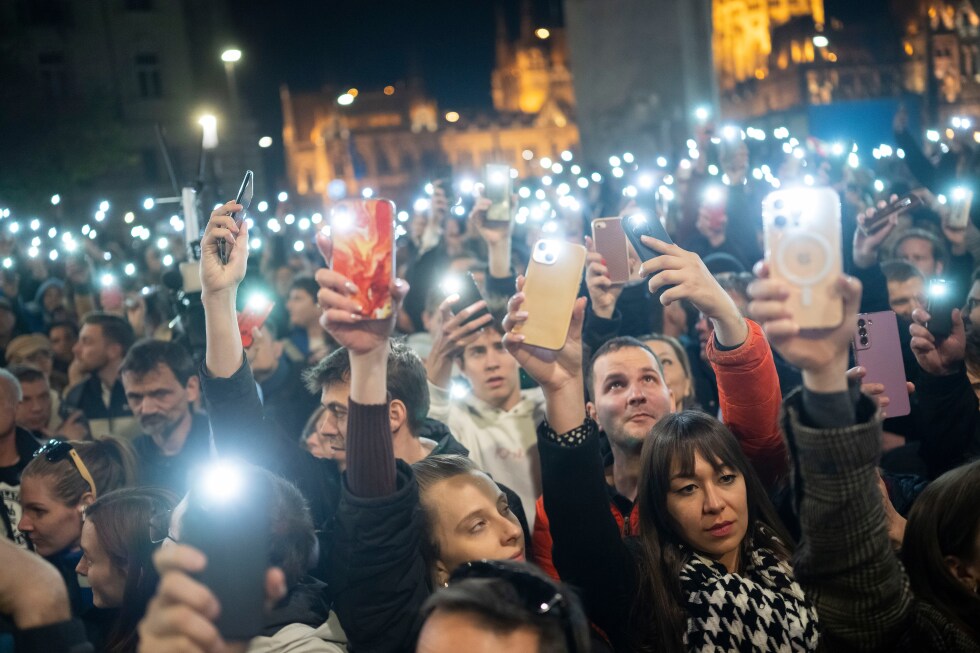
    The historic currency adoption occurs against a backdrop of political instability. The conservative-led government resigned earlier this month following widespread anti-corruption protests, leaving the country without an approved budget for the upcoming year. This political vacuum has hampered critical reforms and delayed access to EU support funds.

    Public sentiment remains mixed, with many citizens expressing concerns about potential price increases and economic uncertainty. Nationalist and pro-Russian factions have amplified these fears, suggesting the euro adoption could erode national identity and exacerbate poverty. Despite these challenges, Bulgaria successfully reduced inflation to 2.7% this year to meet EU convergence criteria, following Croatia’s similar transition in 2023.

  • A look at some of the worst fires in bars, nightclubs and music venues

    A look at some of the worst fires in bars, nightclubs and music venues

    A devastating fire erupted at a bar in the Swiss ski resort of Crans-Montana during New Year’s celebrations, resulting in dozens of presumed fatalities and approximately 100 injuries according to official reports. The tragedy has drawn attention to a global pattern of similar nightlife venue disasters spanning decades.

    The incident echoes multiple historical catastrophes including the 2025 Pulse club fire in North Macedonia that killed 63 revelers due to pyrotechnic flames, and Istanbul’s 2024 Masquerade nightclub blaze that claimed 29 lives during renovations. Other notable tragedies include Spain’s 2023 Murcia nightclub complex fire (13 deaths), Indonesia’s 2022 Sorong nightclub incident (19 deaths), and Cameroon’s Liv’s Nightclub explosion (17 fatalities).

    Historical precedents reveal disturbing similarities in safety failures. The 2016 Oakland Ghost Ship warehouse fire killed 36 people trapped in illegally constructed spaces, while Romania’s 2015 Colectiv nightclub pyrotechnics disaster caused 64 deaths. Brazil’s 2013 Kiss nightclub tragedy claimed over 200 lives due to toxic fumes from burning soundproofing foam.

    Further examination shows recurring patterns: Russia’s 2009 Lame Horse fire (152 deaths) from indoor fireworks, Thailand’s 2009 Santika club blaze (67 deaths) post-countdown celebrations, and China’s 2008 King of Dancers incident (44 deaths) combining fireworks and stampedes. Argentina’s 2004 Cromagnon Republic fire (194 deaths) involved flammable ceiling foam ignition, mirroring the 2003 Station nightclub disaster in Rhode Island (100 deaths) where band fireworks ignited toxic foam.

    The chronology extends to earlier decades including the 1942 Cocoanut Grove fire in Boston (492 deaths) that revolutionized US fire safety codes, and Mississippi’s 1940 Rhythm Night Club tragedy (209 deaths) where boarded windows prevented escape. This historical context underscores persistent safety challenges in entertainment venues worldwide despite technological advancements and regulatory improvements.

  • Bulgaria is joining the euro. Here’s what it means for consumers and businesses

    Bulgaria is joining the euro. Here’s what it means for consumers and businesses

    Bulgaria marks a historic economic transition on January 1st as it becomes the 21st nation to adopt the euro, culminating a seventeen-year journey since joining the European Union in 2007. The long-anticipated move positions the Balkan nation firmly within the Eurozone’s economic framework, though implementation occurs against a backdrop of significant public apprehension.

    The currency conversion establishes a fixed exchange rate of 1.95583 lev to the euro, with dual pricing displays mandated during the transition period. Banking institutions will automatically convert accounts to euros, while physical lev currency remains temporarily acceptable for payments with euro change returned. The Bulgarian Central Bank will facilitate fee-free exchanges until June 30th, with indefinite conversion services thereafter.

    Economically, membership promises substantial benefits including estimated annual savings of 1 billion levs for cross-border traders through eliminated exchange costs. Bulgarian citizens gain practical advantages for travel and online shopping within the Eurozone, while the nation secures representation on the European Central Bank’s governing council.

    The transition requires surrendering certain monetary policy instruments, though Bulgaria previously relinquished this autonomy by pegging the lev to the euro. Adoption mandates compliance with strict EU convergence criteria regarding inflation, debt levels, and exchange rate stability.

    Despite governmental enthusiasm, recent Eurobarometer surveys reveal persistent public skepticism with 53% of Bulgarians opposing the change. Concerns primarily focus on anticipated price inflation during conversion and symbolic loss of national sovereignty. Experts attribute these apprehensions to broader economic anxieties and institutional distrust rather than ideological opposition, exacerbated by disinformation campaigns allegedly linked to Russian interests.

    ECB President Christine Lagarde acknowledges natural pre-adoption uncertainties while predicting minimal inflationary impact (0.2-0.4%) based on previous transitions. Historical data suggests public opinion typically shifts favorably post-implementation, with average approval increasing by 11 percentage points once citizens experience practical benefits.

    The adoption strengthens European economic integration despite Bulgaria’s challenges with corruption rankings and income levels that remain among the EU’s lowest. This expansion represents another step in the Eurozone’s evolution since the 2010-2015 debt crisis, with enhanced regulatory mechanisms now safeguarding against previous vulnerabilities.

  • BBC reports from the scene of Swiss resort bar fire

    BBC reports from the scene of Swiss resort bar fire

    A devastating fire erupted at a popular Swiss alpine resort during New Year’s Eve festivities, resulting in what authorities fear to be dozens of fatalities. The blaze tore through a crowded bar area where revelers had gathered to welcome the new year, transforming celebrations into tragedy within moments.

    Emergency responders from multiple jurisdictions rushed to the scene amid chaotic conditions, battling both the flames and challenging winter weather. Witnesses described scenes of panic as smoke rapidly filled the establishment, with some patrons attempting to escape through windows and emergency exits.

    The resort, located in the picturesque Alps region, typically draws international visitors during the holiday season. Local authorities have launched a comprehensive investigation into the fire’s origins while international assistance has been offered to help identify victims and support grieving families.

    This incident represents one of Europe’s most significant fire tragedies in recent years, raising urgent questions about safety protocols in seasonal entertainment venues. The Swiss government has announced plans for a nationwide review of fire safety standards at public gathering places following the catastrophic event.

  • Watch: Historic Amsterdam church engulfed by fire on New Year’s Eve

    Watch: Historic Amsterdam church engulfed by fire on New Year’s Eve

    A devastating fire engulfed a historic church in Amsterdam during New Year’s Eve celebrations, with the blaze believed to have ignited shortly after midnight. Emergency services rapidly escalated the incident to a major fire emergency as flames consumed the significant architectural landmark.

    The iconic structure, representing centuries of cultural and religious heritage in the Dutch capital, faced one of its gravest challenges as firefighters battled the intense inferno. The timing of the tragedy—coinciding with global New Year celebrations—added a layer of solemnity to the disaster, with eyewitnesses describing scenes of both celebration and horror unfolding simultaneously.

    Local authorities immediately cordoned off the area while firefighting teams employed specialized equipment to contain the rapidly spreading flames. The church’s historical significance and architectural value made the firefighting operation particularly complex, with preservation efforts running parallel to fire suppression activities.

    Initial reports indicate the structure sustained substantial damage, though full assessment awaits complete containment of the blaze. The incident has sparked concerns about fire safety protocols for historical buildings during high-risk periods like holiday celebrations.

  • Fire at Swiss Alps bar kills many people and leaves multiple injured during New Year’s celebrations

    Fire at Swiss Alps bar kills many people and leaves multiple injured during New Year’s celebrations

    CRANS-MONTANA, Switzerland — A devastating fire ripped through a popular bar during New Year’s celebrations in this renowned Alpine resort, resulting in multiple fatalities and numerous injuries, according to local authorities. The tragedy struck in the early hours of Thursday when flames engulfed ‘Le Constellation’ bar at approximately 1:30 a.m., while more than one hundred revelers were inside the establishment.

    Police spokesperson Gaëtan Lathion confirmed the severity of the incident, stating that emergency responders encountered ‘many injured and many dead’ at the scene. The resort community, typically bustling with international tourists during the holiday season, has been plunged into mourning as investigators work to determine the fire’s origin.

    Situated in the heart of the Swiss Alps, Crans-Montana represents both a premier ski destination and a rapidly evolving municipality. The area, located just 40 kilometers north of the iconic Matterhorn peak, has been actively transitioning from traditional tourism toward becoming a hub for high-tech research and development. Despite these modernization efforts, the region remains deeply connected to its winter sports heritage.

    Authorities have established both a reception center and dedicated helpline for affected families as the community grapples with the scale of the tragedy. The investigation remains in its preliminary stages, with officials noting the particular challenges presented by the international nature of the resort’s visitor population.

    The municipality, formed through the merger of multiple towns in 2017, spans 590 hectares from the Rhône Valley to the Plaine Morte glacier, with its highest point reaching nearly 3,000 meters elevation. This tragic event has cast a shadow over what should have been a festive celebration in one of Switzerland’s most picturesque alpine settings.

  • Zelensky says peace deal is 90% ready in New Year address

    Zelensky says peace deal is 90% ready in New Year address

    Ukrainian President Volodymyr Zelensky announced in his New Year’s address that a comprehensive peace agreement to conclude nearly four years of conflict with Russia stands at 90% completion. The Ukrainian leader emphasized that the remaining 10% of negotiations would “determine the fate of peace, the fate of Ukraine and Europe,” while asserting that Ukraine seeks “the end of the war – not the end of Ukraine.”

    The diplomatic progress faces renewed challenges following Moscow’s allegations of a Ukrainian drone attack targeting President Vladimir Putin’s private residence at Lake Valdai. Russian authorities released purported evidence including flight path maps indicating drone launches from Ukraine’s Sumy and Chernihiv regions, along with footage of wreckage identified as a Ukrainian Chaklun drone. The Kremlin announced it would reassess its negotiation stance due to these allegations, which Ukrainian officials and EU diplomat Kaja Kallas have dismissed as a “deliberate distraction” from peace efforts.

    Central to the negotiation stalemate remains the status of Donbas, where Russia currently controls approximately 75% of Donetsk and 99% of Luhansk regions. Zelensky explicitly stated that Ukrainian withdrawal from the eastern industrial heartland would mean “everything will be over,” referencing Moscow’s persistent demand for full control of the territory.

    International involvement continues to intensify, with French President Emmanuel Macron announcing concrete commitments from European states and allies meeting in Paris on January 6. This follows high-level discussions between Zelensky and Trump administration advisers regarding proposed 15-year security guarantees for Ukraine. US special envoy Steve Witkoff confirmed ongoing talks with UK, French, and German security counterparts about “strengthening security guarantees and developing effective deconfliction mechanisms.”

    Meanwhile, Putin’s considerably shorter New Year message praised Russian troops participating in what Moscow terms a “special military operation,” asserting that “we believe in you and our victory.” In a concerning development, North Korean leader Kim Jong Un praised his country’s “invincible alliance” with Moscow, with South Korean officials confirming Pyongyang has sent thousands of troops, missiles, and long-range weapons to support Russian operations, suffering an estimated 600 casualties.

  • French government defends granting citizenship to George and Amal Clooney

    French government defends granting citizenship to George and Amal Clooney

    The French government has formally justified its decision to grant citizenship to actor George Clooney, his human rights lawyer wife Amal Clooney, and their eight-year-old twins Ella and Alexander. The naturalization, announced last weekend in France’s official government journal, has sparked a nuanced debate about privilege and equitable treatment within the nation’s immigration system.

    French authorities clarified that the Clooneys qualified under a specific legal provision allowing naturalization of foreign nationals who significantly contribute to France’s global influence and cultural outreach. The Foreign Ministry emphasized that George Clooney’s stature as an international film star brings substantial benefits to France’s cinema industry, while Amal Clooney’s legal work frequently intersects with French academic institutions and international organizations based in the country.

    The decision faced public scrutiny when junior interior minister Marie-Pierre Vedrenne raised concerns about perceived special treatment, noting that many French citizens might view the move as undermining principles of fairness in the naturalization process. Vedrenne specifically pointed to the actor’s self-admitted limited French language proficiency as potentially sending “a message that is not good.”

    However, Interior Minister Laurent Nuñez, who personally signed the naturalization decree, strongly defended the decision as “a big chance for our country.” The ministry highlighted the family’s demonstrated ties to France, including their primary residence in an 18th-century villa purchased in 2021 near Brignoles in southern Provence.

    In recent interviews, Clooney has expressed his family’s deep connection to France, noting that his wife and children are fluent French speakers while he continues language studies through a learning app. The actor has humorously acknowledged his family sometimes converses in French to secretly discuss him without his understanding.

    The Clooneys have specifically cited France’s strict privacy laws and more grounded lifestyle as primary reasons for establishing their main home there, contrasting it with the intense media scrutiny their children would face in Hollywood. George Clooney told Esquire magazine that raising children in France provides them with “a much better life” away from paparazzi and constant public comparison.

  • What are Russians hoping for in 2026, asks Steve Rosenberg

    What are Russians hoping for in 2026, asks Steve Rosenberg

    As the conflict in Ukraine approaches its fourth consecutive year, BBC Russia Editor Steve Rosenberg has conducted a series of ground-level interviews across Russia to gauge public sentiment about the nation’s future. The extensive reporting reveals a complex tapestry of expectations among Russian citizens as they look toward 2026.

    The investigation captures diverse perspectives ranging from economic concerns to geopolitical expectations. Many interviewees express profound anxiety about the prolonged duration of the military engagement and its cascading effects on daily life, international relations, and economic stability. Contrary to monolithic Western perceptions, Rosenberg’s findings illustrate significant variance in how ordinary Russians conceptualize their personal and national future.

    Economic stability emerges as a predominant concern, with citizens highlighting worries about inflation, currency valuation, and access to imported goods. The reporting also identifies nuanced perspectives on international isolation, with some expressing hope for normalized relations while others anticipate continued geopolitical tensions. Personal aspirations intertwine with national destiny in unexpected ways, creating a multifaceted portrait of a society navigating unprecedented circumstances.

    The temporal focus on 2026 provides a strategic midpoint perspective, allowing citizens to project beyond immediate wartime realities toward medium-term outcomes. Rosenberg’s methodology emphasizes authentic street-level conversations rather than official narratives, capturing voices often absent from international coverage. This approach reveals surprising resilience in some quarters alongside deep apprehension in others, presenting a more complete picture of the Russian psyche during this historical moment.

    The reporting concludes without definitive predictions, instead presenting the array of hopes and concerns as Russia continues to adapt to economic transformations and global repositioning. This ground-level account provides valuable insight into how geopolitical events translate into personal expectations for the future.

  • Bulgaria joins the euro after rocky path to new currency

    Bulgaria joins the euro after rocky path to new currency

    Bulgaria has officially become the 21st nation to adopt the euro, marking a significant yet contentious milestone for the European Union’s most economically disadvantaged member state. This transition, which saw the Bulgarian lev replaced on January 1st, 2026, positions the nation ahead of wealthier Eastern European peers like Poland, Hungary, and the Czech Republic.

    The move to the single currency has exposed a stark generational and geographic rift within the country. For younger, urban, and entrepreneurial citizens, euro adoption represents the final step in a long journey of European integration, following NATO and EU membership and entry into the Schengen zone. They view it as an optimistic leap toward greater economic opportunity and stability.

    Conversely, for older, rural, and more conservative segments of the population, the abandonment of the historic lev—a national symbol since 1881—has provoked fear and resentment. The currency, whose name means ‘lion,’ was pegged first to the Deutschmark and then to the euro since 1997, but its physical replacement is seen by many as an erosion of national sovereignty.

    This societal split is reflected in opinion polls, which indicate the nation’s 6.5 million people are almost evenly divided. The political landscape further complicates the transition. Prime Minister Rosen Zhelyazkov’s coalition government collapsed after a no-confidence vote on December 11th, 2025, following mass protests against the national budget. This event continues a pattern of extreme instability, with seven elections held in the past four years and an eighth likely imminent.

    Interviews with citizens reveal the depth of this division. Todor, a 50-year-small business owner in Gabrovo, expressed strong opposition, stating he believed 70% would reject the euro in a referendum—a vote proposed by President Rumen Radev but rejected by the government. He blamed fears of the new currency for a decline in his sales amid already high inflation.

    In contrast, Ognian Enev, a 60-year-old tea shop owner in Sofia, welcomed the change as a mere ‘technical’ shift. He noted that many Bulgarians, particularly the 1.2 million living abroad who send remittances in euros, are already accustomed to the currency. Like many retailers, he is prepared with euro coins and notes for the dual-currency period throughout January, where change will be given in euros, ahead of the lev’s complete retirement on February 1st.

    To ease the public’s fear of price gouging, a mandatory dual-pricing law has been in effect since August 2025. The near 1:2 conversion rate (€1 = 1.95583 lev) simplifies the transition. Elaborate consumer protection watchdogs have been established to prevent merchants from rounding prices up, with some, like Sofia’s public transport fares, being rounded down instead.

    In a symbolic move to assuage concerns over lost identity, Bulgaria’s euro coins feature distinct national imagery: St. Ivan of Rila on the €1 coin, Paisius of Hilendar on the €2, and the ancient Madara Rider on the smaller denominations.

    The ultimate economic impact remains the critical unknown. The country now faces two potential futures: the successful ‘Baltic model’ of Estonia, Latvia, and Lithuania, which combined euro adoption with robust reforms to spur investment and fight corruption, or the ‘Italian model’ of prolonged economic stagnation—an outcome some, including Mr. Enev, fear is more likely for Bulgaria.