标签: Europe

欧洲

  • Balloons from Belarus cross into Polish airspace for a third night

    Balloons from Belarus cross into Polish airspace for a third night

    WARSAW, Poland — For the third consecutive night, Polish authorities have documented unauthorized balloon incursions originating from Belarus, marking a significant escalation in hybrid operations along the EU’s eastern frontier. The Polish Armed Forces Operational Command characterized these events as deliberate attempts by Minsk to test Warsaw’s aerial defense readiness and reconnaissance capabilities.

    Military spokesperson Jacek Goryszewski revealed that balloon-related incidents have surged dramatically in early 2026 compared to the same period last year. While the exact motivation remains unclear, officials suggest the increase could stem from either political directives within the Belarusian government or sophisticated adaptation by criminal smuggling networks evading enhanced border security measures.

    Although the Polish military maintains these aerial violations pose no direct threat to national airspace security, temporary flight restrictions have been imposed over the Podlaskie region bordering Belarus as a precautionary measure. The Belarusian embassy in Warsaw has not responded to requests for commentary regarding these allegations.

    This development occurs within the broader context of what NATO members Poland and Lithuania describe as coordinated hybrid warfare tactics employed by Belarus and its ally Russia. These tactics previously included manufacturing migration crises, alleged sabotage operations, and systematic espionage activities targeting Western nations.

    The balloon incidents follow earlier security breaches including Russian drone penetrations of Polish airspace in September and a November explosion on passenger rail infrastructure that Warsaw attributes to Moscow. Lithuanian authorities faced similar aerial provocations in December when meteorological balloons from Belarus forced repeated shutdowns of Vilnius International Airport, creating massive travel disruptions that officials labeled as deliberate hybrid attacks.

  • A Kremlin official confirms that U.S.-brokered Russia-Ukraine talks are resuming this week

    A Kremlin official confirms that U.S.-brokered Russia-Ukraine talks are resuming this week

    ABU DHABI, United Arab Emirates – Diplomatic efforts to resolve the Russia-Ukraine conflict will resume this week with trilateral negotiations scheduled in Abu Dhabi on Wednesday and Thursday, according to Kremlin officials. The talks, mediated by the United States, follow a brief postponement attributed to scheduling conflicts despite ongoing frontline hostilities and devastating long-range attacks on civilian infrastructure.

    Kremlin spokesman Dmitry Peskov characterized the discussions as “very complex,” noting that while progress has been achieved on certain issues, significant divisions remain on others. The negotiations occur as the fourth anniversary of Russia’s full-scale invasion approaches, with key sticking points including Moscow’s demand to retain occupied Ukrainian territories, particularly in Ukraine’s eastern industrial regions.

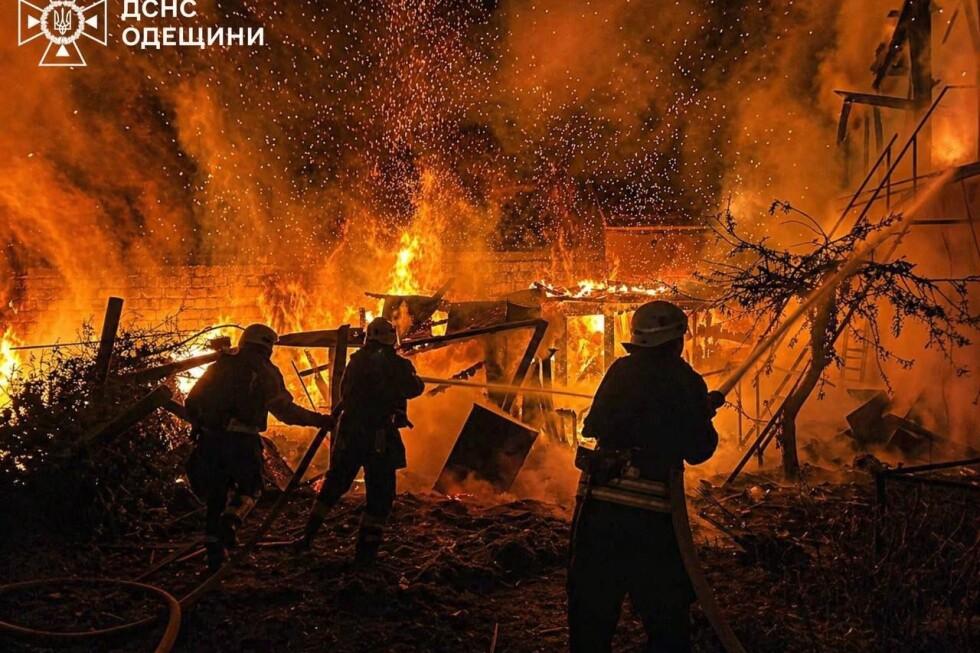
    The diplomatic push continues against a backdrop of intensified violence. Recent Russian drone and missile bombardments have resulted in substantial civilian casualties, including twelve miners killed in a single attack on Sunday. These assaults have severely damaged Ukraine’s power infrastructure, leaving populations without heating, electricity, or running water during harsh winter conditions.

    In a parallel technological development, Ukrainian Defense Minister Mykhailo Fedorov announced measures to prevent Russian forces from exploiting SpaceX’s Starlink satellite services for drone navigation. Ukraine has implemented a mandatory registration system for Starlink terminals, disabling unapproved devices within its territory. SpaceX CEO Elon Musk acknowledged the effectiveness of these countermeasures, offering further cooperation if needed.

    The talks follow discreet weekend meetings between Russian envoy Kirill Dmitriev and American officials in Miami, though details remain undisclosed. Despite sustained diplomatic engagement from the Trump administration, fundamental disagreements continue to impede breakthrough possibilities as the conflict approaches its fourth year.

  • Hellas Verona, last in Italy’s Serie A, fires coach Paolo Zanetti

    Hellas Verona, last in Italy’s Serie A, fires coach Paolo Zanetti

    VERONA, Italy — In a decisive move reflecting the intense pressure of Italy’s top football division, last-placed Serie A club Hellas Verona has terminated the contract of head coach Paolo Zanetti. The dismissal was announced on Monday, merely 48 hours after the team suffered a demoralizing 4-0 defeat away to Cagliari.

    The loss solidified Verona’s position at the very bottom of the league table, a point below fellow strugglers Pisa, who also possess 14 points from 23 matches. This coaching change is part of a broader trend of instability in the Italian top flight, bringing the total number of clubs that have changed managers this season to six.

    Zanetti’s tenure was marked by profound difficulty, with the team securing only two league victories throughout the entire campaign. These wins, both achieved consecutively in December, provided a brief glimmer of hope in an otherwise dismal season. With 15 matches remaining in the season, the club now faces a formidable challenge, sitting four points adrift from the safety of the 17th-place position and potential salvation from relegation.

    The managerial upheaval extends beyond Verona. Just one day prior, Pisa also parted ways with their coach, Alberto Girardino, highlighting the cutthroat nature of the league where poor results prompt immediate organizational action as clubs battle for survival.

  • England’s resurgence threatens France’s and Ireland’s Six Nations dominance

    England’s resurgence threatens France’s and Ireland’s Six Nations dominance

    The Six Nations Championship is poised for a potential power shift as England emerges as a formidable challenger to the longstanding French-Irish supremacy. Under coach Steve Borthwick, England rides an impressive 11-game winning streak highlighted by their decisive 33-19 victory over New Zealand in November, which precipitated the departure of All Blacks coach Scott Robertson. This resurgent squad, featuring emerging talents like Immanuel Feyi-Waboso and Henry Pollock, faces its ultimate test in a climactic final-round showdown against defending champion France in Paris.

    France enters as tournament favorite despite autumn campaign concerns. The team benefits from an ideal schedule with home advantages against both Ireland and England, coupled with the return of inspirational captain Antoine Dupont from ACL injury. Coach Fabien Galthié has embraced a transitional phase toward the 2027 World Cup, surprisingly dropping established stars including record try-scorer Damian Penaud in favor of promising newcomers like Théo Attissogbe and Lenni Nouchi.

    Ireland confronts significant challenges including a humiliated front row against South Africa, lineout inconsistencies, and multiple injuries to key players. The team additionally faces disciplinary concerns after Bundee Aki’s six-week suspension for referee abuse, highlighting what former official Owen Doyle describes as a ‘growing and unacceptable culture’ of misconduct toward match officials.

    Scotland battles persistent reputation issues despite moments of brilliance, with notorious collapses stemming from weak benches and mental fragility. Coach Gregor Townsend received a contract extension through 2027 despite growing clamor for change. Italy demonstrates renewed optimism under Gonzalo Quesada but faces injury setbacks, while Wales struggles with ongoing performance issues and concerningly low ticket sales despite ending historic losing streaks in 2025.

  • 3 seasons in, PWHL set to enjoy international coming-out party during Milan Cortina Games

    3 seasons in, PWHL set to enjoy international coming-out party during Milan Cortina Games

    The landscape of women’s professional hockey has undergone a revolutionary transformation since Kendall Coyne Schofield’s emotional plea for greater visibility following the 2022 Beijing Winter Games. What was once considered a distant dream has materialized into the Professional Women’s Hockey League (PWHL), which now stands poised for its international showcase at the Milan Cortina Games.

    Four years after her tearful declaration that ‘the status quo is not good enough,’ Coyne Schofield’s vision has been validated through the PWHL’s successful launch in 2023. The league, financially backed by Los Angeles Dodgers owner Mark Walter, represents the first truly professional platform for female hockey players, distinguishing itself from previous iterations where athletes often played without salary or proper recognition.

    The Olympic tournament serves as a strategic launching point for the eight-team league, which features 61 PWHL players distributed across ten competing nations—notably comprising the majority of both Team USA and Team Canada rosters. The league is capitalizing on this global stage through extensive advertising campaigns aimed at converting casual Olympic viewers into dedicated PWHL followers.

    Hockey Hall of Famer Jayna Hefford, now PWHL executive vice president, emphasizes the critical opportunity: ‘Previous years, everybody falls in love with the Olympics. They hear stories about players, we have huge viewership numbers, and then it’s sort of like ‘What now?”

    The league’s growth metrics demonstrate remarkable progress: attendance has surpassed 500,000 fans nearing the midpoint of its third season, following the milestone of one million attendees achieved in under two seasons. Expansion plans include adding up to four new teams next season, with potential future establishment of European franchises.

    Despite these achievements, challenges persist. The PWHL lacks a national broadcaster in the United States, though games are available through local markets and YouTube. Additionally, international representation remains limited, with only 25 of the league’s 200-plus players hailing from outside North America. League executives acknowledge this gap and are actively pursuing global growth through potential exhibition games in Europe and enhanced scouting efforts.

    Veteran Swiss national team player Alina Muller, now with the Boston Fleet, believes the league’s stability will gradually attract more international talent: ‘Now being able to watch our games and think, ‘Yeah, I want to end up playing professionally,’ will change the attitude toward the sport completely.’

    The Milan Cortina Games thus represent not just another tournament, but a pivotal moment in women’s hockey history—the culmination of years of advocacy and the beginning of a new era of professional opportunities for female athletes worldwide.

  • Family seeks answers as Kenyan fighting for Russia killed in Ukraine

    Family seeks answers as Kenyan fighting for Russia killed in Ukraine

    A grieving Kenyan family is urgently appealing for governmental assistance to repatriate the remains of their 29-year-old relative, Clinton Nyapara Mogesa, who perished while combatting for Russian forces in eastern Ukraine. Ukrainian defense authorities confirmed Mogesa’s death occurred during a high-casualty offensive operation in the Donetsk region, characterizing the engagement as a devastating ‘meat assault’ tactic.

    Mogesa’s tragic journey began in 2024 when he departed Kenya for anticipated employment in Qatar. His family subsequently discovered he had been recruited from Qatar and transported to Russia under unclear circumstances. Ukrainian intelligence reports indicate Russian forces failed to recover his remains after the battle, and notably, Mogesa was found carrying passports belonging to two additional Kenyan nationals.

    This incident highlights escalating international concerns regarding Russia’s systematic recruitment of Kenyan citizens for military service in Ukraine. Mogesa’s brother, Joel Mogere, revealed the family had liquidated ancestral land holdings to finance his initial voyage to Qatar, describing the deceased as both the household’s primary provider and youngest sibling. ‘His death has profoundly shocked us,’ Mogere stated during a televised interview, emphasizing the emotional and economic devastation wrought by this loss.

    The family’s matriarch, Mellen Moraa, articulated her despair as a diabetic patient who relied entirely on her son’s financial support for medical treatments and sustenance. ‘I earnestly plead with the government for intervention and support,’ Moraa implored, reflecting the helplessness felt by numerous affected families.

    Kenyan governmental records indicate at least 18 citizens previously fighting alongside Russian units were successfully extracted and repatriated last month. However, Foreign Ministry assessments from November suggested approximately 200 Kenyans remain actively enlisted with Russian forces, with recruitment networks continuing operations across Africa.

    Ukraine’s intelligence apparatus estimates over 1,400 individuals from 36 African nations have been recruited into Russian military service. The agency issued renewed cautions against travel to Russia or acceptance of informal employment offers there, warning that such actions ‘carry substantial risks of coercive deployment into assault units without adequate training and minimal survival prospects.’

  • Transfer deadline: Premier League clubs most active with hours left in winter window

    Transfer deadline: Premier League clubs most active with hours left in winter window

    European football’s winter transfer window approaches its decisive finale, with Monday marking the deadline for elite clubs across the continent’s top leagues to finalize their squad reinforcements. The closing hours present a final opportunity for strategic acquisitions and sales that could define team fortunes for the remainder of the competitive season.

    England’s Premier League has emerged as the financial powerhouse of this transfer period, with British clubs collectively investing approximately $450 million in player acquisitions. Manchester City has executed the most significant financial maneuvers thus far, securing the services of winger Antoine Semenyo and center back Marc Guehi for a combined transfer fee of $115 million.

    Several compelling narratives dominate the final hours of negotiation. Liverpool faces pressing questions about reinforcing their defensive line following injury setbacks. Crystal Palace contemplates the potential departure of French striker Jean-Philippe Mateta, with Serie A powerhouse AC Milan reportedly monitoring the situation. Chelsea’s transfer activity remains under particular scrutiny given the club’s historically aggressive approach to both incoming and outgoing transfers.

    The transfer deadline falls simultaneously across multiple leagues at 19:00 GMT for England, France, Germany, and Italy, while Spain’s window remains open until 22:59 GMT, providing La Liga clubs with additional hours for last-minute negotiations.

  • Iran summons EU ambassadors to protest Revolutionary Guard being listed as terror group

    Iran summons EU ambassadors to protest Revolutionary Guard being listed as terror group

    DUBAI, United Arab Emirates — Iran has initiated a significant diplomatic escalation by summoning European Union ambassadors in Tehran to formally protest the bloc’s recent designation of Iran’s Revolutionary Guard as a terrorist organization. The move comes amid heightened regional tensions and the potential threat of U.S. military action in response to Iran’s crackdown on demonstrators and possible mass executions.

    Iranian Foreign Ministry spokesman Esmail Baghaei confirmed that ambassador summons began Sunday and continued through Monday, characterizing the EU’s decision as “illegal, unreasonable and very wrong.” Baghaei indicated that Iranian authorities are preparing reciprocal measures, with decisions expected in coming days.

    The EU’s designation last week specifically references the Revolutionary Guard’s role in suppressing nationwide protests in January that resulted in thousands of deaths and tens of thousands of detentions. This places the EU alongside the United States and Canada, which had previously classified the paramilitary force as terrorist entities.

    Concurrently, Iran’s parliament speaker declared that Tehran now considers all European Union militaries to be terrorist organizations, invoking a 2019 law that mandates reciprocal responses to such designations.

    The Revolutionary Guard, established during Iran’s 1979 Islamic Revolution as a protector of the clerical government, has evolved into a powerful parallel military force with substantial economic influence. Its expansion into private enterprise followed the Iran-Iraq war under Supreme Leader Ayatollah Ali Khamenei’s authorization.

    Evidence emerging via Starlink satellites and other means indicates the Guard’s Basij force played a central role in the violent suppression of protests, with footage showing armed personnel shooting and beating demonstrators during internet blackouts that isolated Iran’s 85 million citizens.

    Meanwhile, the Revolutionary Guard conducted naval exercises in the strategically critical Strait of Hormuz, through which twenty percent of globally traded oil passes. While Iran had notified shipping traffic of the drills, it hasn’t officially acknowledged their execution. The U.S. Central Command issued stern warnings against Iranian harassment of its warships and aircraft or interference with commercial vessel transit through the vital waterway.

  • Son of Norway’s crown princess to go on trial on rape and other charges

    Son of Norway’s crown princess to go on trial on rape and other charges

    OSLO, Norway — A significant criminal trial commenced Tuesday against Marius Borg Høiby, the eldest son of Norway’s Crown Princess Mette-Marit, marking a profound embarrassment for the royal family amidst simultaneous revelations about the crown princess’s past associations with convicted sex offender Jeffrey Epstein.

    Høiby, 29, stands indicted on 38 criminal counts including rape, domestic abuse, drug trafficking, death threats, and traffic violations. The Oslo District Court will hear allegations detailing four separate rape incidents occurring between 2018 and November 2024, alongside patterns of violence against two former partners. Prosecutors indicate a potential decade-long prison sentence if convictions are secured during the trial, projected to continue through mid-March.

    The defendant, product of Crown Princess Mette-Marit’s previous relationship, holds no royal title or formal duties within the monarchy. His stepfather, Crown Prince Haakon, issued an unusual public statement clarifying that neither he nor Mette-Marit intend to attend court proceedings, emphasizing Høiby’s status as a private citizen subject to Norway’s judicial system like any other.

    Compounding the royal family’s challenges, newly unsealed court documents from the Epstein files reveal extensive communications between Crown Princess Mette-Marit and the disgraced financier. Norwegian media reports confirm she utilized Epstein’s Palm Beach, Florida property in early 2013 through a mutual acquaintance. In a contrite statement, the crown princess acknowledged ‘poor judgment’ and expressed deep regret for her association with Epstein, extending sympathy to his victims.

    This dual controversy emerges alongside ongoing public scrutiny of Princess Märtha Louise’s unconventional business activities and her 2024 marriage to American self-described shaman Durek Verrett, collectively presenting unprecedented public relations challenges for Norway’s typically popular monarchy.

    Defense attorney Petar Sekulic maintains his client’s innocence regarding all sexual abuse charges and most violence allegations, promising Høiby will present his comprehensive version of events during the judicial process.

  • ‘Enemy’ insults and questioning Putin: Steve Rosenberg on tightrope of reporting from Russia

    ‘Enemy’ insults and questioning Putin: Steve Rosenberg on tightrope of reporting from Russia

    In a revealing account of contemporary media operations within Russia, BBC Moscow correspondent Steve Rosenberg details the increasingly hostile environment facing Western journalists. The situation has deteriorated markedly since Russia’s full-scale invasion of Ukraine in February 2022, creating what Rosenberg describes as a ‘legal minefield’ for foreign correspondents.

    The hostility manifests through multiple channels, including vitriolic attacks on state-controlled television. Prominent presenter Vladimir Solovyov has personally targeted Rosenberg with derogatory remarks, labeling him ‘Steve Rotten-berg’ and comparing his appearance to a ‘defecating squirrel’ while explicitly branding him ‘a conscious enemy of our country.’

    Operational challenges have intensified significantly. Journalists from nations designated ‘unfriendly’ by the Kremlin, including the United Kingdom, now face heightened scrutiny. Visa arrangements have been tightened, with accreditation requiring renewal every three months instead of the previous annual permits. Travel involves ‘additional checks’ at borders, creating constant administrative hurdles.

    The legal landscape has become particularly perilous. The 2023 espionage conviction of Wall Street Journal reporter Evan Gershkovich, who spent sixteen months imprisoned despite widespread condemnation of the charges as fabricated, demonstrated that foreign citizenship provides no protection against detention. New repressive laws have silenced dissent and criminalized criticism of authorities, forcing many former Russian contributors to avoid Western media outlets entirely.

    Despite these challenges, some access persists. Western broadcasters maintaining Moscow bureaus continue receiving invitations to Kremlin events, occasionally providing opportunities to question President Putin directly. These rare interactions offer insights into Moscow’s perspective, particularly Putin’s persistent resentment over NATO expansion and perceived Western disrespect toward Russian interests.

    The geopolitical alignment has shifted notably with Donald Trump’s return to the American presidency. Moscow perceives improved relations with Washington, resulting in redirected media hostility toward European nations and the UK instead of the United States. This marks a dramatic reversal from the 1990s, when Rosenberg appeared on popular Russian television programs celebrating British culture and Allied cooperation during World War II.

    The correspondent’s personal reflections highlight Russia’s contradictions: simultaneous hostility and warmth from different segments of society. While state media propagates antagonistic narratives, individual Muscovites continue expressing appreciation for Western journalists’ presence, embodying the nation’s double-headed eagle symbolism of conflicting orientations.