
A tragic incident unfolded in Rome as a 69-year-old Japanese tourist, Morimasa Hibino, lost his life after falling from the perimeter wall of the historic Pantheon. The accident occurred at approximately 21:50 local time (19:50 GMT) on Friday evening. According to reports from local newspaper la Repubblica, Hibino fell from a height of around seven meters (22.9 feet) after losing his balance while sitting on the edge of the wall. A passing priest immediately alerted the authorities upon discovering the man lying motionless in a nearby ditch. Emergency responders and firefighters were forced to break open a gate to access the site, where they confirmed Hibino’s death. Authorities have launched an investigation into the incident, with surveillance footage from the area being reviewed to determine the exact circumstances of the fall. The Pantheon, a renowned ancient Roman temple and one of Italy’s most iconic landmarks, attracts millions of visitors annually. This unfortunate event has raised concerns about safety measures at popular tourist sites.
标签: Europe
欧洲
-
Russian missile and drone attacks kill 4 in Ukraine as Zelenskyy pleads for air defense
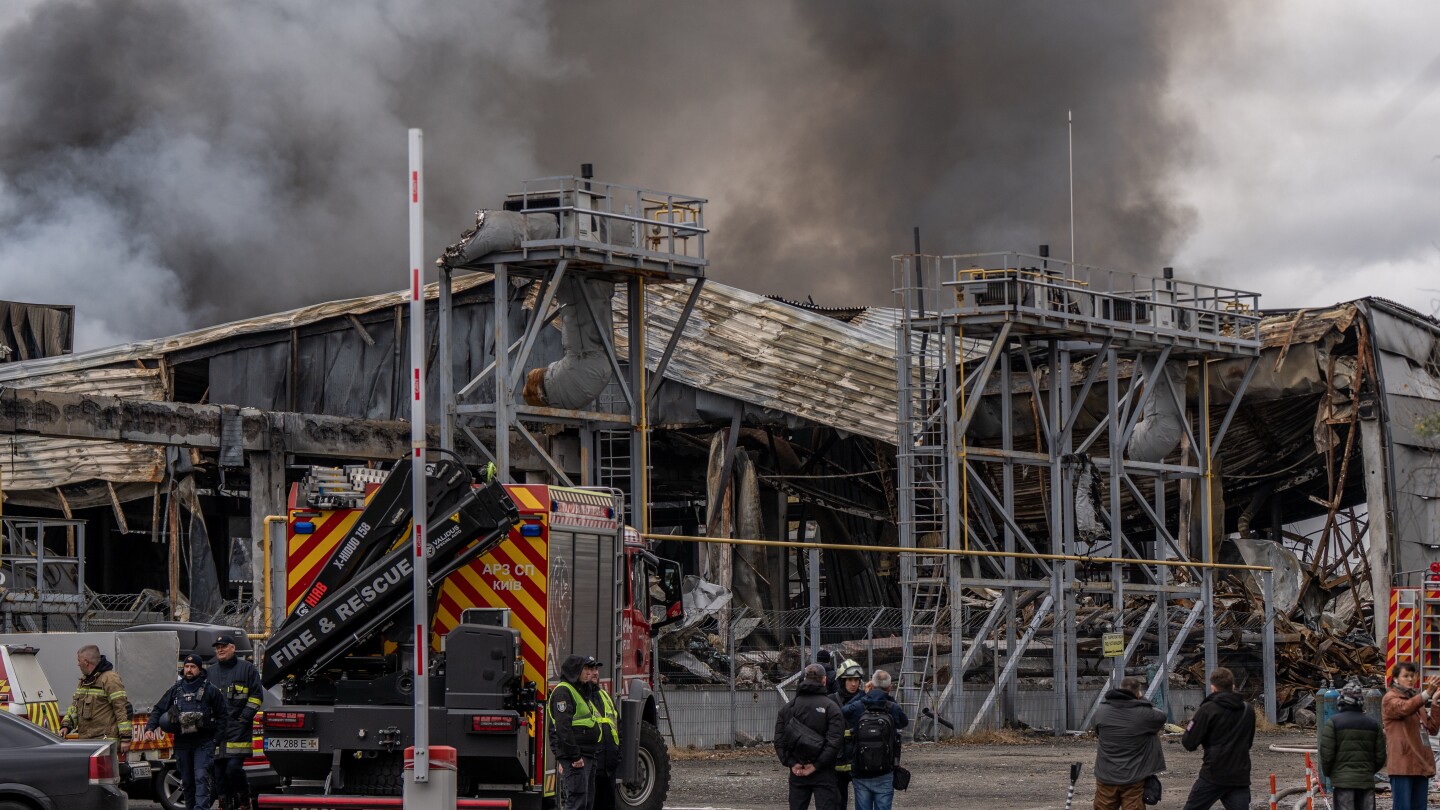
KYIV, Ukraine — A barrage of Russian missile and drone strikes across Ukraine overnight into Saturday resulted in at least four fatalities and 16 injuries, according to Ukrainian officials. The attacks have intensified calls from Ukrainian President Volodymyr Zelenskyy for Western nations to bolster Ukraine’s air defense capabilities. In Kyiv, a ballistic missile strike early Saturday claimed two lives and left nine wounded, as reported by Timur Tkachenko, head of the city’s military administration. The assault caused a fire in a non-residential building and scattered debris in open areas, damaging nearby structures, the State Emergency Service stated on Telegram. Mayor Vitali Klitschko described the capital as being under ‘ballistic attack’ during the onslaught. In the Dnipropetrovsk region, two individuals were killed and seven injured, with apartment buildings and private homes sustaining damage, said acting regional Governor Vladyslav Haivanenko. Ukraine’s air force reported that Russia launched nine missiles and 62 drones, with four missiles and 50 drones intercepted. Meanwhile, Russia’s Defense Ministry claimed to have downed 121 Ukrainian drones over Russian territory. Zelenskyy emphasized the urgent need for Patriot defense systems to protect Ukrainian cities, urging Western allies to act swiftly. ‘America, Europe, and the G7 countries can help ensure that such attacks no longer threaten lives,’ he wrote on X. Zelenskyy is seeking to acquire 25 Patriot systems from the U.S. to strengthen Ukraine’s air defenses. Additionally, he called for expanded sanctions on Russia’s oil sector and the provision of long-range missiles, such as Tomahawks, to counter Russian aggression. These appeals were made during talks in London with European leaders, who pledged continued military support to Ukraine. The discussions, hosted by British Prime Minister Keir Starmer, focused on safeguarding Ukraine’s power grid, enhancing air defenses, and supplying longer-range missiles to strike deep within Russia.
-

‘My skateboard journey round the Wild Atlantic Way to honour my friend’
Becky Gilmour, a 26-year-old from Banbridge, is nearing the completion of her extraordinary skateboarding journey along Ireland’s Wild Atlantic Way. Embarking on this 2,500-kilometer (1,553-mile) coastal route in June, Becky aims to finish by December, before the winter weather worsens. Her mission is deeply personal: to raise awareness about suicide, a cause she was inspired to champion after losing a friend during the Covid-19 pandemic. Becky hopes her journey will encourage open conversations about mental health and demonstrate that outdoor adventures are accessible to everyone, regardless of perceived barriers like cost or athletic ability. Despite not considering herself an athlete, Becky has skated between 20 to 60 kilometers (12 to 37 miles) daily, relying on her trusty longboard, which has required minimal maintenance. Her journey has taken her through picturesque counties like Mayo, where she praised the smooth road surfaces, though she admitted to enduring a few challenging falls. Along the way, Becky has engaged with local communities, visited schools, and even taken to the sea on a paddleboard with her friend Adam, exploring islands like Aran, Inishbofin, and Clare. She has also left behind murals in each county she visits, funded by donations, to spread hope and support for those struggling with mental health issues. Becky’s journey will culminate in Portrush, County Antrim, where she purchased her first longboard with her late friend. Her story has resonated with many, inspiring others to embrace adventure and advocate for mental health awareness.
-
Russia faces a shrinking and aging population and tries restrictive laws to combat it
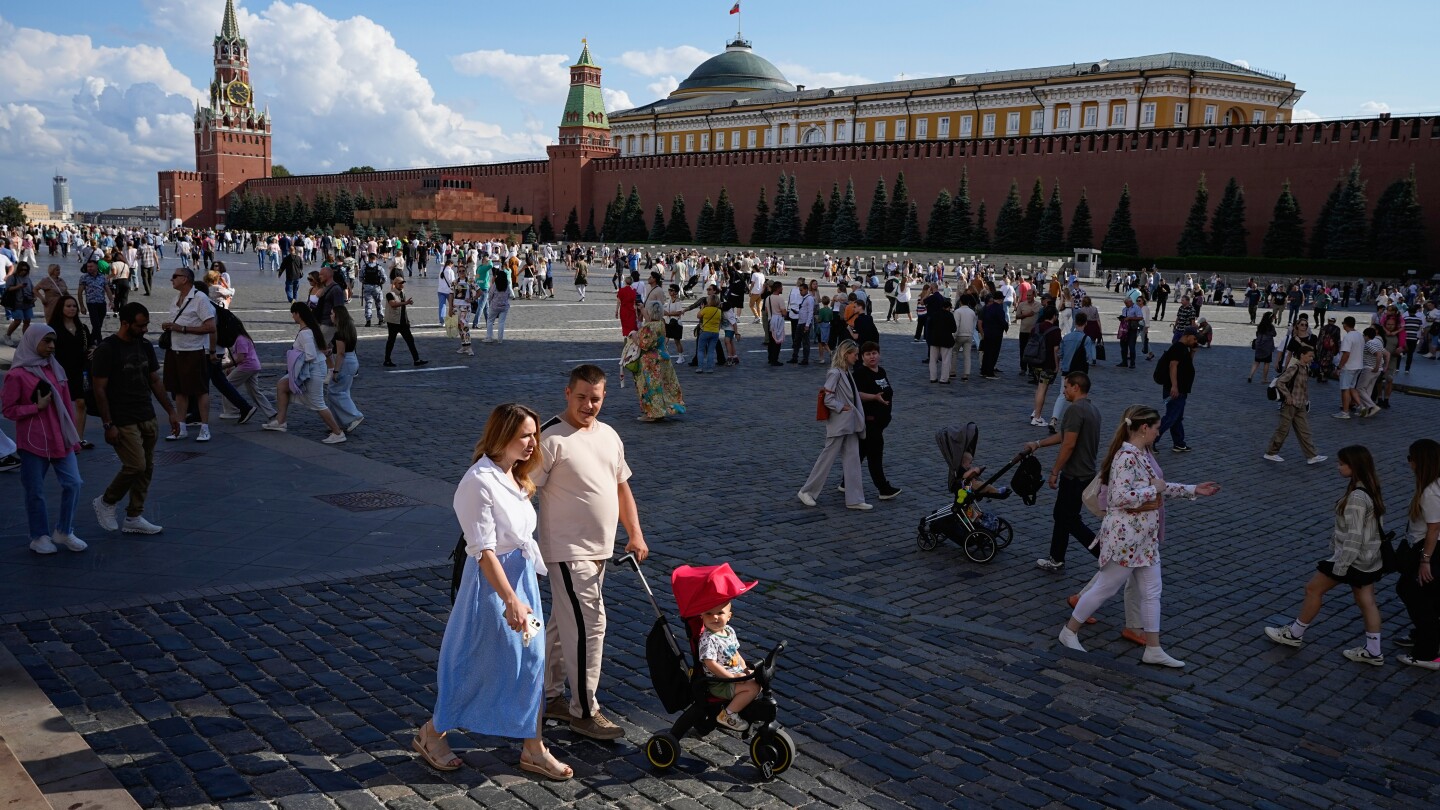
For over two decades, Russia has grappled with a deepening demographic crisis characterized by a shrinking and aging population. Since President Vladimir Putin assumed power in 2000, the country has faced persistent challenges in reversing this trend. In 1999, Russia recorded its lowest number of births, a figure that has continued to haunt the nation despite temporary improvements. By 2015, births peaked at 1.94 million, but economic instability, the ongoing war in Ukraine, and an exodus of young men have since reversed these gains. In 2023, Russia recorded only 1.22 million births, barely surpassing the 1999 low. The population has also aged significantly, with 30% now over 55, compared to 21.1% in 1990. Putin has implemented various measures to encourage larger families, including financial incentives, free school meals, and Soviet-style ‘hero-mother’ medals for women with 10 or more children. However, critics argue that these efforts, coupled with restrictive laws on abortion and LGBTQ+ activism, are unlikely to solve the crisis. The war in Ukraine has further exacerbated the problem, with hundreds of thousands of young men either killed or fleeing the country. Immigration, a potential solution, remains unpopular due to rising anti-migrant sentiment. As Russia’s fertility rate stagnates at 1.4, well below the replacement rate of 2.1, the demographic crisis continues to pose a significant threat to the nation’s future.
-
Europe fights to avoid being sidelined by Trump’s world-shaping plans
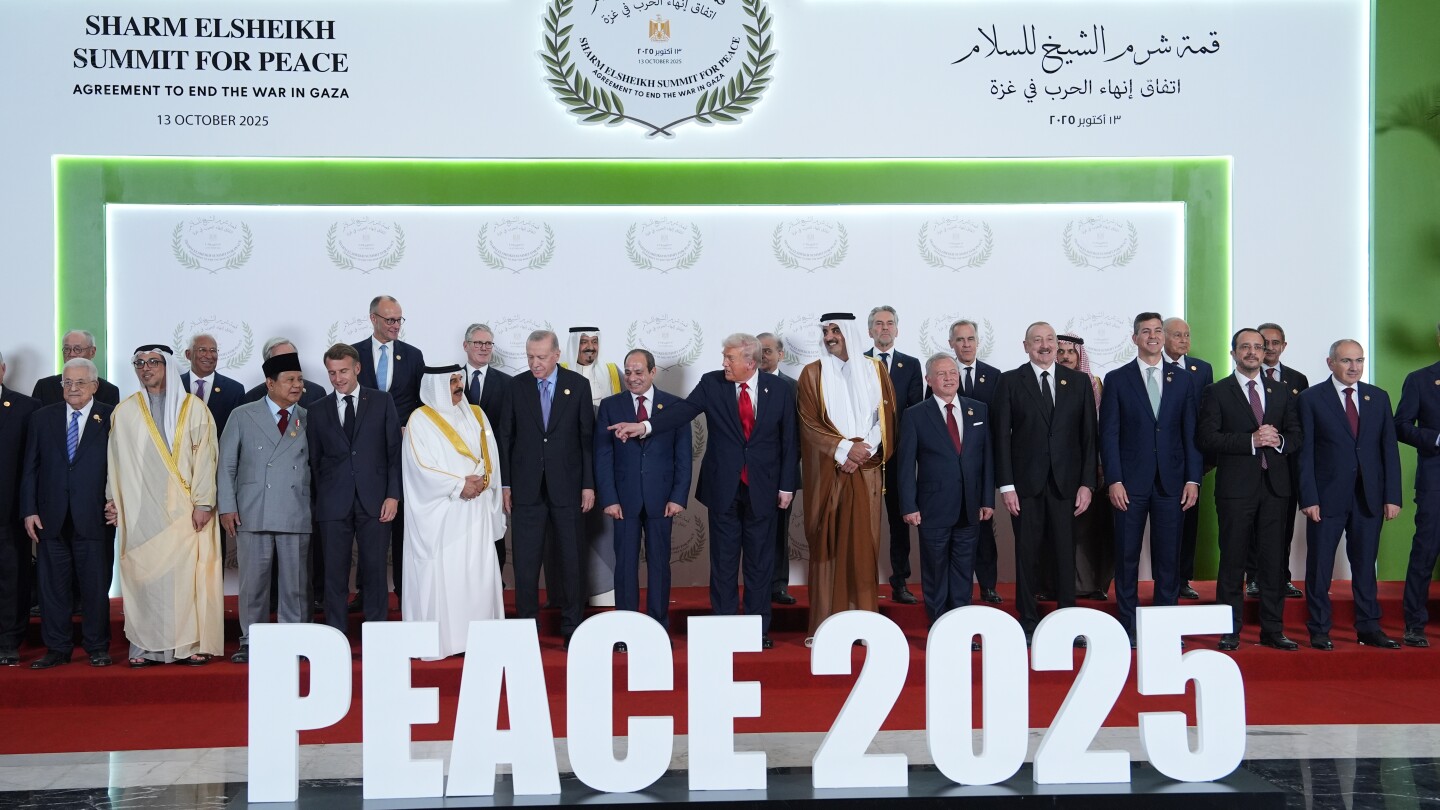
In a striking display of U.S. diplomatic dominance, President Donald Trump recently took center stage in Egypt to announce a U.S.-brokered ceasefire between Israel and Hamas. The scene, with world leaders standing behind him, underscored Europe’s waning influence in global diplomacy. Trump’s ‘America First’ approach has effectively sidelined European allies, leaving them struggling to shape his policies on critical issues like the Ukraine war and the Gaza conflict. Geopolitical expert Lindsay Newman noted that Trump’s foreign policy is largely defined by his personal agenda, leaving little room for European input. Despite mixed results, European leaders have attempted to influence Trump’s stance on Ukraine, with limited success. Trump’s recent sanctions on Russia’s oil and gas industry, while significant, appeared more motivated by frustration with Russian President Vladimir Putin than by European lobbying. Meanwhile, Europe’s role in the Israel-Hamas ceasefire has been minimal, with Trump focusing on Middle Eastern allies like Egypt and Qatar. The ceasefire has temporarily muted European criticism of Israel, offering a brief respite in U.S.-Europe tensions. While Europe has made some progress in forging a unified stance toward Trump, its influence remains limited. However, Trump’s threats to NATO and global tariffs have spurred European nations to increase military spending and strengthen intra-European ties. Kathleen Burk, a historian, suggested that Europe’s unity could still sway Trump, who may recognize the value of allies over adversaries.
-
The new shepherds of Spain: African migrants take up a neglected rural trade
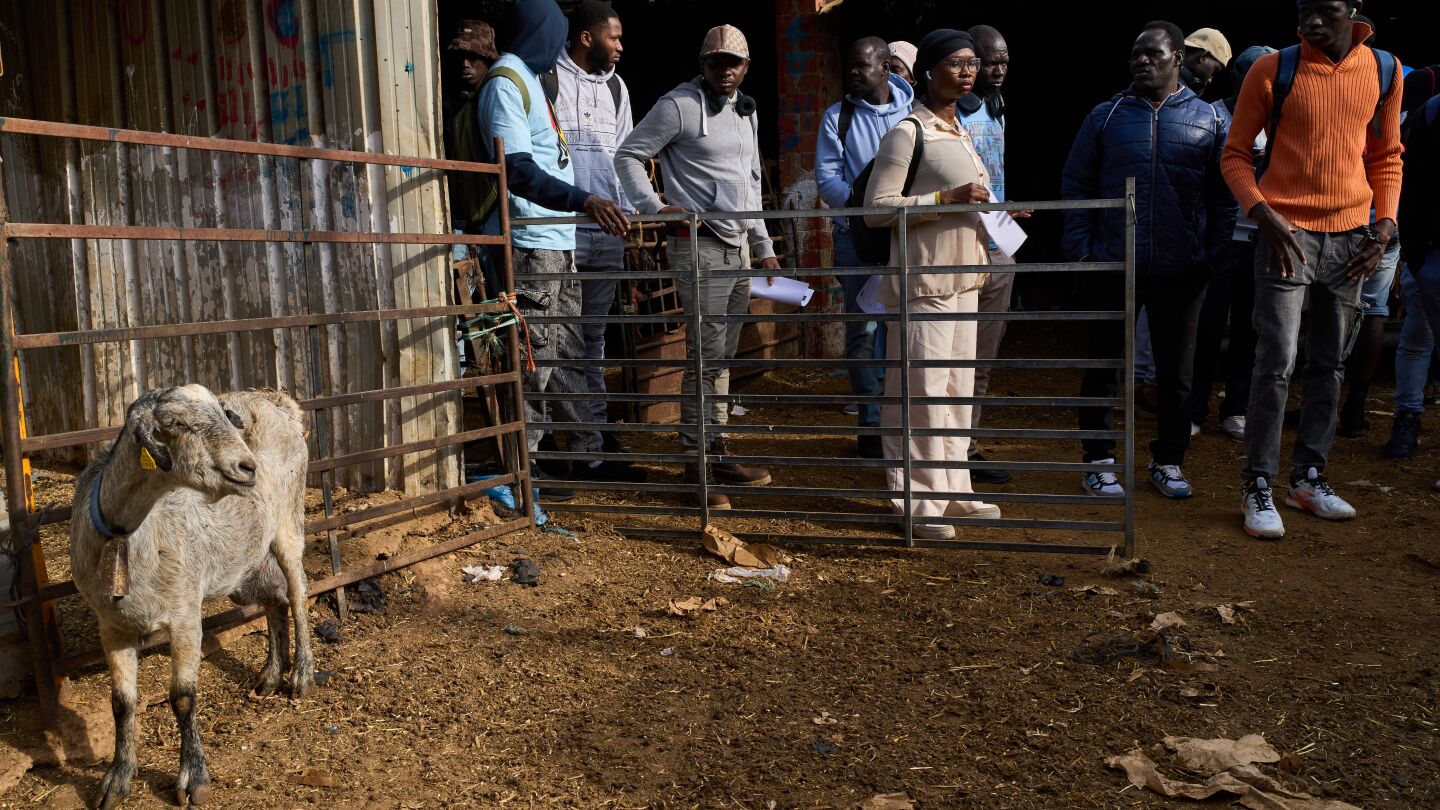
In the sun-drenched plains of Castile-La Mancha, Spain, Osam Abdulmumen, a 25-year-old migrant from Sudan, herds 400 sheep on a centuries-old farm in the village of Los Cortijos. This pastoral scene, reminiscent of the region’s literary fame in “Don Quixote,” masks a deeper crisis: rural depopulation has left traditional shepherding jobs unfilled, a role Spaniards increasingly shun. To address this, a government program is training migrants like Abdulmumen—many from Africa, Venezuela, and Afghanistan—to sustain the region’s prized sheep’s milk cheese industry.
Abdulmumen, who fled violence in Sudan, now lives in a modest apartment in Los Cortijos, dreaming of sending money home to his family. His journey to Spain was arduous, spanning Egypt, Tunisia, Morocco, and finally Ceuta, a Spanish enclave, where he sought asylum. Today, he finds solace in the tranquility of rural life, earning €1,300 monthly, slightly above Spain’s minimum wage.
The program, funded by the regional government, has trained 460 migrants since 2022, with 51 now employed as shepherds. Sharifa Issah, a 27-year-old from Ghana, is among them, drawn to the work due to her experience with animals back home. The training, held near Toledo, covers the basics of shepherding over five days, preparing migrants for roles on farms, slaughterhouses, and olive groves.
Álvaro Esteban, a fifth-generation farmer, returned to Los Cortijos after years away, modernizing his family’s farm with drones and cheese production. He acknowledges that without migrant labor, many farms would face closure within a decade. “Most businesses won’t have successors,” he laments, highlighting the sector’s neglect.
Abdulmumen’s story is emblematic of a broader trend: migrants filling critical gaps in Spain’s rural economy, ensuring the survival of traditions and livelihoods in a region grappling with an aging population and urban migration.
-

UK police hunt for an imprisoned asylum-seeker who was released in error
In a shocking turn of events, Hadush Gerberslasie Kebatu, an Ethiopian asylum-seeker convicted of sexually assaulting a 14-year-old girl, was mistakenly released from a British prison on Friday. The incident has triggered an urgent police search and reignited tensions over migration policies in the UK. Kebatu, 38, was sentenced to 12 months in prison last month for multiple offenses, including sexual assault and harassment. His case had previously fueled widespread anti-migrant protests across the country during the summer. British Prime Minister Keir Starmer expressed outrage, calling the release ‘totally unacceptable’ and vowing to ensure Kebatu is apprehended and deported. Essex Police reported that Kebatu was seen boarding a train in Chelmsford after his erroneous release, prompting an immediate manhunt. The Prison Service has launched an investigation, and a prison officer has been suspended pending the inquiry. Aaron Stow, president of the Criminal Justice Workers’ Union, condemned the incident as a ‘profound failure of duty’ and a betrayal of justice. Kebatu’s arrest and trial had previously sparked protests outside the Bell Hotel in Epping, where he was housed alongside other migrants. The case has highlighted ongoing tensions over the UK’s handling of unauthorized migration, particularly the use of hotels to accommodate asylum-seekers. Critics argue that this policy is costly and exacerbates community tensions, leaving migrants feeling targeted. Kebatu’s lawyer stated that his client wishes to be deported after serving his sentence.
-
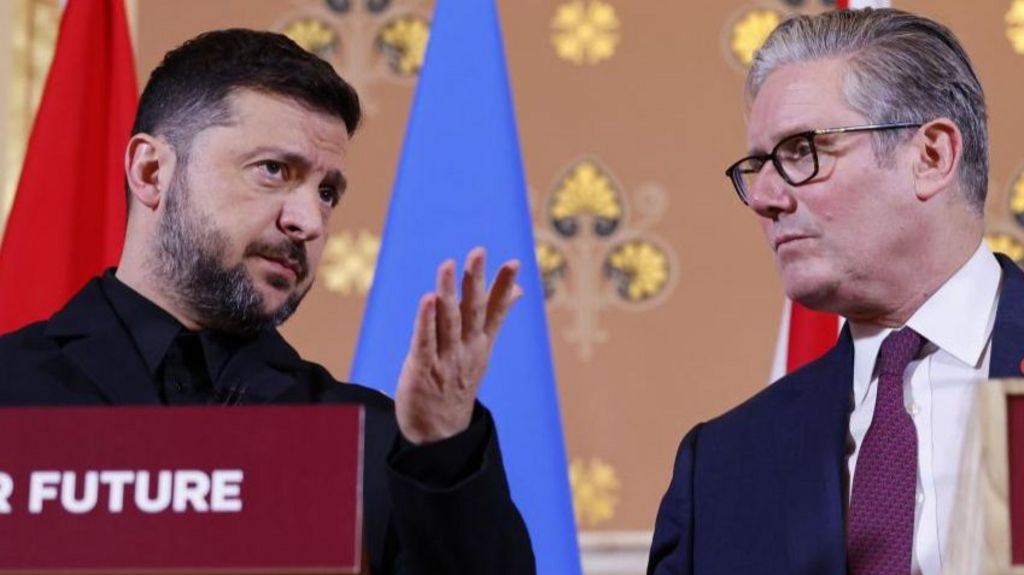
Ukraine allies pledge to take Russian oil and gas off global market
In a significant move to intensify pressure on Russia, more than 20 nations supporting Ukraine have vowed to remove Russian oil and gas from the global market. The decision was announced during a summit in London, hosted by UK Prime Minister Sir Keir Starmer, who emphasized the coalition’s commitment to ‘choke off funding for Russia’s war machine.’ The UK and US recently imposed sanctions on Russia’s two largest oil companies, while the EU targeted Moscow’s liquefied natural gas (LNG) exports. Ukrainian President Volodymyr Zelensky, present at the summit, reiterated that sustained pressure on Russia is essential to ending the conflict. However, the summit did not result in announcements regarding long-range missile deliveries to Ukraine, a key request from Kyiv. Zelensky has long advocated for advanced missile systems, such as US-made Tomahawks, to strike strategic Russian military targets, including oil refineries and weapons depots. However, US President Donald Trump recently indicated reluctance to supply such weapons. Russian President Vladimir Putin issued a stark warning, stating that any use of such weapons against Russian territory would provoke an ‘overwhelming’ response. The London summit concluded with a joint plan to support Ukraine, including targeting Russia’s sovereign assets to unlock billions for Ukraine’s defense. EU leaders also pledged financial support for Ukraine over the next two years but stopped short of agreeing to use €140 billion in frozen Russian assets. The coalition further committed to bolstering Ukraine’s air defenses amid relentless Russian air strikes on civilian and energy infrastructure. Despite these pledges, the lack of concrete measures left some observers disappointed. Ukrainian civilians, meanwhile, expressed concerns over daily hardships, including power outages and water shortages, exacerbated by Russian attacks. The summit underscored the international community’s resolve to support Ukraine but highlighted the challenges in achieving a decisive end to the war.
-

Inspector Clouseau? The mystery man in an AP photo after the Louvre jewel heist creates a buzz
In the aftermath of a daring daylight robbery at the Louvre Museum in Paris, Associated Press photographer Thibault Camus captured an intriguing image that has since captivated the internet. The photo, taken shortly after the theft of the crown jewels, shows a sharply dressed man walking past uniformed police officers who had sealed off the museum. While Camus initially dismissed the shot as unremarkable due to an obstructed foreground, the image quickly gained traction online. Social media users speculated that the well-dressed man, clad in a trench coat, jacket, tie, and fedora, was a French detective investigating the high-profile heist. Some even likened him to the iconic Inspector Clouseau from the ‘Pink Panther’ films. However, Camus clarified that the man was simply a passerby evacuating the area. The Paris prosecutor’s office, when questioned, playfully declined to confirm or deny the man’s identity, adding to the intrigue. The photo, which has garnered millions of views, continues to fuel speculation and fascination.
-
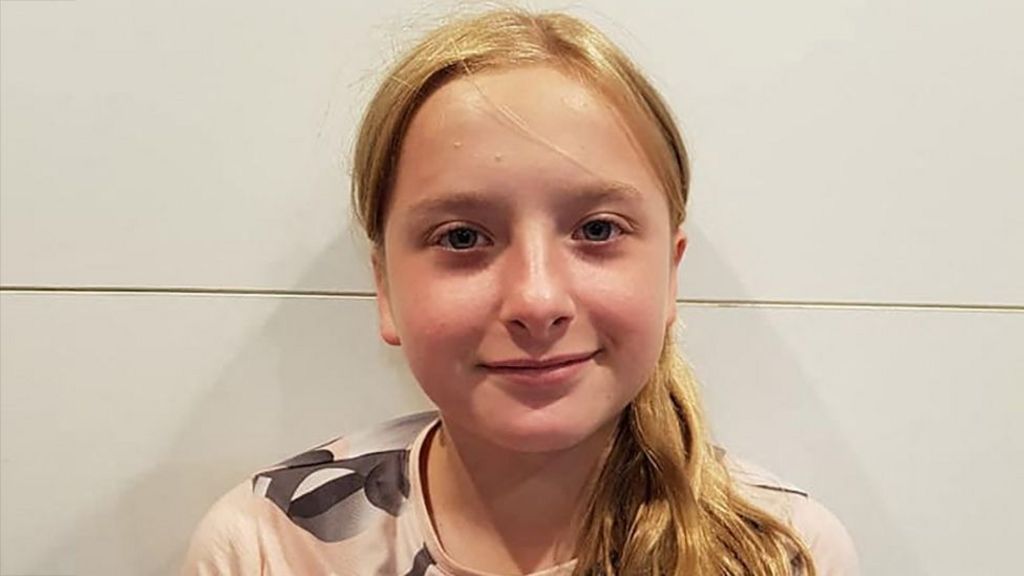
Woman gets rare whole-life sentence for murder of French schoolgirl
In a landmark ruling that has sent shockwaves across France, Dahbia Benkired, a 27-year-old Algerian immigrant, has been sentenced to a rare whole-life term for the rape and murder of 12-year-old Lola Daviet in Paris. This verdict marks the first time a woman has received such a severe penalty in the country. The case, which unfolded in October 2022, saw Lola’s body discovered in a plastic storage box in the courtyard of her family’s residence in northeastern Paris. Benkired, who was under orders to leave France, was found to exhibit ‘psychopathic’ traits by psychiatric experts, though she was deemed legally sane. The trial, presided over by a panel of three judges and six jurors, concluded with the imposition of the harshest possible sentence, a decision that underscores the gravity of the crime. Lola’s mother, Delphine Daviet, and her brother, Thibault, were present in court to hear the verdict, while her father, Johan Daviet, passed away in 2024. The case has been politicized by right-wing and far-right factions, who have used it to fuel debates on immigration and law enforcement. Benkired’s plea for forgiveness during the trial did little to sway the court, which emphasized the irreversibility of her actions and the absence of any viable treatment for her personality disorder.