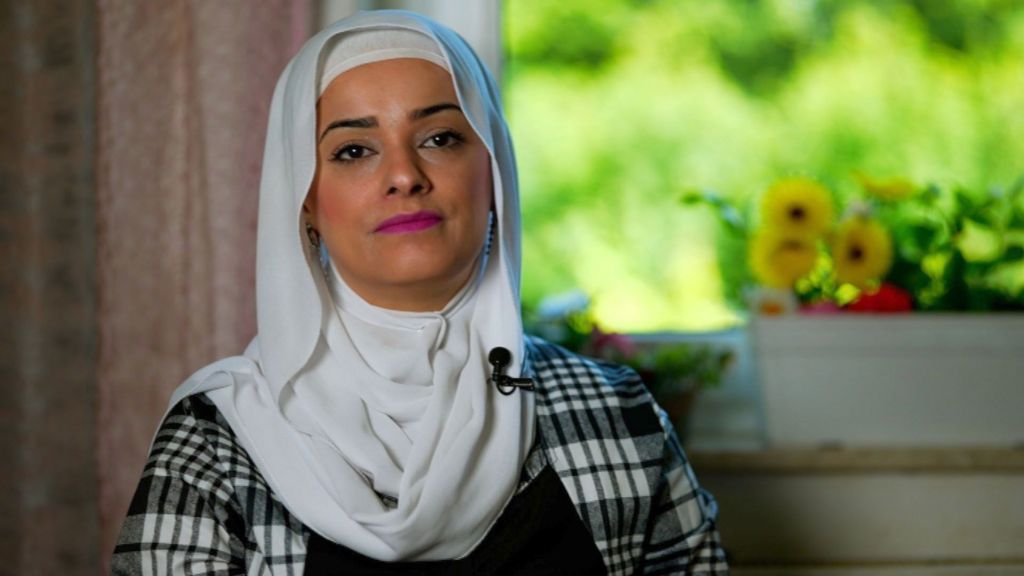
Sadettin Karagoz, the founder of a Turkish charity, has been arrested following allegations of sexual exploitation of vulnerable women seeking aid. The accusations, uncovered by a BBC investigation, reveal a disturbing pattern of abuse within the organization, which was initially seen as a beacon of hope for Syrian refugees in Ankara. Karagoz denies all charges, claiming his charity has helped over 37,000 people and that the allegations are baseless. However, multiple women have come forward with harrowing accounts of sexual assault and harassment, painting a starkly different picture. The charity, known as the Hope Charity Store, was established in 2014 and has been widely recognized for its humanitarian efforts, even receiving a local newspaper award in 2020. Despite its public acclaim, internal testimonies suggest a darker reality. Three women, including a Syrian refugee named Madina, have accused Karagoz of sexual assault, with seven others corroborating their stories. The victims, fearful of stigma and deportation, initially remained silent, but the BBC’s investigation has spurred legal action. Karagoz, a retired bank worker, has previously faced similar accusations in 2019 and 2025, but insufficient evidence led to dropped charges. This time, however, two additional women have testified, resulting in his arrest. Karagoz has cited health issues, including the removal of a testicle in 2016, as evidence of his inability to engage in sexual activity, but medical experts dispute this claim. The case highlights the vulnerability of refugee women and the systemic challenges in addressing sexual violence in Turkey.
标签: Europe
欧洲
-
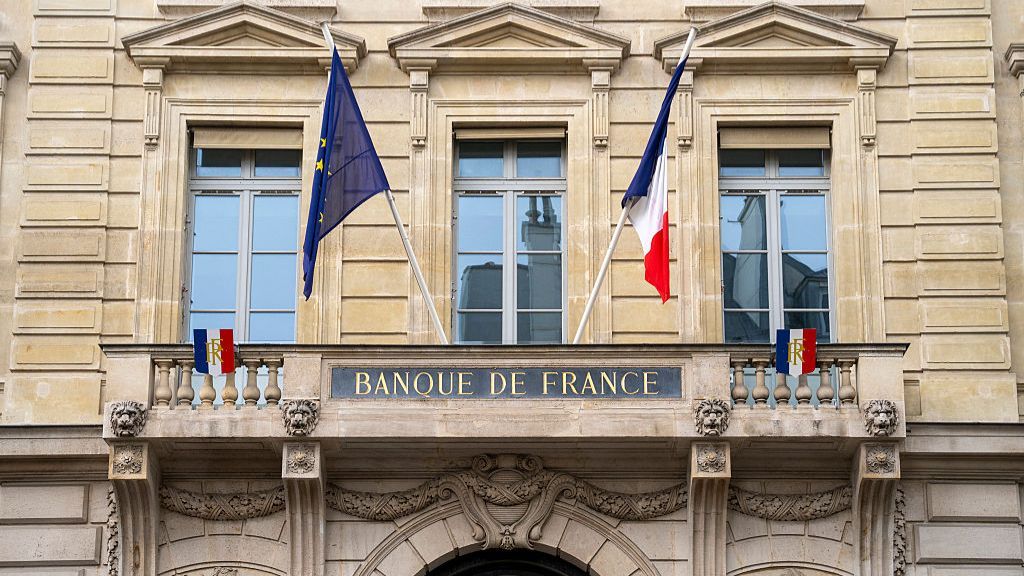
Louvre moves jewels to ultra-secure Bank of France vault after heist
In the wake of a daring daylight heist that exposed significant security vulnerabilities, the Louvre Museum has relocated some of its most valuable jewels to the Bank of France. The transfer, overseen by a secret police escort on Friday, moved the treasures to a highly secure vault located 26 meters below the Bank’s headquarters in central Paris. This vault, known as the “Souterraine,” houses 90% of France’s gold reserves, Leonardo Da Vinci’s notebooks, and other national treasures, with an estimated total value of €600 million (£520 million).
The Souterraine is designed to withstand all forms of attack, featuring a 50cm-thick, seven-tonne flame-resistant concrete door reinforced with steel, and a 35-tonne rotating concrete turret that prevents forced entry. This move comes after masked thieves used an angle grinder to breach a reinforced window in the Louvre’s Gallery of Apollo last Sunday, making off with treasures worth €88 million (£77 million), including a necklace belonging to Napoleon’s wife, Empress Marie-Louise, and a diadem of Napoleon III’s wife, Empress Eugenie.
Despite the swift action by the thieves, who used a mechanical ladder on a lorry to access a first-floor balcony, two of the stolen items, including Empress Eugenie’s Crown, were later found near the museum. French Interior Minister Laurent Nunez expressed confidence that the perpetrators would be apprehended. However, Louvre director Laurence des Cars highlighted the museum’s weak and aging infrastructure, revealing that the sole security camera monitoring the exterior wall where the break-in occurred was facing the wrong direction.
-
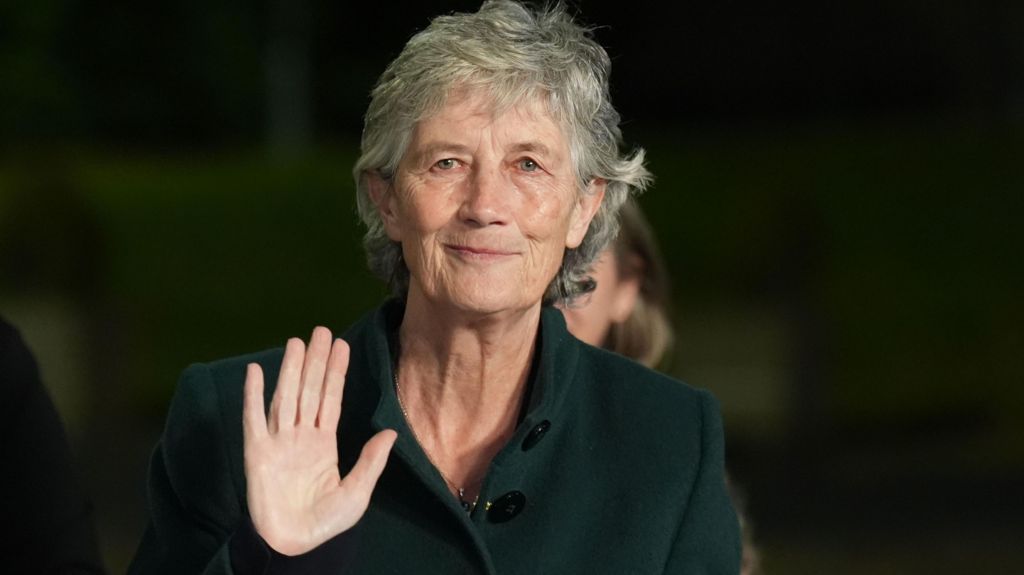
How the anti-establishment candidate won the Irish presidency
Independent left-wing politician Catherine Connolly has been elected as Ireland’s 10th president, securing a decisive victory over her rival Heather Humphreys. Connolly, a seasoned parliamentarian and former deputy speaker of the Dáil, has represented the Galway West constituency since 2016. Her campaign, described as a ‘movement,’ garnered significant support from major left-wing opposition parties, including Sinn Féin, the Irish Labour Party, and the Social Democrats. Despite being seen as an anti-establishment figure, Connolly’s composed debating style and effective social media strategy resonated strongly with younger voters, including a viral moment showcasing her athleticism. Her victory marks a shift in Ireland’s political landscape, with her outspoken views on Palestine, criticism of NATO, and advocacy for a United Ireland drawing both praise and scrutiny. Connolly has pledged to use her presidency to promote peace, neutrality, and climate action, while also returning a portion of her €350,000 salary to community projects. Her election signals a new chapter for Ireland, as she vows to be an inclusive leader who listens and reflects the aspirations of the Irish people.
-
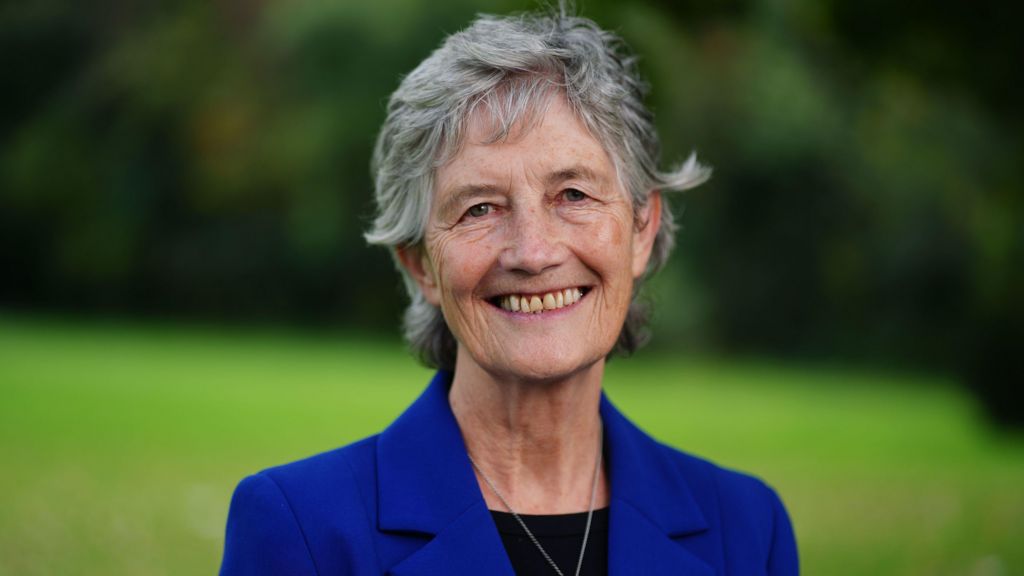
Who is Catherine Connolly?
Catherine Connolly, a prominent figure in Irish politics, has emerged as a formidable candidate in the race for Ireland’s presidency. Her journey, shaped by a childhood in a family of 14 children, has instilled in her a deep sense of integrity and resilience. Born and raised in a social housing estate in Galway, Connolly learned the value of diverse perspectives and the importance of standing against the consensus from an early age. Her mother’s sudden death when she was just nine years old left her father, a plasterer, to raise the family with the help of her older sisters. This early experience of hardship and community support profoundly influenced her worldview and political aspirations. Connolly’s career has been marked by a commitment to social justice, particularly in addressing Ireland’s housing crisis, which she describes as the ‘defining social crisis of our time.’ After serving 17 years as a councillor in Galway, including a term as mayor, she made history in 2020 by becoming the first woman elected to chair debates in the Dáil (Irish Parliament) as Leas-Cheann Comhairle (Deputy Speaker). Her presidential campaign has garnered support from left-leaning opposition parties, including Sinn Féin, the Social Democrats, and People Before Profit. Connolly, a passionate advocate for peace and Irish unity, has pledged to use her presidency to be a ‘voice for peace’ in an increasingly uncertain world. Despite facing criticism over her past associations and decisions, she remains steadfast in her commitment to integrity and honesty, values she attributes to her upbringing. As the campaign unfolds, Connolly’s story of resilience and dedication continues to resonate with voters across Ireland.
-
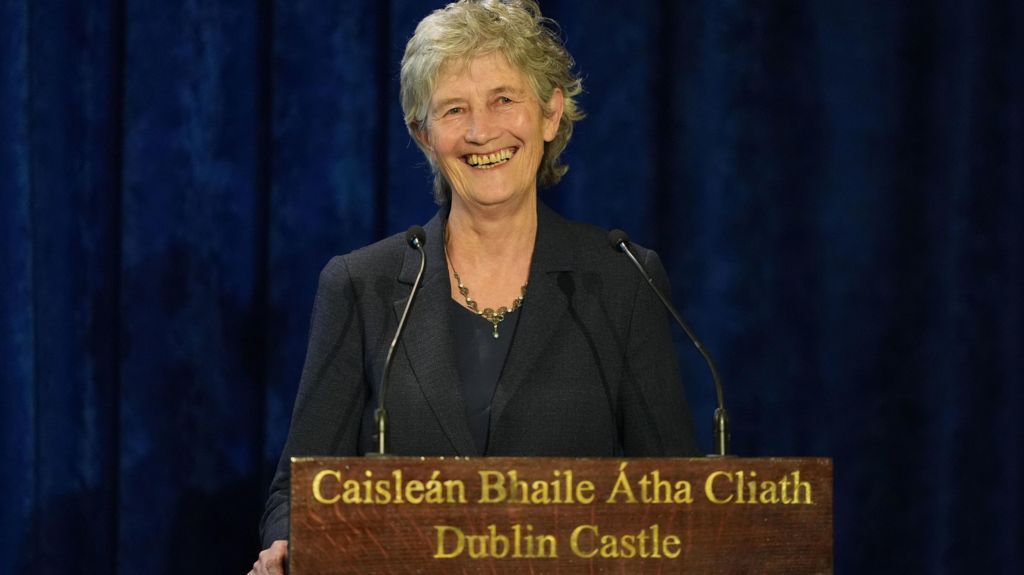
Connolly declared president of Ireland after landslide win
Catherine Connolly has been elected as the 10th President of Ireland, securing a historic landslide victory in the presidential election. The independent candidate, backed by major left-wing parties, triumphed over Fine Gael’s Heather Humphreys, who conceded defeat early in the counting process. The official declaration was made at Dublin Castle, where Connolly delivered her acceptance speech, vowing to be “an inclusive president for all.”
Connolly, a 68-year-old from Galway, has been a member of the Irish parliament (TD) since 2016 and brings a diverse professional background as a psychologist and barrister. She succeeds Michael D. Higgins, who has completed the maximum two terms in office. Connolly secured an unprecedented 914,143 first preference votes, accounting for 63% of the total—the highest in Irish presidential election history.
In her speech, delivered first in Irish and then in English, Connolly emphasized her commitment to being a president who listens, reflects, and speaks when necessary. She pledged to advocate for peace, uphold Ireland’s policy of neutrality, address the existential threat of climate change, and recognize the efforts of people across the nation.
Heather Humphreys, who won 29% of first preference votes, congratulated Connolly and expressed confidence in her ability to serve as a president for all. Fianna Fáil’s Jim Gavin, who withdrew from the race but remained on the ballot, secured 7% of the votes. The election also saw a record 213,738 spoiled votes and a turnout of 46%.
The Irish presidency, while largely ceremonial, holds significant influence as the head of state. The president represents Ireland internationally, plays a central role in national events, and ensures adherence to the constitution. Connolly’s election marks a new chapter in Irish politics, with her progressive vision set to shape the nation’s future.
-
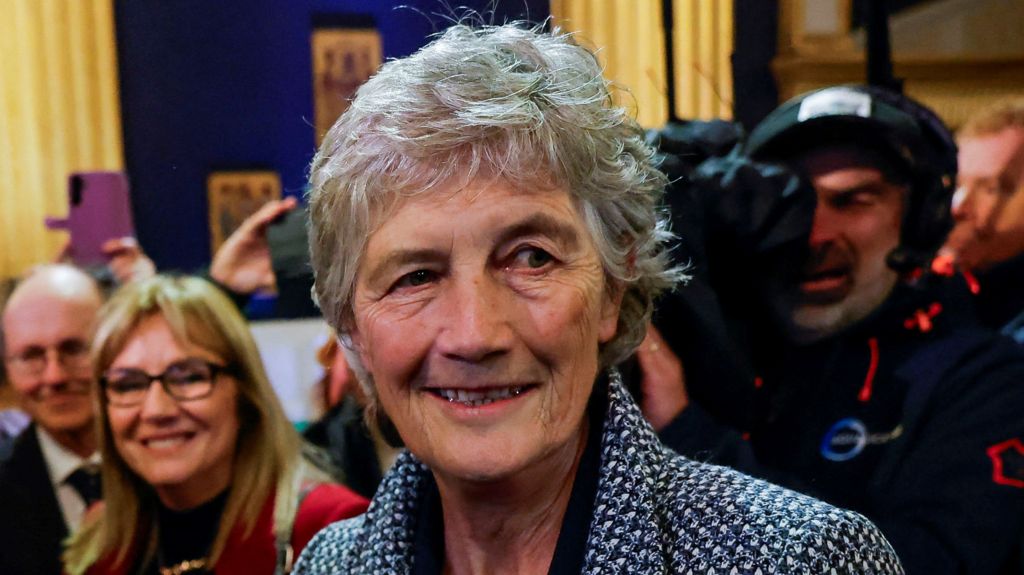
Humphreys congratulates Connolly in Irish presidential election
Catherine Connolly is poised to become the 10th President of Ireland, following a landslide victory in the presidential election. Early tallies from across the country indicate a decisive win for the independent candidate, who is backed by major left-wing parties including Sinn Féin, Labour, the Social Democrats, People Before Profit, and the Greens. Connolly, a 68-year-old former psychologist and barrister, expressed her delight at the results from the count center in her home county of Galway. Her opponent, Fine Gael’s Heather Humphreys, acknowledged the strong support she received in her home constituency but also highlighted the challenges of the campaign, including sectarian abuse directed at her family. The election saw an unprecedented number of spoiled votes, many containing anti-government messages. Despite this, Connolly’s victory is seen as a significant moment in Irish politics, with leaders from across the political spectrum congratulating her on her win. The official result is expected to be announced at Dublin Castle later today.
-
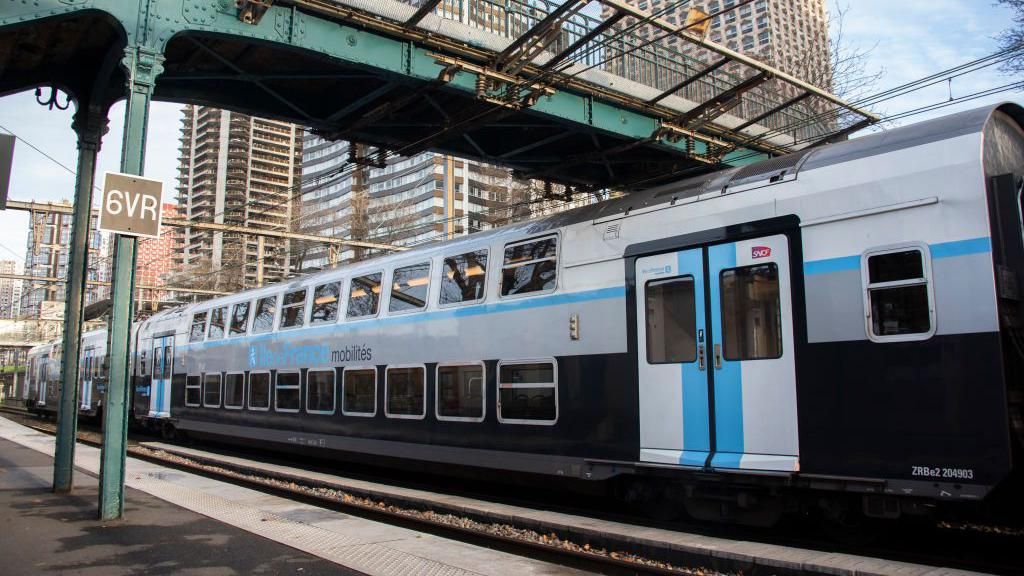
Man arrested after viral video of alleged rape attempt on Paris train
A suspect has been apprehended following the circulation of a viral video that allegedly captures an attempted rape on a train near Paris, according to local media reports. The incident, which occurred earlier this month, involved Jhordana Dias, a 26-year-old Brazilian national. Dias recounted to Le Parisien newspaper that the man boarded the train, physically assaulted her, and attempted to remove her underwear. The situation escalated when another passenger, alerted by Dias’s screams, began recording the incident on her phone. The footage shows the suspect fleeing as the train arrives at a station.
The arrest was made on Friday evening by transport police in Mantes-la-Jolie, located northwest of Paris. Investigators traced the suspect to this location, though the exact method remains unclear. At the time of his arrest, the suspect was not carrying any identification but claimed to be a 26-year-old Egyptian national. He is currently in custody.
The alleged attack took place on October 15 between the Choisy-le-Roi and Villeneuve-le-Roi train stations, southeast of Paris. The video depicts a man dressed in a black tracksuit and cap on the train. Amidst the sound of a woman’s cries, the individual recording the incident can be heard instructing the man to ‘stay there’ as he appears to approach her. The train then arrives at a station, and the man exits, fleeing down the platform.
The woman who filmed the incident, identified only as Marguerite in French media, has been widely praised for potentially preventing a more severe assault on Dias. Dias, who does not speak French, reportedly filed a police complaint in Choisy-le-Roi with the assistance of her brother, who translated her testimony.
The video has been extensively shared across news outlets and social media, prompting numerous women to recount their own experiences of harassment on public transport in France. Additionally, two other women have come forward to Le Parisian, alleging that they were also victims of the same man.
This incident has reignited discussions about women’s safety in France, highlighting the ongoing issue of sexual violence in public spaces.
-
Why the time difference between the US and Europe will be one hour shorter this week
Every October, a peculiar phenomenon disrupts the schedules of individuals and organizations across the Atlantic. For one week, Europe and the United States fall out of sync as they transition from daylight saving time (DST) to standard time. This annual shift, rooted in historical and legislative differences, creates a temporary one-hour reduction in the usual time difference between regions like London and New York, leading to confusion and logistical challenges for international meetings and communications.
-
Early tallies suggest Catherine Connolly is leading candidate in Ireland’s presidential election
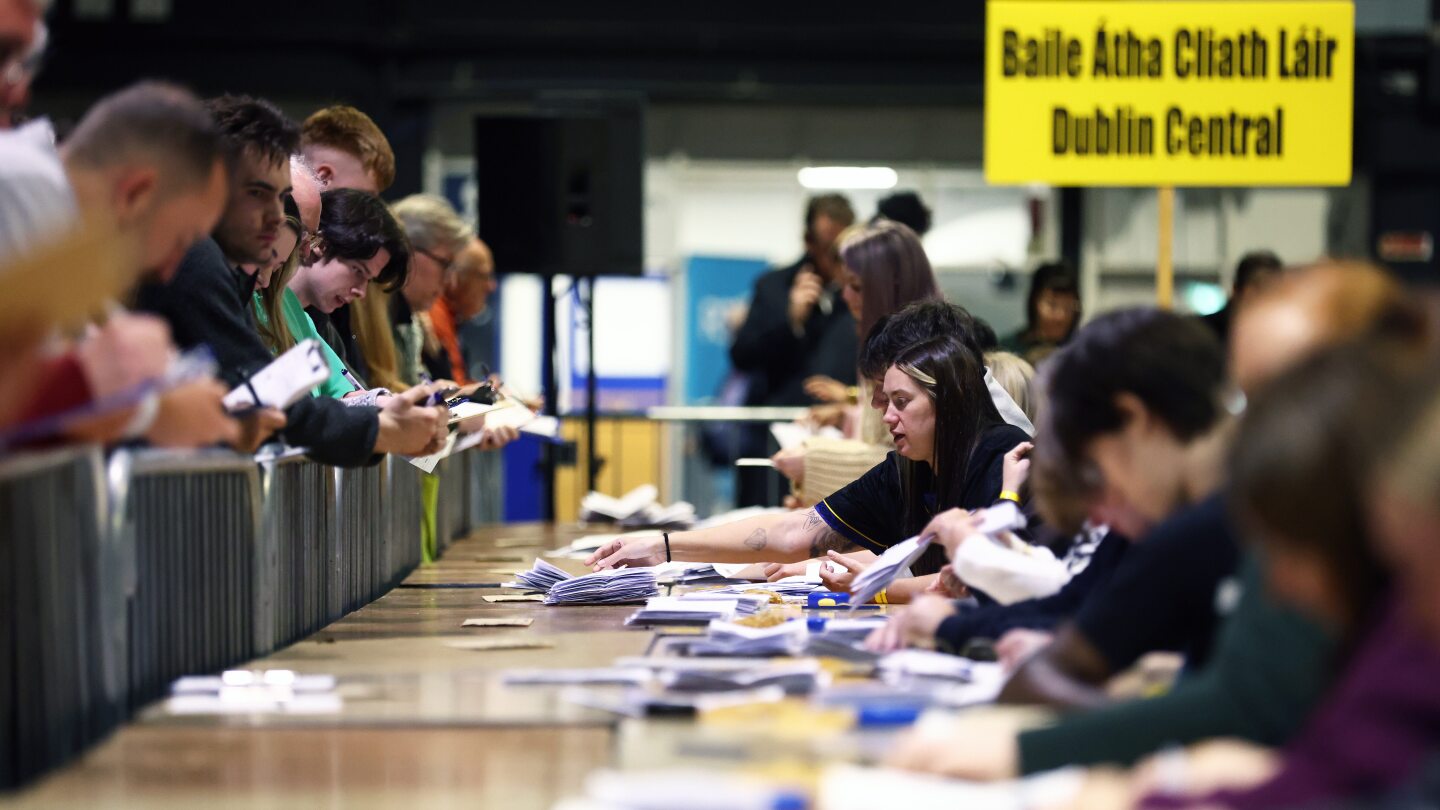
Ireland’s presidential election reached a pivotal moment on Saturday as vote counting commenced, with early indications pointing to a substantial lead for independent left-wing candidate Catherine Connolly. The election, which saw voters choosing between Connolly and center-right contender Heather Humphreys, is set to determine the country’s next president—a role that, while largely ceremonial, holds significant constitutional importance within the European Union member state. The race narrowed to these two candidates after Jim Gavin, the nominee from Prime Minister Micheál Martin’s Fianna Fáil party, withdrew three weeks prior due to a past financial dispute. Despite Gavin’s exit, his name remained on the ballot due to the timing of his withdrawal. Connolly, a 68-year-old former barrister and independent lawmaker since 2016, has gained support from several left-leaning parties, including Sinn Féin, the Labour Party, and the Social Democrats. Known for her vocal criticism of Israel’s actions in Gaza, Connolly has emerged as the frontrunner, outpacing Humphreys, a 64-year-old former cabinet minister from the center-right Fine Gael party, who has positioned herself as a pro-business, pro-EU unity candidate. The election also saw potential candidacies from figures like musician Bob Geldof and former mixed martial arts champion Conor McGregor, though neither secured sufficient backing to enter the race. The winner will succeed Michael D. Higgins, who has served the maximum two seven-year terms since 2011, becoming Ireland’s 10th president and the third woman to hold the office. As votes were counted manually across the country’s 43 electoral constituencies, the final result was expected to be announced later on Saturday.
-
American cardinal celebrates old Latin Mass in St. Peter’s in a sign of change
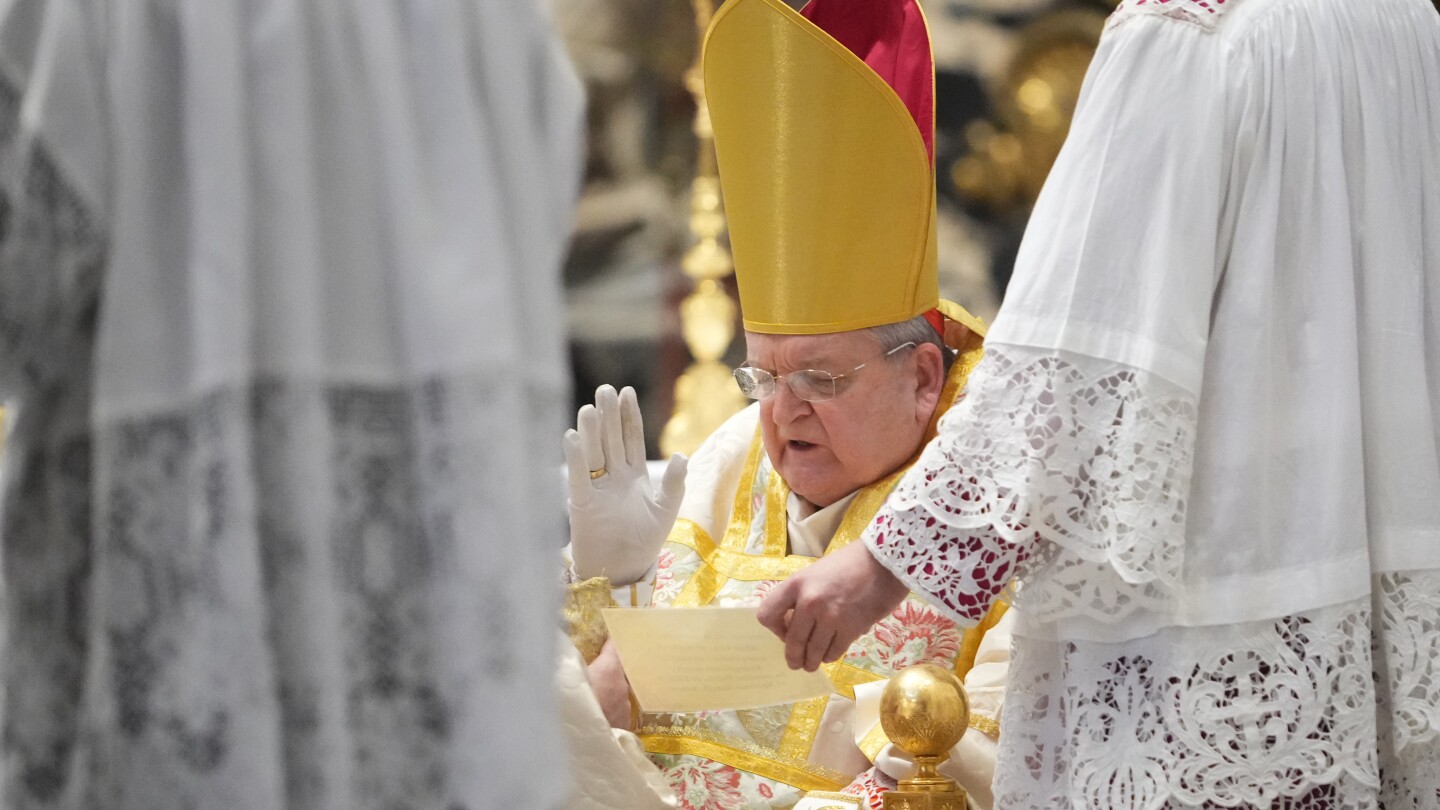
In a significant move that has reignited hope among traditionalist Catholics, Cardinal Raymond Burke celebrated a traditional Latin Mass in St. Peter’s Basilica on Saturday, with explicit permission from Pope Leo XIV. The event, attended by thousands of pilgrims, marked a stark contrast to the restrictions imposed by Pope Francis in 2021, which had left many traditionalists feeling marginalized. The Mass, rich in hymn, incense, and ritual, lasted over two hours and was presided over by Cardinal Burke, a prominent conservative figure in the Catholic Church. The ceremony, held in the heart of Vatican City, was seen as a tangible sign of Pope Leo’s potential openness to dialogue with traditionalist factions. This development comes after years of tension over the Latin Mass, which has been a point of contention since the Second Vatican Council in the 1960s. Pope Benedict XVI had relaxed restrictions on the ancient liturgy in 2007, but Francis reversed this decision, citing concerns over division within the Church. However, leaked Vatican documents in July 2025 suggested that most bishops had expressed satisfaction with the old Latin Mass, undermining Francis’ justification for the restrictions. Pope Leo, the first American pope, has emphasized unity and reconciliation since his election, raising hopes among traditionalists for a more inclusive approach. The event in St. Peter’s Basilica, attended by young families and pilgrims from around the world, underscored the enduring appeal of the ancient liturgy and its role in the spiritual lives of many Catholics.