标签: Europe

欧洲

  • Mariah Carey’s Olympic act prompts questions about possible lip-syncing and a curious teleprompter

    Mariah Carey’s Olympic act prompts questions about possible lip-syncing and a curious teleprompter

    MILAN — The 2026 Winter Olympics opening ceremony in Milan became an instant talking point worldwide following Mariah Carey’s controversial performance of the Italian classic “Nel Blu Dipinto di Blu” (commonly known as “Volare”). While the pop icon’s appearance was touted as a major achievement by organizers, it simultaneously ignited heated discussions across digital platforms regarding cultural authenticity and performance integrity.

    The American singer, despite her non-Italian heritage, delivered what ceremony director Maria Laura Iascone described as a “magic moment” during the 3.5-hour spectacle at San Siro stadium. Carey herself expressed excitement about performing in Italian via Instagram, calling it a “dream come true.” However, social media quickly became divided between admirers praising her vocal prowess and critics questioning why an Italian artist wasn’t selected for the honor.

    Scrutiny intensified when spectators noticed an extensive teleprompter providing phonetic guidance for the Italian lyrics (displaying “Voh-lah-reh” for “Volare” and “Nell blue Dee-peen-toe D blue” for the full title). Additionally, online commentators raised suspicions about potential lip-syncing, noting the singer’s occasionally stiff delivery in the foreign language.

    When pressed during Saturday’s press conference, organizers declined to directly address the lip-syncing allegations. Iascone acknowledged the teleprompter’s presence as necessary support for artists performing in non-native languages, emphasizing that pre-recorded backups are standard practice for globally televised events. She confirmed Carey performed without compensation and maintained that organizers were “satisfied with the result.

    The performance controversy contrasted with appearances by authentic Italian voices including tenor Andrea Bocelli, singer-songwriter Laura Pausini, and mezzosoprano Cecilia Bartoli. Carey’s personal connection to the song—she told Vogue it had long been a favorite—added complexity to the discussion about cultural representation versus artistic choice in international ceremonies.

  • Canada, the world’s historic curling powerhouse, is feeling the pressure at Cortina

    Canada, the world’s historic curling powerhouse, is feeling the pressure at Cortina

    CORTINA D’AMPEZZO, Italy — The Olympic curling arena witnessed a dramatic power shift on Saturday as Great Britain’s Bruce Mouat and Jennifer Dodds delivered a decisive blow to Canadian veterans Brett Gallant and Jocelyn Peterman. The match, characterized by Britain’s aggressive stone placement that systematically dismantled Canada’s strategic formations, represents more than just a round-robin defeat—it symbolizes the complete transformation of international curling competitiveness.

    This marked Canada’s second consecutive loss in the mixed doubles tournament, following an earlier defeat by the United States team. The back-to-back setbacks highlight the erosion of Canada’s historical dominance in a sport it once commanded. Olympic observers now recognize that the competitive landscape has undergone fundamental changes through recent Olympic cycles, with multiple nations developing world-class training programs.

    Devin Heroux, Canadian Broadcasting Corporation’s seasoned curling analyst, noted: “This outcome perfectly illustrates curling’s current global state. Canada long operated under the assumption that it produced the world’s finest curlers. The reality now is that not only has the international community caught up—they’ve arguably surpassed us.”

    Despite these losses, both teams remain likely to advance to the next round alongside the United States and Italy, with Britain now positioned strongly for qualification among the ten teams competing at the 2026 Milan Cortina Games.

    The British duo’s victory stems from years of dedicated training at Scotland’s National Curling Academy, established in 2017. Their partnership exemplifies the structured development programs that have produced formidable challengers to Canadian supremacy. Since the 2018 Pyeongchang Games—where Canada failed to medal in either four-person team event—the nation’s curling dominance has waned, managing only a single bronze across all disciplines in Beijing.

    Post-match discussions revealed another critical factor: rapidly changing ice conditions at Cortina’s curling center. Athletes noted significant alterations from previous days, with ice playing “up to two seconds faster”—a substantial variation that forced tactical adjustments. Gallant employed an automotive analogy: “It’s like taking a Honda Civic down the highway then jumping into a Ferrari.” He emphasized that while challenging, the conditions didn’t excuse the loss: “The team that adjusts better gains the advantage. They adapted quicker than we did.”

    His assessment was echoed by the victorious British pair. “We coped with it very well,” stated Dodds, while Mouat added: “We’re communicating effectively and now understand how the ice will behave for the remainder of the competition.”

    Heroux concluded that adaptation to Cortina’s volatile ice conditions would ultimately determine which team claims gold, marking a new era where flexibility and rapid adjustment have become as crucial as traditional curling skills.

  • Olympics opening ceremony in Milan was lacking snow, but tiny winter wonderland was on its sidelines

    Olympics opening ceremony in Milan was lacking snow, but tiny winter wonderland was on its sidelines

    While the Winter Olympics opening ceremony dazzled global audiences with its high-fashion athlete parade and Mariah Carey’s operatic performance, Milan’s unseasonably warm temperatures—hovering near 50°F (10°C)—created an ironic absence of natural snowfall during the winter sports celebration. This meteorological paradox led spectators to seek alternative snowy experiences at an unexpected venue: Slava’s Snowshow at Teatro Strehler.

    Russian performance artist Slava Polunin’s acclaimed production, running through the Olympics’ final day on February 22, transforms theaters into winter wonderlands using elaborate paper snowstorms. Since 1993, this wordless spectacle has captivated audiences across 60 countries with its unique blend of visual poetry and physical comedy.

    The current Olympic edition features updated improvisational elements reflecting Games atmosphere. During performances, clowns in vibrant green and yellow costumes interact playfully with audiences—swapping belongings, spraying water from umbrellas, and even mimicking phone calls about ongoing Olympic events. A humorous nod to athletic competition emerges when the iconic ‘Chariots of Fire’ theme accompanies slow-motion clown routines.

    For Polunin, 75, snow represents profound duality. Born in Siberia, he explains: ‘It can be immensely beautiful and incredibly dangerous.’ This emotional complexity permeates the show through moments like Polunin cradling an empty coat—a gesture simultaneously tender and lonely—amidst the joyful chaos of bouncing giant balloons and paper blizzards.

    Audience members like Paola Volpe, attending with children after first experiencing the show 15 years prior, appreciate the production’s timeless magic. Regular attendee Raquele Maggi describes it as ‘a dream… a little like magic’ that transcends language barriers through universal physical storytelling.

    The production’s silent narrative format aligns surprisingly with Olympic values of cross-cultural communication, offering spectators an alternative perspective on winter’s essence beyond athletic competition.

  • US wants Russia and Ukraine to end war by June, says Zelensky

    US wants Russia and Ukraine to end war by June, says Zelensky

    Amid escalating military aggression, diplomatic efforts to resolve the Ukraine conflict have entered a critical phase with the United States proposing direct negotiations between Ukrainian and Russian delegations in Miami. President Volodymyr Zelensky confirmed Ukraine’s participation in the proposed talks scheduled for next week, marking the first American-hosted peace initiative since the conflict began.

    The diplomatic development follows inconclusive US-mediated discussions in Abu Dhabi that concluded Friday without breakthrough on core contentious issues, particularly territorial concessions. Zelensky characterized the negotiations as addressing ‘difficult issues [that] remained difficult,’ while revealing Washington’s apparent urgency to reach settlement before June, potentially influenced by domestic political considerations.

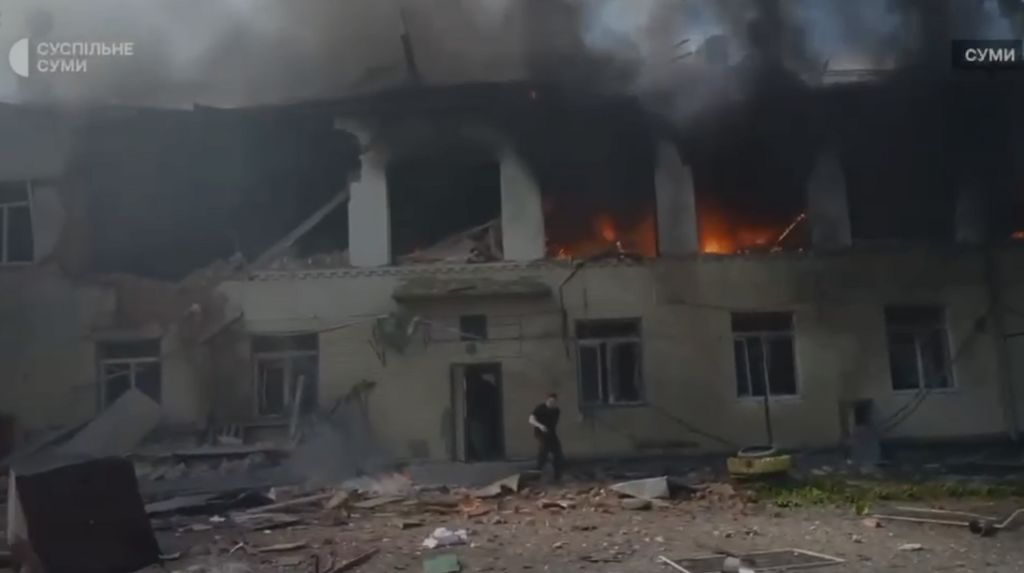
    Concurrently, Russia has intensified its bombardment campaign targeting Ukraine’s energy infrastructure, executing what energy company DTEK described as ‘the most powerful blow’ this year. Friday night’s coordinated assault involved over 400 drones and 40 missiles targeting critical power generation facilities and distribution substations across at least four regions.

    Energy Minister Denys Shmyhal reported severe damage to backbone grid components, prompting emergency power requests to Poland. The Dobrotvir and Burshtyn thermal plants in western regions sustained direct hits, leaving thousands without electricity amid freezing temperatures. This represents the tenth massive attack on DTEK facilities since October 2025, with cumulative attacks exceeding 220 incidents since the invasion began.

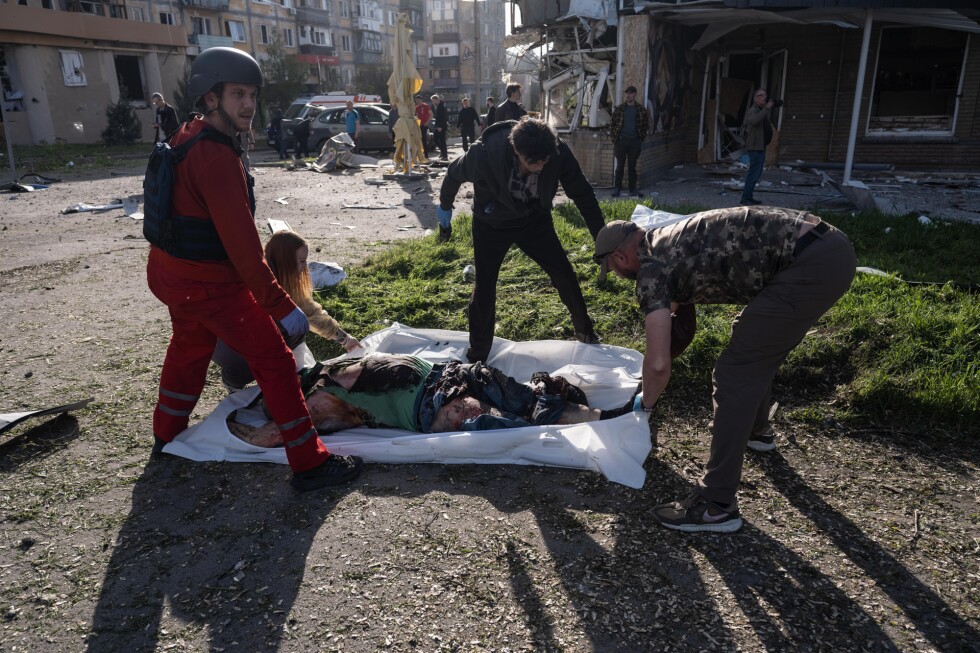
    Civilian impacts have been severe, with Kyiv residents resorting to metro station shelters and reporting inhumane conditions without heating or electricity. Regional authorities confirmed one fatality in Rivne, multiple injuries in Zaporizhzhia, and significant damage to residential and critical infrastructure. A separate drone strike ignited major warehouse fires in Yahotyn.

    Moscow justified resumed attacks after a week-long humanitarian pause requested by President Trump, with Foreign Minister Lavrov simultaneously accusing Ukraine of sabotaging negotiations through alleged assassinations of military officials. The conflict’s human cost continues mounting, with Zelensky acknowledging approximately 55,000 Ukrainian military fatalities and BBC verifying nearly 160,000 Russian combatant deaths.

  • Zelenskyy says US gave Ukraine and Russia a June deadline to reach agreement to end war

    Zelenskyy says US gave Ukraine and Russia a June deadline to reach agreement to end war

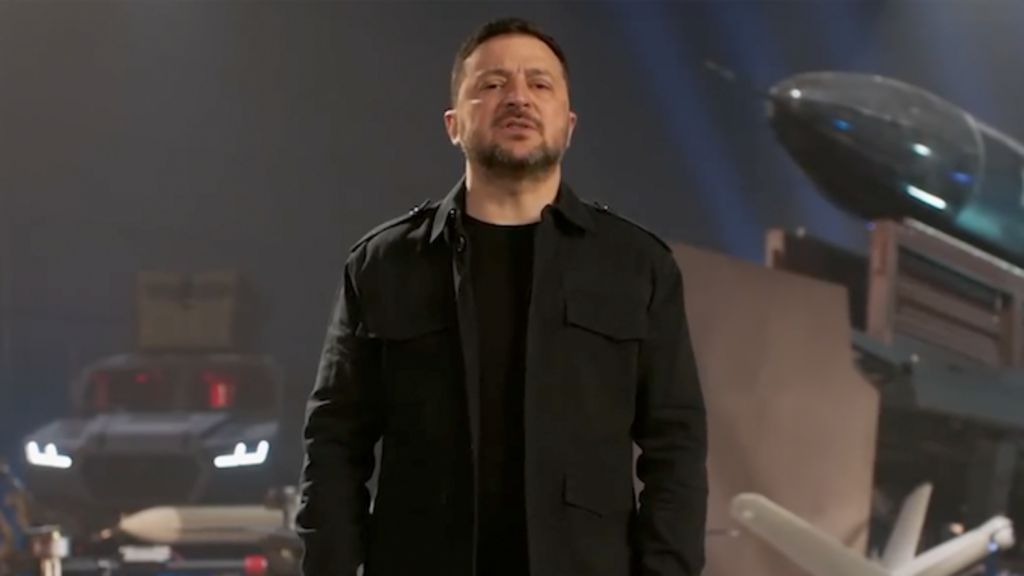
    KYIV, Ukraine – In a significant development toward resolving the protracted conflict, the United States has established a June deadline for Ukraine and Russia to negotiate a peace agreement, according to President Volodymyr Zelenskyy. The announcement comes as intensified Russian strikes on Ukrainian energy infrastructure have compelled nuclear power plants to drastically reduce their electricity output.

    Speaking to journalists on Friday under embargo until Saturday, Zelenskyy revealed that the Trump administration intends to exert diplomatic pressure on both nations should they fail to reach an accord by early summer. “The Americans are proposing the parties end the war by the beginning of this summer and will probably put pressure on the parties precisely according to this schedule,” Zelenskyy stated, adding that Washington seeks “a clear schedule of all events” toward conflict resolution.

    The diplomatic push includes plans for unprecedented trilateral negotiations scheduled for next week in Miami—marking the first such meeting on U.S. soil. Ukraine has confirmed its participation in these high-stakes talks.

    Meanwhile, military aggression continues unabated. Russian forces launched over 400 drones and approximately 40 missiles in overnight attacks targeting Ukraine’s energy grid, generation facilities, and distribution networks. Ukrenergo, the state energy transmission operator, confirmed this represents the second massive assault on energy infrastructure this year, resulting in nuclear power plants being forced to reduce output due to damaged high-voltage substations.

    The consequences have been severe: a significant power deficit has compelled authorities to extend hourly electricity outages across all Ukrainian regions, exacerbating humanitarian concerns during winter months.

    In parallel diplomatic channels, Russia presented the U.S. with a staggering $12 trillion economic proposal—dubbed the “Dmitriev package” after Russian envoy Kirill Dmitriev—which forms part of broader bilateral negotiations.

    The June deadline follows inconclusive trilateral talks in Abu Dhabi, where fundamental disagreements persist. Russia continues to demand Ukrainian withdrawal from Donbas—a condition Kyiv unequivocally rejects. Zelenskyy emphasized that “‘We stand where we stand’ is the fairest and most reliable model for a ceasefire today,” indicating that the most challenging topics would require leadership-level trilateral meetings.

    Additional sticking points include management of the Russian-occupied Zaporizhzhia nuclear plant and a U.S. compromise proposal to establish Donbas as a free economic zone—a concept Zelenskyy views with skepticism due to divergent interpretations.

    The U.S. has reiterated its commitment to monitoring ceasefire mechanisms, having previously proposed a ban on energy infrastructure strikes. While Ukraine expresses willingness to observe such pauses, Zelenskyy noted Russia violated a previous week-long cessation agreement after merely four days.

  • Sofia Goggia lights the cauldron in Cortina after helping Italy secure Olympic hosting rights

    Sofia Goggia lights the cauldron in Cortina after helping Italy secure Olympic hosting rights

    CORTINA D’AMPEZZO, Italy — Italian skiing champion Sofia Goggia, whose pivotal role in securing the 2026 Winter Olympics for Italy, delivered a symbolic culmination to Friday’s opening ceremony by lighting the Olympic cauldron in Cortina d’Ampezzo. The honor occurred simultaneously with retired Olympic legends Alberto Tomba and Deborah Compagnoni performing identical duties in Milan, creating a historic dual-city spectacle.

    Goggia’s selection as torchlighter carried profound significance given her instrumental involvement in Milan-Cortina’s successful bid. During the critical 2019 IOC voting session, Goggia and snowboarder Michela Moioli delivered a charismatic joint presentation that reportedly swayed nearly 100 committee members with their infectious enthusiasm. Their demonstration, which included a synchronized dab gesture, ultimately helped overcome Sweden’s competing candidacy through an exhibition of authentic Italian athletic spirit.

    The 2018 Olympic downhill gold medalist and 2022 Beijing silver medalist now prepares to compete in Sunday’s women’s downhill event on her home slope. Goggia maintains a complex relationship with the Cortina course, having secured four World Cup downhill victories here while simultaneously missing the 2021 world championships due to injury.

    The ceremony additionally featured defending World Cup champion Federica Brignone as one of Italy’s flag bearers, with Olympic curling champion Amos Mosaner physically elevating her during the athletes’ parade—a moment Brignone later remarked upon with humorous concern about her weight. The dual-city opening ceremony established a powerful visual narrative of Italian winter sports heritage bridging generations of athletic excellence.

  • Cheers for Team USA turn to jeers for Vance at Milan Cortina opening ceremony

    Cheers for Team USA turn to jeers for Vance at Milan Cortina opening ceremony

    MILAN — The opening ceremony of the Milan Cortina 2026 Winter Olympics presented a stark contrast in international reception for American representatives on Friday evening. While Team USA athletes received enthusiastic applause during the parade of nations, Vice President JD Vance encountered audible disapproval from sections of the crowd.

    Speedskater Erin Jackson, leading the American contingent as flag bearer, guided one of the final national delegations into Milan’s iconic San Siro stadium. The assembled spectators cheered warmly for the Olympians representing the United States.

    However, the atmosphere shifted noticeably when broadcast cameras focused on Vice President Vance and his wife Usha Vance in the VIP tribune. As the stadium screens displayed the second couple waving American flags, distinct sounds of jeering and whistling emerged from sections of the audience.

    This cool reception occurs against a backdrop of deteriorating international relations during the Trump administration, which has pursued an assertive foreign policy approach including controversial trade tariffs, military engagements in Venezuela, and even discussions about acquiring Greenland.

    The Israeli delegation similarly faced audible disapproval during their entrance, highlighting the political dimensions that occasionally surface during international sporting events.

    These Winter Games mark a historic organizational achievement as the most geographically dispersed in history. Athlete parades occurred simultaneously across four Italian locations: Milan, Cortina d’Ampezzo, Livigno, and Predazzo, spanning northern Italy’s vast mountainous regions.

  • Norway’s crown princess apologises after pressure over Epstein friendship

    Norway’s crown princess apologises after pressure over Epstein friendship

    Norway’s Crown Princess Mette-Marit has issued a profound public apology following revelations of her extensive three-year correspondence with convicted sex offender Jeffrey Epstein. The palace released an official statement expressing the royal’s deep regret for her association with the disgraced financier, acknowledging the damage caused to the Norwegian monarchy.

    Newly disclosed emails from 2011-2014, uncovered in recent U.S. Justice Department filings, reveal startling details about their relationship. The correspondence indicates the crown princess spent four days at Epstein’s Palm Beach residence while he was absent, and contains evidence she was aware of his criminal history. In one October 2011 message, she wrote: ‘Googled u after last email… Agree didn’t look too good,’ referencing Epstein’s 2008 prostitution conviction.

    The apology comes during an exceptionally challenging period for the royal family. Crown Princess Mette-Marits eldest son, Marius Borg Høiby, is currently facing a high-profile trial on 38 criminal charges including four counts of rape, all of which he denies. The 29-year-old, who is not a royal family member but was raised within the royal household, broke down in court this week while describing lifelong media harassment.

    Compounding these difficulties, the crown princess suffers from severe pulmonary fibrosis and may require a lung transplant. Crown Prince Haakon acknowledged the family’s multiple crises, stating his priority has been ‘to take care of the flock’ during this tumultuous period.

    The royal household faces mounting scrutiny as Princess Ingrid Alexandra, second in line to the throne, separately criticized media coverage on her private social media, denouncing ‘personal attacks’ without specifically referencing either controversy.

    The palace has declined further comment on either matter, maintaining that the crown princess needs time to ‘gather herself’ amid what it describes as a ‘very difficult situation.’

  • France urges Iran-backed groups to show restraint if US-Iran tensions escalate

    France urges Iran-backed groups to show restraint if US-Iran tensions escalate

    BEIRUT — French Foreign Minister Jean-Noël Barrot issued a critical appeal for restraint to Iranian-supported factions across the Middle East during his diplomatic tour through the region on Friday. Speaking in Beirut following high-level meetings with Lebanese officials, Barrot emphasized that Tehran-aligned groups must demonstrate “the greatest restraint” should regional tensions between Iran and the United States escalate further.

    The minister’s warning comes amid delicate indirect negotiations between Washington and Tehran in Oman regarding Iran’s nuclear program, with simultaneous concerns mounting about potential regional conflict. Barrot explicitly cautioned that military escalation “would profoundly destabilize the Near and Middle East” and represents a risk that must be avoided “at all cost.”

    Barrot’s regional diplomacy included prior stops in Syria and Iraq, reflecting France’s active engagement in Middle Eastern stability efforts. The French official concurrently addressed Lebanon’s complex security situation, discussing ongoing initiatives to disarm Hezbollah and plans for an upcoming international conference in France to support the Lebanese armed forces.

    The support conference, co-organized with the United States, Saudi Arabia, Qatar, and Egypt, aims to bolster Lebanon’s military capabilities as it expands its presence along the southern border with Israel following 14 months of hostilities between Israel and Hezbollah. This development occurs against the backdrop of Lebanon’s severe economic crisis that has significantly weakened state institutions, including the military.

    France maintains that regional stability serves the interests of all parties involved, including European nations with significant strategic interests in the area. Barrot’s statements reflect growing international concern about potential chain-reaction conflicts involving Iranian proxies in Iraq, Yemen, and Lebanon should U.S.-Iran tensions worsen.

  • Ukrainian mother’s joy after phone call with son she thought had been killed

    Ukrainian mother’s joy after phone call with son she thought had been killed

    In an extraordinary turn of events that defies all expectations of wartime tragedy, a Ukrainian soldier believed killed in action has returned alive after nearly four years of captivity. Nazar Daletskyi, whose family had held a funeral and buried what they believed were his remains in 2023, miraculously contacted his mother from Ukrainian territory following his release in a prisoner exchange with Russia.

    The emotional reunion began with a phone call that left the family in overwhelming disbelief and joy. Nataliya, Daletskyi’s mother, described the moment as emotionally overwhelming, questioning whether her son had all his limbs intact before declaring, ‘My golden child, I have been waiting for you so long.’ The family’s celebration was captured on video, showing cousin Roksolana screaming and jumping with euphoria at the impossible news.

    Daletskyi’s journey back to his family represents both a miracle and an administrative mystery. The 42-year-old experienced soldier had immediately returned to combat when Russia launched its full-scale invasion in 2022, having previously fought in the conflict since 2014. He went missing in action in May 2022, with the family receiving a mysterious Russian-language call suggesting his capture but providing no substantiating details.

    The tragedy deepened when authorities identified a badly burned body through DNA matching as Daletskyi’s remains in 2023, leading to a formal funeral and burial. The family’s grief turned to confusion in September 2024 when a newly released soldier reported seeing Daletskyi alive in captivity. This week, the confirmation came directly from Daletskyi himself in what constitutes one of the most remarkable survival stories of the Ukraine conflict.

    Authorities have launched an investigation into the mistaken identification that led to the funeral, while the family focuses on preparing for Daletskyi’s homecoming with his favorite homemade foods. The case highlights the complex reality of wartime disappearances in Ukraine, where approximately 70,000 people remain officially missing, most presumed to be soldiers either killed with unrecoverable bodies or held prisoner.

    For countless Ukrainian families awaiting news of missing loved ones, Daletskyi’s return offers a powerful symbol of hope against overwhelming odds.