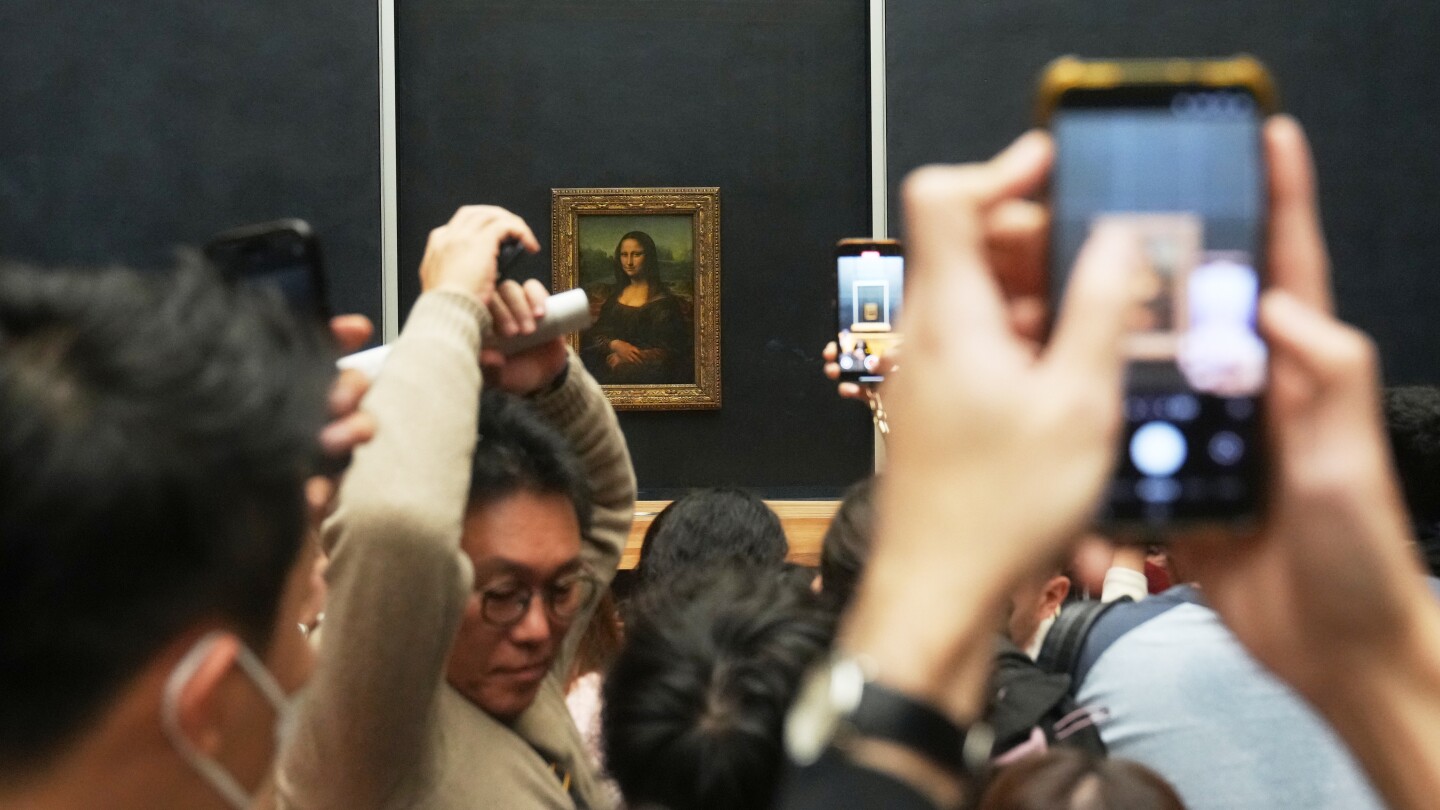
The recent robbery at the Louvre Museum in Paris has thrust France’s Crown Jewels into the global spotlight, an outcome no marketing campaign could achieve. While the nation mourns the breach of its national heritage, the crime has paradoxically elevated the stolen artifacts to celebrity status, reminiscent of how the theft of the Mona Lisa in 1911 transformed it into the world’s most famous artwork. The heist has captivated global media, with nightly newscasts from the U.S. to Asia broadcasting images of the Louvre’s Apollo Gallery and the missing jewels to millions. This surge of attention rivals, or even surpasses, the frenzy following Beyoncé and Jay-Z’s 2018 music video filmed at the museum. Among the treasures that escaped the thieves’ grasp is Empress Eugénie’s emerald-set crown, which may now become the gallery’s most talked-about relic. The Louvre reopened to maximum crowds just days after the robbery, despite the ongoing investigation and heightened security concerns. For France, the loss is not merely financial but a tear in the fabric of its national history. The jewels, which represent the transition from monarchy to modern France, are seen as chapters of the country’s past. Interior Minister Laurent Nuñez described the theft as an “immeasurable” heritage loss, while Louvre director Laurence des Cars acknowledged “a terrible failure” in security. The heist has drawn visitors to the museum, many of whom come to see the site of the crime rather than the missing artifacts. Curators warn that recutting or melting the jewels would be a second violence, as their authenticity lies in their unbroken history. Whether this loss will lead to legend remains the Louvre’s uneasy future.
标签: Europe
欧洲
-
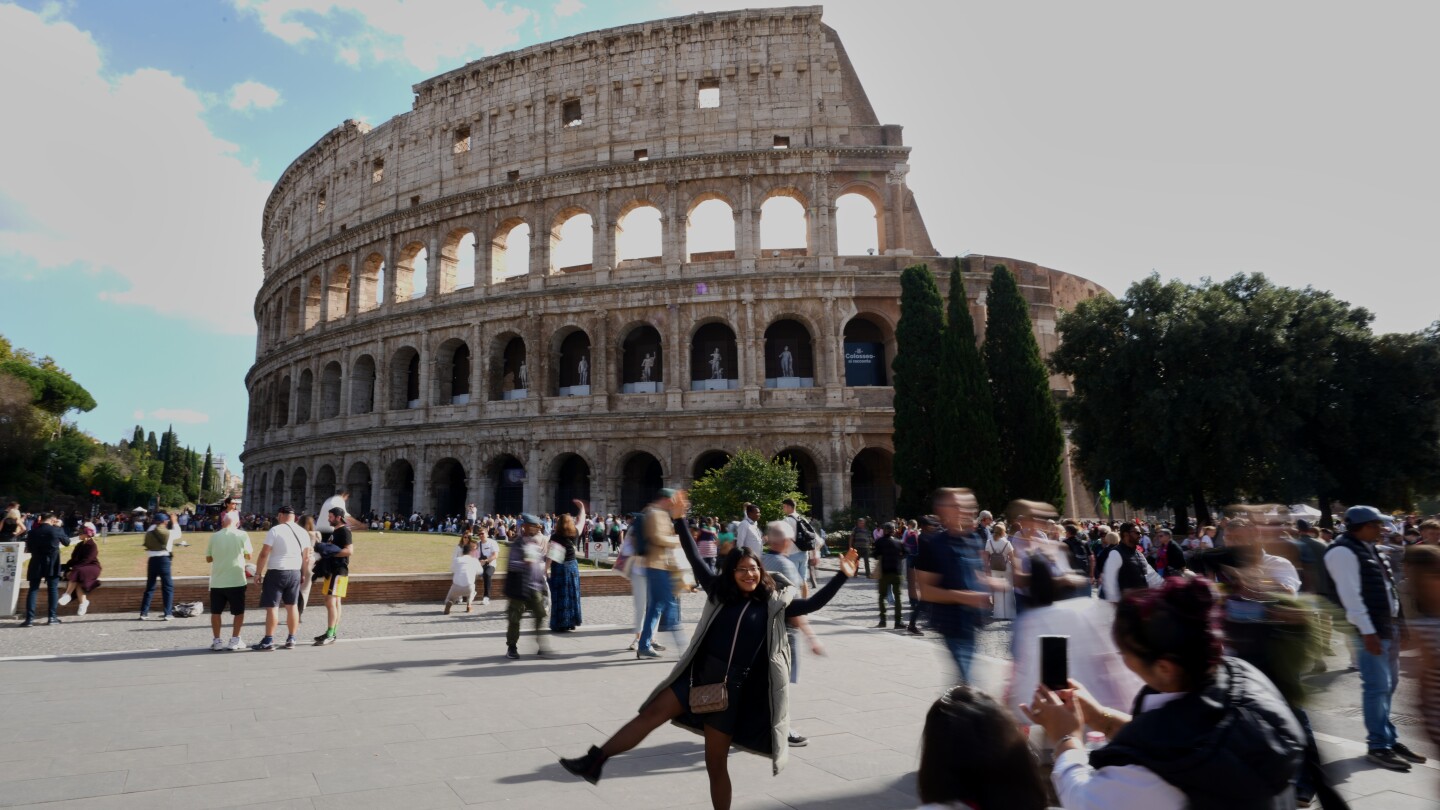
Raves at Rome’s ancient amphitheater? New Colosseum director sets the record straight
Simone Quilici, the newly appointed director of Rome’s Archaeological Park of the Colosseum, has clarified his vision for the iconic amphitheater, emphasizing that it will not become a venue for electronic dance music parties. In an interview with The Associated Press, Quilici addressed the backlash from archaeologists, locals, and even music enthusiasts who feared the ancient structure could be damaged by loud, bass-heavy events. He stressed that any concerts held at the Colosseum must respect its status as a ‘sacred space,’ integral to Roman identity and imbued with religious significance, such as hosting the Via Crucis procession during Easter. Quilici envisions hosting acoustic or jazz performances, poetry readings, and theater productions, with artists like Sting as potential performers. He also plans to expand the existing platform to accommodate these events and introduce historically accurate gladiatorial reenactments. Quilici aims to balance cultural enrichment with preservation, ensuring the Colosseum remains a site of both historical and artistic significance. Additionally, he hopes to encourage tourists to explore lesser-known sites like the Roman Forum, Palatine Hill, Circus Maximus, and the Appian Way, which are part of the broader archaeological park. By creating new access points and connections between these sites, Quilici seeks to manage crowds more effectively and restore the heart of Rome as a cohesive cultural hub.
-
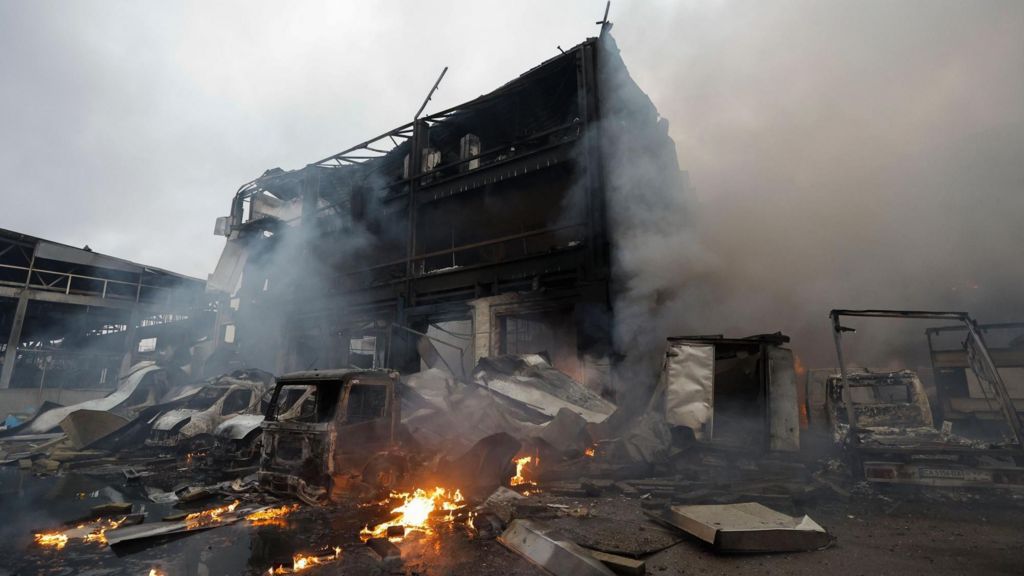
Children injured in Russian strikes on Kyiv, Ukrainian officials say
In a devastating overnight attack, Russian airstrikes on Kyiv have left at least 14 people injured, including four children, according to Ukrainian officials. The assault targeted two high-rise residential buildings, though it remains unclear whether the structures were directly hit or damaged by falling debris. Kyiv Mayor Vitali Klitschko confirmed the incident, while the city’s military administration reported that all victims are receiving medical care, with some requiring hospitalization.
-
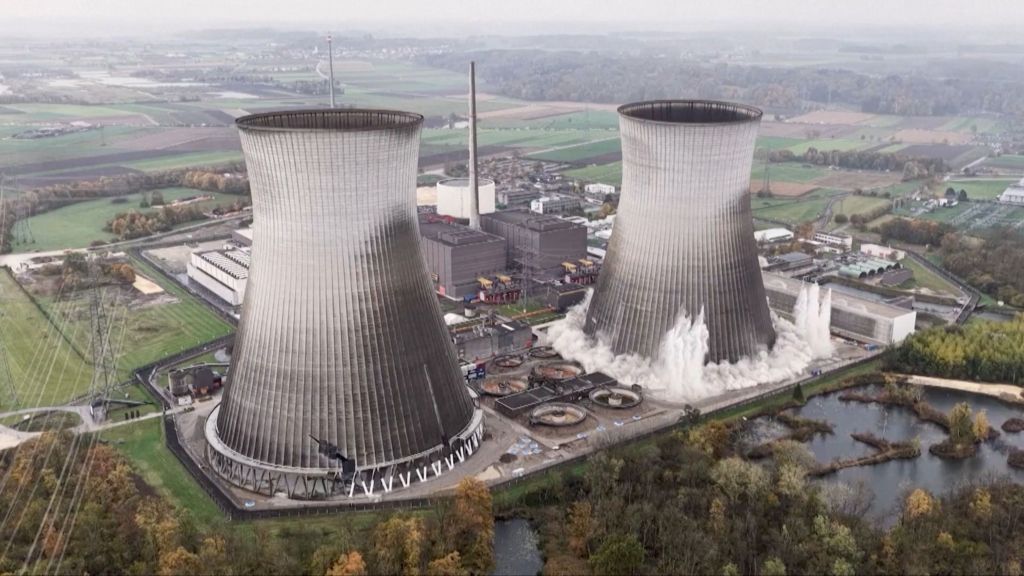
Watch: Moment nuclear plant towers collapse during demolition
In a dramatic and meticulously planned operation, two towering structures at the Gundremmingen nuclear power plant in Germany were brought down in a controlled demolition. The iconic cooling towers, which had stood as a testament to the region’s nuclear energy history, collapsed into massive clouds of white dust, marking a significant moment in Germany’s transition away from nuclear power. The event, captured on video, showcased the precision of the demolition process, with the structures crumbling in unison. The Gundremmingen plant, once a key player in Germany’s energy grid, ceased operations in 2021 as part of the country’s broader shift toward renewable energy sources. The demolition symbolizes the end of an era for nuclear energy in Germany, a decision driven by environmental concerns and the 2011 Fukushima disaster. The site is expected to be repurposed for future sustainable energy projects.
-
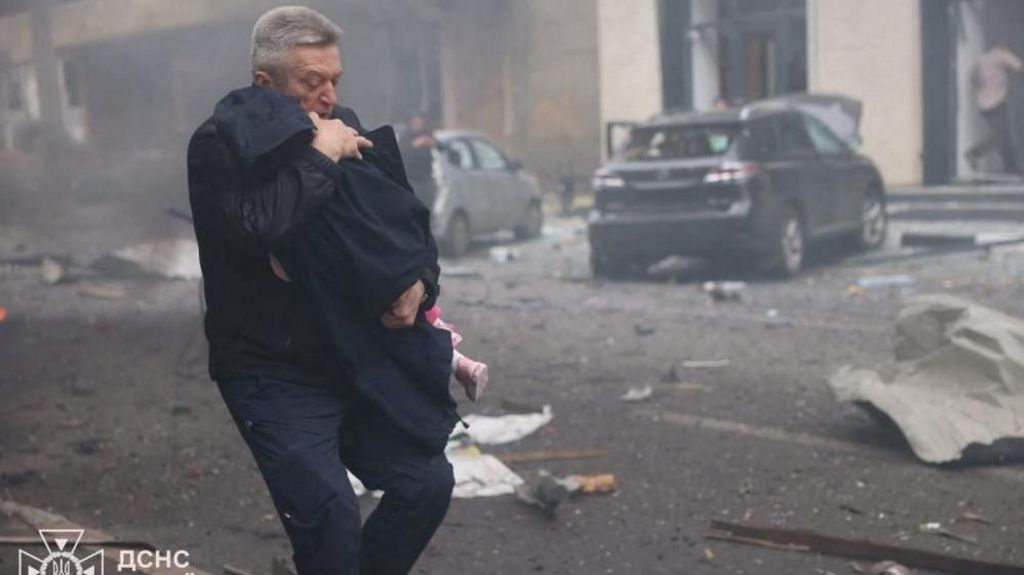
‘Heroes of Kharkiv’: How 48 children were saved from kindergarten hit by Russian drone
In a harrowing display of courage amidst chaos, Ukrainian emergency services, led by Major-General Oleksandr Volobuev, successfully rescued 48 children from a kindergarten in Kharkiv after it was struck by a Russian drone. The attack, which targeted the Honey Academy in the Kholodnohirsky district, left the building heavily damaged and filled with smoke and debris. Volobuev, a seasoned officer from Ukraine’s Civil Protection Service, was captured in a viral image carrying a young girl wrapped in his coat, her small pink shoes peeking out—a poignant symbol of the resilience of Ukraine’s most vulnerable. The rescue operation was fraught with danger, as the building’s roof had collapsed, and the threat of another strike loomed. Fedir Uhnenko, a press officer who joined the rescue efforts, recounted the tense moments of reassuring a young boy while navigating through the rubble. Despite the peril, all children were safely evacuated to a nearby emergency reception point. Tragically, one adult was killed, and nine others were injured in the attack. Ukrainian President Volodymyr Zelensky condemned the strike, calling it an unjustifiable act of aggression. The incident underscores the escalating impact of Russia’s invasion on civilian life, with children increasingly bearing the brunt of the conflict. Both Volobuev and Uhnenko remain resolute in their determination to protect their nation and envision a peaceful future for the children they saved.
-
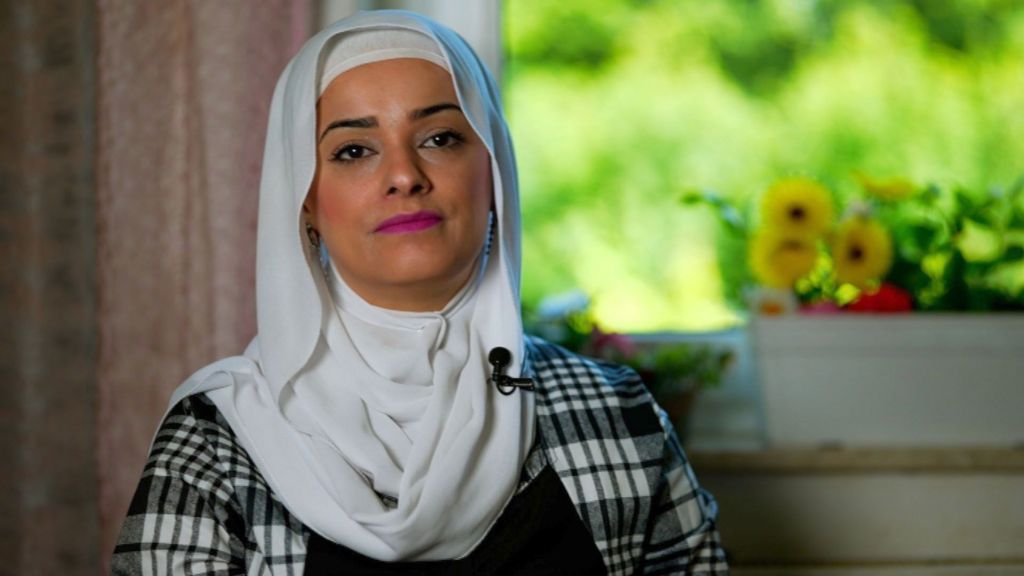
Women welcome arrest of charity boss identified in BBC sex-for-aid investigation
Sadettin Karagoz, the founder of a Turkish charity, has been arrested following allegations of sexual exploitation of vulnerable women seeking aid. The accusations, uncovered by a BBC investigation, reveal a disturbing pattern of abuse within the organization, which was initially seen as a beacon of hope for Syrian refugees in Ankara. Karagoz denies all charges, claiming his charity has helped over 37,000 people and that the allegations are baseless. However, multiple women have come forward with harrowing accounts of sexual assault and harassment, painting a starkly different picture. The charity, known as the Hope Charity Store, was established in 2014 and has been widely recognized for its humanitarian efforts, even receiving a local newspaper award in 2020. Despite its public acclaim, internal testimonies suggest a darker reality. Three women, including a Syrian refugee named Madina, have accused Karagoz of sexual assault, with seven others corroborating their stories. The victims, fearful of stigma and deportation, initially remained silent, but the BBC’s investigation has spurred legal action. Karagoz, a retired bank worker, has previously faced similar accusations in 2019 and 2025, but insufficient evidence led to dropped charges. This time, however, two additional women have testified, resulting in his arrest. Karagoz has cited health issues, including the removal of a testicle in 2016, as evidence of his inability to engage in sexual activity, but medical experts dispute this claim. The case highlights the vulnerability of refugee women and the systemic challenges in addressing sexual violence in Turkey.
-
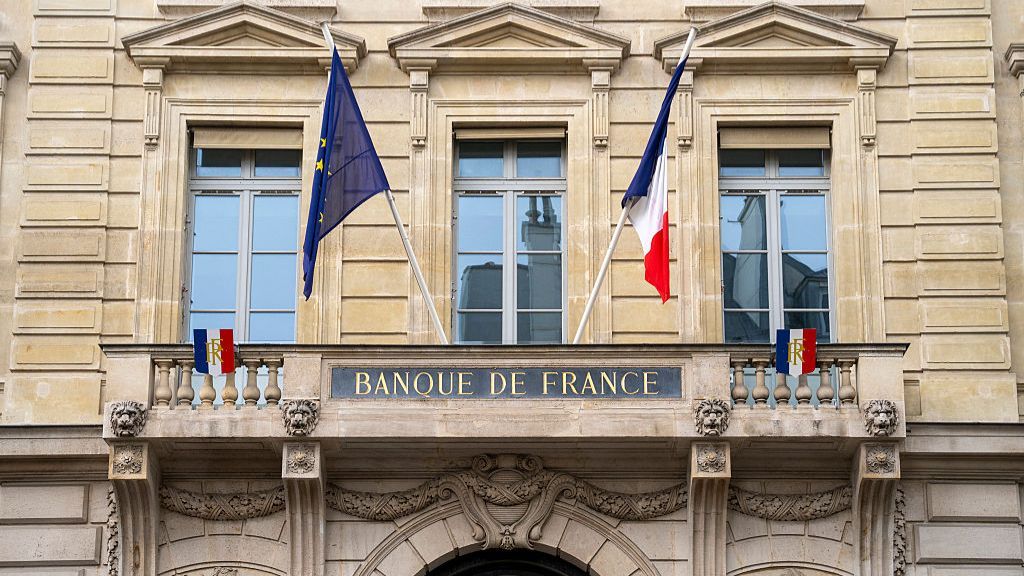
Louvre moves jewels to ultra-secure Bank of France vault after heist
In the wake of a daring daylight heist that exposed significant security vulnerabilities, the Louvre Museum has relocated some of its most valuable jewels to the Bank of France. The transfer, overseen by a secret police escort on Friday, moved the treasures to a highly secure vault located 26 meters below the Bank’s headquarters in central Paris. This vault, known as the “Souterraine,” houses 90% of France’s gold reserves, Leonardo Da Vinci’s notebooks, and other national treasures, with an estimated total value of €600 million (£520 million).
The Souterraine is designed to withstand all forms of attack, featuring a 50cm-thick, seven-tonne flame-resistant concrete door reinforced with steel, and a 35-tonne rotating concrete turret that prevents forced entry. This move comes after masked thieves used an angle grinder to breach a reinforced window in the Louvre’s Gallery of Apollo last Sunday, making off with treasures worth €88 million (£77 million), including a necklace belonging to Napoleon’s wife, Empress Marie-Louise, and a diadem of Napoleon III’s wife, Empress Eugenie.
Despite the swift action by the thieves, who used a mechanical ladder on a lorry to access a first-floor balcony, two of the stolen items, including Empress Eugenie’s Crown, were later found near the museum. French Interior Minister Laurent Nunez expressed confidence that the perpetrators would be apprehended. However, Louvre director Laurence des Cars highlighted the museum’s weak and aging infrastructure, revealing that the sole security camera monitoring the exterior wall where the break-in occurred was facing the wrong direction.
-
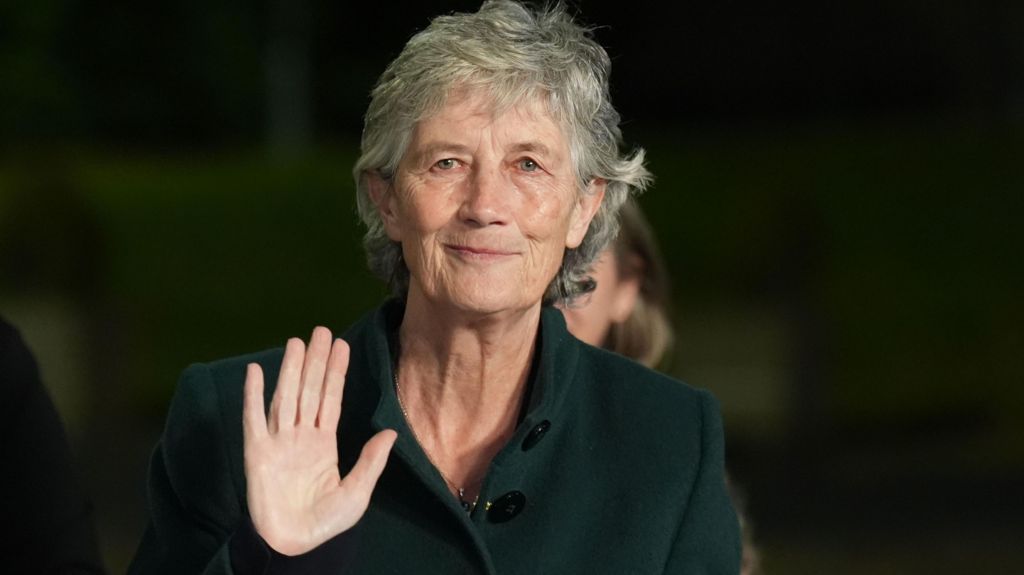
How the anti-establishment candidate won the Irish presidency
Independent left-wing politician Catherine Connolly has been elected as Ireland’s 10th president, securing a decisive victory over her rival Heather Humphreys. Connolly, a seasoned parliamentarian and former deputy speaker of the Dáil, has represented the Galway West constituency since 2016. Her campaign, described as a ‘movement,’ garnered significant support from major left-wing opposition parties, including Sinn Féin, the Irish Labour Party, and the Social Democrats. Despite being seen as an anti-establishment figure, Connolly’s composed debating style and effective social media strategy resonated strongly with younger voters, including a viral moment showcasing her athleticism. Her victory marks a shift in Ireland’s political landscape, with her outspoken views on Palestine, criticism of NATO, and advocacy for a United Ireland drawing both praise and scrutiny. Connolly has pledged to use her presidency to promote peace, neutrality, and climate action, while also returning a portion of her €350,000 salary to community projects. Her election signals a new chapter for Ireland, as she vows to be an inclusive leader who listens and reflects the aspirations of the Irish people.
-
Who is Catherine Connolly?
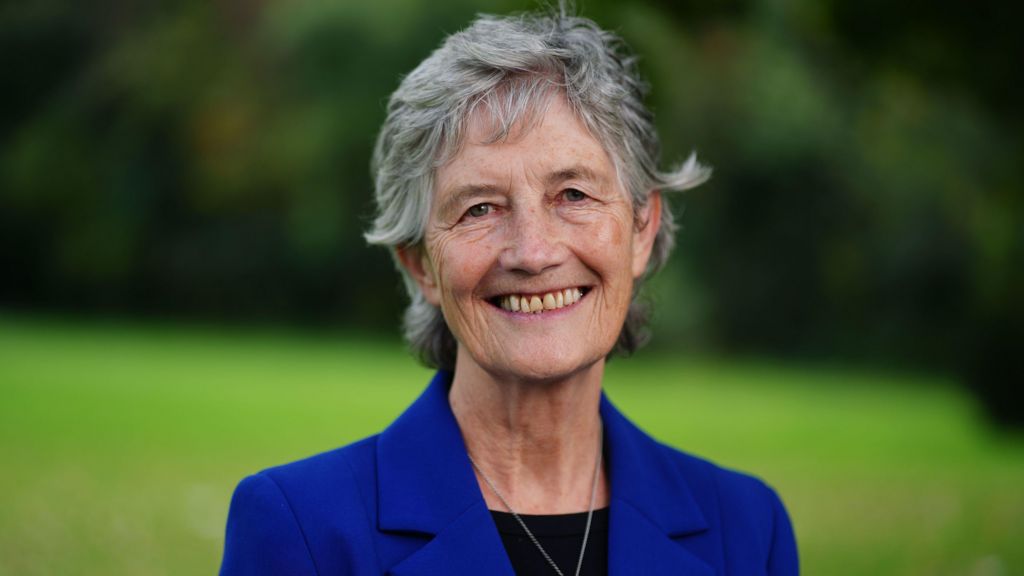
Catherine Connolly, a prominent figure in Irish politics, has emerged as a formidable candidate in the race for Ireland’s presidency. Her journey, shaped by a childhood in a family of 14 children, has instilled in her a deep sense of integrity and resilience. Born and raised in a social housing estate in Galway, Connolly learned the value of diverse perspectives and the importance of standing against the consensus from an early age. Her mother’s sudden death when she was just nine years old left her father, a plasterer, to raise the family with the help of her older sisters. This early experience of hardship and community support profoundly influenced her worldview and political aspirations. Connolly’s career has been marked by a commitment to social justice, particularly in addressing Ireland’s housing crisis, which she describes as the ‘defining social crisis of our time.’ After serving 17 years as a councillor in Galway, including a term as mayor, she made history in 2020 by becoming the first woman elected to chair debates in the Dáil (Irish Parliament) as Leas-Cheann Comhairle (Deputy Speaker). Her presidential campaign has garnered support from left-leaning opposition parties, including Sinn Féin, the Social Democrats, and People Before Profit. Connolly, a passionate advocate for peace and Irish unity, has pledged to use her presidency to be a ‘voice for peace’ in an increasingly uncertain world. Despite facing criticism over her past associations and decisions, she remains steadfast in her commitment to integrity and honesty, values she attributes to her upbringing. As the campaign unfolds, Connolly’s story of resilience and dedication continues to resonate with voters across Ireland.
-
Connolly declared president of Ireland after landslide win
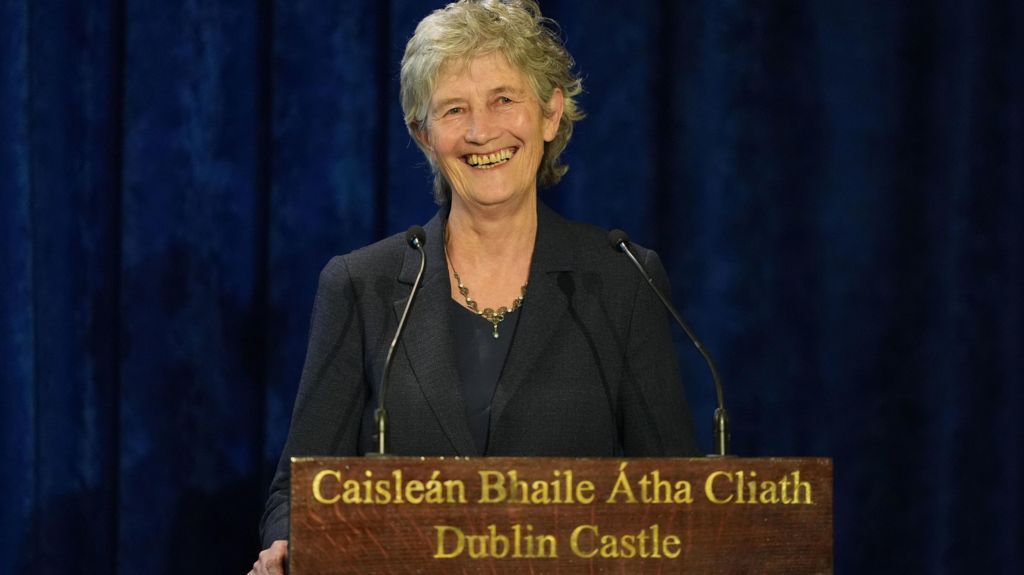
Catherine Connolly has been elected as the 10th President of Ireland, securing a historic landslide victory in the presidential election. The independent candidate, backed by major left-wing parties, triumphed over Fine Gael’s Heather Humphreys, who conceded defeat early in the counting process. The official declaration was made at Dublin Castle, where Connolly delivered her acceptance speech, vowing to be “an inclusive president for all.”
Connolly, a 68-year-old from Galway, has been a member of the Irish parliament (TD) since 2016 and brings a diverse professional background as a psychologist and barrister. She succeeds Michael D. Higgins, who has completed the maximum two terms in office. Connolly secured an unprecedented 914,143 first preference votes, accounting for 63% of the total—the highest in Irish presidential election history.
In her speech, delivered first in Irish and then in English, Connolly emphasized her commitment to being a president who listens, reflects, and speaks when necessary. She pledged to advocate for peace, uphold Ireland’s policy of neutrality, address the existential threat of climate change, and recognize the efforts of people across the nation.
Heather Humphreys, who won 29% of first preference votes, congratulated Connolly and expressed confidence in her ability to serve as a president for all. Fianna Fáil’s Jim Gavin, who withdrew from the race but remained on the ballot, secured 7% of the votes. The election also saw a record 213,738 spoiled votes and a turnout of 46%.
The Irish presidency, while largely ceremonial, holds significant influence as the head of state. The president represents Ireland internationally, plays a central role in national events, and ensures adherence to the constitution. Connolly’s election marks a new chapter in Irish politics, with her progressive vision set to shape the nation’s future.