
In a landmark decision, Germany has pledged an additional $1.076 billion (923.9 million euros) to fund home care for Holocaust survivors globally in the coming year. This significant allocation, negotiated with Germany’s finance ministry, marks the largest budget ever dedicated to supporting frail and vulnerable Holocaust survivors through the New York-based Conference on Jewish Material Claims Against Germany, also known as the Claims Conference. Gideon Taylor, the organization’s president, emphasized that the funding addresses the increasingly complex needs of aging survivors, many of whom are now in their late 80s and facing severe health challenges. The average age of survivors receiving care has risen from 86 in 2018 to 88.5 in 2024, with a notable increase in disabilities such as Alzheimer’s, Parkinson’s, and dementia. Additionally, the Hardship Fund Supplemental payments, which provide €1,450 annually to eligible survivors, have been extended through 2028, benefiting over 127,000 individuals globally. The Claims Conference also announced that non-Jewish rescuers who saved Jewish lives during the Holocaust will now be eligible for similar home care services, ensuring they can live their final years with dignity. Colette Avital, a Holocaust survivor and member of the Claims Conference delegation, praised Germany’s continued commitment to survivors and rescuers, stating that it reflects a profound sense of responsibility. Furthermore, Holocaust education funding has been extended through 2029, with €175 million allocated to initiatives such as teacher training, academic research, and innovative mediums like film, gaming, and virtual reality. Greg Schneider, the Claims Conference’s executive vice president, stressed the urgency of investing in Holocaust education while survivors are still alive to share their testimonies, calling it a moral obligation to both survivors and the six million who perished.
标签: Europe
欧洲
-

Dutch voters head to polls in a knife-edge election focused on housing and Wilders
The Netherlands is witnessing a pivotal moment as voters cast their ballots in a tightly contested general election on Wednesday. The campaign has been dominated by pressing issues such as migration, a housing crisis, and the potential collaboration with Geert Wilders, the controversial anti-Islam lawmaker whose Party for Freedom (PVV) secured a surprising victory two years ago. This election unfolds against a backdrop of heightened polarization and recent violence, including clashes at anti-immigration rallies and protests against new asylum-seeker centers across the country. Polls indicate that Wilders’ PVV, advocating for a complete halt to asylum-seekers entering the Netherlands, remains a frontrunner. However, moderate parties are gaining ground, and pollsters warn that many voters may decide their choice at the last minute. Voting stations, ranging from city halls to historic landmarks like the Anne Frank House, opened at 7:30 a.m. and will close at 9 p.m., with exit polls expected shortly after. The election’s outcome will shape the formation of a coalition government, as the Dutch proportional representation system ensures no single party can govern alone. Mainstream parties have largely ruled out working with Wilders, citing his role in destabilizing the previous coalition over migration policies. Leaders like Rob Jetten of the center-left D66 and Frans Timmermans of the Labor-Green bloc have criticized Wilders’ divisive rhetoric, emphasizing the need for constructive solutions to migration challenges. Wilders, meanwhile, defends his record, blaming other parties for obstructing his agenda. The election could also mark the decline of the New Social Contract party, which faces potential obliteration after joining the outgoing coalition with Wilders and losing its popular leader, Pieter Omtzigt, earlier this year.
-

Trump’s decision to send aircraft carrier to South America will leave Mideast and Europe with none
In a significant strategic move, President Donald Trump has redirected the USS Gerald R. Ford, the nation’s most advanced aircraft carrier, from the Mediterranean Sea to South America as part of an intensified campaign against drug cartels. This decision comes at a critical juncture, as a fragile ceasefire between Israel and Hamas in Gaza faces renewed threats. The redeployment leaves the U.S. with only one active carrier deployed globally, marking a stark shift from recent military engagements, including joint strikes with Israel on Iran and intense combat operations against Yemen’s Houthi rebels in the Red Sea. Aircraft carriers, long symbols of U.S. military power, have been a cornerstone of American foreign policy, with five deployments to the Middle East since the October 7, 2023, Hamas-led attack on Israel. The Ford’s new mission underscores the Trump administration’s heightened focus on the Western Hemisphere, escalating firepower in a region already saturated with warships, aircraft, and troops. Trump, speaking from the USS George Washington in Japan, emphasized the U.S. commitment to halting drug trafficking, both at sea and on land. However, experts like Mark Cancian of the Center for Strategic and International Studies question the sustainability of this deployment, given the limited availability of U.S. carriers. Meanwhile, the U.S. military’s growing presence near Venezuela, coupled with 13 fatal strikes on alleged drug boats, has raised concerns about potential regime change efforts against President Nicolás Maduro, who faces U.S. narcoterrorism charges. Secretary of State Marco Rubio defended the operations as counterdrug efforts, while Maduro accused the U.S. of fabricating a war narrative. Analysts warn of potential instability in Venezuela, with some fearing a Libya-style meltdown if Maduro is ousted. The Ford strike group, accompanied by five destroyers, adds to an unprecedented U.S. military buildup in the region, including submarines, fighter jets, and bombers. Trump’s declaration of drug cartels as unlawful combatants has drawn bipartisan scrutiny, with some lawmakers questioning the lack of congressional approval for these operations. Despite concerns, allies like Sen. Lindsey Graham support the president’s actions, suggesting land strikes in Venezuela are a real possibility.
-

Man arrested after €8m cocaine seizure
In a significant crackdown on organized crime, Irish police have confiscated suspected cocaine valued at over €8 million (£7 million) in County Laois, Republic of Ireland. The operation, led by the Garda National Drugs and Organised Crime Bureau, was conducted on Tuesday following a search of a residential property and surrounding land in the area. During the raid, authorities arrested a man in his 30s and recovered approximately 116 kilograms of the illicit substance. The investigation targeted a notorious crime syndicate based in west Dublin, according to Irish broadcaster RTÉ. Additionally, law enforcement officers seized several electronic devices believed to be linked to the gang. Det Ch Supt Seamus Boland, head of the bureau, emphasized the ongoing commitment to disrupting drug trafficking networks in Ireland. He urged the public to consider the consequences of illegal drug use, stating, ‘We are determined to continue dismantling drug trafficking routes into Ireland and will continue doing our part to keep our communities safer.’ The seized drugs were later displayed by the Garda National Drugs and Organised Crime Bureau, underscoring the scale of the operation.
-

Irish man killed in first Australian mine explosion in a decade
A devastating underground explosion at the Endeavor mine in Cobar, located approximately 700 kilometers northwest of Sydney, has resulted in the tragic deaths of two individuals, including a 59-year-old man from the Republic of Ireland. The incident occurred in the early hours of Tuesday, prompting emergency services to rush to the scene. The Irish national, identified as Ambrose Patrick McMullen from Cootehill in County Cavan, was among the victims. Mr. McMullen, a married father, had relocated to Australia in the mid-1980s, where he built a new life. Two women in their 20s were rescued from the mine, but one succumbed to her injuries later. Carmel Brady, a Fine Gael councillor from Cavan, fondly remembered Mr. McMullen as a kind and athletic individual during their school years. Mine-related fatalities are uncommon in Australia, with the last recorded death occurring in 2015 in Queensland. Cobar Mayor Jarrod Marsden described the incident as ‘absolutely tragic.’ Authorities are conducting a thorough investigation, and a report will be prepared for the coroner.
-

Brigitte Macron’s life ‘deteriorated’ after alleged cyber-bullying, daughter says
Tiphaine Auzière, the 41-year-old daughter of Brigitte Macron, has testified in a Paris court about the severe impact of sexist cyber-bullying and conspiracy theories on her mother’s health and daily life. As the step-daughter of French President Emmanuel Macron, Auzière took the stand during the trial of 10 individuals accused of spreading baseless claims about Brigitte Macron’s gender and sexuality. These allegations, which suggest she is a transgender woman, have plagued the 72-year-old first lady for years. Auzière emphasized the emotional and physical toll these attacks have taken on her mother, stating that Brigitte has had to meticulously manage her public image to avoid fueling the rumors. She also highlighted the broader impact on their family, particularly the harassment faced by her grandchildren at school. The defendants, ranging from 41 to 65 years old, include an elected official, a gallery owner, and a teacher. Among them is Aurélien Poirson-Atlan, who accused Brigitte Macron of being transgender and described the couple’s 24-year age gap as ‘state-sanctioned paedophilia.’ Poirson-Atlan defended his actions as satire, while others claimed they were exercising their ‘freedom of expression.’ Prosecutors are seeking suspended prison sentences of three to 12 months and fines up to €8,000 ($9,300) for the accused. The Macrons have vowed to present photographic and scientific evidence to disprove the allegations, including in a separate case against US influencer Candace Owens. Brigitte Macron, who first met her husband when she was his teacher, has faced relentless scrutiny since their marriage in 2007.
-
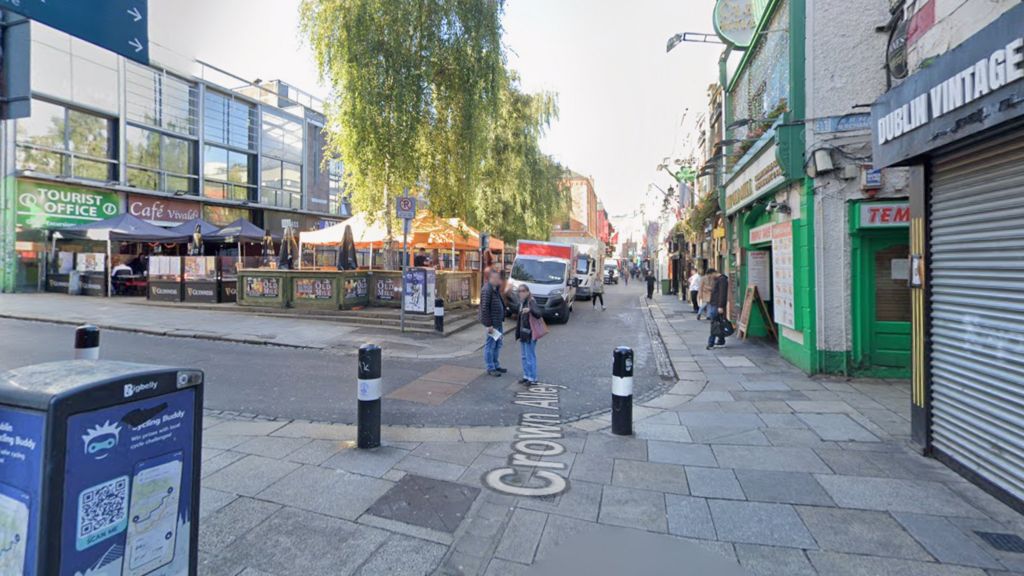
English tourist dies months after alleged Dublin attack
An English tourist in his 40s has tragically passed away months after sustaining severe injuries in an alleged assault in Dublin’s Temple Bar district. The incident occurred in the early hours of August 21 at Temple Bar Square, a popular area known for its vibrant nightlife. The victim was initially rushed to Beaumont Hospital in critical condition before being transferred back to the United Kingdom for further medical care. Despite extensive treatment, he succumbed to his injuries recently. In connection with the case, a man in his 20s has been brought before the court, facing charges related to the assault. Irish broadcaster RTÉ reported the legal proceedings, highlighting the ongoing investigation by gardaí (Irish police). The case has drawn attention to safety concerns in Dublin’s bustling tourist areas.
-

Brigitte Macron’s daughter testifies about alleged cyberbullying of France’s first lady
In a poignant testimony during the second day of a Paris trial, Tiphaine Auzière, the daughter of France’s first lady Brigitte Macron, detailed the profound impact of cyberbullying on her mother’s life. The trial involves ten individuals accused of spreading malicious claims online, including allegations about Brigitte Macron’s gender and sexuality, as well as insinuations linking the 24-year age gap between her and President Emmanuel Macron to “pedophilia.” Some of these posts have garnered tens of thousands of views. Auzière emphasized the deterioration in her mother’s living conditions, stating, “She cannot ignore the horrible things said about her.” She also highlighted the misuse of Macron’s images online, forcing her to be cautious about her appearance and daily life. The defendants, including an elected official, a teacher, and a computer scientist, argued that their comments were intended as humor or satire and expressed confusion over the charges. If convicted, they face up to two years in prison. Brigitte Macron did not attend the trial, and a verdict is expected at a later date. Auzière also revealed the broader impact on the family, particularly on her children and grandchildren, who face taunts at school. The Macron family has long been targeted by conspiracy theories alleging that Brigitte was born a man named Jean-Michel Trogneux, a claim they have consistently denied. In July, the Macrons filed a defamation suit in a Delaware court against U.S. conservative influencer Candace Owens, seeking substantial damages if she continues to propagate these claims. Brigitte and Emmanuel Macron, married since 2007, first met when he was her student at a high school in France. Emmanuel Macron has served as France’s president since 2017.
-

Michael D Higgins returns to Áras after hospital stay
Irish President Michael D. Higgins has returned to Áras an Uachtaráin, his official residence, following a brief hospitalization to address a localized infection. On Sunday, President Higgins was admitted to St James’s Hospital in Dublin as part of a prearranged medical evaluation. A spokesperson confirmed on Tuesday that the president underwent a successful course of antibiotics to treat the condition. In a statement, President Higgins expressed his gratitude to the medical team for their care and thanked the public for their well-wishes during his hospital stay. President Higgins will continue his duties until November 11, when Catherine Connolly, his successor, is inaugurated at Dublin Castle. Connolly, an independent member of the Irish parliament, secured a historic 63% of first-preference votes in the recent presidential election, marking a record in Irish electoral history. However, the unprecedented number of spoiled votes, totaling 213,738, has sparked discussions among politicians about the need for electoral reform. Connolly was officially declared the 10th President of the Republic of Ireland on Saturday evening after defeating Fine Gael candidate Heather Humphreys.
-

Bella Culley’s sentence reduced to two years
Bella Culley, a 19-year-old British woman from Billingham, Teesside, has secured a reduced sentence of two years through a plea bargain after being charged with drug smuggling in Georgia. Culley, who is 35 weeks pregnant, had faced the possibility of up to 20 years or life imprisonment if convicted. Her family paid £137,000 (500,000 Georgian Lari) as part of the agreement, though they were unable to secure her immediate release. Culley is now likely to give birth while incarcerated at Prison Number 5 in Tbilisi. Her next court appearance is scheduled for Monday. The case stems from her arrest at Tbilisi International Airport in May, where authorities discovered 12kg of marijuana and 2kg of hashish in her luggage. Culley has previously claimed she was coerced into transporting the drugs under torture. Plea bargains are a common resolution for drug-related crimes in Georgia, accounting for over 90% of such cases. Culley’s mother, Lyanne Kennedy, expressed optimism outside the court, stating her daughter appeared strong despite her advanced pregnancy. Her lawyer, Malkhaz Salakaia, confirmed that negotiations are nearing completion, with a technical issue delaying the finalization of the plea deal. Salakaia also indicated plans to appeal for a presidential pardon once the agreement is finalized. Culley had initially gone missing in Thailand before her arrest in Georgia. She maintains her innocence, asserting she was forced into the situation and is a university student with no history of drug use.