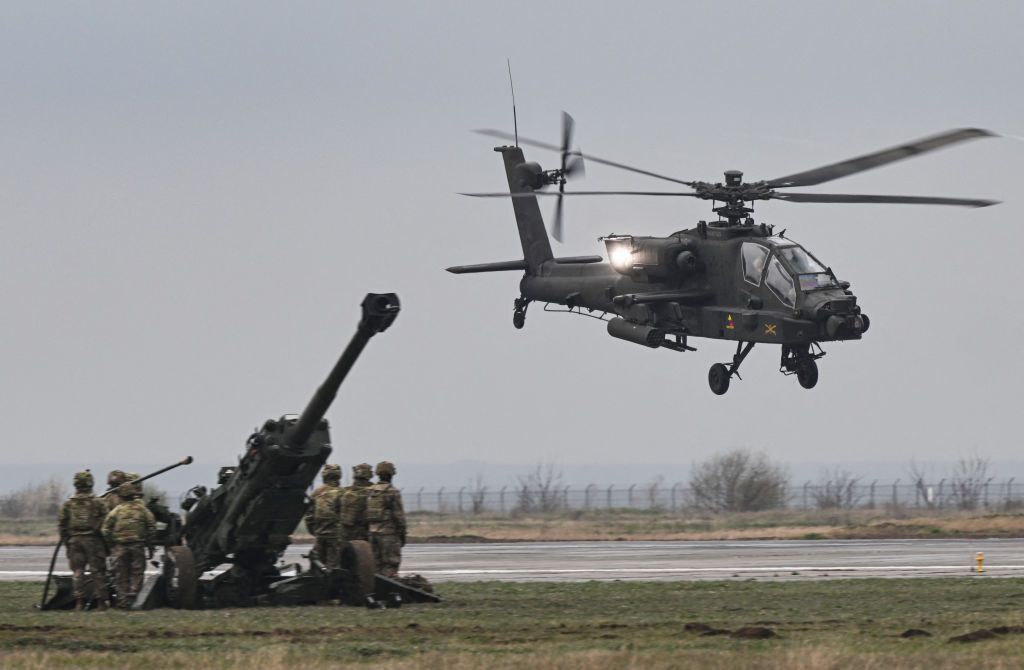
The Romanian Ministry of Defence has announced that the United States plans to reduce its military presence on NATO’s eastern flank, with approximately 900 to 1,000 American troops remaining in Romania, down from the previous 1,700. This decision, described as ‘expected,’ aligns with the Trump administration’s strategic pivot towards the Indo-Pacific region. Defence Minister Ionut Mosteanu revealed that US Defence Secretary Pete Hegseth recently emphasized the need for European nations to bolster their own defence capabilities. A US brigade stationed at the Mihai Kogalniceanu airbase, which is set to become NATO’s largest in Europe, will be rotated out and not replaced. This brigade has elements across Bulgaria, Romania, Slovakia, and Hungary, though it remains unclear whether US troops will also be withdrawn from these countries. Polish Defence Minister Wladyslaw Kosiniak-Kamysz stated that Warsaw has ‘no information’ about potential troop reductions on its soil. The Pentagon has yet to comment on the matter. Meanwhile, the US military presence at Romania’s Deveselu and Campia Turzii bases will remain unchanged. President Donald Trump has consistently advocated for European NATO members to assume greater responsibility for their defence, reflecting his administration’s broader strategic realignment. However, the troop reduction has raised concerns among Eastern European nations, many of which perceive a persistent threat from Russia. A NATO official reassured that Washington’s commitment to the alliance remains ‘clear,’ noting that such adjustments are ‘not unusual.’ The official highlighted that the US military presence in Europe is still significantly larger than in previous years, with over 100,000 personnel deployed as of late last year. This announcement follows NATO’s recent establishment of the Eastern Sentry mission, aimed at enhancing vigilance along the eastern flank. The decision was prompted by several incidents, including Russian drones entering Polish and Romanian airspace, and Russian warplanes violating Estonian airspace.
标签: Europe
欧洲
-
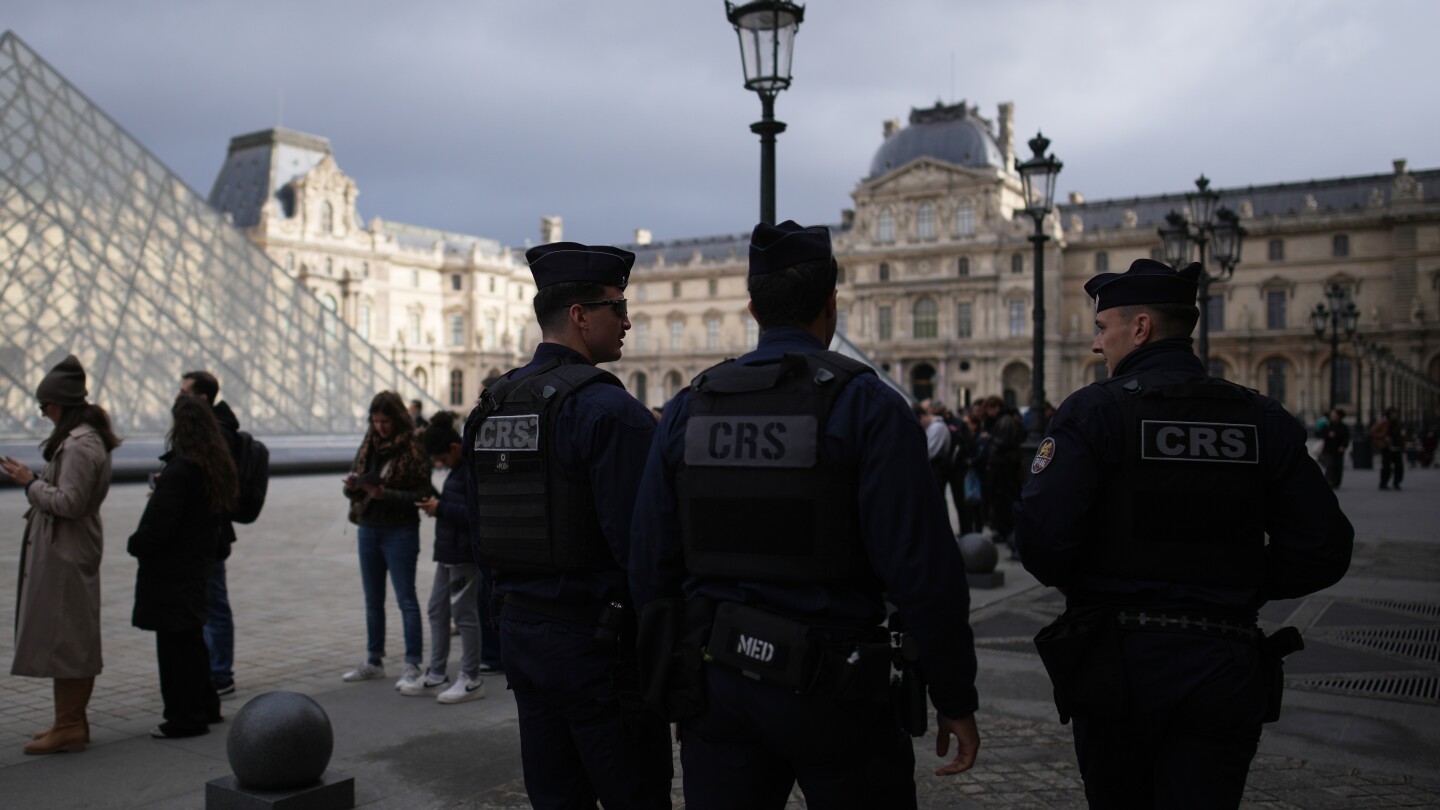
Paris police acknowledge major gaps in Louvre’s defenses after jewel theft
The recent daylight theft at the Louvre Museum has sparked a national reckoning over France’s ability to safeguard its cultural treasures. Paris Police Chief Patrice Faure revealed significant vulnerabilities in the museum’s security systems during a Senate hearing on Wednesday. He highlighted outdated technology, including analog video networks that produce low-quality images and slow real-time sharing. A long-awaited $93 million security upgrade, involving 60 kilometers of new cabling, is not expected to be completed until 2029–2030. Alarmingly, the Louvre’s authorization to operate its security cameras expired in July and was not renewed, a lapse that underscores broader negligence. On October 19, thieves exploited these weaknesses, breaking into the Apollo Gallery and stealing eight pieces of the French crown jewels valued at $102 million. The theft was first reported by a cyclist, not the museum’s alarms, further exposing flaws in the alert system. Two suspects were arrested, but their custody is set to expire, raising concerns about the investigation’s progress. The incident has also revealed an insurance blind spot, as the jewels were not privately insured, leaving the Louvre to bear the total financial loss. Faure emphasized the need for advanced tools like AI-based anomaly detection to enhance security, while rejecting calls for a permanent police post inside the museum. The heist has intensified scrutiny on the Louvre’s management, already strained by chronic understaffing and mass tourism. Experts fear the stolen jewels may be irreversibly altered, adding urgency to France’s debate on protecting its cultural heritage.
-

France expected to adopt consent-based rape law in the wake of landmark Gisèle Pelicot case
France is poised to take a monumental step in its fight against sexual violence as the Senate prepares to give its final approval to a landmark bill on Wednesday. The legislation redefines rape and sexual assault as any non-consensual sexual act, marking a significant shift in the country’s legal framework. This move follows the harrowing trial of Gisèle Pelicot, whose case exposed systemic issues in France’s approach to sexual violence and consent. The bill, introduced in January, gained momentum after 51 men were convicted of raping and abusing Pelicot over nearly a decade, sparking a national reckoning on rape culture. Lawmakers Marie-Charlotte Garin and Véronique Riotton, who spearheaded the initiative, emphasized the urgency of addressing sexual violence, stating, ‘It’s time to take action and take a new step forward.’ The legislation explicitly defines consent as ‘freely given, informed, specific, prior, and revocable,’ and clarifies that silence or lack of resistance does not imply consent. It also stipulates that any sexual act involving violence, coercion, threat, or surprise is non-consensual. The bill received overwhelming support in the National Assembly last week, with only the far-right opposing it. Once enacted, France will join other European nations like Germany, Belgium, and Spain in adopting consent-based rape laws. The Pelicot case, which revealed the role of pornography, online chatrooms, and misconceptions about consent in perpetuating rape culture, has made her a global symbol in the fight against sexual violence.
-
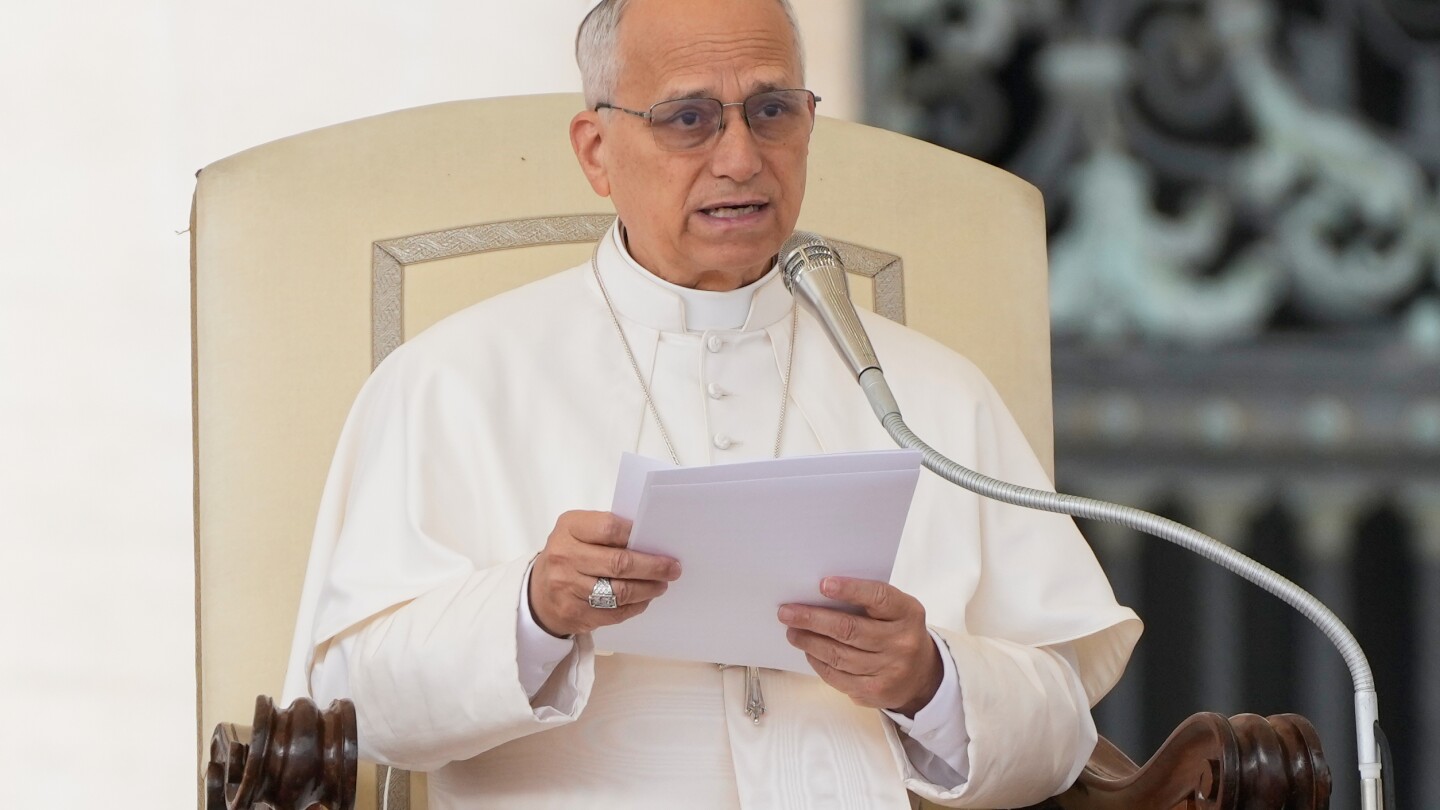
Pope condemns antisemitism and vows to fight it as tensions rise over Israel’s war in Gaza
In a significant address during his Wednesday general audience, Pope Leo XIV acknowledged the misunderstandings and conflicts that have arisen between Catholics and Jews amid Israel’s war in Gaza. However, he firmly reiterated the Catholic Church’s unwavering condemnation of antisemitism and its commitment to combating it, rooted in the Gospel-mandated friendship with the Jewish people. The Pope’s remarks coincided with the 60th anniversary of the landmark Vatican document “Nostra Aetate,” which revolutionized the Church’s relationship with Judaism. The declaration, Latin for “In Our Time,” denounced antisemitism in all forms and repudiated the centuries-old “deicide” charge that blamed Jews collectively for Christ’s death. This historic document marked a turning point in the Church’s reckoning with its role in perpetuating antisemitism, particularly in the context of the Holocaust. Speaking to a diverse audience that included Jewish leaders and representatives of other faiths, Pope Leo emphasized the importance of continuing dialogue despite current challenges. He noted that while political circumstances and injustices have strained relations, the Church remains steadfast in its friendship with the Jewish people. The anniversary comes amid a surge in antisemitism globally, particularly in the wake of Israel’s military actions in Gaza following the October 7, 2023, Hamas attacks. In the United States alone, the Anti-Defamation League reported a record high of 9,354 antisemitic incidents last year, with 58% linked to Israel. The war has also tested the Vatican’s relationship with the Jewish community, with Pope Francis facing criticism for comments perceived as equating Hamas’s actions with Israel’s military response. While Francis called for the release of hostages and condemned violence, his remarks on Israel’s conduct sparked controversy. Pope Leo, however, has sought to bridge divides, meeting with Jewish leaders during his installation in May and reaffirming the Church’s commitment to dialogue. Rabbi Noam Marans of the American Jewish Committee praised the Pope’s acknowledgment of the challenges, calling it a significant step forward. He urged the Vatican to leverage its moral authority to combat antisemitism more vigorously, emphasizing the critical need for solidarity in these turbulent times.
-
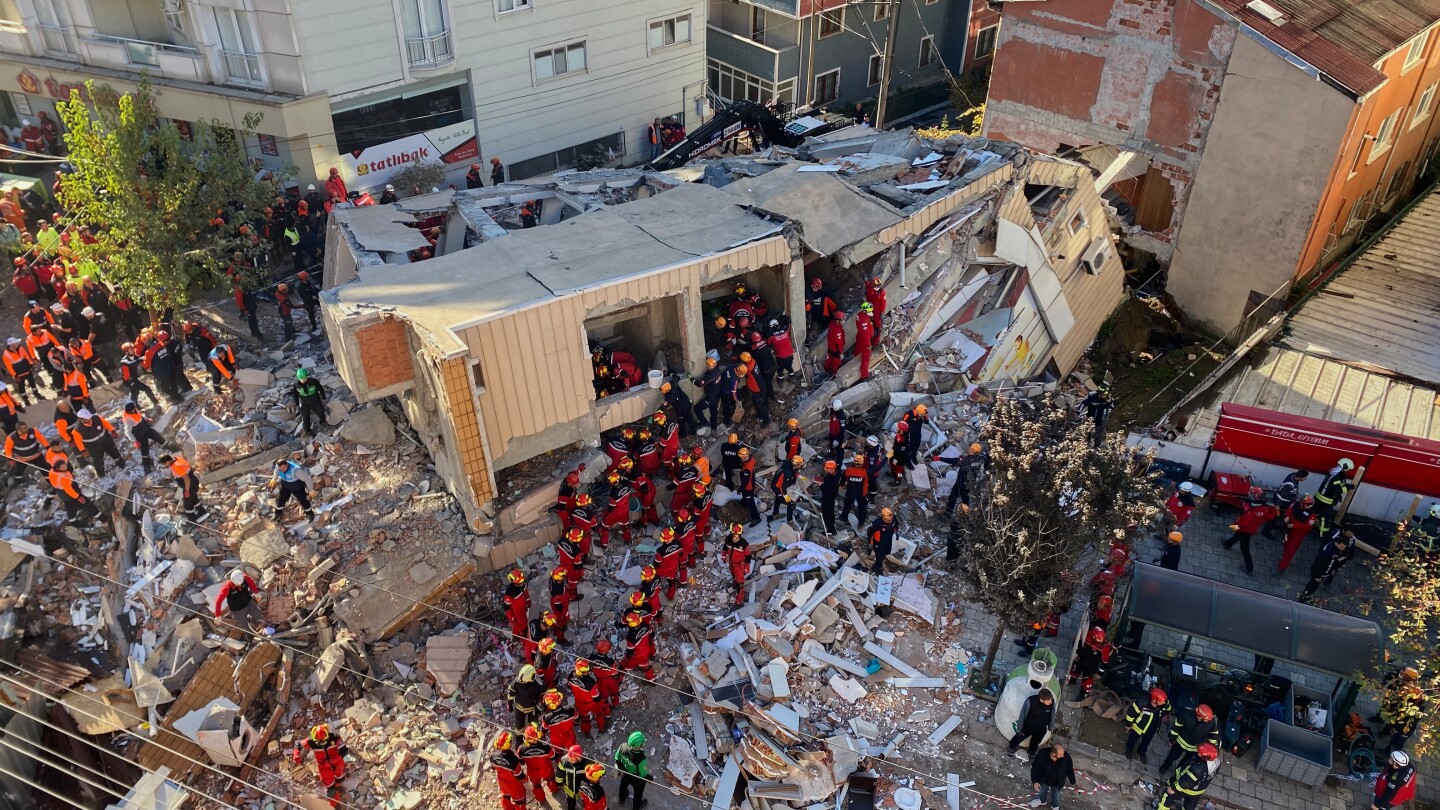
Rescue operations underway after 7-story building collapses in northwest Turkey
A tragic incident unfolded in the early hours of Wednesday in Gebze, a northwestern city in Turkey, when a seven-story apartment building collapsed, leaving five members of a single family trapped beneath the debris. Gebze Governor İlhami Aktas confirmed the identities of those trapped, though the status of their survival remains uncertain. Rescue operations are currently underway, led by teams from the Disaster and Emergency Management Directorate (AFAD). The cause of the collapse is still under investigation, with no definitive answers yet. However, Gebze Mayor Zinnur Büyükgöz speculated that ongoing metro construction in the vicinity might have contributed to the disaster. Gebze, situated along the north Anatolian fault line, has a history of seismic activity, most notably during the devastating 1999 earthquake that claimed approximately 18,000 lives. The incident has raised concerns about building safety and urban development practices in the region.
-

Imprisoned Bahrain activist Abdulhadi al-Khawaja starts hunger strike over his detention
Abdulhadi al-Khawaja, a prominent Bahraini activist imprisoned since the 2011 Arab Spring protests, has initiated an open-ended hunger strike to draw attention to his internationally condemned detention. Al-Khawaja, who also holds Danish citizenship, began the strike on Wednesday while held at the Jaw Rehabilitation and Reform Center in Bahrain. This marks his second hunger strike; his first, in 2012, lasted 110 days. Medical professionals, including Dr. Damian McCormack, have warned that al-Khawaja’s health is precarious, citing his 10-kilogram (22-pound) underweight status and a pre-existing heart condition. McCormack emphasized that any duration of hunger strike poses a high risk of death for the 64-year-old activist. Bahraini authorities have not directly addressed the hunger strike but maintain that prisoners receive fair trials, full rights, and prompt medical care. Al-Khawaja’s detention has been widely criticized by human rights groups and UN experts, who describe it as arbitrary following a life sentence imposed by a military tribunal on terrorism charges. His hunger strike aims to pressure Denmark and the European Union to negotiate his release. The timing coincides with Bahrain’s annual Manama Dialogue, a security summit attracting global leaders. Al-Khawaja, a founder of the Bahrain Center for Human Rights, has long advocated for democratic reforms in the Shiite-majority nation governed by a Sunni ruling family. His activism has made him a symbol of the ongoing struggle for human rights in Bahrain, where unrest persists despite the violent suppression of the 2011 protests.
-

German scents exhibition combines 1,000 years of fragrances with art and history
DÜSSELDORF, Germany — Have you ever imagined the scent of war, the aroma of love, or the pungent odor of medieval Paris? A groundbreaking exhibition in Germany is inviting visitors to embark on a sensory journey through history by exploring 81 distinct fragrances across 37 galleries. Titled ‘The Secret Power of Scents,’ the exhibition, which opened on Wednesday at the Kunstpalast museum in Düsseldorf, seamlessly blends art and olfactory experiences to traverse over 1,000 years of cultural history.
Curated as an experimental exploration, the exhibition encourages visitors to engage with history through their sense of smell. ‘This is an invitation to discover the history of scents with your nose,’ said Felix Krämer, the museum’s director general. The exhibition is organized chronologically, from medieval religious artifacts to contemporary 21st-century art. Each gallery is equipped with scent steles, atomizers, and diffusers to evoke the aromas of specific time periods or cultural contexts.
One gallery immerses visitors in the sacred fragrance of myrrh, used in Christianity, Judaism, and Islam for prayer and purification. In contrast, a World War I-themed gallery releases a jarring blend of gunpowder, blood, and sulfur, eliciting visceral reactions from visitors. ‘Anyone who has experienced war will recognize its brutality in this scent,’ said curator Robert Müller-Grünow, a leading expert in scent technology.
The exhibition also explores the romantic side of history, with a gallery dedicated to Peter Paul Rubens’ 1610 painting ‘Venus and Adonis,’ diffusing the scents of roses and civet, once considered erotic in the 17th century. Meanwhile, the stench of medieval Paris—a mix of canalization, mold, and unwashed bodies—offers a stark contrast.
The 1920s are celebrated with the uplifting aroma of tobacco, vanilla, and leather, accompanying Gert Wollheim’s 1924 painting ‘Farewell from Düsseldorf,’ which symbolizes the liberation of women. Modern art is represented through scents reminiscent of global brands like Coca-Cola and Eurowings, alongside contemporary fragrances like ‘Iso E Super,’ a velvety, cedarwood-like scent designed to enhance attractiveness.
Running through March 8, the exhibition has captivated visitors like Kirsten Gnoth, who described the experience as ‘completely new and exciting.’ By combining art with scents, the exhibition offers a unique and immersive way to explore history.
-
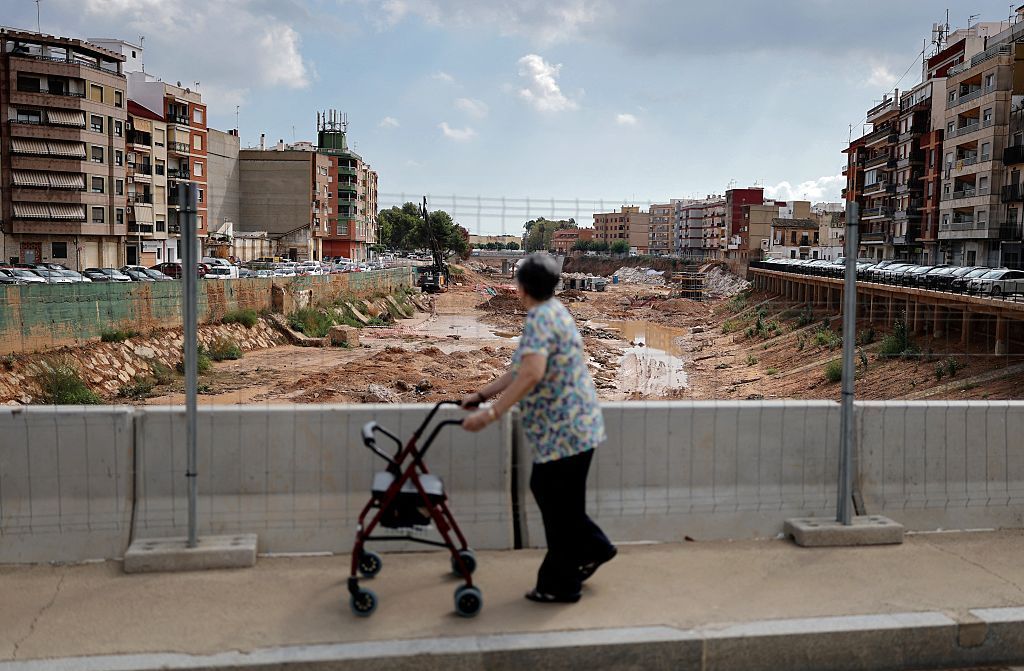
Angry Spaniards still demand answers a year after Valencia’s deadly floods
On 29 October 2024, eastern Spain was struck by catastrophic floods, known as the Dana, which claimed the lives of 237 people across the Valencia region and neighboring areas. The disaster, the worst of its kind in decades, left an indelible mark on communities such as Benetússer and Paiporta, where entire families were swept away by the torrential waters. Toñi García, a resident of Benetússer, tragically lost her husband, Miguel, and their 24-year-old daughter, Sara, when floodwaters engulfed their home’s basement. ‘They didn’t reach the garage door,’ she recalls, ‘because it was so much water, so many metres deep.’ A year later, the region continues to grieve, with a state memorial service attended by King Felipe VI and Prime Minister Pedro Sánchez. The emotional scars remain, particularly among children, with nearly a third still experiencing fear of rain and loud noises, according to Save the Children. Despite significant progress in reconstruction, questions linger about the handling of the crisis. The regional government’s delayed emergency alarm, issued after 20:00 on the day of the floods, has drawn widespread criticism. Regional President Carlos Mazón’s actions during the disaster, including a lengthy lunch with a journalist, have fueled public outrage. Tens of thousands protested in Valencia, demanding his resignation. Mazón, supported by the far-right Vox party, has defied calls to step down, blaming the central government for insufficient support. A judicial inquiry into possible negligence is ongoing, with Mazón set to face a parliamentary commission later this month. As Valencia rebuilds, the threat of future weather events looms large, prompting calls for improved preparedness and resilience.
-

Tight race in Dutch election as anti-Islam populist Wilders’ hope of power declines
The Netherlands is on the brink of a pivotal election as Geert Wilders’ anti-Islam Freedom Party (PVV) faces a fierce challenge from left-leader Frans Timmermans and liberal Rob Jetten. Despite Wilders’ victory in the 2023 elections, his prospects of forming a government appear slim this time around. Opinion polls indicate a decline in his support, with Dutch voters grappling with pressing issues such as a chronic housing shortage, rising living costs, and overcrowded asylum centers. Unlike the previous election, Wilders’ rivals are refusing to collaborate with him after he dissolved his own coalition government in June 2024. The election, which commenced at 07:30 local time on Wednesday, is marked by uncertainty, with over a third of voters undecided. Analysts suggest that the second-place finisher could play a decisive role in forming the next government, likely from the center-left or center-right. Wilders’ controversial stance on immigration and Islam, coupled with internal party issues, has alienated both radical and moderate voters. Meanwhile, Timmermans and Jetten have prioritized addressing the housing crisis, with promises of significant construction projects. Unemployment, though low by European standards, has risen to 4%, the highest in four years, fueling voter anxiety. As the Dutch electorate seeks stability, the election outcome could signal a shift away from populism towards more traditional governance.
-
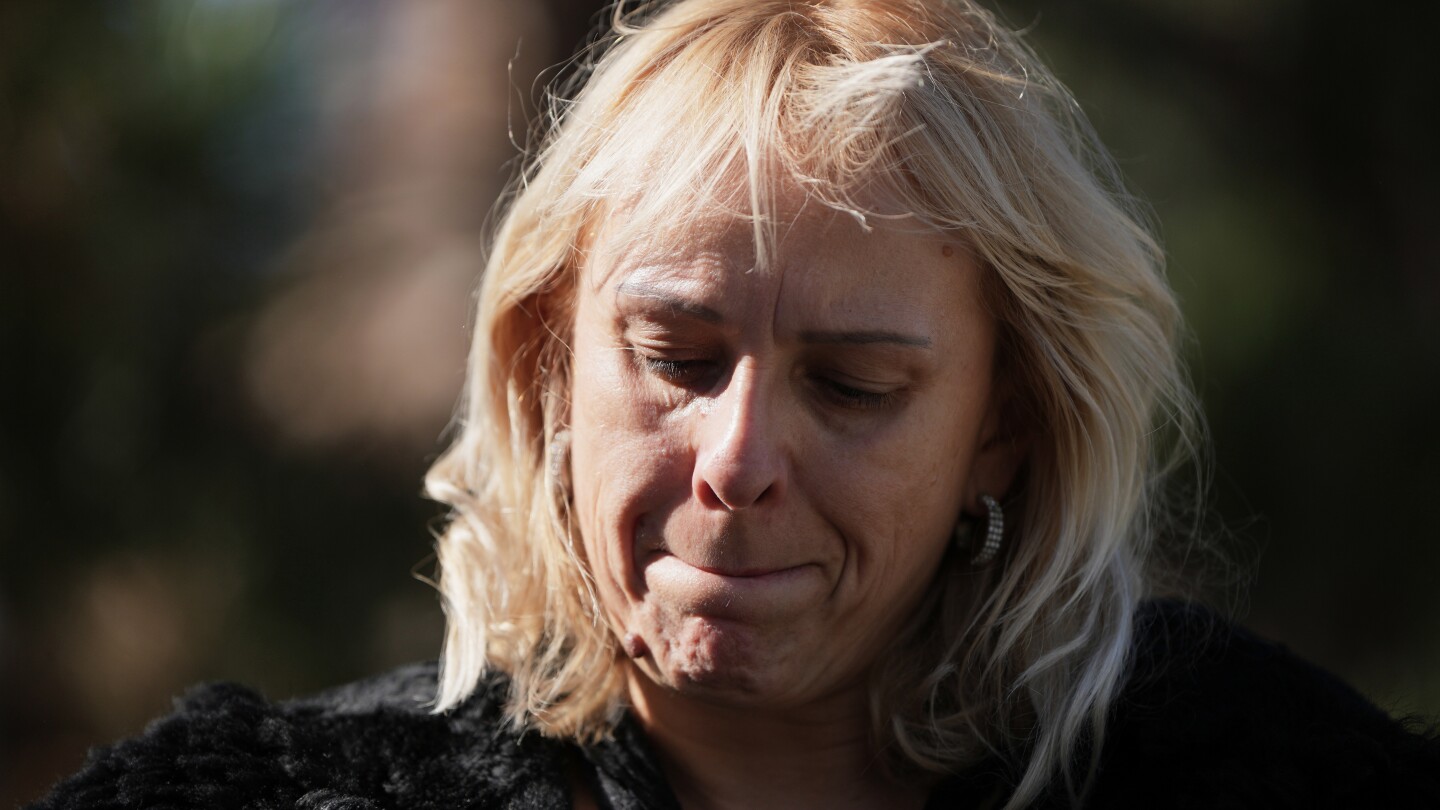
A defiant mother seeks justice for Serbian train station collapse that killed her son and 15 others
BELGRADE, Serbia — Dijana Hrka’s life was irrevocably altered on November 1 last year when a catastrophic partial building collapse at a train station in Serbia’s northern city of Novi Sad claimed the life of her 27-year-old son, Stefan, along with 15 others. The tragedy, which also left one woman severely injured, has since ignited widespread anti-government protests across the country, challenging the autocratic rule of President Aleksandar Vucic. Hrka, 47, has emerged as a vocal advocate for justice, joining tens of thousands of protesters demanding accountability for the lives lost and an end to systemic corruption in construction and governance. The protests, which have rattled Vucic’s administration, are set to intensify on the first anniversary of the disaster. Authorities have yet to address the underlying grievances, with discontent simmering over the government’s crackdown on dissent, including detentions and job losses. Hrka, who has faced threats for her activism, remains resolute, drawing strength from the youth-led movement. “Once you lose what is dearest to your heart, you lose fear,” she said. The anniversary protest aims to pressure Vucic to call for early parliamentary elections and ensure those responsible for the collapse face justice. While prosecutors have charged 13 individuals, including engineers and officials, skepticism remains about the transparency of the judicial process. The protest, though intended as a peaceful commemoration, carries the risk of violence, given previous clashes between police and demonstrators. Amid the tension, university students have embarked on a cross-country trek to Novi Sad, symbolizing unity and resilience. Hrka’s unwavering determination and the youth’s activism continue to challenge the status quo, keeping the memory of the victims alive and demanding systemic change.