标签: Europe

欧洲

  • Barcelona’s Sagrada Família becomes world’s tallest church

    Barcelona’s Sagrada Família becomes world’s tallest church

    In a historic moment for architecture and religious heritage, Barcelona’s iconic Sagrada Familia has officially been crowned the tallest church in the world. Workers recently placed the first section of a cross atop its central tower, bringing the structure’s height to 162.91 meters. This achievement surpasses the Ulm Minster in Germany, which had held the record since 1890. Designed by the legendary architect Antoni Gaudí, the basilica has been under construction for over a century, with its main building slated for completion next year. The central Tower of Jesus Christ will eventually reach 172 meters once the cross is fully installed in the coming months.

    The Sagrada Familia’s journey began in 1882, with Gaudí taking over the project a year later. His visionary designs transformed the original plans into a grand architectural masterpiece, initially funded by donations from devout worshippers. However, the project faced numerous challenges, including Gaudí’s untimely death in 1926, when only one of the planned 18 towers had been built. The Spanish Civil War further disrupted progress, as Catalan anarchists destroyed Gaudí’s models and plans. More recently, the Covid-19 pandemic halted construction due to a sharp decline in tourism and funding.

    Despite these setbacks, the Sagrada Familia Foundation has persevered, relying on contributions from visitors and private donors. General Director Xavier Martínez announced that the Tower of Jesus Christ will be completed by 2026, marking the centenary of Gaudí’s death. The foundation plans to host commemorative events to honor the architect, who is buried in the church’s crypt. Over the next decade, work will continue on decorative elements, sculptures, and a grand stairway leading to the main entrance, ensuring the basilica remains a symbol of resilience and artistic brilliance.

  • How teenager gave a street concert and was caught up in Russia’s repressive past

    How teenager gave a street concert and was caught up in Russia’s repressive past

    In the quiet woods on the outskirts of St. Petersburg, a solemn ceremony unfolds as names of victims from Joseph Stalin’s Great Terror are read aloud. The Levashovo Wasteland, believed to hold the remains of 20,000 to 45,000 individuals, serves as a grim reminder of the dictator’s brutal purges in the 1930s. Portraits of the executed are nailed to pine trees, evoking the haunting ghosts of Russia’s past. Yet, the present tells a story of continued repression under the current regime. While Russian authorities downplay Stalin’s crimes, they enforce stringent laws to suppress dissent and silence criticism, particularly regarding the war in Ukraine. Critics are increasingly labeled as ‘foreign agents,’ a modern twist on Stalin’s ‘enemies of the people.’ This narrative of control extends to the arts, where young musicians like Diana Loginova face severe consequences for their public performances. Diana, an 18-year-old music student and lead singer of the band Stoptime, has been detained multiple times for organizing street concerts that authorities claim disrupted public order. Her performances, which include songs by exiled Russian artists critical of the Kremlin, have drawn significant crowds but also the ire of the state. Despite the crackdown, supporters of Diana and other dissidents continue to voice their solidarity, albeit at great personal risk. The story of Ludmila Vasilyeva, an 84-year-old survivor of the Nazi siege of Leningrad, further underscores the ongoing struggle. Ludmila, who has publicly protested against the war in Ukraine, was fined for ‘discrediting the Russian armed forces.’ Her defiance, however, remains unshaken, as she continues to speak out against the growing authoritarianism in Russia. The parallels between Stalin’s era and the present day are stark, highlighting a nation grappling with its past while navigating the challenges of modern repression.

  • Latvian Parliament votes to withdraw from domestic violence treaty

    Latvian Parliament votes to withdraw from domestic violence treaty

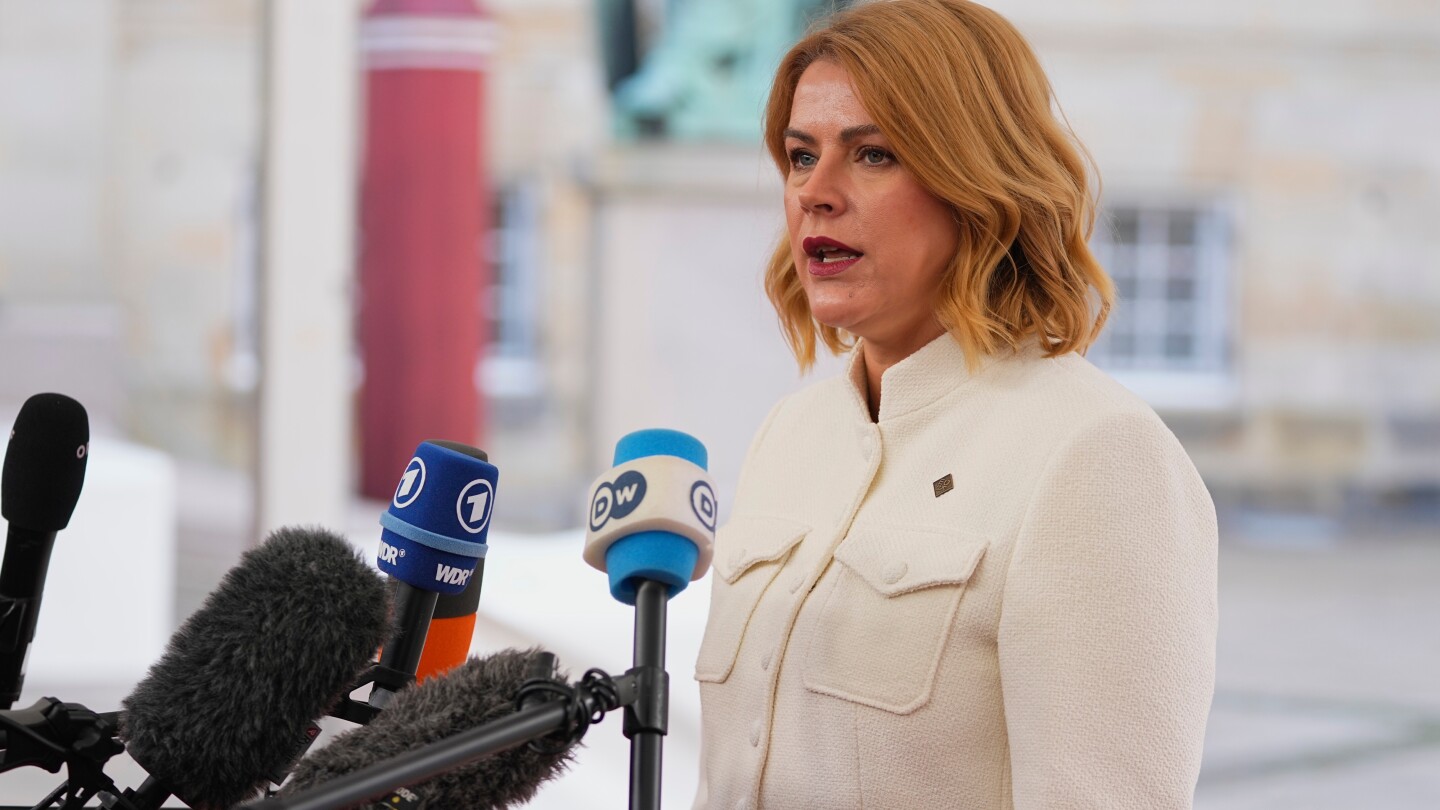
    In a contentious decision, the Latvian Parliament voted on Thursday to withdraw from the Istanbul Convention, a landmark treaty designed to protect women from violence, including domestic abuse. The vote followed a grueling 13-hour debate, marking a significant shift in Latvia’s stance on gender-based violence. The treaty, which came into force in Latvia in 2024, aimed to standardize support for victims of violence across Europe. However, it has faced fierce opposition from ultra-conservative groups and political factions, who argue that it promotes ‘gender ideology,’ encourages sexual experimentation, and harms children. The push to withdraw began in September, spearheaded by opposition lawmakers and supported by the Union of Greens and Farmers, a member of the tripartite governing coalition. Prime Minister Evika Siliņa, whose government initially pledged to ratify the convention, condemned the move, calling it ‘cruel’ and a betrayal of victims seeking help. The decision has exposed fractures within the governing coalition ahead of the 2026 parliamentary elections. Critics, including international women’s rights organization Equality Now, warn that the withdrawal endangers women in Latvia and emboldens anti-human rights movements across Europe and Central Asia. Public reaction has been polarized, with around 5,000 people protesting against the withdrawal in Riga, while a smaller group rallied in support. The law now awaits review by President Edgars Rinkēvičs, who may return it to Parliament or, in rare cases, call for a referendum.

  • Russian activity increasing around key Ukrainian town, army chief says

    Russian activity increasing around key Ukrainian town, army chief says

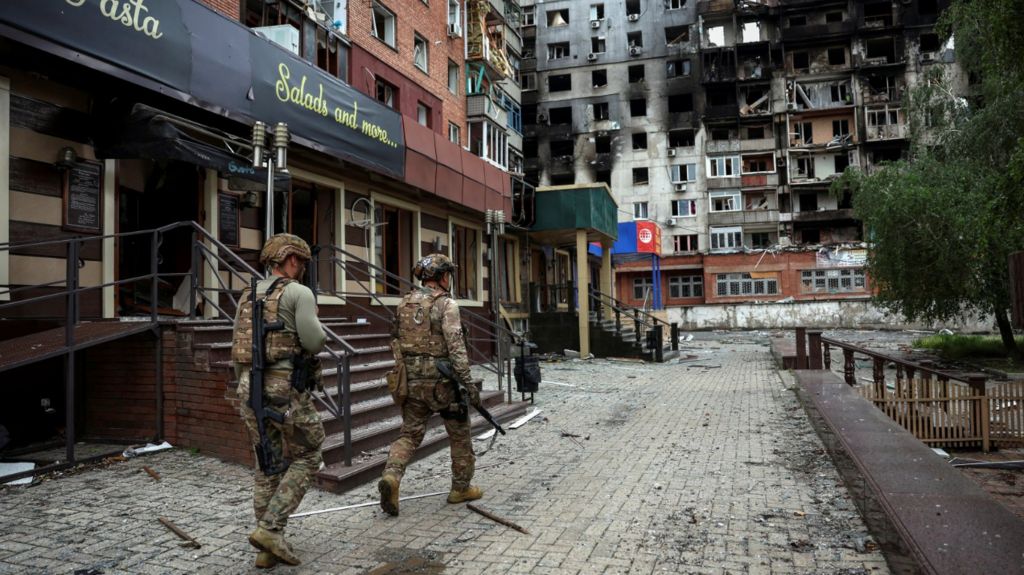
    The commander-in-chief of Ukraine’s armed forces, General Oleksandr Syrskyi, has issued a stark warning about escalating Russian military activity around the strategic town of Pokrovsk in the Donetsk region. Describing the situation as ‘difficult,’ Syrskyi confirmed that Russian infantry is massing in the area, though he dismissed claims of a Ukrainian blockade as ‘untrue’ propaganda. Pokrovsk, a critical transport and supply hub, has become a focal point in Russia’s efforts to advance further into eastern Ukraine, potentially paving the way for the capture of key cities like Kramatorsk and Sloviansk. General Syrskyi emphasized the importance of identifying and neutralizing Russian forces while maintaining a balance between military objectives and capabilities. He stressed that preserving the lives of Ukrainian soldiers remains the top priority. Ukrainian President Volodymyr Zelensky echoed these concerns, stating that Russian forces outnumber Ukrainians in Pokrovsk by eight to one and that Moscow aims to use the town as a propaganda tool to convince the United States of Ukraine’s retreat. Defense intelligence firm Sybelline and Ukrainian monitoring group Deepstate both reported that the battle for Pokrovsk has intensified, with Russian forces making significant advances and disrupting Ukrainian supply routes. Deepstate warned that the situation is nearing a crisis point, with little time left to reverse the deterioration. The conflict in Pokrovsk underscores the broader struggle for control in eastern Ukraine, as Russia continues its full-scale invasion launched in February 2022.

  • William and Kate win privacy case against French magazine over family holiday photos

    William and Kate win privacy case against French magazine over family holiday photos

    The Prince and Princess of Wales have successfully won a legal battle against the French magazine Paris Match, which published intrusive photographs of the royal family during a private skiing holiday. The images, captured in April, depicted William, Kate, and their children—Prince George, Princess Charlotte, and Prince Louis—enjoying a break in the French Alps. The photos showed the family on the slopes and relaxing on a chalet balcony, prompting the royals to take legal action. The Nanterre Judicial Court ruled that the publication of these images and an accompanying article violated the family’s right to privacy and their control over their personal images. Kensington Palace, the couple’s office, condemned the magazine’s actions, describing the article and long-lens paparazzi photos as a gross intrusion into their private family time. In a statement, the palace emphasized the couple’s commitment to safeguarding their children’s upbringing from undue public scrutiny and interference, vowing to take necessary steps to enforce these boundaries. This case echoes a previous legal victory in 2012, when William and Kate sued the French magazine Closer for publishing topless photos of Kate during a private holiday. The British media has largely respected an informal agreement to protect the privacy of the royal children, but international outlets have occasionally disregarded such norms.

  • Barcelona’s Sagrada Familia becomes the world’s tallest church

    Barcelona’s Sagrada Familia becomes the world’s tallest church

    Barcelona’s iconic Sagrada Familia basilica has achieved a historic milestone by becoming the world’s tallest church. On Thursday, a section of its central tower was successfully installed, elevating the structure to a height of 162.91 meters (534 feet). This surpasses Germany’s Ulmer Münster, a Gothic Lutheran church that previously held the title at 161.53 meters (530 feet). The Sagrada Familia, designed by the visionary architect Antoni Gaudí, is now just over a meter taller than its German counterpart. The central “Tower of Jesus Christ” is still under construction and is expected to reach its final height of 172 meters (564 feet) in the coming months. Construction of the basilica began in 1882, and Gaudí, who passed away in 1926, never anticipated its completion within his lifetime. Over the decades, the project has gained momentum, fueled by its status as a global tourist attraction. Last year alone, 4.9 million visitors, including 15% from the United States, contributed to its funding through entrance fees. The church’s intricate facades and interior decorations will continue to be developed over the next decade, with full completion anticipated around 2035. Next year marks the centenary of Gaudí’s death, and the basilica plans to host events honoring his architectural legacy, which includes other remarkable structures in Barcelona and across Spain.

  • Guy Kopelowicz, former Paris photo chief for AP, dies at 89

    Guy Kopelowicz, former Paris photo chief for AP, dies at 89

    Guy Kopelowicz, a revered figure in photojournalism and a key contributor to The Associated Press’s visual storytelling in France for over four decades, has died at the age of 89. His family confirmed his passing on Sunday. Kopelowicz’s illustrious career spanned some of the most pivotal moments in modern history, including the 1968 Paris uprising, the 1972 Munich Olympics hostage crisis, and the 1998 World Cup. Born in Paris on October 28, 1936, he joined the AP in 1964 as a photo editor, eventually rising to become Paris Chief Photo Editor in 1984, a role he held until his retirement in 2005. Beyond his professional achievements, Kopelowicz was a lifelong jazz aficionado, writing for Jazz Hot and Jazz Magazine in the late 1950s and later photographing jazz performers post-retirement. His passion for jazz was matched only by his love for fine wine, particularly Bordeaux grands crus. Kopelowicz leaves behind his wife of 55 years, Denise, and their son, Marc. A memorial service will be held at Père Lachaise Cemetery in Paris on Friday.

  • Greek airline will run direct flights to Baghdad starting in December

    Greek airline will run direct flights to Baghdad starting in December

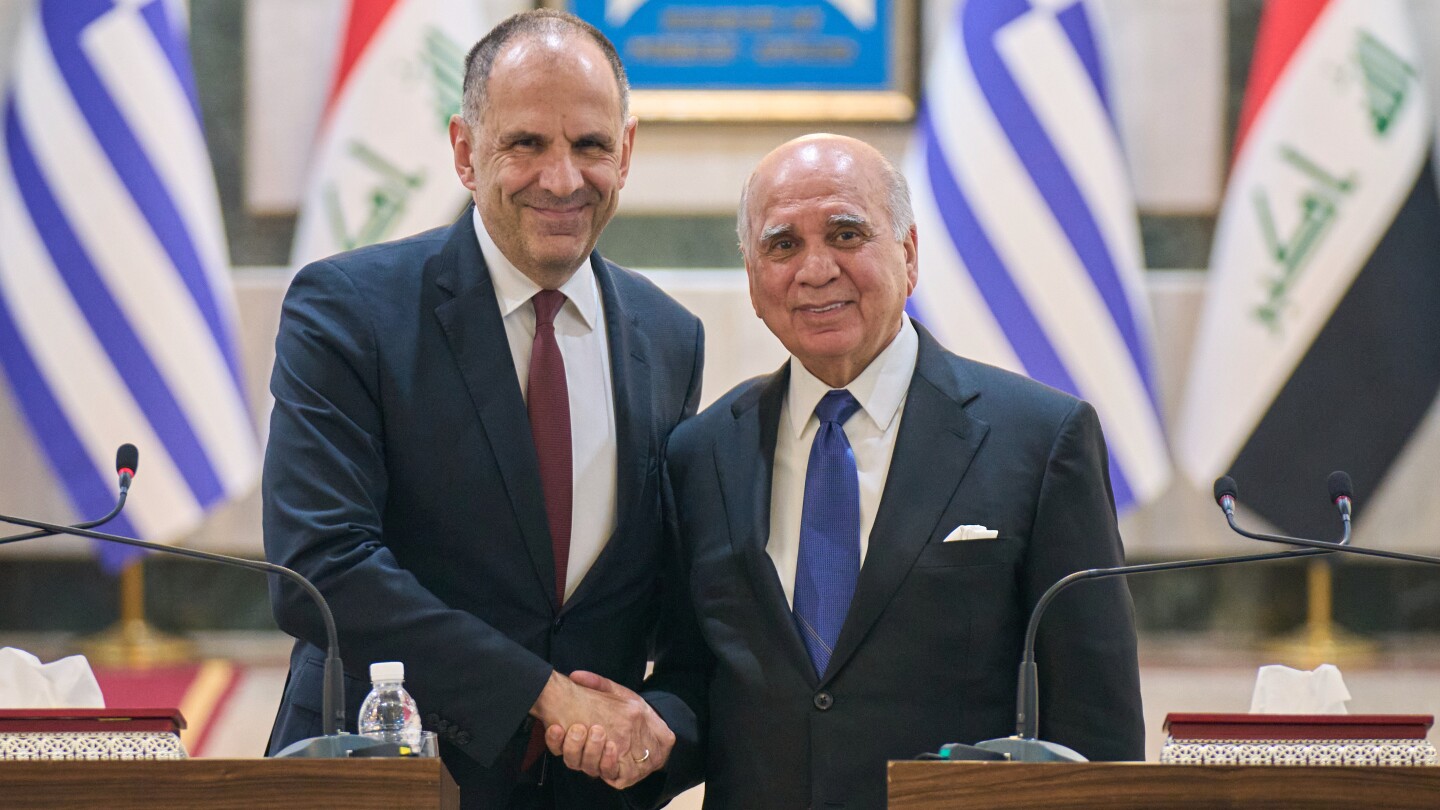
    In a significant move to enhance bilateral relations, Greece has announced the launch of direct flights from Athens to Baghdad, marking a new chapter in the economic and cultural ties between the two nations. Greek Foreign Minister Giorgos Gerapetritis revealed on Thursday during his visit to Iraq that Aegean Airlines will commence its inaugural flight on December 16. This development is particularly noteworthy as no other European airline currently operates direct flights to the Iraqi capital. Gerapetritis emphasized the potential of this initiative to significantly bolster economic and cultural connections between the peoples of Greece and Iraq. While Aegean Airlines and a few other carriers already service Irbil, the capital of Iraq’s semi-autonomous Kurdish region, Baghdad has largely been avoided due to historical security concerns. The security situation in Iraq has improved since the fall of Saddam Hussein in 2003 and the subsequent defeat of the Islamic State group, which once controlled vast territories in Iraq and Syria. Iraqi Foreign Minister Fuad Hussein welcomed the new flight route, highlighting ongoing discussions between the two countries on cooperation in agriculture, investment, and tourism. He noted that recent visits by European leaders to Iraq reflect the country’s growing stability and its enhanced international standing.

  • This Spanish tenor’s already a star in Europe. Now he’s made a big splash at the Met

    This Spanish tenor’s already a star in Europe. Now he’s made a big splash at the Met

    Xabier Anduaga, the 30-year-old Spanish tenor, has swiftly ascended to stardom in the opera world, earning acclaim for his exceptional vocal talent and stage presence. His journey began in San Sebastian, Spain, where he started singing as a boy soprano in church at the age of seven. By ten, he joined the Orfeón Donostiarra Choir, where he met Elena Barbé, his future wife and vocal coach. Despite early struggles at the conservatory, where he was pushed to sing roles unsuitable for his light tenor voice, Anduaga found his footing under Barbé’s guidance. His breakthrough came in 2016 when he performed at the Rossini festival in Pesaro, Italy, and later stepped in as a last-minute replacement for a role in Rossini’s “La Cenerentola” in Bilbao. Since then, Anduaga has become a sought-after performer across Europe, headlining productions like Bellini’s “La Sonnambula” at the Metropolitan Opera in New York. His voice, described as capable of “thinning to a silken thread or blooming into ringing, plush fortissimos,” has drawn comparisons to legendary tenors like Pavarotti, though Anduaga humbly dismisses such parallels. With a growing repertoire that includes bel canto favorites and lighter Verdi roles, Anduaga is poised to become a defining figure in opera for years to come.

  • The International Space Station marks 25 years of nonstop human presence in orbit

    The International Space Station marks 25 years of nonstop human presence in orbit

    CAPE CANAVERAL, Fla. — This weekend marks a monumental milestone in space exploration: 25 years of uninterrupted human habitation aboard the International Space Station (ISS). Since its first crew arrived on November 2, 2000, the ISS has hosted nearly 300 individuals from 26 countries, including professional astronauts, space tourists, and even a movie director. The pioneering trio of NASA’s Bill Shepherd and Russia’s Sergei Krikalev and Yuri Gidzenko laid the foundation for this extraordinary achievement, transforming the station into a functional and hospitable environment. Despite geopolitical tensions between the U.S. and Russia, collaboration in space remains strong, a testament to the unifying power of space exploration. Over the years, the ISS has evolved from a rudimentary outpost to a state-of-the-art facility, complete with advanced labs, an internet phone, and a glassed-in cupola offering breathtaking views of Earth. Astronauts have conducted thousands of experiments, including groundbreaking medical research and the famous twins study involving Scott and Mark Kelly. However, life aboard the ISS is not without challenges. Astronauts have faced close calls, such as a near-drowning incident, persistent air leaks, and the growing threat of space debris. As the ISS approaches its planned decommissioning in 2031, NASA is working with private companies like SpaceX and Axiom Space to ensure a seamless transition to future orbital stations. SpaceX has been tasked with safely deorbiting the ISS, while Axiom plans to repurpose its module into a new space station. NASA’s goal is to maintain a continuous human presence in orbit, ensuring that the legacy of the ISS endures.