标签: Europe

欧洲

  • New studies of old dogs help scientists understand where they came from

    New studies of old dogs help scientists understand where they came from

    Groundbreaking genetic research has fundamentally reshaped our understanding of canine domestication, revealing that dogs have been humanity’s companions for at least 15,800 years—5,000 years longer than previously established. Two landmark studies published in Nature have employed innovative DNA extraction techniques to analyze over 200 ancient canine and wolf specimens, providing unprecedented insights into the origins of our furry friends.

    Scientists have long theorized that dogs descended from ancient gray wolf populations in Europe or Asia through a gradual process of domestication where wolves became less aggressive while adapting to human coexistence. However, the precise timeline and geographical origins remained elusive until researchers developed specialized methods to isolate and study degraded ancient DNA, which is typically heavily contaminated and difficult to extract.

    The genetic evidence demonstrates that by 14,200 years ago, dogs had already established widespread presence across Western Europe and Asia, coexisting with hunter-gatherer societies long before the advent of agriculture. Remarkably, European dog genomes remained relatively consistent despite major human migrations during the agricultural revolution, suggesting canine populations were less affected by incoming human groups than previously thought.

    Unlike their Asian and American counterparts whose genetic patterns closely mirror human migration, European dogs maintained genetic continuity through thousands of years of societal changes. While the exact appearance of these earliest dogs remains uncertain, researchers speculate they likely resembled smaller wolves and may have assisted humans with guarding, hunting, and potentially even providing companionship to children.

    This research represents a significant advancement in paleogenomics while underscoring the enduring bond between humans and dogs—a relationship that has persisted for millennia and continues to evolve today.

  • UK bans crypto donations to political parties in bid to curb foreign influence

    UK bans crypto donations to political parties in bid to curb foreign influence

    LONDON — In a decisive move to safeguard electoral integrity, British Prime Minister Keir Starmer declared on Wednesday that political parties would be prohibited from accepting donations in cryptocurrencies. The announcement came during the weekly Prime Minister’s Questions session, where Starmer emphasized that illicit finance represents a “stark” threat to the nation’s democratic foundations.

    The new policy introduces an immediate moratorium on cryptocurrency contributions to political organizations and establishes an annual cap of £100,000 (approximately $134,000) for donations from British voters residing overseas. These measures are designed to prevent foreign actors from exploiting financial loopholes to influence UK politics.

    The ban presents particular challenges for Reform UK, the hard-right party led by Nigel Farage, which has been among the few political groups openly accepting digital currency donations. According to Electoral Commission data, the party received £12 million in the past year from Christopher Harborne, a British businessman based in Thailand.

    Reform UK deputy leader Richard Tice criticized the government’s decision, claiming it aimed to “stop the incredible progress of Reform.” Despite holding only eight seats in the 650-member House of Commons, Reform UK has consistently outperformed both the governing Labour Party and opposition Conservatives in recent opinion polls.

    The cryptocurrency ban follows a comprehensive review led by former senior civil servant Philip Rycroft, who expressed concerns that untraceable digital currencies could serve as conduits for foreign money entering the British political system. Rycroft’s report, commissioned in December after several high-profile incidents including the imprisonment of former Reform UK politician Nathan Gill for accepting bribes to make pro-Russian statements, recommended temporary restrictions until proper regulatory frameworks could be established.

    The proposed changes, which require parliamentary approval but will be backdated to take effect immediately, represent the latest in a series of democratic reforms introduced by Starmer’s center-left government. Previous measures include tightened corporate donation rules and proposals to lower the voting age from 18 to 16.

  • Haaland donates £100,000 Viking book to home town

    Haaland donates £100,000 Viking book to home town

    Beyond his remarkable achievements on the football pitch, Manchester City striker Erling Haaland is making significant contributions to cultural preservation in his native Norway. The prolific forward, who holds the record as Norway’s all-time top scorer with 55 goals in 48 international appearances, has acquired and donated a priceless 16th-century Viking manuscript to the community where he spent his formative years.

    Haaland, together with his father Alf-Inge, secured the historic artifact for 1.3 million Norwegian crowns (approximately £100,000) in December—setting a national record for book sales in Norway. The manuscript represents the 1594 printed edition of works by renowned 13th-century historian Snorri Sturluson, containing medieval narratives about Viking monarchs, warriors, farmers, and queens.

    The 25-year-old athlete, born in Leeds during his father’s tenure with Leeds United but raised in the western Norwegian town of Bryne, has gifted this unique surviving copy to the local library. This strategic placement ensures public accessibility and display within the Jæren district municipality of Time, approximately 30 kilometers south of Stavanger.

    Haaland articulated his motivation to Norwegian media outlets: “I intend for this book to remain permanently accessible so people can learn about the historical figures originating from my hometown of Bryne and the Jæren region. Football enabled me to pursue my aspirations, but literature offers boundless opportunities for others to envision grand possibilities and discover their unique trajectories.”

    The Manchester City star continues to demonstrate exceptional performance in professional football, currently leading the Premier League scoring charts with 22 goals in 29 matches this season. His athletic excellence recently propelled Norway to their first World Cup finals qualification since 1998, with Haaland finishing as top scorer in European qualifiers with 16 goals.

  • Musketeer d’Artagnan’s remains believed found under Dutch church

    Musketeer d’Artagnan’s remains believed found under Dutch church

    Archaeologists have unearthed skeletal remains beneath St. Peter and Paul Church in Maastricht that may belong to Charles de Batz de Castelmore, the historical inspiration for Alexandre Dumas’ legendary character d’Artagnan. The discovery occurred during exploratory digging beneath broken floor tiles where the church altar stood two centuries ago.

    Church deacon Jos Valke, who participated in the excavation, expressed 99% certainty that the remains belong to the famous musketeer based on multiple evidentiary factors. The skeleton was found in sacred ground directly beneath the former altar position, accompanied by a bullet believed to have caused d’Artagnan’s death and a 1660 coin from a bishop who conducted Mass for Louis XIV.

    Archaeologist Wim Dijkman, who has researched d’Artagnan’s potential burial site for 28 years, maintains scientific caution despite his high expectations. ‘This could be the highlight of my career,’ Dijkman told regional broadcasters, emphasizing the need for DNA confirmation before definitive identification.

    The remains have been subjected to advanced forensic analysis, with samples sent to German laboratories for DNA testing and additional bones transported to Deventer for anthropological examination to determine age, geographical origin, and biological sex.

    Historical records indicate d’Artagnan perished during the 1673 Siege of Maastricht while serving as a close aide to Louis XIV. Contemporary accounts suggest he was struck in the throat by a musket ball during the French campaign to capture the Dutch city. Given the midsummer timing of his death, French forces buried him locally near their encampment in what is now southwestern Maastricht.

    While Dumas’ Three Musketeers were fictionalized characters, they were inspired by members of an elite military corps that provided royal protection and participated in military engagements. This discovery potentially bridges literary legend with historical reality, offering tangible connection to one of literature’s most enduring adventure figures.

  • BBC names ex-Google executive Matt Brittin its new director-general as it faces a feud with Trump

    BBC names ex-Google executive Matt Brittin its new director-general as it faces a feud with Trump

    The British Broadcasting Corporation (BBC) has announced the appointment of Matt Brittin, a former Google executive with nearly two decades of technology sector experience, as its new director-general. The 57-year-old Brittin, who previously served as Google’s president for Europe, the Middle East, and Africa, assumes leadership of the 104-year-old British institution during one of its most challenging periods.

    Brittin’s appointment comes as the BBC confronts multiple significant challenges, including a substantial $10 billion defamation lawsuit filed by former U.S. President Donald Trump. The legal action stems from a documentary that aired prior to the 2024 presidential election, which edited together three separate quotes from Trump’s January 6, 2021 speech to create the appearance of a single statement urging supporters to “fight like hell” and march to the Capitol.

    The broadcaster faces additional pressure as it navigates its charter renewal process, which determines its public funding structure through the television license fee system. Currently set at £174.50 annually, the funding model has faced increasing criticism from commercial competitors and challenges in the digital streaming era, where traditional television viewing has declined significantly.

    Despite these challenges, Brittin expressed strong confidence in the BBC’s future, describing the organization as “an extraordinary, uniquely British asset” that requires “the pace and energy to be both where stories are, and where audiences are.” He emphasized the need for a “thriving BBC that works for everyone in a complex, uncertain and fast changing world.”

    The BBC has moved to dismiss Trump’s lawsuit in Florida federal court, arguing the case could create a “chilling effect” on reporting about public figures and events. The broadcaster maintains the documentary never aired in Florida or the United States, while simultaneously acknowledging through its chairman that the editing “gave the impression of a direct call for violent action.”

  • Estonia and Latvia say territories hit by stray Ukrainian drones

    Estonia and Latvia say territories hit by stray Ukrainian drones

    In a significant security development, Estonian and Latvian authorities confirmed that Ukrainian drones inadvertently entered their airspace from Russian territory overnight, resulting in two separate incidents with minimal damage.

    According to official statements from Tallinn and Riga, one drone struck the chimney of the Auvere power plant in northeastern Estonia, causing what was described as ‘light damage.’ Simultaneously, another drone exploded in Latvia’s southern Kraslava region. Both nations reported no casualties or major infrastructure damage from these incidents.

    The occurrences coincided with Ukraine’s substantial drone offensive targeting the Russian port of Ust-Luga on the Baltic Sea, located approximately 25 kilometers from the Estonian border. Estonian Prime Minister Kristen Michal detailed that the Ukrainian operation against Ust-Luga occurred in three waves between 03:00 and 08:00 local time, prompting Baltic air patrol activation and public emergency notifications warning citizens of ‘drone threat.’

    Estonian Security Police Chief Margo Palloson characterized the incident as involving ‘a Ukrainian drone that deviated from its course, possibly affected in Russian airspace.’ This assessment was echoed by Latvian officials, with Prime Minister Edgars Rinkevics confirming the drone’s Ukrainian origin.

    Latvian Defense Minister Andris Spruds curtailed his official visit to Ukraine to address the security situation, while Joint Staff Deputy Chief Egils Lescinskis suggested the drone had ‘most likely veered off course or was affected by electromagnetic warfare measures.’ Lescinskis acknowledged the inherent security challenges, stating nobody could ‘feel completely safe when military operations are taking place in neighbouring countries.’

    Officials refrained from assigning blame to Ukraine, instead contextualizing the events within Russia’s broader aggression. Palloson warned that Estonia should anticipate ‘more such incidents,’ with Prime Minister Michal adding it was ‘pointless to create the illusion that we can build a wall on the border with Russia.’

    The incident follows a similar occurrence in Lithuania earlier this week, where a Ukrainian attack drone crashed near the Belarusian border. Lithuanian authorities confirmed the drone was part of operations against Russia and indicated they would discuss airspace security protocols with Ukrainian counterparts.

    The broader context reveals intensified drone warfare, with Ukraine launching nearly 400 drones toward multiple Russian regions overnight, including the Moscow area. This escalation comes as Russia launched its largest 24-hour drone assault on Ukraine, firing 948 drones that resulted in numerous casualties.

  • Denmark’s ‘kingmaker’ could decide who will lead its next government after inconclusive election

    Denmark’s ‘kingmaker’ could decide who will lead its next government after inconclusive election

    COPENHAGEN, Denmark — Denmark faces a period of political uncertainty following Tuesday’s parliamentary elections that failed to deliver a decisive majority to any single party or coalition bloc. The inconclusive outcome has positioned Foreign Minister Lars Løkke Rasmussen and his centrist Moderate party as the pivotal force in determining the Scandinavian nation’s next government formation.

    Center-left Prime Minister Mette Frederiksen, despite leading her Social Democrats to remain the largest parliamentary party, confronts diminished support compared to the previous 2022 election. Her outgoing administration, notable for being the first in decades to bridge Denmark’s traditional left-right political divide, resigned on Wednesday as customary procedure. Political leaders subsequently engaged in roundtable discussions regarding potential governing arrangements before anticipated consultations with Danish King Frederik X.

    The electoral campaign predominantly centered on domestic economic concerns rather than international tensions, notably sidestepping the recent diplomatic friction surrounding former U.S. President Donald Trump’s expressed interest in Greenland. With over 4.3 million eligible voters participating in the democratic process—representing an impressive 84% turnout in the nation of 6 million—the election demonstrated robust civic engagement.

    Denmark’s Folketing, a single-chamber parliament, comprises 179 seats with four-year terms. While 175 representatives come from Denmark proper, the semi-autonomous territories of Greenland and the Faroe Islands each contribute two lawmakers. The country’s proportional representation system typically necessitates coalition governments, traditionally formed along either left-leaning ‘red bloc’ or right-leaning ‘blue bloc’ lines.

    Election expert Rune Stubager, co-director of the Danish National Election Study, suggested that Frederiksen might secure a third term as prime minister despite the uncertain outcome. ‘Whether this occurs through a new centrist coalition or a government primarily relying on support from the red bloc depends entirely on negotiation outcomes,’ Stubager commented Wednesday.

    The 48-year-old Frederiksen has established her political reputation through steadfast support for Ukraine against Russian aggression and maintaining Denmark’s characteristically restrictive immigration policies. However, Defense Minister Troels Lund Poulsen, representing the center-right Liberal party, explicitly rejected further coalition with the Social Democrats.

    Løkke Rasmussen’s Moderates, holding 14 crucial seats in the evenly divided parliament, emerged as the election’s undeniable kingmakers. With 90 seats required for majority control, neither traditional bloc can govern without Moderate support. Rasmussen appealed for compromise, urging rivals from both sides to moderate their campaign positions and ‘come and play with us.’

    Stubager observed that the Moderates’ strengthened negotiating position would likely force concessions from other parties’ campaign promises. ‘As far as I can ascertain, government formation appears impossible if all these tripwires remain intact,’ Stubager noted. ‘Consequently, certain parties must inevitably retract commitments to enable viable governance.’

    Analysts attribute part of the Moderates’ electoral success to Rasmussen’s diplomatic handling of the Greenland controversy. The party, polling poorly late last year, gained significant momentum after Rasmussen’s headline-generating trip to Washington helped de-escalate tensions with the United States.

    ‘Donald Trump essentially provided a platform where Lars Løkke could demonstrate statesmanship, and he performed admirably according to most Danish observers,’ Stubager remarked. Frederiksen similarly sought political advantage from the Greenland situation, calling early elections months before constitutionally required after polling indicated strengthened public support following her firm stance against potential American acquisition of the Arctic territory.

    The prime minister had warned in January that any U.S. takeover of Greenland would effectively signify ‘the end of NATO.’ Although Trump subsequently retreated from tariff threats against Denmark and other European opponents of the proposal, technical discussions concerning Arctic security arrangements between the U.S., Denmark, and Greenland continue presently.

  • Hungary will cut natural gas supplies to Ukraine until Russian oil deliveries resume

    Hungary will cut natural gas supplies to Ukraine until Russian oil deliveries resume

    Hungarian Prime Minister Viktor Orbán declared on Wednesday that his nation would progressively halt natural gas exports to Ukraine until Russian oil shipments resume through the Druzhba pipeline. This announcement intensifies a growing energy conflict between the two nations amid Russia’s ongoing war in Ukraine.

    Orbán characterized the current oil stoppage as “Ukrainian blackmail” in a social media address, asserting Hungary would redirect gas supplies to bolster its own reserves instead. The Druzhba pipeline, which traverses Ukrainian territory, has been non-operational for nearly two months following what Ukrainian officials attribute to Russian drone attacks damaging critical infrastructure.

    The Hungarian leader’s stance aligns with Slovakia’s populist government, with both nations accusing Kyiv of deliberately obstructing Russian energy deliveries. Ukrainian President Volodymyr Zelenskyy has expressed reluctance to permit continued transit of Russian oil through his country’s territory.

    This energy confrontation carries significant implications for Ukraine’s energy security. According to Ukrainian energy consultancy EXPRO, Hungary supplied approximately 45% of Ukraine’s gas imports last year, though this figure declined to 38% by January 2024.

    The current announcement represents the latest in a series of retaliatory measures from Budapest. Last week, Orbán—considered the Kremlin’s most prominent EU advocate—blocked a €90 billion EU loan package for Ukraine and vowed to veto further pro-Ukraine decisions until oil flows resume. Previous actions included halting diesel shipments to Ukraine and opposing additional EU sanctions against Russia.

    With Hungarian elections approaching next month, Orbán has intensified an aggressive anti-Ukraine campaign, labeling the nation an “enemy” and accusing Zelenskyy of attempting to provoke an energy crisis to influence the electoral outcome. The Hungarian government has deployed military personnel to protect energy infrastructure, alleging Ukrainian plots without providing substantiating evidence.

    Both Hungary and Slovakia maintain temporary exemptions from the EU’s prohibition on Russian oil imports instituted following Russia’s February 2022 invasion of Ukraine.

  • Fuel prices begin to fall in Ireland after excise duty cuts

    Fuel prices begin to fall in Ireland after excise duty cuts

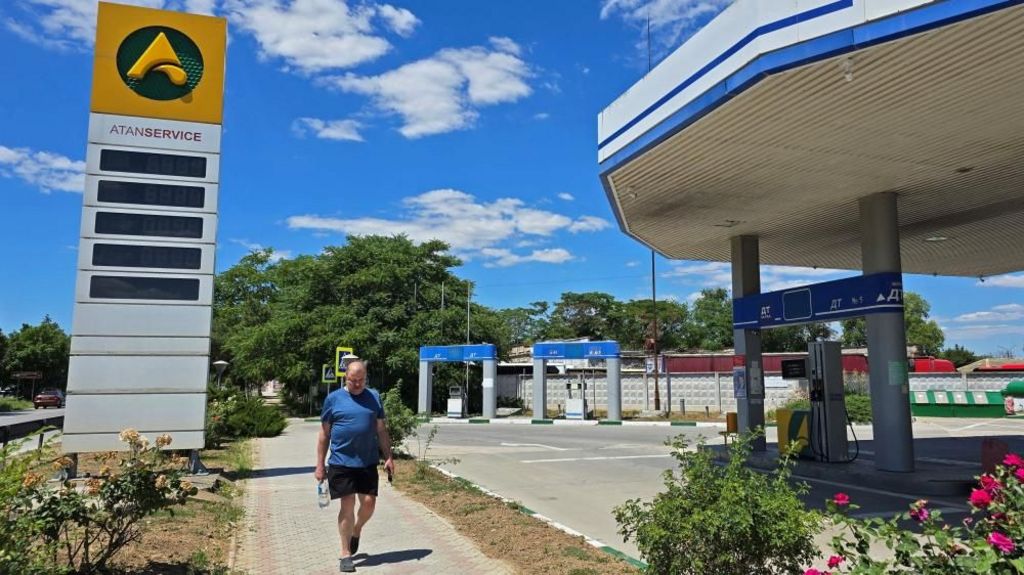
    In a decisive move to combat soaring energy costs, the Irish government has enacted a series of temporary tax reductions on fuel, providing immediate relief at the pump for consumers and businesses alike. The measures, approved by the Dáil (Irish parliament) as part of a broader €235 million support package, took effect at midnight, instantly lowering excise duties on petrol and diesel.\n\nThe policy slashes excise duty by 20 cents per litre on diesel and 15 cents per litre on petrol, a relief set to remain until the end of May. This intervention comes as a direct response to escalating global oil prices, a consequence of ongoing turbulence in the Middle East. Prior to the cut, diesel prices had surged to between €2.20 and €2.30 per litre, while petrol reached approximately €2.00 per litre. Early reports from national broadcaster RTÉ indicate prices are already adjusting, with diesel falling to around €2.09 and petrol to €1.85 on many forecourts.\n\nTaoiseach (Irish Prime Minister) Micheál Martin characterized the measures as \”targeted and temporary,\” designed to \”help shield homes and businesses\” from the volatile market. He acknowledged the limitations of government action amidst such a global crisis, stating the cuts would be subject to review based on market developments.\n\nHowever, the rollout is not entirely seamless. Industry experts note that many service stations may continue selling existing stock purchased at the higher tax rate, meaning the full benefit for motorists will be delayed until new deliveries arrive. Some retailers, keen to avoid accusations of price gouging, are reportedly reducing their pump prices preemptively before their new, cheaper stock is delivered.\n\nThe package extends beyond forecourt fuels. The NORA levy on home-heating oil has been suspended, trimming its price by two cents per litre. Furthermore, the government has introduced a VAT-inclusive three cent per litre cut on green diesel and temporarily increased the maximum rebate under the Diesel Rebate Scheme for hauliers from 7.5 to 12 cents per litre until June 30th. Additional supports include a four-week extension of heating payments for social welfare recipients and targeted energy aid for pensioners, carers, and people with disabilities.\n\nReaction from industry has been measured. Eugene Drennan, a former president of the Irish Road Haulage Association, welcomed the break but described the cuts as \”minimalist,\\” arguing they are insufficient for customers to see a significant benefit and calling for readiness to act again if the market deteriorates further.

  • Top central banker thinks businesses may be quicker to raise prices due to Iran war

    Top central banker thinks businesses may be quicker to raise prices due to Iran war

    FRANKFURT, Germany — European Central Bank President Christine Lagarde has issued a stark warning that businesses and workers across the eurozone may respond more rapidly to the current oil price surge triggered by the Iran conflict, drawing lessons from the recent inflation crisis following Russia’s invasion of Ukraine. Speaking at a financial conference in Frankfurt on Wednesday, Lagarde emphasized that the collective experience of high inflation has fundamentally altered economic behavior patterns. “We have a more recent memory of high inflation, which could affect how quickly costs are passed on and compensation is sought,” Lagarde stated in her prepared remarks. She noted that while the ECB successfully tamed the 2022 inflation spike through aggressive rate hikes, that experience “has left a mark” on an entire generation that witnessed its first major inflationary episode. Historical context reveals that eurozone inflation peaked at 10.6% in October 2022 after energy disruptions from the Ukraine conflict, before declining to 1.9% by February 2024 according to Eurostat data. Lagarde clarified that central banks typically avoid reacting to transient energy price shocks through monetary policy adjustments. The conventional approach involves looking beyond temporary spikes unless they trigger broader price-wage spirals. However, she cautioned that if inflation trends persistently above the ECB’s 2% target threshold, the response “must be appropriately forceful or persistent.” The ECB chief acknowledged that the current energy price increase remains comparatively smaller than the 2021-2022 crisis but stressed the need for vigilant monitoring. The central bank maintained its key interest rate at 2% during its March 19 meeting, adopting a watchful stance amid evolving economic conditions.