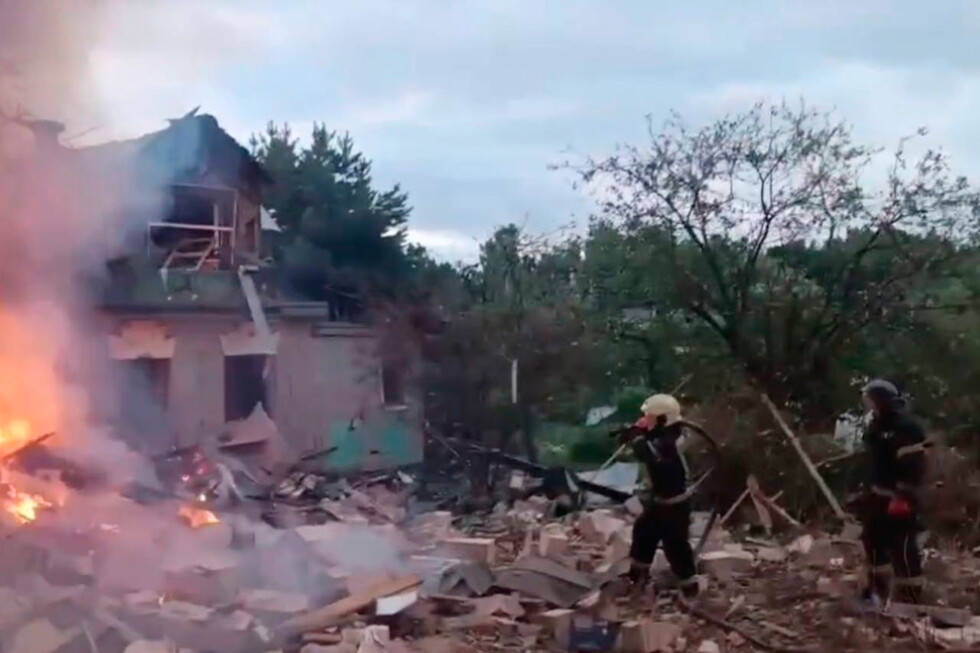
As relentless Russian airstrikes and missile barrages continue to pummel Ukrainian cities, leaving a rising trail of death and civilian suffering, a new diplomatic rift has emerged over a U.S. decision to extend a key exemption to Western sanctions on Russian crude oil exports. The U.S. move extends the window for global buyers to purchase Russian oil and petroleum products already loaded onto cargo vessels at sea until May 16, a measure Washington says is designed to head off a catastrophic global energy supply crunch stoked by escalating conflict between the U.S., Israel and Iran.
标签: Europe
欧洲
-

Allies back Starmer as Mandelson and Epstein leave the UK leader fighting for his job
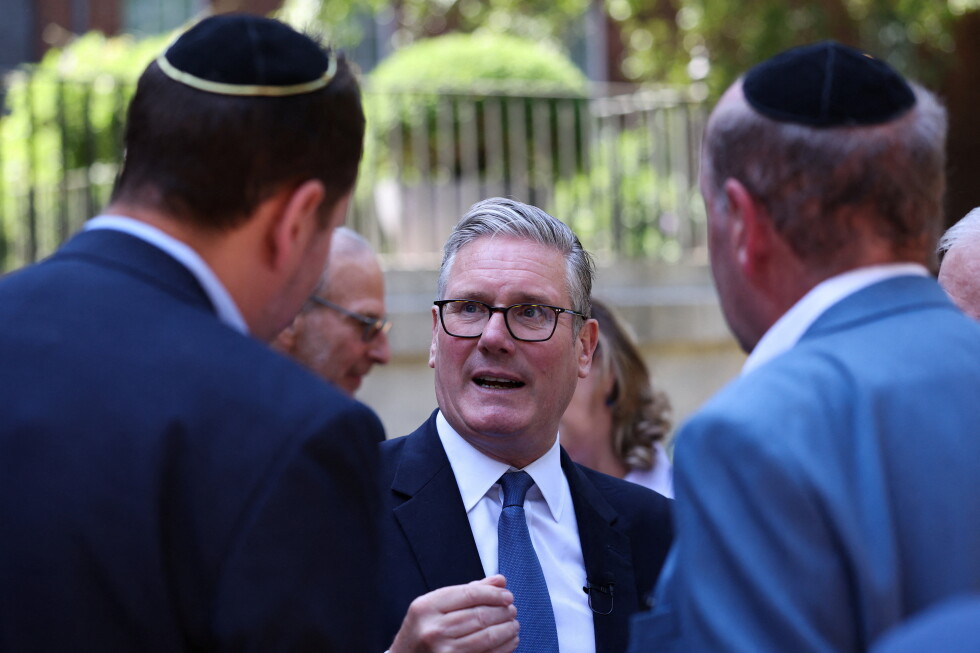
LONDON – As Prime Minister Keir Starmer braces for a make-or-break showdown with restive British lawmakers on Monday, his grip on the highest office in the United Kingdom hangs by a thread, triggered by a explosive botched appointment of a disgraced political ally to the nation’s most critical diplomatic post.
The crisis centers on Starmer’s January 2025 decision to name Peter Mandelson, a veteran politician with longstanding ties to late convicted sex offender Jeffrey Epstein, as Britain’s ambassador to the United States. It has now been revealed that Mandelson failed the mandatory intensive security vetting process required for the role – and Starmer claims he was never notified of the damning vetting recommendation that barred Mandelson from receiving clearance. The Prime Minister says he is “furious” over the withheld information, insisting he would never have moved forward with the appointment had he been informed of the outcome. The Foreign Office, which holds final authority over diplomatic nominations, ultimately approved Mandelson’s appointment despite the vetting panel’s opposition.
Senior figures within Starmer’s own Cabinet have rushed to shore up his position this weekend. Deputy Prime Minister David Lammy defended the Prime Minister, stating, “if Starmer had known, he would never, ever have appointed him ambassador.” Technology Secretary Liz Kendall echoed the defense during a Sunday interview with Sky News, arguing Starmer “is a man of integrity and there is no way he would have proceeded” with the nomination had he been aware of the failed security check.
The fallout has already claimed one high-profile casualty: Olly Robbins, the top civil servant at the Foreign Office, was forced to step down on Thursday. Supporters of Robbins, however, insist he is being made a scapegoat for the political failure, claiming he only followed established protocol in handling the sensitive vetting process. Robbins is set to deliver his own account of the chain of events to the House of Commons Foreign Affairs Committee on Tuesday. Simon McDonald, who served as Foreign Office permanent secretary until 2020, backed that narrative, telling the BBC that Robbins had been “thrown under the bus.” McDonald added that highly classified vetting information “would never be shared” with the prime minister or his political staff, per longstanding security rules.
All major opposition parties have already united in calling for Starmer’s immediate resignation. Kemi Badenoch, leader of the right-of-center Conservative Party, called the prime minister’s position “untenable.” Liberal Democrats leader Ed Davey doubled down on that demand Sunday, saying, “the government is in perpetual crisis, and I don’t think they can get out of that unless Keir Starmer moves aside.”
While Starmer’s Labour Party holds a substantial parliamentary majority, any push to remove him from office will have to come from his own party lawmakers – many of whom are already deeply frustrated by the party’s plummeting approval ratings. Starmer temporarily defused tensions over the appointment back in February, when a small group of Labour MPs first called for his resignation. But political analysts widely expect a formal leadership challenge to launch after local and regional elections conclude on May 7, where polling projects major losses for Labour.
Internal divisions within Labour run deeper than just the Mandelson scandal. Some MPs argue that changing leadership mid-term would be deeply damaging amid ongoing global instability, including the active wars in Ukraine and the Middle East, with a national election not required for another three years. But other party members have grown despairing over Starmer’s string of missteps since he led Labour to a landslide general election victory in July 2024. The Prime Minister has struggled to deliver on campaign pledges to boost economic growth, repair strained public services, and ease the country’s ongoing cost-of-living crisis, and has already been forced to reverse course on multiple key policy positions.
Critics argue the Mandelson appointment lays bare a fundamental failure of judgment on Starmer’s part. Government documents released in March 2025, after Parliament forced transparency, show Starmer’s own own staff warned him that Mandelson’s close friendship with Epstein – who died in prison in 2019 while serving a sentence for sex offenses – created significant “reputational risk” for the government. Despite those warnings, Downing Street moved forward with the nomination, pointing to Mandelson’s experience as a former European Union trade chief and his extensive network of contacts among global political and business elites, which officials framed as a major asset for engaging with U.S. President Donald Trump’s second administration.
Mandelson’s tenure in Washington lasted less than nine months. Starmer fired him in September 2025, after new evidence emerged that Mandelson had lied about the full extent of his connections to Epstein. The release of millions of pages of court documents related to Epstein by the U.S. Department of Justice earlier this year brought fresh damaging revelations, showing Mandelson maintained his relationship with the financier even after Epstein’s 2008 conviction for sexual offenses involving a minor. Emails included in the document dump also suggested Mandelson shared sensitive, potentially market-moving British government information with Epstein in 2009, following the global financial crisis.
British law enforcement launched a criminal investigation into the allegations, and arrested Mandelson on February 23 on suspicion of misconduct in public office. He has since been released from custody without bail conditions as the investigation proceeds. Mandelson has repeatedly denied all wrongdoing, has not been formally charged with any crime, and does not face any allegations of sexual misconduct connected to the Epstein case.
-

Belgium’s Beguinages: Tranquil oases in a world of noise and distraction
Bruges, Belgium’s most iconic tourist hub, hums with the constant energy of rolling suitcase wheels on cobblestones, chugging motorboats cutting through canal waters, and multilingual chatter from visitors that fills every historic street. Tucked away just across a small bridge, beneath an ornate stone arch carved with the Latin word “sauvegarde” — meaning “safe place” — a small group of 24 women have carved out a quiet sanctuary far from the city’s crowds: the Princely Beguinage Ten Wijngaerde, a serene oasis ringed with golden daffodils that dates all the way back to 1245.
For Trees Dewever, this enclosed community has been home for 22 years. In a world defined by chaos and constant stimulation, she says the beguinage wraps its residents in an overwhelming sense of peace that feels essential to modern life. Her neighbor Jo Verplaetsen, who has lived here for the same span of decades, echoes that sentiment: the medieval spirit of shelter that shaped the community remains just as soothing and socially connected today, leaving residents grateful for their home every single day.
The origins of beguinages stretch back to the 12th century, born as a response to widespread societal upheaval. Centuries of medieval conflict had decimated Europe’s male population, leaving a surge of widows and unmarried women without financial or social stability. Rather than committing to the strict, binding rules of traditional convents, many of these women chose the more flexible structure of beguinage life, explains Michel Vanholder, a volunteer at the Grand Beguinage Church of Mechelen. “They didn’t want to go become nuns but nevertheless they wanted to live together without men because there were not enough men to marry,” he notes.
Women who joined these communities were called beguines. Unlike nuns, they were never required to take formal vows of celibacy or poverty, could own personal property, and were free to leave the beguinage at any time if they chose to marry. This middle way between secular life and religious order filled a critical gap for women seeking independence in a male-dominated medieval world, says Brigitte Beernaert, who has called the Bruges beguinage home for more than 20 years. Historically, beguines supported their communities by caring for the sick and impoverished, selling skilled handwork like needlepoint and fine lace, and reinvesting earnings back into shared community resources.
For centuries, beguinages had a fraught relationship with the Vatican: at times embraced as legitimate religious communities, they were also targeted with waves of persecution. One of the most famous beguines, French Christian mystic Marguerite Porete, was burned at the stake as a heretic in 1310 for her unorthodox theological writings. Over the centuries, the beguine movement has captured the imagination of creative thinkers, with iconic novelists including Charlotte Brontë, Ken Follett, and Umberto Eco all featuring beguines and their male equivalent, the beghards, in their work.
Architecturally, beguinages were intentionally designed to prioritize comfort, quiet, and safety for like-minded women. Small private gardens are tucked along quiet alleys or clustered around a central courtyard, where homes face inward to foster community connection, and a chapel or church almost always sits at the heart of the site. Today, 13 historic beguinages across Flanders, Belgium’s Dutch-speaking northern region, are protected as UNESCO World Heritage Sites, recognizing their unique cultural and historical significance.
For visitors like German tourist Biata Weissbaeker, who explored the Bruges site with her husband, these all-women spaces remain just as vital today as they were 800 years ago. “Women need a place like this: a safe place that gives them the possibility to go inside themselves,” she says.
While the last traditional beguine in Belgium, Marcella Pattijn, passed away in 2013 at 92 years old, the core mission of the beguinage community has endured through eight centuries. “Once you are in here, you are safe — that was of course literal in the Middle Ages, once you lived here, the law couldn’t take you away,” Beernaert explains. “Today it’s more like a safe place for women alone.”
The Bruges beguinage still restricts residency to women exclusively, even as the city of Bruges now owns and maintains the grounds, with residents renting their homes from the municipal government. Across Belgium, beguinage communities host regular public events to nurture connection among residents through shared activities like community gardening, and open their doors to the public through open house events to share their history. Recently, residents of the Bruges beguinage planted raspberry bushes along the canal wall and keep beehives to produce their own honey. For Beernaert, the timeless peace of the site feels more important than ever amid global uncertainty. “The world is terrible for the moment, and this gives us the impression that it’s still safe here,” she says. “This gives Bruges already a little bit of a small paradise, if you want. And living inside that paradise feels unbelievable.”
-

Bulgarians head to the polls to elect a parliament for the eighth time in 5 years
SOFIA, Bulgaria — Balkan EU and NATO member Bulgaria is heading into its eighth national parliamentary election in just five years on Sunday, a vote that comes after years of crippling political gridlock that has left the country starved of stable, effective governance. This snap election was triggered last December, when a conservative-led administration stepped down in the wake of mass nationwide demonstrations that drew hundreds of thousands of protesters, overwhelmingly young Bulgarians, to capital and city streets across the country. Demonstrators’ core demand was the creation of a truly independent judiciary capable of rooting out the deep, systemic corruption that has defined the nation’s political landscape for decades.
Since 2021, the country of 6.5 million people has been trapped in a cycle of fragmented legislative bodies that have only produced fragile, short-lived governments. No administration formed in that window has managed to hold power for more than 12 months, with every government falling either to mass public protests or unaccountable backroom power deals within parliament. This constant rotation of ruling coalitions has eroded public faith in democratic institutions, spurred widespread voter apathy, and driven a steady decline in election turnout across successive votes.
Sunday’s ballot carries outsized geopolitical weight, coming just days after Hungarian voters rejected the long-ruling authoritarian administration of Viktor Orbán, a prominent far-right leader who has maintained close personal and policy ties to Russian President Vladimir Putin. The clear front-runner in this election is Rumen Radev, a left-leaning, pro-Russian former president who resigned from his largely ceremonial post in January — months before the end of his second five-year term — to launch a campaign for the position of prime minister. The 62-year-old Radev, a former fighter pilot and ex-air force commander, is leading the newly organized center-left Progressive Bulgaria coalition, and stands as Bulgaria’s most popular active politician.
Radev has campaigned on a promise of a national fresh start, positioning himself as a vocal opponent of the country’s deeply entrenched oligarchic networks and their links to top political figures. At campaign stops across the country, he has vowed to “remove the corrupt, oligarchic model of governance from political power.” His support base is split between two broad groups: voters drawn to his anti-corruption platform, and backers who align with his open Eurosceptic and pro-Russia policy stances. While Radev has issued formal public condemnation of Russia’s full-scale invasion of Ukraine, he has repeatedly opposed sending military aid to Kyiv and has advocated for reopening diplomatic negotiations with Moscow to end the ongoing conflict.
Bulgaria’s geopolitical standing has shifted notably in recent months: the country joined the EU’s eurozone on January 1 of this year, shortly after gaining full membership in the EU’s border-free Schengen Area, even as its domestic political system remains mired in chaos. The current race was triggered by the 2021 resignation of three-time conservative prime minister Boyko Borissov, who stepped down after mass protests driven by public anger over corruption and systemic injustice. The closest rival to Radev’s coalition is Borissov’s center-right GERB party.
Opinion polling indicates Radev’s coalition is on track to capture more than 30% of the national vote, putting it roughly 10 percentage points ahead of GERB. Most published polls carry a margin of error between 3% and 3.5%. Polling stations opened across the country at 7 a.m. local time and are scheduled to close at 8 p.m., with initial exit polls set to be released immediately after voting ends. Preliminary full election results are expected to be published on Monday.
-

French peacekeeper killed in southern Lebanon
A deadly deliberate attack on a United Nations peacekeeping patrol in southern Lebanon has claimed the life of one French service member and left three other peacekeepers injured, two critically, according to senior UN and French officials. The incident, which unfolded on a routine mission near the village of Ghanduriyah, has deepened concerns over the safety of UN personnel in the region just days after a fragile 10-day ceasefire between Israel and Hezbollah took effect.
The fatal shooting occurred when the patrol, deployed with the United Nations Interim Force in Lebanon (UNIFIL), was working to clear explosive ordnance along a key road and reopen access to a UN position that had been cut off by weeks of cross-border fighting between Israel and the Iran-aligned militant group Hezbollah. French Armed Forces Minister Catherine Vautrin confirmed the unit was ambushed at close range by an armed faction. The fallen French peacekeeper was struck immediately by a direct small-arms round; fellow troops pulled him to safety but were unable to resuscitate him, Vautrin added.
French President Emmanuel Macron publicly placed blame for the attack squarely on Hezbollah, saying “Everything suggests that responsibility for this attack lies with Hezbollah.” He called on Lebanese national authorities to immediately arrest those responsible and fulfill their security commitments alongside UNIFIL personnel. A spokesperson for UN Secretary-General António Guterres echoed the condemnation, noting that an initial UNIFIL assessment attributed the gunfire to non-state actors, which the mission presumes to be Hezbollah. The spokesperson stressed the urgent need for all factions to honor the recently agreed cessation of hostilities and maintain full compliance with the ceasefire terms.
Hezbollah has forcefully rejected all accusations of involvement, calling the claims rushed and baseless. In an official statement released Saturday, the group urged stakeholders to exercise caution before assigning blame, calling for a full, transparent investigation by the Lebanese Armed Forces to uncover the full circumstances of the incident. The militant group also called for continued close coordination between UNIFIL, the Lebanese army, and local communities during this period of heightened volatility.
Lebanese national leaders have moved quickly to condemn the attack. Lebanese President Joseph Aoun spoke by phone with President Macron, pledging that all perpetrators would be brought to justice. Prime Minister Nawaf Salam has formally ordered a full official investigation into the ambush. The Lebanese Armed Forces said the shooting followed earlier exchanges of fire with unidentified armed individuals, adding that it is maintaining close operational coordination with UNIFL during what it describes as an extremely sensitive security phase in southern Lebanon.
This attack is the latest in a string of deadly incidents targeting UN peacekeepers in the region. In late March, three Indonesian UNIFIL personnel were killed in two separate incidents: one in a vehicle-borne explosion and another in a projectile strike a day prior. Since UNIFIL was first established by the UN Security Council in 1978, following Israel’s initial invasion of southern Lebanon, more than 330 peacekeepers have lost their lives during the mission.
UNIFIL has reiterated that under binding international law, all armed and political actors are legally obligated to guarantee the safety and security of UN personnel deployed in the region. The mission emphasized that deliberate targeted attacks on peacekeepers constitute grave violations of international humanitarian law, and can be formally prosecuted as war crimes.
The current attack comes against a backdrop of sharply escalating tensions along the Lebanon-Israel Blue Line, where cross-border clashes between Hezbollah and Israel reignited on March 2, drastically raising the security risks for peacekeepers deployed to the area. The 10-day ceasefire brokered by the United States went into effect on April 16, with Washington calling on Hezbollah to strictly abide by the agreement’s terms.
Originally mandated to oversee Israeli withdrawal from southern Lebanon, restore regional stability, and support the Lebanese government in reasserting sovereign control over its southern territory, UNIFIL’s mandate was expanded following the 2006 Israel-Hezbollah war. UN Security Council Resolution 1701 expanded the mission’s responsibilities to include monitoring ceasefire compliance along the Blue Line, the de facto border between Israel and Lebanon, in partnership with the Lebanese Armed Forces.
-

‘Croatia, but cheaper’: The quirky holiday spots on trend for 2026
In an era where the thrill of discovering a lesser-known travel spot has become one of the most sought-after holiday experiences, shifting travel trends among British holidaymakers are throwing a spotlight on underrated European gems that balance affordability, authenticity, and adventure. New data from the Association of British Travel Agents (ABTA) reveals that 2024 has seen a growing preference for genuine, off-the-beaten-path trips over crowded, one-size-fits-all all-inclusive resorts, with 40% of Britons planning to visit a country they have never explored before this year. This shift comes against a backdrop of global uncertainty: ongoing conflict in the Middle East has pushed many travelers to seek safer European alternatives, while concerns over potential jet fuel shortages and the ongoing cost-of-living crisis have put longer-haul trips out of reach for many. For those hunting for a cost-effective, unique summer getaway, a handful of lesser-known European destinations are quickly climbing must-visit lists.
-

Chernobyl’s last wedding: The couple who married as a nuclear disaster unfolded
On the cusp of their wedding day in April 1986, 19-year-old trainee teacher Iryna Stetsenko and 25-year-old nuclear power plant engineer Serhiy Lobanov had every reason to look forward to their future. The young couple were building their life in Pripyat, a purpose-built, newly constructed Soviet city constructed to house workers of the nearby Chernobyl Nuclear Power Plant. What they could not know that night was that 4 kilometers from their apartment, the world’s worst nuclear disaster was already unfolding.
It was just after midnight when Iryna, who had just finished polishing her nails for the ceremony, stepped out onto her balcony and heard an unfamiliar, deep rumble. “It was as if a hundred planes were roaring overhead, everything hummed, and every window pane shook,” she recalled. Serhiy, sleeping on a kitchen mattress in a relative’s apartment full of wedding guests, felt a low, rolling wave that he mistook for a minor earthquake before drifting back to sleep.
When dawn broke on April 26, Serhiy woke full of excitement for his sunny wedding day. As he ran pre-ceremony errands, he noticed signs that something was very wrong: soldiers in gas masks patrolled the streets, workers hosed down roads with foamy decontamination solution, and colleagues from the plant told him they had been called in urgently for an emergency they could not explain. Glancing across the city, he could see dark smoke billowing from the damaged Reactor Number Four. What would later become clear is that firefighters and plant workers had spent the entire night fighting a massive toxic blaze, absorbing potentially lethal doses of radiation to contain the disaster.
Though anxiety prickled at him, Serhiy continued with his plans. He found the city market nearly deserted on what was usually a busy Saturday morning, and picked five simple tulips for his bride. Back at Iryna’s apartment, her mother had spent the night fielding frantic calls from neighbors warning of an unspecified catastrophe, but Soviet information controls kept any details of the accident from being released. When Iryna’s mother called local authorities for answers, officials insisted all scheduled city events proceed as planned. Schools stayed open, and the wedding went forward.
The wedding party processed in a line of cars to Pripyat’s Palace of Culture, the city’s central venue for both state ceremonies and popular local discos. The couple exchanged their vows standing on a cloth embroidered with their names, then moved to a nearby café for their wedding banquet. But the joy of the day was swallowed by uncertainty. “Everyone knew something terrible had happened, but nobody knew what it was,” Serhiy said. The couple had practiced a traditional waltz for their first dance, but as the weight of the unfolding tragedy settled over them, they lost the rhythm almost immediately. “We just hugged each other and stayed that way, moving together in the hug,” Iryna remembered.
By the early hours of Sunday, just hours after they were married, the couple were warned to evacuate immediately: a mandatory evacuation train was set to depart Pripyat at 5 a.m. Iryna only had a thin celebration dress with her, so she slipped her voluminous wedding dress back on to run back to her mother’s apartment to pack. Her new shoes had already given her blisters, so she ran barefoot through rain puddles, wedding dress trailing behind her. As their train pulled out of the station in the pre-dawn dark, they could see the glowing, collapsed reactor against the sky. Serhiy described it as “looking straight into the eye of an active volcano.” Authorities told evacuees the displacement would only last three days. The couple never returned.
The 1986 Chernobyl explosion, which occurred in what is now northern Ukraine, was caused by a catastrophic failed safety test. The International Atomic Energy Agency and World Health Organization estimate the blast released 400 times more radioactive material than the atomic bomb dropped on Hiroshima. The Soviet Union faced widespread international condemnation for its slow, opaque response: it only confirmed the accident two days later, after Swedish nuclear monitors detected abnormal radiation drifting across Western Europe, and Soviet leader Mikhail Gorbachev did not address the disaster publicly for more than two weeks.
Nikolai Solovyov, a lead turbine engineer on shift at the plant when the explosion hit, described the moment: “It felt like an earthquake under our feet. We saw the roof collapsing, a blast of hot air rushed toward us carrying thick black dust, and then the sirens started.” He and his colleagues rushed to the site assuming a generator had exploded, never imagining the reactor itself had blown. One worker’s dosimeter registered radiation levels far beyond its measuring capacity. They found a colleague alive but vomiting, a clear sign of acute radiation sickness—he was among the first to die from the disaster.
The official death toll in the immediate aftermath of the accident stands at 31: two killed directly by the blast, 28 who died from acute radiation sickness in the weeks that followed, and one fatality from cardiac arrest. The long-term death toll remains fiercely contested: a 2005 UN agency study estimated up to 4,000 people may eventually die from radiation-related causes, while other independent estimates put the number as high as tens of thousands.
To contain the spreading radiation, Soviet authorities launched a massive clean-up operation, mobilizing hundreds of thousands of “liquidators” from across the union to stabilize the site and clear radioactive debris. Extreme radiation levels fried electronic equipment, forcing many workers to clear toxic debris by hand in short shifts designed to limit lethal exposure. Jaan Krinal, one of dozens of liquidators deployed from Soviet-era Estonia, recalled wearing 20+ kilograms of lead plating for protection, plus a construction helmet, goggles, and a dosimeter tucked in his pocket. He and fellow Estonian liquidator Rein Klaar worked in 60-second bursts on the roof of Reactor Three, with no time to process the danger they faced. “Nobody could tell us what was what,” Rein said. “There was no time to think.”
In the months after the evacuation, Iryna and Serhiy were staying with Iryna’s grandmother 300 kilometers away in the Poltava region, east of Kyiv, when doctors made an unexpected discovery: Iryna was three months pregnant. Evacuated women were broadly warned that radiation exposure could harm fetuses, and many were advised to terminate pregnancies. “I was scared to have the baby, and scared to have an abortion,” Iryna remembered. But one supportive female doctor encouraged her to carry the pregnancy to term, and later that year, Iryna gave birth to a healthy daughter, Katya. Today, Katya is a mother herself, and the couple have a 15-year-old granddaughter.
Four decades on, the legacy of the Chernobyl disaster stretches across generations, and new upheaval has again upended the lives of those who survived it. The site of the explosion has become an active war zone following Russia’s 2022 full-scale invasion of Ukraine. In 2022, Russian tanks seized the Chernobyl plant complex, holding staff hostage for five weeks, laying mines, and digging defensive trenches across contaminated land. In 2025, a drone strike punched a hole in the 1.6 billion USD safety shield installed over Reactor Four in 2016, replacing an unstable original concrete sarcophagus. While radiation levels did not spike after the strike, the International Atomic Energy Agency has confirmed the shield can no longer perform its primary safety function. The plant requires constant monitoring and maintenance to prevent further radiation leaks.
Much of the 1,000-square-mile Chernobyl Exclusion Zone is now safe for short-term visitor tours, but permanent settlement remains banned, and hotspots of deadly contamination remain in areas like the Red Forest, a stand of pine trees killed by radiation that remains heavily toxic. Pripyat, once celebrated as a beacon of Soviet technological progress and youthful optimism, is now a crumbling ghost city. The Palace of Culture where Iryna and Serhiy married stands abandoned and derelict, succumbing to decades of neglect.
For Iryna and Serhiy, displacement became a second reality in 2022, after a Russian missile struck their daughter’s Kyiv apartment. The couple fled Ukraine for a new life in Berlin, forced to uproot their lives for the second time—once for a nuclear disaster, once for war. Though they suspect radiation exposure has contributed to long-term health issues Iryna has endured, including two total knee replacements, and a 2016 heart attack Serhiy suffered, their four-decade marriage has become their anchor through every crisis.
“I think we really had to go through so many difficulties in life to understand that we really can’t be one without the other,” Iryna said. “After 40 years, I can say with certainty that we are like a thread and a needle. We do everything together.”
This story accompanies new BBC programming marking the 40th anniversary of the Chernobyl disaster. UK viewers can watch *What Happened at Chernobyl* on BBC One at 8:30 p.m. on April 20, with streaming available on BBC iPlayer from 6 a.m. the same day. *The Last Dance Floor in Chernobyl*, a podcast telling the full story of Iryna and Serhiy’s wedding against the backdrop of disaster, will also be released.
-

England thrashes Scotland as record Murrayfield crowd watches a Women’s Six Nations rout
On a sun-soaked matchday across the United Kingdom and Ireland, the second round of the 2024 Women’s Six Nations delivered lopsided results that kept the tournament’s biggest anticipated showdown firmly on schedule, while continuing to break fan attendance records for women’s rugby.
England, the tournament’s dominant defending champions, delivered a staggering 84-7 blowout over host Scotland at Edinburgh’s Murrayfield, a result that stretched their unmatched winning streak to 35 consecutive test matches. Entering the match with significant disruption to their roster — three additional World Cup winners sidelined by injury just one week after a rusty 33-12 win over Ireland at Twickenham — coach John Mitchell was forced to reshuffle his starting lineup: back-rower Abi Burton shifted to an unfamiliar lock position, 19-year-old Demelza Short made her senior international debut, and Emma Sing earned a start at fullback that moved regular Ellie Kildunne out to the wing.
That reshuffled side put on a masterclass of attacking rugby, crossing the try line 12 times — all converted — from 18 attacking entries into Scotland’s 22-meter zone. Number 8 Maddie Feaunati turned in a Player of the Match performance as an unstoppable attacking force, supported by standout displays from Sadia Kabeya, prop Maud Muir (playing in her 50th test match), scrumhalf Lucy Packer, flyhalf Zoe Harrison, captain Megan Jones, and Sing. Ten different players notched tries for England, including a double from Kildunne that pushed her career test try total to 50 in just 59 appearances, former captain Marlie Packer’s 53rd career try, and scores for replacement players Sarah Bern, Mia Venner and Haineala Lutui.
Mitchell praised his side’s adaptability after the final whistle, noting “That was a special performance. There’s been a lot of moving parts over the last few weeks, with some serious injuries.” The 84-point result marked the seventh time England has hit the 80-point mark in Six Nations history — no other team has ever done so — and ranks as the fourth-highest single-game score in the tournament’s history, the third time England has put 80 or more points on Scotland. Scotland captain Rachel Malcolm acknowledged the gulf in quality between the two sides, saying “Where we are in our cycle, England aren’t a team that we are ready to compete with. We created some pretty cool chances but we didn’t stop them enough times.”
The match also made off-field history: a sellout crowd of 30,498 fans packed Murrayfield, the largest standalone crowd for any women’s sporting event in Scottish history. That record attendance continues a tournament-wide trend of growing fan support for the Women’s Six Nations.
Across the border in Cardiff, second-ranked France pulled away from a stubborn first-half fightback to beat Wales 38-7 at Cardiff Arms Park, keeping their unbeaten record intact and setting up a potential Grand Slam decider against England in the final round of the tournament in Bordeaux. France got off to a disastrous start: prop Yllana Brosseau was sin-binned for four early penalties inside the opening 14 minutes, and scrumhalf Pauline Bourdon Sansus soon joined her for collapsing a Welsh rolling maul, which gifted Wales a penalty try that left the two sides tied 7-7 at halftime with France down to 13 players.
Playing a man down actually focused the French side, who crossed for their first try through lock Madoussou Fall Raclot before halftime while Wales held firm defensively. The deadlock broke completely after the break, when French captain Manaé Feleu finished off a break from Aubane Rousset to retake the lead. When Wales’ Gwen Crabb was yellow-carded mid-way through the second half, France capitalized in quick succession: Bourdon Sansus set up Léa Murie for a try before crossing for one of her own just five minutes later. Wing Anaïs Grando, playing in just her second test match, closed out the scoring with two late tries to push the final score to 38-7.
Fall Raclot noted after the match that the slow start was a concern for the side ahead of their tough upcoming fixture: “We need to better prepare our starts. We’ve had two close games now that can’t happen again. We were able to talk to each other, get back together, and in the end we got the job done.”
In Galway, Ireland kept the pressure on France with a record-breaking 57-20 win over Italy, putting Ireland in position to upset France’s Grand Slam hopes when they face Les Bleues in Clermont-Ferrand next weekend. The result marked a major rebound for Ireland after a tight, low-scoring opening round loss to England, and drew a crowd of 9,206 to Connacht Rugby’s 12,500-capacity stadium — a sellout for Ireland’s first ever test match hosted in Galway.
Winger Beibhinn Parsons, who made her international debut at just 16 years old in 2018, seized the opportunity to play her first senior test in her home region, scoring a hat trick of tries. Fellow winger Robyn O’Connor, called up from the national sevens program, scored a try on her debut, crossing for the bonus-point fourth try as early as the 23rd minute. Last year’s Six Nations MVP, number 8 Aoife Wafer, bounced back from a quiet opening round to put on a dominant display: 12 carries, eight tackles, one turnover and a try in just 53 minutes of play.
Ireland held a commanding 45-10 lead at halftime, and while Italy rallied in the second half to score four tries and earn a bonus point, Ireland’s nine tries pushed their final total past the previous record of 54 points against Italy set one year ago. After the match, Ireland coach Scott Bemand said his side was already focused on the huge upcoming test against France, adding “There are some things to tidy up from today but if we get those bits right we know we can put in a performance to compete with the French. We think we are getting better.”
With two rounds complete, England and France remain the only two unbeaten sides, on a direct collision course for a Grand Slam decider in the final round in a month’s time. If Ireland can pull off an upset over France next weekend, they will throw the tournament table wide open heading into the final matches.
-

What consumers can do as the Iran war impacts the cost and availability of flights
The ongoing military conflict between the U.S. and Israel against Iran has created unprecedented pressure on global oil markets, sending shockwaves through the international aviation sector and leaving summer travel planners facing uncertainty over ticket costs and flight availability.
The head of the International Energy Agency has issued an urgent warning: European nations could face critical jet fuel shortages in as little as a matter of weeks, a shortfall that would force both domestic European carriers and international airlines flying into the continent to slash flight numbers dramatically. Already, the global benchmark price of jet fuel has more than doubled in just over a month, jumping from roughly $99 per barrel at the end of February to a peak of $209 per barrel in early April. In response, airlines across the globe have moved quickly to offset these rising costs, implementing higher checked bag fees and adding new fuel surcharges to passenger tickets.
In one of the most high-profile examples of the conflict’s impact on commercial air travel, Air Canada announced Friday that it will temporarily suspend all service to New York City’s John F. Kennedy International Airport from June 1 through October 25, a move designed explicitly to cut the carrier’s overall fuel consumption and reduce cost exposure. Air Canada is far from alone: major U.S. carriers including United Airlines and Delta Air Lines, alongside pan-European giant Air France-KLM, Scandinavian carrier SAS, Asian operators Philippine Airlines and Cathay Pacific, have all trimmed route networks, lifted ticket prices, and warned that further hikes will be implemented if the conflict disrupts oil shipments through the critical Strait of Hormuz, a chokepoint through which roughly 20% of global oil supplies pass daily.
Industry analysts note that the extreme volatility of current oil markets makes long-term planning nearly impossible for airlines, prompting a cautious approach that will keep fares elevated until geopolitical tensions ease. “It’s very hard for the airlines to make predictions in this environment, so they’re going to be conservative, and that’s why it’s likely that their prices will remain elevated for some time until things really stabilize,” explained Shye Gilad, a former commercial airline captain and current professor at Georgetown University’s McDonough School of Business.
While upward pressure on fares and fees is unavoidable for 2025 late spring and summer travel, industry experts emphasize that consumers still have actionable strategies to limit the impact on their travel budgets, ranging from smart booking practices to flexibility and loyalty program utilization.
### Act Early and Avoid Restrictive Fares
Travel experts warn that the common “wait-and-see” approach to booking, where consumers hold out for lower fares hoping for a quick end to the conflict, carries unusual risk this year. The longer the conflict drags on, the closer it gets to the peak summer travel season, when demand already outpaces available capacity.Even if a lasting ceasefire or full peace agreement is reached in the coming weeks, restoring jet fuel production and distribution to normal levels will take months, meaning price relief will not be immediate, according to Henry Harteveldt, airline industry analyst and president of the Atmosphere Research Group. Recent geopolitical shifts have only underscored this uncertainty: Iran’s sudden reversal of an earlier decision to reopen the Strait of Hormuz, paired with former U.S. President Donald Trump’s commitment to maintaining a tight blockade on Iranian oil exports, have left reliable oil flow from the Persian Gulf far from guaranteed.
“My advice to travelers is this: If you find a flight whose schedule fits yours, with a fare you can afford, and on an airline you can at least tolerate, book it,” Harteveldt said. “But — and I cannot emphasize this enough — do not book a Basic Economy fare.”
Basic Economy tickets, the cheapest fare class offered by most airlines, come with severe restrictions that leave little flexibility for changing plans. For most North American carriers, Basic Economy tickets cannot be changed or canceled for a refund or travel credit after the standard 24-hour booking window closes, meaning travelers are left with no recourse if their plans shift. Paying a slightly higher fee for a standard Economy ticket unlocks far more flexibility to adjust travel plans, Harteveldt added. Gilad echoed this advice, noting that paying a small premium for a fully refundable ticket gives travelers an additional advantage: if fares drop significantly after booking, passengers can cancel their original reservation and rebook at the lower rate.
For travelers looking to lock in the lowest possible fares, longstanding industry guidance still holds: international flights typically hit their lowest price point between two and five months before departure, while domestic trips are cheapest when booked three to six weeks in advance. Last-minute bookings, which already command a premium under normal market conditions, will see even steeper price increases this year, Gilad said. “Remember, especially if you’re traveling on the major airlines, they’re going to have more ability to adjust fares. If you book too close to your travel date, you’re going to pay more. The farther out you can book, the better.”
### Stay Flexible To Unlock Lower Fares
Travelers who are not tied to a specific departure date or destination can unlock significant savings by adjusting their plans. Shifting departure or return dates by just one or two days, moving from peak travel periods like weekends and holidays to less popular midweek slots, often cuts hundreds of dollars off the total ticket price.Being open to alternate destinations can also yield major savings. For example, a flight departing from the U.S. to one major European city can be hundreds of dollars cheaper than a flight to a neighboring capital. Thanks to extensive low-cost carrier networks and high-speed rail connections across most of Europe, flying into a cheaper, alternate airport still leaves travelers easy access to their intended final destination. For travelers open to exploring new options, flight search tools like Skyscanner’s “Explore Everywhere” feature let users compare fares across all possible destinations from their departure airport to find the lowest available prices.
Similarly, considering alternate departure airports can lead to major savings. Major international hub airports typically offer more competition and lower fares than small regional airports. In many cases, booking a short connecting flight or taking a train to a major hub, then flying long-haul from there, still results in a lower total cost than flying directly from a local regional airport — for example, taking a short train from Milwaukee to Chicago’s O’Hare International Airport before a long-haul international flight.
### Pack Light To Avoid Added Fees
Many major U.S. airlines have raised checked bag fees in recent months in response to rising operating costs, so sticking to a carry-on bag whenever possible eliminates this extra expense entirely. For travelers who cannot pack light, planning ahead is critical: most airlines charge significantly higher fees to add checked bags closer to the departure date, especially within the 24 hours before a flight.### Leverage Loyalty Points And Credit Card Rewards
As fares rise, the value of unused airline and credit card loyalty points has increased, and most airlines have not raised the number of points required for award tickets at the same pace as cash fares, according to Adam Morvitz, CEO of points.me, a leading travel rewards redemption search platform. Airlines still need to fill empty seats, Morvitz explained, and offering award seats at attractive point pricing is a proven strategy to boost load factors.Even travelers who do not have enough points to cover a full round-trip ticket can redeem points to cover one leg of the journey, freeing up cash for other travel expenses. Morvitz noted that most travelers redeem points directly through their credit card’s booking portal, where points are typically worth roughly 1 cent per point. Transferring credit card points to an airline’s own loyalty program almost always unlocks better value, as most major credit card issuers partner with a wide range of global airlines.
For example, American Express Membership Rewards points can be transferred to Air France-KLM’s Flying Blue program. Even travelers who do not intend to fly Air France can use those points to book award tickets on Flying Blue partner carriers, including Delta Air Lines, Morvitz explained. “Points are a form of wealth, and consumers should recognize that those points increase spending power,” he said.
For travelers who do not already have a travel-focused credit card, new cardmember sign-up bonuses can often provide enough points to cover an entire summer flight after meeting the card’s minimum spending requirement. Even for occasional travelers, the sign-up bonus alone typically delivers more points than the incremental points earned from flying regularly, Morvitz said. Points can be earned on everyday spending, from groceries and dining out to gas purchases, and many travel cards include additional perks like free or discounted checked bags that cut down on extra travel costs.
-

Venezuela’s Maria Corina Machado draws a huge Madrid rally and rebuffs meeting with Spain’s Sánchez
MADRID – On a Saturday during her multi-nation European tour, exiled Venezuelan opposition leader María Corina Machado gathered thousands of supporters at a rally in Madrid’s iconic Puerta del Sol, while confirming she had turned down a planned meeting with Spain’s progressive Prime Minister Pedro Sánchez. The timing of the rejection carried sharp political irony: the same day Sánchez was hosting a high-profile summit of progressive leaders from across the globe who share his ideological alignment.
Unlike Sánchez, who has long been an outspoken critic of former U.S. President Donald Trump, Machado has openly praised Trump’s January action that ousted long-time Venezuelan authoritarian leader Nicolás Maduro. Earlier this year, the opposition figure even awarded Trump her nomination for the Nobel Peace Prize, a step she says she has no regrets over, despite the Trump administration having largely sidelined her pro-democracy advocacy efforts.
In comments to reporters after the rally, Machado justified her refusal to meet Sánchez, arguing that the proceedings of his Barcelona gathering of global progressive leaders made any such meeting inappropriate. She had previously stated her firm intention to return to Venezuela to continue her political work, though she declined to share specific details of when or how the return would be carried out, while openly acknowledging the immense challenges that would accompany any homecoming under current circumstances.
Machado’s European tour has already included meetings with top leaders from France, Italy and the Netherlands, and it unfolds against a shifting political landscape in Venezuelan opposition circles. Interim President Delcy Rodríguez has remained in her temporary role beyond the original 90-day deadline set for her position, and the U.S. government has recently relaxed a number of sanctions targeting Rodríguez. Machado has been openly critical of Rodríguez’s leadership, framing her interim government as a force that perpetuates “chaos, violence and terror” in the country. She has repeatedly reaffirmed her commitment to holding free, democratic elections in Venezuela, saying she is confident such a transition is coming.
Maintaining close ties to the former U.S. administration, Machado confirmed she is in permanent contact with Trump administration officials and says she trusts Washington’s phased approach to Venezuela following Maduro’s ouster. She went so far as to single out Trump as the only global head of state that has risked his own countrymen’s well-being to advance Venezuelan freedom, referencing the U.S. military operation carried out in January.
The rally itself was backed by prominent local conservative opposition figure Isabel Díaz Ayuso, the regional leader of Madrid who is one of Sánchez’s most vocal domestic critics. Ayuso formally welcomed Machado earlier the same day before the main public gathering.
Spain is home to more than 600,000 Venezuelan migrants, the largest concentration of Venezuelan people outside of the Americas. Most of these residents fled to Spain to escape political persecution, widespread violence, and Venezuela’s crippling economic collapse, with a majority settling in the capital city of Madrid.
Among the attendees was 27-year-old Venezuelan migrant Grehlsy Peñuela, who says she still pins her hopes for her home country on Machado and her eventual return to Caracas. Peñuela carried signs bearing the photos of her two cousins, who she says are still being held as political prisoners in the Venezuelan capital. Like many migrant supporters at the rally, she says she would only consider returning to Venezuela if one condition is met: the full resignation of the country’s current ruling government.