
China has enacted a significant revision to its Cybersecurity Law, which will take effect on January 1, 2026. The updated legislation, approved by the Standing Committee of the 14th National People’s Congress, places a strong emphasis on advancing artificial intelligence (AI) research and development while imposing harsher penalties for cybersecurity violations. A key addition to the law is the explicit support for foundational AI research, including the development of algorithms, training data resources, and computing infrastructure. The revision also mandates the establishment of robust AI ethics guidelines, enhanced risk monitoring, and safety oversight to ensure the responsible application of AI technologies. Furthermore, the law encourages the integration of AI into innovative cybersecurity management practices to bolster protection levels. The amendments introduce stricter penalties for violations, particularly those involving large-scale data breaches or the loss of functionality in critical information infrastructure. Operators failing to meet cybersecurity obligations could face fines ranging from 500,000 to 10 million yuan, while individuals directly responsible may be fined up to 1 million yuan. The revised law also strengthens enforcement against the dissemination of prohibited information, with fines escalating to 10 million yuan for severe violations. This marks the second revision of the Cybersecurity Law since its inception in 2016, reflecting China’s commitment to addressing emerging challenges in the digital landscape. The NPC official highlighted the law’s role in curbing harmful cyber activities while acknowledging the persistent threats of network intrusions and illegal content dissemination. The amendments aim to refine liabilities, enhance coordination with related laws, and improve the precision and consistency of cybersecurity governance.
标签: Asia
亚洲
-
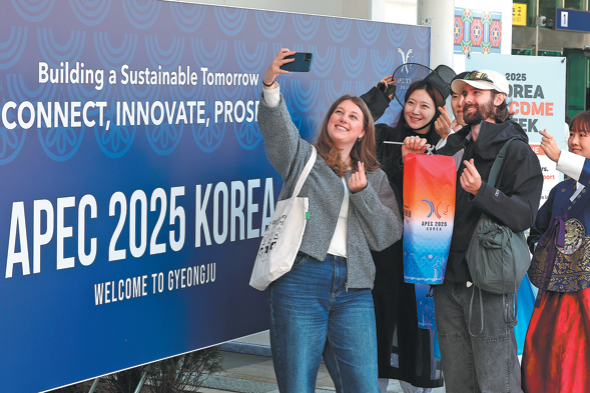
Beijing-Seoul joint efforts contribute to APEC’s success
As the Republic of Korea (ROK) prepares to host the Asia-Pacific Economic Cooperation (APEC) Economic Leaders’ Meeting this week, with China set to take the helm next year, there is a growing sense of optimism among officials, scholars, and business leaders. They believe that the success of these consecutive events will significantly bolster free trade, economic growth, and governance across the Asia-Pacific region. The historic city of Gyeongju, once the capital of the ancient Silla Dynasty, will serve as the venue for this year’s meeting, focusing on critical themes such as sustainability, digital transformation, and trade cooperation. Park Jang-ho, director of the APEC Preparation and Support Office, highlighted Gyeongju’s selection due to its cultural heritage, historical significance, and state-of-the-art facilities. He also noted that the ROK plans to showcase its advancements in cutting-edge technologies, with prominent figures like Tesla CEO Elon Musk expected to attend. Park emphasized the deep-rooted historical ties between China and the ROK, underscoring the ROK’s commitment to strengthening bilateral relations. He remarked, ‘Hosting the APEC meeting in Gyeongju is highly significant, and with China assuming the APEC presidency next year, the interactions between our two nations will become even more frequent, further enhancing our bilateral ties.’ Recent months have seen a series of high-level exchanges between the two countries, covering key areas such as APEC collaboration and bilateral cooperation. During a recent phone conversation, Chinese Foreign Minister Wang Yi and his ROK counterpart Cho Hyun expressed mutual support and a shared commitment to fostering consensus among various stakeholders. Both nations are expected to reinforce their solidarity, uphold the international trading system, champion multilateralism, and accelerate the establishment of a free trade area in the Asia-Pacific region, contributing positively to the creation of an Asia-Pacific community.
-

Cruise passenger, 80, found dead after being abandoned on Great Barrier Reef island
In a tragic incident, an 80-year-old cruise passenger, Suzanne Rees, was found dead on Lizard Island, part of Australia’s Great Barrier Reef, a day after being accidentally abandoned by the crew of the Coral Adventurer. The Sydney resident had disembarked on Saturday for a planned hike to a mountain lookout with fellow passengers. However, the ship departed approximately five hours before reporting her missing later that evening. Her daughter, Katherine Rees, has accused Coral Expeditions of a ‘failure of care and common sense,’ alleging that her mother was left unescorted after feeling ill during the hike. The crew reportedly failed to conduct a passenger count before leaving the island. Suzanne Rees’ body was discovered the following day about 50 meters off the hiking trail, with evidence suggesting she had fallen from a cliff or slope. Katherine Rees has called for a coroner’s inquiry to determine whether the cruise company could have prevented her mother’s death. Coral Expeditions’ CEO, Mark Fifield, expressed condolences and assured full cooperation with ongoing investigations. The Australian Maritime Safety Authority and a workplace safety watchdog are also probing the incident. This tragedy has reignited concerns about safety standards in Australia’s Great Barrier Reef tourism industry, reminiscent of the 1998 case where an American couple was abandoned at sea and never found.
-

Sinner cruises in Paris Masters opener, Zverev keeps title defence alive
Jannik Sinner made a commanding start to his Paris Masters campaign, defeating Zizou Bergs 6-4, 6-2 in a swift one-hour and 27-minute match on Wednesday. The Italian, a four-time Grand Slam champion, showcased his trademark efficiency, not facing a single break point while methodically securing breaks early in both sets. This victory keeps Sinner on track to reclaim the world number one ranking, should he clinch his maiden ATP 1000 title in Paris. His next challenge will be against Francisco Cerundolo, who earlier defeated Miomir Kecmanovic. Meanwhile, reigning champion Alexander Zverev faced a tougher battle, overcoming Camilo Ugo Carabelli in a grueling three-set match, 6-7 (5/7), 6-1, 7-5. Zverev, who narrowly avoided an early exit, will now face Alejandro Davidovich Fokina in the next round. Elsewhere, Casper Ruud suffered an unexpected defeat to Daniel Altmaier, while Daniil Medvedev advanced due to Grigor Dimitrov’s withdrawal. The tournament also saw Felix Auger-Aliassime stage a comeback victory, keeping his ATP Finals hopes alive.
-
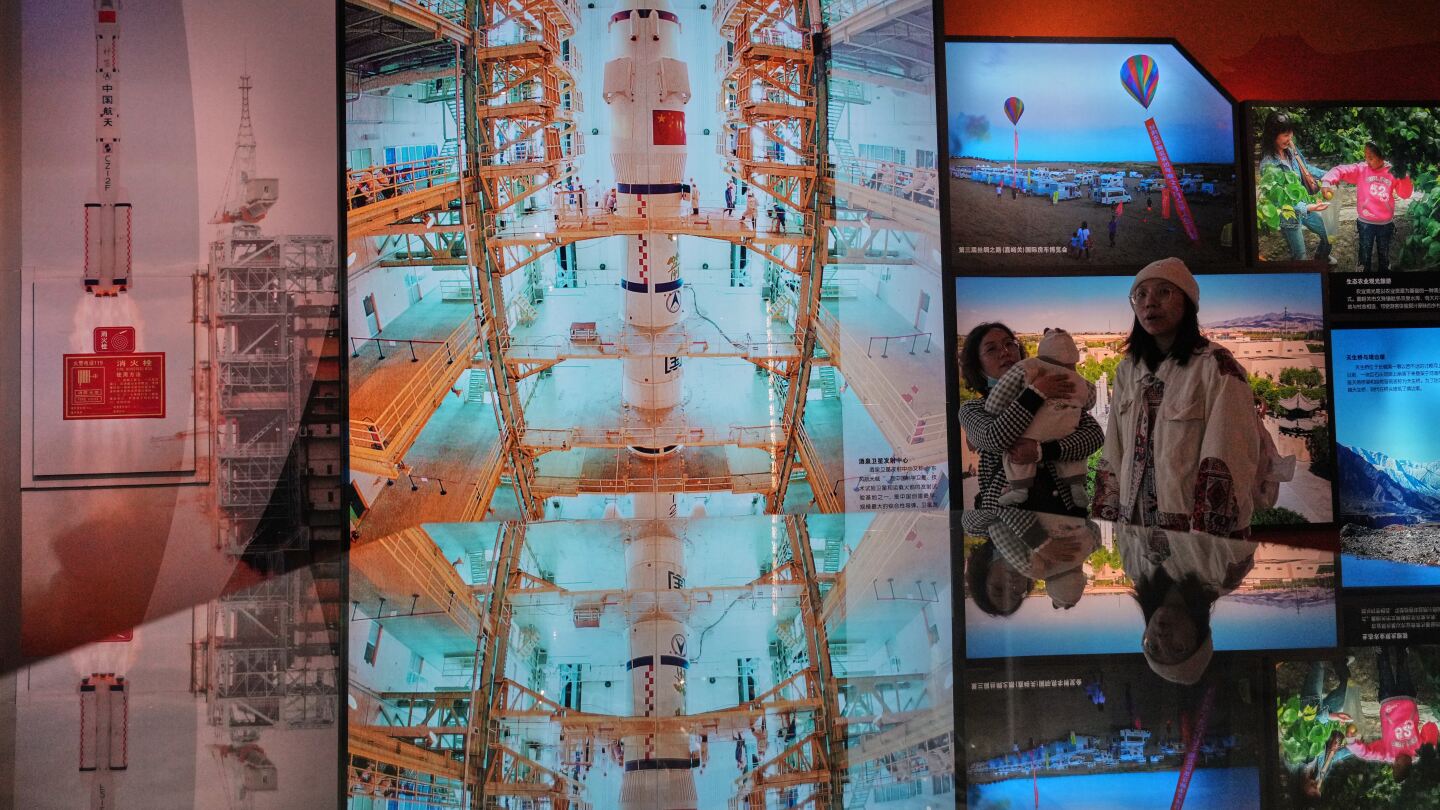
China says it’s on track to land astronauts on the moon by 2030 ahead of space station mission
China has reaffirmed its commitment to landing astronauts on the moon by 2030, marking a significant milestone in its ambitious space exploration agenda. Zhang Jingbo, spokesperson for the China Manned Space Program, announced on Thursday that all preparatory efforts, including the development of the Long March 10 rocket, lunar landing suits, and exploration vehicles, are progressing smoothly. ‘Our goal of achieving a manned moon landing by 2030 remains steadfast,’ Zhang emphasized. This announcement underscores China’s determination to establish itself as a global leader in space exploration. In parallel, China is preparing to launch its latest crew to the Tiangong space station, a critical component of its broader space strategy. The new crew, consisting of Zhang Lu, Wu Fei, and Zhang Hongzhang, is scheduled to depart from the Jiuquan launch center on Friday at 11:44 p.m. local time. While Zhang Lu has prior experience from the Shenzhou 15 mission, Wu Fei and Zhang Hongzhang will be venturing into space for the first time. The astronauts will also conduct experiments on four mice—two male and two female—to study the effects of weightlessness and confinement. The Tiangong space station, meaning ‘Heavenly Palace,’ was developed after China was excluded from the International Space Station due to U.S. national security concerns, highlighting the country’s independent advancements in space technology.
-
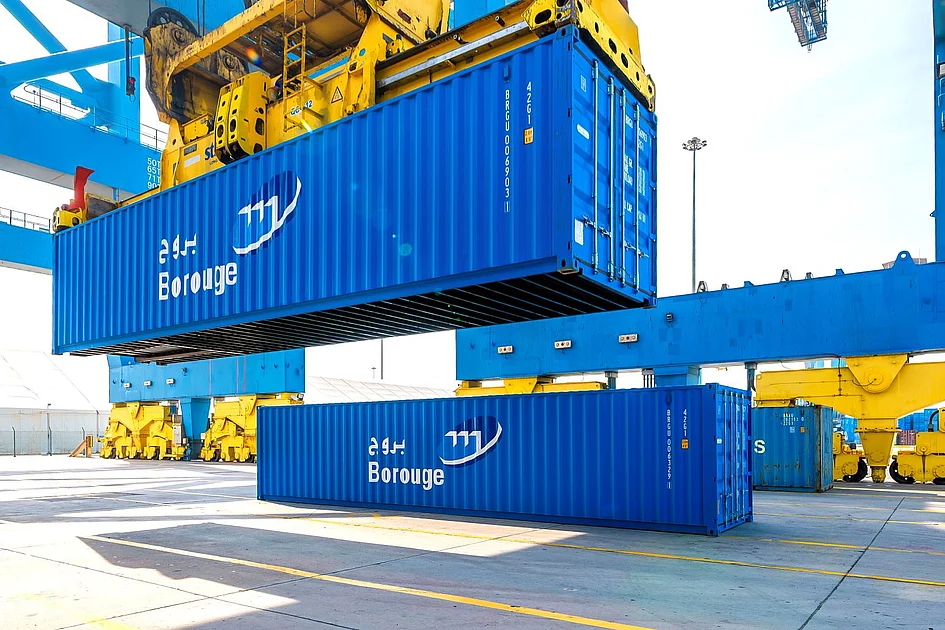
Borouge surges in Q3 with record production and 52% profit growth
Borouge Plc has reported an exceptional third quarter in 2025, achieving a remarkable 52% quarter-on-quarter increase in net profit, reaching $295 million. This stellar performance was driven by record production levels, robust sales, and stringent cost management, surpassing market expectations and solidifying the company’s leadership in the global polyolefins industry. The Abu Dhabi Securities Exchange-listed petrochemicals giant also posted an adjusted EBITDA of $565 million, reflecting a best-in-class margin of 39%, up from 34% in Q2. Despite a decline in benchmark prices, Borouge maintained premium pricing for its differentiated polyethylene (PE) and polypropylene (PP) products, averaging $233 and $142 per tonne, respectively, over the first nine months of 2025. CEO Hazeem Sultan Al Suwaidi credited the company’s resilient business model and operational excellence for the outstanding results. Following the successful and ahead-of-schedule turnaround of its Borouge 3 plant in Q2, the company increased utilization rates to 110% for PE and 112% for PP, resulting in a 19% rise in quarterly sales volumes to 1.4 million tonnes. The Asia Pacific region emerged as a key growth driver, accounting for 61% of total sales, up from 57% in the previous quarter. For the nine-month period ending September 2025, Borouge reported revenues of $4.17 billion, slightly lower than the $4.41 billion recorded in the same period last year due to reduced average selling prices. However, net profit rose to $769 million, supported by operational efficiency and cost control. The company reaffirmed its full-year dividend intention of 16.2 fils per share, with the second-half payout expected in April 2026. Additionally, Borouge continued its share buyback program, repurchasing over 157.5 million shares by the end of Q3, reflecting strong confidence in its long-term growth prospects. Looking ahead, Borouge is nearing completion of its Borouge 4 expansion project, which is over 90% complete. The first plant is expected to commence operations by year-end, adding 1.4 million tonnes of annual capacity and significantly boosting earnings potential. The project will become a core asset of the proposed Borouge Group International (BGI), set for launch in Q1 2026. Innovation remains central to Borouge’s strategy, with the reintroduction of its enhanced BorSafe PE100-RC pipe grade, which won ‘New Product of the Year’ at the Asian Oil and Gas awards. In advanced packaging, Borouge unveiled a new Borstar PP grade supporting up to 50% post-consumer recycled content, reinforcing its commitment to circular and sustainable solutions. The company’s AI, Digitalisation and Technology (AIDT) program has already delivered $477 million in value this year, with a target of $575 million for 2025. Borouge is also pioneering AI-powered autonomous control room operations at its Ruwais facility in collaboration with Yokogawa and Honeywell. With strong fundamentals, expanding capacity, and a focus on innovation, Borouge is well-positioned to capitalize on improving market dynamics and deliver sustained value to shareholders.
-

Overwhelming majority of Palestinians oppose Hamas disarmament, poll finds
A recent poll conducted by the Palestinian Centre for Policy and Survey Research (PCPSR) reveals that a significant majority of Palestinians are against the disarmament of Hamas and remain skeptical of U.S. President Donald Trump’s peace plan for Gaza. The survey, conducted between October 22 and 25, 2023, involved 1,200 respondents from the occupied West Bank and Gaza, with a margin of error of 3.5 percent. Approximately 70 percent of Palestinians oppose Hamas’s disarmament, even if it means a return to Israeli attacks. Opposition is particularly strong in the West Bank, where 80 percent of respondents support Hamas retaining its weapons, compared to 55 percent in Gaza. The poll also highlights widespread pessimism about Trump’s peace plan, with 62 percent of Palestinians doubting its ability to end the conflict permanently. This skepticism is more pronounced in the West Bank (67 percent) than in Gaza (54 percent). Despite the ongoing violence, 53 percent of Palestinians believe the October 7, 2023, Hamas-led attack on southern Israel was justified, with higher support in the West Bank (59 percent) than in Gaza (44 percent). Hamas continues to enjoy greater popularity than Fatah, with 35 percent of Palestinians supporting Hamas compared to 24 percent for Fatah. The poll also reveals dissatisfaction with Palestinian Authority President Mahmoud Abbas, with 85 percent of respondents calling for his resignation. Trump’s peace plan proposes a committee of Palestinian technocrats to govern Gaza, overseen by a U.S.-led ‘Board of Peace.’ While 45 percent of Palestinians support this idea, opposition remains strong in the West Bank. The plan also includes deploying Arab and Muslim peacekeepers to Gaza, which faces mixed reactions, with 78 percent opposition in the West Bank and 52 percent in Gaza. However, support increases when peacekeepers are tasked with securing Gaza’s borders without disarming Hamas. The ceasefire has been marred by Israeli violations, including a devastating attack on Gaza City and Khan Younis, resulting in over 100 Palestinian deaths, including 46 children.
-

K-pop group NewJeans loses legal battle against agency
In a significant legal development, K-pop sensation NewJeans has been unsuccessful in its bid to terminate its contract with record label Ador. A South Korean court ruled on Tuesday that the group’s agreement with the agency, which extends until 2029, remains legally binding. The five-member group, consisting of Hanni, Hyein, Haerin, Danielle, and Minji, had announced their unilateral departure from Ador last year, alleging mistreatment and manipulation by the label. Despite their claims, the court upheld the contract’s validity, prompting the group to plan an appeal, as reported by local media. This case has sent shockwaves through the Korean entertainment industry, marking a dramatic escalation in the year-long dispute between the chart-topping act and its agency. Earlier this year, the group rebranded as NJZ, released a new single, and performed in Hong Kong before their independent activities were halted by a court injunction. The ruling underscores the complexities of artist-label relationships in the highly competitive K-pop industry.
-

Tokyo auto show highlights technology but Trump’s tariffs loom large
The Tokyo Mobility Show, currently underway at Tokyo Big Sight, is showcasing a dazzling array of futuristic transportation solutions, ranging from electric vehicles to cutting-edge personal mobility devices. Among the highlights is Honda Motor Co.’s Uni-One, a robotic chair designed for quick, quiet personal transport by 2035. Toyota Motor Corp. also unveiled a helicopter-like aircraft with six propellers, developed in collaboration with U.S. aviation firm Joby, though it remains in the experimental phase. The event, which opened to the public on November 9 after a media preview, emphasizes innovation in mobility while addressing broader industry challenges. A significant backdrop to the show is the looming impact of U.S. tariffs on Japanese automakers. President Donald Trump’s decision to raise auto tariffs from 2.5% to 15% is projected to slash over 2 trillion yen ($13 billion) from annual operating profits. Japanese automakers, including Mazda and Nissan, are responding with strategies to mitigate these effects. Mazda’s CEO, Masahiro Moro, highlighted efforts to develop emotionally intelligent vehicles and sustainable technologies. Nissan showcased its Sakura electric car prototype, featuring a solar-powered roof called the ‘Ao-Solar Extender,’ designed to generate electricity for household use and emergency power during disasters. Meanwhile, Toyota and Nissan are considering importing U.S.-made models back to Japan to address trade imbalances. The Japanese government has pledged to invest $550 billion in the U.S. and purchase Ford vehicles. Despite these challenges, Japanese automakers remain committed to innovation and market adaptation. Toyota’s CEO, Koji Sato, emphasized tailoring offerings to diverse customer preferences, while Nissan’s Ivan Espinosa underscored the importance of Japan as a core market. The show also featured Toyota’s Land Hopper, a collapsible electric bicycle designed to complement the upcoming Land Cruiser FJ. As automakers brace for the full impact of tariffs in 2024, analysts predict increased U.S. production and diversification into markets like Australia and Canada.
-

Saudi’s Diriyah gigaproject eyes role rebuilding historic Syrian sites
Saudi Arabia’s ambitious Diriyah gigaproject, a cornerstone of the kingdom’s Vision 2030 strategy to diversify its economy and establish itself as a global tourism and cultural hub, is now eyeing a potential role in the reconstruction of historic sites in Syria. Jerry Inzerillo, CEO of Diriyah Gate Company, revealed during the Future Investment Initiative (FII) summit in Riyadh that discussions with Syrian officials have taken place regarding this collaboration. ‘Someone is going to rebuild Damascus and Aleppo at some point, and Beirut as well,’ Inzerillo stated, emphasizing that while the company is currently occupied with its primary project, it may consider contributing to Syria’s reconstruction in the future. The ongoing conflict in Syria has devastated many of its ancient cities and archaeological treasures, including the ancient city of Aleppo and the Roman temple sites at Palmyra, prompting international calls for restoration efforts. Challenges such as funding, security, and political coordination remain significant hurdles. Meanwhile, the Diriyah project, which includes luxury hotels, museums, and residential units centered around the UNESCO-listed At-Turaif district, is progressing on schedule and within budget. The company is also exploring opportunities to develop six additional cultural heritage sites in Saudi Arabia and plans to pursue an initial public offering on the Saudi exchange after 2030, anticipating billions in foreign private investment.