标签: Asia

亚洲

  • Refugees in Minnesota sue Trump administration for ‘terrorising’ arrests amid federal crackdown

    Refugees in Minnesota sue Trump administration for ‘terrorising’ arrests amid federal crackdown

    A significant legal battle has emerged in Minnesota as approximately 100 lawfully admitted refugees filed a class action lawsuit against the Trump administration on Friday. The litigation targets what attorneys describe as a systematic “detention dragnet” operation that specifically terrorizes one of the most thoroughly vetted immigrant populations in the United States.

    According to Stephanie Gee, Senior Director of U.S. Legal Services at the International Refugee Assistance Project (IRAP), Immigration and Customs Enforcement (ICE) agents have detained these refugees without formal charges since January 9th, when the federal government initiated “Operation Post-Admission Refugee Reverification and Integrity Strengthening.” The detained individuals originate from various countries, including European nations, with some being children.

    IRAP, in collaboration with the Center for Human Rights and Constitutional Law and class action firm Berger Montague, argues the operation violates multiple constitutional protections and established government procedures for handling refugee cases. “This operation itself is unlawful on many levels,” Gee emphasized, noting that it contradicts existing policies governing refugee applications and treatment within the country.

    The enforcement tactics in Minnesota mirror ICE’s controversial approaches nationwide, featuring violent arrests where immigrants are forcibly removed from homes and vehicles. Detainees face transfer to remote facilities in Texas under conditions critics compare to “concentration camps” due to severe overcrowding, inadequate hygiene, and substandard nutrition.

    Refugees undergo exceptionally rigorous screening—often lasting years—before receiving government-funded relocation to American communities. This population never anticipated vulnerability to detention and removal procedures given their lawful status and extensive pre-admission vetting.

    The situation escalated tragically when ICE agents killed two U.S. citizens in Minnesota who were legally documenting enforcement activities. Despite ongoing investigations, White House Press Secretary Karoline Leavitt defended ICE operations, denouncing comparisons to Nazi Gestapo as “despicable” and “shameful.”

    Minneapolis Mayor Jacob Frey publicly demanded federal agents leave his city, declaring, “A great American city is being invaded by its own federal government.” Homeland Security data reveals most detained immigrants possess no criminal records, contradicting administration claims targeting “the worst of the worst.”

  • US weighs ‘precision strikes’ on Iranian officials as military build-up surges, sources say

    US weighs ‘precision strikes’ on Iranian officials as military build-up surges, sources say

    The United States is actively considering targeted military action against high-ranking Iranian officials believed responsible for the lethal suppression of protesters, according to a Gulf official familiar with ongoing deliberations. These precision strikes, potentially occurring as early as this week, represent a significant escalation in Washington’s response to Tehran’s internal crackdown that has resulted in thousands of civilian casualties.

    Administration discussions have been characterized as chaotic, with intense debate surrounding anticipated Iranian retaliation strategies. The Trump administration has maintained a month-long deliberation period regarding potential military engagement with Iran, initially leveraging the protest crackdown as justification. Despite President Trump’s earlier encouragement for demonstrators to seize state institutions, he subsequently declared the ‘killing has stopped’ and opted for de-escalation—a decision influenced by diplomatic pressure from Gulf states including Saudi Arabia, Qatar, and Oman.

    Current and former officials indicate this de-escalation may represent merely a tactical pause rather than a permanent policy shift. The administration has significantly enhanced its military readiness in the region, deploying additional warplanes, advanced air defense systems, and naval assets including the Abraham Lincoln aircraft carrier group equipped with F-35 and F/A-18 fighter jets. Open-source intelligence confirms the establishment of an F-15 squadron at Jordan’s Muwaffaq Salti Air Base.

    Regional dynamics complicate potential strike operations, as Gulf states have enforced an airspace and facilities ban for US attacks against Iran since April 2025. This restriction has forced alternative basing strategies, with Jordan emerging as a critical operational hub. Tehran has issued stark warnings that US regional partners would face retaliatory strikes if their territories facilitate attacks against Iran.

    The geopolitical landscape remains fractured, with Saudi Arabia, Oman, Qatar, and Turkey opposing military action while Israel supports regime change objectives. The UAE has formally declared it will not permit its territory, airspace, or waters to be used for offensive operations against Iran—a position likely influenced by Iran’s previous retaliation against Qatar’s al-Udeid air base following nuclear facility bombings.

    Experts warn that current circumstances could provoke unprecedented Iranian responses, including potential shutdown of the Strait of Hormuz (transit route for 20% of global oil) or attacks against US bases region-wide. The memory of the recent 12-day Iran-Israel conflict remains fresh, during which Iranian ballistic missiles penetrated Tel Aviv’s defenses despite US-Israeli air superiority, creating critical supply shortages in missile interceptors that required emergency replenishment operations.

  • Oura Ring 4 review: A fitness tracker you’ll actually want to wear

    Oura Ring 4 review: A fitness tracker you’ll actually want to wear

    In an era dominated by wearable technology, the Oura Ring 4 emerges as a sophisticated health monitoring device that successfully merges clinical-grade biometric tracking with elegant jewelry-grade design. Now in its fourth iteration, this discreet finger-worn device represents a significant evolution in personal health technology, focusing particularly on recovery metrics and sleep quality assessment.

    The device’s aesthetic appeal immediately distinguishes it from conventional fitness trackers. Unlike wrist-worn alternatives that often appear conspicuously technological, the Oura Ring 4 presents as a premium accessory available in multiple finishes including ceramic options and various colorways. The brand’s meticulous sizing process—requiring a 24-hour trial period with sizing kits—ensures optimal comfort for continuous wear.

    Where the device truly excels is in its sophisticated health monitoring capabilities. Sleep analysis forms the cornerstone of its functionality, providing detailed breakdowns of sleep stages, duration, and efficiency through an intuitive mobile application. According to recently released regional data, UAE residents average 6.85 hours of sleep nightly—slightly below global averages—yet demonstrate exceptional sleep efficiency at 85.7%, ranking among the world’s highest quality sleepers despite being predominantly night owls with sleep windows typically spanning 12:06 AM to 7:57 AM.

    The Readiness Score feature represents another innovative aspect, evaluating users’ physiological preparedness for daily activities. This metric empowers individuals to make informed decisions about training intensity and recovery needs based on biometric feedback rather than subjective feeling alone.

    Activity tracking performs admirably, with the device automatically recognizing and recording various exercises after initial manual configuration. The ring’s hardware specifications impress with eight-day battery longevity, 120-minute full recharge capability, and waterproof construction suitable for swimming and showering.

    Financially, the Oura Ring 4 requires a one-time hardware investment starting from AED 1,399 (rising to AED 1,999 for premium finishes) complemented by a monthly subscription of AED 29.99 for full data access—positioning it favorably against competitor pricing models despite ongoing subscription requirements.

    While the accompanying application presents a learning curve for first-time users due to its comprehensive data presentation, the platform ultimately delivers valuable health insights that encourage more mindful lifestyle choices without compromising aesthetic preferences.

  • England’s High Court orders Saudi Arabia to pay £3m to dissident over Pegasus hack

    England’s High Court orders Saudi Arabia to pay £3m to dissident over Pegasus hack

    In a landmark ruling with significant implications for state accountability, the English High Court has mandated the Kingdom of Saudi Arabia to pay over £3 million in damages to a London-based dissident. The court conclusively determined that Saudi authorities were responsible for infecting the activist’s phone with Pegasus spyware and orchestrating a physical assault against him.

    The judgment, delivered by Judge Pushpinder Saini, found Ghanem al-Masarir—a former Saudi citizen and prominent human rights campaigner—entitled to substantial compensation for severe psychiatric injuries. These injuries stemmed from the 2018 hacking of his phone using the notorious Pegasus surveillance tool, acquired from the Israeli cyber-arms firm NSO Group, and a coordinated physical attack outside Harrods department store in London that same year.

    Judge Saini’s ruling emphasized a clear pattern of intimidation against Masarir between 2015 and 2019, directly linking these acts to the Saudi state’s motivation to silence his public criticism. The court rejected Saudi Arabia’s initial claim of state immunity under the 1978 State Immunity Act, a defense that was ultimately dismissed in 2022. A subsequent appeal by the kingdom was struck out in 2024 after it failed to pay court costs.

    The Pegasus software, as detailed in proceedings, grants remote access to an infected device, enabling data extraction, location tracking, and the interception of calls and ambient communications. The court found no legal justification for this invasive surveillance or the physical violence inflicted upon Masarir, who was exercising his fundamental right to free speech.

    Masarir, who has lived in the UK since 2003 and was granted asylum in 2018, expressed that the ruling closes a ‘long and painful chapter.’ His YouTube channel, which has garnered over 300 million views, has been a primary platform for his advocacy. While acknowledging that no financial sum can undo his suffering, he expressed hope that Saudi Arabia would comply with the judgment promptly.

    The case sets a powerful precedent. Yahya Assiri, another UK-based Saudi dissident and founder of the rights group Alqst whose phone was also hacked, hailed the verdict as a victory for all human rights defenders. This ruling occurs against a backdrop of wider concerns, following a 2021 investigation that revealed hundreds of British citizens, including lawyers and academics, had been targeted by Pegasus spyware, with accusations pointing to both the UAE and Saudi Arabian governments.

  • Trump raises US tariffs on South Korea imports to 25%

    Trump raises US tariffs on South Korea imports to 25%

    In a significant escalation of trade policy, former US President Donald Trump has declared a substantial increase in tariffs on South Korean imports, raising them to 25%. The announcement was made via social media, where Trump accused Seoul of failing to uphold commitments under a bilateral trade agreement finalized last October.

    The tariff hike affects a broad range of products, including automobiles, lumber, pharmaceuticals, and various other goods subject to reciprocal tariffs. Trump justified the move by stating that South Korean lawmakers had been ‘slow to approve the deal,’ contrasting it with what he described as swift US action to reduce its own tariffs in accordance with the agreement.

    South Korea has responded with concern, indicating it had not received official notification of the tariff decision and is seeking urgent discussions with Washington. The country’s Industry Minister, Kim Jung-kwan, is reportedly cutting short a trip to Canada to arrange immediate talks with US Commerce Secretary Howard Lutnick.

    The contentious trade deal, reached in October, included a significant pledge from South Korea to invest approximately $350 billion in the United States, with portions directed toward the shipbuilding sector. Subsequent negotiations in November established that the US would reduce certain tariffs once South Korea initiated its domestic approval process. The agreement was submitted to South Korea’s National Assembly on November 26 and is currently under review, with local media projecting likely passage in February.

    This development represents another instance of Trump utilizing tariffs as a primary instrument of foreign policy during his second term. The move follows recent threats against Canada, where Trump warned of 100% tariffs if Ottawa pursued a trade agreement with China. Canadian Prime Minister Mark Carney has since clarified that no such deal with China is under consideration, with Canadian officials reportedly communicating this position to their US counterparts.

    The tariff strategy echoes previous confrontational approaches, including Trump’s earlier threats against eight countries, including the UK, regarding their opposition to US interests in Greenland. While those particular tariff threats were eventually withdrawn citing progress toward a ‘future deal,’ the episodes have contributed to strains in US relations with NATO allies and trading partners.

  • What is the meaning of ‘globalise the intifada’ and when did it first appear?

    What is the meaning of ‘globalise the intifada’ and when did it first appear?

    The phrase ‘Globalize the Intifada’ has emerged as one of the most contentious slogans in pro-Palestine activism, sparking intense debate about its meaning and legal status. Recent developments in the United Kingdom have seen law enforcement agencies take unprecedented steps to criminalize its use, resulting in the first criminal charges under racial hatred legislation.

    British authorities have charged three individuals for chanting the slogan during a December protest supporting hunger-striking Palestine Action prisoners. The charges allege ‘using threatening, abusive or insulting words or behaviour intending thereby to stir up racial hatred,’ an offense carrying potential seven-year prison sentences. This enforcement action follows joint announcements from the Metropolitan Police and Greater Manchester Police in December that they would arrest anyone using the phrase or displaying it on placards.

    The linguistic and historical context of ‘intifada’ reveals complex layers of meaning. Derived from Arabic, the term translates to ‘shaking off’ or ‘uprising’ and has been applied to various resistance movements beyond the Middle East, including the Jewish uprising in the Warsaw Ghetto during World War II. Historically, it references two specific Palestinian uprisings: the largely non-violent First Intifada (1987-1993) that employed civil disobedience and stone-throwing tactics, and the more violent Second Intifada (2000-2005) that featured suicide bombings and resulted in approximately 4,000 combined casualties.

    Pro-Palestine activists maintain the slogan represents a call for international solidarity against what they term Israel’s genocide in Gaza, which has claimed over 71,000 Palestinian lives since October 2023. Ben Jamal of the Palestine Solidarity Campaign asserts the phrase advocates ‘worldwide support for an end to the oppression of the Palestinian people through all means of legitimate resistance’ rather than violence against Jewish civilians.

    However, critics including the American Jewish Committee argue the slogan inherently promotes violence, noting that previous intifadas resulted in significant Israeli casualties. UK Health Secretary Wes Streeting recently stated those who don’t view the phrase as violent are ‘daft,’ while Prime Minister Keir Starmer has called it ‘a call to attack Jewish communities around the world.’

    The enforcement crackdown follows the December Bondi Beach attack in Australia, where 15 people were killed in an antisemitic incident. Although the attackers had no established connection to Palestine activism, Australian and British authorities have cited rising antisemitic hate crimes as justification for stricter measures. New South Wales Premier Chris Minns has initiated a parliamentary inquiry into banning the phrase, describing it as ‘hateful, violent rhetoric.’

    Legal experts and rights organizations have raised concerns about free expression implications. The International Centre of Justice for Palestinians criticized the police action as ‘reckless and nonsensical,’ noting that the Crown Prosecution Service had previously advised that such phrases didn’t meet prosecution thresholds. The situation reflects broader tensions surrounding protest rights and counter-terrorism measures in Western democracies grappling with the complexities of the Israel-Palestine conflict.

  • UAE offers condolences to Philippines over victims of deadly ship sinking

    UAE offers condolences to Philippines over victims of deadly ship sinking

    The United Arab Emirates has formally expressed its profound condolences and solidarity with the Republic of the Philippines following a devastating maritime tragedy in the southern island province of Basilan. The diplomatic gesture comes in response to the sinking of a passenger ferry that resulted in significant casualties and missing persons.

    According to maritime authorities, the vessel carrying more than 350 passengers capsized approximately five kilometers east of Baluk-Baluk Island in the Zamboanga Peninsula region on Monday morning. Current reports indicate at least 18 fatalities with 24 individuals still unaccounted for in the ongoing search and rescue operations.

    The Philippine Coast Guard released dramatic footage showing rescue teams extracting survivors from dark waters and providing emergency medical treatment. Social media platforms circulated live recordings capturing desperate pleas for assistance as the disaster unfolded in early morning darkness.

    In an official statement released through its Ministry of Foreign Affairs, the UAE government conveyed heartfelt sympathies to the bereaved families and extended solidarity with both the Philippine government and citizens. The statement emphasized shared grief over the tragic loss of life in the maritime incident.

    Maritime safety experts note that such accidents occur with concerning frequency in the Philippine archipelago, where millions depend on affordable but often poorly regulated sea transportation to navigate between the nation’s 7,000-plus islands. This latest incident has renewed discussions about maritime safety standards and emergency response capabilities in the region’s vital ferry transportation network.

  • Pact to boost China’s gold market

    Pact to boost China’s gold market

    In a landmark move set to redefine Asia’s precious metals trading landscape, Hong Kong and Shanghai have established a comprehensive partnership agreement aimed at creating an integrated renminbi-denominated gold market. The strategic accord, signed during the opening session of the 19th Asian Financial Forum, represents a coordinated effort to elevate China’s financial hubs within the global gold ecosystem.

    The agreement was formally executed by Christopher Hui Ching-yu, Hong Kong’s Secretary for Financial Services and the Treasury, and Yu Wenjian, Chairman of the Shanghai Gold Exchange. Both officials characterized the partnership as a transformative milestone that will fundamentally reshape the regional gold trading architecture.

    Secretary Hui emphasized the timing significance of this initiative, noting that “gold’s strategic importance has intensified amid prevailing geopolitical uncertainties, persistent inflationary pressures, and the ongoing restructuring of the international monetary system.”

    Under the newly established framework, the Hong Kong Precious Metals Central Clearing Company—a wholly government-owned entity—will implement a sophisticated collaborative governance structure. This system will feature Secretary Hui chairing the board with representation from the Shanghai Gold Exchange serving as deputy chairman.

    The Shanghai exchange will contribute substantial technical expertise and regulatory guidance across multiple domains including system architecture, rule formulation, institutional access protocols, risk management frameworks, and operational standards. Both parties have committed to synchronized efforts ensuring the efficient development of gold trade-clearing mechanisms aligned with international benchmarks.

    Hong Kong Chief Executive John Lee Ka-chiu underscored the agreement’s broader implications, stating it will “initiate a cross-boundary trade-clearing system for precious metals” that enhances financial connectivity between the two markets.

    The collaboration extends to physical infrastructure development, with Hong Kong targeting expansion of its gold storage capacity to exceed 2,000 metric tons within three years. Future cooperation will encompass physical delivery mechanisms, warehousing solutions, and broader ecosystem development.

    The People’s Bank of China demonstrated strong institutional support through Deputy Governor Zou Lan, who witnessed the signing ceremony. The central bank pledged comprehensive backing for Shanghai’s participation in developing the clearing system and reinforcing Hong Kong’s ambition to become an international gold trading hub.

    Industry representatives including Edward Au, Deloitte China’s Southern Region Managing Partner, noted the agreement’s relevance amid current financial fragmentation trends. While anticipating gradual rather than immediate capital inflows, Au projected that consistent policy execution would eventually yield deeper market participation and enhanced institutional accessibility across Asia’s gold market.

  • Can India be a player in the computer chip industry?

    Can India be a player in the computer chip industry?

    India’s technological landscape is undergoing a significant transformation as the nation strategically develops its domestic semiconductor industry. This initiative, catalyzed by global supply chain disruptions during the COVID-19 pandemic, represents a crucial step toward technological self-reliance.

    Bangalore-based Tejas Networks exemplifies India’s existing strengths in semiconductor design. As a leading provider of telecommunications equipment, the company designs specialized chips that power mobile networks and broadband connections. “Telecom chips are fundamentally different from consumer or smartphone chips,” explains Arnob Roy, Tejas Networks co-founder. “They handle massive volumes of data coming simultaneously from hundreds of thousands of users with absolute reliability requirements.”

    India already possesses remarkable design capabilities, with an estimated 20% of the world’s semiconductor engineers working within its borders. “Almost every major global chip company has its largest or second-largest design centre in India,” confirms Amitesh Kumar Sinha, Joint Secretary of India’s Ministry of Electronics and Information Technology.

    The nation’s vulnerability emerged during the pandemic when manufacturing dependencies became apparent. “Covid showed us how fragile global supply chains can be,” Sinha notes. “If one part of the world shuts down, electronics manufacturing everywhere is disrupted.”

    India’s strategy focuses initially on the Outsourced Semiconductor Assembly and Test (OSAT) segment rather than competing directly in wafer fabrication dominated by Taiwan and China. “Assembly, test and packaging are easier to start than fabs,” explains Ashok Chandak, president of India Electronics and Semiconductor Association. “That is where India is moving first.”

    Kaynes Semicon, established in 2023, represents the vanguard of this initiative. The company has invested $260 million in a Gujarat facility that began production in November. Rather than targeting advanced AI chips, Kaynes focuses on practical applications. “These are not glamorous chips, but they are economically and strategically far more important for India,” says CEO Raghu Panicker. “We’re producing chips for cars, telecoms and the defense industry.”

    The journey involves substantial challenges, particularly in workforce development. “Training takes time,” Panicker emphasizes. “You cannot shortcut five years of experience into six months. That is the single biggest bottleneck.”

    Despite these hurdles, industry leaders remain optimistic about India’s semiconductor future. Roy anticipates that “over the next decade, a significant semiconductor manufacturing base will emerge in India.” This development, while requiring “patient capital and time,” marks the beginning of India’s strategic move toward technological independence in critical electronics components.

  • How Ozempic, GLP-1 drugs are reshaping food shopping habits in UAE

    How Ozempic, GLP-1 drugs are reshaping food shopping habits in UAE

    A transformative shift in dietary consumption patterns is sweeping across the United Arab Emirates, driven significantly by the increasing adoption of GLP-1 receptor agonists such as Ozempic. Renowned food industry analyst Phil Lempert, addressing attendees at Gulfood—the world’s premier food and hospitality exhibition—revealed that these pharmaceutical interventions are fundamentally altering how consumers approach nutrition and grocery shopping.

    Lempert, founder of SupermarketGuru and recognized trend authority through appearances on major media platforms including The Oprah Winfrey Show, identified three powerful forces reshaping global food retail: the expanding loneliness epidemic, proliferation of GLP-1 medications, and emerging ‘no-buy’ consumer movements. His research demonstrates that UAE shoppers are making fewer retail visits while selecting higher-quality, nutritionally dense foods in reduced quantities, moving decisively away from ultra-processed alternatives.

    The physiological mechanism of GLP-1 drugs, originally developed for diabetes management, produces enhanced satiety signals and reduced appetite. With Novo Nordisk’s recent introduction of an oral formulation eliminating injection barriers and reducing cost, Lempert anticipates usage rates could “double or triple in a very short timeframe,” accelerating existing consumption trends.

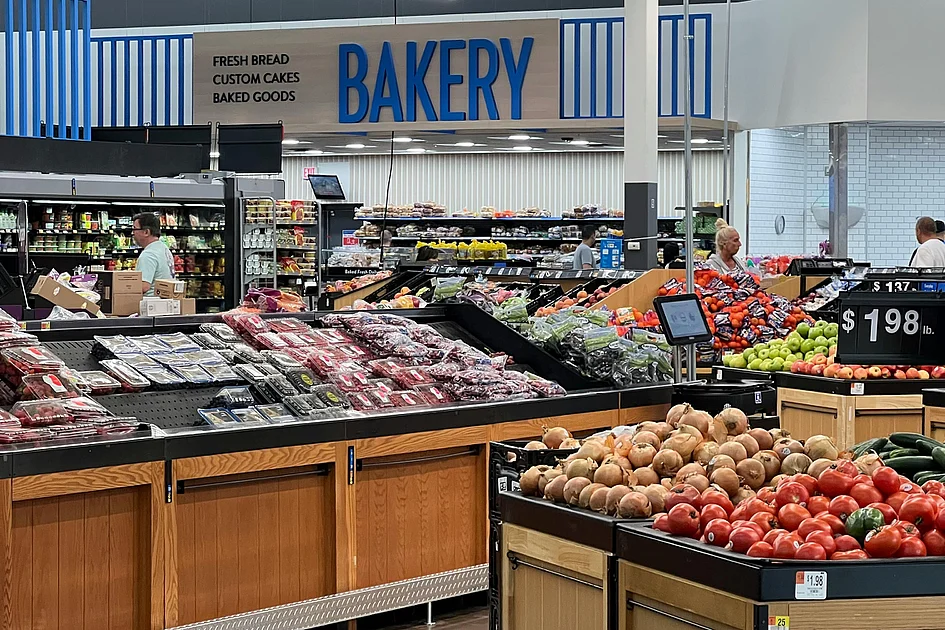
    This pharmacological influence intersects with concerning social patterns. “Post-COVID has witnessed unprecedented increases in loneliness,” Lempert noted, observing consequent changes in shopping behavior: “More frequent trips with smaller basket sizes.” Retail innovators like American giant Kroger are responding with architectural and service modifications including communal tables, in-store cafés, and cooking demonstrations specifically designed to foster human connection.

    UAE-based supermarket chain Grandiose exemplifies this dual approach, combining social engagement spaces like food preparation avenues with curated selections of premium yet affordable products. CEO Mussaab Aboud emphasized the evolving philosophy: “Food doesn’t have to be expensive and quality doesn’t have to be expensive. Consumers seek affordable excellence—products delivering sensory satisfaction and nutritional benefit without premium pricing.”

    This convergence of pharmaceutical science, retail innovation, and social adaptation signals a profound reorientation of food consumption values throughout the Emirates, prioritizing wellness, quality, and community engagement over quantity and convenience.