标签: Asia

亚洲

  • Nipah virus outbreak in India triggers Asia airport screenings

    Nipah virus outbreak in India triggers Asia airport screenings

    Health authorities across Asia are implementing enhanced screening protocols following the emergence of a Nipah virus outbreak in India’s West Bengal state. The highly lethal pathogen, which boasts a mortality rate ranging from 40% to 75%, has prompted immediate public health responses due to the absence of approved vaccines or treatments.

    Thailand has activated screening measures at three major airports receiving flights from West Bengal, while Nepal has instituted similar precautions at Kathmandu’s international airport and land border crossings with India. These preventive actions come as health officials confirm five healthcare workers infected in West Bengal, with one individual in critical condition. Approximately 110 contacts have been quarantined as containment efforts intensify.

    The World Health Organization classifies Nipah among its top ten priority diseases alongside COVID-19 and Zika, recognizing its significant epidemic potential. The virus demonstrates zoonotic transmission capabilities, primarily spreading from fruit bats and pigs to humans, with additional person-to-person transmission occurring through contaminated food sources.

    Clinical presentation varies considerably among infected individuals, with some remaining asymptomatic while others develop severe neurological complications. Initial symptoms typically include fever, headache, muscle pain, vomiting, and sore throat, potentially progressing to encephalitis—a dangerous brain inflammation—in severe cases. The incubation period ranges from 4 to 14 days.

    First identified in 1998 during an outbreak among Malaysian pig farmers, the virus derives its name from the village where it was initially discovered. Historical outbreaks have demonstrated substantial societal impact, including the culling of over one million pigs in Malaysia and significant economic losses across agricultural sectors.

    Bangladesh has experienced the heaviest burden in recent years, recording over 100 fatalities since 2001. India’s Kerala state emerged as another hotspot, with outbreaks in 2018 (17 fatalities among 19 cases) and 2023 (2 deaths among 6 confirmed cases). The current cluster in West Bengal appears connected to a private hospital in Barasat, where two nurses remain hospitalized in intensive care.

    While no cases have been reported beyond India’s borders, Taiwan’s health authorities have proposed designating Nipah as a ‘Category 5 disease’—a classification reserved for emerging infections with substantial public health risks that mandate immediate reporting and specialized control measures.

  • Firefighters battle ’emergency level’ blazes in Australia heatwave

    Firefighters battle ’emergency level’ blazes in Australia heatwave

    Australian emergency crews are confronting an escalating crisis as multiple bushfires rage across Victoria during an unprecedented heatwave. With temperatures soaring to historic highs—reaching 48.9°C in some regions—firefighters are battling at least six major blazes, including two classified at emergency level in Camperdown and the Otways region.

    Authorities have issued urgent evacuation directives and shelter-in-place orders for several communities as conditions deteriorate rapidly. The Country Fire Authority warns that the Otways fire poses particular danger due to potential ember showers that could ignite new fires ahead of the main front line.

    Forest Fire Management Victoria’s chief fire officer Chris Hardman described the extreme heat conditions as creating ‘incredibly difficult’ firefighting circumstances. While full damage assessments remain ongoing, Deputy Incident Controller Alistair Drayton reported preliminary indications of property losses, though praising firefighters’ ‘spectacular’ efforts.

    The crisis extends beyond Victoria, with South Australia also under extreme fire alert and total fire bans implemented across multiple jurisdictions. Health officials simultaneously warn of severe public health risks from the prolonged heat exposure, particularly for vulnerable populations including elderly residents and children.

    Victoria’s chief health officer Dr. Caroline McElnay emphasized the potentially fatal consequences of heat exhaustion and heat stroke, noting that extreme temperatures can trigger cardiac events and other medical emergencies.

  • Spaceport’s milestone a major boost for Hainan space industry

    Spaceport’s milestone a major boost for Hainan space industry

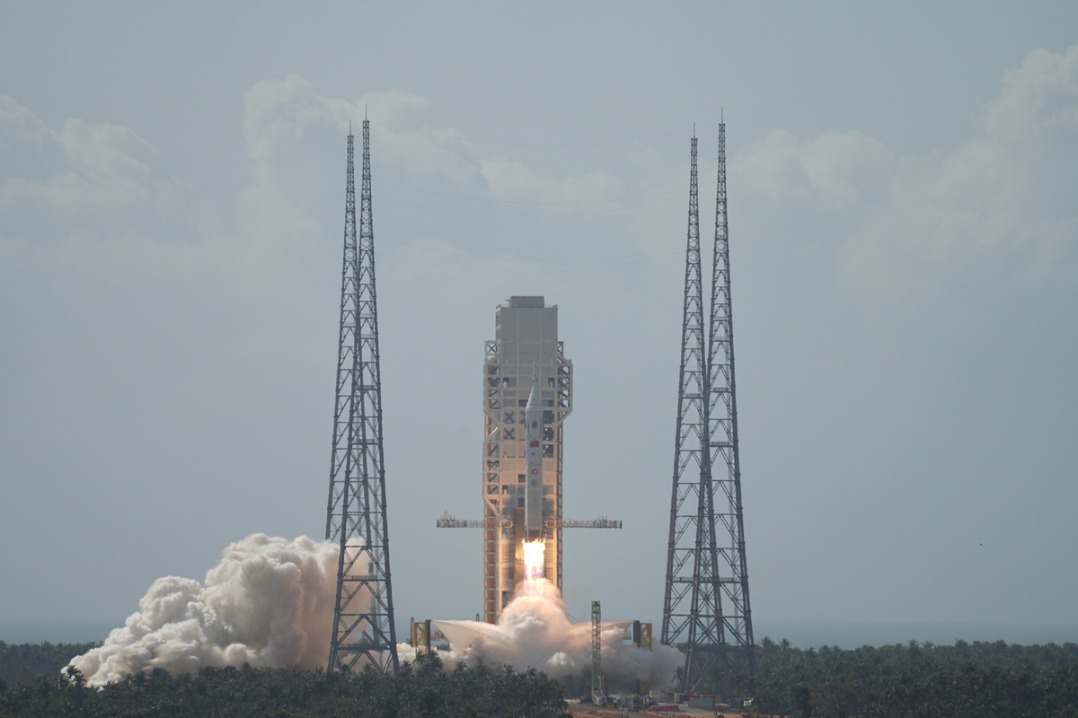
    China’s Wenchang Space Launch Site has achieved a historic milestone by completing 12 successful launch missions throughout 2025, establishing a new benchmark for the nation’s space operations capabilities. The facility, located in Hainan province, concluded its record-breaking year on December 31st with a Long March 7A rocket deployment that successfully placed the Shijian 29A and 29B satellites into predetermined orbit.

    This achievement represents a significant acceleration in China’s space launch tempo, with the November 30th mission having already marked the first time the spaceport reached double-digit annual launches. Since commencing operations in 2016, Wenchang has executed 45 space missions, demonstrating a consistently increasing launch frequency that underscores China’s advancing position in space technology.

    As China’s first independently designed green spaceport featuring modern infrastructure, Wenchang operates two all-weather launch platforms specifically engineered for medium and large cryogenic-liquid rockets. Space officials attribute the enhanced launch capacity to substantially improved operational efficiency, primarily achieved through revolutionary reductions in rocket testing cycles on the launchpads.

    Wang Yuliang, a senior official at the facility, emphasized that ‘minimizing the rocket’s on-pad occupation time has been crucial to our success.’ The evolution has been remarkable: the launch cycle for the 2017 Tianzhou 1 mission required approximately 40 days, which was streamlined to over 30 days for the 2021 Tianzhou 2 launch, and further reduced to about 20 days for Tianzhou 4 in 2022.

    Technical teams have implemented numerous innovations including process optimization, task integration, redundancy elimination, and installation simplification. Between missions, engineers conducted comprehensive equipment upgrades and maintenance to ensure system reliability. According to Commander Fu Yihang, propellant handling efficiency has tripled through the addition of tankers and implementation of parallel transfer operations.

    Space experts indicate that these operational refinements position Wenchang as a critical asset for China’s ambitious future space projects, including crewed lunar missions and deep-space exploration programs that will demand even higher launch frequencies and operational precision.

  • A sisterhood forged in Kuliang endures through decades

    A sisterhood forged in Kuliang endures through decades

    In the mountainous retreat of Kuliang, where foreign residents once sought refuge from Fuzhou’s subtropical heat, an extraordinary cross-cultural friendship has withstood eight decades of separation and geopolitical shifts. The story begins in November 1941 when two families—one Chinese, one American—welcomed daughters on the same day at Fuzhou’s Anglo-Chinese College. The coincidence prompted the families to name both girls after the institution’s Chinese name, Yinghua Middle School, creating an immediate bond between Li Yiying and Gail Harris (Chinese name Bi Lehua).

    Their childhood unfolded against the backdrop of Kuliang’s international community, which flourished from the late 19th century as a summer sanctuary for foreigners from more than 20 nations. The girls spent idyllic summers exploring the hills, fishing in creeks, and sharing sweets—forming what Harris describes as “a twin-like connection” despite their different cultural backgrounds.

    This childhood chapter abruptly closed in 1948 when Harris’s family returned to the United States. “We were devastated when we left China when I was 7,” Harris recalled. “I never imagined I would return.” For decades, their connection survived only through fading photographs and distant memories until a miraculous reunion in 2014 brought the sisters-by-bond back together in Fuzhou.

    The emotional reconnection sparked broader interest in Kuliang’s multicultural heritage. Elyn MacInnis, descendant of an American family with deep Kuliang roots, has spearheaded efforts to revive these cross-cultural connections through the Kuliang Friends group. “The Kuliang story demonstrates that friendship across cultures is both fragile and powerful,” MacInnis noted. “It requires time, listening, and trust-building—qualities that characterized the original community where families lived together with mutual humility and respect.”

    MacInnis emphasizes that preserving Kuliang’s legacy requires both honoring historical roots and cultivating new growth through youth engagement. She points to China’s initiative to invite 50,000 young Americans over five years as particularly significant, noting that even brief cultural exchanges can create lifelong impacts. “These experiences of shared daily life and trust-building may affect participants for the rest of their lives,” she observed, adding that meaningful relationships “may not take as long as we think to form.”

    Meanwhile, the rekindled bond between Li and Harris continues to flourish across generations. The childhood friends have reunited four times in Fuzhou since 2014, retracing their steps through Kuliang and introducing younger family members to their trans-Pacific heritage. Their enduring connection stands as a testament to people-to-people diplomacy and the enduring power of cross-cultural friendship.

  • Philippines’ Duterte fit to face ICC proceedings, judges say

    Philippines’ Duterte fit to face ICC proceedings, judges say

    The International Criminal Court has formally declared former Philippine President Rodrigo Duterte mentally competent to participate in pre-trial proceedings regarding alleged crimes against humanity. This judicial determination, issued on Monday, directly countermands defense claims that the 80-year-old leader suffers from cognitive impairments that would prevent his meaningful engagement with the court.

    Judicial authorities at The Hague-based court have scheduled a critical hearing for February 23rd to evaluate whether prosecutors have established sufficient evidentiary foundation to advance the case to full trial. The ICC’s medical assessment panel concluded that Duterte retains adequate mental capacity to exercise his procedural rights effectively, noting that participation standards “did not have to be at their notionally highest level.”

    Duterte faces allegations of orchestrating systematic human rights violations during his controversial anti-drug campaign (2016-2022), which resulted in thousands of extrajudicial killings of suspected drug offenders. The former president consistently defended the brutal crackdown as necessary for establishing public order and economic stability.

    Congresswoman Leila de Lima, a prominent Duterte critic who was previously imprisoned on fabricated drug charges during his administration, hailed the ruling as a victory for accountability: “This tells victims that in the reckoning of Duterte at the ICC, their voices will not be sidelined by technical evasions.”

    The former leader’s arrest at Manila International Airport in March 2025 coincided with the dissolution of his political alliance with successor President Ferdinand Marcos Jr. Duterte’s detention has polarized Philippine society, drawing condemnation from human rights organizations while maintaining support among populist constituencies who feel marginalized by traditional political elites.

    Notably, Duterte secured election as mayor of Davao City while incarcerated in May 2024, demonstrating his enduring political influence. His daughter, Vice-President Sara Duterte, remains a formidable presidential contender for the 2028 elections, where term limits prevent Marcos from seeking reelection.

  • North Korea launches suspected ballistic missiles toward the sea, neighbors say

    North Korea launches suspected ballistic missiles toward the sea, neighbors say

    In a significant escalation of regional tensions, North Korea conducted suspected ballistic missile tests on Tuesday, launching projectiles toward the sea off its eastern coast. The provocative military demonstration comes as the isolated nation intensifies hostile rhetoric toward South Korea preceding a major political assembly.

    Japanese and South Korean defense authorities confirmed detecting the launch activity, with Japan’s Prime Minister’s Office and Defense Ministry identifying the projectiles as possible ballistic missiles. South Korea’s Defense Ministry reported tracking at least one unidentified projectile but provided no immediate details regarding the weapons’ flight distance or trajectory.

    This latest provocation follows North Korea’s recent allegations of unauthorized South Korean surveillance drone incursions across the border in January and September—claims that Seoul has categorically denied. The South Korean government has initiated investigations to determine whether civilian-operated drones might have been involved.

    Security analysts interpret these developments as strategically timed to amplify anti-South Korean sentiment before the ruling Workers’ Party congress, scheduled to convene in late January or February. This marks the first such gathering in five years and may feature significant policy declarations, including the potential formalization of leader Kim Jong Un’s concept of a hostile “two-state” system on the Korean Peninsula in the party constitution.

    The missile tests represent the latest in a series of advanced weapons demonstrations by North Korea. Earlier this month, the nation conducted test flights of hypersonic missiles under Kim’s personal supervision, with state media emphasizing his directive to strengthen the country’s nuclear deterrent capabilities.

    In December, North Korea additionally tested what it described as long-range strategic cruise missiles and new anti-air missiles, while releasing imagery suggesting progress on its first nuclear-powered submarine project. Weapons development achievements are expected to feature prominently during the upcoming party congress, analysts note.

  • India and EU set to announce landmark trade deal

    India and EU set to announce landmark trade deal

    In a significant geopolitical development, India and the European Union have finalized a comprehensive trade agreement following nearly two decades of intermittent negotiations. The breakthrough comes as both economic powers seek to strengthen international partnerships amid growing trade tensions with the United States.

    European Commission President Ursula von der Leyen and European Council President António Costa attended India’s Republic Day celebrations in Delhi as chief guests, setting the stage for Tuesday’s bilateral summit where the agreement will be formally announced. The presence of EU leadership at this symbolic event underscores the strategic importance both parties place on this partnership.

    The agreement, described by officials as the ‘mother of all trade deals,’ represents approximately 25% of global GDP and one-third of worldwide trade. It will enhance market access for Indian exports to European markets while facilitating entry for European investments and goods—particularly automobiles and beverages—into India’s rapidly expanding economy.

    This development occurs against a backdrop of increasing protectionist measures globally. Both India and the EU have faced economic pressure from recent US tariff policies, including the 50% tariffs imposed by the Trump administration last year. The timing of this agreement sends a powerful message about both economies’ commitment to multilateral trade cooperation in an era of rising trade barriers.

    While negotiations began in 2007 and stalled in 2013 due to disagreements over market access and regulatory standards, discussions formally resumed in July 2022. The most contentious issues included access to India’s automobile sector, agricultural goods, and carbon-linked tariffs. Intensive negotiations over recent days successfully resolved these remaining chapters.

    The formal signing is expected later this year following approval by the European Parliament and European Council. This agreement marks India’s latest in a series of trade pacts, including recent agreements with the UK, Oman, and New Zealand, while the EU recently concluded a landmark deal with Mercosur after 25 years of negotiation.

  • India’s prime minister says it has reached a free trade deal with the EU

    India’s prime minister says it has reached a free trade deal with the EU

    In a landmark development for global trade, Indian Prime Minister Narendra Modi announced on Tuesday the successful conclusion of a comprehensive free trade agreement between India and the European Union. This monumental pact, affecting approximately two billion people across both economies, culminates sixteen years of complex diplomatic and economic negotiations.

    The agreement, characterized by both parties as the ‘mother of all deals,’ establishes one of the world’s most significant bilateral trade frameworks. The partnership encompasses an extraordinary 25% of global GDP and accounts for approximately one-third of worldwide trade activity, creating substantial opportunities for businesses and consumers across both markets.

    Prime Minister Modi revealed the breakthrough during a virtual address at an energy conference, emphasizing the transformative potential of the agreement. ‘This landmark accord will generate tremendous economic benefits and strengthen strategic cooperation between our nations,’ Modi stated, highlighting the agreement’s broad economic implications.

    The timing of this agreement carries particular significance as both India and the EU face escalating trade tensions with the United States, which has imposed substantial import tariffs affecting both economies. These developments have disrupted traditional trade patterns and accelerated the pursuit of alternative economic partnerships among major global players.

    The formal announcement was scheduled to occur later Tuesday through a joint declaration involving Prime Minister Modi, European Commission President Ursula von der Leyen, and European Council President Antonio Luis Santos da Costa. This high-level participation underscores the strategic importance both sides attribute to the agreement.

    Analysts suggest this agreement could reshape global trade dynamics by creating a powerful economic bloc that balances against other major trading nations while establishing new standards for international commerce in the 21st century.

  • Takeaways from AP’s report on how Bangladeshi workers were tricked into fighting in the Ukraine war

    Takeaways from AP’s report on how Bangladeshi workers were tricked into fighting in the Ukraine war

    An extensive investigation by the Associated Press has uncovered a systematic scheme wherein Bangladeshi laborers were fraudulently recruited for civilian positions in Russia, only to be coerced into active military participation in the Ukraine conflict. The findings, based on firsthand accounts from survivors and documentation from affected families, reveal a disturbing pattern of human trafficking disguised as employment opportunities.

    Three escaped workers—Maksudur Rahman, Mohan Miajee, and Jehangir Alam—provided chilling testimonies of their ordeal. They described being manipulated into signing Russian-language military contracts under false pretenses, followed by compulsory basic training in combat techniques and drone operations. Subsequently, they were forced to perform high-risk duties including frontline supply transport, casualty evacuation, and body recovery operations. Some reported being utilized as human shields in active combat zones.

    Labor recruiters specifically targeted economically vulnerable communities in Bangladesh, promoting attractive employment opportunities as cooks, cleaners, and launderers within Russian military installations. These offers included false promises of eventual Russian residency. Many victims incurred substantial debts or liquidated assets to cover processing fees administered by the now-defunct recruitment agency SP Global.

    While the precise number of affected individuals remains undetermined, evidence suggests potentially hundreds of Bangladeshi nationals may have been involuntarily conscripted. Bangladeshi police investigations indicate approximately forty citizens may have perished in combat operations.

    Authorities in Bangladesh have initiated trafficking investigations targeting networks operated by local intermediaries with connections to Russian officials. The probe began following January 2025 testimony from a returnee who exposed the fraudulent recruitment practices. This led to the identification of nine additional victims and criminal charges against a key operative—a dual Bangladeshi-Russian national residing in Moscow.

    The Russian Defense Ministry and Bangladeshi government authorities have not responded to repeated requests for commentary regarding these allegations.

  • Bangladeshi workers lured to Russia for jobs were forced to fight in the war in Ukraine

    Bangladeshi workers lured to Russia for jobs were forced to fight in the war in Ukraine

    An extensive investigation by The Associated Press has uncovered a systematic pattern of human trafficking wherein Russian military operatives and labor recruiters are deliberately deceiving Bangladeshi nationals into combat roles in Ukraine under false pretenses of civilian employment.

    The scheme begins with aggressive recruitment in Bangladesh’s impoverished regions, where brokers promise lucrative salaries of $1,000-$1,500 monthly for non-combat positions such as janitors, chefs, and laundry attendants in Russia. Desperate workers often take substantial loans—up to $9,800—to pay broker fees, viewing overseas employment as their only economic opportunity.

    Upon arrival in Moscow, victims are immediately coerced into signing Russian military contracts they cannot comprehend. Subsequently transported to military facilities, they receive abbreviated combat training—typically just three days—covering weapons handling, drone warfare, and medical evacuation procedures before being deployed to frontlines.

    Multiple eyewitness accounts describe brutal treatment: recruits face severe beatings, torture with shovels, confinement in basement cells, and threats of imprisonment or execution for non-compliance. They are systematically positioned ahead of Russian forces during advances, forced to transport supplies under fire, and retrieve casualties amid intense drone warfare.

    The scale of this trafficking operation remains unclear, though witnesses report observing hundreds of South Asian combatants alongside Russian units. Similar recruitment patterns have emerged targeting vulnerable populations in India, Nepal, and African nations.

    Bangladeshi authorities have initiated investigations, uncovering intermediary networks with connections to Russian government entities. At least 40 Bangladeshi nationals are believed to have perished in combat, though official confirmation remains elusive as both Russian and Bangladeshi governments have declined to respond to inquiries.

    Families of missing personnel cling to documents—military contracts, visa papers, and dog tags—as potential evidence for repatriation efforts. Meanwhile, advocacy organizations like BRAC have identified at least 10 confirmed cases and suspect many more unreported instances of coerced military service.

    This exploitation highlights broader systemic issues: Russia’s deliberate targeting of economically vulnerable populations to supplement its military manpower, and the inadequate protections for migrant workers caught in geopolitical conflicts beyond their comprehension or consent.