标签: Asia

亚洲

  • Electricity fully restored in Sharjah after power outage due to emergency fault

    Electricity fully restored in Sharjah after power outage due to emergency fault

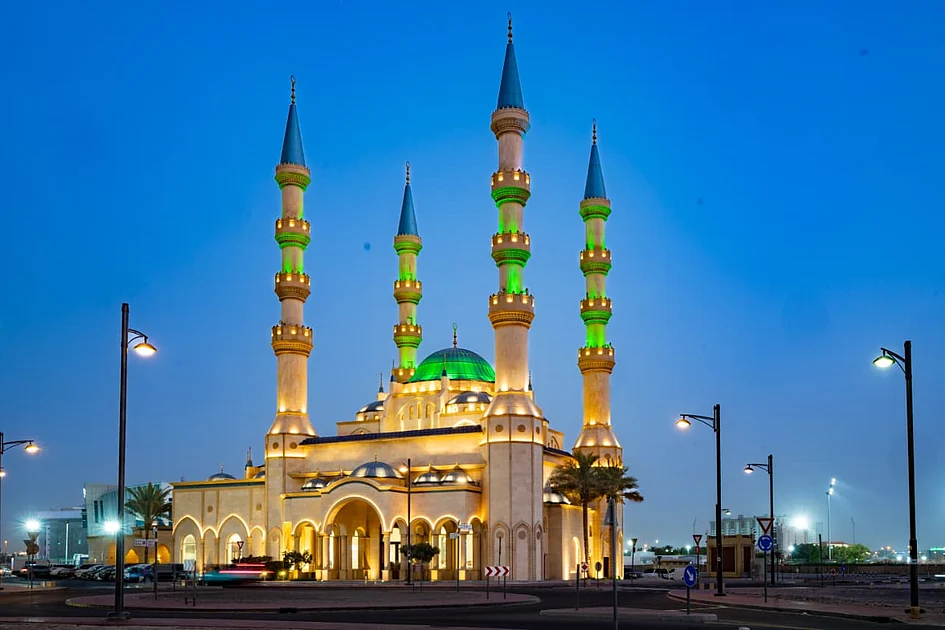
    Sharjah’s electrical infrastructure demonstrated remarkable resilience on Sunday as authorities successfully restored power across all affected areas following an unexpected outage. The disruption, which commenced approximately at noon, temporarily impacted essential services including government operations, commercial activities, and banking functions throughout several key neighborhoods.

    The Sharjah Electricity and Water Authority (SEWA) confirmed the incident resulted from an isolated emergency fault within the local power network. This triggered automated protection mechanisms designed to prevent widespread grid instability. Technical response teams were immediately deployed to identify and address the fault source while implementing strategic isolation protocols.

    Affected zones included prominent commercial and residential districts such as Al Majaz and Al Taawun, with Jamal Abdul Nasser Street experiencing particular service interruptions. The outage temporarily disabled elevator operations, internet connectivity, and routine municipal services, though critical infrastructure remained protected throughout the event.

    SEWA’s emergency protocols proved effective, with most areas seeing restoration within three hours. Resident testimonials reflected generally positive experiences, with Ghada Mamoon of Al Majaz noting: ‘The power went off for a short time and was restored efficiently.’ Similar sentiments were echoed by Sara Al Amin along Jamal Abdul Nasser Street, who confirmed normal operations resumed within hours.

    While some residents in Al Taawun reported slightly extended restoration timelines, SEWA officials assured complete recovery by afternoon through methodical phased restoration—a standard procedure ensuring system safety during re-energization.

    The authority emphasized its ongoing commitment to grid modernization and preventive maintenance, citing the incident as evidence of robust protection systems successfully containing what could have become a more extensive disruption. The UAE’s electrical networks maintain among the highest reliability standards regionally, with such occurrences remaining exceptional due to advanced infrastructure investments and rapid-response capabilities.

  • Novel concept: China’s spellbinding bookstores draw selfie snappers

    Novel concept: China’s spellbinding bookstores draw selfie snappers

    Across China, a new generation of architecturally spectacular bookstores is drawing crowds more interested in Instagrammable moments than literary discoveries. Despite persistent challenges in print book sales that continue to lag behind pre-pandemic levels, these visually striking establishments are experiencing remarkable growth through their transformation into cultural landmarks and social media hotspots.

    In Tianjin, the recently opened Zhongshuge location has become a sensation with its dramatic design featuring towering accordion-style steps and a fantastical spiral staircase that evokes comparisons to Harry Potter’s Hogwarts. The store regularly fills with visitors wielding selfie sticks and tripods, all competing to capture the perfect shot against its cobalt-colored architectural marvels. So intense is the photography activity that faded prints marking ‘The Best Spot for Photos’ dot the floor.

    This phenomenon represents a strategic shift in China’s bookstore industry. According to industry experts, many establishments now deliberately invest in creating photogenic interiors specifically designed to attract social media users. Beijing-based architect Zheng Shiwei notes that this approach has become ‘relatively mainstream’ as bookstores seek new revenue streams beyond traditional book sales.

    The trend has sparked both enthusiasm and concern within cultural circles. While these visually striking spaces successfully draw public engagement with literary venues, some establishments have implemented restrictions on professional photography equipment and flash photography due to disruptions to actual readers. The famous Librairie Avant-Garde in Nanjing notably banned tripods and unauthorized photoshoots after customer complaints about interference with reading experiences.

    Despite these challenges, many bookstore owners embrace the photographic trend. Juli Hu, founder of a Beijing bookstore converted from a former Taoist temple, acknowledges that ‘books bring in relatively low profit’ and actively welcomes social media exposure. Her establishment frequently refreshes cultural displays to maintain photographic appeal while integrating tea service and trinket sales to sustain operations.

    Industry representative Ai Limin confirmed that physical bookshops have ‘maintained steady growth’ through this wave of uniquely characteristic establishments that blend cultural preservation with modern consumer behavior. The phenomenon demonstrates how traditional bookselling is adapting to contemporary digital culture while creating spaces that serve multiple purposes beyond mere commerce.

  • Myanmar votes in second phase of junta-run election

    Myanmar votes in second phase of junta-run election

    Myanmar’s military regime conducted the second phase of its staged electoral process on Sunday, January 11, 2026, amidst mounting international condemnation and domestic skepticism. The voting included the constituency previously represented by ousted democratic leader Aung San Suu Kyi, whose party was forcibly dissolved following the 2021 coup that abruptly ended Myanmar’s decade of democratic transition.

    The State Administration Council, as the junta styles itself, has framed this three-phase electoral exercise as a pathway to restoring civilian governance, with the final phase scheduled for completion by January 25. However, democracy monitoring organizations and international rights experts have uniformly dismissed the process as a carefully orchestrated attempt to cement military dominance under a veneer of electoral legitimacy.

    Electoral mathematics already indicate predetermined outcomes. The military-aligned Union Solidarity and Development Party (USDP) secured approximately 90% of lower house seats during the initial voting phase in late December 2025. This overwhelming victory occurred amid reports of severe voter suppression, with turnout estimated at just 50%—a dramatic decline from the 70% participation recorded in the 2020 elections that brought Suu Kyi’s National League for Democracy to power.

    The electoral landscape reflects Myanmar’s ongoing civil conflict. Voting has been canceled across extensive territories controlled by ethnic rebel factions and resistance forces, while the military has intensified offensive operations, including aerial bombardments of civilian areas, in contested regions. UN Human Rights Special Rapporteur Tom Andrews characterized the process as ‘engineered polls designed to manufacture a facade of legitimacy while violence and repression continue unabated.’

    Myanmar’s political environment remains perilous for dissent. Over 330 individuals face prosecution under junta-enacted laws that criminalize election criticism with penalties up to 10 years imprisonment. The Assistance Association for Political Prisoners documents more than 22,000 political detainees currently held in military prisons, underscoring the repressive context in which this electoral exercise unfolds.

  • Prashant Tamang, Indian Idol season 3 winner and star of ‘Paatal Lok’, dies at 43

    Prashant Tamang, Indian Idol season 3 winner and star of ‘Paatal Lok’, dies at 43

    The entertainment industry is grappling with the tragic loss of Prashant Tamang, the celebrated Indian Idol season 3 winner and accomplished actor, who passed away unexpectedly on January 11, 2026, at his New Delhi residence. The 43-year-old multifaceted artist succumbed to a fatal stroke, as confirmed by multiple news sources including NDTV.

    Tamang’s friend, Mahesh Sewa, disclosed to Press Trust of India that the artist experienced cardiac arrest around 9 AM. Despite being rushed to medical facilities by family members, he was pronounced dead upon arrival. Sewa expressed profound shock, noting that Tamang had appeared in excellent health during their recent conversation.

    The talented performer first captured national attention in 2007 through his victorious Indian Idol journey, which launched his diverse entertainment career. His musical contributions spanned multiple languages, with his debut album ‘Dhanyavad’ featuring both Hindi and Nepali tracks. Tamang subsequently became a prominent figure in Nepali cinema, contributing to films including ‘Gorkha Paltan’ (2010), ‘Angalo Yo Maya Ko’, and ‘Himmat 2’ (2013).

    Tamang’s acting prowess gained significant recognition through his portrayal of a serial killer in the second season of the critically acclaimed crime thriller ‘Paatal Lok’. His final cinematic appearance will be seen in the upcoming Bollywood war drama ‘Battle of Galwan’, starring Salman Khan and Chitrangada Singh.

    Beyond his artistic achievements, Tamang served as an inspirational figure for the Nepali-Indian community, breaking cultural barriers in mainstream entertainment. West Bengal Chief Minister Mamata Banerjee commemorated his legacy on social media, highlighting his Darjeeling roots and previous association with Kolkata Police.

    The artist leaves behind his wife and their four-year-old daughter, with the industry mourning the loss of a versatile talent whose career transcended musical and theatrical boundaries.

  • In Gaza hospital, patients cling to MSF as Israel orders it out

    In Gaza hospital, patients cling to MSF as Israel orders it out

    A critical humanitarian crisis is escalating in Gaza as Médecins Sans Frontières (MSF) faces imminent expulsion from the territory under Israel’s controversial NGO ban. The organization, along with 36 other aid groups, has been ordered to cease operations by March 1st for allegedly failing to provide detailed staff information to Israeli authorities.

    At Nasser Hospital in southern Gaza—one of the few remaining functional medical facilities—patients express profound anxiety about losing MSF’s essential services. Ten-year-old Adam Asfour, receiving treatment for shrapnel wounds sustained in September bombings, articulated the collective fear: “They stood by us throughout the war. When I heard it was possible they would stop providing services, it made me very sad.”

    Israel’s Ministry of Diaspora Affairs and Combating Antisemitism, which oversees NGO registrations, has leveled serious allegations against MSF, claiming two employees maintain ties to Hamas and Islamic Jihad—charges the organization vehemently denies. This decision has drawn international condemnation and warnings of catastrophic consequences for Gaza’s already strained relief systems.

    MSF currently sustains approximately 20% of hospital beds across Gaza while operating around 20 health centers. Their 2025 operations included over 800,000 medical consultations and more than 10,000 deliveries. Beyond medical care, the organization provides critical drinking water distribution to a population devastated by prolonged conflict.

    Humanitarian workers report that constraints are already mounting. “We can’t have any more international staff enter Gaza, nor can we bring in supplies—we will run into shortages,” stated Kelsie Meaden, MSF logistics manager at Nasser Hospital. Claire Nicolet, another MSF official, emphasized the irreplaceable nature of their work: “It’s almost impossible to find an organization that could replace all what we are doing currently in Gaza.”

    The potential withdrawal occurs against the backdrop of a healthcare system pushed to the brink by two years of war. Many facilities have been damaged by bombardments or overwhelmed by casualties, with unreliable electricity, water, and fuel supplies compounding the crisis. Aid groups warn that emergency care, maternal health, and pediatric treatment services risk complete collapse without international support.

    Humanitarian sources confirm that at least three international NGO employees have already been barred from entering Gaza through the Kerem Shalom crossing due to rejected applications. As the March deadline approaches, patients like 18-month-old Joud—being treated for severe burns from boiling water accidents—face uncertain futures despite showing significant improvement under MSF care.

    While MSF asserts it will “continue working as long as we can,” the organization acknowledges that without reversal of Israel’s decision, their life-saving operations in Gaza will terminate in March, leaving hundreds of thousands without essential medical services.

  • Iran warns Washington it will retaliate against any attack with strikes on Israel, US bases

    Iran warns Washington it will retaliate against any attack with strikes on Israel, US bases

    Iran has issued a stark warning to the United States, declaring that any American military action would trigger immediate retaliatory strikes against Israeli territory and US military installations throughout the Middle East. The warning came from Parliament Speaker Mohammad Baqer Qalibaf, a former Revolutionary Guards commander, during a parliamentary address on Sunday.

    The escalating tensions occur against the backdrop of widespread civil unrest in Iran that began on December 28th, initially sparked by economic grievances but rapidly evolving into political demonstrations challenging the clerical establishment. According to human rights organization HRANA, the death toll has reached 116 casualties, including both protesters and security personnel.

    Israeli security forces have been placed on high alert amid concerns about potential US intervention in support of the Iranian protest movement. Three security sources confirmed heightened preparedness, though specific operational details remain classified. The Israeli government has maintained official silence regarding the situation.

    The current crisis follows recent military confrontations between the nations, including a 12-day conflict in June that saw joint US-Israeli airstrikes against Iranian targets, followed by Iranian missile attacks on American bases in Qatar.

    Information flow from Iran remains severely restricted due to government-imposed internet blackouts implemented since Thursday. Meanwhile, social media evidence indicates continued protests, including verified footage showing substantial nighttime gatherings in Tehran’s Punak neighborhood.

    US President Donald Trump has repeatedly expressed willingness to support the protest movement, stating on social media that ‘the USA stands ready to help.’ This rhetoric coincides with confirmed discussions between Israeli Prime Minister Benjamin Netanyahu and US Secretary of State Marco Rubio regarding potential intervention scenarios.

    A senior US intelligence official characterized the situation as an ‘endurance game,’ with both opposition forces and government authorities attempting to outlast each other while avoiding actions that might justify foreign military involvement.

  • Alia Bhatt calls herself a ‘Yami fan’ after watching ‘Haq’

    Alia Bhatt calls herself a ‘Yami fan’ after watching ‘Haq’

    In a remarkable display of industry camaraderie, Bollywood luminary Alia Bhatt has publicly acclaimed Yami Gautam’s performance in the courtroom drama ‘Haq,’ describing it as one of the most exceptional female performances in cinematic history. The acclaimed actress not only reached out to Gautam personally but also utilized her social media platform to express profound admiration, declaring herself an ardent ‘Yami fan’ through an extensive Instagram story tribute.

    Bhatt’s digital endorsement characterized Gautam’s portrayal as ‘pure craft, heart and all things gold,’ emphasizing the performance’s placement among her all-time favorites. The heartfelt message further revealed their private telephone conversation, with Bhatt expressing eager anticipation for Gautam’s future projects that would ‘charm and entertain’ audiences.

    Responding to the generous praise, Gautam reciprocated with equal warmth, acknowledging Bhatt’s professional integrity and personal generosity. She highlighted their meaningful morning conversation as evidence of mutual respect and empowerment within the industry, expressing commitment to ‘always rooting for one each other’ in their cinematic journeys.

    This public exchange of admiration follows previous accolades from other prominent Bollywood figures including Kiara Advani and Sanjay Kapoor, solidifying the film’s significant impact within the entertainment community.

    ‘Haq,’ which premiered in theaters on November 7, 2025, represents a substantial cinematic achievement exploring women’s rights through the landmark 1985 Indian Supreme Court case of Mohd. Ahmed Khan vs Shah Bano Begum. Directed by Suparn S Varma and produced under the Junglee Pictures banner with executive production by Vineet Jain, Vishal Gurnani, Juhi Parekh Mehta and Harman Baweja, the film features an ensemble cast including Vartika Singh, Danish Husain, Sheeba Chadha, and Aseem Hattangady alongside Gautam’s celebrated performance.

  • As Vijay’s ‘Jana Nayagan’ faces delay, his 2016 hit ‘Theri’ to release in theatres

    As Vijay’s ‘Jana Nayagan’ faces delay, his 2016 hit ‘Theri’ to release in theatres

    In an unexpected cinematic development, Tamil superstar Thalapathy Vijay’s 2016 action thriller ‘Theri’ is poised for a theatrical re-release on January 15, 2026—exactly a decade after its original premiere. The announcement comes from veteran producer Kalaipuli S. Thanu of V Creations, who revealed the news through his official social media channels alongside a specially commissioned anniversary poster.

    The re-release strategy emerges concurrently with production delays affecting Vijay’s highly anticipated final film project, ‘Jana Nayagan,’ which has encountered postponement due to certification complications. Originally scheduled for January 9, 2026, the setback has left fans awaiting the actor’s purported farewell performance.

    Directed by Atlee, ‘Theri’ showcases Vijay in a dual role as both DCP Vijaya Kumar and Joseph Kuruvilla, portraying a former police officer who abandons his career to safeguard his young daughter from his turbulent past. The film’s narrative gains emotional depth through its exploration of paternal sacrifice and redemption, complemented by strong performances from Samantha Ruth Prabhu and Amy Jackson in pivotal supporting roles. Child actor Nainika delivered a memorable performance as Vijay’s on-screen daughter, contributing to the film’s emotional resonance.

    The film’s cultural impact extended beyond regional cinema, inspiring the Hindi remake ‘Baby John’ featuring Varun Dhawan and Keerthy Suresh. Its return to theaters represents both a nostalgic celebration for dedicated fans and a strategic countermeasure to maintain audience engagement during the ‘Jana Nayagan’ delay. This re-release initiative demonstrates the enduring commercial viability of Vijay’s filmography and the industry’s adaptive strategies in managing production timelines.

  • New protests hit Iran as alarm grows over crackdown ‘massacre’

    New protests hit Iran as alarm grows over crackdown ‘massacre’

    Iran has been plunged into a new wave of civil unrest as citizens defy authorities despite a comprehensive internet blackout entering its third day. The demonstrations, which initially erupted over economic grievances and soaring living costs, have evolved into a direct challenge against the nation’s theocratic establishment that has governed since the 1979 revolution.

    According to documentation by the US-based Human Rights Activists News Agency, the death toll has reached at least 116 individuals, including 37 security personnel. However, human rights organizations caution that the actual number of fatalities may be significantly higher due to severe information restrictions imposed by the government’s digital crackdown.

    Netblocks, an internet monitoring organization, confirmed that Iran’s connectivity shutdown has surpassed 60 hours, describing the measure as a direct threat to citizen safety during this critical period. Despite these constraints, social media platforms have circulated videos showing substantial crowds mobilizing in Tehran, Mashhad, and other urban centers, with some footage depicting burning vehicles and confrontations with security forces.

    The Center for Human Rights in Iran has received disturbing accounts indicating hundreds of additional casualties, overwhelmed medical facilities, and critical blood supply shortages. Particularly alarming are reports of security forces intentionally targeting protesters’ eyes with projectiles.

    Interior Minister Eskandar Momeni characterized the events as acts of vandalism during a state television broadcast, asserting that the situation was being contained. Meanwhile, Reza Pahlavi, the exiled son of Iran’s former monarch, has emerged as a vocal supporter of the demonstrations, urging continued resistance against the regime.

    This uprising represents one of the most significant challenges to Supreme Leader Ayatollah Ali Khamenei’s governance, occurring against the backdrop of regional tensions following Israel’s recent military engagement with Iran and ongoing international pressure.

  • Iran: Death toll rises to 116; internet blackout crosses 60 hours

    Iran: Death toll rises to 116; internet blackout crosses 60 hours

    Iran remains engulfed in a severe communications crisis as authorities continue to enforce a nationwide internet blackout that has now surpassed 60 consecutive hours. The digital shutdown coincides with escalating civil unrest that has resulted in a mounting death toll, with the US-based HRANA Rights Group reporting at least 116 fatalities linked to ongoing protests against governmental authorities.

    Netblocks, an internet monitoring organization, has characterized the censorship measures as particularly dangerous during this critical period. ‘The censorship measure presents a direct threat to the safety and wellbeing of Iranians at a key moment for the country’s future,’ the monitor stated via social media platform X, emphasizing the prolonged duration of the connectivity restrictions.

    The Iranian government has simultaneously declared three days of national mourning for what official sources describe as ‘martyrs,’ though state media has not provided specific casualty figures or detailed accounts of the circumstances surrounding these deaths. This official period of mourning stands in stark contrast to the ongoing suppression of digital communications that would typically allow for documentation and international awareness of the situation.

    The extended internet blackout represents one of the most severe digital crackdowns in Iran’s recent history, effectively isolating the country’s population from global communication networks and hindering the flow of information both within and beyond its borders. Such comprehensive restrictions on digital connectivity have raised significant concerns among human rights organizations regarding transparency and accountability during periods of civil unrest.