标签: Asia

亚洲

  • Defiant Iran says it’s ‘ready’ as Trump swings tariff stick

    Defiant Iran says it’s ‘ready’ as Trump swings tariff stick

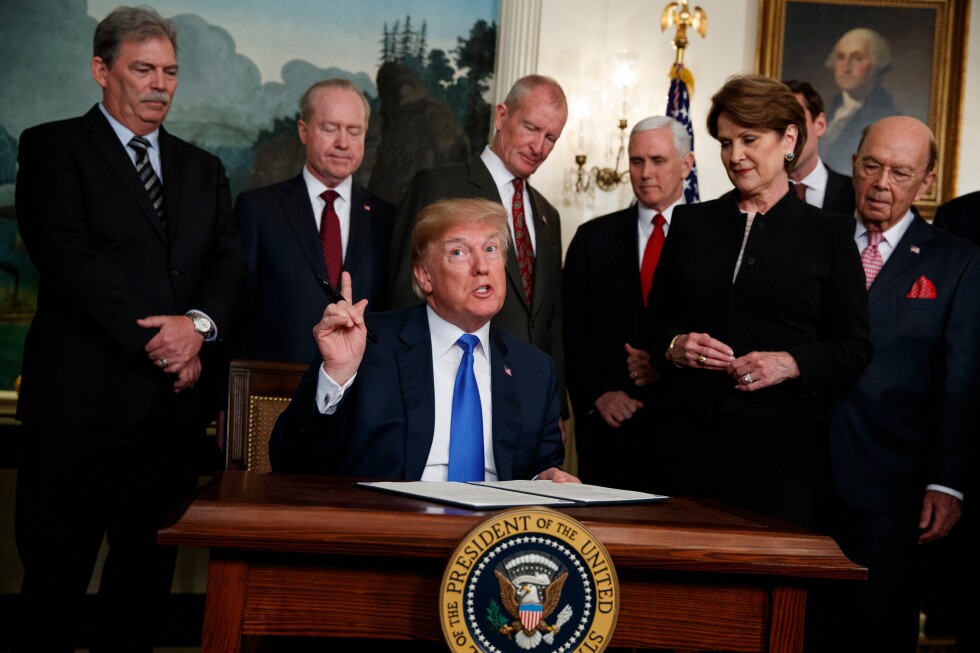
    Iran has issued a stark warning to the United States, asserting its full military preparedness should Washington choose to escalate tensions through armed conflict. The declaration comes as President Donald Trump implemented immediate 25% tariffs on nations conducting business with Iran, significantly heightening economic pressure on the Middle Eastern nation.

    Global oil markets reacted swiftly to the escalating geopolitical tensions, with prices climbing Tuesday as traders responded to potential disruptions from Iran, which contributes approximately 3% of worldwide oil production. The economic measures coincide with heightened security concerns, prompting the virtual US embassy to urgently advise American citizens to immediately depart Iran via land routes to Armenia or Türkiye.

    Chinese officials condemned the US tariff strategy, with Foreign Ministry spokeswoman Mao Ning emphasizing during a Beijing briefing that “tariff wars have no winners” while reaffirming China’s commitment to protecting its legitimate interests and citizens abroad. China further expressed opposition to external interference in Iran’s internal affairs and called for peaceful resolution mechanisms.

    The Trump administration’s economic offensive follows Sunday’s revelation that military options are under active consideration against Iran, including potential airstrikes. The New York Times reported Pentagon officials presenting expanded strike options targeting Iran’s nuclear infrastructure and ballistic missile facilities, though cyber operations remain a more probable initial response.

    Iranian Foreign Minister Seyed Abbas Araghchi confirmed in an Al Jazeera interview that diplomatic channels remain open despite the tensions, noting continued communication with US Special Envoy Steve Witkoff regarding nuclear negotiations. However, Araghchi questioned Washington’s commitment to equitable dialogue given simultaneous military threats.

    The geopolitical standoff unfolds against Iran’s domestic turmoil, where December protests over economic conditions resulted in significant casualties. Iranian state media reported massive pro-government demonstrations Monday in Tehran and other cities, with Supreme Leader Ayatollah Ali Khamenei claiming these rallies successfully countered foreign-backed destabilization efforts.

  • Pakistani expat arrested for harassing minor in Saudi Arabia

    Pakistani expat arrested for harassing minor in Saudi Arabia

    Saudi Arabian authorities have apprehended a Pakistani expatriate on serious charges involving the harassment of a minor, marking another enforcement of the Kingdom’s stringent anti-harassment legislation. The arrest of Khursheed Muhammad Nazir was executed through a coordinated operation between Najran Region Police and the General Directorate of Community Security and Combating Human Trafficking.

    The Ministry of Interior confirmed that formal legal proceedings have been initiated against the suspect, who has been formally transferred to the Public Prosecution for further judicial processing. This case highlights Saudi Arabia’s rigorous application of its 2018 Anti-Harassment Law (Royal Decree No. M/96), which mandates severe punishments for such offenses.

    Under Saudi jurisprudence, standard harassment violations carry penalties of up to two years imprisonment and/or fines reaching 100,000 riyals. However, the legal framework imposes significantly heightened sanctions when the victim is a child, with potential sentences extending to five years incarceration and financial penalties up to 300,000 riyals.

    The enhanced penalty structure also applies under multiple aggravating circumstances, including cases involving repeat offenses, victims with special needs, perpetrators in positions of authority, incidents occurring in educational or workplace environments, same-sex harassment, crimes committed against unconscious victims, and offenses during times of crisis or disaster.

  • US designates Muslim Brotherhood branches in Egypt, Jordan and Lebanon as ‘terror’ groups

    US designates Muslim Brotherhood branches in Egypt, Jordan and Lebanon as ‘terror’ groups

    In a significant foreign policy decision, the United States government has formally designated three Middle Eastern branches of the Muslim Brotherhood as terrorist organizations. The Tuesday announcement from both the Treasury and State Departments imposes severe sanctions on the Egyptian, Jordanian, and Lebanese chapters of the controversial Islamic movement.

    The State Department classified the Lebanese branch as a Foreign Terrorist Organization (FTO), the most stringent designation under U.S. law that criminalizes any material support to the group. Simultaneously, the Treasury Department listed the Jordanian and Egyptian branches as Specially Designated Global Terrorists, alleging their support for Hamas operations.

    Secretary of State Marco Rubio characterized the move as “the opening actions of an ongoing, sustained effort to thwart Muslim Brotherhood chapters’ violence and destabilisation wherever it occurs.” The administration pledged to “use all available tools” to disrupt the groups’ financial networks and resource access.

    This decision culminates years of advocacy from former President Donald Trump, who began pushing for the designation after meeting with Egyptian President Abdel Fattah el-Sisi in spring 2019. The move follows Trump’s executive order last year directing administration officials to develop appropriate sanctions against Brotherhood-affiliated organizations.

    The designations carry substantial legal consequences: providing material support to these groups becomes illegal, current and former members face entry bans to the United States, and comprehensive economic sanctions will target their revenue streams.

    The Muslim Brotherhood, founded in 1928 in opposition to British colonial rule, has consistently denied allegations of violence, maintaining its status as a political and social movement. The organization gained significant political influence following the 2011 Arab Spring uprisings, notably achieving power in Egypt through Mohamed Morsi’s democratic election in 2012 before his overthrow and subsequent death in custody.

    The U.S. decision has already created regional reverberations, reflecting the deep divisions among Middle Eastern governments regarding the Brotherhood. While Saudi Arabia, the UAE, and Bahrain have banned the organization, other regional powers maintain varying relationships with Brotherhood-affiliated groups. The designation exacerbates existing tensions between regional powers including Turkey, Qatar, Saudi Arabia, and the United Arab Emirates, for whom the Brotherhood remains a persistent point of contention.

  • Palestine Action trial: Jury retires to consider verdict in Elbit Systems case

    Palestine Action trial: Jury retires to consider verdict in Elbit Systems case

    A British jury has commenced deliberations in the contentious trial of six Palestine Action activists accused of orchestrating a raid on an Israeli-owned arms manufacturing facility. The defendants—Leona Kamio (30), Samuel Corner (23), Fatema Rajwani (21), Zoe Rogers (22), Jordan Devlin (31), and Charlotte Head (29)—face multiple charges including aggravated burglary, criminal damage, and violent disorder for their alleged roles in the 6 August 2024 incident at Elbit Systems’ plant near Bristol.

    During the proceedings at Woolwich Crown Court, Justice Johnson provided critical guidance to jurors, emphasizing that the prosecution’s case hinges on establishing ‘contingent or conditional intention’ regarding weapon use. While acknowledging the undisputed fact that defendants entered the facility armed with sledgehammers, the judge clarified that conviction requires proof of willingness to use these tools against security personnel if confronted.

    The trial revealed dramatic contradictions in testimony, particularly concerning security guard Angelo Volante’s account. Defense attorneys challenged Volante’s credibility, noting discrepancies in his statements about whether protesters’ sledgehammers made physical contact. CCTV evidence emerged as a pivotal point of contention, with defense counsel Mira Hammad characterizing missing footage from multiple security cameras as ‘suspicious’ and potentially exculpatory.

    Notably, PC Sarah Grant, the officer responsible for retrieving surveillance footage, testified that Elbit’s camera system operated with inconsistent frame rates as low as 17 seconds, describing the security infrastructure as ‘not fit for purpose.’ This technical deficiency has complicated the reconstruction of events, particularly regarding an alleged altercation in a factory alcove.

    The case has drawn significant attention due to the UK government’s July 2025 proscription of Palestine Action and the broader context of arms trade controversies. All defendants maintain their innocence, with Rogers’ attorney Audrey Mogan dismissing injury allegations as ‘a joke’ contrary to evidence of her client’s character and physical capabilities.

    The jury’s verdict, when delivered, will determine the legal consequences for the activists and potentially establish important precedents regarding protest rights, property damage, and conditional intent in British jurisprudence.

  • Iran protests: Authorities to press capital crime charges for some ‘rioters’

    Iran protests: Authorities to press capital crime charges for some ‘rioters’

    Iranian prosecutors announced Tuesday they would pursue capital crime charges against demonstrators arrested during recent protests, signaling a potential escalation in the government’s crackdown on dissent. The Tehran prosecutor’s office stated an unspecified number of individuals would face charges of “moharebeh” (waging war against God), a sharia law violation carrying the death penalty.

    The development comes amid alarming execution statistics from human rights organizations. The Norway-based Iran Human Rights group reported at least 1,500 executions in Iran during the previous year, making the country the world’s second-most prolific executioner after China. During the 2022-2023 protest wave, twelve protesters were executed, with an additional twelve put to death on espionage charges related to Israel.

    United Nations High Commissioner for Human Rights Volker Turk expressed grave concern over judicial officials publicly discussing potential death penalties for protesters through expedited proceedings. Rights organizations fear the Islamic republic is conducting rapid trials without observing fair trial standards for detained demonstrators.

    The case of 26-year-old Erfan Soltani, arrested last week in Karaj, exemplifies these concerns. According to family sources, Soltani has already received a death sentence and could face execution as early as Wednesday, though state media hasn’t reported on the case and charges remain unclear.

    Iranian state media has emphasized that dozens of security force members died at the hands of “rioters,” while rights groups report hundreds of protester fatalities, with potentially higher numbers unconfirmed. The situation continues to draw international condemnation as Iran employs severe judicial measures against dissent.

  • UAE, the Philippines sign CEPA during Marcos visit; what this means for both nations

    UAE, the Philippines sign CEPA during Marcos visit; what this means for both nations

    In a significant diplomatic ceremony witnessed by UAE President Sheikh Mohamed bin Zayed Al Nahyan and Philippine President Ferdinand R. Marcos Jr., the two nations solidified a groundbreaking Comprehensive Economic Partnership Agreement (CEPA) in Abu Dhabi on January 13, 2026. This landmark trade deal marks President Marcos’ first international visit of the year and coincides with his participation in Abu Dhabi Sustainability Week.

    The newly ratified agreement establishes a comprehensive framework for enhanced economic collaboration, representing a strategic evolution in bilateral relations between the Gulf nation and the Southeast Asian archipelago. Sheikh Mohamed characterized the partnership as reflecting a shared vision to broaden cooperation that serves mutual interests, expressing confidence that the CEPA would significantly advance both countries’ development objectives.

    From the UAE perspective, this agreement constitutes a pivotal component of the nation’s ambitious foreign trade strategy targeting $1.1 trillion in non-oil foreign trade by 2031. Current trade metrics demonstrate robust growth, with bilateral non-oil trade reaching $940 million in 2024 and showing a remarkable 22.4% year-on-year increase during the first three quarters of 2025. Economic projections indicate the partnership could boost UAE GDP by approximately $2.4 billion by 2032.

    For the Philippines, this historic agreement represents their first free trade pact with a Middle Eastern nation, providing unprecedented market access to the region. The CEPA is designed to eliminate tariffs, reduce trade barriers, and stimulate investment flows across key sectors including electrical equipment, financial services, agriculture, and precious metals. The agreement additionally facilitates private-sector collaboration, strengthens supply chain resilience, promotes knowledge transfer, and empowers small and medium enterprises to expand globally.

    The UAE-Philippines CEPA joins 31 other agreements under the UAE’s comprehensive trade program, which has already contributed to record non-oil trade figures of $810 billion in 2024, marking a 14% annual increase. Fourteen of these agreements are currently operational, reflecting the UAE’s commitment to rules-based trade as a mechanism for economic diversification and global business expansion.

  • Exam season begins in UAE: CBSE schools conduct board practicals, prelims

    Exam season begins in UAE: CBSE schools conduct board practicals, prelims

    Educational institutions across the United Arab Emirates affiliated with the Central Board of Secondary Education (CBSE) have commenced the critical examination period for Grades 10 and 12. The current phase, running through February 14, 2026, encompasses practical assessments, internal evaluations, and preliminary examinations that carry substantial weight in final academic results.

    The CBSE board has emphasized the significance of these assessments, urging all educational stakeholders to approach them with maximum seriousness. This examination window represents a pivotal academic milestone for thousands of students throughout the UAE, characterized by intensive laboratory sessions, extended revision periods, and the challenging balance between academic preparation and emotional health.

    Educational leaders have implemented comprehensive strategies to ensure both academic readiness and psychological support. Woodlem Park School in Ajman initiated structured orientations for parents, students, and faculty, complemented by mock practical examinations to familiarize candidates with assessment protocols. Principal Bhanu Sharma highlighted the institution’s dual focus on academic excellence and emotional welfare, incorporating specialized sessions on stress management, nutritional guidance, and healthy study routines conducted by certified professionals.

    In Abu Dhabi, Shining Star International School has nearly completed its practical examination schedule. Principal Abhilasha Singh reported that preparation began prior to the winter break, with students participating in mock tests and additional classes throughout the holiday period. The school has maintained teacher availability for continuous support, with plans for targeted revision sessions following the preliminary examinations scheduled for January 19.

    JSS Private School in Dubai has implemented sophisticated logistical planning to accommodate students undertaking multiple assessments, including those preparing for competitive entrance examinations. The school has established specialized support systems including a tele-counselling helpline titled ‘YOU Matter – Help Is Just a Call Away,’ daily meditation practices, and emotional monitoring through the Upstrive application to track student wellbeing indicators.

    This coordinated approach across UAE educational institutions demonstrates a evolving paradigm in examination management that prioritizes both academic achievement and student mental health during high-pressure assessment periods.

  • UAE experts warn couples not to ignore travel risks during pregnancy

    UAE experts warn couples not to ignore travel risks during pregnancy

    Medical professionals in the United Arab Emirates are issuing urgent warnings to expectant couples regarding travel risks during advanced pregnancy stages. This advisory follows a concerning clinical case in Dubai that demonstrates how seemingly minor incidents can trigger delayed serious complications.

    A 36-week pregnant woman experienced a sudden vehicle braking incident without direct abdominal impact or immediate discomfort. Despite no apparent injury, she developed lightheadedness and weakness approximately one week later at 37 weeks gestation. Medical examination revealed abnormally low blood pressure, leading to diagnostic imaging that confirmed placental abruption—a partial separation of the placenta from uterine walls that compromises fetal oxygen supply and maternal health.

    Dr. Meera T. Anto, Specialist Obstetrician and Gynecologist at International Modern Hospital, Dubai, emphasizes that weeks 39-40 represent particularly critical periods. “The baby’s head becomes deeply engaged, the cervix softens in preparation for delivery, and labor can commence without warning,” she explains. “A woman can transition from normalcy to active labor or medical distress within minutes.”

    Medical authorities note that internal stress from sudden movements or jerks can affect placental integrity without visible external indicators. Extended travel additionally poses risks including dehydration, blood pressure fluctuations, reduced uterine blood flow, and increased contraction frequency. Complications may manifest hours or days after the initiating event, creating dangerous diagnostic delays.

    Healthcare providers recommend immediate medical consultation for pregnancy-related dizziness, faintness, reduced fetal movement, uterine tightening, back pain, vaginal bleeding, or subjective feelings of abnormality. Doctors emphasize that maternal intuition often detects subtle changes before monitoring equipment registers abnormalities.

    The successful resolution of the Dubai case through careful monitoring and normal delivery represents optimal outcomes, but specialists caution that results could easily have been tragic. Experts advise limiting routine commuting after 38 weeks even in low-risk pregnancies and maintaining proximity to medical facilities during late gestation periods.

  • Noble Legacy Masters target back-to-back titles in Ultimate Golf Challenge Season 3

    Noble Legacy Masters target back-to-back titles in Ultimate Golf Challenge Season 3

    The Ultimate Golf Challenge (UGC) Season 3 prepares to launch with reigning champions Noble Legacy Masters positioning themselves for a historic title defense. Fresh off their dramatic Season 2 victory at Emirates Golf Club in February 2025, the team enters the new campaign with reinforced confidence and strategic roster enhancements.

    Co-owner Achal Ghai emphasized the league’s maturation, noting significant improvements in organizational structure. “The player auction demonstrated remarkable evolution in its third season,” Ghai stated. “The process felt exceptionally fair, well-structured, and balanced for all franchise owners, indicating positive directional movement for the competition.”

    The champions have implemented calculated squad development strategies focusing on quality, diversity, and adaptability—essential attributes for a tournament spanning multiple courses across four intensive competition days. Their roster now features increased low-handicap talent and improved overall balance, providing competitive advantages across varying course conditions.

    Beyond technical prowess, team chemistry remains paramount. Ghai highlighted lessons from their previous triumph: “Team-building proves absolutely crucial. Last season demonstrated how profoundly chemistry and collective belief impact performance. We’ve deliberately reinforced these elements while maintaining our competitive hunger.”

    The UGC continues revolutionizing amateur golf in the UAE through its franchise model, drawing comparisons to cricket’s Indian Premier League. With 10 corporate teams, 160 athletes, and over 350 scheduled rounds, the league has established itself as a transformative force in regional golf.

    As the February 5th season commencement approaches, Noble Legacy Masters project unwavering determination to achieve consecutive championships in a league that continues redefining corporate competitive golf standards in the United Arab Emirates.

  • Saudi Arabia prohibits use of God’s name on packaging items

    Saudi Arabia prohibits use of God’s name on packaging items

    Saudi Arabia’s Ministry of Commerce has implemented a significant prohibition against the commercial use of divine names on consumer packaging and bags. The new regulation, announced by ministry spokesman Abdulrahman Al Hussain on Monday, specifically targets the printing of ‘The Most Beautiful Names of Allah’ on items that could potentially lead to disrespect or inappropriate handling.

    The policy stems from concerns that disposable or utilitarian items like shopping bags and product packaging may be subjected to improper treatment after use, thereby desecrating the sacred names. Al Hussain emphasized that the ban applies specifically to commercial establishments and aims to ensure proper reverence for divine attributes.

    In an official statement released on social media platform X, the ministry clarified: ‘Out of respect for glorifying and safeguarding the Most Beautiful Names of Allah, commercial establishments are prohibited from printing these names or the Divine Name on anything that may subject them to disrespect.’ The announcement specifically identified bags and packaging materials as primary concerns due to their transient nature and potential for improper disposal or usage.

    The regulatory move reflects Saudi Arabia’s ongoing efforts to maintain religious sanctity in commercial practices and public life. The ministry did not specify penalties for violations but indicated the policy would be enforced through existing commercial compliance mechanisms. This decision aligns with the kingdom’s broader cultural and religious policies aimed at preserving Islamic values in all aspects of society, including commercial activities.