标签: Asia

亚洲

  • Review into UK protest laws failed to invite Palestine march organisers for consultation

    Review into UK protest laws failed to invite Palestine march organisers for consultation

    A UK government review into contentious new protest legislation has ignited controversy for its apparent exclusion of key stakeholders. The Palestine Coalition, the organizing body behind 33 national pro-Palestine marches, was initially omitted from consultation despite its central role in the demonstrations under scrutiny.

    Home Secretary Shabana Mahmood initiated the independent review in November, tasking Lord Ken Macdonald KC with examining whether recent amendments to public order and hate crime laws were being implemented effectively. The review emerged following government concerns about protest timing after a tragic antisemitic attack on a Manchester synagogue.

    The oversight has raised serious questions about the review’s comprehensiveness and impartiality. The coalition, whose largest member organization (Palestine Solidarity Campaign) represents over 15,000 members across nearly 100 UK branches, had to proactively request participation after discovering their initial exclusion.

    Further concerns emerged regarding transparency, as the review’s terms of reference were not initially made public, and consulted organizations were reportedly given limited time for submissions to meet the February 2026 deadline.

    The controversy deepens when examining Lord Macdonald’s previous public positions. He co-authored a letter to The Times in October 2023 defending Israel’s siege of Gaza as self-defense and later signed a UK Lawyers for Israel letter arguing against weapons sale suspensions to Israel.

    The Palestine Coalition’s submission vigorously challenges the government’s narrative, rejecting attempts to connect the Manchester synagogue attack with peaceful protests and highlighting the demonstrations’ overwhelmingly peaceful character with lower arrest rates than typical football matches or festivals.

    The review occurs alongside broader concerns from 40 civil society organizations, including Amnesty International UK and Liberty, who have denounced the government’s proposed legal changes as a “draconian crackdown” on fundamental democratic rights.

  • Pep Guardiola speaks out against genocide in Gaza and ICE killings

    Pep Guardiola speaks out against genocide in Gaza and ICE killings

    Manchester City manager Pep Guardiola has intensified his humanitarian advocacy, delivering powerful condemnations of global conflicts during a recent press conference. The decorated football coach articulated profound distress over violence in Gaza, Ukraine, Sudan, and lethal incidents involving U.S. immigration enforcement.

    Guardiola’s remarks followed his appearance at a Barcelona charity event where he wore a Palestinian keffiyeh and criticized international silence regarding Palestinian children’s suffering. When questioned about his political stance before the Carabao Cup match against Newcastle United, Guardiola responded with emotional intensity.

    “Never in human history have we possessed such clear visibility of global atrocities,” Guardiola told journalists. “The genocide in Palestine, the tragedies in Ukraine and Russia, the carnage in Sudan—these are fundamental human problems that demand our attention.”

    The Spanish tactician described how visual evidence from conflict zones affects him personally: “Watching innocent civilians perish wounds me profoundly. Advocating ideologies that require mass slaughter is indefensible. I will consistently oppose such violence.”

    Guardiola specifically referenced the killings of U.S. citizens Renee Good and Alex Pretti by law enforcement, posing rhetorical questions about similar incidents occurring in Britain. His humanitarian concerns extend beyond recent comments, having addressed Gaza’s situation last year while receiving an honorary degree from the University of Manchester.

    This advocacy creates complex dynamics for Manchester City, owned by UAE Vice President Mansour bin Zayed Al Nahyan. Extensive reporting indicates the UAE government supplies weapons to Sudan’s Rapid Support Forces through multinational networks, with intercepted communications suggesting Mansour’s direct involvement with paramilitary leader Hemedti. Activist group Manchester4Sudan notes the apparent contradiction between Guardiola’s condemnations and the club’s ownership connections.

  • 10,000-ton electric container ship tests off Jiangxi province

    10,000-ton electric container ship tests off Jiangxi province

    China has achieved a groundbreaking milestone in maritime transportation with the commencement of sea trials for Ningyuan Diankun, the world’s first 10,000-ton intelligent oceangoing vessel powered exclusively by electricity. The revolutionary container ship embarked from Hukou county in Jiujiang city, Jiangxi province on February 1st after successfully completing outfitting and mooring tests.

    Constructed by Jiangxi Jiangxin Shipbuilding, this pioneering vessel represents the largest pure electric ship of its kind globally. Measuring 127.8 meters in length, the container ship boasts a substantial capacity of 740 TEU (twenty-foot equivalent units) containers, featuring an innovative open-top design that enhances loading efficiency.

    The current sea trials constitute a comprehensive evaluation phase focusing on multiple critical systems. Engineers are testing the advanced battery power supply infrastructure, propulsion performance metrics, hull operational capabilities, and cutting-edge autonomous navigation technologies. The testing itinerary includes navigation to a designated trial zone near Shanghai, with arrival expected by February 6th and completion scheduled for February 13th.

    This technological achievement positions China at the forefront of sustainable maritime innovation, demonstrating significant progress in electrifying commercial shipping—a sector traditionally dominated by fossil fuels. The successful implementation of such large-scale electric propulsion systems could potentially transform global shipping standards and contribute substantially to reducing maritime carbon emissions.

  • China’s construction sector sees drop in energy use, emissions during build phase, rise in operations

    China’s construction sector sees drop in energy use, emissions during build phase, rise in operations

    China’s construction industry demonstrated a complex energy consumption pattern in 2024, with new data revealing contrasting trends between building construction and operational phases. According to a comprehensive report jointly compiled by the China Association of Building Energy Efficiency and Chongqing University, the sector witnessed significant environmental improvements during construction activities despite increased energy demands from existing building operations.

    The detailed analysis, unveiled Wednesday in Beijing, indicates that energy consumption during construction processes declined to 1.25 billion metric tons of standard coal, representing a reduction of 20 million tons compared to previous year figures. Correspondingly, carbon dioxide equivalent emissions during construction dropped substantially to 2.78 billion tons, marking a decrease of 60 million tons year-on-year. The report attributes the majority of these consumption and emission metrics to the production and utilization of construction materials.

    Conversely, operational energy consumption across China’s civil building portfolio increased by 40 million tons to reach 1.3 billion tons of standard coal. Despite this absolute increase, the proportion of operational energy use within China’s total energy consumption profile actually decreased marginally by 0.1 percentage points to 21.8 percent. Operational carbon emissions reached 2.47 billion tons of carbon dioxide equivalent, reflecting an increase of 60 million tons.

    The report highlights a crucial finding: while operational metrics showed absolute increases, the growth rate has significantly decelerated. Historical data from 2000 to 2024 shows operational energy use increased by 1.02 billion tons of standard coal with average annual growth of 6.5 percent, but the 2024 increase was only 3.2 percent year-on-year. Similarly, operational carbon emissions grew by 1.81 billion tons of CO2 equivalent over the period with average annual growth of 5.7 percent, compared to just 2.5 percent in 2024 alone.

    This divergence suggests China’s enhanced focus on construction phase efficiency and sustainable building materials is yielding measurable results, even as the challenge of managing operational energy consumption in existing buildings continues to evolve. The data provides critical insights for policymakers and industry stakeholders working toward China’s broader carbon neutrality goals.

  • Former Japanese PM: Taiwan is China’s ‘internal affair’

    Former Japanese PM: Taiwan is China’s ‘internal affair’

    In a significant diplomatic intervention, former Japanese Prime Minister Yukio Hatoyama has publicly criticized current Premier Sanae Takaichi for remarks that allegedly violate the foundational 1972 Japan-China Joint Statement. The veteran statesman characterized these comments as causing substantial damage to Sino-Japanese relations, creating what he described as a “serious setback” in bilateral diplomacy.

    Hatoyama emphasized that according to the historic joint statement and subsequent international agreements, the Taiwan question unequivocally constitutes China’s internal affair, thereby placing it beyond the scope of legitimate Japanese political interference. This position, he noted, represents a longstanding diplomatic consensus that current leadership appears to be undermining.

    The former prime minister issued a compelling call for national introspection, urging Japanese society to critically evaluate whether a political leader making such diplomatically damaging remarks remains fit to govern. He further advocated for enhanced public education regarding the Taiwan question’s complex historical context and its profound implications for Japan-China relations, stressing that broader awareness is essential for informed democratic decision-making.

    This development occurs amid increasing regional tensions and represents a notable instance of a former Japanese leader directly challenging current foreign policy approaches toward China and Taiwan.

  • Ahead of Ramadan, Luxtop unveils device to experience faith at home

    Ahead of Ramadan, Luxtop unveils device to experience faith at home

    Dubai-based luxury home brand Luxtop Home Couture has introduced a groundbreaking technological innovation designed to transform spiritual practice within contemporary households. The unveiling of their fully offline, voice-activated Quran Corner occurred during a special event commemorating both the launch of their Dubai showroom and the company’s first anniversary.

    This sophisticated system represents a significant departure from traditional prayer spaces by integrating proprietary voice-recognition technology within an architecturally inspired structure reflecting Islamic design principles. The device operates entirely without internet connectivity, external networks, or smart home integrations, ensuring an uninterrupted spiritual experience. Users can effortlessly initiate or conclude recitations and select specific surahs through simple voice commands, making Quranic engagement accessible to all family members regardless of technological proficiency.

    The philosophical foundation of the Quran Corner derives from Surah Al-Baqarah (2:152): “So remember Me; I will remember you.” This verse guided the development team in creating a living family space that naturally incorporates spiritual remembrance into daily routines. The design features softly illuminated arches functioning as personal mihrabs, blending traditional symbolism with discreet technological integration.

    Attendees at the launch event received priority access to the limited-edition Ramadan Soul collection, with one signature Quran Corner piece presented as a ceremonial gift. The exhibition additionally showcased author-designed Ramadan gifts, the MAJLIS COUTURE—The Seven Expressions collection developed with an Italian designer, and the inaugural issue of Luxtop Atlas, the brand’s cultural journal exploring Ramadan as a holistic lifestyle.

    Luxtop positions this innovation as more than mere interior design—it constitutes an amanah (sacred responsibility) to create environments where technology, faith, and family life harmoniously coexist, placing spiritual remembrance at the center of domestic existence.

  • Abu Dhabi announces new speed limits on 3 major roads from February 9

    Abu Dhabi announces new speed limits on 3 major roads from February 9

    In a significant move to bolster traffic safety, Abu Dhabi’s transport authorities have announced comprehensive revisions to speed regulations across three major arterial roads, effective February 9, 2026. The initiative, spearheaded by the Joint Traffic Safety Committee, represents the latest phase in the emirate’s ongoing campaign to mitigate accident risks and improve roadway security.

    The updated speed restrictions will be implemented on critical transport corridors. The Abu Dhabi–Al Ain Road (E22) will undergo a substantial reduction from 160 km/h to 140 km/h across both directions between Al Nahda Interchange and Bani Yas Interchange. The subsequent segment extending to the Bridge Complex will experience a further decrease from 140 km/h to 120 km/h. Additionally, Al Rawdah Road (E30) will have its maximum permitted speed lowered from 120 km/h to 100 km/h in both travel directions.

    This regulatory adjustment continues a pattern of traffic safety enhancements initiated throughout 2025. Previous measures included similar speed limit reductions on Sheikh Khalifa bin Zayed International Road (E11) and Abu Dhabi–Sweihan Road (E20). In a complementary strategy, authorities eliminated the mandatory minimum speed requirement of 120 km/h on Sheikh Mohammed Bin Rashid Road (E311), simultaneously removing associated financial penalties for non-compliance.

    The emirate has concurrently advanced its technological approach to traffic management through the implementation of a variable speed limit system on Sheikh Zayed bin Sultan Street. This intelligent infrastructure utilizes real-time data from sensors and surveillance cameras to dynamically adjust speed restrictions according to prevailing road conditions, congestion patterns, and environmental factors.

    Transport officials have emphatically urged motorists to strictly observe these revised regulations, emphasizing that compliance is fundamental to ensuring collective roadway safety for all users.

  • Guangdong sees surge in holiday arrivals as travel pattern shifts

    Guangdong sees surge in holiday arrivals as travel pattern shifts

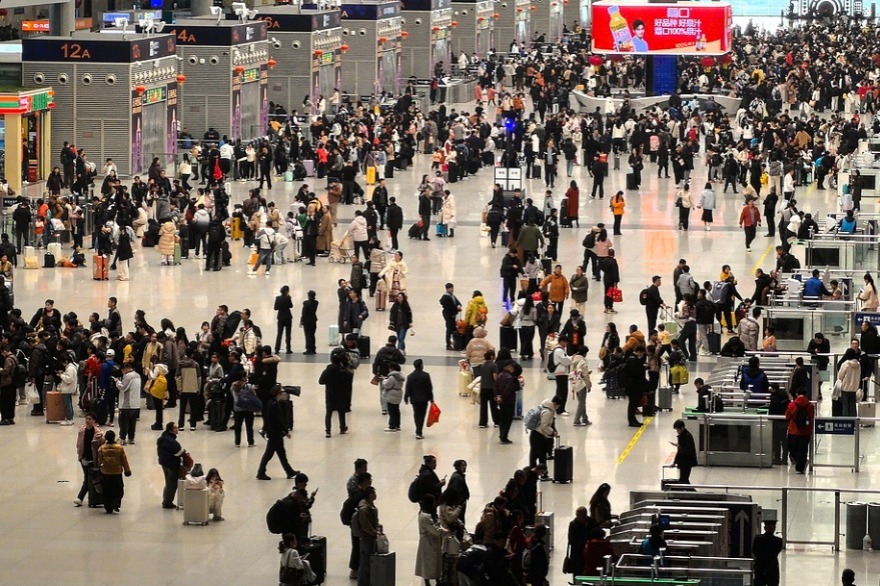
    Guangdong Province is experiencing a remarkable reversal in traditional Spring Festival travel patterns, with major urban centers like Guangzhou and Shenzhen emerging as popular destination hubs rather than merely departure points for outgoing travelers.

    According to data released by China Railway Guangzhou Group, the initial 72 hours of the annual Chunyun period witnessed nearly 4 million passenger departures from Guangdong while simultaneously recording approximately 2.84 million arrivals. This substantial inbound traffic represents a significant shift in holiday migration trends during China’s most important traditional festival.

    The railway operator reported handling over 5.62 million passenger journeys by Wednesday, demonstrating the immense scale of transportation activity during this peak travel season. In response to this evolving travel dynamic, authorities have implemented special measures to accommodate increased mobility.

    Seventy-two trains across eight key routes connecting Guangdong to Beijing, Guizhou Province, and Guangxi Zhuang Autonomous Region are now offering discounted ticket prices. This initiative forms part of a broader governmental effort to stimulate cultural exchange and tourism development throughout the Spring Festival holiday period.

    Travelers can access these reduced fares through multiple booking channels including the railway operator’s official digital platforms or traditional ticket counters at station facilities. The coordinated approach aims to ensure smooth transportation operations while encouraging reverse migration patterns that benefit regional tourism economies.

  • Philippines misses tourism target; officials clash over promotion tactics

    Philippines misses tourism target; officials clash over promotion tactics

    The Philippine tourism sector faces mounting scrutiny as official data reveals significant shortfalls in meeting visitor arrival targets, despite global travel volumes surpassing pre-pandemic benchmarks. While worldwide leisure travel expanded by approximately 4% annually, the archipelago nation recorded merely 6.48 million international arrivals in 2025—marking a marginal 0.76% increase from the previous year’s 5.94 million visitors and falling substantially below the government’s 7.7 million objective.

    This performance gap has ignited intense political friction, culminating in a contentious Congressional hearing where Tourism Secretary Christina Frasco faced sharp criticism from Senator Raffy Tulfo. The legislator accused Frasco of prioritizing self-promotion over destination marketing, presenting evidence of her prominent appearance on magazine covers, promotional posters, and social media content intended to showcase the country’s attractions.

    “The marketing approach is fundamentally flawed,” Tulfo asserted. “Instead of highlighting our pristine beaches, rich culinary heritage, and cultural assets, these materials disproportionately feature the Secretary’s likeness—a strategy that contrasts sharply with successful tourism campaigns in Vietnam, Malaysia, and Thailand.”

    Frasco defended her position, stating she neither authorized nor had prior knowledge of these promotional materials. “The cover photograph was extracted from event coverage without my consent,” she explained, emphasizing that the publications contained repurposed content rather than original interviews.

    The Philippines’ tourism underperformance becomes particularly notable when compared to regional competitors. Neighboring Southeast Asian nations welcomed between 15 to 30 million visitors in 2024, while the Philippines struggled to reach even 7 million. Even with enhanced air connectivity—such as Emirates’ expanded flight schedules and targeted promotion to UAE residents—the country attracted only 40,000 Emirati and expatriate visitors in 2024, indicating deeper structural challenges beyond mere accessibility.

    This political clash over tourism strategy emerges as the country implements new initiatives including visa-free entry programs for Chinese and Indian tourists, alongside digital nomad visas, suggesting that marketing execution rather than policy design may be hampering recovery efforts.

  • Turkey secures $2bn Saudi solar investment at record‑low power prices

    Turkey secures $2bn Saudi solar investment at record‑low power prices

    In a landmark move to strengthen economic cooperation, Turkey and Saudi Arabia have finalized a major solar energy investment agreement during President Recep Tayyip Erdogan’s official visit to Riyadh. The deal, signed by Turkish Energy Minister Alparslan Bayraktar and Saudi Energy Minister Prince Abdulaziz bin Salman Al Saud, establishes a framework for substantial renewable energy collaboration between the two regional powers.

    The agreement initiates the first phase of a comprehensive 5,000-megawatt solar project, with an initial commitment to develop 2,000 megawatts of solar capacity across two strategic locations in Turkey’s Anatolia region. The solar installations will be constructed in the provinces of Sivas and Karaman, representing approximately $2 billion in foreign direct investment. Turkish officials confirmed that funding will be sourced through a combination of Saudi investment and international financial institutions.

    This partnership achieves a historic milestone in energy economics, securing electricity at an unprecedented rate of 1.995 euro cents per kilowatt-hour for the Taseli project in Karaman. Minister Bayraktar emphasized that this represents the most competitive electricity price ever secured in Turkey, with the fixed-rate contract extending for approximately 25 years. The guaranteed pricing structure will directly benefit Turkish consumers through reduced energy costs.

    The initial phase alone will generate sufficient electricity to power approximately 2.1 million households, significantly contributing to Turkey’s renewable energy objectives. Beyond competitive tenders, Turkish officials indicated they will pursue additional renewable investments through intergovernmental agreements, potentially expanding into innovative energy storage solutions and floating solar projects in subsequent phases.

    This collaboration supports Turkey’s ambitious national energy strategy, which targets 120,000 megawatts of installed solar and wind capacity by 2035. Project timelines indicate construction will commence in 2027, with the first phase becoming fully operational by 2029, and the remaining capacity expected to come online by 2028-2029.