标签: Asia

亚洲

  • Rent or buy? First-time buyers push UAE property market towards ownership

    Rent or buy? First-time buyers push UAE property market towards ownership

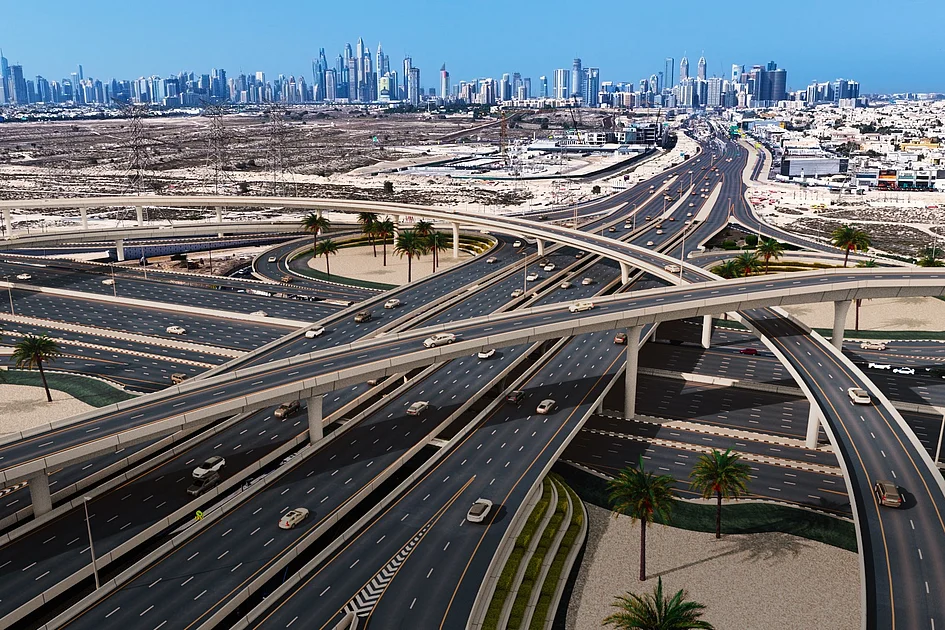
    The United Arab Emirates is experiencing a fundamental transformation in its residential property landscape as growing numbers of renters transition to homeowners, marking a significant shift in housing preferences. According to comprehensive data from Property Finder, the market is witnessing sustained buyer momentum across both Abu Dhabi and Dubai, with platform activity throughout 2025 indicating a decisive move toward property ownership over traditional leasing arrangements.

    The digital real estate portal’s bi-monthly consumer sentiment survey reveals that approximately 70% of Dubai respondents intend to purchase property within the next six months. This substantial buyer interest continues to outpace rental demand, with sales listing impressions accounting for 49% of all platform activity. Abu Dhabi has similarly demonstrated a pronounced year-on-year increase in sales-focused searches, indicating parallel trends in the capital emirate.

    Multiple factors are driving this paradigm shift. Long-term residency policies, ownership-linked visa programs, and targeted initiatives such as the First-Time Home Buyer Programme have collectively enabled thousands of residents to enter the property market within the past year. First-time purchasers have emerged as crucial demand drivers, while existing homeowners are increasingly upgrading to larger, higher-quality properties as confidence in permanent settlement strengthens.

    This growing confidence is quantitatively reflected in buyer financial behavior. Home-seekers are now allocating 31% of their income toward mortgage payments in 2025, a significant increase from 23% recorded in 2024. Market preferences show a clear inclination toward premium, spacious residences despite higher financial commitments.

    While apartments continue to dominate transaction volumes due to broader availability and affordability considerations, villas—constrained by limited inventory—have demonstrated stronger price appreciation. In Abu Dhabi, apartments remain the most sought-after residential format, accounting for most transactions amid healthy supply across various locations and price segments. However, the villa market shows distinct upscaling trends, with larger family homes representing a growing transaction share.

    Established communities including Downtown Dubai, Dubai Marina, Palm Jumeirah, Business Bay, JVC, JBR, and Dubai Hills Estate maintained popularity throughout 2025. Off-plan developments such as Dubai Islands and Maritime City attracted substantial interest, particularly for luxury and waterfront properties.

    Industry experts identify the 25-35 age demographic as the next growth engine for the market. Yogesh Bulchandani, CEO & Founder of Sunrise Capital, noted: “We are witnessing a significant influx of young buyers. Dubai’s upcoming phase of real estate growth will hinge on affordability and accessibility.” Ismail Al Hammadi, Founder & CEO of IAH Group, added that property ownership has become integrated into younger generations’ long-term financial planning strategies.

    This collective data indicates the maturation of the UAE’s residential market, where property ownership is increasingly perceived as a comprehensive lifestyle decision rather than purely financial investment.

  • The deadly landmine legacy of Syria’s war

    The deadly landmine legacy of Syria’s war

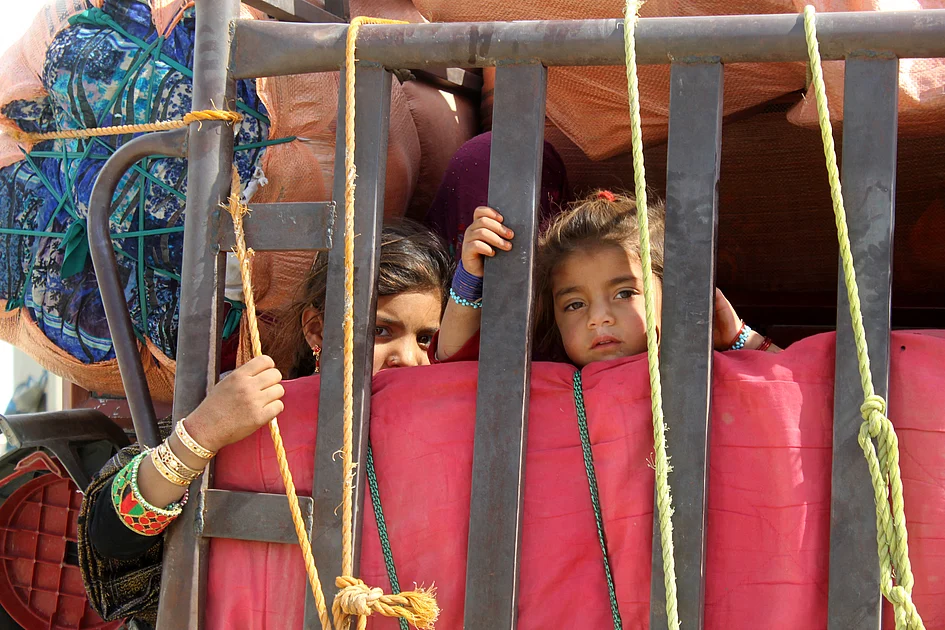
    The enduring legacy of Syria’s civil conflict continues to claim innocent lives through hidden explosives, transforming returning communities into perilous landscapes. A tragic incident in Khan Shaykhun, Idlib province, exemplifies this ongoing crisis: ten-year-old Mohammed discovered what appeared to be a toy buried in the earth, only to trigger an anti-personnel mine that proved fatal for him and severely injured his younger brothers.

    This family’s tragedy reflects a broader national emergency. Approximately 2.6 million Syrians have returned to their homes over the past fourteen months, many to former frontline areas where an estimated 300,000 active explosive devices remain concealed beneath soil and rubble. According to the International NGO Safety Organisation, these remnants of war have killed or maimed over 1,600 individuals since the ousting of long-time president Bashar al-Assad in December 2024.

    Idlib province represents one of the most heavily contaminated regions, having witnessed intense clashes between government forces and opposition groups. Both regime and rebel fighters employed extensive mining tactics, leaving behind anti-personnel mines, improvised explosive devices, and booby traps in residential areas, vehicles, and public buildings.

    Humanitarian organizations face monumental challenges in addressing this crisis. The Halo Trust, operating in Syria since 2017 with 250 personnel, conducts meticulous clearance operations along a several hundred-kilometer frontline from southern Idlib to northern Aleppo. Their teams perform controlled detonations of cluster munitions, artillery shells, rockets, and grenades—yet the scale of contamination overwhelms current resources.

    Syria’s decimated healthcare infrastructure compounds the tragedy. Specialized facilities like Idlib Surgical Specialized Hospital struggle with inadequate medical supplies and equipment. Medical professionals report performing approximately four emergency procedures daily for mine victims, often resorting to amputations due to infection risks and limited surgical capabilities.

    Prevention efforts have intensified through organizations like the Mines Advisory Group (MAG), which expanded mine-risk education programs across Syria and refugee-hosting countries. Through community outreach and digital campaigns targeting displaced populations considering return, these initiatives aim to reduce casualties by teaching explosive recognition and avoidance strategies.

    For families like Mustafa al-Azraq’s, who returned to their home after five years in displacement camps only to lose a child to unexploded ordnance, the conflict’s end has brought renewed tragedy rather than security. Their story underscores the urgent need for comprehensive demining operations and international support to make Syria’s landscape truly safe for returning populations.

  • What is the Ibrahimi Mosque and why does it matter?

    What is the Ibrahimi Mosque and why does it matter?

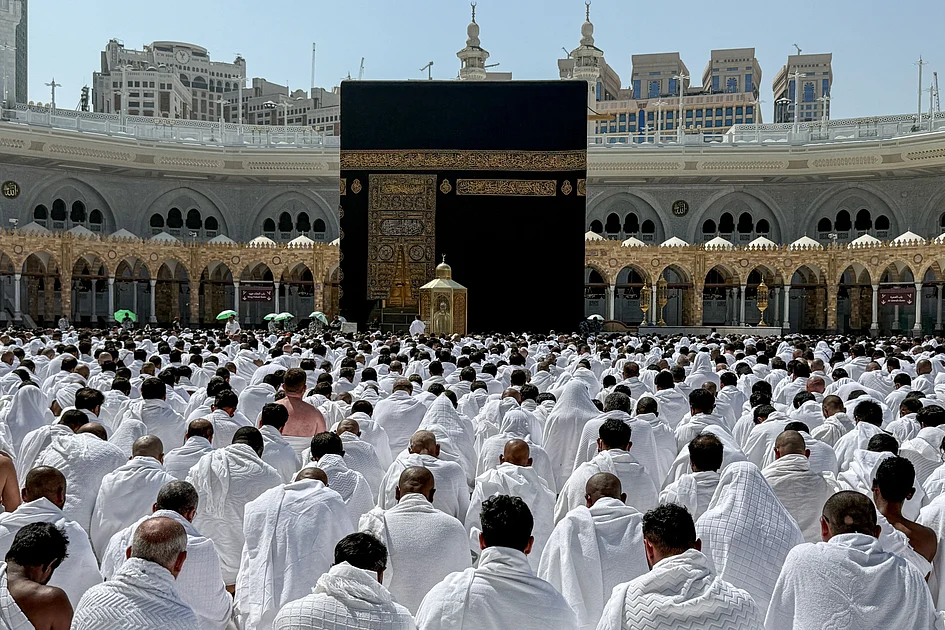
    The Ibrahimi Mosque in Hebron, a revered holy site for Islam, Judaism, and Christianity, has become the epicenter of escalating tensions in the occupied West Bank. This medieval structure, built above ancient tombs believed to hold biblical patriarch Abraham and his family, has been administered by Palestinians as a mosque for over 1,400 years. Recent Israeli actions, however, have fundamentally altered the status quo at one of the region’s most contested religious sites.

    In January, Israeli authorities barred the mosque’s Palestinian directors and seized planning rights over portions of the complex, violating longstanding arrangements that had governed the site for decades. This move represents the latest in a series of access restrictions and settler attacks against Palestinian holy sites that have intensified since October 2023, affecting including Al-Aqsa Mosque in Jerusalem and Joseph’s Tomb in Nablus.

    The historical significance of the Ibrahimi Mosque (known to Jews as the Cave of the Patriarchs and to Christians as the Cave of Machpelah) spans millennia. The current structure incorporates a 12th-century Romanesque Christian church constructed atop an earlier mosque destroyed during the Crusades. After conversion back to a mosque by the Muslim Ayubbid dynasty, the site remained exclusively accessible to Muslims throughout Mamluk and Ottoman rule until the British Mandate period.

    Modern tensions escalated significantly after Israel’s occupation of the West Bank in 1967. The establishment of the Kiryat Arba settlement on confiscated Palestinian land brought thousands of settlers to Hebron’s outskirts, creating a segregated enclave adjacent to 200,000 Palestinians. The conflict reached a horrific climax in 1994 when American-Israeli settler Baruch Goldstein massacred 29 Palestinian worshippers during Ramadan prayers. This tragedy led to the formal partition of the prayer hall, with two-thirds reserved for Jewish worship and one-third for Muslims.

    The current situation reflects intensified Israeli control measures. The Civil Administration, Israel’s governing body in the West Bank, unilaterally seized municipal control of the mosque’s central courtyard in December, enabling construction projects opposed by Palestinian authorities. Israeli settlers have increasingly stormed the mosque, hosting weddings and music festivals in violation of prayer arrangements, while far-right ministers Bezalel Smotrich and Itamar Ben Gvir (a Kiryat Arba resident) have made provocative visits with large security details.

    The Palestinian Authority has condemned these actions as part of Israel’s ‘Judaization projects’ in the West Bank, stating they constitute ‘flagrant violations of international resolutions and law.’ Hamas similarly criticized the moves as undermining the mosque’s Islamic identity. While Qatar, Turkey, and the UAE have issued diplomatic condemnations, the international community has taken limited concrete action.

    Palestinian lawyers are now petitioning Israel’s Supreme Court, citing UNESCO’s 2017 designation of the site as an endangered World Heritage Site belonging to Palestine. They argue that Israeli decisions regarding the mosque were made ‘without authority’ and represent ‘systematic and unlawful violation of the status quo.’ As legal battles continue, the Ibrahimi Mosque remains both a sacred space and a symbol of the broader Israeli-Palestinian conflict.

  • Xizang’s remote villages gain access to express delivery services

    Xizang’s remote villages gain access to express delivery services

    In a significant infrastructure achievement, the Xizang Autonomous Region has successfully transformed 2,410 village-level postal and logistics service stations through comprehensive upgrades completed by the end of 2025. This expansion has effectively integrated remote highland communities into China’s national express delivery network, marking a milestone in regional connectivity.

    The development emerged as a central discussion point during Xizang’s recent ‘two sessions’ – the region’s premier legislative and political advisory gatherings. Official data reveals impressive growth metrics: the postal sector generated 1.35 billion yuan ($195 million) in revenue during 2025, representing a 12.1% year-on-year increase, while handling 207 million parcels – a 2.3% growth from previous figures.

    Express delivery services demonstrated particularly robust performance, with revenues reaching 920 million yuan (13.3% growth) and 38 million packages delivered (23.2% increase). Li Fengwei, People’s Congress deputy and deputy general manager of YTO Express in Nyingchi, confirmed that delivery stations now operate in all county seats, with services extending to previously isolated villages.

    ‘Our expansion beyond county towns has reached even the most remote settlements,’ Li stated, citing Geling village in Metog county as an example of this connectivity revolution. The initiative has effectively eliminated traditional challenges of extensive travel distances and package collection inconveniences that long plagued mountainous regions.

    The enhanced logistics network has transformed consumption patterns, enabling diverse online shopping experiences for rural residents. From essential infant products to regionally distinctive fresh fruits, e-commerce goods now flow directly to village doorsteps, fundamentally altering economic and lifestyle dynamics across the Tibetan Plateau.

  • ‘Border 2’ star Ahan Shetty opens up on patriotism and carrying forward dad Suniel Shetty’s legacy

    ‘Border 2’ star Ahan Shetty opens up on patriotism and carrying forward dad Suniel Shetty’s legacy

    Bollywood actor Ahan Shetty has revealed how his portrayal in the anticipated sequel ‘Border 2’ profoundly deepened his admiration for India’s armed forces. The son of veteran actor Suniel Shetty, who starred in the original 1997 war epic, Ahan reflects on the circular journey from childhood inspiration to professional tribute.

    Shetty disclosed that watching his father’s character sacrifice in the first film moved him to tears as a toddler. Now starring in the sequel, he describes the experience as fulfilling a childhood aspiration to honor military personnel. ‘Through my role in Border 2, I can pay tribute to the Indian armed forces,’ Shetty stated, noting how actors live multiple lives through their characters.

    During production, Shetty engaged extensively with officers across all military branches—army, navy, air force, and Border Security Forces. He gained extraordinary insights into submariners’ realities, who endure months underwater with limited oxygen and extreme atmospheric pressure. ‘They sleep wherever space allows—next to torpedo shafts or missile stacks,’ Shetty recounted. ‘Comfort is their last priority.’

    These interactions fostered immense respect for personnel who serve without expectation of fame. ‘These are real heroes who live and die unsung,’ Shetty emphasized, vowing to continue honoring them beyond this project.

    The actor addressed his career trajectory following his 2021 debut in ‘Tadap,’ which underperformed commercially. He credited family support during challenging periods, particularly his father’s advice about ‘that one Friday that changes your destiny.’ For Shetty, ‘Border 2’ represented that turning point.

    Looking ahead, Shetty confirmed multiple projects: an action-romance based on real events with director Shaad Ali, a spy thriller with Ribhu Dasgupta, and a horror film. Despite his action heritage, he expressed particular affection for romantic comedies like ‘Zindagi Na Milegi Dobara’ and openness to South Indian cinema collaborations.

    Shetty also praised contemporaries like Ahaan Panday and celebrated Ranveer Singh’s successful comeback in ‘Dhurandhar’ as inspiration for navigating industry volatility.

  • Indian expat wins Dh20 million in Big Ticket weeks after baby’s birth; yet to see child

    Indian expat wins Dh20 million in Big Ticket weeks after baby’s birth; yet to see child

    In an extraordinary twist of fate, Indian expatriate Shantanu Shettigar has claimed the Dh20 million Big Ticket jackpot just weeks after welcoming his first child into the world. The 34-year-old shop supervisor based in Muscat received the life-altering news during an ordinary workday, marking what he describes as a ‘double blessing’ following the birth of his daughter on December 27th.

    The emotional significance of the win is magnified by the fact that Shettigar has yet to physically meet his newborn child. ‘I think my daughter came into this world with luck,’ the overwhelmed father told Khaleej Times, expressing his belief that her arrival precipitated his unprecedented fortune. The new father missed the initial notification calls during the live draw due to work commitments, only discovering his windfall upon answering the third attempt by show organizers.

    Having participated in the Big Ticket lottery for approximately five years with consistent regularity over the past three, Shettigar typically shared ticket purchases with a compatriot from his hometown of Udupi in Karnataka. Despite knowing numerous long-term participants who have pursued the jackpot for over a decade without success, Shettigar maintained his participation without expectations of winning.

    The winner remains remarkably grounded despite his sudden multimillionaire status, confirming he will continue his current employment while carefully considering how to manage his newfound wealth. His immediate priorities focus on family reunification—he plans to travel to Abu Dhabi next month to complete prize formalities before bringing his wife and daughter to join him in Oman. ‘Family is the most important thing for me now,’ Shettigar emphasized, highlighting his intention to use the winnings to secure his family’s future.

    This remarkable sequence of events—becoming a father and winning one of the region’s most substantial lottery prizes within weeks—has left Shettigar processing what he characterizes as overwhelmingly positive life transformations. His story joins numerous other expatriate success narratives within the UAE’s popular Big Ticket lottery system, though few have experienced such perfectly timed fortune alongside personal milestones.

  • Egyptian man explores 460-year-old fair in Tianjin

    Egyptian man explores 460-year-old fair in Tianjin

    In the Ninghe district of Tianjin, the historic Lutai Fair—a cornerstone of northern Chinese cultural heritage for approximately 460 years—continues to thrive as a vibrant hub of tradition and community exchange. This year’s event attracted widespread attention, including Egyptian national Ahmed Mohamed Saleh, who embarked on an immersive journey through the fair’s bustling lanes and rich cultural offerings.

    The fairgrounds featured hundreds of stalls showcasing local culinary specialties, traditional Spring Festival decorations, and regional agricultural products. Visitors were enveloped in a sensory experience characterized by the aromatic scents of local delicacies, the dynamic calls of vendors, and the lively social interactions emblematic of China’s rural market culture.

    A notable highlight was the innovative 100-yuan (approximately $14) New Year shopping challenge, where participants curated selections of food and festive items within a strict budget. Ahmed navigated the marketplace with enthusiasm, acquiring strawberries, spicy crayfish, pickled cabbage, and traditional Spring Festival couplets while sampling flavors and discovering cultural artifacts.

    Beyond commercial activities, the fair served as a platform for preserving intangible cultural heritage through demonstrations of traditional craftsmanship and local skills. The event also hosted a competitive village chef championship where culinary experts from surrounding towns prepared distinctive northern Chinese dishes.

    This convergence of historical preservation and contemporary engagement illustrates how traditional rural markets maintain relevance in modern society. The Lutai Fair functions as both a cultural exchange conduit and a window into northern China’s agricultural heritage, drawing urban dwellers and international visitors alike to experience its unique blend of tradition and community spirit.

  • Review into UK protest laws failed to invite Palestine march organisers for consultation

    Review into UK protest laws failed to invite Palestine march organisers for consultation

    A UK government review into contentious new protest legislation has ignited controversy for its apparent exclusion of key stakeholders. The Palestine Coalition, the organizing body behind 33 national pro-Palestine marches, was initially omitted from consultation despite its central role in the demonstrations under scrutiny.

    Home Secretary Shabana Mahmood initiated the independent review in November, tasking Lord Ken Macdonald KC with examining whether recent amendments to public order and hate crime laws were being implemented effectively. The review emerged following government concerns about protest timing after a tragic antisemitic attack on a Manchester synagogue.

    The oversight has raised serious questions about the review’s comprehensiveness and impartiality. The coalition, whose largest member organization (Palestine Solidarity Campaign) represents over 15,000 members across nearly 100 UK branches, had to proactively request participation after discovering their initial exclusion.

    Further concerns emerged regarding transparency, as the review’s terms of reference were not initially made public, and consulted organizations were reportedly given limited time for submissions to meet the February 2026 deadline.

    The controversy deepens when examining Lord Macdonald’s previous public positions. He co-authored a letter to The Times in October 2023 defending Israel’s siege of Gaza as self-defense and later signed a UK Lawyers for Israel letter arguing against weapons sale suspensions to Israel.

    The Palestine Coalition’s submission vigorously challenges the government’s narrative, rejecting attempts to connect the Manchester synagogue attack with peaceful protests and highlighting the demonstrations’ overwhelmingly peaceful character with lower arrest rates than typical football matches or festivals.

    The review occurs alongside broader concerns from 40 civil society organizations, including Amnesty International UK and Liberty, who have denounced the government’s proposed legal changes as a “draconian crackdown” on fundamental democratic rights.

  • Pep Guardiola speaks out against genocide in Gaza and ICE killings

    Pep Guardiola speaks out against genocide in Gaza and ICE killings

    Manchester City manager Pep Guardiola has intensified his humanitarian advocacy, delivering powerful condemnations of global conflicts during a recent press conference. The decorated football coach articulated profound distress over violence in Gaza, Ukraine, Sudan, and lethal incidents involving U.S. immigration enforcement.

    Guardiola’s remarks followed his appearance at a Barcelona charity event where he wore a Palestinian keffiyeh and criticized international silence regarding Palestinian children’s suffering. When questioned about his political stance before the Carabao Cup match against Newcastle United, Guardiola responded with emotional intensity.

    “Never in human history have we possessed such clear visibility of global atrocities,” Guardiola told journalists. “The genocide in Palestine, the tragedies in Ukraine and Russia, the carnage in Sudan—these are fundamental human problems that demand our attention.”

    The Spanish tactician described how visual evidence from conflict zones affects him personally: “Watching innocent civilians perish wounds me profoundly. Advocating ideologies that require mass slaughter is indefensible. I will consistently oppose such violence.”

    Guardiola specifically referenced the killings of U.S. citizens Renee Good and Alex Pretti by law enforcement, posing rhetorical questions about similar incidents occurring in Britain. His humanitarian concerns extend beyond recent comments, having addressed Gaza’s situation last year while receiving an honorary degree from the University of Manchester.

    This advocacy creates complex dynamics for Manchester City, owned by UAE Vice President Mansour bin Zayed Al Nahyan. Extensive reporting indicates the UAE government supplies weapons to Sudan’s Rapid Support Forces through multinational networks, with intercepted communications suggesting Mansour’s direct involvement with paramilitary leader Hemedti. Activist group Manchester4Sudan notes the apparent contradiction between Guardiola’s condemnations and the club’s ownership connections.

  • 10,000-ton electric container ship tests off Jiangxi province

    10,000-ton electric container ship tests off Jiangxi province

    China has achieved a groundbreaking milestone in maritime transportation with the commencement of sea trials for Ningyuan Diankun, the world’s first 10,000-ton intelligent oceangoing vessel powered exclusively by electricity. The revolutionary container ship embarked from Hukou county in Jiujiang city, Jiangxi province on February 1st after successfully completing outfitting and mooring tests.

    Constructed by Jiangxi Jiangxin Shipbuilding, this pioneering vessel represents the largest pure electric ship of its kind globally. Measuring 127.8 meters in length, the container ship boasts a substantial capacity of 740 TEU (twenty-foot equivalent units) containers, featuring an innovative open-top design that enhances loading efficiency.

    The current sea trials constitute a comprehensive evaluation phase focusing on multiple critical systems. Engineers are testing the advanced battery power supply infrastructure, propulsion performance metrics, hull operational capabilities, and cutting-edge autonomous navigation technologies. The testing itinerary includes navigation to a designated trial zone near Shanghai, with arrival expected by February 6th and completion scheduled for February 13th.

    This technological achievement positions China at the forefront of sustainable maritime innovation, demonstrating significant progress in electrifying commercial shipping—a sector traditionally dominated by fossil fuels. The successful implementation of such large-scale electric propulsion systems could potentially transform global shipping standards and contribute substantially to reducing maritime carbon emissions.