标签: Asia

亚洲

  • Chinese scientists propose human-wildlife conflict resolution strategy

    Chinese scientists propose human-wildlife conflict resolution strategy

    Chinese researchers from the Northwest Institute of Plateau Biology (CAS) have pioneered a groundbreaking temporal livestock management approach to address the persistent global challenge of human-wildlife conflicts. Their innovative study, published in Integrative Zoology, offers a scientific framework for balancing biodiversity conservation with sustainable development in agropastoral communities.

    The research team, led by Dr. Lian Xinming, conducted an extensive decade-long field investigation in China’s ecologically critical Sanjiangyuan region—known as the nation’s water tower. Through sophisticated monitoring techniques involving 422 infrared cameras across 2,580 square kilometers, scientists gathered unprecedented data on four large carnivores: snow leopards, wolves, lynxes, and brown bears.

    Employing advanced kernel density estimation methods, the team analyzed diel activity patterns and seasonal variations among these predators. The findings revealed distinct nocturnal behaviors with species-specific peak activity times. Wolves demonstrated particularly notable seasonal variations in their activity patterns compared to other species.

    Crucially, the research identified precise high-risk windows for livestock predation and human encounters. For brown bears, the most dangerous period for home invasions occurs between 20:42 and 02:36, requiring heightened vigilance during these hours. The study recommends strategic interventions including guard dogs and electronic deterrents during identified risk periods.

    Dr. Lian emphasized that integrating spatial utilization zoning with temporally-regulated grazing schedules can significantly reduce human-carnivore encounters. This evidence-based approach represents a paradigm shift from reactive conflict management to proactive, scientifically-informed coexistence strategies that benefit both wildlife conservation and local livelihoods.

  • Pop music’s bias towards English is fading, says Spotify

    Pop music’s bias towards English is fading, says Spotify

    The global music industry is experiencing a profound linguistic transformation as streaming data reveals English’s declining monopoly on popular music. According to Spotify’s latest report, songs in 16 different languages featured in the Global Top 50 chart in the past year—more than double the number recorded in 2020. This diversification includes Spanish, Korean, Portuguese, Turkish, Indonesian, and Arabic compositions.

    Spanish-language superstar Bad Bunny emerged as the world’s most-streamed artist, while Rosalía made history at the Brit Awards by becoming the first artist to win Best International Artist for a predominantly non-English album. Her latest work ‘Lux’ incorporates an impressive 14 different dialects.

    The streaming giant’s data identifies Brazilian Funk as the world’s fastest-growing genre with a 36% audience increase, followed by K-Pop (31% growth) and Trap Latino (29% increase). Each of these genres generated over $100 million in royalties through Spotify alone last year.

    Despite this linguistic diversification, English maintains considerable dominance with 14 of the IFPI’s Top 20 best-selling albums being exclusively English-language productions. However, international acts including South Korea’s Stray Kids, Enhypen, Seventeen, and Japan’s Mrs Green Apple are increasingly breaking into mainstream charts as listeners explore beyond traditional rock and pop paradigms.

    Spotify’s financial impact on the industry remains substantial, with $11 billion paid in royalties last year—making it the world’s highest-paying music retailer. The platform distributed £860 million to UK artists alone, with over 75% generated from international streams. Approximately 150 UK artists earned over £1 million each, while the number earning above £500,000 has doubled since 2018.

    The company’s transparency initiative comes amid ongoing criticism regarding artist compensation rates, which range from £0.002 to £0.0035 per stream. Spotify emphasizes that nearly half of all royalties go to independent artists and labels, with over 13,800 artists earning at least $100,000 annually.

    Recent controversies have emerged regarding Spotify’s corporate connections, particularly CEO Daniel Ek’s chairmanship of German defense technology company Helsing. Several artists including Massive Attack have removed their catalogs in protest, citing ethical concerns about indirectly funding ‘lethal, dystopian technologies’ through streaming revenue. Spotify maintains that it and Helsing are ‘totally separate companies.’

  • Binhai to further strengthen industrial innovation

    Binhai to further strengthen industrial innovation

    Tianjin’s Binhai New Area is strategically positioning itself as the central innovation engine within the Beijing-Tianjin-Hebei regional development corridor, marking a significant transformation in China’s economic landscape. As the district commemorates two decades since its designation as a national-level development zone and enters the initial phase of the 15th Five-Year Plan (2026-2030), it demonstrates remarkable economic momentum with a 5% year-on-year GDP growth in 2025, constituting over 42% of Tianjin’s total economic output.

    Under the leadership of District Head Shan Zefeng, who also serves as a deputy to the 14th National People’s Congress, Binhai is executing an ambitious strategy to convert Beijing’s substantial innovation resources into tangible industrial productivity. The district’s industrial framework continues to evolve strategically, with the tertiary sector now representing more than 55% of the economy and contributing nearly 70% to overall growth.

    The area has achieved a significant milestone by surpassing 5,000 high-tech enterprises, while specialized, refined, and innovative enterprises reached 1,200 last year. Technology contract transactions exceeded 88 billion yuan, demonstrating robust innovation activity.

    Substantial investments are fueling this transformation, with Beijing-origin projects accumulating over 250 billion yuan ($36.2 billion) in committed funding. Major corporate movements include Lenovo’s substantial expansion with its Tianjin Innovation Park in the Tianjin Port Free Trade Zone, which generated 40 billion yuan in revenue last year and will host the company’s artificial intelligence R&D operations. Similarly, FAW Toyota Motor Sales Company relocated its headquarters from Beijing to Tianjin in June.

    Strategic partnerships are accelerating development, notably the collaboration between Tianjin Binhai New Area Construction and Investment Group and China Communications Construction Company’s Beijing-Tianjin-Hebei regional headquarters. This alliance focuses on urban development, infrastructure enhancement, and industrial operations.

    Binhai is specifically targeting cutting-edge technological domains including artificial intelligence, biological manufacturing, and brain-computer interface technologies to cultivate new productive forces. The Tianjin Binhai-Zhongguancun Science Park, established as a flagship collaborative innovation project in 2016, has registered more than 6,500 enterprises to date.

    Looking forward, Binhai aims to leverage its comparative advantages while supporting Beijing’s non-capital function relocation initiatives. The district seeks to contribute ‘Binhai strength’ toward establishing the Beijing-Tianjin-Hebei region as a pioneering demonstration zone for Chinese modernization.

  • Mudanjiang targets northward opening-up

    Mudanjiang targets northward opening-up

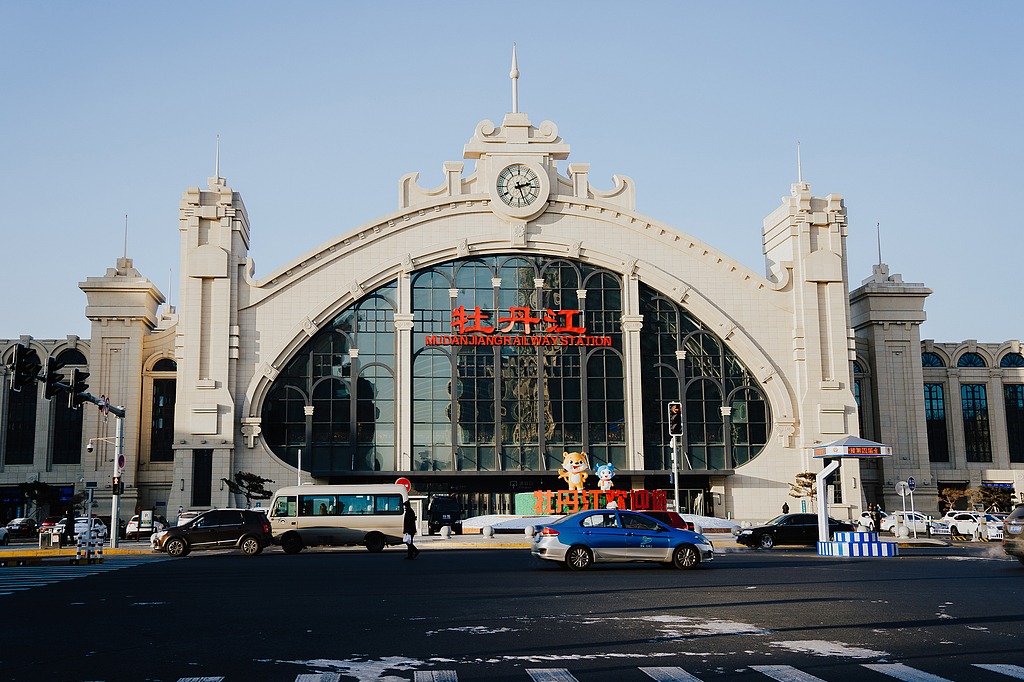
    Mudanjiang, a strategic border city in Northeast China’s Heilongjiang province, is positioning itself as a critical gateway for the nation’s ambitious northward opening-up strategy. According to Zhang Guojun, Party Secretary of Mudanjiang and deputy to the 14th National People’s Congress, the city is leveraging its geographical advantages to accelerate high-quality economic development within the Belt and Road Initiative framework.

    During the recent Two Sessions meetings, Zhang revealed that Heilongjiang province has achieved remarkable foreign trade growth despite global economic pressures. The region recorded a doubling of foreign trade volume throughout the 14th Five-Year Plan period (2021-2025), maintaining an impressive average annual growth rate of 15.2%. Particularly noteworthy was the 2025 performance, which saw a 5% year-on-year increase in total export value, with exports to Russia surging by 21.8%, BRI participant countries by 11.6%, and African nations by 28.4%.

    The transformation of Mudanjiang’s export structure signals a qualitative economic upgrade. The city witnessed a staggering 4.4-fold increase in exports of high-value-added products, including electric passenger vehicles, lithium batteries, and solar cells. This shift toward technology-intensive exports demonstrates the region’s successful industrial modernization efforts.

    Heilongjiang has strengthened its institutional framework for economic expansion, with the free trade zone playing a pivotal role in driving innovation and industrial clustering. The recent approval of the Mudanjiang Industrial Collaboration Park has provided additional momentum to the province’s development trajectory.

    As China enters the 15th Five-Year Plan period (2026-2030), Heilongjiang is tasked with the significant mission of establishing itself as a comprehensive pivot for the nation’s northward economic strategy. Provincial authorities are formulating comprehensive plans to accelerate this development, ensuring Mudanjiang’s transformation into a hub of international connectivity and economic vitality.

  • Over 1,300 Iranian civilians killed, nearly 10,000 civilian sites destroyed in US-Israeli military strikes: Iran’s UN envoy

    Over 1,300 Iranian civilians killed, nearly 10,000 civilian sites destroyed in US-Israeli military strikes: Iran’s UN envoy

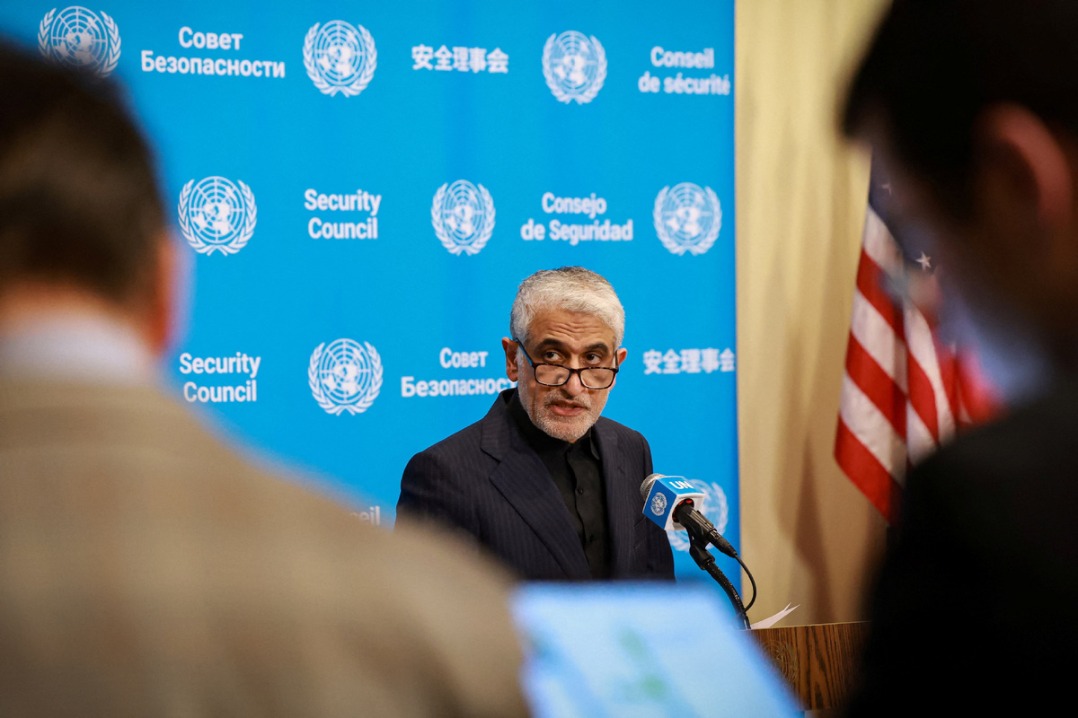
    In a grave address to the international community, Iran’s United Nations envoy has presented devastating casualty figures from recent military operations. Ambassador Amir Saeid Iravani disclosed that coordinated strikes by American and Israeli forces have resulted in approximately 1,300 civilian fatalities and the destruction of nearly 10,000 non-military sites across Iranian territory since late February 2026.

    The comprehensive damage assessment includes 7,943 residential properties, 1,617 commercial establishments, 32 medical facilities, 65 educational institutions, and multiple Red Crescent humanitarian centers. Critical infrastructure such as energy supply systems and water purification plants have also been deliberately targeted, according to the ambassador’s detailed account.

    Iravani characterized these operations as systematic violations of international humanitarian law, stating that coalition forces have shown ‘no restraint in committing these crimes’ against civilian populations. The ambassador provided specific examples of alleged war crimes, including attacks on Tehran’s Mehrabad Airport that destroyed civilian aircraft and strikes on fuel storage facilities that released hazardous pollutants into the atmosphere.

    The environmental impact of these operations extends beyond immediate casualties, with the ambassador noting violations of international climate agreements due to widespread contamination. Additionally, Iravani revealed that four Iranian diplomats were killed in what he described as a ‘deliberate terrorist attack’ on a Beirut hotel, marking a significant escalation in the conflict.

    Iran’s representative concluded with an urgent appeal for international intervention, warning that casualty numbers continue to rise as attacks persist. The Iranian government reserves the right to take all necessary measures to protect its sovereignty and civilian population, while calling for immediate diplomatic action to halt the ongoing military campaign.

  • UAE defense ministry says intercepts new missiles, drones targeting Dubai

    UAE defense ministry says intercepts new missiles, drones targeting Dubai

    The United Arab Emirates’ Ministry of Defense confirmed early Wednesday that its advanced air defense systems successfully intercepted and neutralized multiple ballistic missiles and unmanned aerial vehicles targeting the metropolitan area of Dubai. The projectiles were identified as originating from Iranian territory, marking the latest escalation in regional hostilities.

    Authorities issued emergency mobile alerts to Dubai residents, warning of imminent aerial threats and instructing civilians to seek immediate shelter in protected areas. The alerts were subsequently deactivated following the successful interception operation.

    This military engagement occurs against the backdrop of heightened Middle Eastern tensions that began with coordinated US-Israeli strikes against Iranian targets starting February 28. Tehran has responded with sustained offensive operations against Israeli and American strategic assets throughout the region.

    In an official statement released Tuesday, the UAE Defense Ministry emphasized its continued vigilance and enhanced defensive capabilities, noting an exceptional 94% interception rate against 1,475 drone incursions and a 92% success rate against 270 missile attacks over the preceding eleven-day period. The ministry attributed this defensive effectiveness to strengthened cooperation with international security partners.

  • Military exercises slammed

    Military exercises slammed

    PYONGYANG/SEOUL — North Korea has issued a forceful condemnation of the ongoing joint military exercises between the United States and South Korea, characterizing them as a direct threat to regional stability. The official Korean Central News Agency (KCNA) reported on Tuesday that the Democratic People’s Republic of Korea (DPRK) views these drills as substantially undermining peace in the region.

    The military exercises, designated as Freedom Shield and scheduled from March 9 to March 19, encompass 22 field training operations involving actual troop deployments and maneuvers. While Seoul and Washington maintain that the exercises are defensive in nature, Pyongyang and various critics argue they represent provocative actions that heighten military tensions on the Korean Peninsula.

    Kim Yo-jong, a senior official in the Workers’ Party of Korea, explicitly rejected characterizations of the drills as routine training, instead labeling them as ‘provocative and aggressive war rehearsals’ specifically designed to simulate combat scenarios against North Korea. She emphasized the inviolability of North Korea’s security sphere and reaffirmed the nation’s commitment to defending both the Korean Peninsula and the broader region.

    Simultaneously, civic groups in Seoul organized protests outside the US embassy, where activists demanded the immediate cessation of the joint exercises. Demonstrators argued that the drills jeopardize peace prospects and hinder potential inter-Korean reconciliation efforts. Protest leaders particularly expressed concern about the potential deployment of advanced weapon systems, including unmanned attack aircraft and new missile technologies, during the exercises.

    Critics accused the United States of prioritizing geopolitical ambitions over the safety of South Korean citizens, urging Seoul to reconsider its military dependence on Washington and instead pursue diplomatic solutions to reduce tensions on the peninsula.

  • New strategy to revitalize Chinese cities

    New strategy to revitalize Chinese cities

    China is positioning urban renewal as a cornerstone of its national development strategy through the forthcoming 15th Five-Year Plan (2026-2030), marking a significant shift in the nation’s approach to urbanization. According to Jon Taylor, Associate Dean at the University of Texas at San Antonio, this strategic pivot moves beyond mere physical reconstruction to encompass comprehensive urban transformation.

    The draft outline submitted to the National People’s Congress emphasizes a fundamental policy reorientation from outward urban expansion to intensive inward development. This new paradigm encourages cities to pursue compact, efficient, and environmentally sustainable redevelopment rather than unchecked spatial growth.

    Taylor notes that China’s urbanization drive, particularly in first-tier cities like Beijing, Shanghai, Guangzhou, and Shenzhen, has created a substantial inventory of aging infrastructure. Much of the residential and commercial properties constructed between the late 1980s and early 2000s have become increasingly inadequate to meet modern demands driven by demographic changes and evolving social, environmental, and technological needs.

    The urban renewal strategy serves multiple objectives: revitalizing aging districts, stabilizing housing markets, and advancing affordable housing reforms. More significantly, it functions as a major structural driver for China’s economy during the coming five-year period. The initiative connects neighborhood renovations, infrastructure modernization, and efficient land use optimization with broader domestic economic growth objectives.

    Several cities have already pioneered experimental approaches. Shanghai has implemented “micro-renewal” programs at the neighborhood level, while Guangzhou has pursued district-level regeneration. All major cities have rapidly expanded transit-oriented redevelopment, and Beijing has undertaken substantial old-city preservation and renewal projects.

    Beyond physical reconstruction, this strategy aims to strengthen high-efficiency urban governance aligned with national goals of improving government responsiveness, integrating digital systems, and enhancing public services. Taylor emphasizes that urban renewal represents not merely a construction program but a comprehensive vehicle to reshape Chinese society, local governance, and economic development for the next decade and beyond.

    Once the 15th Five-Year Plan is approved and implemented, urban renewal will transition from a peripheral initiative to a central tenet of China’s national development strategy, reflecting its critical importance in the nation’s future planning.

  • Xiangxi marches ahead on road to prosperity

    Xiangxi marches ahead on road to prosperity

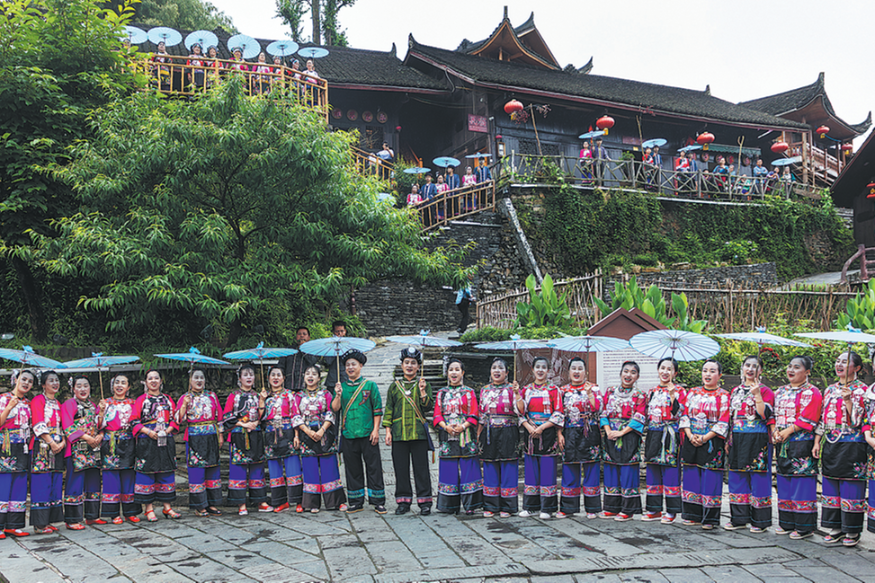
    Xiangxi Tujia and Miao Autonomous Prefecture, the birthplace of China’s targeted poverty alleviation strategy, is now pioneering a comprehensive rural revitalization model that ensures all ethnic groups share in common prosperity. According to Liu Tao, Communist Party Secretary of the autonomous prefecture and deputy to the 14th National People’s Congress, the region has successfully transitioned from poverty elimination to sustainable development.

    The prefecture, home to approximately 2.9 million permanent residents with ethnic minorities comprising 80.5% of the population, has achieved remarkable economic growth. Since President Xi Jinping first proposed the ‘targeted poverty alleviation’ concept here in 2013, Xiangxi has lifted 656,000 people out of poverty and removed all 1,110 impoverished villages from the poverty list by 2020. Last year, the region’s GDP reached 88.95 billion yuan ($12.94 billion), more than doubling its 2013 figure.

    Xiangxi has implemented sophisticated monitoring systems and support mechanisms to prevent regression into poverty. Over 12,000 Party members maintain one-to-one partnerships with formerly impoverished families, while more than 3,470 officials remain stationed in villages. The government has developed tailored strategies for each village, household, and individual, creating a safety net that provides an average of five targeted assistance measures per monitored household.

    The revitalization strategy leverages both economic and cultural assets. Large export-oriented tea plantations and eco-friendly tea gardens now provide stable income for over 600,000 people. The prefecture has also capitalized on its natural landscapes and rich ethnic culture to develop rural tourism, creating job opportunities for more than 500,000 residents.

    Shibadong village, the symbolic starting point of China’s poverty alleviation campaign, exemplifies this transformation. The Miao ethnic village, known for its traditional wooden dwellings and cultural heritage, has seen its collective economic dividend reach 1 million yuan last year, with per capita income exceeding 30,000 yuan.

    Rather than isolated development, Xiangxi has established 10 rural revitalization clusters ensuring balanced regional growth. The strategy emphasizes cultural enrichment through regular public activities, such as the grand Spring Festival gathering in Jishou that featured performances rooted in Xiangxi’s ethnic traditions.

    The comprehensive approach demonstrates how targeted poverty alleviation can evolve into sustainable rural revitalization, creating models that benefit all ethnic groups while preserving cultural heritage.

  • Presidium of China’s annual legislative session holds 2nd meeting

    Presidium of China’s annual legislative session holds 2nd meeting

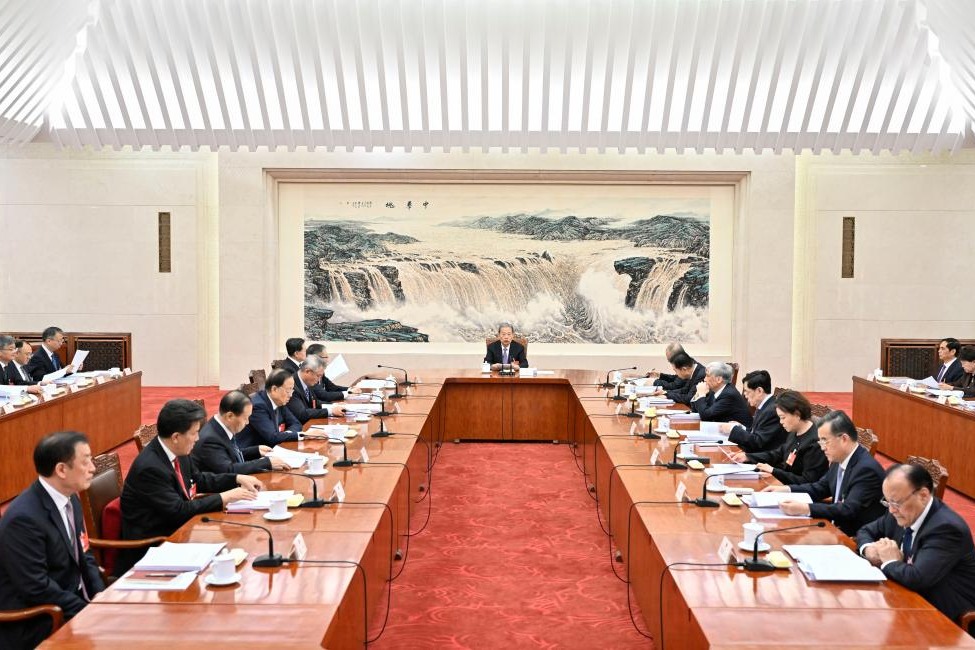
    The presidium of China’s National People’s Congress (NPC) convened its second meeting on March 10, 2026, at Beijing’s Great Hall of the People, marking a significant phase in the country’s annual legislative session. Presided over by Zhao Leji, executive chairman of the presidium and chairman of the NPC Standing Committee, the meeting set in motion the deliberation process for several critical legislative documents and national development plans.

    The assembly determined to submit three major legislative revisions to NPC delegations for comprehensive review: an updated environmental code, a revised law promoting ethnic unity and progress, and an amended national development planning law. These legislative instruments represent China’s continued commitment to environmental governance, social harmony, and strategic economic direction.

    Additionally, the presidium approved for delegation deliberation several draft resolutions concerning the government work report, the outline of the 15th Five-Year Plan (2026-2030) for national economic and social development, the 2026 national economic and social development plan report, and the 2026 central and local budgets report. These documents collectively form the policy framework that will guide China’s development trajectory through the latter half of the 2020s.

    Prior to the main presidium meeting, Zhao Leji conducted a meeting of the executive chairpersons, ensuring procedural efficiency and organizational coherence throughout the legislative process. The systematic approach to these deliberations reflects the structured nature of China’s legislative procedures and the importance placed on comprehensive review of national policies.