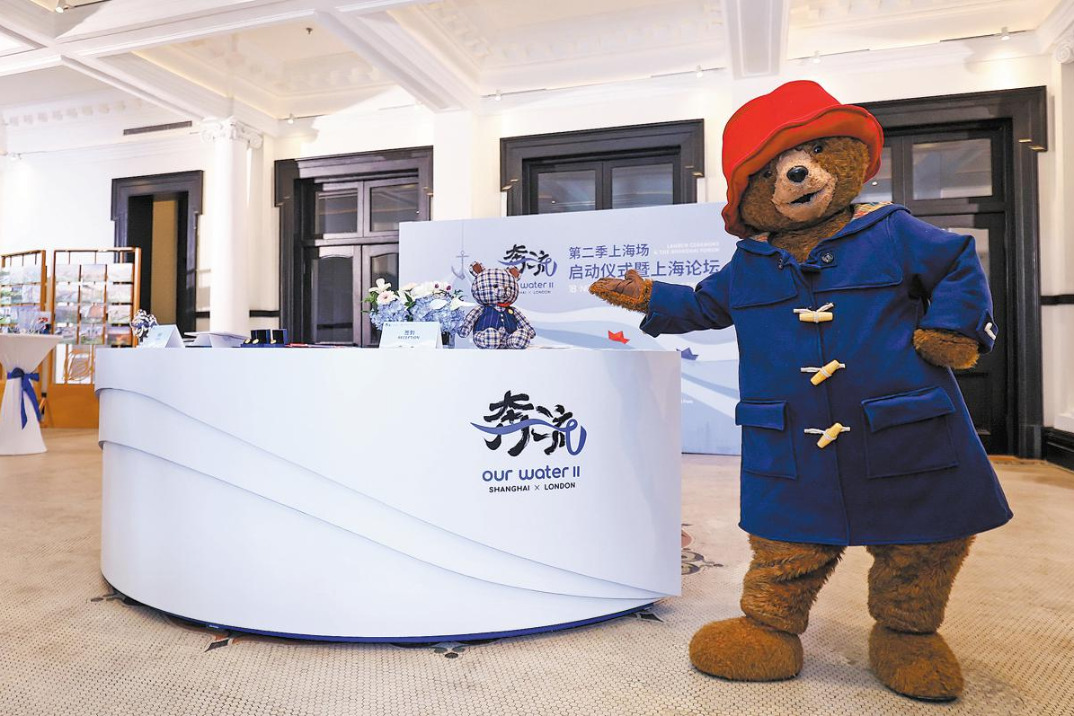
Shanghai has emerged as a global leader in waterfront renewal and urban innovation, showcasing its commitment to sustainable development and cultural exchange. The Jing’an central business district, encompassing the Suhewan and West Nanjing Road functional areas, recently joined the Global Business Districts Innovation Club. This prestigious alliance connects Shanghai with elite business districts across Europe, the United States, Asia, and Africa, fostering collaboration to enhance waterfront spaces and urban functionality. The announcement was made during the launch of the second season of the ‘Our Water’ event in Shanghai, which emphasized intercultural dialogue among world cities. The event, hosted by the Shanghai United Media Group and the Shanghai International Culture Association, introduced a global initiative to collect innovative waterfront case studies. This project aims to promote ecological resilience, climate response, and the integration of cultural and economic development, ensuring waterfronts become accessible and sustainable urban assets. Over 200 international and domestic guests attended the event, engaging in discussions on sustainable design, urban renewal, and the role of waterfronts in global cultural exchange. Ruan Cunfan, director of the Lonsen Group, highlighted how Suhewan’s development drew inspiration from global cities like Hong Kong, Tokyo, and London, emphasizing a people-centric approach. Jing’an district, known for its openness and professional services, continues to strengthen its position in the global urban network, with high-caliber institutions like Roland Berger and Morgan McKinley establishing a presence in Suhewan. This initiative underscores Shanghai’s role as a blueprint for waterfront renewal and urban innovation on the global stage.
标签: Asia
亚洲
-
The evolution of relic preservation
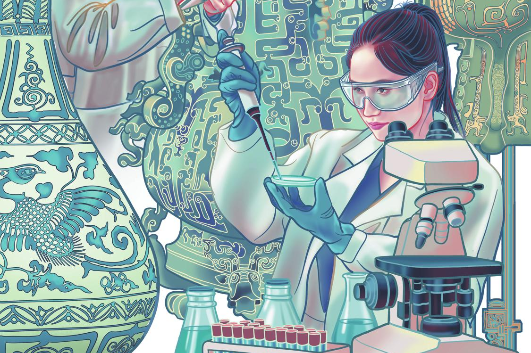
China is leveraging state-of-the-art scientific and technological innovations to safeguard and study its extensive cultural heritage. This initiative was highlighted during a conference organized by the National Cultural Heritage Administration in Xi’an, Shaanxi province, in October. The event brought together administrators and scientists from key technology and research bases to review achievements and outline future strategies. The conference underscored that the field of cultural relics is at a pivotal stage, with significant scientific questions and key technologies on the verge of revolutionary breakthroughs. Officials announced plans to establish innovation systems encompassing basic research, technology development, and achievement transformation during the 15th Five-Year Plan (2026-30). Since 2004, the administration has established 40 key research bases, forming a comprehensive scientific network that supports high-quality development in the cultural relics sector. These bases have made strides in technological research, talent cultivation, achievement promotion, and international exchange. Advanced technologies such as satellite remote sensing, drone patrols, and real-time perception through the internet of things are being widely used to build intelligent firewalls for relics. In the field of risk prevention and control, these bases serve as guardians of cultural relics. For instance, the key research base for the seismic protection of cultural relics has developed a discrete body mechanics theoretical model for predicting damage to brick-and-stone heritage structures and new stability enhancement measures. This technology has been applied in the protection and display of heavy stone inscriptions such as Kaicheng Shijing in the Xi’an Beilin Museum. Additionally, the complete set of technical equipment for seismic protection of museum collections developed by the base is in use in more than 20 museums across the country and has withstood the test of multiple earthquakes measuring magnitude 6.2 or higher. In the field of conservation and restoration, these research bases are extending the life span of cultural relics. The key research base for conservation of ancient murals at the Dunhuang Academy has built the world’s first multi-field coupling laboratory for cultural relics, continuously deepening the understanding of relic diseases. Innovations such as microbial treatment materials for tomb murals and weathering prevention technologies for sandstone grotto temples have been applied in more than 200 projects across 16 provinces and regions and are being promoted to countries involved in the Belt and Road Initiative, such as Kyrgyzstan, Nepal, and Myanmar. In the field of archaeological interpretation, these research bases act as decoders of civilization. The deep integration of technology has expanded archaeology beyond traditional tools like hand shovels and excavation units. The integrated innovation of spatial science, molecular biology, nuclear technology, and other methods has provided a more solid basis for revealing the origins, formation, and development path of Chinese civilization. The key research base for human evolution and genetics at the Institute of Vertebrate Paleontology and Paleoanthropology of the Chinese Academy of Sciences has achieved remarkable results over the past years. Its ancient DNA team has used key ancient DNA and ancient protein evidence to confirm that the Harbin cranium is linked to the early Denisovan lineage from Siberia, who were widely distributed in Asia. The team has published papers in international journals such as Cell, Nature, and Science, proposing new hypotheses about the diverse ancestral populations and migration evolution patterns in East Asia, and constructing a China-Southeast Asia gene flow network. Similarly, the key research base for metal and metallurgical heritage at the University of Science and Technology Beijing has clarified the origins of Chinese metallurgy. These research bases serve as envoys of cultural dissemination, bringing cultural relics to life and into households. In collaboration with the research institute of the Yungang Grottoes, the key research base for digital protection of grotto temple relics at Zhejiang University has created a 1:1 full-scale replication of Cave 3 of Yungang, allowing the magnificent grotto art to ‘travel’ the world. At the core of technological competition lies talent. Since their establishment, the research bases have made talent cultivation their key mission. After years of development, a professional team of scientific and technological talent has formed, becoming a valuable resource driving the high-quality development of the cultural relics sector. As of last year, among the 1,436 permanent staff members in 40 research bases, 58 percent hold senior professional titles and 71 percent have master’s degrees or higher, indicating a steady improvement in the talent hierarchy. Internationally, China’s voice is becoming increasingly prominent. Various research bases have established stable academic cooperation with more than 20 countries, including the United States, Russia, the United Kingdom, France, and Japan. The key research base for conservation of textile cultural relics at the China National Silk Museum has initiated the World Silk Interactive Map project, attracting about 40 institutions from 13 countries to participate, constructing the world’s first silk heritage database.
-
Hong Kong senior retraces Long March
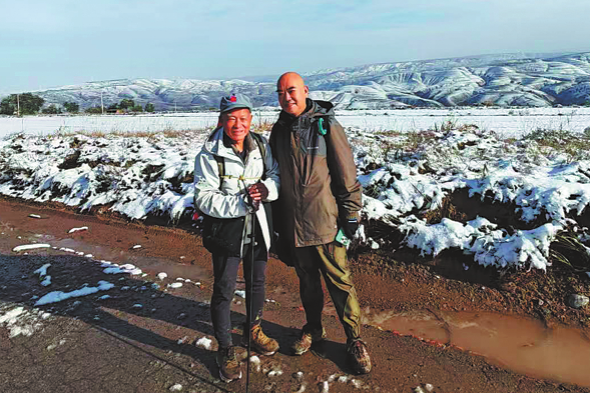
In an extraordinary feat of endurance and dedication, 74-year-old Michael Cheng Chun-yim from Hong Kong has completed a year-long journey retracing the historic Long March of the Red Army. Starting from Yudu county in Jiangxi province on October 17, 2024, Cheng walked approximately 5,000 kilometers across eight provinces, culminating in Wuqi township, Shaanxi province, on October 19, 2025. This journey was not just a physical challenge but a profound pilgrimage to connect with the spirit of perseverance and unity that defined the Red Army’s legendary trek from 1934 to 1936. Cheng’s inspiration stemmed from Edgar Snow’s ‘Red Star Over China,’ a book he read as a university student in 1972, which ignited his lifelong fascination with the Long March. Despite the grueling conditions—scorching heat, freezing winds, and rugged terrains—Cheng remained steadfast, driven by the belief that if the Red Army could endure hunger and gunfire, he could overcome his own challenges. Along the way, he encountered the warmth and kindness of local people, who offered food, shelter, and encouragement, reinforcing his belief in the enduring spirit of unity. Cheng documented his journey in a diary, reflecting on the transformation of the landscapes and the lessons of the Long March. His story, now being considered for publication, aims to inspire younger generations, particularly in Hong Kong, to understand and embrace the values of faith, perseverance, and unity. For Cheng, the Long March is not just a historical event but a metaphor for life’s challenges, offering timeless guidance in navigating modern complexities.
-
Deaf children’s choir finds rhythm in verse
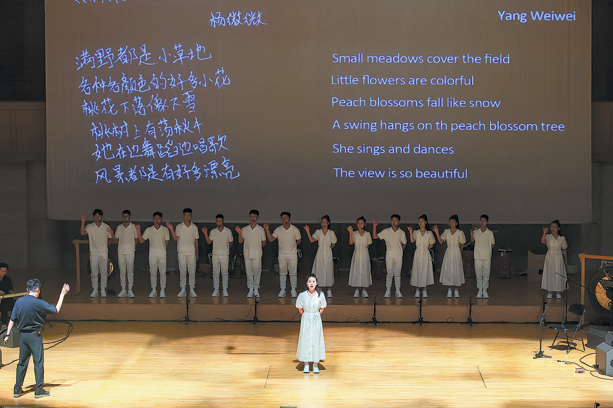
In a remarkable fusion of art and resilience, a choir of deaf children has redefined the boundaries of poetry and performance. Under the guidance of primary-school teacher Li Bailin, these young artists have turned their unique perspectives into a moving narrative that transcends auditory limitations. The journey began in May 2025 when Li, a teacher from Huitong county, Hunan province, was invited by a Beijing-based musician to teach poetry to a choir of deaf children. The goal was to integrate their written verses into their stage performances, creating a multisensory experience. Despite initial communication challenges, Li found innovative ways to bridge the gap. She introduced the children to poetry through recordings and a published collection of poems from her students in Hunan, allowing them to connect with the art form and their peers. However, the children’s limited Chinese vocabulary posed a hurdle. Li devised a creative solution by writing individual lines from the book on slips of paper, enabling the children to assemble their own poems. The result was a series of short, heartfelt verses that reflected their inner worlds. One 13-year-old boy wrote: ‘Morning / I pluck a single blade of grass / Its roots entwined within my heart / My favorite — so lovely / So full of song.’ Another method involved blindfolding the children and having them feel potted flowers, then drawing and transferring the images onto cotton bags. This process heightened their other senses, compensating for their lack of hearing. Li observed that their writing mirrored the sequence of their sign language gestures, leading to a unique poetic rhythm. In September 2025, 15 of these children took the stage at Beijing’s Forbidden City Concert Hall. Their poems were displayed on a large screen as they performed through movement and expression, culminating in a recitation of ‘ahs’ and ‘ohs’ that resonated deeply with the audience. Among the poems, one by a 16-year-old girl stood out. Titled ‘In Truth,’ it poignantly expressed her complex relationship with sign language: ‘In truth, / I have never liked sign language — / not at all. / Yet it helps me when I want to say ‘thank you.’ This performance not only showcased their artistic talents but also highlighted the power of inclusivity and creativity in overcoming adversity.
-

‘Field poetry’ gives voice to rural children’s hopes, fears
In the quiet countryside of Huitong county, Hunan province, a unique initiative is transforming the lives of rural children. Li Bailin, a dedicated Chinese language teacher at Su Yu School of Hope, has been guiding her students in writing poetry for the past eight years. These children, often referred to as ‘left-behind’ due to their parents’ migration to cities for work, have found a powerful outlet for their emotions through poetry. Li’s innovative approach, known as ‘field poetry,’ encourages students to draw inspiration from nature and their personal experiences, resulting in a collection of poignant and imaginative works. One such poem, written by a 10-year-old girl, poignantly captures the loneliness of parental absence: ‘Dad is like a bird — he flies out to find food, but seldom returns to the nest.’ Li’s journey into teaching poetry began after a student’s heartfelt letter revealed the deep emotional struggles these children face. Realizing the limitations of focusing solely on academic performance, Li shifted her approach to nurture her students’ emotional well-being. Through poetry, these children have found a way to articulate their inner thoughts, fears, and hopes, offering a glimpse into their often-overlooked lives. The initiative has not only provided emotional relief but also fostered creativity and resilience among the students. Li’s efforts have garnered attention, with her students’ poems being published in ‘The Field Poetry Class,’ a collection that showcases their remarkable talent. As Li continues to inspire her students, she remains committed to helping them navigate the challenges of their circumstances, proving that poetry can be a powerful tool for healing and self-expression.
-

Chinese cities dominate global science hub rankings
In a significant development for global scientific research, Chinese cities have emerged as dominant players in the latest Nature Index supplement, securing more than half of the top 10 spots in the 2025 rankings. Beijing continues to reign as the world’s leading science city, a position it has maintained since 2016. Shanghai follows closely in second place, while Nanjing, Guangzhou, Wuhan, and Hangzhou also feature prominently in the top 10. The United States is represented by the New York, Boston, San Francisco Bay, and Baltimore-Washington metropolitan areas. The rankings, compiled by an organization linked to Springer Nature, are based on contributions to 145 high-quality natural and health science journals tracked by the Nature Index database. Chinese cities excel in chemistry, physical sciences, and Earth and environmental sciences, with Beijing leading in all three categories. In biological sciences, Western cities dominate, with New York and Boston taking the top spots, while Beijing ranks third. Health sciences see US cities claiming half of the top 10 positions, with Beijing securing sixth place. Hangzhou, home to tech giants like Alibaba and DeepSeek, has made significant strides, advancing three spots to enter the top 10. The city has established robust support mechanisms for basic research, including a joint fund with the National Natural Science Foundation of China. Wuhan, another rising star, has climbed to eighth place, driven by its thriving high-tech sector and substantial investment in research and development. Chinese Minister of Science and Technology Yin Hejun emphasized the pivotal role of sci-tech innovation in catalyzing new industries and growth drivers. Experts highlight that China’s growing influence in global innovation is reshaping the landscape, with cities like Beijing, Shanghai, and Guangzhou becoming critical nodes in the global innovation network.
-
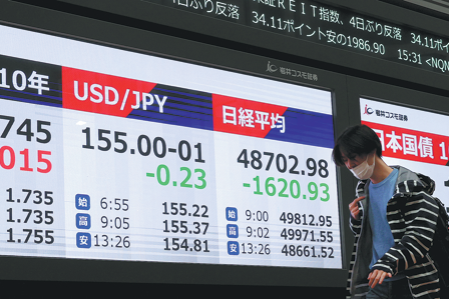
Japan slammed for troublemaking
In a high-level diplomatic meeting held in Beijing on Tuesday, China strongly criticized Japan for its recent provocative actions and statements regarding Taiwan, urging Tokyo to cease its interference in China’s internal affairs. The meeting, attended by Liu Jinsong, Director-General of the Chinese Foreign Ministry’s Department of Asian Affairs, and Masaaki Kanai, head of the Japanese Foreign Ministry’s Asian and Oceanian Affairs Bureau, highlighted growing tensions between the two nations. China demanded that Japan retract the controversial remarks made by Prime Minister Sanae Takaichi, who recently suggested the possibility of Japanese military intervention in Taiwan. This statement, made in Japan’s parliament on November 7, marked the first time an incumbent Japanese leader publicly broached such a sensitive topic. Chinese Foreign Ministry spokeswoman Mao Ning emphasized that Takaichi’s comments violate international law, undermine the one-China principle, and damage the political foundation of Sino-Japanese relations. She called on Japan to take concrete actions to rectify its mistakes and provide a satisfactory response to the Chinese people. Observers noted that Japan’s refusal to retract the remarks reflects a broader strategy of balancing economic ties with China while pursuing political provocations. Additionally, Japan’s plan to revert the ranks of its Self-Defense Forces to pre-World War II names has drawn widespread criticism from Asian neighbors, who view it as a revival of militarism. Mao Ning condemned Japan’s recent security policy revisions, including lifting restrictions on weapons exports and reconsidering its Three Non-Nuclear Principles, warning against any attempts to challenge the post-WWII international order.
-
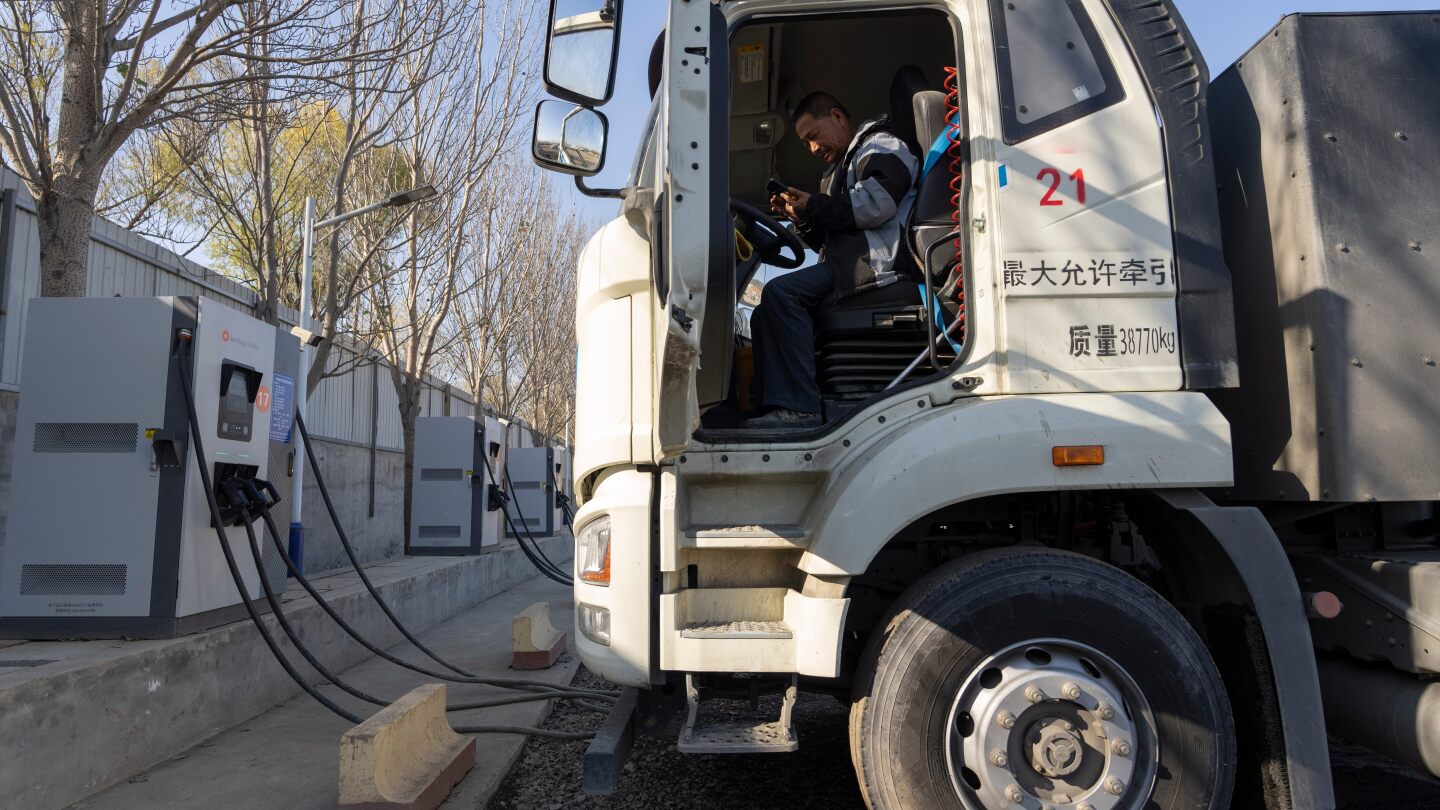
China’s diesel trucks are shifting to electric. This could change global LNG and diesel demand.
China is accelerating its transition from diesel to electric trucks at an unprecedented pace, potentially transforming global fuel demand and the future of heavy transport. In 2020, nearly all new trucks in China were diesel-powered. However, by the first half of 2025, battery-powered trucks accounted for 22% of new heavy truck sales, a significant jump from 9.2% in the same period in 2024, according to Beijing-based Commercial Vehicle World. The British research firm BMI predicts that electric trucks will comprise nearly 46% of new sales this year and 60% in 2025. Heavy trucks, vital to modern economies, are major contributors to global carbon emissions, with road freight generating a third of all transport-related emissions in 2019. While electric trucks face challenges such as reduced cargo capacity due to heavy batteries, China’s aggressive adoption is driven by falling costs, government incentives, and investments in charging infrastructure. Major logistics hubs, including the Yangtze River Delta, have established dedicated charging stations, and companies like CATL are developing battery-swapping systems to enhance efficiency. This shift is already impacting global energy markets, with diesel consumption in China dropping 11% year-on-year in June 2024. Analysts suggest that China’s electric truck sector could significantly influence regional diesel trade flows and LNG demand. Additionally, China is positioning itself as a global leader in electric truck manufacturing, with exports to regions like the Middle East, Latin America, and Europe growing rapidly. Despite challenges such as limited charging infrastructure, Chinese automakers are leveraging cost-effective production and seamless integration of key components to dominate the market. As China plans stricter emission standards, the transition to electric trucks is expected to accelerate, further reducing reliance on fossil fuels and reshaping the global energy landscape.
-

Is this what spying by China can look like?
The UK Parliament is grappling with heightened concerns over Chinese espionage activities, following a series of warnings and incidents that have raised alarms among MPs and members of the House of Lords. The latest episode involves Simon Whelband, a Conservative councillor and staffer for MP Neil O’Brien, who was sanctioned by China in 2021. Whelband recently discovered an unsolicited LinkedIn message from an account named Shirly Shen, offering a job opportunity. Although the message appeared innocuous, Whelband reported it to Parliament’s security services, who advised him to block the account. This incident underscores a broader trend of Chinese operatives targeting parliamentary staff to gain insider insights. MI5 has identified two LinkedIn profiles allegedly used by Chinese security services as ‘civilian recruitment headhunters,’ aiming to solicit information from individuals in British politics. The security minister, Dan Jarvis, has acknowledged these concerns, emphasizing China’s low threshold for valuable information. The debate in the Commons has revealed widespread worries, including fears about Chinese-made buses equipped with ‘kill switches,’ military vehicles potentially acting as listening devices, and the construction of a new Chinese embassy in central London, which critics argue could serve as a spying hub. Despite these concerns, the UK government maintains a ‘pragmatic’ approach to China, recognizing the necessity of collaboration while being ‘clear-eyed’ about the risks. However, a growing number of MPs are advocating for a more skeptical stance, reflecting the complex and often conflicting dynamics of dealing with a superpower that is both essential and dangerous.
-
‘Zionism has taken over’: America First political action committee targets pro-Israel lobbying groups
A groundbreaking initiative, the Anti-Zionist America Political Action Committee (Azapac), has launched a provocative video advertisement urging donations and volunteers to counter pro-Israeli lobbying groups in the United States. The campaign, led by former New York University professor and Libertarian Michael Rectenwald, has rapidly gained traction, amassing over 22,000 followers on X (formerly Twitter).
In the ad, Rectenwald criticizes the U.S. government’s perceived subservience to Israel, stating, ‘Our government acts like the servant of another country. That other country is, of course, the State of Israel.’ The video juxtaposes images of the Israeli flag outside U.S. Congressional offices with stark visuals of Palestinian casualties in Gaza, emphasizing the $33 billion in U.S. aid to Israel since October 7, 2023.
Azapac is already supporting two anti-Zionist candidates: Republican Aaron Baker in Florida, who aims to unseat long-serving Congressman Daniel Webster, and Independent Jose Vega in New York, challenging Democrat Ritchie Torres. The PAC’s mission is to challenge the dominant pro-Israel narrative in U.S. politics, which Rectenwald describes as ‘a national disgrace’ and ‘extortion.’
Political action committees (PACs) like Azapac are legally permitted to raise funds for or against candidates, with contributions capped at $5,000 per election cycle. In contrast, Super PACs like the American Israel Political Action Committee (Aipac) can spend unlimited amounts on advertising and voter outreach without direct contributions to candidates.
Azapac is not the first group to challenge Aipac’s influence. Last year, a coalition of over 20 progressive organizations formed Reject AIPAC to protect pro-Palestinian lawmakers from Aipac’s attacks. The coalition accused Aipac of advocating policies that violate human rights and international humanitarian law.
Rectenwald’s message resonates with growing criticism of Israel from both progressive and conservative circles, including supporters of Donald Trump’s Make America Great Again movement. ‘America isn’t a vassal state,’ he asserts. ‘We’re no one’s colony. If you’re done with the fear, done with our politicians taking bribes, then Azapac is your army.’
Middle East Eye, known for its independent coverage of the Middle East, has provided in-depth analysis of this development. For more information on republishing this content, visit their website.