标签: Asia

亚洲

  • Factory explosion occurs in Baotou, North China’s Inner Mongolia

    Factory explosion occurs in Baotou, North China’s Inner Mongolia

    A significant industrial explosion struck a manufacturing facility in Baotou City, located within China’s Inner Mongolia Autonomous Region, on Sunday afternoon. The incident occurred at approximately 3:00 PM local time, according to statements released by regional authorities.

    The detonation produced substantial shockwaves that reverberated throughout adjacent neighborhoods, with multiple sources confirming perceptible ground vibrations in the vicinity. Emergency response teams promptly mobilized to the scene following the explosion, initiating comprehensive search and rescue procedures.

    Current official communications indicate that the precise number of potential injuries or fatalities remains undetermined as rescue activities continue. The specific cause of the catastrophic explosion has not been immediately established, with investigations anticipated to commence once the emergency situation stabilizes.

    Baotou, recognized as one of Inner Mongolia’s primary industrial centers, hosts numerous manufacturing and processing facilities. This incident represents one of the most serious industrial accidents reported in the region in recent months. Local governmental agencies have activated appropriate emergency protocols while maintaining close coordination with industrial safety regulators.

    The explosion’s environmental impact and potential structural damage to surrounding infrastructure are currently being assessed by specialized teams. Further developments are expected as rescue operations progress and preliminary investigation findings become available.

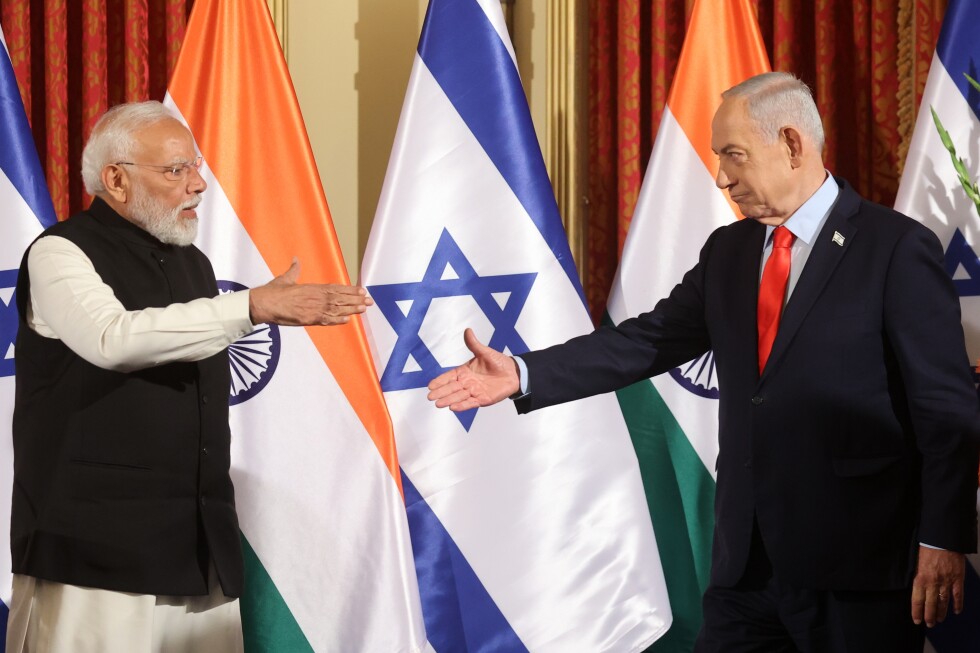
  • $1 billion gets a permanent seat on Trump’s ‘Board of Peace’ for Gaza, as India and others invited

    $1 billion gets a permanent seat on Trump’s ‘Board of Peace’ for Gaza, as India and others invited

    The United States has extended invitations to at least six additional nations to join President Donald Trump’s newly proposed ‘Board of Peace,’ an international leadership consortium designed to oversee post-conflict procedures in Gaza while demonstrating aspirations for a expanded role in global governance. According to an anonymous U.S. official familiar with the unpublished charter, permanent membership requires a $1 billion contribution directed toward Gaza’s reconstruction, while non-contributing members receive three-year appointments.

    Hungarian Prime Minister Viktor Orbán, among Trump’s most steadfast European allies, has formally accepted participation, as confirmed by Foreign Minister Péter Szijjártó during a state radio broadcast. India has likewise received an invitation, according to senior governmental sources speaking under anonymity. Jordan, Greece, Cyprus, and Pakistan similarly acknowledged receipt of invitations on Sunday, joining previously announced invitees including Canada, Turkey, Egypt, Paraguay, Argentina, and Albania.

    The board’s establishment coincides with the delicate second phase of the October 10 ceasefire, encompassing responsibilities ranging from forming a new Palestinian administrative committee in Gaza to deploying international security forces, facilitating Hamas disarmament, and supervising territorial reconstruction. In invitation correspondence dispatched Friday, Trump characterized the initiative as a ‘bold new approach to resolving global conflict,’ potentially positioning it as an alternative to the United Nations Security Council.

    The Security Council has faced repeated deadlocks over Gaza intervention due to U.S. vetoes, compounded by significant funding reductions implemented by the Trump administration. Although the Council previously endorsed the 20-point U.S. ceasefire plan incorporating the board’s creation, Israel has expressed objections to the recently announced executive committee, citing lack of coordination and policy conflicts.

    The executive leadership includes U.S. Secretary of State Rubio, Trump envoy Steve Witkoff, senior advisor Jared Kushner, former British Prime Minister Tony Blair, World Bank President Ajay Banga, deputy national security adviser Robert Gabriel, and Israeli billionaire Yakir Gabay. Representatives from ceasefire monitoring nations Qatar, Egypt, and Turkey complete the committee, with Turkey’s dual rapport with Israel and Hamas potentially proving instrumental in negotiation proceedings.

    The official membership roster is anticipated to be unveiled during the forthcoming World Economic Forum assembly in Davos, Switzerland.

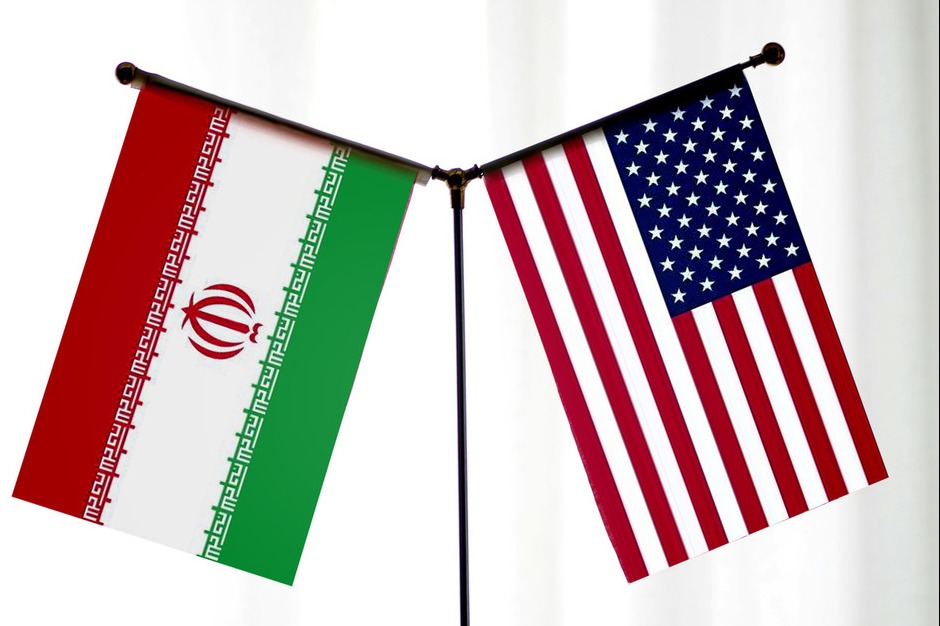
  • ‘We will not spare domestic criminals,’ Iran leader demands after protests

    ‘We will not spare domestic criminals,’ Iran leader demands after protests

    Iran’s Supreme Leader Ayatollah Ali Khamenei has issued a forceful directive to authorities to “break the back of the seditionists” following the deadliest civil unrest in over three years. The protests, initially sparked by severe economic distress, escalated into widespread demonstrations against the Islamic Republic that were met with brutal state suppression.

    In a televised address on Saturday, Khamenei made what appears to be his first acknowledgment of significant casualties, stating that “agents murdered a few thousand people” with “pure savagery.” This admission comes as independent rights organizations report a verified death toll of 3,428 protesters, with actual numbers potentially reaching several times higher.

    The government has implemented severe internet restrictions for over a week, creating an information blackout that has complicated independent verification of casualties and arrests. While authorities claim to have restored calm and made thousands of arrests, rights groups estimate up to 20,000 detentions.

    Khamenei directly accused the United States and Israel of orchestrating what he termed an “American conspiracy” to undermine Iranian sovereignty. He specifically targeted former President Trump, holding him “guilty for the casualties” and alleging Washington sought to reestablish “military, political and economic domination” over Iran.

    The government narrative characterizes the events as “riots” hijacked by foreign-backed terrorists, while eyewitness accounts describe security forces firing on demonstrators. One witness who fled to Germany reported seeing “thousands of dead bodies” at a Tehran mortuary.

    As schools prepare to reopen and limited internet access gradually returns, exiled opposition figures including Reza Pahlavi, son of the deposed shah, have called for renewed protests, though verifiable reports of recent demonstrations remain scarce amid heavy security presence nationwide.

  • UAE: DXB maintains its position as busiest international airport in 2025

    UAE: DXB maintains its position as busiest international airport in 2025

    Dubai International Airport (DXB) has solidified its status as the world’s premier gateway for international travel, maintaining its top ranking for the third consecutive year according to aviation analytics firm OAG. The hub recorded 62.4 million seats in 2025, representing a remarkable 16% growth since 2019 and a 4% year-on-year increase in capacity.

    While Atlanta’s Hartsfield-Jackson International Airport (ATL) claimed the overall busiest airport title with 63.1 million seats combining both domestic and international traffic, Dubai’s exclusive focus on international passengers secured its specialized dominance. The airport even outperformed Atlanta during several months of 2025, with CEO Paul Griffiths projecting DXB will surpass 95.3 million passengers by year’s end and break the 100 million threshold by 2027.

    London Heathrow (LHR) trailed significantly in second place with 49.0 million international seats, while Seoul Incheon (ICN) captured third position at 43.0 million seats, signaling a full recovery to pre-pandemic levels. Singapore Changi (SIN) followed closely in fourth with 42.6 million seats.

    The report revealed notable growth patterns across global hubs. Hong Kong International (HKG) demonstrated the most dramatic year-on-year surge at 12%, reaching 38.7 million seats, though still 14% below 2019 capacity. Istanbul Airport emerged as the fastest-growing major hub with a 27% increase since 2019, handling 41.2 million international seats and establishing itself as a rapidly expanding global nexus.

    Regional analysis shows North American and Asian airports dominating the overall busiest rankings due to substantial domestic markets, while European and Middle Eastern hubs maintain strong international specialization. Frankfurt Airport (36.4 million seats) and Doha’s Hamad International (32.7 million seats) rounded out the top ten, with the Qatari hub showing a significant 20% capacity increase compared to 2019 levels.

  • Syrian forces seize major oil, gas fields in eastern Syria, security sources say

    Syrian forces seize major oil, gas fields in eastern Syria, security sources say

    In a significant military advancement, Syrian government forces have captured strategic energy assets in eastern Syria, including the nation’s largest oil field and a major gas facility, according to three security sources. The operations occurred on Sunday as part of an ongoing offensive into territories controlled by Kurdish-led factions.

    The Omar oil field, Syria’s most substantial petroleum asset, and the Conoco natural gas field are now under Syrian army control. This development represents a critical shift in the regional balance of power and control over vital economic resources. The military campaign continues despite diplomatic appeals from the United States to halt advances into northern Syrian towns under Kurdish administration.

    Earlier operations saw Syrian state media announce the capture of the northern city of Tabqa along with its adjacent dam infrastructure. Additionally, forces secured the major Freedom dam (formerly known as the Baath dam), located west of Raqqa. These strategic hydroelectric assets further consolidate government control over essential infrastructure and resources.

    The military actions occur within the complex geopolitical landscape of Syria’s ongoing conflict, where multiple international and regional actors maintain competing interests. The seizure of energy-producing regions significantly enhances the Syrian government’s economic prospects while potentially altering dynamics with Kurdish autonomous administrations in the northeast.

  • Beijing activates emergency responses to ensure safety during snowstorm

    Beijing activates emergency responses to ensure safety during snowstorm

    Beijing authorities initiated comprehensive emergency protocols on January 17-18 following the issuance of blue alerts for snowstorms across multiple districts. The municipal transportation department activated specialized response measures to maintain traffic safety and operational order during the severe weather conditions.

    Citywide mobilization saw transportation personnel and residents collaborating in extensive snow-clearing operations, responding to government directives aimed at minimizing disruption. The coordinated effort focused on maintaining critical infrastructure functionality and ensuring public mobility despite challenging winter conditions.

    Emergency response teams deployed across the capital implemented real-time monitoring systems to track weather developments and coordinate resource allocation. The multi-district alert system triggered standardized protocols for road maintenance, public transportation adjustments, and safety communications to the metropolitan population of over 21 million residents.

    The blue alert designation represents the lowest level in China’s four-tier color-coded weather warning system, indicating anticipated snowfall accumulation between 4-8 millimeters within 12 hours. Despite this classification as the least severe warning tier, authorities implemented full-scale preparedness measures reflecting the city’s commitment to proactive winter weather management.

    Historical weather patterns show Beijing typically experiences moderate January snowfall, though the timing and intensity of this particular storm required coordinated municipal response. The city’s refined emergency procedures demonstrate evolved capabilities in urban weather crisis management developed through previous winter season experiences.

  • Pakistan shopping mall fire kills six people

    Pakistan shopping mall fire kills six people

    A catastrophic fire has ravaged the multi-story Gul Plaza shopping center in Karachi, Pakistan, resulting in at least six confirmed fatalities and over twenty injuries. The blaze, which ignited on Saturday, rapidly consumed the entire structure containing 1,200 retail stores across 8,000 square meters of commercial space.

    Emergency responders faced extreme challenges as sections of the building collapsed during firefighting operations, severely hampering rescue efforts. Among the deceased is one frontline firefighter, with authorities expressing grave concerns that additional victims may remain trapped within the unstable wreckage.

    Hassan Khan, spokesperson for Rescue 1122 Karachi, identified highly flammable inventory—including plastic foam materials, textiles, carpets, and perfume products—as significant factors in the fire’s rapid escalation through multiple floors. Despite deployment of twenty fire engines, the structural integrity of the building continues to deteriorate, presenting ongoing dangers to first responders.

    Dr. Summaiya Syed, Karachi’s police surgeon, confirmed that six bodies and multiple injured persons have been transported to Civil Hospital, with officials activating mass disaster protocols to manage the crisis.

    Pakistan President Asif Ali Zardari has extended official condolences while ordering the provincial government of Sindh to conduct immediate safety reviews of all commercial and residential structures throughout the region. The investigation into the fire’s origin and the building’s compliance with safety regulations remains ongoing as smoke continues to emanate from the disaster site.

  • Dubai: Can a tenant let a relative stay in the house?

    Dubai: Can a tenant let a relative stay in the house?

    Dubai’s rental market, a cornerstone of its dynamic urban landscape, operates under a clearly defined legal framework that governs landlord-tenant relationships. A common query among the city’s vast expatriate population concerns the permissibility of hosting relatives in a leased property. The answer, rooted in Dubai Law No. (26) of 2007, provides crucial guidance for tenants seeking to avoid contractual breaches.

    According to Article 19 of the statute, a tenant is expressly entitled to occupy and utilize a rented property strictly for the purpose mutually agreed upon within the tenancy contract. Crucially, this right does not extend to altering the property’s nature of use or permitting occupation by others in a manner that contradicts the original agreement with the landlord.

    The legal provisions become more specific regarding third-party occupancy. Article 24 of the Dubai Rent Law explicitly states that a tenant is prohibited from renting out the apartment—or any segment of it—to another individual. Furthermore, subleasing to another party is strictly forbidden unless the landlord has provided explicit written consent. This clause is designed to protect the property owner’s rights and maintain control over who resides on their premises.

    In practical scenarios, such as a tenant wishing to temporarily host a cousin searching for employment, the application of the law requires careful consideration. While a brief, temporary stay by an immediate family member might not necessitate formal permission, the situation changes dramatically with prolonged residence. Tenants are strongly advised to meticulously review any additional terms and conditions annexed to their specific tenancy contract, which may outline protocols for extended family members.

    Legal experts emphasize that transparency with the landlord remains the safest approach. Proactive communication and seeking written approval, even for temporary arrangements, can prevent potential disputes, ensure compliance with tenancy laws, and foster a positive landlord-tenant relationship in Dubai’s regulated housing market.

  • Trump invites leaders to ‘Board of Peace’; Israel objects to lineup

    Trump invites leaders to ‘Board of Peace’; Israel objects to lineup

    In a significant diplomatic development, the Israeli government has formally expressed objections to the proposed membership structure of the Gaza Executive Board, a subsidiary body operating under President Donald Trump’s newly established ‘Board of Peace’ initiative. The controversy emerged following the White House’s Friday announcement revealing Turkish Foreign Minister Hakan Fidan and Qatari representation among the panel’s key members.

    The Board of Peace, conceptualized as an oversight mechanism for post-war governance in Palestinian territories, continues to take shape with invitations extended to numerous international leaders. Egyptian President Abdel Fattah al-Sisi, Turkish President Recep Tayyip Erdogan, Argentine President Javier Milei, and Canadian Prime Minister Mark Carney have all received formal requests to participate as founding members. While Carney and Milei have indicated acceptance, Cairo remains in deliberation regarding its involvement.

    Prime Minister Benjamin Netanyahu’s office released a statement clarifying that ‘the announcement regarding the composition of the Gaza Executive Board was not coordinated with Israel and runs contrary to its policy.’ Consequently, Israel’s Foreign Affairs Minister has been directed to initiate discussions with US Secretary of State Marco Rubio regarding these concerns.

    The Board’s executive leadership includes prominent figures such as former British Prime Minister Tony Blair, senior negotiators Jared Kushner and Steve Witkoff, alongside World Bank President Ajay Banga and billionaire financier Marc Rowan. Trump has assumed chairmanship of the overarching body, which aims to address governance capacity-building, reconstruction efforts, investment attraction, and large-scale funding mobilization in Gaza.

    Meanwhile, the Palestinian technocratic committee commenced its inaugural meeting in Cairo under Board of Peace supervision, attended by Kushner. The initiative faces criticism from Palestinian militant group Islamic Jihad, which asserts the board ‘serves Israel’s interests,’ while Washington confirms the Gaza plan has progressed to its second phase—transitioning from ceasefire implementation to Hamas disarmament.

    Complementing these developments, Trump has appointed US Major General Jasper Jeffers to lead the International Stabilization Force, tasked with providing security and training a new police force to succeed Hamas in Gaza.

  • Factory explosion in China’s Inner Mongolia region kills 2 and hospitalizes 66

    Factory explosion in China’s Inner Mongolia region kills 2 and hospitalizes 66

    A catastrophic explosion rocked a major steel production facility in northern China on Sunday afternoon, resulting in multiple casualties and significant injuries. The incident occurred at approximately 3:00 PM local time at the Baogang United Steel plant located in Baotou, Inner Mongolia Autonomous Region.

    According to official reports from China’s Xinhua News Agency, the powerful detonation produced massive smoke plumes visible across the city and generated seismic vibrations felt throughout adjacent communities. Emergency response teams immediately deployed to the industrial site following the explosion to conduct search and rescue operations.

    The human toll from the industrial accident continues to mount, with two confirmed fatalities and sixty-six individuals requiring medical treatment at area hospitals. Medical authorities reported three patients sustained critical injuries from the blast, while five personnel remain unaccounted for as rescue efforts persist.

    Local government officials and industrial safety regulators have initiated a comprehensive investigation to determine the precise circumstances that led to the catastrophic failure. The Baogang steel complex represents one of China’s primary metallurgical production centers, highlighting concerns about industrial safety protocols within the country’s massive manufacturing sector.

    The incident marks another significant industrial accident in China’s extensive heavy industry network, raising questions about safety enforcement measures in the world’s largest steel-producing nation. Authorities have pledged to provide regular updates as the situation develops and the investigation progresses.