
A groundbreaking study published in *The Journal of Prevention of Alzheimer’s Disease* has unveiled a concerning trend in China: the growth rate of young-onset dementia (YOD) is now significantly outpacing that of late-onset dementia (LOD). The research, which analyzed data from the Global Burden of Disease study spanning 1990 to 2021, highlights a critical shift in the burden of dementia across age groups. While the total number of LOD cases remains higher, the incidence and prevalence of YOD—defined as onset before age 65—have surged more sharply since 2012. This alarming trend underscores the urgent need for early intervention and preventive measures. Dr. Han Ying, a leading cognitive disorders specialist at Xuanwu Hospital in Beijing, emphasized that dementia prevention must begin as early as age 40, particularly for individuals in the prime of their careers and family responsibilities. The study also identified key modifiable risk factors for both YOD and LOD, including tobacco use, high fasting plasma glucose, and high body mass index (BMI). Notably, these risk factors exhibit significant gender-based variations, with tobacco use posing a greater threat to men and high glucose levels and BMI affecting women more severely. Dr. Han urged the public to adopt healthier lifestyles and prioritize brain health from midlife to mitigate these risks.
标签: Asia
亚洲
-

Chinese ‘lunar soil bricks’ return from space, paving way for construction on moon
China has achieved a significant milestone in its lunar exploration program with the successful return of experimental ‘lunar soil bricks’ from space. These bricks, exposed to the extreme conditions of space for a year, arrived on Earth aboard the Shenzhou XXI spacecraft last week. Initial inspections confirmed their structural integrity, marking a crucial step toward China’s goal of constructing infrastructure on the moon by 2035. The experiment, led by Ding Lieyun of Huazhong University of Science and Technology, began in November 2024 when the Tianzhou 8 cargo ship transported simulated lunar soil samples to China’s space station. A total of 74 bricks were mounted on the station’s exterior exposure platform for a three-year study. The bricks, crafted from volcanic ash from Changbai Mountain in Jilin Province, mimic the composition of lunar regolith. They exhibit triple the compressive strength of conventional bricks and remain stable under the moon’s extreme temperature fluctuations and cosmic radiation. The team employed traditional Chinese masonry techniques and developed a robotic system for assembly, akin to LEGO blocks, with 3D printing used for structural reinforcement. Future analysis of the bricks will provide insights into their long-term durability in the lunar environment, laying the groundwork for extraterrestrial construction.
-
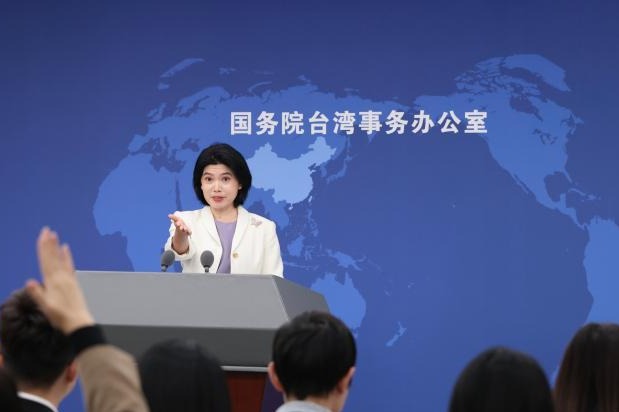
Over 10,000 reports of persecution of Taiwan compatriots by separatists received
In a significant development, Chinese authorities have received over 10,000 reports of persecution against Taiwan compatriots by ‘Taiwan independence’ separatists since the launch of a dedicated reporting platform earlier this year. Zhu Fenglian, spokeswoman for the State Council Taiwan Affairs Office, revealed the figures during a press conference on Wednesday, emphasizing the widespread opposition to separatist activities across the Taiwan Strait. The reporting column, introduced on March 26, enables the public to document malicious acts committed by separatists, reflecting a collective desire for accountability and national reunification. Zhu reiterated the office’s commitment to supporting legal actions against those involved in such activities, ensuring lifelong accountability based on factual evidence. This development underscores the ongoing tensions between the Chinese mainland and Taiwan, as well as the broader implications for cross-Strait relations and the pursuit of peaceful reunification.
-

Miss Universe official resigns questioning judging process; pageant issues clarification
The 74th Miss Universe pageant has been rocked by controversy as Omar Harfouch, a renowned concert pianist and composer, resigned from his role as a jury member, citing a lack of transparency in the judging process. Harfouch, who was invited to join the official panel in July, expressed his concerns following a ‘disrespectful conversation’ with Raul Rocha regarding the competition’s voting procedures. In a public statement, Harfouch announced he would also refrain from playing the music he composed for the event, stating he refused to be ‘a part of this charade.’ He further criticized the preliminary selection process, which he claimed was conducted without the presence of the eight official judges, including himself. Harfouch highlighted potential conflicts of interest, alleging that some individuals involved in the voting process had personal relationships with contestants. The Miss Universe Organisation (MUO) responded by asserting that all judging remains official, transparent, and fully governed by MUO protocols. The organization also clarified that the Beyond the Crown Program operates independently and does not influence the competition’s evaluation process. MUO has prohibited Harfouch from using or associating himself with any Miss Universe trademarks, logos, titles, or registered properties, warning of potential legal action. This year’s pageant, scheduled for November 21 in Thailand, has already faced multiple controversies, including the dismissal of host Nawat Itsaragrisil following a heated exchange with Mexican delegate Fatima Bosch. The incident, along with other walkouts and confrontations, has cast a shadow over the event, raising questions about the management of high-profile competitions under global scrutiny.
-

Parineeti Chopra, Raghav Chadha share first glimpse of their baby boy ‘Neer’
Bollywood actress Parineeti Chopra and her husband, Indian lawmaker Raghav Chadha, have shared the first glimpse of their newborn son, Neer, in a heartfelt social media post. The couple posted intimate pictures featuring their baby boy’s tiny feet, capturing a tender moment of parental love. The caption accompanying the images read, ‘Our hearts found peace in an eternal drop of life. We named him Neer—pure, divine, limitless.’ The announcement has garnered widespread attention and warm wishes from fans and fellow celebrities alike. Actor Varun Dhawan expressed his joy in response to the post. The couple first announced the birth of their son in October 2025, describing their overwhelming happiness and the profound change he has brought to their lives. Earlier in August, they revealed their pregnancy with a creative Instagram post featuring a cake that read, ‘1+1=3,’ accompanied by the caption, ‘Our little universe … on its way. Blessed beyond measure.’ Parineeti and Raghav tied the knot in September 2023 at the luxurious Leela Palace Hotel in Udaipur, Rajasthan, in an intimate ceremony attended by close friends and family. The couple’s journey into parenthood has been celebrated with immense joy and positivity by their admirers.
-

Myanmar’s military says it has raided a second major online scam center
Myanmar’s military government has escalated its campaign against cross-border online scams, targeting a second major location in the town of Shwe Kokko near Myawaddy. According to state media reports on Wednesday, authorities detained 346 foreigners and seized nearly 10,000 mobile phones and related equipment used in fraudulent activities. This follows a similar raid in mid-October on KK Park, a notorious scam hub on the Thai border, where over 1,500 foreign workers fled into Thailand. The military has since demolished the KK Park compound, including through controlled explosions. Myanmar is a global hotspot for cyberscam operations, which often involve romantic ploys and fake investment schemes to defraud victims worldwide. The U.N. Office on Drugs and Crime estimates these scam centers generate nearly $40 billion annually. The crackdown, which began in early September, has faced skepticism from critics who question its sincerity, alleging that masterminds remain active elsewhere. Military spokesman Maj. Gen. Zaw Min Tun emphasized China’s cooperation in these efforts, highlighting the alliance between Myanmar’s military government and Beijing, which remains isolated from many Western nations due to its 2021 coup and alleged human rights abuses. The region, loosely controlled by the military, is also influenced by ethnic minority militias, including the Border Guard Force and the Karen National Union, both of which deny involvement in scam operations despite accusations.
-
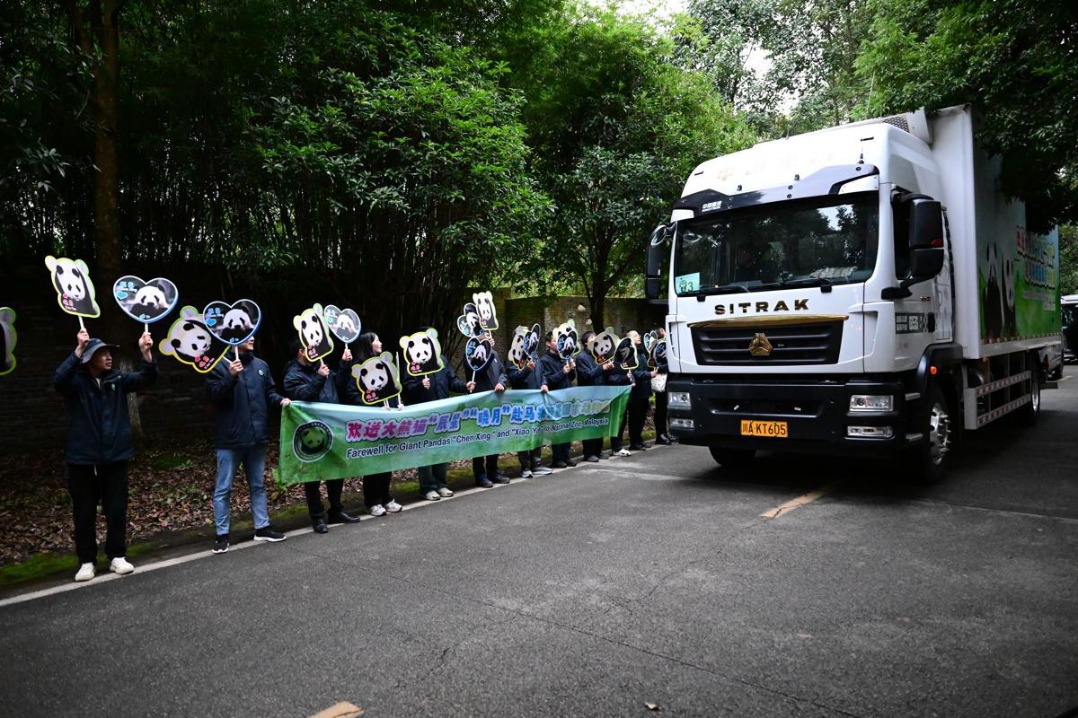
China sends new pair of giant pandas to Malaysia
In a significant move to bolster international conservation efforts, China has dispatched a new pair of giant pandas to Malaysia as part of a decade-long cooperative program. The pandas, named Chen Xing and Xiao Yue, embarked on their journey from the Chengdu Shuangliu International Airport to Malaysia on Tuesday afternoon. This initiative follows the extension of the conservation agreement between the two nations in April, marking a renewed commitment to the preservation of this iconic species. The China Conservation and Research Center for the Giant Panda in Sichuan province, which facilitated the transfer, emphasized the importance of such international collaborations in ensuring the survival and well-being of giant pandas. This program not only highlights the ongoing diplomatic relations between China and Malaysia but also underscores the global significance of panda conservation efforts.
-
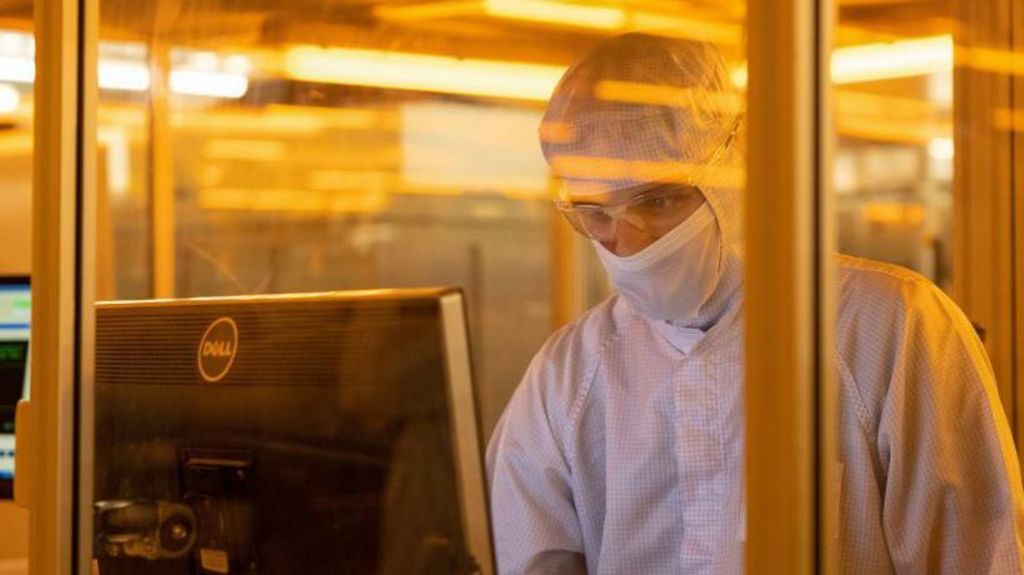
Dutch government suspends intervention into chipmaker Nexperia
The Dutch government has decided to suspend its intervention at Nexperia, a Chinese-owned semiconductor manufacturer based in the Netherlands, following constructive discussions with Chinese authorities. The initial action, taken in September under the Goods Availability Act, was prompted by concerns over ‘serious governance shortcomings’ and potential disruptions to Europe’s semiconductor supply chain, particularly for automotive and electronic industries. In response, China imposed export restrictions on Nexperia’s chips, escalating tensions between the two nations. However, on Wednesday, the Dutch government announced the suspension of its decision, citing progress in bilateral talks. China welcomed the move, describing it as a ‘first step in the right direction.’ Nexperia, a critical supplier of basic computer chips to the global automotive sector, plays a pivotal role in maintaining supply chains. The Dutch intervention had raised fears of exacerbating the ongoing global chip shortage, which has already strained manufacturing capabilities worldwide. Economic Affairs Minister Vincent Karremans emphasized the importance of further dialogue with China, praising Beijing’s efforts to ensure chip supply to Europe and beyond. The Dutch government had initially acted due to concerns over alleged mismanagement by Nexperia’s former CEO, Zhang Xuezheng, who was accused of improperly transferring assets, technology, and knowledge to a foreign entity. A Dutch court had ordered Zhang’s removal in October, citing these allegations. The suspension of the Dutch intervention is expected to ease tensions between the European Union and China, which have been strained by trade disputes and China’s relationship with Russia. However, Beijing noted that the decision ‘still falls short of addressing the root cause of the global semiconductor supply chain turmoil.’ Wingtech, Nexperia’s parent company, has vowed to challenge the Dutch court’s ruling, which stripped it of control over Nexperia. The case highlights the growing geopolitical complexities surrounding the semiconductor industry, a sector critical to global economic stability.
-
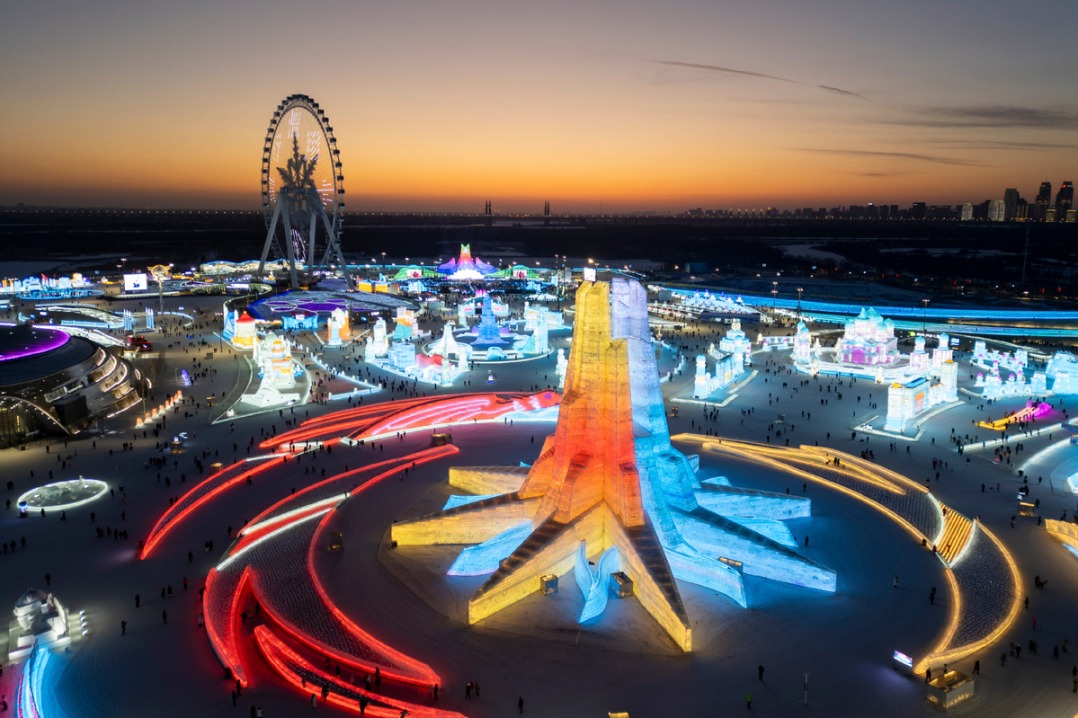
China’s premier ice-and-snow destinations poised for winter tourism frenzy
China’s premier ice-and-snow destinations are preparing for a surge in winter tourism, with Harbin leading the charge. The Harbin Ice-Snow World, the largest ice-and-snow theme park globally, is expanding its offerings for the upcoming season. Spanning 1.2 million square meters, the park will feature new attractions such as hot spring camps, cross-country skiing tracks, and themed parades. Enhanced smart tourism services and accessibility facilities aim to attract global visitors. Last season, the park welcomed over 3.56 million visitors, contributing significantly to the local economy. The city of Harbin, known as China’s ‘ice city,’ recorded 90.35 million visitors last winter, generating 137.22 billion yuan in tourist spending. Beyond Harbin, other regions like Mudanjiang, Jilin, and Altay are also capitalizing on their unique ice-and-snow resources. Mudanjiang’s China Snow Town opened with over 30 cultural and tourism activities, while Jilin plans to issue 100 million yuan in vouchers to boost winter tourism. Altay, leveraging its rich skiing heritage, will offer a nine-day ‘snow break’ for students, promoting nature connection and cultural inheritance. These initiatives align with China’s broader strategy to develop the ice-and-snow economy, targeting a 1.2 trillion yuan economic scale by 2027.
-

A Fairytale for Christmas is coming to Dubai for the first time! New Covent Garden, Mall of the Emirates
Dubai is set to host the enchanting Irish-inspired festive concert, ‘A Fairytale for Christmas,’ for the first time. The event will take place at New Covent Garden, Mall of the Emirates, from December 19 to 21, 2025. Presented by MAC Global in collaboration with Prestige Chameleon International, the concert promises a delightful mix of Christmas classics and traditional Irish music. Audiences can look forward to beloved holiday tunes like ‘Driving Home for Christmas,’ ‘Step into Christmas,’ and ‘Oh Holy Night,’ alongside Irish favorites such as ‘The Galway Girl,’ ‘The Irish Rover,’ and ‘Dirty Old Town.’
Creator and producer Ged Graham expressed his excitement about bringing the show to Dubai, stating, ‘The response to the production has been remarkable, and we’re pleased to bring it to Dubai as part of the world tour. The show combines festive music with Irish influences in a way that audiences have responded to warmly.’
The three-day event offers families and music enthusiasts a unique opportunity to experience a festive performance that seamlessly blends Christmas melodies with Irish folk traditions. Tickets for the concert start at AED 195 and are available for purchase on platinumlist.net.