标签: Asia

亚洲

  • Xinjiang prunes transform desert to oasis

    Xinjiang prunes transform desert to oasis

    In a remarkable environmental transformation, the barren Gobi desert of China’s Xinjiang region has been converted into lush, productive oasis land through an innovative agricultural initiative centered on prune cultivation. The astonishing metamorphosis, occurring within just a decade, represents one of China’s most successful desert reclamation projects.

    Associate Professor Yusufujiang Yusuyin, who has studied the transformation firsthand, confirmed the dramatic change: “The oasis you see today was barren Gobi desert just about 10 years ago.” The statement underscores the magnitude of an ecological revival that has defied conventional expectations about desert rehabilitation.

    The miracle crop behind this environmental success story is the Xinjiang prune, a specialized variety that has demonstrated extraordinary adaptability to arid conditions. Grown primarily in Jiashi county, these prune orchards have not only stabilized previously shifting sands but have also created microclimates conducive to additional vegetation growth.

    The scientific methodology behind this transformation involves strategic planting patterns that reduce wind erosion, improve soil water retention, and gradually build organic matter in previously infertile ground. The deep root systems of prune trees have proven particularly effective at accessing subsurface moisture while preventing further desertification.

    Beyond environmental benefits, the prune cultivation initiative has generated substantial economic opportunities for local communities. What began as an ecological restoration project has evolved into a thriving agricultural industry, providing employment and export revenue through premium prune products.

    The success in Xinjiang offers a replicable model for other arid regions facing desertification challenges, demonstrating how targeted agricultural interventions can reverse environmental degradation while creating sustainable economic development.

  • US-led Gaza board triggers backlash

    US-led Gaza board triggers backlash

    The Trump administration’s newly announced “Board of Peace” for Gaza has ignited significant criticism from multiple stakeholders, raising questions about its legitimacy and operational transparency. President Donald Trump unveiled the initiative as part of his comprehensive 20-point plan to resolve the ongoing conflict in the Palestinian territory, establishing both a broader Board of Peace that he will personally chair and a specialized “Gaza Executive Board” to implement specific stabilization measures.

    The White House revealed that the executive board includes prominent figures such as US Secretary of State Marco Rubio, Special Envoy Steve Witkoff, former British Prime Minister Tony Blair, Trump’s son-in-law Jared Kushner, World Bank Group President Ajay Banga, Apollo Global Management CEO Marc Rowan, and Deputy National Security Adviser Robert Gabriel. According to official statements, these members will oversee critical portfolios including governance capacity-building, regional relations, reconstruction efforts, investment attraction, and large-scale funding mobilization.

    However, the announcement encountered immediate resistance. Israeli Prime Minister Benjamin Netanyahu’s office stated that the board membership “was not coordinated with Israel and runs contrary to its policy,” with instructions given for the Foreign Affairs Minister to contact the US Secretary of State regarding the matter.

    Palestinian factions expressed stronger objections. The Islamic Jihad Movement condemned the initiative as serving “Israeli interests” and aligning with “occupation specifications,” viewing it as indicative of negative intentions regarding ceasefire implementation. Meanwhile, the parallel formation of a 15-member Palestinian technocrat committee led by Ali Shaath, hailed by the US as a “vital step forward,” failed to alleviate concerns.

    Critics highlighted fundamental flaws in the approach. Ashish Prashar, former aide to Tony Blair, criticized board members for having a “strong track record of endorsing and arming Israel’s project of genocide” and emphasized that “the future of Palestine should only be decided by Palestinians.” Academic expert Abdul Wahed Jalal Nori of the International Islamic University Malaysia questioned the mechanism’s credibility, legitimacy, and intent, stating that any peace initiative “while excluding Palestinians from meaningful consultation is fundamentally flawed.”

    The emerging consensus among critics suggests the board is perceived less as a genuine peace mechanism and more as an administrative tool designed to manage the consequences of destruction rather than address root causes of the conflict, with particular concern about the documented history of military intervention and political cover for Israel’s actions among proposed board members.

  • Philippine president announces new gas find in waters facing the disputed South China Sea

    Philippine president announces new gas find in waters facing the disputed South China Sea

    MANILA, Philippines — In a significant development for national energy security, Philippine President Ferdinand Marcos Jr. has confirmed the discovery of a substantial new natural gas reservoir adjacent to the existing Malampaya field in the West Philippine Sea. The find promises to mitigate potential power shortages while reinforcing domestic energy independence.

    The newly identified deposit, designated Malampaya East 1, is situated approximately 5 kilometers east of the primary production site northwest of Palawan province. Initial assessments indicate the reservoir contains an estimated 98 billion cubic feet of natural gas, with preliminary testing demonstrating a potential daily extraction capacity of 60 million cubic feet.

    President Marcos characterized the discovery as crucial for extending Malampaya’s operational lifespan and ensuring stable electricity generation for Luzon, the nation’s most populous region. The field’s output could potentially power over 5.7 million households annually while yielding valuable condensate fuels.

    This discovery arrives as the original Malampaya field, operational since 2001 and responsible for generating more than 20% of Luzon’s electricity, faces projected production declines. Last year, Marcos extended exploration rights at Malampaya for an additional 15 years to prevent energy shortfalls.

    The geological find occurs within the Philippines’ Exclusive Economic Zone, where the nation maintains sovereign resource rights under international law. However, the discovery highlights ongoing regional complexities, as similar exploration attempts at Reed Bank—another prospective area within the West Philippine Sea—remain stalled due to territorial disputes with China.

    Beijing’s expansive claims over the South China Sea have previously complicated energy exploration efforts by multiple nations, including Vietnam and Malaysia. While the Malampaya East 1 site falls unequivocally within Philippine jurisdiction, its discovery underscores the strategic importance of domestic energy resources amid geopolitical tensions in the contested waterways.

  • Return capsule of Shenzhou XX spaceship safely returns to Earth

    Return capsule of Shenzhou XX spaceship safely returns to Earth

    China’s ambitious space program marked another significant achievement on January 19, 2026, as the return capsule of the Shenzhou XX spacecraft completed its journey back to Earth, touching down safely at the Dongfeng landing site in Inner Mongolia Autonomous Region. The successful recovery operation, documented by photographer Wang Jiangbo, demonstrates China’s growing capabilities in space exploration and spacecraft retrieval technology.

    The landing represents the culmination of a meticulously planned mission that underscores China’s advancing position in the global space community. The return capsule’s descent through Earth’s atmosphere and subsequent parachute-assisted landing required precise engineering and coordination between ground control teams and the autonomous systems aboard the spacecraft.

    Located in North China, the Dongfeng landing site has previously served as the recovery zone for multiple Chinese space missions, with infrastructure specifically designed to support these complex operations. The site’s remote characteristics provide ideal conditions for spacecraft recovery while minimizing potential risks to populated areas.

    The Shenzhou program, which began in the 1990s, has evolved into a cornerstone of China’s space ambitions, encompassing both crewed and uncrewed missions. This latest successful return further validates the program’s technical maturity and operational reliability as China continues to expand its activities in space, including the development of its Tiangong space station and planned lunar exploration missions.

  • Factory blast in China’s Inner Mongolia kills 2, missing rises to 8, 84 injured

    Factory blast in China’s Inner Mongolia kills 2, missing rises to 8, 84 injured

    A catastrophic industrial explosion has rocked Baotou City in China’s Inner Mongolia Autonomous Region, resulting in multiple casualties and triggering a massive emergency response. The incident occurred at 3:03 PM local time on Sunday at a plate manufacturing facility operated by Baogang United Steel, one of the region’s major industrial enterprises.

    According to official statements from Baotou executive vice mayor Lin Li, the disaster originated from the sudden detonation of a 650-cubic-meter saturated water and steam spherical tank. The explosion’s force caused significant damage to the facility and resulted in substantial human casualties.

    The current casualty figures indicate two confirmed fatalities, with eight individuals remaining unaccounted for. Medical facilities across the region are treating 84 injured personnel, including five patients in critical condition. The majority of injuries consist of facial wounds and soft tissue contusions, with all affected individuals reported to be in stable condition under the care of leading medical specialists.

    Emergency response teams have established a comprehensive rescue headquarters to coordinate multi-departmental efforts involving fire control, public security, health services, and market supervision authorities. The local government has implemented immediate safety measures, including the suspension of operations at the affected plant and initiating a city-wide safety inspection across all industrial and trade enterprises.

    Environmental monitoring agencies have conducted preliminary assessments indicating no adverse effects on surrounding air quality, soil conditions, or water systems. Utility services and residential heating in adjacent areas continue to operate normally without disruption.

    Regional authorities have formed a specialized investigation team to determine the precise cause of the accident and assess potential liabilities. Legal proceedings have been initiated against responsible parties within the enterprise management structure.

  • Vietnam sees rapid growth despite tariffs

    Vietnam sees rapid growth despite tariffs

    As Vietnam commences its 14th National Congress this week, economic analysts are spotlighting the nation’s remarkable resilience as an emerging Southeast Asian powerhouse. Defying significant trade headwinds, Vietnam achieved an impressive 8.02% GDP expansion in 2025, positioning it as the fastest-growing economy within ASEAN and among global leaders.

    Burkhard Schrage, interim head of the Management Department at RMIT University Vietnam’s Business School, characterized the achievement as “a landmark accomplishment” and “a bright spot amid continued global volatility.” The congress, running through Sunday, is anticipated to mark a strategic pivot toward a quality-focused growth model emphasizing sustainability and technological sovereignty rather than pure quantitative expansion.

    This transformational shift is reflected in the draft political report which, for the first time, positions science, technology, and innovation at the core of Vietnam’s national development strategy. Schrage described the gathering as “a historic turning point, marking the transition into a new era of national strength and self-reliance.”

    According to Le Hong Hiep, senior fellow at Singapore’s ISEAS-Yusof Ishak Institute, Vietnam’s economic momentum stems from multiple drivers: robust export performance, heightened foreign direct investment, accelerated infrastructure development, and diversified consumption strategies. Despite facing 20% tariffs imposed by the United States since August, Vietnam’s exports surged 20% year-on-year in the fourth quarter, reaching $475 billion annually—a 17% overall increase. Disbursed FDI inflows simultaneously rose 9% to $27.6 billion, marking a five-year high.

    Hiep noted that 2026 will provide clearer insights into the tariffs’ comprehensive impact on exports and the broader economy. In response, Vietnamese authorities are implementing strategic countermeasures including export diversification away from the US market. “In these efforts, China is also featured significantly in Vietnam’s plans,” Hiep emphasized, noting Hanoi’s intention to increase exports to China to reduce its trade deficit and offset potential declines in shipments to Western economies.

    Infrastructure development represents another critical frontier, with Vietnam increasingly collaborating with China on connectivity projects. Hiep highlighted the logical progression of integrating Vietnam’s infrastructure network with China’s robust systems, noting that such connections would “boost the efficiency and potential of these projects to contribute to the overall economic development of Vietnam.” The state-run Vietnam News Agency recently identified infrastructure breakthroughs as a “foundational pillar” for achieving double-digit growth in 2026.

    Looking toward the future, Schrage projected that Vietnam is entering a “defining decade” that could reshape Southeast Asia’s economic hierarchy, potentially overtaking Thailand as ASEAN’s third-largest economy by 2026 or 2027. By 2030, Vietnam’s economic standing will likely be defined by its transition toward high middle-income status, solidifying its position as a regional economic leader.

  • Urumqi to host youth winter games

    Urumqi to host youth winter games

    Urumqi, the capital of China’s Xinjiang Uygur Autonomous Region, is poised to become the epicenter of winter sports development as it prepares to host the National Youth Winter Games from January 28 to February 1. The event will showcase young athletic talent across five disciplines: figure skating, speed skating, 3-on-3 ice hockey, snowboard slalom, and cross-country skiing.

    This competition forms part of the broader ‘Happy Run’ initiative, a national fitness program launched in 2021 through collaboration between China’s General Administration of Sport, the Ministry of Education, and other institutions. The program aims to promote physical activity among children and adolescents nationwide.

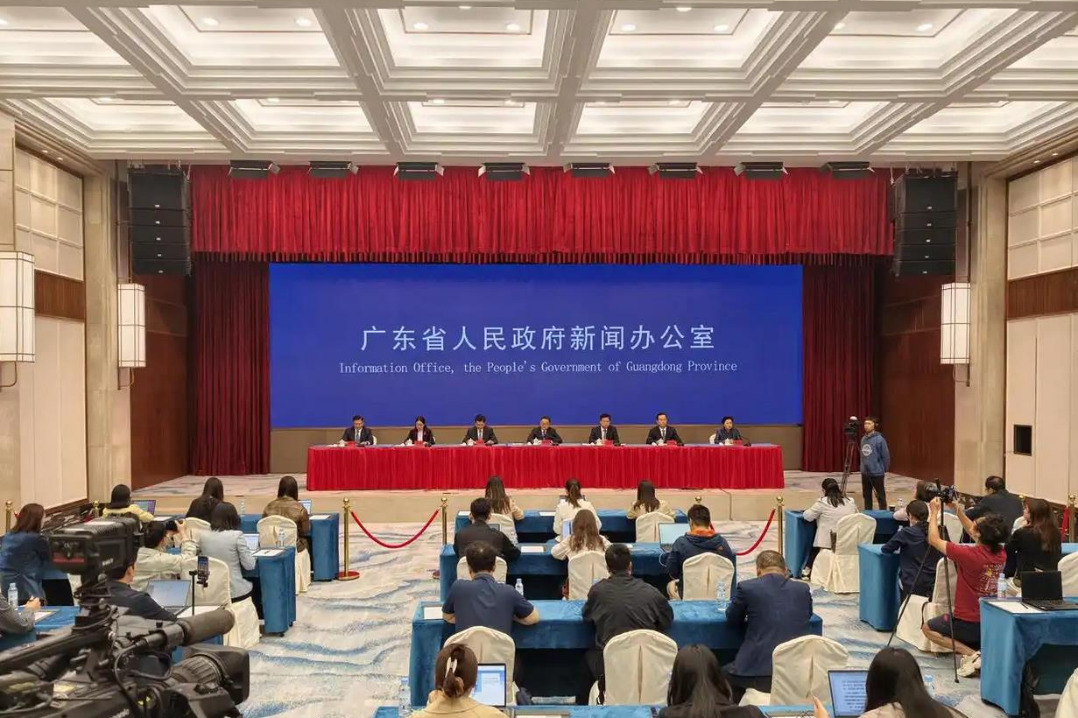
    Official registration data reveals significant participation, with 862 young athletes and 140 coaches from across China set to compete. Jiang Qingguo, Deputy Director of the General Administration of Sport’s youth sports division, announced these figures during a January 8 press conference in Urumqi.

    Xinjiang has strategically invested in winter sports infrastructure and development in recent years. Aert, Director of the Regional Sports Bureau, emphasized that the games will demonstrate Xinjiang’s advanced sports facilities and services while simultaneously boosting winter tourism, sports training programs, and equipment sales.

    The region has witnessed remarkable growth in youth participation. During Xinjiang’s inaugural ‘snow break’ for primary and secondary students from December 1-5, Urumqi’s six major ski resorts recorded approximately 61,000 student visits. The Silkroad Mountain Resort experienced particularly high demand, with daily attendance reaching 20,000 visitors and nighttime attendance doubling compared to previous periods. In Altay Prefecture, ski resorts reported over 21,000 student visits, with about 16,000 students enrolling in skiing or snowboarding lessons.

    Xinjiang’s institutional approach includes designating 213 schools as winter sports specialty institutions. Among these, Miaoergou Middle School in Shuixigou Town has pioneered the region’s first regular high school winter sports program since 2024. The program currently enrolls 72 students across two cohorts who balance standard academic coursework with professional training in speed skating, ice hockey, alpine skiing, snowboarding, and cross-country skiing. Six students have already advanced to train with regional professional teams.

    The program’s innovative structure allows students to pursue both academic and athletic excellence. Gu Xinxiang, the school’s Vice-Principal, noted that this balanced approach has received enthusiastic support from both students and parents.

    Bi Xihao, a 15-year-old speed skater training with the Xinjiang team, exemplifies this dual-path success. In just over a year, he has reduced his 500-meter time from 41 seconds to 37.8 seconds. Based full-time at the Xinjiang Winter Sports Training Center in Shuixigou Town, Bi maintains his academic studies through online evening classes in mathematics and English, supplemented by independent study of history and Chinese literature.

    The Training Center itself offers world-class facilities, situated at 1,650 meters above sea level—making it one of the world’s highest-altitude ice rinks. Li Shunyi, Deputy Director of the center’s venue management office, explained that the rink features precision-controlled ice with low friction characteristics. The subplateau environment and dry climate combine to create optimal training conditions.

    Han Fang, a coach with the Xinjiang speed skating team, confirmed that the center’s advanced facilities and altitude advantage have produced demonstrable competitive results. The program’s success is further evidenced by three athletes currently training with the national team for the upcoming Olympic Winter Games Milano Cortina 2026.

  • Indonesian rescuers find body, wreckage of plane

    Indonesian rescuers find body, wreckage of plane

    Indonesian search and rescue teams have made a significant breakthrough in the recovery operation for a missing turboprop aircraft, locating the main wreckage site and retrieving one body from the crash location on Mount Bulusaraung. The ATR 42-500 aircraft, operated by Indonesia Air Transport, vanished from radar on Saturday during adverse weather conditions while approaching Makassar, the capital of South Sulawesi Province.

    The critical discovery occurred on Sunday when rescue personnel identified scattered aircraft debris in a steep ravine approximately 200 meters deep on the mountainside. Muhammad Arif Anwar, head of Makassar’s Search and Rescue Office and mission coordinator, confirmed the recovery of a male victim’s body and the visual identification of major aircraft components, including the engine, fuselage sections, and passenger seats.

    The aircraft was conducting a specialized flight from Yogyakarta on Java island to Makassar with ten individuals aboard, including seven crew members and three officials from Indonesia’s Marine Affairs and Fisheries Ministry. The government personnel were engaged in an aerial monitoring mission surveying local fisheries when the aircraft encountered difficulties.

    Initial detection of the crash site was made by air force helicopter crews who spotted aircraft windows in the forested mountainous terrain. Ground teams subsequently accessed the challenging location, confirming the presence of extensive wreckage consistent with a high-impact collision. The remote and topographically complex area has complicated recovery efforts, though the discovery has enabled rescuers to narrow their search parameters significantly.

    Anwar emphasized that the joint rescue operation is now prioritizing the search for additional victims while maintaining hope for potential survivors. The recovered body awaits formal identification procedures to confirm its connection to the flight manifest. Aviation authorities have initiated an investigation into the circumstances surrounding the incident, particularly focusing on the aircraft’s final communications with air traffic control regarding approach alignment corrections prior to disappearance.

  • Guangzhou to screen all seniors in care homes for early signs of dementia

    Guangzhou to screen all seniors in care homes for early signs of dementia

    The city of Guangzhou, a major metropolitan hub in Southern China’s Guangdong province, has unveiled an ambitious public health initiative to conduct universal cognitive screening for all residents of elderly care facilities. This program represents a significant escalation of the city’s ongoing efforts to combat dementia through early detection and intervention.

    According to disclosures from the Guangzhou Municipal Health Commission, this systematic screening operation will be implemented across all senior care institutions throughout the city by the conclusion of 2027. The initiative emerges in response to policy recommendations advanced during Guangzhou’s January 2025 political consultative sessions.

    The driving force behind these proposals was Ouyang Zhihong, a standing committee member of the Guangzhou Committee of the Chinese People’s Political Consultative Conference who concurrently serves as executive president of the Guangdong Home-Care Services Association. Ouyang presented a comprehensive framework emphasizing the critical importance of community-based screening mechanisms combined with professional clinical assessment to identify early-stage Alzheimer’s disease and high-risk individuals.

    Central to Guangzhou’s dementia prevention strategy is the innovative ‘Hui Ji Yi’ (Wisdom Memory) digital platform—a smart screening mini-program integrated into the municipal government’s digital infrastructure. This technological solution has already facilitated approximately 400,000 preliminary cognitive assessments since its implementation in April 2024, resulting in the identification of 23,000 positive cases that subsequently received early intervention.

    The city’s approach establishes a multi-tiered medical consortium that creates a seamless continuum of care from hospital diagnosis to community and family-based support. Personalized intervention protocols are being developed to address the full spectrum of cognitive conditions, ranging from subjective cognitive decline to mild impairment and advanced dementia.

    At the community level, Guangzhou has embedded dementia prevention within its national basic public health services framework, leveraging family physician teams to maintain ongoing monitoring and support. Through a coordinated alliance of medical institutions, the city has established a district-wide responsibility system encompassing all eleven administrative regions of Guangzhou.

    The ultimate objective of these concerted efforts is to achieve dementia prevention awareness among no less than 80% of the city’s elderly population, representing a substantial public health advancement in addressing the challenges associated with aging and cognitive disorders.

  • Reuniting with their reindeer

    Reuniting with their reindeer

    In the pristine primordial forests of Inner Mongolia, a cultural renaissance is underway as young members of the Ewenki ethnic group return to their ancestral traditions, forgoing urban opportunities to preserve their unique symbiotic relationship with reindeer.

    The Olguya Ewenki ethnic township in Genhe city, home to approximately 300 Ewenki people, maintains one of the world’s most specialized human-animal relationships. Unlike Arctic reindeer herders who primarily raise the animals for meat, the Ewenki utilize reindeer as transportation, milk producers, and spiritual companions deeply woven into their cultural fabric.

    This extraordinary bond faced severe threat of extinction between 2008-2015 as younger generations migrated to cities seeking modern opportunities. Elder tribesman Dekesha Kaertakun, 67, recalls this period with profound concern: “My heart was heavy during those years. I maintained hope by telling peers that as long as reindeer remained in these mountains, Ewenki would return to raise them.”

    The cultural tide has now turned remarkably. Young Ewenki are increasingly returning to their heritage, answering what Kaertakun describes as “the mountains calling their children home.” This reversal represents a significant victory for cultural preservation and demonstrates the powerful pull of ancestral traditions even amidst modernization pressures.

    China’s increased focus on protecting cultural heritage and ecological resources has provided supportive context for this cultural revival. The return of Ewenki youth ensures the continuation of ancient reindeer husbandry techniques and spiritual practices that have defined their ethnicity for generations, preserving a unique chapter of human cultural diversity.