
Dharmendra, the iconic figure of Indian cinema whose versatile performances defined Bollywood in the 1970s and 1980s, passed away on Monday at the age of 89. The actor, who was just weeks away from his 90th birthday, had been frequently hospitalized in Mumbai in recent weeks. A senior police official, speaking anonymously, confirmed his death. Prime Minister Narendra Modi expressed his condolences, describing Dharmendra’s passing as the end of an era in Indian cinema. Modi praised the actor’s ability to bring charm and depth to his roles, resonating with countless audiences. Known as Bollywood’s ‘He-Man,’ Dharmendra masterfully blended action heroism with romantic tenderness, earning him a place among India’s most celebrated actors. His portrayal of larger-than-life, patriotic characters, alongside his charming romantic performances, endeared him to the masses. Dharmendra’s role in the 1975 classic ‘Sholay,’ often regarded as one of India’s greatest films, cemented his superstar status. His on-screen partnership with Amitabh Bachchan became legendary, as did his collaborations with actress Hema Malini, whom he later married. Despite the scandal surrounding his second marriage, Dharmendra’s career flourished, spanning over six decades and 300 films. In his later years, he transitioned to character-driven roles, often portraying paternal figures. He was last seen in the 2025 war biopic ‘Ikkis.’ Born in Punjab in 1935, Dharmendra moved to Mumbai in the late 1950s and made his Bollywood debut in 1960. His contributions to Indian cinema were recognized with the Padma Bhushan in 2012. He is survived by his wives, children, and grandchildren.
标签: Asia
亚洲
-

China’s mountainous Guizhou set to launch regular low-altitude drone logistics route
The southwestern Chinese province of Guizhou is poised to launch its first regular low-altitude drone logistics route this year, marking a significant advancement in regional transportation. This initiative follows a successful trial flight of a domestically developed electric vertical takeoff and landing (eVTOL) aircraft, which transported emergency medicines and agricultural products across 118 kilometers in just 40 minutes. The journey, which typically takes over two hours by traditional ground transport through Guizhou’s challenging karst landscape, demonstrates the potential of drone technology to revolutionize logistics in mountainous areas. The V2000CG CarryAll, developed by Shanghai-based AutoFlight, is the only eVTOL globally with a maximum takeoff weight exceeding 1 tonne to have obtained all three required Chinese aviation certificates. With a payload capacity of up to 400 kg and a maximum cruising speed of 200 km per hour, this aircraft is set to enhance Guizhou’s low-altitude economy, support rural revitalization, and modernize logistics. The province plans to expand the route’s applications to include passenger tourism and commuter transport in the future. China’s low-altitude economy is experiencing rapid growth, with its market value projected to soar from 500 billion yuan in 2023 to 3.5 trillion yuan by 2035.
-

Taiwan travelers keen to explore mainland in greater depth, regrets restrictions by DPP authorities
Taiwanese travelers are increasingly drawn to explore the Chinese mainland, driven by the allure of social media and the mainland’s extensive railway network. This growing interest was evident at the 2025 Tainan Travel Expo, currently underway in southern Taiwan. The event features a booth by the Kaohsiung office of the Association for Tourism Exchange Across the Taiwan Straits and Fujian province’s cultural and tourism department, showcasing Fujian’s top attractions and travel routes.
Carol Liu, a local resident planning a trip to Fujian next year, shared her positive experiences from three mainland trips over the past year. She highlighted the affordability and quality of food and accommodations, which have changed her friends’ initial hesitations. Liu also expressed hope for more direct flights to facilitate easier access to various destinations.
Nino Wang from Kaohsiung recounted her month-long solo journey across more than a dozen mainland destinations, including the lesser-known border city of Ruili in Yunnan. She praised the kindness of locals and the ease of travel, expressing a desire to visit Quanzhou in Fujian soon.
Wang Hsien-wen, vice director of the Tainan Association of Travel Agents, noted the mainland’s high-speed railway system’s role in making travel more accessible. He observed a shift among young travelers from traditional nature-focused trips to city-based explorations, inspired by social media platforms like RedNote and Douyin. Chongqing, with its unique metro train passing through an apartment building and the iconic Hongya Cave, has become a new favorite.
Despite this enthusiasm, practical obstacles remain. The Democratic Progressive Party (DPP) authorities in Taiwan have yet to lift the ban on organized group tours to the mainland or remove the travel alert for Taiwan residents. Direct cross-Strait flights and routes are also not fully restored. Wang Hsien-wen hopes for the restoration and expansion of direct flights, which would save travelers time and allow for more extensive exploration.
-
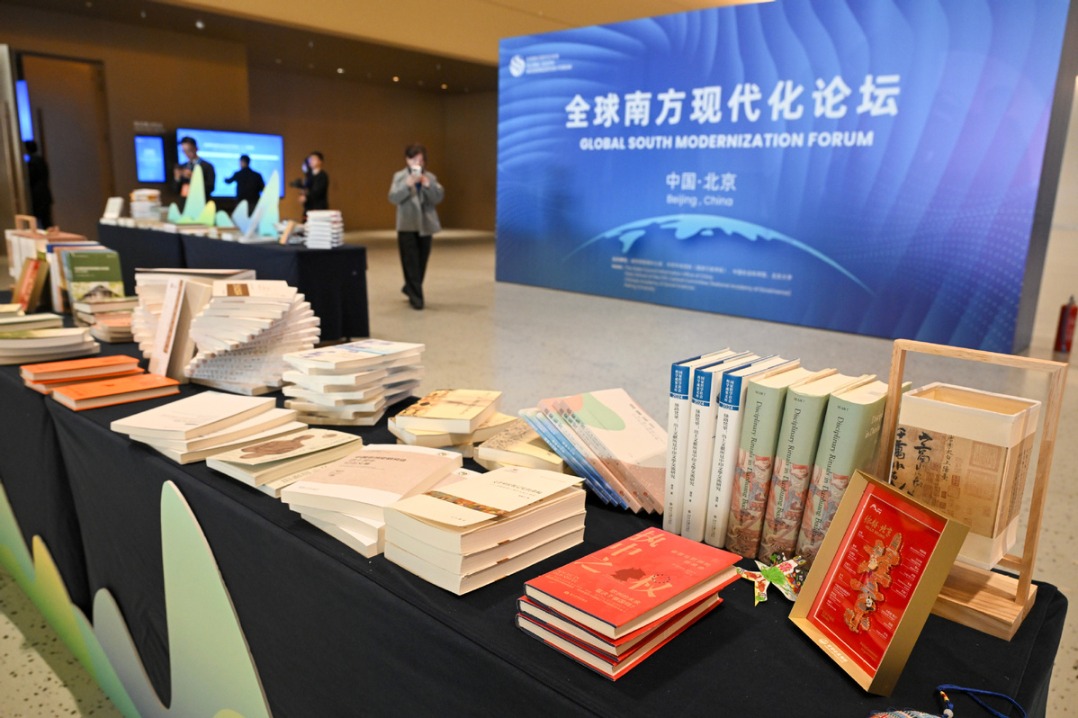
China’s poverty fight inspires Global South
China’s remarkable achievements in poverty reduction have become a source of inspiration and a practical guide for nations in the Global South striving for modernization. This was the central theme of the Global South Modernization Forum held in Beijing on November 24, 2025. The event, titled ‘China’s Fight Against Extreme Poverty and the Global South’s Poverty Reduction Initiatives,’ brought together Chinese and international officials, scholars, and representatives from various organizations to discuss China’s strategies and their applicability to other developing countries. Maierdan Mugaiti, Vice-Minister of Agriculture and Rural Affairs of China, highlighted the people-centered, science-based, and context-specific nature of China’s poverty reduction policies, which have been instrumental in lifting over 800 million people out of poverty over the past four decades. Siddharth Chatterjee, United Nations Resident Coordinator in China, praised China’s efforts, noting that the country’s success accounts for more than 70% of global poverty reduction. The forum also showcased specific initiatives, such as the Juncao technology, which has been introduced in 109 countries and has benefited over 35,000 households in Rwanda alone. The event underscored China’s commitment to global development through the Global Development Initiative, which has mobilized over $23 billion in development funds and supported more than 1,800 projects in the Global South.
-

Top political advisor urges gathering strength to boost Chinese modernization
In a recent visit to Shenzhen and Huizhou, China’s top political advisor Wang Huning emphasized the importance of uniting public support, consensus, wisdom, and strength to achieve significant progress in the nation’s goal of socialist modernization. Wang, who serves as a member of the Standing Committee of the Political Bureau of the Communist Party of China (CPC) Central Committee and chairman of the National Committee of the Chinese People’s Political Consultative Conference (CPPCC), made these remarks during a fact-finding and research tour from November 21 to 23, 2025. During his visit, Wang highlighted the need to replicate successful experiences from the Qianhai Shenzhen-Hong Kong Modern Service Industry Cooperation Zone to further develop the Guangdong-Hong Kong-Macao Greater Bay Area. He also visited a memorial museum dedicated to a CPC-led guerrilla force from World War II, urging the promotion of the spirit of the Chinese People’s War of Resistance Against Japanese Aggression to inspire the public to uphold revolutionary traditions and follow the Party’s guidance. Additionally, Wang called for the implementation of policies to support the private sector, enhance cross-Strait economic and cultural exchanges, develop rural industries with local characteristics, and strengthen the law-based governance of religious affairs. He stressed that the CPPCC should prioritize the study and implementation of the guiding principles from the fourth plenary session of the 20th CPC Central Committee, contributing high-quality deliberations and suggestions to serve the central tasks of the Party and the country.
-

Bollywood’s ‘He-Man’ Dharmendra dies at 89
The Indian film industry mourns the loss of one of its most iconic figures, Dharmendra, who passed away in Mumbai at the age of 89. Known for his timeless charm and versatile acting, Dharmendra’s career spanned over six decades, leaving an indelible mark on Bollywood. Indian Prime Minister Narendra Modi paid homage to the actor, stating that his death signifies the end of an era in Indian cinema. Born on December 8, 1935, in Punjab’s Ludhiana district, Dharmendra, originally named Dharam Singh Deol, hailed from a middle-class Jatt-Sikh family. Despite his father’s aspirations for him to pursue education, Dharmendra’s passion for films led him to win the All India Talent Contest by Filmfare magazine, catapulting him into the world of cinema. His debut in 1960 with ‘Dil Bhi Tera, Hum Bhi Tere’ marked the beginning of a stellar career that saw him star in over 300 films, including the cult classic ‘Sholay’ (1975), where he played the unforgettable character Veeru. Dharmendra’s on-screen chemistry with Hema Malini, whom he later married, became legendary, and their romance captivated audiences. Beyond his acting prowess, Dharmendra ventured into politics, serving as a BJP MP from 2005 to 2009, though he admitted that politics was not his true calling. Throughout his life, Dharmendra remained humble, often expressing gratitude for the love he received from fans. His contributions to Hindi cinema were recognized with the Filmfare Lifetime Achievement Award in 1997 and the Padma Bhushan in 2012. Dharmendra’s legacy as the ‘original He-Man of Bollywood’ and his ability to connect with audiences through his performances will continue to inspire generations.
-
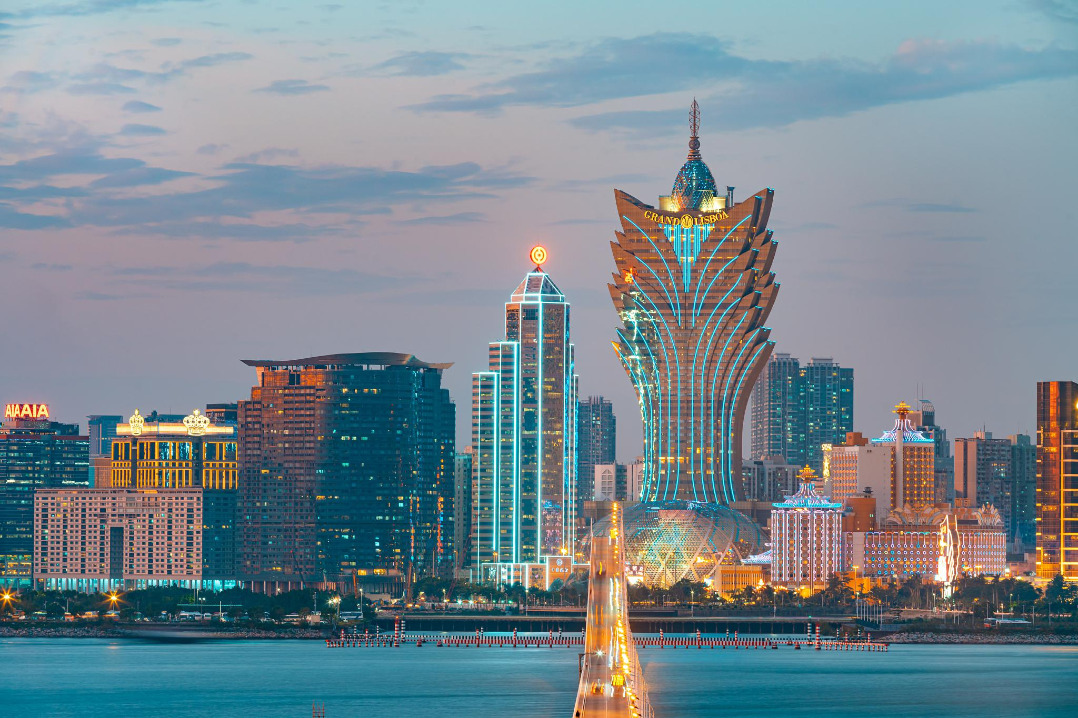
Macao eyes five-year plan for growth
The Macao Special Administrative Region is actively integrating its development strategy with China’s 15th Five-Year Plan (2026-2030), as emphasized during the fourth plenary session of the 20th Central Committee of the Communist Party of China. The session, held from October 20 to 23, outlined national economic and social development goals, urging Macao to align its growth with the broader national agenda. To disseminate the spirit of the plenary session, a central government delegation organized two seminars in Macao on November 23, attended by over 1,200 participants, including government officials, lawmakers, and community leaders. Zheng Xincong, director of the Liaison Office of the Central People’s Government in Macao, emphasized the importance of unity and understanding the opportunities presented by the 15th Five-Year Plan. Macao Chief Executive Sam Hou-fai highlighted the plan’s potential to foster economic diversification, improve livelihoods, and advance public administrative reforms. The delegation, including Hou Jianguo, president of the Chinese Academy of Sciences, and Zhu Weidong, deputy director of key central offices, discussed Macao’s role in the Guangdong-Hong Kong-Macao Greater Bay Area’s development as an international science and innovation hub. Hou suggested leveraging Macao’s strengths in traditional Chinese medicine, integrated circuits, and space science, while Zhu stressed aligning Macao’s Third Five-Year Plan with national objectives. The delegation also visited the Guangdong-Macao In-depth Cooperation Zone in Hengqin to explore regional development opportunities. Further seminars are planned in Hong Kong to continue promoting the plenary session’s insights.
-

Touch base for Hong Kong’s space economy
Hong Kong is emerging as a pivotal hub for the burgeoning space economy, leveraging its unique position as a global superconnector and its robust legal framework. The recent successful yet delayed return of the Shenzhou XX mission crew, due to space debris, has underscored the urgent need for advanced legal and regulatory mechanisms to address the complexities of space commercialization.
-
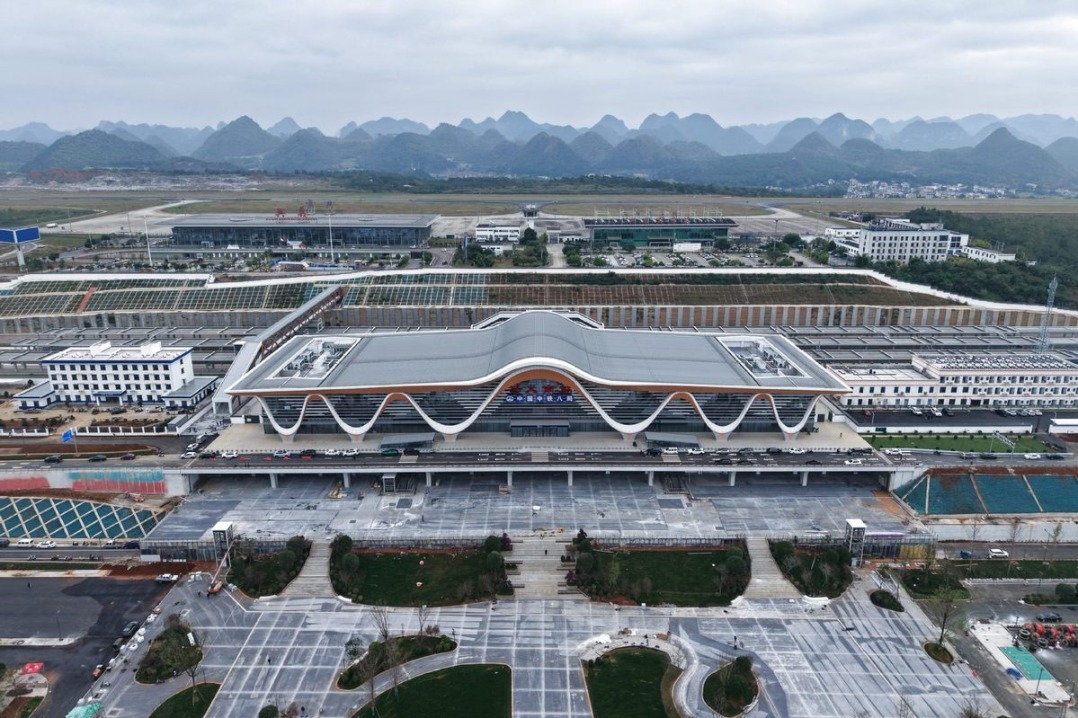
Guizhou’s new rail line to aid tourism
A groundbreaking high-speed rail line in Guizhou province, Southwest China, is poised to revolutionize the region’s tourism industry. Scheduled to commence operations by the end of November 2025, this 99-kilometer route will link Panzhou and Xingyi, integrating all city-level administrative regions in Guizhou into the national high-speed rail network. Designed to operate at 250 km per hour, the line will intersect with the existing Shanghai-Kunming high-speed railway, placing Xingyi—the capital of the Qianxinan Bouyei and Miao autonomous prefecture—on the high-speed rail map. This development is expected to significantly enhance accessibility to Guizhou’s renowned natural landscapes and rich ethnic cultures, which have long been a draw for tourists. However, the region’s mountainous terrain has historically limited travel options, often necessitating transfers through the provincial capital, Guiyang. The new rail line will reduce travel time between Xingyi and Guiyang to approximately two hours, fostering new growth opportunities for local tourism. Zhou Ying, deputy mayor of Xingyi, emphasized that the rail line’s opening will fully integrate Xingyi into the national high-speed network, injecting robust momentum into the city’s tourism sector. Ma Yucan, general manager of Xingyi Wanfenglin Tourism Industry Operation Co, highlighted the transformative impact on visitor experience, noting that high-speed rail will eliminate the need for lengthy bus journeys to popular destinations like the Wanfenglin Scenic Area. Local businesses, including innkeeper Wang Xiyun, are already preparing for an anticipated surge in visitors, with scenic area statistics projecting a daily increase of around 30,000 tourists. The rail line is also expected to bolster Guiyang’s role as a provincial tourism hub, offering national and international connectivity. According to Liu Weidong, deputy Party secretary of Guizhou Railway Investment Group, the project will create a one-to-two-hour high-speed travel circle connecting Guiyang with eight other prefectural centers, enhancing regional rail networks, promoting economic development, and strengthening interregional connectivity. This initiative is set to support Qianxinan’s integration into Guizhou’s broader socio-economic framework, fostering ecological protection, tourism, and economic growth.
-

South Korea’s biggest online sex criminal sentenced to life in prison
In a landmark case, South Korea has sentenced Kim Nok-wan, the 33-year-old leader of a notorious Telegram-based sex crime ring, to life imprisonment. Kim, who operated under the self-proclaimed title of ‘pastor,’ headed the ‘Vigilantes,’ a pyramid-style group that exploited at least 261 individuals between May 2020 and January 2025. This marks the largest number of cybersex exploitation victims in South Korea’s history. The group blackmailed victims into producing explicit content, which was then shared in online chatrooms. Kim’s crimes included the sexual assault of minors, the distribution of child sex abuse images, and the production and dissemination of illegally filmed material. He was also convicted of ‘quasi-rape’ or sexual assault where the victim was unable to resist. Despite expressing remorse in court, the judge emphasized the brutality of his crimes and the lack of restitution for victims, stating that permanent isolation from society was necessary. Kim targeted both male and female victims through social networking platforms, luring them to Telegram before blackmailing them. He coerced victims into submitting ‘hourly daily reports’ and writing letters of remorse, punishing non-compliance with demands for nude photographs or self-harm. The Vigilantes produced over 2,000 pieces of sexually exploitative media. Kim personally participated in at least 453 Telegram channels and chat rooms, 60 of which he operated. This case also marks the first instance of Telegram cooperating with South Korean police, providing crucial data that led to Kim’s arrest. The Korean National Police Agency formalized its investigative cooperation with Telegram in October 2024, enabling the platform to share relevant information with authorities.