标签: Asia

亚洲

  • VR headsets take war-scarred children to world away from Gaza

    VR headsets take war-scarred children to world away from Gaza

    In the aftermath of prolonged conflict, innovative virtual reality therapy is providing psychological respite for children severely affected by the war in Gaza. At a temporary facility in Al-Zawayda, central Gaza, young trauma survivors are experiencing immersive therapeutic sessions through specialized VR headsets that transport them to peaceful virtual environments far removed from their war-torn reality.

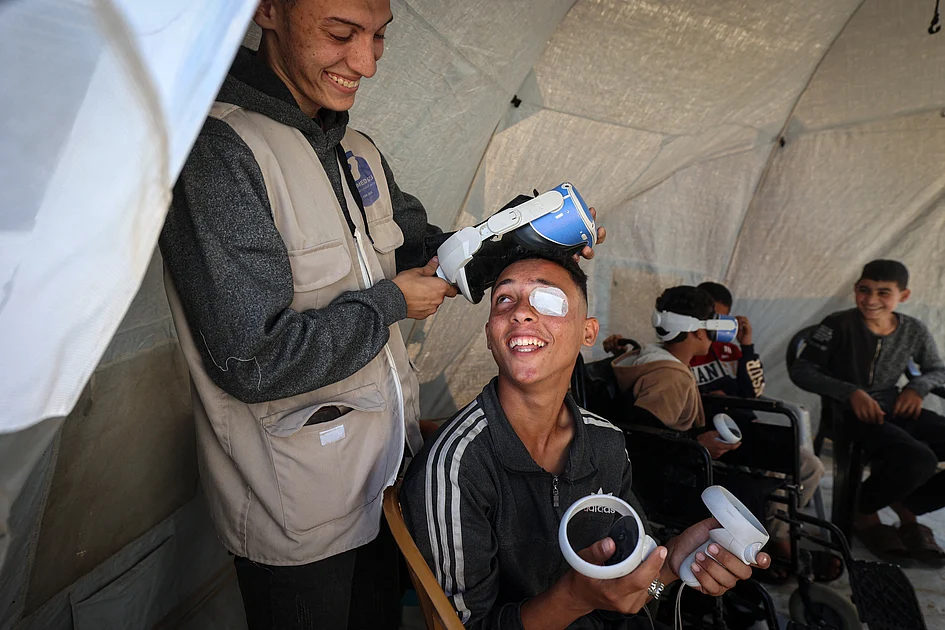
    Within a white tent erected on sandy terrain, children wearing TechMed Gaza headsets explore digitally created landscapes featuring serene beaches, lush gardens, and safe urban settings. The therapy sessions, observed by AFP journalists, show visibly engaged participants—one child reaches out to touch virtual elements, another reports seeing birds, while a wheelchair-bound boy describes encountering trees, grass, and flowers.

    Mental health supervisor Abdalla Abu Shamale explains that the program extends beyond mere escapism. “Through specialized programming, we design games with therapeutic, preventive, and developmental objectives that help children develop effective coping mechanisms,” he stated. The technology has demonstrated particular effectiveness with war-amputee children, those with physical injuries, and those exposed to extreme traumatic events.

    The urgency of mental health intervention in Gaza is underscored by UNICEF statistics indicating approximately one million children—effectively the entire child population of Gaza—require mental health and psychosocial support following two years of devastating conflict. According to the World Health Organization, conflict-related injuries carry significant mental health consequences, with survivors struggling with trauma and loss while psychosocial services remain scarce.

    Clinical results show promising outcomes, with VR therapy achieving measurable improvements in significantly fewer sessions than traditional methods. Where conventional therapy typically requires 10-12 sessions, VR techniques can produce positive results within just 5-7 sessions, according to program operators. The technology allows therapists to create customized experiences that account for each child’s specific physical and psychological condition, helping rebuild positive perceptions of the world.

    The therapy continues despite the fragile ceasefire that has held since October 10 between Israel and Hamas, offering a innovative approach to addressing the massive mental health crisis affecting Gaza’s youngest generation.

  • Google Doodle celebrates the UAE’s 54th National Day

    Google Doodle celebrates the UAE’s 54th National Day

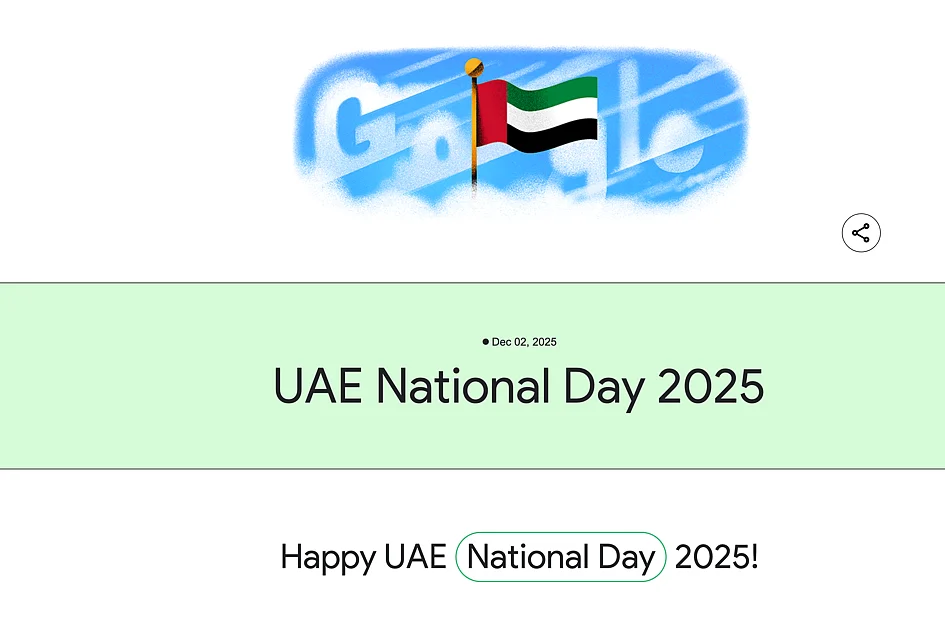
    In a vibrant digital tribute marking the United Arab Emirates’ 54th National Day, Google has unveiled a special animated Doodle featuring the nation’s iconic four-colored flag gracefully fluttering against a sky backdrop. This artistic celebration appeared exclusively for UAE-based users on the search engine’s homepage throughout Tuesday, December 2nd, 2025.

    The commemorative Doodle recognizes the UAE’s remarkable transformation journey since its federation establishment in 1971. Google’s tribute highlights the nation’s achievements across diverse sectors including life sciences, real estate development, and entrepreneurial innovation, reflecting the country’s position as a global hub for progressive vision and boundary-pushing initiatives.

    This year’s animation continues Google’s tradition of honoring UAE National Day with culturally significant artwork. Previous commemorative Doodles have featured emblematic national symbols including the revered falcon, the resilient Arabian oryx—a species successfully reintroduced to its native desert habitat after near extinction—and traditional imagery of camel procession against silhouetted urban skylines.

    The digital celebration coincides with physical commemorations across the Emirates, including special events at Abu Dhabi’s newly inaugurated Zayed National Museum where rare historical footage was presented to the nation’s rulers during Eid Al Etihad ceremonies. These coordinated celebrations underscore the UAE’s unique blend of cultural heritage preservation and futuristic ambition that continues to inspire both citizens and global observers alike.

    Google’s Doodle initiative represents part of the technology giant’s ongoing commitment to recognizing significant cultural and national milestones worldwide through creative digital expressions that reach millions of daily users.

  • First snowfall of winter decorates Shenyang Imperial Palace

    First snowfall of winter decorates Shenyang Imperial Palace

    The historic Shenyang Imperial Palace, a UNESCO World Heritage Site located in northeastern China’s Liaoning province, experienced its inaugural winter snowfall on Thursday, creating a breathtaking visual spectacle that attracted photographers and visitors alike. This meteorological event occurred shortly after the arrival of the year’s 20th solar term in the traditional Chinese calendar, marking a significant seasonal transition.

    The architectural masterpiece, which served as the royal residence during the early Qing Dynasty, underwent a remarkable transformation as a delicate layer of fresh snow blanketed its ancient structures. The striking contrast between the pristine white snow accumulation and the palace’s distinctive vermilion walls created a visually captivating scene that highlighted the site’s historical grandeur against the winter backdrop.

    Photography enthusiasts and cultural admirers flocked to the palace grounds to capture this ephemeral beauty, with the snow-enhanced landscape offering unique compositional opportunities. The precipitation event not only enhanced the palace’s aesthetic appeal but also demonstrated how natural elements can complement and elevate the appreciation of cultural heritage sites.

    The timing of this first snowfall holds particular significance within the context of traditional Chinese seasonal observations, occurring during a period of astronomical importance in the lunar calendar. This synchronization of natural phenomena with cultural heritage provides a poignant reminder of China’s rich historical tapestry and the enduring beauty of its architectural treasures throughout seasonal changes.

  • The ICC removed Karim Khan from his own investigation in Venezuela. Now Israel wants it to do the same over Gaza

    The ICC removed Karim Khan from his own investigation in Venezuela. Now Israel wants it to do the same over Gaza

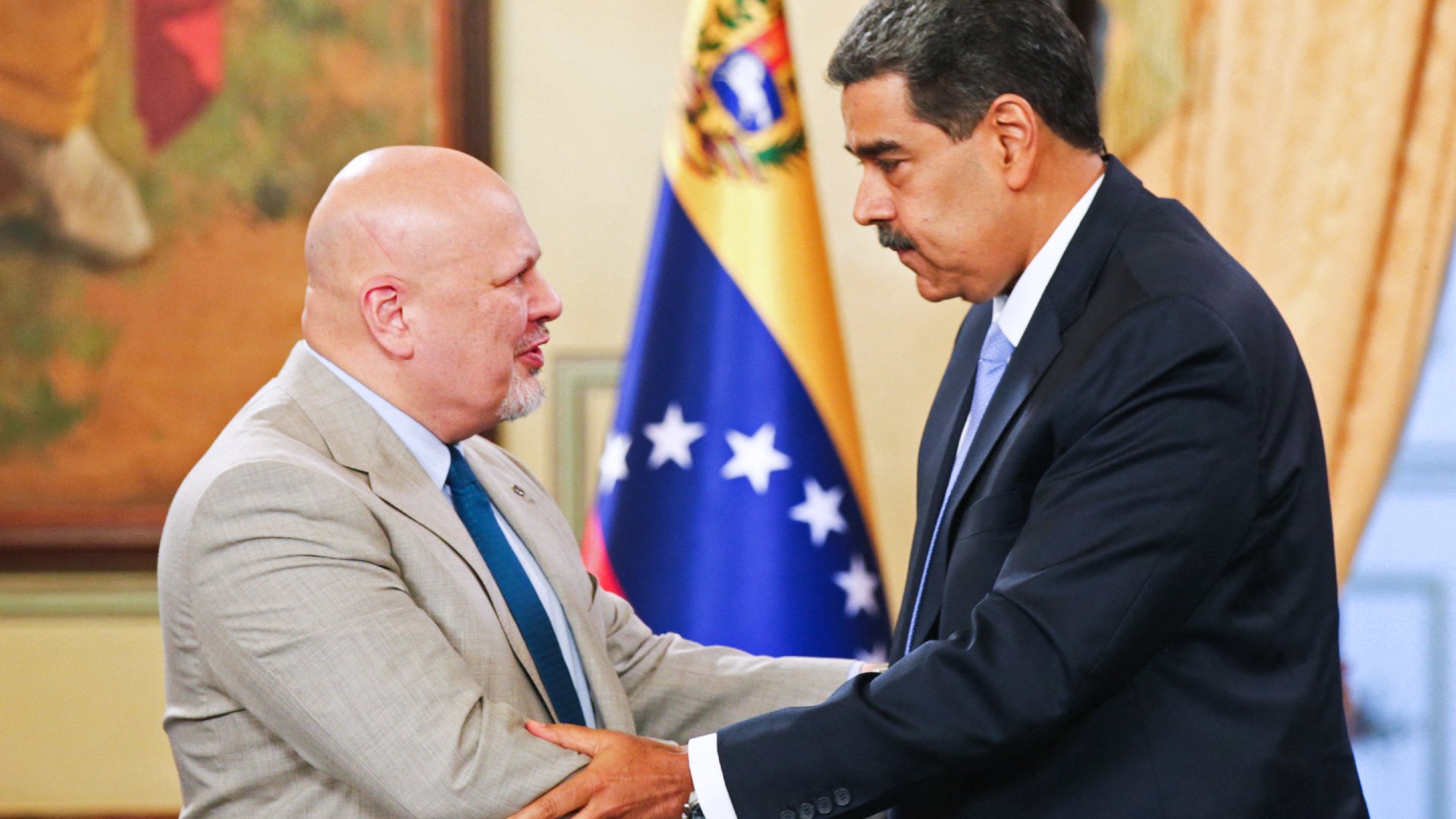
    A Washington-based advocacy group that previously secured the recusal of International Criminal Court (ICC) Chief Prosecutor Karim Khan from a Venezuela investigation has now accused him of ‘acting in unprecedented haste’ in pursuing arrest warrants against Israeli leadership. The Arcadia Foundation, recognized by the ICC as representing Venezuelan victims, successfully challenged Khan’s impartiality in August based on familial connections to Venezuela’s legal team, creating a precedent that Israel now seeks to leverage in its own case against the prosecutor.

    The ICC’s appeals chamber, comprising the same five judges who ordered Khan’s recusal in the Venezuela matter, is currently reviewing Israel’s November complaint seeking his removal from investigations into Israeli officials. Israel’s submission argues that Khan’s impartiality might ‘reasonably be doubted’ due to allegations that his pursuit of warrants against Prime Minister Benjamin Netanyahu and Defense Minister Yoav Gallant was motivated by a desire to deflect attention from sexual misconduct allegations—claims Khan vehemently denies.

    Robert Carmona-Borjas, Arcadia’s CEO, told Middle East Eye that their challenge was ‘strictly juridical and institutional’ rather than a personal campaign or geopolitically motivated action. He emphasized demands for ‘consistency in the application of its own law and ethical standards’ from the court.

    The Prosecutor’s Office, in its response signed by Deputy Prosecutor Nazhat Shameem Khan, dismissed Israel’s complaint as without standing and argued the Venezuela and Israel cases were ‘incomparable.’ The office maintained that the decision to seek warrants followed ‘a robust review process and analysis of the evidence’ and was independently assessed by ICC judges.

    This legal battle unfolds against a backdrop of intense external pressure on the ICC, including U.S. sanctions against Khan and other court officials. The Trump administration has imposed measures against ICC personnel, accusing the court of ‘illegitimate actions’ targeting Israel and the United States. During the ICC’s annual meeting in The Hague, numerous countries condemned such external pressure without explicitly naming the U.S., while some urged serious consideration of the misconduct allegations against Khan.

    Legal experts familiar with the case have characterized Israel’s complaint as ‘frivolous,’ noting that Khan actually delayed the warrant process rather than accelerated it. An investigation revealed that Khan’s decision to apply for warrants predated the misconduct allegations by six weeks, undermining claims of ulterior motives.

  • Palestinians evacuated from Gaza face tough adjustment in Greece

    Palestinians evacuated from Gaza face tough adjustment in Greece

    ATHENS – Palestinian adolescents evacuated from the Gaza conflict zone confront profound physical and psychological hurdles as they attempt to reconstruct their lives in Greece, where governmental support remains inconsistent despite widespread public solidarity.

    Raghad Al Fara, 15, navigates her new existence in Athens on crutches, her body bearing the scars of an Israeli bombardment in Khan Younis that crushed her right leg and back beneath rubble. Evacuated with her mother and younger sister in February while the rest of her family remains in Gaza, she resides in a women’s refugee shelter, still awaiting comprehensive psychological care. “I never thought I would survive, let alone set foot on European soil,” Raghad stated.

    According to Heracles Moskoff, Secretary General for Vulnerable Persons at Greece’s migration ministry, Raghad is among ten Gazan minors suffering from complex orthopedic and psychological injuries. Her mother, Shadia Al Fara, expressed frustration with the support system, noting her daughter bedwetted for months due to trauma and that families receive no financial assistance. “Greece took responsibility for us but then abandoned us,” she lamented.

    Conversely, 20-year-old Sara Al Sweirki represents a more hopeful narrative. Evacuated in September, she will commence psychology studies at the private Deree American College of Greece in January, aiming to help others overcome trauma. “I want to be a girl my age like others, learn guitar and piano, and study,” Al Sweirki emphasized. “My dream was interrupted after October 7. But now I am more determined than ever to pursue my goal.”

    The Greek government’s approach appears contradictory to public sentiment. A recent study by aboutpeople revealed 74% of Greeks support recognizing Palestinian statehood, reflecting heightened solidarity following Israel’s military tactics in Gaza. This public stance contrasts with the conservative government’s position, which Palestinian official Latif Darwesh states lacks “political will” to host more injured Gazans despite community requests.

    Historically, Greece maintained strong ties with Palestine under socialist leader Andreas Papandreou in the 1980s, when many Palestinian students found refuge there. Today, evacuees face an uncertain future, balancing gratitude for evacuation against concerns about long-term stability and family members left behind in what Shadia Al Fara describes as “hell.”

  • Protecting pristine NW China plateau lake from waste

    Protecting pristine NW China plateau lake from waste

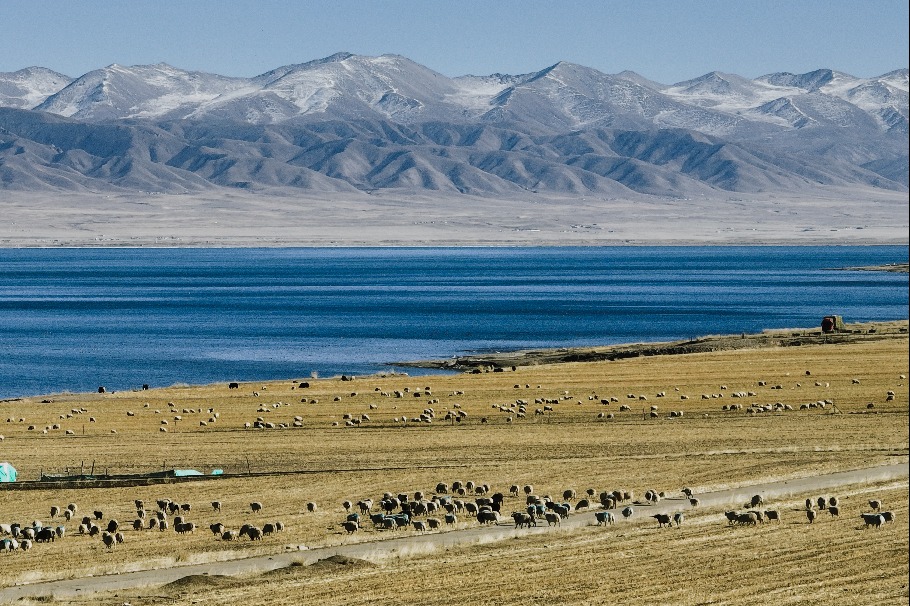
    On the windswept Qinghai-Tibet Plateau, herder Sonam Tsering recalls when winter gales transformed his pastures into plastic wastelands. “It was heartbreaking to see my pasture littered with plastic bags,” said Tsering from Gangcha county, noting the lethal threat to livestock that accidentally ingested the debris. Today, his reality has transformed dramatically through a simple phone call that ensures prompt waste collection.

    This change stems from a fundamental shift in waste management strategies around Qinghai Lake, one of the world’s highest plateau lakes and a crucial ecological barrier for Northwest China. For two decades, more than ten landfills occupying over 500,000 square meters have processed household waste in ecologically sensitive grasslands and valleys. The plateau’s extreme cold and low oxygen levels severely delayed natural degradation, while seasonal winds scattered plastic waste across fragile ecosystems.

    In 2023, Qinghai province launched its first large-scale waste-to-energy facility in Xining, triggering a systematic overhaul. Counties surrounding the lake now collect and transport waste through township and county-level networks to Xining for incineration. Between June 2024 and May 2025, nearly 30,000 tonnes of waste made this journey in approximately 2,000 truckloads.

    The incineration process operates at temperatures exceeding 850°C, effectively breaking down harmful substances through fermentation and high-temperature combustion. “Flue gas undergoes rigorous treatment through de-acidification, absorption and dust removal processes,” explained Wang Yongpeng, head of the Xining project, ensuring emissions meet environmental standards. The process has additionally generated approximately 15 million kilowatt-hours of electricity.

    This waste management transformation coincides with remarkable ecological recovery. Qinghai Lake has experienced expanding water levels for twenty consecutive years, with satellite data from September 2024 recording a surface area of 4,650.08 square kilometers. Biodiversity has flourished alongside these conservation efforts.

    China’s national waste management paradigm has shifted dramatically from landfill dependence to advanced incineration. Over 1,000 large-scale incineration plants now process more than 1.1 million tonnes daily nationwide—equivalent to filling 440 Olympic-sized swimming pools. The Qinghai Lake initiative provides a pioneering model for waste disposal in high-altitude, low-oxygen environments globally.

  • ‘No work, no money’: Somali migrants in Yemen long to return home

    ‘No work, no money’: Somali migrants in Yemen long to return home

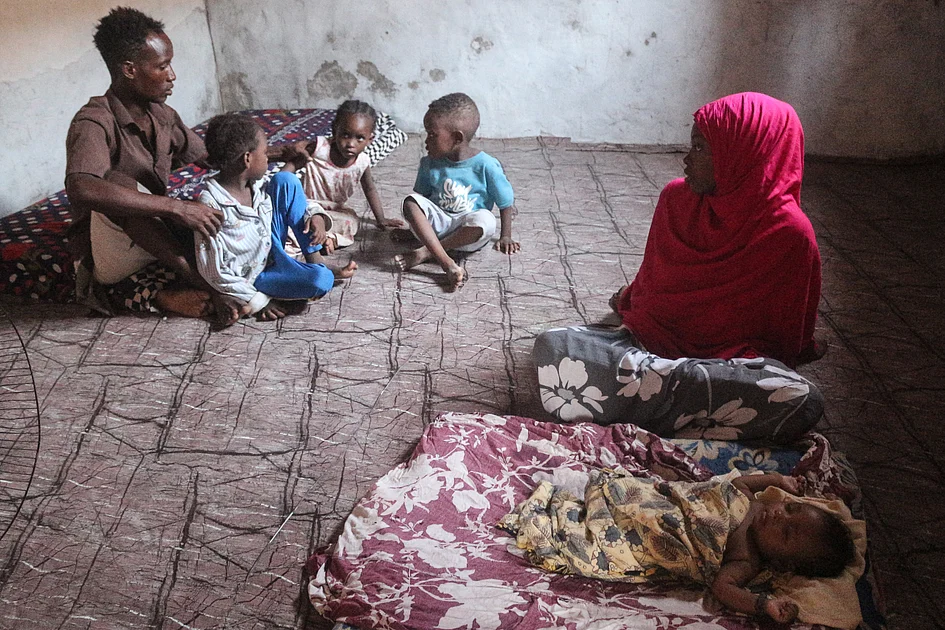
    In the sprawling settlement known as ‘Little Mogadishu’ within Yemen’s port city of Aden, thousands of Somali migrants endure crushing poverty amidst makeshift shelters surrounded by garbage piles and unpaved roads. These displaced individuals, who initially envisioned Yemen as a transit point toward prosperous Gulf states, now find themselves trapped in a worsening humanitarian catastrophe.

    Yemen, recognized as the Arabian Peninsula’s most impoverished nation, has become an unintended destination rather than a thoroughfare for African migrants. Despite the country’s own devastating civil war that has claimed hundreds of thousands of lives and decimated infrastructure, approximately 17,000 Africans arrived in Yemen in October 2025 alone—representing a startling 99 percent increase from previous months according to United Nations data.

    The reality for these migrants stands in stark contrast to their aspirations. Somali refugees, who constitute 63 percent of Yemen’s 61,000 registered refugees and asylum seekers, face extreme hardship with limited access to employment, education, or basic necessities. Men line roadways daily seeking temporary work, while many resort to scavenging through refuse heaps for edible items to sustain their families.

    Abdullah Omar, a 29-year-old Somali father of four, exemplifies this struggle. Having invested $500 with human traffickers to escape Somalia’s instability, he now survives on occasional car washing jobs that yield mere dollars per day. ‘Some days we eat, some days it’s up to God. That’s life,’ Omar told journalists, explaining his decision to enroll in a UN repatriation program after finding ‘no work, no money, and no schooling for the children.’

    The UN Refugee Agency reports that 56 percent of returning Somalis cite ‘lack of income opportunities’ in Yemen as their primary reason for repatriation. A voluntary return program provides transportation and transitional financial assistance, having facilitated the return of over 500 Somalis in 2025 with additional flights planned.

    Ahmed Abu Bakr Marzouk, a 58-year-old contractor who lived in Yemen for 25 years, represents another dimension of this crisis. Once prosperous enough to build homes in Mogadishu, he now sees returning to Somalia’s relative stability as his only option. ‘If peace returns, I’ll come back,’ Marzouk stated. ‘If not, I won’t.’

    This migration paradox continues despite Yemen’s overwhelming challenges: 19.5 million people requiring humanitarian assistance, mass unemployment, currency depreciation, halted oil exports, and insufficient international funding create an environment where neither locals nor migrants can thrive.

  • Saadiyat Beach Golf Club to host 2025 IGS Challenge with new format and bigger field

    Saadiyat Beach Golf Club to host 2025 IGS Challenge with new format and bigger field

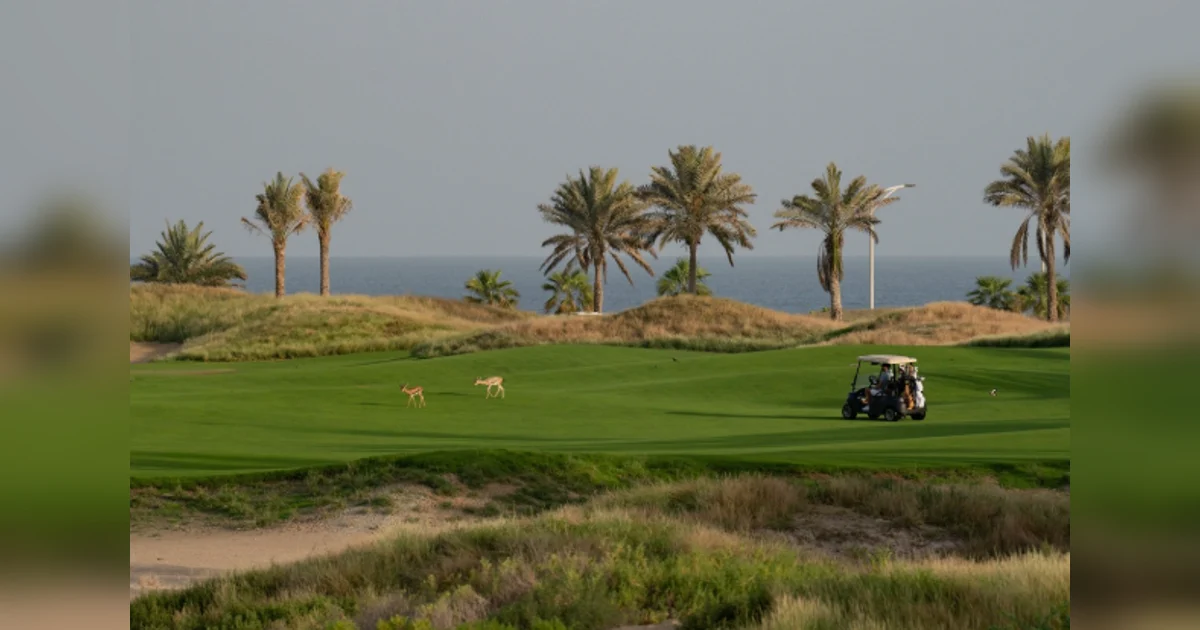
    The prestigious Indian Golfers Society (IGS) has announced groundbreaking enhancements to its flagship tournament, the IGS Challenge, scheduled for December 11, 2025, at Abu Dhabi’s acclaimed Saadiyat Beach Golf Club. This premier social golfing event will feature an expanded field of over 100 participants competing under a revamped competitive structure.

    The 2025 edition introduces a sophisticated Individual Stableford format with three distinct divisions designed to maximize competitive fairness. Elite Division players will contend for gross prizes from the championship blue tees, while Division A (handicap index 0-11.5) and Division B (handicap index 11.6+) will compete from composite tees with separate net prize categories. The tournament will additionally feature nine on-course specialty prizes, ensuring golfers across all skill levels have opportunity for recognition.

    Arjun Khanna, Member of the IGS Management Committee, noted the society’s remarkable growth trajectory: ‘The response to this year’s Challenge reflects the expanding appeal of our community. Saadiyat’s spectacular oceanfront course provides the perfect backdrop for competitive excellence and camaraderie.’

    The event boasts support from premium sponsors including BMW, Glenlivet, Nexus Insurance Brokers, and The Brain & Performance Centre, whose involvement elevates the tournament experience. Established in 1996 as the UAE and Middle East’s exclusive community of its kind, IGS unites over 140 golf professionals, business leaders, and high-net-worth individuals through premium golf experiences.

    Participants will face the dual challenge of Gary Player’s championship-designed course and Saadiyat’s characteristic coastal winds, creating what promises to be both a thrilling and demanding competition. The tournament will commence with a 12:30 pm shotgun start, followed by traditional hospitality events and evening celebrations that have become hallmarks of the IGS experience.

  • Chinese universities set to launch embodied intelligence majors to fill talent gap

    Chinese universities set to launch embodied intelligence majors to fill talent gap

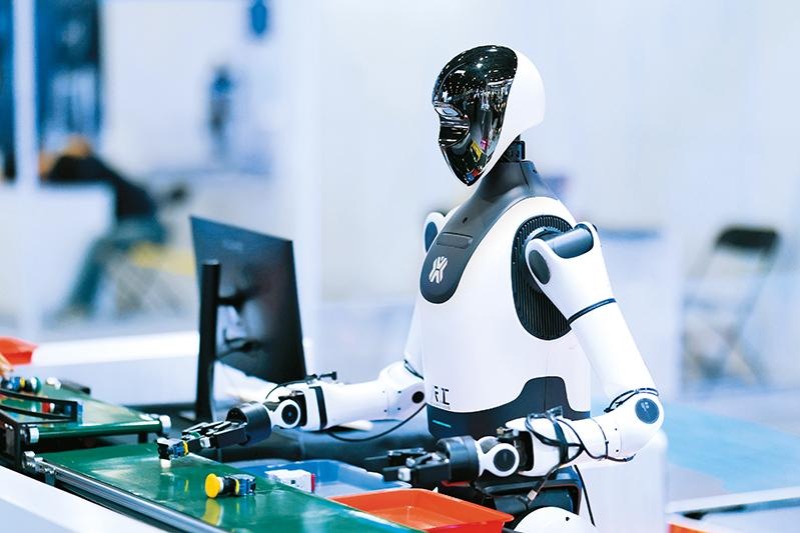
    In a strategic response to mounting industry demands, China’s leading academic institutions are pioneering undergraduate programs in embodied intelligence—a cutting-edge field centered on intelligent systems with physical presence, exemplified by humanoid robotics.

    Prestigious universities including Shanghai Jiao Tong University, Beihang University, and Zhejiang University are establishing dedicated curricula to cultivate expertise in this emerging discipline. The Shanghai Jiao Tong University initiative, spearheaded by Professor Lu Cewu—co-founder of embodied intelligence firm Noematrix—exemplifies the industry-academia integration central to these programs. The university aims to create collaborative platforms with leading companies and develop industry-linked practicum centers.

    Employment prospects form a cornerstone of these programs. Beijing Institute of Technology’s embodied intelligence major plans to enroll 120 undergraduates, with approximately 58% expected to pursue advanced education and 42% transitioning directly to employment sectors including state-owned aerospace corporations, automotive manufacturers, and tech giants Huawei and Tencent.

    This educational shift responds to substantial market growth projections. According to the Development Research Center of the State Council, China’s embodied intelligence industry is forecast to reach 400 billion yuan ($56.5 billion) by 2030, exceeding 1 trillion yuan by 2035. Current industry compensation reflects this demand, with embodied intelligence professionals commanding average annual salaries of 333,400 yuan—surpassing other AI sectors by approximately 14%.

    The talent deficit is particularly acute, with Beijing Institute of Technology estimating a industry shortfall of approximately one million qualified professionals. Current educational offerings remain fragmented across traditional disciplines, with insufficient practical engineering training and outdated laboratory facilities.

    Government prioritization has accelerated program development, with embodied intelligence designated a key future industry in China’s recent policy directives. The field joins quantum technology, biomanufacturing, and 6G communications as identified economic growth engines for the coming five-year period.

    Global investment trends underscore the field’s prominence: humanoid robotics attracted over 32.8 billion yuan in financing through September 2025, with Chinese markets accounting for more than 80% of worldwide funding activities.

  • Australia opener Khawaja ruled out of second Ashes Test

    Australia opener Khawaja ruled out of second Ashes Test

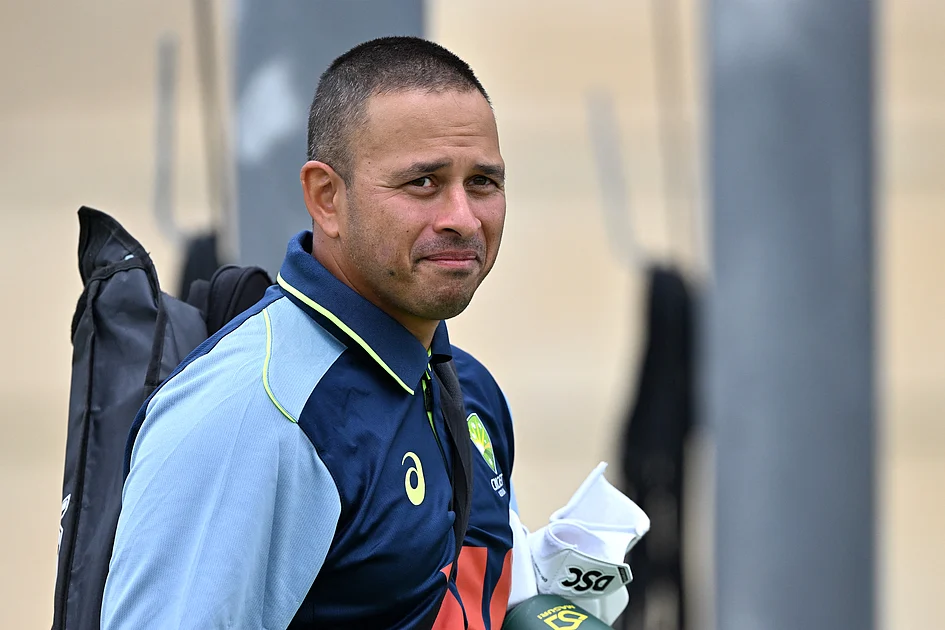
    In a significant development for the ongoing Ashes series, Australian cricket officials confirmed on Tuesday that veteran opener Usman Khawaja has been medically ruled out of the second Test match against England. The 38-year-old left-handed batsman continues to struggle with persistent back spasms that initially surfaced during the series opener in Perth.

    Khawaja’s condition showed no signs of improvement during Monday’s net session at Brisbane’s Gabba ground, where the crucial second Test is scheduled to commence this Thursday. The team’s medical staff determined that the player’s back issues would prevent him from participating effectively in the upcoming match.

    Despite this setback, Cricket Australia has opted against adding a replacement batsman to the squad. This decision strongly indicates that Travis Head will retain his position as opener following his spectacular performance in Perth, where his brilliant 123-run innings propelled Australia to an eight-wicket victory in the first Test.

    The selection committee has considered several alternatives, including potential openings for Marnus Labuschagne or Steve Smith, both of whom have previous experience as openers since David Warner’s retirement nearly two years ago. However, Labuschagne explicitly stated on Monday that neither he nor Smith would be assuming the opening role in the immediate future.

    Notably, Khawaja will remain with the Australian squad throughout his recovery period, maintaining hope that he can extend his Test career beyond his 39th birthday next month. His continued presence with the team provides an opportunity for rehabilitation while staying integrated with the squad’s preparations for subsequent matches in the prestigious Ashes series.