标签: Asia

亚洲

  • Military exercises slammed

    Military exercises slammed

    PYONGYANG/SEOUL — North Korea has issued a forceful condemnation of the ongoing joint military exercises between the United States and South Korea, characterizing them as a direct threat to regional stability. The official Korean Central News Agency (KCNA) reported on Tuesday that the Democratic People’s Republic of Korea (DPRK) views these drills as substantially undermining peace in the region.

    The military exercises, designated as Freedom Shield and scheduled from March 9 to March 19, encompass 22 field training operations involving actual troop deployments and maneuvers. While Seoul and Washington maintain that the exercises are defensive in nature, Pyongyang and various critics argue they represent provocative actions that heighten military tensions on the Korean Peninsula.

    Kim Yo-jong, a senior official in the Workers’ Party of Korea, explicitly rejected characterizations of the drills as routine training, instead labeling them as ‘provocative and aggressive war rehearsals’ specifically designed to simulate combat scenarios against North Korea. She emphasized the inviolability of North Korea’s security sphere and reaffirmed the nation’s commitment to defending both the Korean Peninsula and the broader region.

    Simultaneously, civic groups in Seoul organized protests outside the US embassy, where activists demanded the immediate cessation of the joint exercises. Demonstrators argued that the drills jeopardize peace prospects and hinder potential inter-Korean reconciliation efforts. Protest leaders particularly expressed concern about the potential deployment of advanced weapon systems, including unmanned attack aircraft and new missile technologies, during the exercises.

    Critics accused the United States of prioritizing geopolitical ambitions over the safety of South Korean citizens, urging Seoul to reconsider its military dependence on Washington and instead pursue diplomatic solutions to reduce tensions on the peninsula.

  • New strategy to revitalize Chinese cities

    New strategy to revitalize Chinese cities

    China is positioning urban renewal as a cornerstone of its national development strategy through the forthcoming 15th Five-Year Plan (2026-2030), marking a significant shift in the nation’s approach to urbanization. According to Jon Taylor, Associate Dean at the University of Texas at San Antonio, this strategic pivot moves beyond mere physical reconstruction to encompass comprehensive urban transformation.

    The draft outline submitted to the National People’s Congress emphasizes a fundamental policy reorientation from outward urban expansion to intensive inward development. This new paradigm encourages cities to pursue compact, efficient, and environmentally sustainable redevelopment rather than unchecked spatial growth.

    Taylor notes that China’s urbanization drive, particularly in first-tier cities like Beijing, Shanghai, Guangzhou, and Shenzhen, has created a substantial inventory of aging infrastructure. Much of the residential and commercial properties constructed between the late 1980s and early 2000s have become increasingly inadequate to meet modern demands driven by demographic changes and evolving social, environmental, and technological needs.

    The urban renewal strategy serves multiple objectives: revitalizing aging districts, stabilizing housing markets, and advancing affordable housing reforms. More significantly, it functions as a major structural driver for China’s economy during the coming five-year period. The initiative connects neighborhood renovations, infrastructure modernization, and efficient land use optimization with broader domestic economic growth objectives.

    Several cities have already pioneered experimental approaches. Shanghai has implemented “micro-renewal” programs at the neighborhood level, while Guangzhou has pursued district-level regeneration. All major cities have rapidly expanded transit-oriented redevelopment, and Beijing has undertaken substantial old-city preservation and renewal projects.

    Beyond physical reconstruction, this strategy aims to strengthen high-efficiency urban governance aligned with national goals of improving government responsiveness, integrating digital systems, and enhancing public services. Taylor emphasizes that urban renewal represents not merely a construction program but a comprehensive vehicle to reshape Chinese society, local governance, and economic development for the next decade and beyond.

    Once the 15th Five-Year Plan is approved and implemented, urban renewal will transition from a peripheral initiative to a central tenet of China’s national development strategy, reflecting its critical importance in the nation’s future planning.

  • Presidium of China’s annual legislative session holds 2nd meeting

    Presidium of China’s annual legislative session holds 2nd meeting

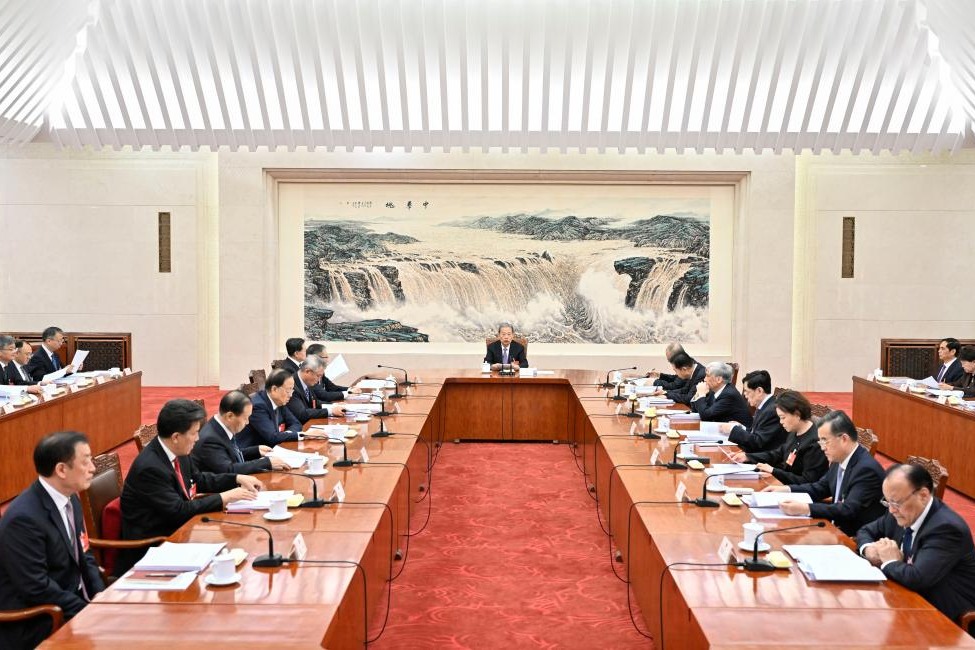
    The presidium of China’s National People’s Congress (NPC) convened its second meeting on March 10, 2026, at Beijing’s Great Hall of the People, marking a significant phase in the country’s annual legislative session. Presided over by Zhao Leji, executive chairman of the presidium and chairman of the NPC Standing Committee, the meeting set in motion the deliberation process for several critical legislative documents and national development plans.

    The assembly determined to submit three major legislative revisions to NPC delegations for comprehensive review: an updated environmental code, a revised law promoting ethnic unity and progress, and an amended national development planning law. These legislative instruments represent China’s continued commitment to environmental governance, social harmony, and strategic economic direction.

    Additionally, the presidium approved for delegation deliberation several draft resolutions concerning the government work report, the outline of the 15th Five-Year Plan (2026-2030) for national economic and social development, the 2026 national economic and social development plan report, and the 2026 central and local budgets report. These documents collectively form the policy framework that will guide China’s development trajectory through the latter half of the 2020s.

    Prior to the main presidium meeting, Zhao Leji conducted a meeting of the executive chairpersons, ensuring procedural efficiency and organizational coherence throughout the legislative process. The systematic approach to these deliberations reflects the structured nature of China’s legislative procedures and the importance placed on comprehensive review of national policies.

  • Xiangxi marches ahead on road to prosperity

    Xiangxi marches ahead on road to prosperity

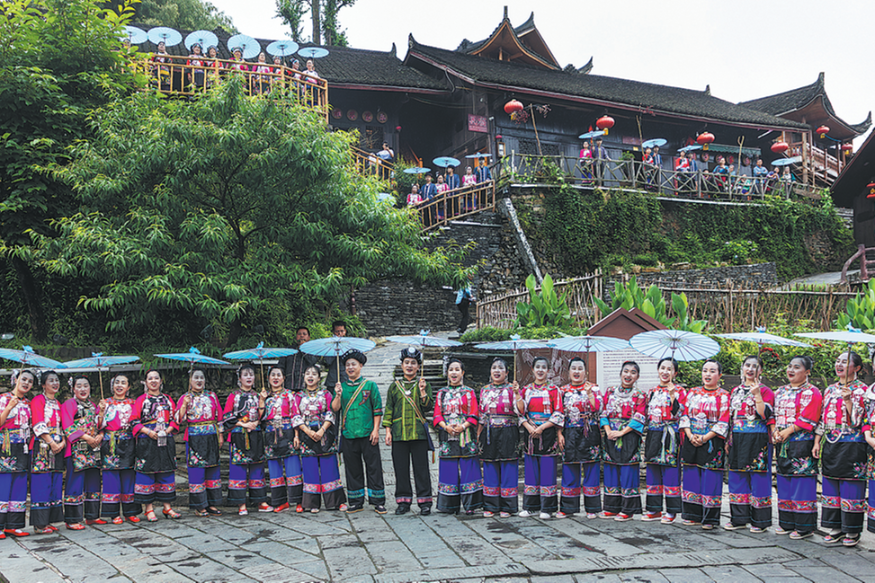
    Xiangxi Tujia and Miao Autonomous Prefecture, the birthplace of China’s targeted poverty alleviation strategy, is now pioneering a comprehensive rural revitalization model that ensures all ethnic groups share in common prosperity. According to Liu Tao, Communist Party Secretary of the autonomous prefecture and deputy to the 14th National People’s Congress, the region has successfully transitioned from poverty elimination to sustainable development.

    The prefecture, home to approximately 2.9 million permanent residents with ethnic minorities comprising 80.5% of the population, has achieved remarkable economic growth. Since President Xi Jinping first proposed the ‘targeted poverty alleviation’ concept here in 2013, Xiangxi has lifted 656,000 people out of poverty and removed all 1,110 impoverished villages from the poverty list by 2020. Last year, the region’s GDP reached 88.95 billion yuan ($12.94 billion), more than doubling its 2013 figure.

    Xiangxi has implemented sophisticated monitoring systems and support mechanisms to prevent regression into poverty. Over 12,000 Party members maintain one-to-one partnerships with formerly impoverished families, while more than 3,470 officials remain stationed in villages. The government has developed tailored strategies for each village, household, and individual, creating a safety net that provides an average of five targeted assistance measures per monitored household.

    The revitalization strategy leverages both economic and cultural assets. Large export-oriented tea plantations and eco-friendly tea gardens now provide stable income for over 600,000 people. The prefecture has also capitalized on its natural landscapes and rich ethnic culture to develop rural tourism, creating job opportunities for more than 500,000 residents.

    Shibadong village, the symbolic starting point of China’s poverty alleviation campaign, exemplifies this transformation. The Miao ethnic village, known for its traditional wooden dwellings and cultural heritage, has seen its collective economic dividend reach 1 million yuan last year, with per capita income exceeding 30,000 yuan.

    Rather than isolated development, Xiangxi has established 10 rural revitalization clusters ensuring balanced regional growth. The strategy emphasizes cultural enrichment through regular public activities, such as the grand Spring Festival gathering in Jishou that featured performances rooted in Xiangxi’s ethnic traditions.

    The comprehensive approach demonstrates how targeted poverty alleviation can evolve into sustainable rural revitalization, creating models that benefit all ethnic groups while preserving cultural heritage.

  • Tehran says no return to diplomacy after attacks

    Tehran says no return to diplomacy after attacks

    Iran has formally declared an end to diplomatic engagement with the United States following coordinated military strikes by US and Israeli forces, despite previously participating in what international observers characterized as promising negotiations. The escalation directly contradicts Washington’s assertions that hostilities would conclude swiftly, instead pointing toward a prolonged regional conflict that has already begun impacting global energy markets.

    In a televised interview with PBS News, Iranian Foreign Minister Seyed Abbas Araghchi characterized the breakdown as a “very bitter experience,” noting that attacks occurred despite substantial progress during three rounds of negotiations. This perception is reinforced by analysis from Arhama Siddiqa of Pakistan’s Institute of Strategic Studies, who observes that Tehran views US diplomatic overtures as fundamentally disconnected from military actions on the ground.

    The confrontation has exposed potential fractures within the US-Israeli alliance, with Siddiqa suggesting that any American attempt to de-escalate could create strategic divergence if Israel believes continued military pressure better serves its security objectives. This dynamic has significantly constricted diplomatic space amid intensifying regional tensions driven by mutual mistrust and competing agendas.

    Humanitarian consequences continue to mount, with Iranian officials reporting over 1,200 fatalities including 200 children and 11 healthcare workers. The conflict’s spillover has displaced hundreds of thousands across the Middle East, with UNICEF reporting nearly 700,000 displaced in Lebanon alone. International involvement continues to evolve, with Australia announcing deployment of surveillance aircraft and missile systems to the United Arab Emirates while emphasizing purely defensive objectives.

  • Bangladesh wins toss, elects to field against Pakistan in 1st ODI

    Bangladesh wins toss, elects to field against Pakistan in 1st ODI

    DHAKA, Bangladesh — Cricket enthusiasts witnessed a dramatic transformation in Pakistan’s lineup as the team introduced four debutants for the opening One Day International against Bangladesh on Wednesday. The hosts won the crucial toss and immediately elected to field, setting the stage for an intriguing contest between the neighboring nations.

    The Pakistani batting order featured an entirely revamped top tier with Sahibzada Farhan, Maaz Sadaqat, Shamyl Hussain, and Abdul Samad taking center stage. Farhan’s inclusion came as a direct reward for his exceptional performance during the recent T20 World Cup, where he amassed an impressive 383 runs, establishing himself as a rising star in international cricket.

    Both squads demonstrated strategic alignment in their bowling selections, each opting for a trio of fast bowlers in anticipation of pitch conditions favoring pace attacks. Bangladesh deployed their formidable pace battery consisting of Nahid Rana, Taskin Ahmed, and Mustafizur Rahman. Pakistan countered with their own speed arsenal led by captain Shaheen Shah Afridi, supported by Mohammad Wasim and Faheem Ashraf.

    Bangladesh made significant adjustments to their roster, recalling Tanzid Hasan to replace Soumya Sarkar while strengthening their middle-order with the experienced Litton Das and Afif Hossain.

    The selection decisions reflected substantial post-tournament reassessments, particularly for Pakistan, who made the bold move to exclude seasoned veterans Babar Azam and Saim Ayub following their underwhelming performance at the T20 World Cup, co-hosted by India and Sri Lanka.

    This series marks Bangladesh’s return to international cricket after their absence from the T20 World Cup, where Scotland replaced them when security concerns prevented their travel to India.

    Final Lineups:
    Bangladesh: Saif Hassan, Tanzid Hasan, Towhid Hridoy, Najmul Hossain Shanto, Litton Das, Afif Hossain, Mehidy Hasan Miraz (captain), Rishad Hossain, Taskin Ahmed, Nahid Rana, Mustafizur Rahman

    Pakistan: Sahibzada Farhan, Maaz Sadaqat, Shamyl Hussain, Mohammad Rizwan, Salman Ali Agha, Hussain Talat, Abdul Samad, Faheem Ashraf, Shaheen Shah Afridi (captain), Mohammad Wasim, Abrar Ahmed

  • India’s IndiGo airline CEO resigns months after mass cancellation crisis

    India’s IndiGo airline CEO resigns months after mass cancellation crisis

    India’s dominant aviation carrier IndiGo has announced the immediate departure of Chief Executive Pieter Elbers, who cited personal reasons for his abrupt resignation. This leadership transition follows a severe operational crisis in December that resulted in massive flight cancellations across the country.

    The airline, which commands approximately 66% of India’s domestic aviation market, faced unprecedented disruption when new pilot duty regulations exposed critical staffing shortages. The carrier canceled nearly 4,500 flights during the peak travel season—the most significant service breakdown in its two-decade history—stranding thousands of passengers nationwide.

    India’s aviation regulatory authority responded with substantial penalties, fining IndiGo $2.45 million and criticizing senior management, including Elbers, for their handling of the crisis. The airline subsequently acknowledged miscalculating pilot availability requirements under the new fatigue-reduction protocols.

    Co-founder Rahul Bhatia will assume interim leadership during the executive search process. In internal communications, Bhatia referenced the December events, stating the situation “should never have taken place” while expressing gratitude to employees who managed the operational challenges.

    Elbers, who joined IndiGo in 2022 after a distinguished career at KLM Royal Dutch Airlines, oversaw significant expansion initiatives including a landmark order for 500 narrow-body Airbus aircraft plus additional wide-body planes to bolster international operations.

    The leadership change occurs as India’s aviation sector experiences rapid growth, with IndiGo serving as a primary driver of market expansion through its fleet of 440 aircraft operating predominantly domestic routes with select international services to Middle Eastern, European, and Asian destinations.

  • Japan marks 15 years since tsunami disaster as Takaichi pushes more nuclear energy use

    Japan marks 15 years since tsunami disaster as Takaichi pushes more nuclear energy use

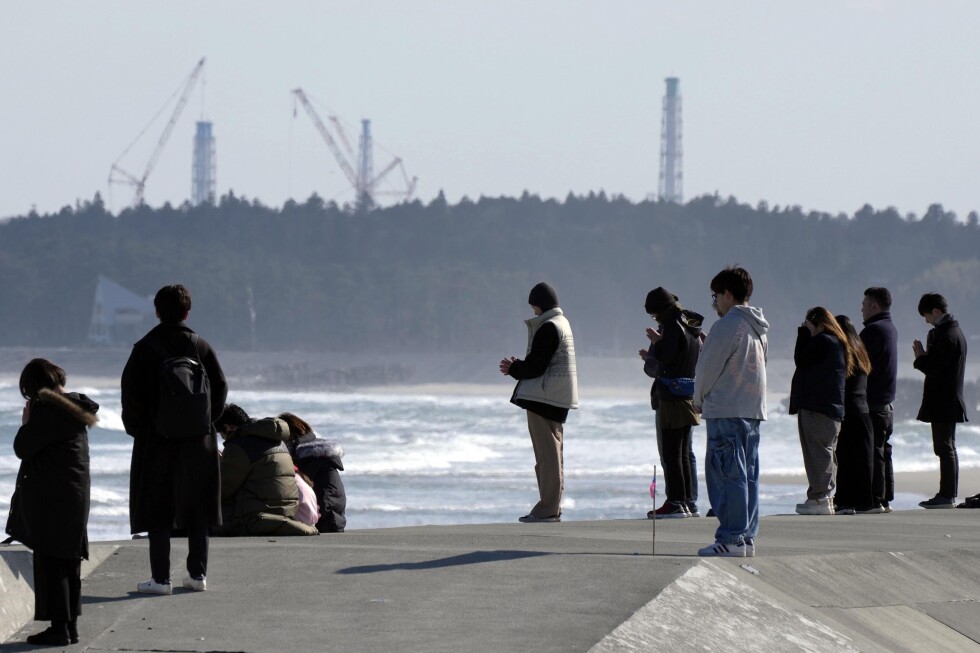
    TOKYO — Japan solemnly observed the 15th anniversary of the catastrophic earthquake, tsunami, and nuclear meltdown that devastated its northeastern coastline, even as the government advances controversial initiatives to expand atomic energy usage.

    The magnitude 9.0 temblor that struck on March 11, 2011, triggered massive tsunami waves that ravaged coastal communities across Iwate, Miyagi, and Fukushima prefectures. The disaster claimed over 22,000 lives and displaced approximately half a million residents from their homes, with radiation concerns forcing the evacuation of some 160,000 people from Fukushima alone.

    At precisely 2:46 p.m., the nation paused for a moment of silence to honor the victims. During a memorial ceremony in Fukushima, Prime Minister Sanae Takaichi committed to accelerating regional recovery efforts within the next five years while preserving the “valuable lessons learned from the huge sacrifice of the disaster.”

    This commemorative event occurs against the backdrop of a significant policy reversal. In 2022, Japan terminated its decade-long nuclear phase-out strategy, with Takaichi now actively promoting reactor restarts and advocating for nuclear power as a stable energy source.

    Despite substantial infrastructure reconstruction, community and economic recovery remains sluggish. Approximately 26,000 displaced residents have not returned to their hometowns, having resettled elsewhere or remaining concerned about radiation risks in still-restricted zones.

    The technical challenges at the Fukushima Daiichi plant remain formidable. Three reactors contain at least 880 tons of melted fuel debris, with detailed assessment hampered by persistently dangerous radiation levels. Full-scale debris removal has been postponed until at least 2037.

    Additionally, decontamination efforts have produced enormous quantities of slightly radioactive soil—sufficient to fill 11 baseball stadiums. Government proposals to repurpose this material for public works projects have encountered significant public opposition.

    In affected coastal communities, residents gathered at dawn to offer prayers for missing loved ones, their remains still lost to the sea fifteen years after the tragedy.

  • China’s defense spending maintains reasonable growth

    China’s defense spending maintains reasonable growth

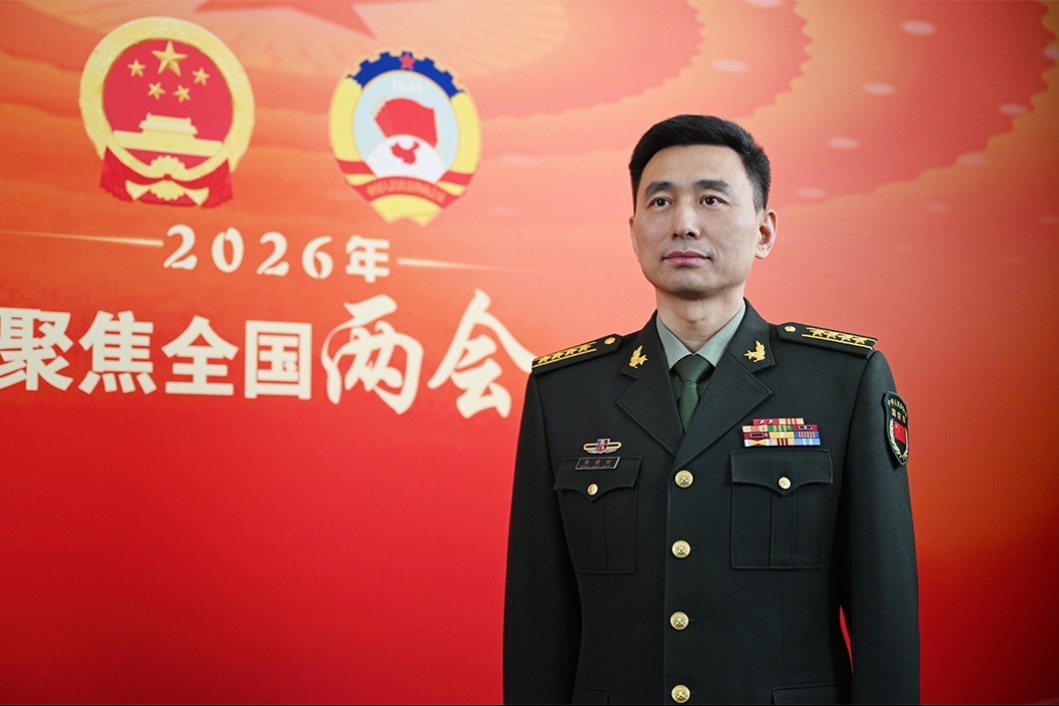
    China has unveiled a strategic defense budget of 1.91 trillion yuan ($278 billion) for fiscal year 2026, representing a measured 7% year-on-year increase. Senior Colonel Zhang Xiaogang, spokesperson for the People’s Liberation Army and People’s Armed Police Force delegation, articulated the rationale behind this expenditure during the fourth session of the 14th National People’s Congress.

    The budget allocation reflects China’s commitment to synchronized development of national defense capabilities and economic prosperity. Colonel Zhang emphasized that the funding determination follows comprehensive evaluation of multiple strategic factors, including national security requirements, overall development objectives, and the synchronization between military modernization and China’s broader modernization agenda.

    According to defense officials, the increased expenditure will primarily fuel three key modernization initiatives: advancing integrated military development through mechanization, informatization, and smart technology implementation; enhancing joint operational capabilities and traditional combat forces; and accelerating the systematic development of new-domain forces with combat-ready capabilities.

    The budgetary expansion will also facilitate critical investments in advanced weaponry development, defense technology innovation, modern logistics infrastructure, and combat-oriented training programs. Additionally, the military plans to implement comprehensive reforms in budget management systems, establishing dynamic balance mechanisms between funding supply and demand while strengthening full-cycle financial oversight and performance evaluation.

    Colonel Zhang characterized these developments as essential strategic underpinnings for Chinese modernization, noting that the approach simultaneously enhances both defense capabilities and economic strengths while safeguarding national sovereignty and security interests.

  • Motions prioritize emerging industries

    Motions prioritize emerging industries

    Chinese legislators are channeling significant attention toward establishing legal frameworks for cutting-edge technological sectors during the current National People’s Congress session. According to the session’s secretariat, an overwhelming majority of the 226 motions submitted by NPC deputies focus on legislative priorities for the 15th Five-Year Plan (2026-2030), with particular emphasis on building China’s modern industrial system.

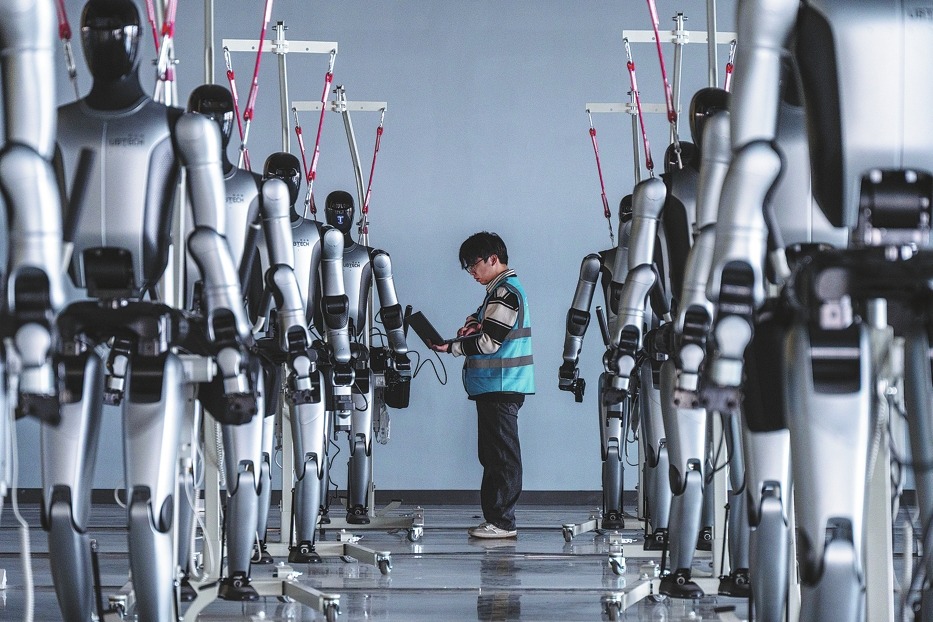
    Guo Zhenhua, head of the motions work group, revealed that more than two-thirds of proposals target legal establishment or amendment to strengthen technological self-reliance and develop a high-standard socialist market economy. The legislative push specifically addresses artificial intelligence governance, digital economy regulations, low-altitude economic development, and national laboratory operations.

    Beyond emerging technologies, deputies have advocated for revisions to existing legislation including the Patent Law to accelerate the transformation of scientific achievements into practical applications. This initiative aims to bridge the gap between innovation and industrial implementation.

    Concurrently, social welfare concerns feature prominently in the legislative agenda. Sixty-six motions address quality-of-life improvements including traffic safety enhancements, comprehensive elderly care services, and protection for workers in emerging employment sectors such as ride-hailing and delivery services.

    The secretariat additionally reported receiving over 7,000 suggestions covering broader policy areas including internet economy development, green energy transition, agricultural智能化services, and combating online misinformation and telecommunications fraud. Unlike formal motions, these suggestions represent advisory opinions for government departments rather than items requiring NPC review.