标签: Asia

亚洲

  • Earthquake of magnitude 7 strikes Borneo; no tsunami threat

    Earthquake of magnitude 7 strikes Borneo; no tsunami threat

    A significant seismic event measuring 7.0 on the Richter scale occurred off the northern coast of Borneo in the early hours of Monday, according to monitoring by the German Research Centre for Geosciences (GFZ). The substantial depth of the tremor—recorded at 633 kilometers (approximately 393 miles) beneath the Earth’s surface—significantly mitigated potential damage at ground level.

    The GFZ, which initially registered the quake at magnitude 7.1 before downward revision, confirmed the epicenter was positioned in maritime territory near the world’s third-largest island. The exceptional depth of the seismic activity placed it within the classification of a deep-focus earthquake, which typically dissipates energy before reaching populated areas.

    Concurrent with GFZ’s assessment, the United States Tsunami Warning Center promptly issued a statement confirming no tsunami threat emerged from the subterranean event. The combination of the quake’s profound depth and offshore location resulted in minimal impact despite its considerable magnitude.

    The Borneo region, shared by Malaysia, Indonesia, and Brunei, resides within the seismically active Pacific Ring of Fire, making such geological events relatively common though rarely destructive at such depths. The absence of immediate reports regarding casualties or structural damage underscores how depth parameters fundamentally alter earthquake impact assessments.

  • South Africa thrash India to assert T20 World Cup title credentials

    South Africa thrash India to assert T20 World Cup title credentials

    In a stunning reversal of their 2024 World Cup final encounter, South Africa delivered a commanding performance to crush defending champions India by 76 runs in their Super Eight Group One match of the Twenty20 World Cup on Sunday. The comprehensive victory at Narendra Modi Stadium served as a powerful statement of intent from the Proteas, establishing them as serious title contenders.

    South Africa’s innings began disastrously after captain Aiden Markram elected to bat first, collapsing to 20-3 within the powerplay. Jasprit Bumrah (3-15) and Arshdeep Singh dismantled the top order, removing openers Quinton de Kock and Markram before Bumrah’s clever change of pace deceived Ryan Rickelton.

    The match turned dramatically through a spectacular 97-run partnership between David Miller and Dewald Brevis. Miller’s explosive 63 from 26 balls, earning him player-of-the-match honors, combined with Brevis’ solid 45, engineered a remarkable recovery. Tristan Stubbs provided the final flourish with an unbeaten 44 from 24 deliveries, propelling South Africa to a competitive 187-7.

    India’s response never gained momentum, crumbling under scoreboard pressure from the outset. Markram’s strategic decision to open with off-spin against India’s left-handed top order paid immediate dividends, removing the in-form Ishan Kishan in the first over. Marco Jansen compounded the crisis by dismissing Tilak Varma in the second over.

    The hosts’ innings unraveled completely when Keshav Maharaj delivered a decisive 15th over, removing Hardik Pandya, Rinku Singh, and Arshdeep Singh in quick succession. Shivam Dube’s fighting 42 provided minimal consolation as India collapsed to 111 all out in 18.5 overs, suffering their first defeat of the tournament.

    Jansen finished with impressive figures of 4-22, including the wickets of Dube and Bumrah with consecutive deliveries. The victory not only avenged South Africa’s previous final loss to India but demonstrated their capability to perform under extreme pressure against quality opposition.

  • How budget fast fashion is taking small-town India by storm

    How budget fast fashion is taking small-town India by storm

    In the heart of Sangli, a western Indian town, a gleaming three-story Reliance Trends outlet symbolizes a profound shift in the nation’s retail landscape. Here, consumers like Alka, a geriatric care worker in her late 50s, experience a new paradigm of shopping. No longer confined to bargaining in street-side bazaars for unbranded apparel, she now browses vibrant collections of ethnic-wear kurtas in air-conditioned comfort, aided by attendants and trial rooms—a luxury previously unimaginable for most Indians.

    This transformation is spearheaded by budget fashion brands like Reliance Trends (led by Isha Ambani, heiress to the Reliance Industries empire) and Tata’s Zudio, which offer merchandise priced between $4 and $15—comparable to traditional bazaars—but with a vastly superior shopping experience. These brands are capturing the aspirations of value-conscious consumers, particularly in smaller towns, driving extraordinary growth in India’s organized fast-fashion sector.

    Zudio’s trajectory exemplifies this boom. From a mere seven stores and $12 million revenue in 2018, it has exploded to 765 stores with revenues surpassing $1 billion by mid-2025, dramatically outpacing global giants like Zara and H&M. Analysts attribute this success to a ‘bottom-of-the-pyramid’ strategy, where pricing remains critical even as brands offer contemporary designs.

    The growth, however, represents a ‘wallet-shift’ rather than a market expansion. With weak job markets and stagnant wages, consumers are redirecting spending from local mom-and-pop stores to branded outlets. Budget brands have aggressively penetrated tier-2 and tier-3 towns, applying global fast-fashion playbooks—Zudio, for instance, achieves a lightning-fast 15-day inventory turnaround, rivaling Zara’s efficiency.

    Yet this expansion comes with challenges. E-commerce platforms like Meesho, growing at 35-40% annually, intensify competition. Moreover, India’s apparel market remains underpenetrated, with per-capita spending lagging behind China, the US, and even Indonesia. While the sector should ideally grow at 12-15%, it has stagnated below 10% in recent years.

    Environmental concerns also loom large. The textile industry is India’s third-largest contributor to dry municipal solid waste, with only a quarter being recycled. Despite some sustainability efforts, less than 1% of used clothing globally is recycled into new garments. For now, however, style and affordability outweigh ecological worries as small-town Indians embrace the fast-fashion revolution.

  • Kim reelected to top post of North Korea’s ruling party as it hails his nuclear buildup

    Kim reelected to top post of North Korea’s ruling party as it hails his nuclear buildup

    SEOUL, South Korea — North Korean leader Kim Jong Un has been reaffirmed as the General Secretary of the ruling Workers’ Party during the ongoing party congress, with state media attributing his reelection to significant advancements in the nation’s nuclear capabilities and enhanced geopolitical positioning. The Korean Central News Agency (KCNA) reported Monday that delegates demonstrated “unshakable will and unanimous desire” in reinstating Kim to the premier party position during Sunday’s proceedings.

    The quadrennial political gathering, which commenced last Thursday, serves as a platform for Kim to articulate his strategic military and economic objectives for the forthcoming five-year period. Analysts anticipate the congress will yield announcements regarding the modernization of conventional armed forces and their integration with nuclear assets, alongside continued emphasis on economic self-sufficiency through mass mobilization campaigns.

    This political consolidation occurs against the backdrop of Pyongyang’s increasingly assertive foreign policy stance, characterized by expanded nuclear arsenals and strengthened military cooperation with Russia through collaborative engagements in Ukraine. These developments have substantially intensified tensions with Washington and Seoul, effectively halting meaningful diplomatic engagement since the unsuccessful 2019 summit between Kim and former U.S. President Donald Trump.

    Notably, the congress adopted revisions to party regulations, though specific details remain undisclosed. Regional experts had projected these amendments might formalize North Korea’s hardened position toward South Korea, potentially redefining inter-Korean relations as between two hostile nations—a significant departure from historical reunification aspirations. Kim’s government has consistently rejected denuclearization prerequisites for negotiations, while simultaneously expanding arms exports to Russia and revitalizing post-pandemic trade with China.

  • Iran FM says ‘good chance’ of diplomatic solution to US standoff

    Iran FM says ‘good chance’ of diplomatic solution to US standoff

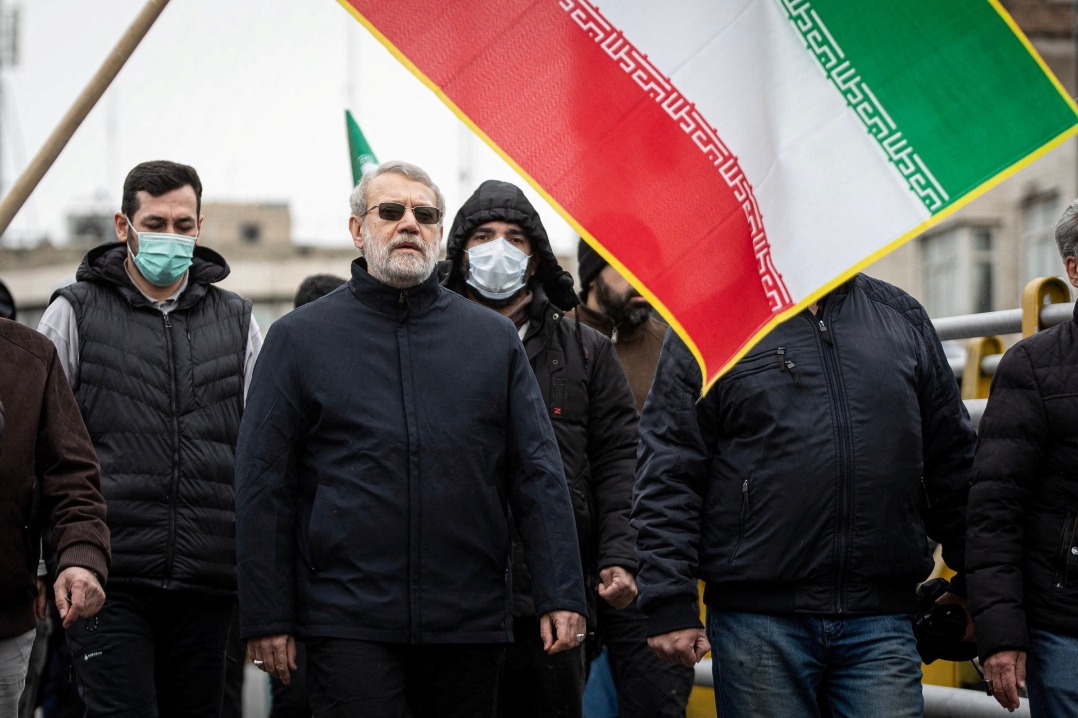
    Iranian Foreign Minister Abbas Araghchi conveyed measured optimism on Sunday regarding the potential for a diplomatic breakthrough in the ongoing nuclear impasse with the United States. During an interview with CBS News, the top diplomat indicated that negotiators remain actively engaged in developing substantive agreements.

    “I maintain belief that a favorable opportunity persists for achieving a diplomatic solution founded on mutually beneficial principles,” Araghchi stated, revealing that both parties are currently “drafting textual components and working through deal elements.”

    The minister’s comments arrive amid heightened regional tensions and substantial US military repositioning throughout Middle Eastern bases. Despite this backdrop, Araghchi’s remarks suggest continued dialogue channels remain operational between the longstanding adversaries.

    Addressing Washington’s objections to Iran’s uranium enrichment activities, the foreign minister asserted national sovereignty rights: “As an independent nation, we retain full authority to determine our own course without external interference.”

    The diplomatic outlook appears cautiously positive despite recent escalatory actions, including significant US troop movements across the region. Araghchi’s characterization of negotiations as a “win-win game” indicates Tehran’s desire for compromise rather than confrontation.

    This development follows recent statements from US officials expressing curiosity about Iran’s continued resistance to capitulation despite American military posturing. The situation remains fluid with both public diplomacy and military preparedness occurring simultaneously.

  • How South Korea’s democracy rallied after the president tried to impose military rule

    How South Korea’s democracy rallied after the president tried to impose military rule

    In a landmark verdict demonstrating democratic accountability, South Korea’s former President Yoon Suk Yeol has been sentenced to life imprisonment for orchestrating a failed insurrection attempt in December 2024. The Seoul High Court’s decisive ruling caps a dramatic 14-month period that began when Yoon declared martial law on national television, claiming unspecified “anti-state forces” had infiltrated the country.

    The attempted power grab unraveled within hours as citizens defied curfews and thousands gathered at the National Assembly in subzero temperatures. In an extraordinary display of democratic solidarity, 190 lawmakers breached police barricades to convene an emergency session that unanimously rejected the martial law declaration. By 1:00 AM, just six hours after Yoon’s announcement, the insurrection had collapsed.

    Stanford University’s Korea Program Director Gi-Wook Shin notes this episode represents “a rare example of democratic resilience” amid global democratic fragility. “The rapid response from the National Assembly, courts, media, and civil society demonstrates that democratic safeguards are robust and effective,” Shin told the BBC.

    The failed coup attempt triggered mass protests that transcended generational divides. Older Koreans, recalling the nation’s authoritarian past under Park Chung Hee and Chun Doo Hwan, recognized the patterns of historical oppression. Younger citizens, though initially confused, quickly mobilized through digital networks. Their collective action led to Yoon’s impeachment within ten days and his arrest on January 3, 2025.

    Despite the successful defense of democracy, the episode exposed deep political fractures. Approximately 27% of Koreans maintain Yoon’s innocence, with supporters expressing “deep disappointment” at the verdict. The former president tapped into existing anxieties, particularly among young men, amplifying conspiracy theories about political opponents colluding with foreign powers.

    Yoon faces additional trials related to the insurrection attempt and separate corruption charges. While eligible for presidential pardon, the ruling party is advancing legislation to block this possibility. The case establishes a significant precedent for holding leaders accountable and demonstrates how institutional checks and citizen participation can preserve democratic norms against authoritarian threats.

  • Carnival provides key clues as Meydan’s road stretches far beyond the Dubai World Cup

    Carnival provides key clues as Meydan’s road stretches far beyond the Dubai World Cup

    The Meydan Racecourse’s Dubai Racing Carnival has transcended its role as a local preparatory event, establishing itself as a critical proving ground for international thoroughbred talent with aspirations far beyond the UAE. While the prestigious $30.5 million Dubai World Cup on March 28th remains the immediate focal point, Friday’s fixture delivered compelling evidence that the Carnival’s influence now stretches across continents, directly shaping the fields for America’s most celebrated Classics in May.

    The narrative of global ambition was powerfully illustrated in the Group 3 UAE Oaks. Labwah, a formidable filly trained by Salem bin Ghadayer for Sheikh Hamdan bin Mohammed bin Rashid Al Maktoum, delivered a performance of sheer dominance. Under jockey Bernardo Pinheiro, she seized an uncontested lead from the outset and accelerated to a stunning 7.5-length victory over Yuno. This emphatic win not only showcased her superior stamina and authority but also secured 50 qualifying points for the $1.5 million Longines Kentucky Oaks (G1), America’s premier race for three-year-old fillies. Bin Ghadayer confirmed that a decision between a start in the Kentucky Oaks or a challenge against colts in the UAE Derby on World Cup night now rests with Sheikh Hamdan.

    The international theme continued in the Listed Dubai Road to the Kentucky Derby, where British trainer Jamie Osborne found ‘sweet revenge.’ His colt, Brotherly Love, powered to a two-length victory under jockey Saffie Osborne, earning 20 crucial qualifying points for the Kentucky Derby. This victory avenged a narrow second-place finish by the colt’s half-brother, Heart Of Honour, in the same race the previous year.

    Despite the overseas headlines, the card also provided significant clues for the upcoming Dubai World Cup meeting. The Group 3 Nad Al Sheba Trophy, a key trial for the Dubai Gold Cup, was won by the determined eight-year-old Al Nayyir, trained by Tom Clover and ridden by Rossa Ryan. Their half-length triumph over favourite Sunway earned an automatic berth in the Gold Cup. The evening was further highlighted by a victory for Sheikh Hamdan in the Group 2 Balanchine Stakes with Fairy Glen, cementing a highly successful night that underscored the Dubai Carnival’s dual role as both a local finale and an international launching pad.

  • ‘Jacks’ of all trades helps England beat Sri Lanka at T20 World Cup

    ‘Jacks’ of all trades helps England beat Sri Lanka at T20 World Cup

    England secured a decisive 51-run victory against tournament co-hosts Sri Lanka in a crucial Super Eight clash at the T20 World Cup on Sunday, thanks to an exceptional all-round performance from Will Jacks. The match, held at Pallekele International Cricket Stadium, saw England overcome a challenging batting performance through dominant bowling excellence.

    After being put into bat first following Sri Lanka’s winning toss decision, England struggled to establish momentum throughout their innings. Captain Jos Buttler fell early for just 7 runs, trapped lbw by spinner Dunith Wellalage while attempting an unconventional reverse shot. The batting troubles continued as in-form Jacob Bethell departed for 3, Tom Banton was run out, and Harry Brook fell lbw for 14 after an unsuccessful review.

    Phil Salt provided the only substantial resistance with a fighting 62 from 36 deliveries, reaching his fifty before holing out to give Wellalage his third wicket. Jacks contributed a valuable 21 runs late in the innings, but England could only manage a seemingly below-par 146-9 from their 20 overs.

    The modest total appeared insufficient until England’s bowling attack unleashed a devastating powerplay performance. Jofra Archer struck early, removing dangerous opener Pathum Nissanka to initiate Sri Lanka’s collapse. Jacks then delivered a spectacular bowling spell, claiming wickets from consecutive deliveries to dismiss Kusal Mendis and Pavan Rathnayake.

    Sri Lanka’s batting lineup crumbled under relentless pressure, collapsing to 34-5 within the first nine overs. The hosts suffered from multiple soft dismissals, including Dushan Hemantha’s bizarre hit-wicket departure for 5 runs. Captain Dasun Shanaka offered brief resistance with 30 runs, but Jacks completed his remarkable performance by taking the catch that removed the Sri Lankan skipper, finishing with impressive figures of 3-22.

    Jacks was deservedly named Player of the Match for his dual contributions. ‘It encourages me to get into the game and perform better,’ he stated afterward. ‘Bowling in the powerplay is something I’ve done a lot of, so it’s not foreign to me.’ Sri Lanka were eventually bowled out for 95 in 16.5 overs, never recovering from their disastrous start.

  • Iranian students rally for second day of competing demonstrations

    Iranian students rally for second day of competing demonstrations

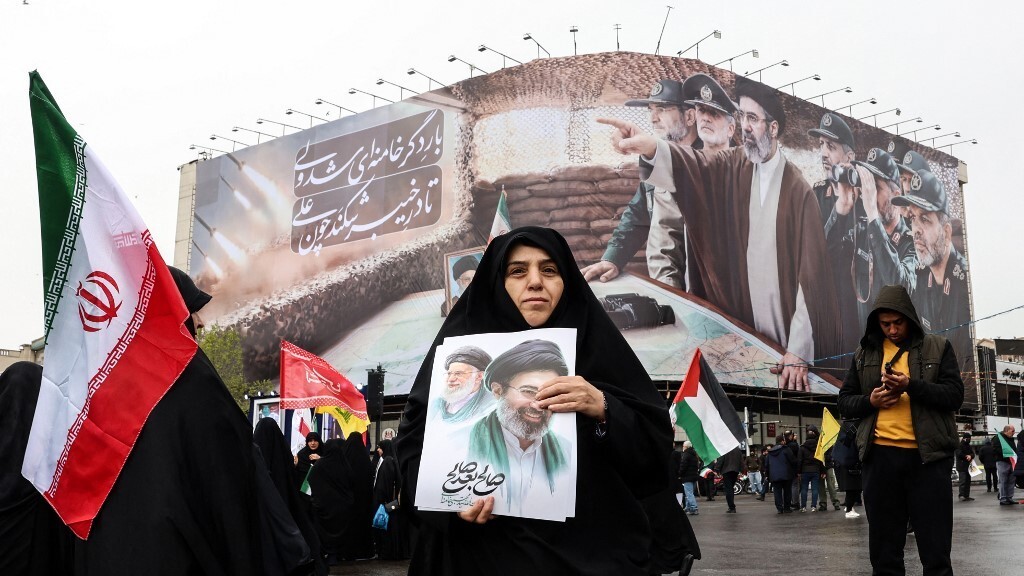
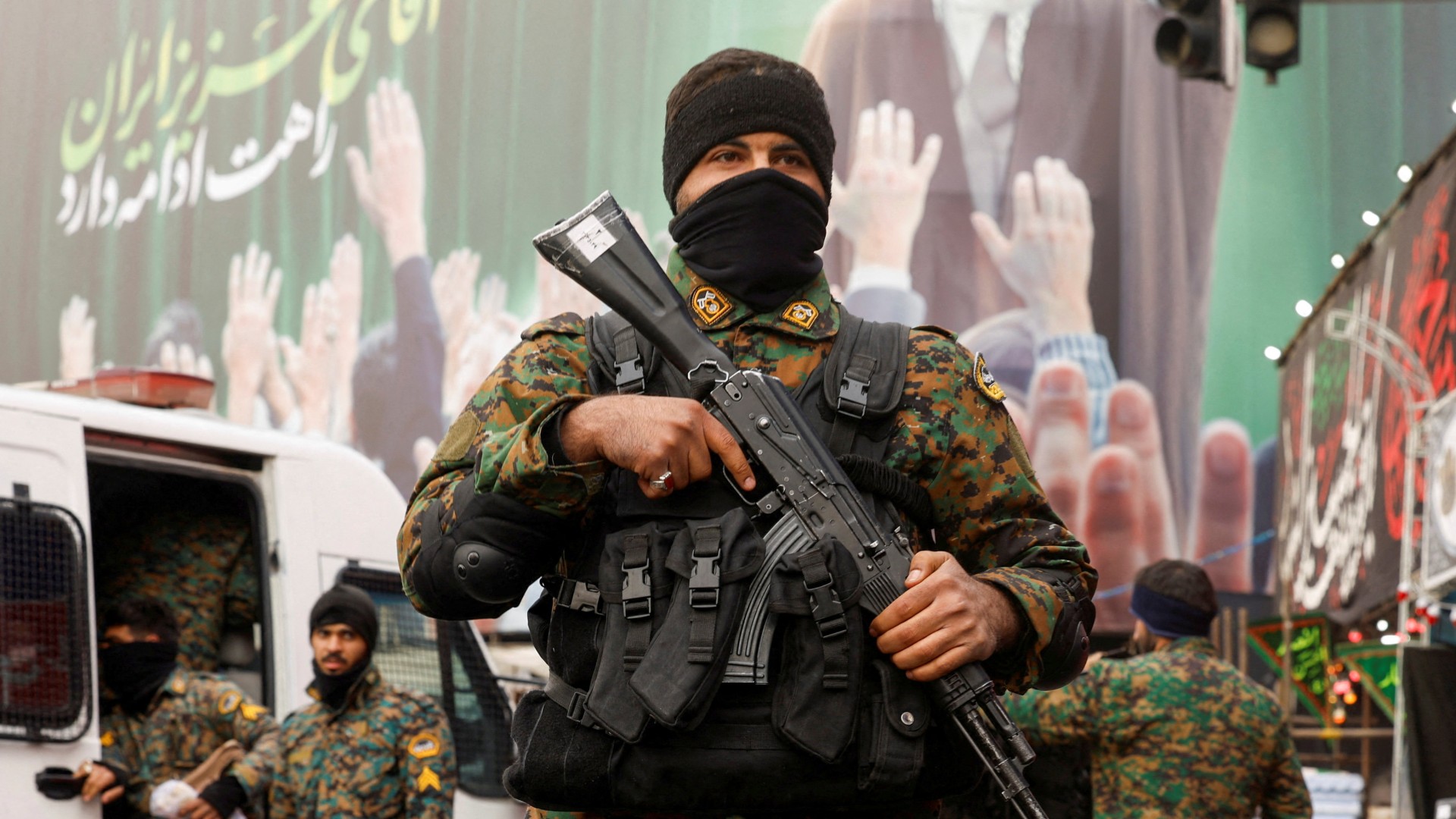
    Tehran’s university campuses transformed into arenas of ideological conflict on Sunday as Iranian students engaged in a second consecutive day of dueling demonstrations. The protests, marking the 40-day mourning period for victims of January’s violent unrest, revealed deepening societal fractures with both pro-government and anti-establishment factions holding simultaneous rallies.

    According to state-affiliated Fars news agency, significant tensions emerged at multiple academic institutions across the capital, particularly at the prestigious Sharif University of Technology. Videos verified by international media outlets depicted extraordinary scenes of students waving the banned flag of Iran’s pre-1979 monarchy featuring the lion and sun emblem, while chanting provocative slogans including ‘long live the shah’ and other anti-government rhetoric.

    The demonstrations originated from December’s economic protests but have dramatically evolved into broader challenges against Iran’s clerical establishment. Competing groups faced off across campuses, with uniformed security personnel frequently intervening to separate opposing factions. Open clashes were documented in circulated videos, showing physical altercations breaking out between demonstrators.

    Iran’s official narrative maintains that approximately 3,000 casualties occurred during recent unrest, attributing violence to ‘terrorist acts’ allegedly sponsored by foreign adversaries. However, independent monitoring by the US-based Human Rights Activists News Agency (HRANA) suggests a significantly higher death toll exceeding 7,000 individuals, predominantly comprising protesters.

    The sustained campus activism represents a particularly sensitive challenge for Iranian authorities, as student movements have historically served as catalysts for broader political change. The current protests notably incorporate symbolic elements from Iran’s monarchical past, suggesting an expansion of dissident rhetoric beyond immediate economic grievances toward more fundamental challenges to the Islamic Republic’s ideological foundation.

  • Pakistan killed ‘more than 80’ militants in strikes on Afghanistan: Security source

    Pakistan killed ‘more than 80’ militants in strikes on Afghanistan: Security source

    Pakistan has launched significant military operations against militant targets in neighboring Afghanistan, with security sources reporting more than 80 insurgents killed in overnight airstrikes. The offensive, confirmed by Pakistani security officials on Sunday, February 22, 2026, represents a substantial escalation in cross-border counterterrorism operations.

    The strikes were characterized by Islamabad as a direct response to recent suicide bombings within Pakistani territory that authorities attribute to Afghanistan-based militant organizations. According to the security source who spoke with AFP, the casualty count is anticipated to rise as assessments continue.

    The Taliban-led government in Afghanistan has historically denied allegations of harboring militant groups along the porous border region. AFP correspondents in Afghanistan noted the challenges in independently verifying the reported death toll due to the remote nature of the targeted areas and limited access to conflict zones.

    This military action occurs amid deteriorating security relations between the two neighboring nations and raises concerns about potential regional destabilization. The cross-border operation marks one of the most significant publicly acknowledged incursions by Pakistani forces into Afghan airspace in recent years.

    The development underscores the ongoing tensions in the Afghanistan-Pakistan border region, which remains a persistent security challenge despite decades of counterterrorism efforts. Both nations have historically accused each other of failing to control militant activities within their respective territories.