标签: Asia

亚洲

  • Japan’s emperor expresses concern about 3/11 disaster survivors on his 66th birthday

    Japan’s emperor expresses concern about 3/11 disaster survivors on his 66th birthday

    TOKYO — Emperor Naruhito of Japan delivered poignant remarks ahead of his 66th birthday, expressing profound concern for survivors still grappling with the aftermath of the catastrophic 2011 triple disaster. Speaking just weeks before the March 11 anniversary, the monarch highlighted the ongoing challenges facing affected communities despite visible infrastructure progress.

    “While recovery of infrastructure has made progress, I feel that reconstruction of livelihoods and community still needs to be addressed,” Naruhito stated in pre-released comments. He emphasized the persistent emotional trauma survivors endure, noting: “As I think of those who lost their loved ones and had to cope with complete change of their living environment, I feel their scars have not healed yet… they stay despite the passage of time.”

    The imperial family, including Empress Masako, Princess Aiko, and Crown Prince Akishino’s family, made a traditional balcony appearance at Tokyo’s Imperial Palace to acknowledge cheering well-wishers waving Japanese flags. This public celebration contrasted with the Emperor’s sobering message about the nation’s unfinished recovery.

    The 2011 Great East Japan Earthquake and subsequent tsunami claimed nearly 20,000 lives, displaced hundreds of thousands, and triggered meltdowns at Fukushima Daiichi Nuclear Power Plant. While most radiation-evacuated zones have officially reopened, revitalization remains elusive due to diminished employment opportunities and fractured community bonds.

    Emperor Naruhito stressed the critical importance of intergenerational disaster education, advocating for continuous transmission of hard-earned lessons to younger Japanese citizens. He pledged to maintain closeness with affected populations, sharing their joys and sorrows while praying for future disaster prevention.

    The monarch also addressed royal succession matters, expressing hopes that Princess Aiko would develop into “a fine person as a human being and a royal member” who might contribute to international peacekeeping. His comments emerge amid ongoing debate about Japan’s male-only succession laws, which prevent the 24-year-old princess from ascending the throne and would require her to relinquish royal status upon marrying a commoner.

  • Arsenal’s Eze sinks Spurs again, Liverpool late show floors Forest

    Arsenal’s Eze sinks Spurs again, Liverpool late show floors Forest

    In a pivotal weekend for the Premier League title race, Arsenal reasserted their dominance with a commanding 4-1 victory over North London rivals Tottenham Hotspur. The Gunners’ triumph, fueled by a brilliant double from Eberechi Eze, restored their five-point advantage at the summit while deepening Tottenham’s relegation concerns.

    Eze, who nearly joined Spurs before his August transfer from Crystal Palace, broke his goal drought in spectacular fashion. The England international opened the scoring with a clinical finish just after the half-hour mark, though Tottenham’s Randal Kolo Muani provided an immediate response. The match turned decisively in Arsenal’s favor when Viktor Gyokeres netted his most significant goal since joining the club early in the second half. Eze sealed the victory with his second goal before Gyokeres completed the scoring in stoppage time.

    Meanwhile, Liverpool secured a dramatic late victory at Nottingham Forest through Alexis Mac Allister’s 97th-minute winner. The Argentine midfielder pounced on a rebound after Virgil van Dijk’s header was saved, breaking Forest’s resistance in the dying moments. The victory came despite Liverpool’s admitted poor performance, with Mac Allister stating post-match that ‘nothing was good’ about much of their display.

    The results have significant implications across the table: Arsenal maintain pressure on pursuing Manchester City, who hold a game in hand; Liverpool climb level with Chelsea and Manchester United in the European qualification race; while Tottenham remain just four points above the relegation zone under interim manager Igor Tudor.

    In other matches, Fulham climbed into the top half with a 3-1 victory at Sunderland, while Crystal Palace secured just their second win in sixteen games through Evann Guessand’s 90th-minute winner against Wolves.

  • How a UN expert proved the RSF committed genocide in Sudan’s el-Fasher

    How a UN expert proved the RSF committed genocide in Sudan’s el-Fasher

    A United Nations investigation has determined that atrocities committed by Sudan’s Rapid Support Forces (RSF) in the North Darfur capital of el-Fasher bear the hallmarks of genocide, according to findings presented by the UN Fact-Finding Mission for Sudan (FFMS). The landmark conclusion represents the most serious classification of international crimes and marks the first time the UN mission has reached such a determination regarding the conflict.

    Mona Rishmawi, a member of the FFMS and expert on the Darfur conflict, characterized the findings as “serious and urgent” in an interview with Middle East Eye, stating they should compel immediate international action to halt weapons flows to the paramilitary force. The report, scheduled for presentation to the UN Human Rights Council this week, documents systematic atrocities committed during the RSF’s October takeover of el-Fasher following a 500-day siege.

    The investigation established that the RSF committed three prohibited genocidal acts against protected ethnic groups: mass killings, systematic rape and sexual violence, and the deliberate creation of conditions calculated to bring about physical destruction. Most victims belonged to the Zaghawa and Fur communities, previously recognized as protected groups by the International Criminal Court.

    Evidence gathered from survivors indicates civilians were subjected to execution, rape, ransom detention, and even blood extraction in makeshift detention centers. The mission documented mass killings at six specific locations including el-Fasher University, the Saudi Hospital, and major exit routes where RSF forces constructed earthen berms to trap fleeing civilians.

    Rishmawi emphasized that the genocidal intent could be inferred from the totality of RSF conduct, including their use of dehumanizing language such as promises to “purify your race” and the coordinated pattern of targeting specific ethnic groups. The 18-month siege deliberately denied civilians access to food, medicine, and clean water, with water sources reportedly bombed to exacerbate suffering.

    The report identifies several RSF commanders present during the atrocities and notes that leadership figures including Mohamed Hamdan Dagalo (Hemedti) publicly praised the “liberation” of el-Fasher. Despite this, both the RSF and Sudanese Armed Forces refused to cooperate with the UN investigation, denying access to controlled territories and ignoring repeated requests for information.

    The mission has shared confidential evidence files with the International Criminal Court, which has jurisdiction over Darfur under a 2005 Security Council referral. However, Rishmawi noted that the ICC’s capacity has been weakened by recent US sanctions, complicating pursuit of accountability.

    The report serves as a warning to states providing political or material support to combatants, noting that the RSF appears to have benefited from logistical military support in violation of the Darfur arms embargo in place since 2005. While not naming specific nations, the mission indicated it is engaging with various states regarding their involvement and will report on third-state responsibility in the future.

    The investigation faced significant challenges due to severe financial and staffing constraints within the UN system, operating with less than half the necessary personnel. Evidence was primarily gathered from survivors in neighboring Chad and South Sudan after being denied access to el-Fasher itself.

    Rishmawi called for serious discussions regarding an international protection force, noting that many Darfur residents felt safer under the previous African Union-UN hybrid peacekeeping mission (Unamid) that operated from 2007-2020. With minimal international presence and media coverage currently in Sudan, civilians remain vulnerable to ongoing violence with limited global attention.

  • A Hong Kong court uphold the convictions of about a dozen activists in national security case

    A Hong Kong court uphold the convictions of about a dozen activists in national security case

    Hong Kong’s Court of Appeal has delivered a definitive ruling in the city’s most significant national security case, rejecting all appeals from pro-democracy activists convicted for their involvement in an unofficial primary election. The decision solidifies the legal consequences for 47 activists charged in 2021 with conspiracy to commit subversion under Beijing’s national security legislation.

    In a sweeping judgment Monday, the court dismissed appeals from eleven activists challenging their convictions, including former legislators Leung Kwok-hung, Lam Cheuk-ting, Raymond Chan, and Helena Wong. All sentence appeals were similarly rejected, maintaining prison terms ranging from four to ten years imposed earlier this year. The mass prosecution has effectively dismantled Hong Kong’s once-vibrant pro-democracy movement that peaked during the 2019 anti-government protests.

    The case stemmed from an unofficial primary election organized by democracy advocates seeking to coordinate candidates for the 2020 legislative elections. Prosecutors successfully argued that the activists’ strategy to secure a legislative majority—aimed at pressuring for police accountability reforms and democratic leadership elections—constituted an attempt to paralyze government operations and force resignations.

    Judges in their 2024 verdict determined that the activists’ plans would have undermined governmental authority and precipitated constitutional crisis. While foreign governments and human rights organizations have condemned the sentences as politically motivated, both Beijing and Hong Kong authorities maintain that the national security law was essential for preserving stability.

    Among the original defendants, Lawrence Lau, a pro-democracy former district councilor, saw his acquittal upheld despite prosecution appeals. Nearly twenty activists from the case have been released over the past year after completing their sentences, including former district councilors Jimmy Sham and Lester Shum.

    The courtroom proceedings revealed emotional scenes as incarcerated activists waved to family members and supporters, some of whom had waited outside the courthouse since Saturday to secure seating. Retiree Margaret Chan, who attended to show support for those she considers innocent, expressed relief that some activists had already served their terms, noting ‘They have survived it.’

  • US futures fall while Asian markets are mostly higher after the Supreme Court nixes Trump’s tariffs

    US futures fall while Asian markets are mostly higher after the Supreme Court nixes Trump’s tariffs

    Financial markets across Asia and the United States exhibited divergent reactions Monday following a landmark Supreme Court decision that struck down the majority of former President Donald Trump’s sweeping tariff policies. The ruling, which dismantled a key component of Trump’s trade architecture, triggered a complex recalibration of market positions globally.

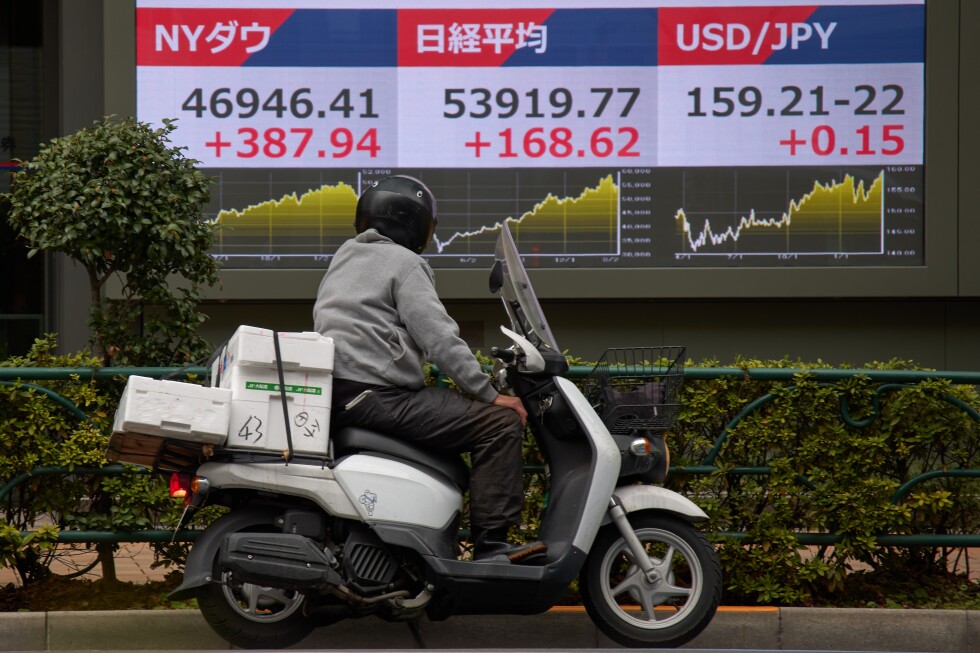
    Asian markets largely celebrated the judicial intervention, with Hong Kong’s Hang Seng Index leading regional gains by surging 2.2% to 27,003.47. South Korea’s Kospi advanced 1.1% to 5,873.07 while Taiwan’s Taiex jumped 1.4%. Conversely, China’s Shanghai Composite bucked the regional trend by declining 1.3% to 4,082.07, and Australia’s S&P/ASX 200 shed 0.4% to 9,041.00. Tokyo markets remained closed for a national holiday.

    The contrasting performances illustrated what Rabobank strategist Benjamin Picton described as “the winners-and-losers effect of shifts in tariff policy,” noting that the decision “delivered a boost to countries who previously had a comparatively bad deal.”

    U.S. futures signaled caution ahead of the Wall Street opening, with S&P 500 futures dropping 0.7%, Dow Jones Industrial Average futures falling 0.6%, and Nasdaq composite futures declining 0.8%. This contrasted with Friday’s relatively calm reaction on Wall Street itself, where the S&P 500 had actually risen 0.7% to 6,909.51 following the ruling.

    Despite the court’s decision, trade policy uncertainty persists as Trump announced alternative measures to maintain import taxes, including a potential 15% global tariff through executive action. “We have tariffs, we just have them in a different way,” Trump told reporters, indicating he would pursue tariffs through other legal avenues requiring Commerce Department investigations.

    Individual stocks reflected the ongoing market adjustments, with Akamai Technologies plummeting 14.1% despite strong earnings, as its profit forecast disappointed investors. The company plans increased spending on equipment investments, potentially reflecting broader economic impacts from AI-driven memory shortages.

    Meanwhile, economic indicators continued to present a complex picture with reports showing slowing U.S. economic growth alongside accelerating inflation. Traders maintained expectations of at least two Federal Reserve rate cuts this year, though Fed officials emphasized the need for further inflation reduction before supporting additional rate reductions.

    In commodity markets, U.S. benchmark crude declined 53 cents to $65.95 per barrel while Brent crude dropped 51 cents to $70.79. Precious metals rallied sharply with gold rising 1.9% and silver surging 5.5%, as currency markets saw the U.S. dollar soften against the yen and euro.

  • What’s behind Israel’s ‘special relationship’ with India?

    What’s behind Israel’s ‘special relationship’ with India?

    Indian Prime Minister Narendra Modi’s upcoming two-day visit to Israel marks a significant moment in the deepening strategic partnership between the two nations. The visit, described by Israeli Prime Minister Benjamin Netanyahu as highlighting a “special relationship,” comes at a critical juncture in Middle Eastern geopolitics, with escalating tensions with Iran and ongoing conflict in Gaza.

    The relationship between India and Israel has evolved substantially since Netanyahu’s landmark 2017 visit to India, which established the countries as strategic partners in water and agriculture. Modi’s current visit represents a continuation of this growing alliance, particularly in defense and technology sectors.

    Over the past decade, India has emerged as the largest purchaser of Israeli weapons systems, with defense purchases increasing by 175% between 2015-2019. The partnership extends beyond mere transactions to include co-production agreements and technology transfer, supporting Modi’s “Make in India” initiative for military modernization and indigenous manufacturing.

    The timing of the visit is strategically significant for both leaders. Netanyahu faces elections in nine months and benefits from demonstrating strong international alliances, while Modi reinforces his global stature and strategic outreach to the Global South. The visit includes addressing the Israeli Knesset—an honor reserved for special guests—and meetings focused on technology innovation in Jerusalem.

    Notably absent from the itinerary are visits to occupied Palestinian territories, reflecting India’s policy under Modi to “de-hyphenate” Israel and Palestine relations, despite India’s official commitment to a two-state solution.

    The countries recently signed a Bilateral Investment Agreement aimed at protecting mutual investments and advancing broader economic integration. Discussions during the visit are expected to focus on expanding cooperation in intelligence, weapons development, anti-ballistic missile systems, and emerging technologies including artificial intelligence and quantum computing.

    Netanyahu has articulated a vision of forming a “hexagon” of alliances involving India, Arab nations, African countries, Mediterranean states, and Asian partners, seen as an effort to create a pro-Western, anti-Iran economic and strategic bloc building on the India-Middle East-Europe Economic Corridor.

    While the visit has been celebrated in mainstream Indian media, it has also prompted concerns and protests from Palestinian advocates within India, met with government crackdowns. The opposition Indian National Congress has criticized the lack of transparency surrounding the visit rather than the substance of the relationship itself.

  • Shaping a human-centric future for AI – AI Impact Summit 2026

    Shaping a human-centric future for AI – AI Impact Summit 2026

    New Delhi hosted a landmark convergence of global leadership at the AI Impact Summit 2026, marking a pivotal chapter in technological history. Prime Minister Narendra Modi welcomed representatives from over 100 nations alongside innovators and thousands of youth participants, creating what organizers described as the world’s most democratized AI gathering.

    The summit positioned artificial intelligence as a civilization-altering force comparable to fundamental discoveries like fire and electricity, but with unprecedented acceleration. Unlike previous technological revolutions, AI’s transformative effects are unfolding within weeks rather than decades, creating both extraordinary opportunities and urgent challenges.

    Central to the discussions was India’s philosophical shift toward human-centric AI development. The principle of ‘Sarvajana Hitaya, Sarvajana Sukhaya’ (Welfare for All, Happiness of All) formed the ethical foundation for conversations about AI’s global role. This approach contrasts with machine-centric models, emphasizing technology as an amplifier of human potential rather than a replacement for human agency.

    India demonstrated practical implementations through case studies including ‘Sarlaben,’ an AI-powered digital assistant serving 3.6 million dairy farmers with real-time guidance in local languages. Another platform, Bharat Vistaar, provides multilingual agricultural information to empower farmers with crucial data from weather patterns to market dynamics.

    The summit’s most significant contribution emerged as India’s ‘Manav’ framework for global AI governance. This comprehensive structure establishes five pillars: Moral and Ethical Systems for ethical guidelines, Accountable Governance through transparent oversight, National Sovereignty regarding data rights, Accessible and Inclusive implementation to prevent monopolization, and Valid and Legitimate systems adhering to verifiable legal standards.

    Addressing critical trust challenges, Prime Minister Modi proposed authenticity labeling for digital content analogous to nutritional labels on food products. This initiative responds to growing concerns about deepfakes and disinformation threatening democratic societies. India has already implemented legal requirements for labeling synthetically generated content.

    The summit highlighted India’s substantial infrastructure investments under the India AI Mission, including deployment of thousands of GPUs and establishment of a national AI Repository. These developments enable even small startups to access world-class computing power at affordable rates, potentially reshaping the global innovation landscape.

    With its unique combination of demographic dynamism, democratic values, and technological ambition, India positioned itself as a testing ground for inclusive AI solutions. The country’s invitation to global innovators—’Design and develop in India. Deliver to the world’—signals its aspiration to become the epicenter of human-centric artificial intelligence development.

  • Pakistan claim of killing 80 militants ‘false’: Afghan security source

    Pakistan claim of killing 80 militants ‘false’: Afghan security source

    A senior Afghan security official has categorically rejected Pakistan’s assertion that its recent military strikes in Afghanistan resulted in the deaths of approximately 80 militants. Speaking to AFP on Sunday under conditions of anonymity, the source within the Taliban-led government described the casualty figures presented by Pakistani authorities as “false and imaginary.

    The dispute centers around cross-border operations conducted by Pakistani forces, which have escalated tensions between the neighboring nations. While Pakistan maintains its operations successfully targeted militant hideouts, Afghan officials present a starkly different account.

    According to local authorities in Afghanistan, the strikes resulted in at least 18 confirmed fatalities, including several children. This significant discrepancy in casualty reports highlights the ongoing information warfare accompanying military actions in the restive border region.

    International journalists stationed in Afghanistan have been unable to independently verify either side’s claims due to the remote and dangerous nature of the conflict zones. The lack of transparent access to these areas continues to complicate objective assessment of military operations and their outcomes.

    The incident represents the latest flare-up in long-standing tensions between Pakistan and Afghanistan regarding border security and militant activity. Both nations have historically accused each other of insufficient action against armed groups operating in their respective territories.

  • Kim Jong Un re-appointed leader of North Korea’s ruling party

    Kim Jong Un re-appointed leader of North Korea’s ruling party

    North Korea’s ruling Workers’ Party has unanimously reconfirmed Kim Jong Un as its General Secretary during the ongoing Ninth Party Congress, reinforcing his position at the helm of the authoritarian regime. The assembly, which commenced on February 19th and occurs quinquennially, brings together approximately 5,000 party delegates in a highly orchestrated display of political consolidation.

    In his inaugural address, Chairman Kim emphasized dual national priorities: enhancing economic conditions and elevating living standards for citizens, while simultaneously advancing the country’s military capabilities. State media outlet KCNA reported significant improvements in national ‘war deterrence’ capacities, centering around nuclear development. However, the opaque nature of the regime makes independent verification of these claims virtually impossible.

    The congress provides rare insight into North Korea’s political machinery, revealing substantial reshuffling within the presidium—the executive committee. Over half of its 39 members have been replaced since the previous convention in 2021, indicating possible strategic realignments or internal consolidation of power.

    Anticipating potential announcements regarding the nuclear program, the regime recently showcased new nuclear-capable rocket launchers. These developments unfold against a backdrop of persistent international sanctions aimed at curbing Pyongyang’s weapons proliferation.

    Attention also focuses on Kim Jong Un’s daughter, Ju Ae, whose repeated appearances at high-profile events—including military inspections and diplomatic functions—fuel speculation about her potential role as a political successor, as suggested by South Korean intelligence.

  • Earthquake of magnitude 7 strikes Borneo; no tsunami threat

    Earthquake of magnitude 7 strikes Borneo; no tsunami threat

    A significant seismic event measuring 7.0 on the Richter scale occurred off the northern coast of Borneo in the early hours of Monday, according to monitoring by the German Research Centre for Geosciences (GFZ). The substantial depth of the tremor—recorded at 633 kilometers (approximately 393 miles) beneath the Earth’s surface—significantly mitigated potential damage at ground level.

    The GFZ, which initially registered the quake at magnitude 7.1 before downward revision, confirmed the epicenter was positioned in maritime territory near the world’s third-largest island. The exceptional depth of the seismic activity placed it within the classification of a deep-focus earthquake, which typically dissipates energy before reaching populated areas.

    Concurrent with GFZ’s assessment, the United States Tsunami Warning Center promptly issued a statement confirming no tsunami threat emerged from the subterranean event. The combination of the quake’s profound depth and offshore location resulted in minimal impact despite its considerable magnitude.

    The Borneo region, shared by Malaysia, Indonesia, and Brunei, resides within the seismically active Pacific Ring of Fire, making such geological events relatively common though rarely destructive at such depths. The absence of immediate reports regarding casualties or structural damage underscores how depth parameters fundamentally alter earthquake impact assessments.