标签: Asia

亚洲

  • Photo of Qinglong Mountain egg fossil featured in top chemistry publication for groundbreaking dating research

    Photo of Qinglong Mountain egg fossil featured in top chemistry publication for groundbreaking dating research

    A groundbreaking scientific achievement from China’s Qinglong Mountain has received international acclaim in the field of chemistry. The prestigious publication Chemical & Engineering News has featured a crystalline dinosaur egg fossil discovery from Shiyan, Hubei province, in its annual “The Year in Chemistry Through Pictures” collection, recognizing it as exemplary of how chemistry enhances our understanding of the natural world.

    The selection, announced on December 2, 2025, highlights the most influential chemical developments globally. The recognition stems from pioneering research led by Zhao Bi, a senior engineer at the Hubei Institute of Geosciences in Wuhan, who emphasized the study’s significant innovation in geochronological methodology.

    This research represents the first successful application of isotopic geochronology to biogenic eggshell minerals, establishing a novel approach for dating dinosaur fossils. The breakthrough provides unprecedented capabilities for refining our understanding of Cretaceous environments and evolutionary timelines. The technique offers new perspectives on dinosaur ecology and extinction causes, potentially revolutionizing paleontological dating methods.

    The fossil’s inclusion among the year’s most notable chemical achievements underscores China’s growing contribution to advanced scientific research and international scientific collaboration, demonstrating how chemical analysis can unlock mysteries of prehistoric life.

  • China sees jump in number of students returning from overseas in 2024

    China sees jump in number of students returning from overseas in 2024

    China is experiencing a significant acceleration in the return of its overseas-educated talent, with official data revealing a substantial surge in students choosing to return home after completing their studies abroad. According to figures released by the Ministry of Education at a Shanghai event on Thursday, December 11th, 2025, the nation welcomed back 495,000 returnees in 2024 alone. This marks a notable increase of 79,400 individuals, representing a year-on-year growth rate of 19.1 percent.

    The data was unveiled during the 30th-anniversary commemoration of the ministry’s ‘Chunhui’ (Spring Light) program. This long-standing initiative is designed to encourage Chinese scholars abroad to contribute their expertise to national development. The statistics further contextualize this trend within China’s broader educational history since its reform and opening-up policy began in 1978. Over this 46-year period, an estimated 8.88 million Chinese citizens pursued education overseas. Of the 7.43 million who have completed their studies, a decisive majority—6.44 million—have chosen to return to China.

    A particularly striking trend emerges from the post-2012 era. The ministry reported that a staggering 5.63 million students have returned to China since 2012, accounting for approximately 87 percent of all returnees since the late 1970s. This indicates not only a recent acceleration in the reversal of the ‘brain drain’ phenomenon but also suggests a powerful and sustained momentum in China’s ability to attract its global talent back home, potentially reshaping its innovation landscape and labor market.

  • China’s Hezhen Yimakan storytelling inscribed on UNESCO Representative List

    China’s Hezhen Yimakan storytelling inscribed on UNESCO Representative List

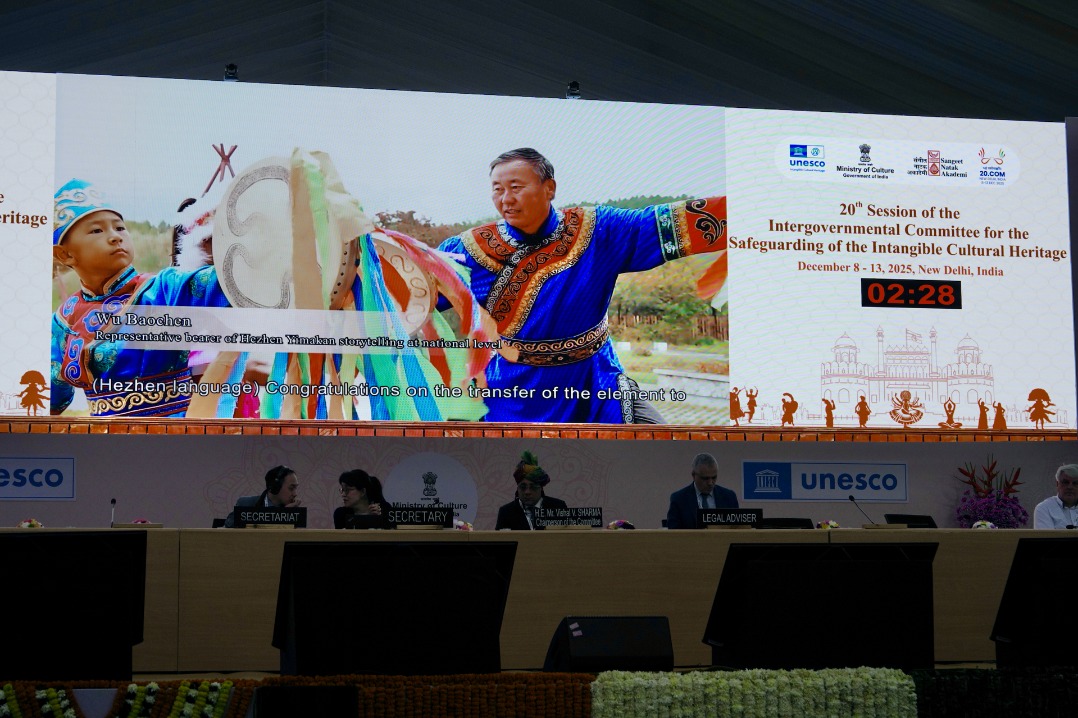
    In a landmark decision at its 20th regular session in New Delhi, UNESCO’s Intergovernmental Committee for the Safeguarding of the Intangible Cultural Heritage has granted dual recognition to China’s Hezhen Yimakan storytelling tradition. The ancient oral practice has been officially transferred from the List of Intangible Cultural Heritage in Need of Urgent Safeguarding to the prestigious Representative List of the Intangible Cultural Heritage of Humanity.

    The committee simultaneously inscribed the safeguarding program for Hezhen Yimakan storytelling into the Register of Good Safeguarding Practices, marking the first time any cultural element has achieved both distinctions concurrently. This unprecedented double recognition follows China’s successful transfer of three cultural elements in 2024, including Li textile techniques.

    Hezhen Yimakan represents the rich cultural tapestry of the Hezhe ethnic group, serving as a living repository of their history, heroic narratives, traditional fishing and hunting practices, ritual ceremonies, and moral codes. This unique art form blends prose and verse delivery in the Hezhe language, fulfilling multiple social functions including historical documentation, intergenerational education, and community entertainment.

    Since its initial inclusion on the Urgent Safeguarding List in 2011, collaborative efforts among tradition bearers, community organizations, research institutions, and government agencies have significantly strengthened the tradition’s viability. China’s community-centered preservation approach has enhanced both intergenerational transmission and global visibility of this cultural treasure.

    The successful transfer follows China’s submission of a comprehensive periodic report to UNESCO in December 2023, which detailed the remarkable recovery of the tradition. The committee’s examination and approval at its 19th session in December 2024 acknowledged China’s effective safeguarding measures while encouraging continued community engagement.

    This achievement brings China’s total representations across UNESCO’s Intangible Cultural Heritage lists to 45, comprising 40 on the Representative List, three on the Urgent Safeguarding List, and two on the Register of Good Safeguarding Practices.

  • Supply and marketing fair held in Lhasa

    Supply and marketing fair held in Lhasa

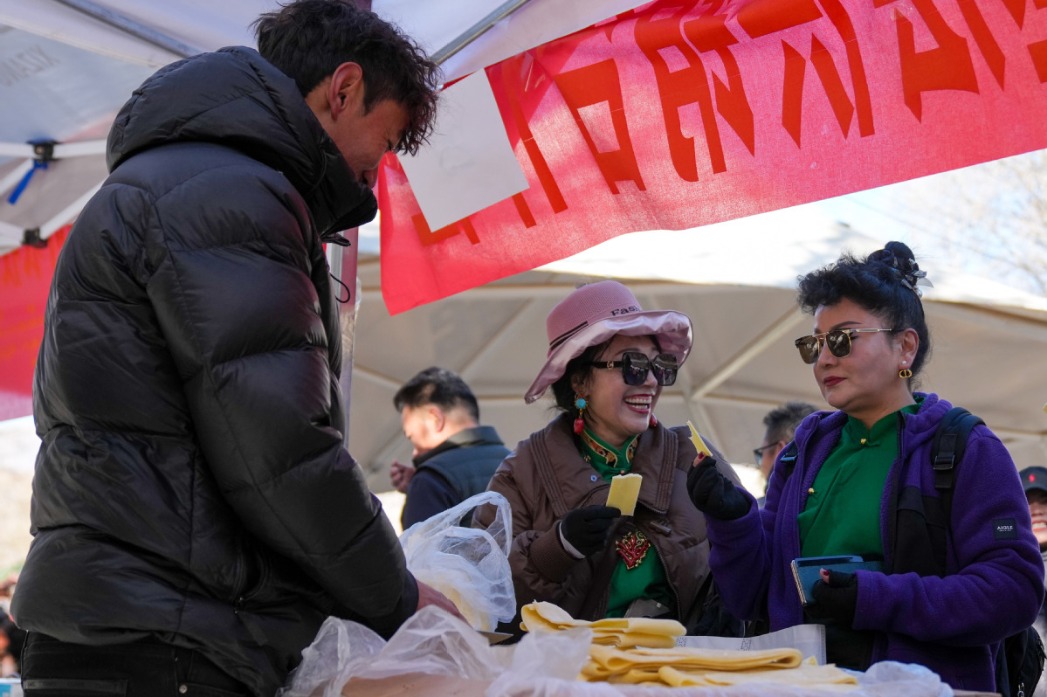
    Lhasa, the capital of China’s Xizang Autonomous Region, became a vibrant marketplace on December 10, 2025, as it hosted a comprehensive supply and marketing fair at a local park. The event transformed the urban green space into a bustling economic hub, featuring an extensive collection of over 1,000 distinctive agricultural products native to the Tibetan plateau.

    The fair served as a commercial platform highlighting the region’s unique agricultural heritage, with particular emphasis on highland barley derivatives, premium yak meat products, and traditional dairy items. These offerings represent not just commercial goods but centuries-old culinary traditions preserved by local farmers and herdsmen.

    Visitors engaged enthusiastically with vendors, examining and selecting from an array of authentic specialties while learning about their origins and production methods. The event’s design specifically facilitated direct interaction between producers and consumers, eliminating intermediary distribution channels.

    This initiative forms part of broader regional efforts to strengthen rural economies by creating direct market access for agricultural producers. By providing this platform, organizers aimed to boost income generation for farming and herding communities while simultaneously offering urban residents access to genuine regional products.

    The successful execution of this fair demonstrates the growing economic vitality of Xizang’s agricultural sector and its increasing integration with consumer markets. Such events contribute significantly to preserving cultural traditions while adapting them to contemporary economic frameworks, ensuring both economic benefits and cultural preservation.

  • Former CNOOC executive charged in bribery case

    Former CNOOC executive charged in bribery case

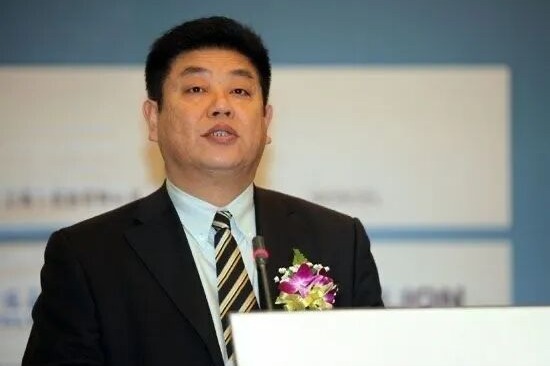
    In a significant development in China’s ongoing anti-corruption campaign, Yuan Guangyu, the former deputy general manager of China National Offshore Oil Corporation (CNOOC), has been formally indicted on bribery charges. The Supreme People’s Procuratorate announced on December 11, 2025, that the Xuzhou People’s Procuratorate in Jiangsu Province has filed charges against the 66-year-old former executive.

    The case follows an extensive investigation conducted by the National Supervisory Commission, which concluded its probe and transferred the findings to judicial authorities for prosecution. With jurisdiction designated by the Supreme People’s Procuratorate, Jiangsu Provincial People’s Procuratorate approved Yuan’s arrest on allegations of corruption.

    Prosecutors allege that Yuan exploited his influential positions—including director of CNOOC Bohai Oil Administration Bureau and executive vice-president and president of CNOOC Limited—to provide improper benefits to certain entities and individuals. According to the indictment, he accepted substantial illicit property from others, with the involved amount described as ‘extremely huge’ by judicial authorities.

    During the legal proceedings, judicial officials have followed standard protocol by informing Yuan of his defendant rights, conducting interrogations, and consulting with his defense counsel. The case represents another high-profile prosecution in China’s systematic anti-graft campaign targeting senior corporate executives in state-owned enterprises.

    Yuan, who had spent his entire career within the CNOOC system, was initially placed under investigation in March 2025, marking the beginning of a nine-month process that has now culminated in formal charges.

  • Man sentenced to 4 years in landmark dog poisoning case

    Man sentenced to 4 years in landmark dog poisoning case

    In a groundbreaking legal ruling, a Beijing court has sentenced a 65-year-old man to four years imprisonment for dispersing lethal toxins in a residential community, resulting in the deaths of nine pet dogs. The Chaoyang District People’s Court delivered the verdict on Thursday against defendant Zhang, convicting him of employing hazardous substances in public spaces—marking the first criminal case of its kind in Beijing’s judicial history.

    The tragic incident occurred in September 2022 when eleven dogs were poisoned within a Chaoyang district residential complex. Nine animals succumbed to sodium fluoroacetate, an extremely toxic compound commonly used in rodenticides that proves fatal through minimal contact or ingestion. Among the victims was a 13-year-old West Highland white terrier belonging to Li, who described the pet as her closest companion through her most formative adult years.

    The case gained significant attention as Li resigned from her employment to pursue justice, eventually representing multiple pet owners during October 2023 court proceedings. While Zhang admitted to dispersing the poisonous substance, he provided ambiguous motivations for his actions, citing general antipathy toward dogs while disputing direct responsibility for the fatalities.

    Legal experts highlight the case’s significance in establishing precedent for animal welfare litigation and defining legal boundaries regarding public endangerment through unauthorized use of toxic materials. The defendant has indicated intentions to appeal the verdict to a higher judicial authority.

  • China’s ‘Jiutian’ large drone takes first flight, aims for versatile civil roles

    China’s ‘Jiutian’ large drone takes first flight, aims for versatile civil roles

    China’s aviation sector has achieved a significant milestone with the successful inaugural flight of the ‘Jiutian,’ a large-scale unmanned aerial vehicle (UAV) developed by the state-owned Aviation Industry Corporation of China (AVIC). The demonstration took place on Thursday in Pucheng, located in Shaanxi province, marking a substantial advancement in the country’s indigenous drone capabilities.

    Engineered for exceptional performance metrics, the Jiutian drone features an impressive 16.35-meter length and a 25-meter wingspan. With a maximum takeoff weight of 16 tonnes, the aircraft can carry payloads up to 6,000 kilograms. Its operational specifications include an endurance of 12 hours and an extensive ferry range of 7,000 kilometers, enabling long-distance missions across diverse geographical regions.

    The UAV’s design incorporates advanced features including a high operational ceiling, broad speed range, and short takeoff and landing capabilities. These characteristics make it particularly suitable for challenging environments and various mission profiles. A key innovation is its modular payload system, which allows for rapid reconfiguration to address multiple civilian needs.

    Potential applications span critical sectors including precision logistics for delivering heavy cargo to remote areas, emergency communication support during disasters, comprehensive geographic surveying, and natural resource mapping. This versatility positions the Jiutian as a multi-role platform that could significantly enhance operational efficiency in fields requiring heavy-lift aerial capabilities without human pilot constraints.

    The development represents China’s growing expertise in high-end UAV technology and underscores the expanding applications of drone systems beyond military use into civilian and commercial domains, potentially creating new paradigms in transportation, emergency response, and resource management.

  • An airstrike on a hospital in a rebel-controlled area of Myanmar kills 34 and injures 80

    An airstrike on a hospital in a rebel-controlled area of Myanmar kills 34 and injures 80

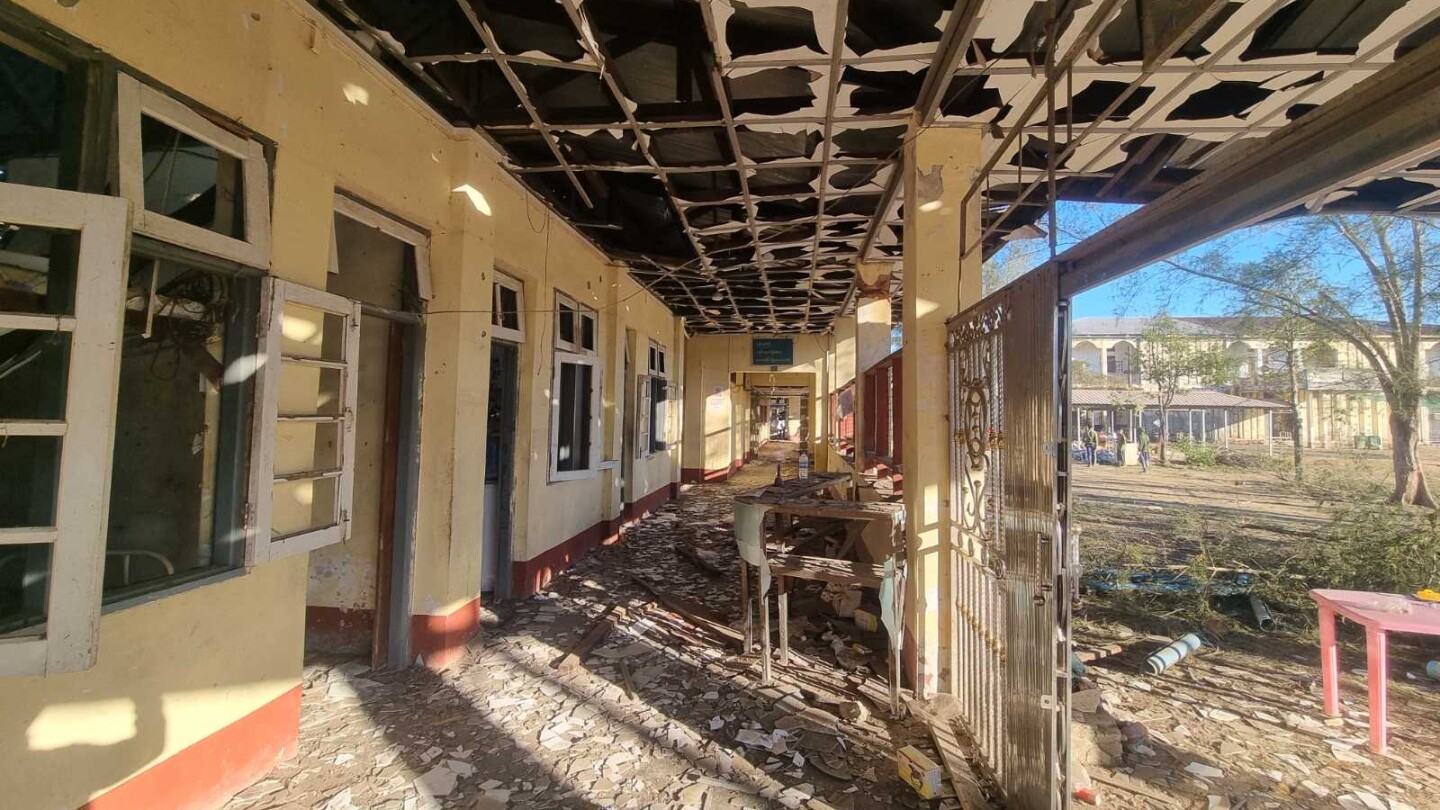
    In a devastating escalation of Myanmar’s ongoing civil conflict, a military airstrike has obliterated a critical hospital in Rakhine State, resulting in substantial casualties among patients and medical personnel. The assault occurred Wednesday evening in Mrauk-U township, an area under the control of the ethnic Arakan Army rebel force.

    According to verified reports from rescue workers and independent media outlets, the aerial bombardment killed 34 individuals—17 women and 17 men—while injuring approximately 80 others. Wai Hun Aung, a senior rescue services official in Rakhine, confirmed that a jet fighter deployed two bombs at 9:13 p.m., with one striking the hospital’s recovery ward and another landing adjacent to the main building. The attack reduced most of the medical facility to rubble and damaged nearby vehicles.

    This hospital had served as a vital healthcare lifeline for local communities after most medical facilities in Rakhine shuttered due to prolonged conflict. Doctors had recently regrouped in Mrauk-U to restore essential medical services when the strike occurred.

    The military junta that seized power in Myanmar’s 2021 coup has remained silent regarding the attack. Meanwhile, the shadow National Unity Government—formed by lawmakers barred from office—has strongly condemned the assault and called for international intervention to pressure the military regime.

    The Arakan Army, which captured Mrauk-U in February 2024, represents the armed wing of the Rakhine ethnic minority seeking autonomy from Myanmar’s central government. Their November 2023 offensive has secured 14 of Rakhine’s 17 townships, including a strategically significant regional army headquarters.

    This incident occurs against the backdrop of planned December 28 elections, which opposition groups decry as an attempt to legitimize military rule. The junta has intensified airstrikes against pro-democracy forces ahead of the polls, deepening Myanmar’s political crisis that began with the 2021 power grab.

  • 2 workers trapped in S. Korean construction site collapse

    2 workers trapped in S. Korean construction site collapse

    Emergency response teams in Gwangju, South Korea, are conducting urgent rescue operations following the collapse of a steel structure at a library construction site on Thursday afternoon. The incident occurred at approximately 1:58 PM local time (0458 GMT) in the city located 270 kilometers south of Seoul.

    According to reports from Yonhap News Agency, two construction workers remain trapped beneath the collapsed framework. Fire and rescue authorities immediately deployed to the scene following the structural failure, though specific details regarding the workers’ conditions have not been disclosed.

    The collapse has raised immediate concerns about construction safety protocols at the developing site. Local officials have cordoned off the area while specialized teams work to stabilize the debris and extract the trapped individuals. The library project, part of the city’s urban development initiative, now faces scrutiny as investigators prepare to examine the causes behind the structural failure.

    This incident highlights ongoing challenges in construction safety within rapid development projects across South Korea. The response operation continues as rescue teams work against time to locate and extract the workers from the precarious situation.

  • Bangladesh to hold national elections in February, the first since 2024 mass uprising

    Bangladesh to hold national elections in February, the first since 2024 mass uprising

    Bangladesh’s Chief Election Commissioner A.M.M. Nasir Uddin announced Thursday that the nation’s next general elections will take place on February 12, marking a pivotal moment in the country’s political landscape eighteen months after the ousting of former Prime Minister Sheikh Hasina. The electoral timetable was formally disclosed during a nationally televised address, revealing that citizens will simultaneously participate in a referendum concerning proposed political reforms while electing 300 parliamentary representatives.

    The electoral process will commence with nomination filings from December 12-29, followed by a six-day review period. January 20 has been designated as the final date for candidate withdrawals. This election represents the thirteenth national vote since Bangladesh achieved independence from Pakistan in 1971 following a bloody liberation war.

    The political environment remains deeply fractured since the massive protests of July-August 2024 that precipitated Hasina’s removal from power. The former leader, now residing in exile in India, received a death sentence in November from a Bangladeshi court for crimes against humanity related to the unrest. Since August 8, 2024, an interim government led by Nobel Peace Prize laureate Muhammad Yunus has governed the nation, implementing a ban on all activities of Hasina’s Awami League party that effectively excludes the former ruling party from electoral participation.

    Reactions to the election announcement have revealed stark political divisions. The Bangladesh Nationalist Party (BNP), along with Islamist party Jamaat-e-Islami and the newly formed National Citizen Party, welcomed the electoral timeline. BNP Secretary General Mirza Fakhrul Islam Alamgir characterized the announcement as ‘a day of joy,’ expressing confidence that the election commission and government were committed to implementing the people’s democratic rights.

    Conversely, Hasina’s Awami League condemned the election as illegitimate, asserting that excluding the party that led Bangladesh’s independence movement would plunge the nation into profound crisis. The interim government under Yunus congratulated the election commission, describing the upcoming vote as consolidating Bangladesh’s ‘new trajectory’ following last year’s historic uprising.

    International human rights organizations have raised concerns about Bangladesh’s democratic transition, with Human Rights Watch and Amnesty International questioning the rule of law under the interim government and the fairness of Hasina’s trial. The nation remains polarized as it attempts to break from the dominance of two dynastic political camps—Hasina’s Awami League and the BNP led by ailing former Prime Minister Khaleda Zia—while addressing concerns about rising Islamist influence.

    The concurrent referendum addresses demands by political parties to legitimize the ‘July National Charter’ of political reforms, which currently lacks binding legal status. In Bangladesh’s parliamentary democracy of 170 million people, only parliament can amend the constitution, making the referendum’s outcome potentially significant for the country’s governance framework. Over 127.6 million registered voters are eligible to participate in both the electoral and referendum processes.