标签: Asia

亚洲

  • Premier League: City held by Solanke stunner, Sesko delivers ‘best feeling’ for United

    Premier League: City held by Solanke stunner, Sesko delivers ‘best feeling’ for United

    In a dramatic Sunday of Premier League action, the title race witnessed a significant shift as Manchester City dropped crucial points while Manchester United secured a last-gasp victory. The unfolding events have dramatically altered the landscape at the top of the table.

    Manchester City’s championship aspirations suffered a major setback at the Tottenham Hotspur Stadium, where they surrendered a two-goal advantage against a resilient Spurs side. Despite establishing commanding control through first-half strikes from Rayan Cherki and Antoine Semenyo, Pep Guardiola’s squad collapsed in the second period. The remarkable comeback was orchestrated by Dominic Solanke, whose spectacular scorpion-kick equalizer secured a 2-2 draw and sent shockwaves through the title race.

    This result marks a concerning trend for the defending champions, who have managed just a single victory in their six Premier League outings this calendar year. The dropped points have enabled Arsenal to establish a potentially decisive six-point cushion at the summit as they pursue their first league championship in over two decades.

    Meanwhile, at Old Trafford, Manchester United continued their resurgence under interim manager Michael Carrick with a breathtaking 3-2 triumph over Fulham. The match followed a similar narrative of squandered advantages and late drama. United appeared comfortable with goals from Casemiro and Matheus Cunha, but Fulham mounted a furious comeback through Raul Jimenez’s penalty and Kevin’s spectacular equalizer.

    Just as Fulham seemed to have secured a point, summer signing Benjamin Sesko delivered a moment of pure brilliance, spinning onto Bruno Fernandes’ precise pass before unleashing an unstoppable drive into the top corner during stoppage time. The dramatic winner sparked euphoric celebrations and extended United’s winning streak to three matches under Carrick’s guidance, propelling them into the coveted top four positions.

    In other Sunday fixtures, Aston Villa’s outside title hopes diminished further with a disappointing 1-0 home defeat to ten-man Brentford. Despite Kevin Schade’s first-half dismissal, the Bees secured all three points through Dango Ouattara’s strike before half-time. Villa’s frustration was compounded when a Tammy Abraham equalizer was disallowed by VAR review.

    The day’s results have fundamentally reshaped the Premier League landscape, with Arsenal emerging as clear favorites while their rivals encounter varying degrees of struggle and resurgence.

  • UAE leaders offer condolences to Pakistan President over terrorist attacks in Balochistan

    UAE leaders offer condolences to Pakistan President over terrorist attacks in Balochistan

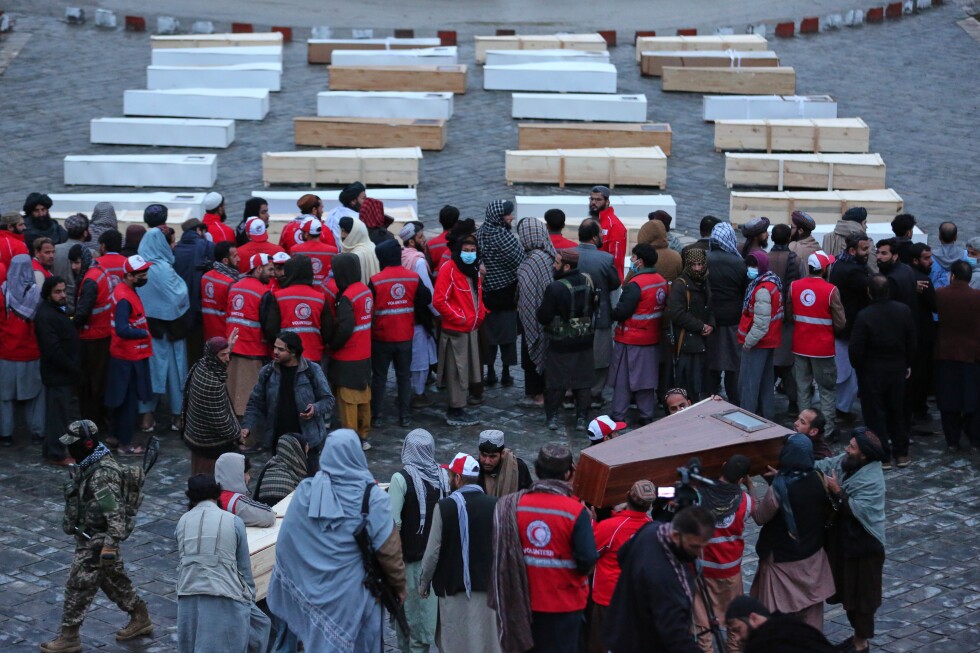
    In a significant diplomatic gesture, the United Arab Emirates’ highest leadership has formally expressed condolences to Pakistan following devastating terrorist attacks in the restive Balochistan province. UAE President Sheikh Mohamed bin Zayed Al Nahyan spearheaded the response by dispatching an official cable to Pakistani President Asif Ali Zardari, conveying profound sympathy for the tragic loss of life and injuries resulting from the coordinated assaults.

    The presidential message emphasized the UAE’s solidarity with Pakistan during this period of national grief while extending heartfelt wishes for the rapid recovery of all individuals injured in the violence. This demonstration of regional solidarity was further reinforced by parallel communications from Sheikh Mohammed bin Rashid Al Maktoum, Vice President and Prime Minister of the UAE and Ruler of Dubai, alongside Sheikh Mansour bin Zayed Al Nahyan, who serves as Vice President, Deputy Prime Minister and Chief of the Presidential Court.

    The coordinated diplomatic response underscores the strategic importance of UAE-Pakistan relations and reflects the Emirates’ consistent foreign policy stance against transnational terrorism. The attacks in Balochistan represent the latest challenge to regional security, with the province having experienced persistent instability due to separatist movements and extremist activities. The UAE’s prompt expression of support signals continued cooperation between the Gulf states and South Asian nations in addressing shared security concerns while promoting regional stability through diplomatic channels.

  • Arab and Muslim states condemn Israel’s ceasefire breaches after deadly Gaza strikes

    Arab and Muslim states condemn Israel’s ceasefire breaches after deadly Gaza strikes

    Top diplomats from eight nations—Qatar, Jordan, the United Arab Emirates, Indonesia, Pakistan, Turkey, Saudi Arabia, and Egypt—have issued a forceful joint condemnation of Israel’s repeated breaches of the Gaza ceasefire. The ministers declared that these violations have resulted in over a thousand Palestinian casualties, killed and wounded, since the October 2025 truce was established.

    In a statement released on the social media platform X this Sunday, the coalition warned that Israel’s military actions are dangerously escalating tensions and jeopardizing delicate efforts to consolidate calm and reestablish stability in the region. The ministers articulated that these repeated breaches represent a direct threat to the broader political process, actively hindering ongoing work to create the necessary security and humanitarian conditions for a transition to a more stable phase in the Gaza Strip.

    The officials called upon both Israel and Hamas to uphold their respective responsibilities and exercise maximum restraint. Furthermore, they pushed for a comprehensive resolution, advocating for a just and lasting peace founded on the Palestinian right to self-determination and statehood. This vision, they stressed, must align with international law, relevant United Nations Security Council resolutions, and the foundational principles of the Arab Peace Initiative.

    This diplomatic rebuke followed a severe escalation on Saturday, during which Israeli forces launched some of the most intensive airstrikes witnessed since the October ceasefire. Palestinian health authorities reported the attacks killed more than 30 individuals. Among the deceased were three young sisters from the same family. The strikes targeted residential homes, tents sheltering internally displaced persons, and a local police station.

    Footage emerging from Gaza City depicted scenes of profound devastation: apartment walls blown out, concrete structures blackened by fire, and debris scattered widely across streets and amidst the wreckage. The Israeli military justified the offensive as a response to a prior breach of the ceasefire the previous day, a recurring rationale used to explain attacks in the densely populated enclave. These actions have been widely criticized for exacerbating the severe humanitarian collapse in the besieged Strip.

    In a related development, Israel is scheduled to reopen the critical Rafah border crossing with Egypt on Monday. This move is part of a U.S.-backed plan initially advanced during the Trump administration. According to local health officials, Israeli strikes have claimed the lives of more than 500 people since the October ceasefire agreement was first announced.

  • India budget 2026: High-speed rail corridors, medical hubs and tax reforms

    India budget 2026: High-speed rail corridors, medical hubs and tax reforms

    Finance Minister Nirmala Sitharaman presented a transformative budget on February 1, 2026, outlining India’s roadmap to achieve developed nation status by its 100th independence anniversary in 2047. The comprehensive fiscal plan combines massive infrastructure development with strategic tax reforms designed to position India as a global technology and healthcare hub.

    The centerpiece of the infrastructure initiative involves seven new high-speed rail corridors connecting major metropolitan centers including Delhi, Mumbai, Pune, Hyderabad, Chennai, Varanasi, and Siliguri. These corridors aim to revolutionize domestic transportation and facilitate efficient movement for millions of daily commuters across the nation.

    In a bold move to attract foreign investment, the government proposed an unprecedented tax holiday extending until 2047 for international companies providing global cloud services through Indian data centers. This incentive requires foreign entities to serve Indian customers via local reseller partnerships, creating a symbiotic relationship between international technology firms and domestic businesses.

    The budget introduced significant support measures for the technology sector, particularly benefiting mid-sized IT companies by raising the safe harbour threshold from ₹3 billion to ₹20 billion. This regulatory easing comes as Indian IT firms face challenges in their primary American market.

    Financial sector reforms include establishing a high-level banking committee dedicated to the ‘Viksit Bharat’ (Developed India) vision, targeting economic transformation into a $10 trillion economy through focused development in education, healthcare, employment, technology, and sustainability.

    Healthcare initiatives feature five planned regional medical hubs developed through public-private partnerships, designed to establish India as a premier medical tourism destination. These integrated complexes will combine medical facilities, educational institutions, and research centers while incorporating traditional Ayurvedic medicine centers and rehabilitation infrastructure.

    The budget also provides a one-time, six-month voluntary disclosure window for eligible taxpayers including students, young professionals, and returning NRIs to regularize limited undisclosed foreign income or assets with immunity from penalties and prosecution.

    Despite these ambitious measures, stock markets reacted negatively primarily due to increased Securities Transaction Tax (STT) for Futures and Options trading, highlighting the challenge of balancing growth initiatives with market confidence.

  • ICC says Pakistan boycotting India match in T20 World Cup ‘undermines spirit of game’

    ICC says Pakistan boycotting India match in T20 World Cup ‘undermines spirit of game’

    The International Cricket Council (ICC) has issued a formal statement expressing profound concern over Pakistan’s government-directed decision to boycott its scheduled match against India in the upcoming T20 World Cup. While confirming participation in the broader tournament, Pakistan will notably abstain from the high-profile February 15 clash in Colombo, a move the global cricketing body finds fundamentally incompatible with the ethos of international sports.

    The ICC emphasized that the very foundation of global sporting events relies on the principle of equal participation among all qualified teams. Pakistan’s selective withdrawal, the Council stated, directly ‘undermines the spirit and sanctity of the competitions.’ The statement further elaborated that while the ICC acknowledges the sovereignty of national governments in policy matters, this particular decision is detrimental to the interests of the global game and its vast international fanbase, which includes millions of passionate cricket enthusiasts in Pakistan itself.

    Addressing the Pakistan Cricket Board (PCB) directly, the ICC urged careful consideration of the ‘long-term implications’ this boycott could have on the nation’s own cricketing future. The Council warned that such actions risk adversely affecting the entire global cricket ecosystem, of which Pakistan is both a member and a significant beneficiary. The ICC’s primary objective remains the successful execution of the tournament, a responsibility it asserts is shared by all member boards, including the PCB. The statement concluded with an expectation for the PCB to actively pursue a ‘mutually acceptable resolution’ that safeguards the interests of all stakeholders involved.

  • India’s snakebite crisis is killing tens of thousands every year

    India’s snakebite crisis is killing tens of thousands every year

    India faces a devastating public health emergency as snakebite envenoming claims approximately 50,000 lives annually, representing nearly half of global fatalities from such incidents. Recent research indicates the actual toll might be significantly higher, with estimates suggesting up to 1.2 million deaths occurred between 2000 and 2019.

    The Global Snakebite Taskforce (GST) has uncovered critical healthcare system deficiencies through a comprehensive survey of 904 medical professionals across India, Brazil, Indonesia, and Nigeria. The findings reveal that 99% of Indian healthcare workers encounter substantial obstacles when administering life-saving antivenom treatments. These challenges include inadequate medical infrastructure, limited antivenom accessibility, and insufficient professional training.

    Devendra, an Indian farmer, exemplifies the human cost of this crisis. After a snakebite during mulberry harvesting, delayed medical intervention necessitated leg amputation. His experience reflects a broader pattern where treatment delays frequently result in severe complications including amputations, surgical interventions, and permanent mobility impairments.

    The World Health Organization designated snakebite envenoming as a ‘highest priority neglected tropical disease’ in 2017, noting approximately 5.4 million global snakebites annually with over 100,000 fatalities. The burden disproportionately affects impoverished rural communities in low and middle-income nations.

    India’s central and eastern regions report the highest snakebite incidence, particularly among agricultural workers and tribal populations. In response, the government launched the National Action Plan for Prevention and Control of Snakebite Envenoming (NAPSE) in 2024, aiming to reduce fatalities by 50% before 2030 through enhanced surveillance, improved antivenom availability, and public awareness campaigns.

    However, implementation remains inconsistent. Dr. Yogesh Jain of GST notes that snakebites are often perceived as ‘a poor person’s problem,’ resulting in insufficient political attention despite being largely preventable. Rapid treatment is crucial since venom enters the bloodstream within minutes, potentially causing respiratory failure, paralysis, tissue damage, or organ failure.

    Rural healthcare access complications include inadequate transportation infrastructure, distant medical facilities, and limited ambulance services. A tragic case involved a pregnant Gujarat woman who died during transport after family members carried her 5 kilometers in a cloth sling.

    Antivenom administration presents additional challenges. Many healthcare workers lack proper training and fear potential adverse reactions. Current antivenom only neutralizes venom from the ‘big four’ species (spectacled cobra, common krait, Russell’s viper, and saw-scaled viper), leaving numerous other venomous snakes without targeted treatments.

    Recent research by the All India Institute of Medical Sciences in Jodhpur demonstrated that two-thirds of patients receiving standard antivenom for unidentified snake bites responded poorly, highlighting the urgent need for region-specific antivenom development.

    Organizations like The Liana Trust are researching venoms beyond the ‘big four,’ but progress remains slow due to the labor-intensive and time-consuming nature of antivenom development. Experts advocate for making snakebites notifiable diseases to improve reporting and resource allocation, emphasizing that political commitment is essential to resolve this public health crisis.

  • Abu Dhabi Open is a special tournament for me, says Bencic

    Abu Dhabi Open is a special tournament for me, says Bencic

    Swiss tennis star Belinda Bencic has identified the Mubadala Abu Dhabi Open as a particularly significant event in her professional career as she prepares to compete for an unprecedented third championship title. The World No. 10 returned to Zayed Sports City’s Stadium Court on Sunday, engaging in pre-tournament photography alongside the trophy she has claimed twice before.

    Bencic’s remarkable relationship with this tournament includes championship victories in both 2023 and 2025, with her most recent triumph representing a career milestone. Her 2025 win against American Ashlyn Krueger marked a spectacular comeback following maternity leave, demonstrating the 28-year-old’s exceptional resilience and competitive prowess on the WTA Tour.

    The Olympic gold medalist (Tokyo 2020) maintains an undefeated record at the Abu Dhabi event, where her combination of precision shot-making, strategic intelligence, and emotional connection with spectators has created memorable moments. Her 2025 victory became particularly poignant when she celebrated on court with her daughter, Bella, before a capacity crowd at Zayed Sports City.

    Bencic, who has received a bye into the Round of 32 and will commence her campaign on Monday, expressed her affection for the tournament: ‘The Mubadala Abu Dhabi Open is a special tournament for me – I’ve had some of my best memories here. The atmosphere is always incredible, and it means so much to return to a place where I’ve felt so much support from the fans.’

    The tournament, organized by MARI in partnership with Mubadala and the Abu Dhabi Sports Council, has rapidly evolved into one of the WTA Tour’s most engaging early-season competitions. Running from January 31 to February 7, the event combines elite women’s tennis with extensive community engagement initiatives and family-oriented activities, offering a comprehensive sports entertainment experience.

  • ’85 seconds to midnight’: How wars, less nuclear arms control affects ‘Doomsday Clock’

    ’85 seconds to midnight’: How wars, less nuclear arms control affects ‘Doomsday Clock’

    The international architecture governing nuclear non-proliferation is facing unprecedented collapse, according to leading atomic researcher Professor Karen Hallberg. Speaking at the World Laureate’s Summit, the Secretary General of the Pugwash Conferences on Science and World Affairs warned that critical treaties are expiring while nuclear rhetoric escalates among world powers.

    The imminent expiration of the New Strategic Arms Reduction Treaty (New START) between Russia and the United States on February 4, 2026, marks a pivotal moment in nuclear diplomacy. This expiration represents the first significant retreat from nuclear restraint in decades, potentially triggering a dangerous escalation in warhead deployment. Professor Hallberg emphasized the alarming lack of public awareness regarding these developments, contrasting current apathy with historical mass protests against nuclear weapons.

    Current global nuclear inventories remain concentrated among nine nations, with approximately 12,331 warheads documented by the Federation of Atomic Scientists. Russia and the United States collectively control over 83% of these stockpiles. While overall numbers show a gradual decline, the reduction pace has slowed considerably compared to previous decades.

    The deteriorating situation prompted The Bulletin of the Atomic Scientists to advance the symbolic Doomsday Clock to 85 seconds before midnight—the closest approach to catastrophic midnight in the mechanism’s history. This adjustment reflects growing concerns about diminished arms control agreements, escalating geopolitical conflicts, and emerging threats from artificial intelligence.

    Professor Hallberg’s organization, awarded the Nobel Peace Prize in 1995 for efforts to reduce nuclear weapons’ role in international politics, now warns of a potential new nuclear arms race as more states pursue weapons capabilities. This convergence of diplomatic breakdown and technological advancement creates what experts describe as the most perilous nuclear landscape since the Cold War era.

  • Djokovic vows to push on despite ‘bitter’ Australian Open final loss

    Djokovic vows to push on despite ‘bitter’ Australian Open final loss

    In a stunning reversal at Rod Laver Arena, world number one Carlos Alcaraz dethroned Novak Djokovic’s decade-long dominance in Australian Open finals with a spectacular 2-6, 6-2, 6-3, 7-5 victory on Sunday. The Spanish phenom has now thwarted Djokovic’s pursuit of a record-breaking 25th Grand Slam title for the third time in major finals, maintaining the Serbian’s tie with Margaret Court for the all-time record.

    The 38-year-old Djokovic, while visibly disappointed immediately following the match, expressed measured optimism about his tournament performance and future prospects. ‘It’s hard just right after the match to be all positive and smiling because you are a competitor and you don’t want to lose,’ Djokovic told reporters. ‘I managed to beat Jannik Sinner – who is double-defending champion here – in five sets, very proud of that. Incredible match, incredible achievement.’

    Djokovic acknowledged Alcaraz’s emerging legendary status, stating, ‘I lost to a number one in the world and already a legendary player.’ The Serbian star dominated the opening set but experienced a noticeable energy drop in subsequent sets, though he declined to elaborate on the specific reasons, preferring to credit Alcaraz’s performance.

    A critical moment occurred at 4-4 in the fourth set when Djokovic failed to convert a break point with an errant forehand. ‘That forehand, I had a good look at that forehand. Yeah, my forehand broke down in important moments,’ he reflected. ‘One or two shots can change the momentum of the match and switch things around. A lot of what-if scenarios in my head.’

    Despite the defeat, Djokovic remains committed to his Grand Slam ambitions. ‘I have belief, and I have always confidence and vision to win a Slam anywhere where I play,’ he asserted. In a characteristically humorous moment, the veteran acknowledged the new generation’s ascendancy: ‘The two of them [Alcaraz and Sinner], I guess, are going to be fighting for biggest titles, and then the youngsters like myself are going to try to catch up.’

    The path to this final saw Djokovic benefit from favorable circumstances – a walk-over in the fourth round and opponent Lorenzo Musetti’s retirement while down two sets in the quarterfinals. This context made the championship match potentially his best opportunity for another major trophy, adding significance to the narrow loss.

  • NRIs applaud India Budget 2026 push, welcome business-friendly measures

    NRIs applaud India Budget 2026 push, welcome business-friendly measures

    Indian business executives based in the United Arab Emirates have expressed widespread approval of India’s Budget 2026, praising its strategic focus on sustained economic growth, technological advancement, and enhanced non-resident Indian (NRI) participation. The fiscal plan, presented by Finance Minister Nirmala Sitharaman, has been characterized as a balanced approach that maintains fiscal discipline while accelerating infrastructure development and digital transformation.

    Prominent business figures highlighted several key initiatives that signal India’s ambition to emerge as a global manufacturing and technology leader. Yusuff Ali MA, Chairman of LuLu Group International, noted that the budget’s emphasis on artificial intelligence, micro, small and medium enterprises (MSMEs), and infrastructure development reinforces India’s position as an emerging economic powerhouse. The easing of Portfolio Investment Scheme rules and increased foreign holding limits were particularly welcomed as measures that would encourage greater NRI investment in India’s growth story.

    Healthcare sector leaders including Dr. Azad Moopen, Founder of Aster DM Healthcare, applauded the budget’s healthcare roadmap, which includes the Biopharma Shakti initiative and customs duty exemptions on critical cancer drugs. The expansion of medical infrastructure through new AIIMS facilities and district hospital upgrades is expected to strengthen India’s healthcare ecosystem and position the country as a global medical hub.

    Financial experts noted the budget’s careful balancing act between growth stimulation and fiscal responsibility. Siddharth Balachandran, Chairman of the Indian Business and Professional Council, observed that while the securities transaction tax hike on derivatives might be challenging, it was a necessary measure. The budget’s recognition of AI and deep technologies at the macroeconomic level was widely praised as timely and strategic.

    Several business leaders emphasized the importance of execution following the budget’s announcement. Thumbay Moideen, Founder President of Thumbay Group, stressed that implementation at scale would be crucial for realizing the budget’s vision. The budget’s focus on public-private partnership models was seen as instrumental in building a self-sustaining and resilient Indian economy aligned with the ‘Viksit Bharat 2047’ vision.

    While overall reception was positive, some executives noted areas for potential enhancement. Adeeb Ahamed, Managing Director of LuLu Financial Holdings, suggested that clearer financial services reforms and a more integrated tourism strategy could have further strengthened the medium-term outlook. Similarly, Anuj Puri of Anarock Group noted the absence of direct affordable housing incentives as a missed opportunity for inclusive urban development.