标签: Asia

亚洲

  • Thousands flock to a Tokyo zoo to see the last 2 pandas in Japan before their return to China

    Thousands flock to a Tokyo zoo to see the last 2 pandas in Japan before their return to China

    Tokyo’s Ueno Zoological Gardens is witnessing emotional farewells as thousands of visitors queue for hours to bid farewell to giant panda twins Xiao Xiao and Lei Lei before their scheduled return to China in late January. The four-year-old siblings, born at the zoo in June 2021, will make their final public appearance on January 25th, marking the end of an era as Japan faces its first panda-free period in over fifty years.

    The departure coincides with significantly deteriorated diplomatic relations between Tokyo and Beijing. Tensions escalated sharply in early November when Japanese Prime Minister Sanae Takaichi suggested potential military involvement should China impose naval blockades against Taiwan. Subsequent Chinese restrictions on tourism to Japan and cancellation of cultural exchanges have been followed by recent military provocations, including Chinese aircraft carrier drills near southern Japan and radar-locking incidents targeting Japanese aircraft.

    Panda diplomacy, a longstanding symbol of Sino-Japanese relations since the first pandas arrived in 1972 to commemorate normalized diplomatic ties, now faces uncertainty. While Chief Cabinet Secretary Minoru Kihara expressed hope for continued panda exchange programs, zoo officials acknowledge the challenging prospects for replacement pandas given current political realities.

    Visitors like Yuki Imai from Kanagawa prefecture expressed shock at the sudden departure announcement, while Kazuhiro Yamamoto and his wife Hiroko waited over two hours for their one-minute viewing window, speculating about the connection between diplomatic tensions and the accelerated return timeline.

    The zoo has implemented new viewing restrictions, limiting access to 4,800 pre-registered visitors weekly for one-minute slots. Curator Hitoshi Suzuki acknowledged the challenges of raising the twins but emphasized the “great delight” they brought to visitors. The zoo will maintain panda facilities in anticipation of future arrivals while promoting other animals during the interim period.
  • China and US anti-narcotics agencies cooperate to crack a cocaine smuggling case

    China and US anti-narcotics agencies cooperate to crack a cocaine smuggling case

    In a significant demonstration of cross-border law enforcement cooperation, Chinese and United States narcotics control agencies have jointly dismantled an international cocaine trafficking operation. The successful operation, concluded in mid-December 2025, represents a breakthrough in bilateral anti-drug collaboration despite ongoing geopolitical tensions between the two nations.

    The coordinated effort involved sophisticated intelligence sharing and simultaneous operational activities across multiple jurisdictions. According to official sources, the investigation uncovered a sophisticated smuggling network that attempted to exploit commercial shipping channels between North America and Asian markets. The operation resulted in multiple arrests across both countries and the seizure of substantial quantities of cocaine with an estimated street value running into millions of dollars.

    This joint operation builds upon previous cooperation frameworks established through bilateral agreements on narcotics control. Law enforcement officials from both countries emphasized that drug trafficking represents a transnational challenge that requires international collaboration regardless of political differences. The successful takedown of this smuggling network demonstrates the operational effectiveness of US-China cooperation in combating organized crime.

    Anti-narcotics experts note that such collaborations have become increasingly important as criminal organizations continue to develop more sophisticated methods to circumvent border controls and law enforcement measures. The operation signals both nations’ commitment to addressing the global drug trade through shared intelligence and coordinated enforcement actions.

  • Teen donates to preserve war truths in Nanjing

    Teen donates to preserve war truths in Nanjing

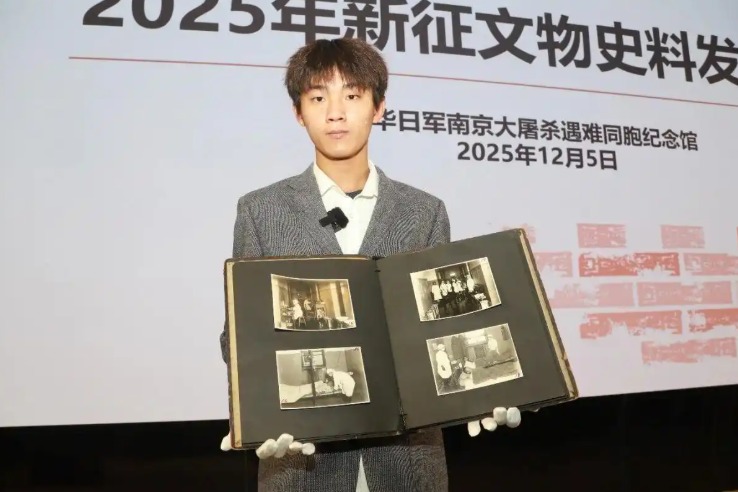
    In an extraordinary act of historical preservation, 15-year-old Yu Ningpeng from Xuzhou, Jiangsu province has donated significant wartime artifacts to the Memorial Hall of the Victims in Nanjing Massacre by Japanese Invaders. The high school student, who began collecting historical items at age six, has dedicated nine years to assembling evidence countering Japanese right-wing attempts to distort invasion history.

    The donated materials include two particularly revealing documents: a December 18, 1937 battlefield letter sent by a Japanese lieutenant to Fukushima prefecture, bearing a distinctive ‘Nanjing Fall Memorial’ postmark, and a photographic album from the Japanese military’s Hanami unit containing 44 rare images documenting a field hospital establishment in Tianjin.

    The lieutenant’s correspondence vividly describes the capture of Nanjing: ‘Our destination, the capital Nanjing, was finally captured by us on the 13th. On the 17th, we held a grand entry ceremony for the military commander and received a review.’ Meanwhile, the photo album provides unprecedented visual evidence of military medical operations, showing hospital layouts, laboratory facilities, supply rooms, and patient wards.

    Yu acquired these artifacts through secondary trading platforms at considerable personal expense, investing over 20,000 yuan without parental financial support. ‘All the expenses for the collection were earned through my own insight and knowledge,’ the teen collector revealed.

    The donation ceremony on December 5 marked Yu’s seventh visit to the memorial hall since its 2007 reopening, though his first as an official donor. His contribution comes amid increased public engagement with historical preservation, as the museum has received 573 artifacts this year alone—a 30% increase over previous years.

    Yu emphasizes that historical remembrance serves educational rather than retaliatory purposes: ‘Remembering history is not about perpetuating hatred, but about learning from it.’ The aspiring archaeologist advocates for Sino-Japanese youth exchanges grounded in historical accuracy, stating that friendship should not come at the expense of truth. His ultimate goal remains clear: ‘We must work hard to learn skills and make the country stronger so that historical tragedies do not repeat themselves.’

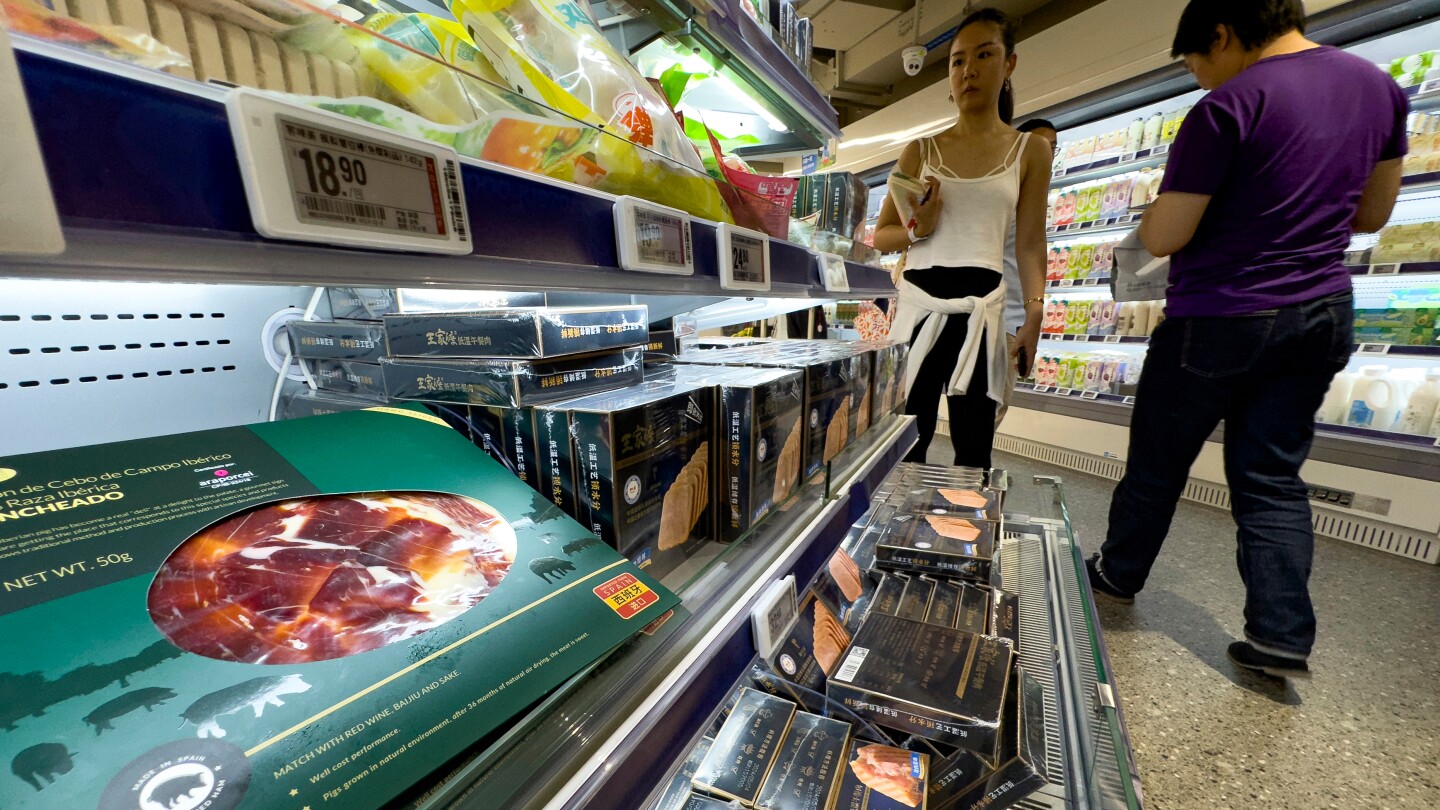
  • China puts anti-dumping tariff of up to 18.9% on imports of pork from the EU

    China puts anti-dumping tariff of up to 18.9% on imports of pork from the EU

    China’s Commerce Ministry announced on Tuesday a significant reduction in final anti-dumping duties on European Union pork imports, setting tariffs between 4.9% and 19.8%—a substantial decrease from the preliminary rates of up to 62.4% imposed last September. The decision concludes a comprehensive investigation into EU pork trade practices that Beijing initiated in response to Brussels’ provisional tariffs on Chinese electric vehicles.

    The finalized tariffs, which will take effect Wednesday and remain for five years, apply to all pork products regardless of processing method—including fresh, chilled, frozen, dried, pickled, smoked, or salted varieties. The ministry stated its investigation determined that EU producers had been dumping pork and pig by-products in the Chinese market at prices below production costs or domestic market values, causing harm to China’s domestic pork industry.

    The announcement comes amid complex trade dynamics between the economic powers. The EU maintains a substantial trade deficit with China, exceeding €300 billion ($348 billion) in the previous year, yet remains a critical supplier of pork and specialty byproducts—including ears, snouts, and feet considered delicacies in China—to the Asian market.

    Notably, the resolution provides differentiated rates based on cooperation with the investigation, with collaborating companies facing lower duties. The decision follows similar trade measures against European brandy, though major cognac producers received exemptions, and ongoing probes into EU dairy products.

    The ministry emphasized that its conclusions were reached through an “objective, fair and impartial manner,” reflecting Beijing’s strategic approach to balancing trade relations while protecting domestic interests. EU pork exports to China peaked at €7.4 billion ($7.9 billion) in 2020 following China’s swine disease crisis but have declined as China rebuilt its domestic herds.

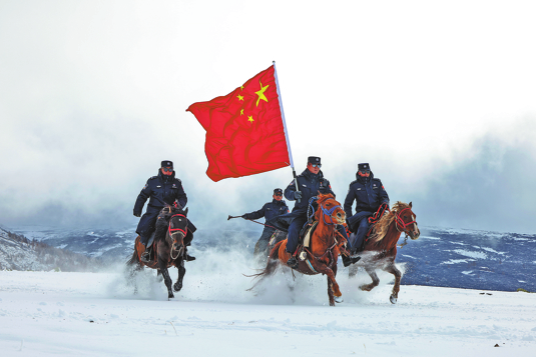
  • Horsemen safeguard remote borders

    Horsemen safeguard remote borders

    In the formidable Altay Mountains of China’s Xinjiang Uygur Autonomous Region, a specialized unit of border police has adapted to one of the country’s most challenging environments through an unexpected tool: horses. Operating from the Kanas Scenic Area Border Police Station at 1,324 meters above sea level, these officers patrol 817.63 square kilometers of rugged terrain bordering Kazakhstan, Russia, and Mongolia.

    The region transforms into a treacherous winter landscape for half the year, with temperatures plunging to -30°C and snowdrifts reaching three meters deep. Under these extreme conditions, conventional vehicles become useless, forcing officers to rely on equestrian patrols to maintain border security and provide emergency services.

    Station chief Zhu Peicai, a 15-year veteran of these harsh conditions, emphasizes that ‘riding a horse is as essential for us as driving a police car.’ His team of 24 officers and seven auxiliary personnel—with an average age of 29—serves a diverse community of 1,037 residents from six ethnic groups, approximately 80% of whom are Mongolian.

    The dangers these officers face are substantial. Beyond the constant threat of avalanches and hidden crevasses, they regularly rescue tourists lured by the area’s spectacular winter beauty but unprepared for its dangers. In October alone, the station rescued over 140 stranded visitors, including a major operation on October 1 when 110 tourists became trapped in the remote Black Lake area without communication capabilities.

    Officer Wang Yicheng describes the patrols as essential preventive measures: ‘Once the snow falls and freezes, the trail often becomes a death trap. Without a telephone signal, anyone stranded faces hypothermia within hours.’

    The physical toll on officers is severe, with some experiencing such intense saddle sores from extended missions that they must sleep on their stomachs for days. The team also recalls near-fatal incidents, including a harrowing avalanche in January last year that buried 200 meters of road and trapped over 1,000 tourists.

    Beyond emergency response, the officers serve as community mediators and grassroots administrators. A simple wooden table outside their station has become a hub for dispute resolution, with a remarkable 100% mediation success rate. Their annual accomplishments include handling over 900 rescue calls, saving more than 300 tourists and herders, and recovering approximately 4 million yuan in economic losses.

    Despite the isolation and danger, these officers have developed a profound commitment to their mission. As Political Commissar Wang Jia expressed after planting the national flag at the China-Russia border marker: ‘Standing there, seeing the flag flutter against the snow, every ache is worth it.’

  • China’s economic agenda hailed

    China’s economic agenda hailed

    Analysts across Asia are recognizing significant regional economic implications from China’s newly announced economic priorities. The conclusion of China’s Central Economic Work Conference on December 11 has set the stage for substantial domestic market enhancement strategies that promise to create stabilizing effects throughout Asian supply chains.

    Economic experts note that China’s commitment to strengthening internal consumption mechanisms arrives at a critical juncture for export-dependent Asian economies facing constrained global trading conditions. The policy direction emphasizes consumption stimulation initiatives, urban-rural income augmentation programs, and the elimination of regulatory barriers that currently inhibit consumer activity.

    Reuben Mondejar, economics professor at IESE Business School in Spain, observed that while China’s agenda primarily addresses domestic economic dynamics, the resulting increase in Chinese import capacity will inevitably produce positive spillover effects across Asian trading partners.

    Singapore-based researcher Amitendu Palit from the National University of Singapore highlighted China’s evolution from primarily a manufacturing exporter to a substantial consumption market. “Global attention has traditionally focused on China’s production capabilities,” Palit noted, “while underestimating its remarkable potential as a consumer market.”

    The strategic shift assumes greater importance considering current U.S. tariff policies affecting numerous trading nations. Malaysia-based investment specialist Ian Yoong Kah Yin suggested that China’s market expansion could catalyze more structured economic integration between China and ASEAN members, potentially leading to enhanced manufacturing partnerships specifically targeting Chinese consumer demand.

    Financial analysts from Nomura confirmed that domestic demand stimulation remains Beijing’s consistent policy priority, maintaining the emphasis established in previous year’s economic planning sessions. China’s substantial foreign exchange reserves and rising living standards provide strong fundamentals for this consumer-focused approach.

    The conference outcomes also reaffirmed China’s commitment to institutional opening-up and service sector liberalization, measures that economists believe will stabilize global supply chains and reduce vulnerability to unilateral economic pressures from dominant global powers.

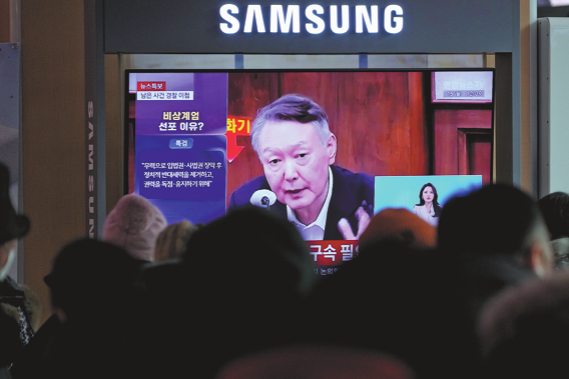
  • Yoon planned martial law early on: Probe team

    Yoon planned martial law early on: Probe team

    A comprehensive 180-day investigation by South Korea’s special counsel has uncovered that ousted President Yoon Suk-yeol orchestrated preparations for martial law implementation for over a year before his controversial decree on December 3, 2024. The findings, announced by special counsel leader Cho Eun-suk on Monday, detail a systematic plan to neutralize political opposition through military force.

    According to the investigation, Yoon and his associates initiated martial law preparations as early as October 2023. The scheme involved using military power to paralyze the National Assembly and seize both legislative and judicial authority, fundamentally aiming to eliminate political adversaries and consolidate power indefinitely. The probe further revealed that Yoon authorized unusual military operations intended to provoke an armed response from North Korea (DPRK), which ultimately failed when no military reaction materialized.

    Faced with this failure, Yoon’s administration allegedly categorized routine political activities within the National Assembly as “anti-state acts” and “insurrection plots” to justify the emergency martial law declaration. Although announced on December 3 last year, the decree was rescinded mere hours later following overwhelming opposition from the legislature.

    The constitutional consequences were severe: in April 2025, South Korea’s Constitutional Court upheld parliament’s impeachment vote, resulting in Yoon’s removal from office. The investigation has led to indictments against 24 individuals, including former Prime Minister Han Duck-soo, former Interior Minister Lee Sang-min, and former Defense Minister Kim Yong-hyun. Yoon and several key associates remain in custody pending trial.

    Evidence supporting these findings includes seized notes from former Defense Intelligence Commander Noh Sang-won, phone memoranda from former counterintelligence chief Yeo In-hyung, and testimonies from multiple witnesses. The investigation also uncovered Yoon’s longstanding hostility toward the Democratic Party, dating back to his tenure as prosecutor general. During a November 2022 meeting with People Power Party leadership, Yoon reportedly vowed to “sweep the DP away” even if it meant being “shot to death,” given emergency powers.

    In related developments, the Seoul Central District Court sentenced former commander Noh to two years imprisonment for unlawfully collecting military intelligence officers’ personal information connected to the martial law scheme. Additionally, the Constitutional Court announced it will deliver its impeachment ruling on Thursday regarding National Police Agency chief Cho Ji-ho, accused of blocking lawmakers’ assembly access during the crisis.

  • Scientists alter mast cells to fight cancerous tumors

    Scientists alter mast cells to fight cancerous tumors

    In a revolutionary approach to cancer treatment, researchers at Zhejiang University have successfully transformed mast cells—typically known for triggering allergic responses—into precision weapons against cancerous tumors. This innovative strategy merges targeted immune system activation with advanced drug delivery mechanisms.

    The research, published in the prestigious journal Cell, represents a collaboration between Professors Gu Zhen and Yu Jicheng of Zhejiang University and Professor Liu Fujian of China Medical University. Their work focuses on repurposing mast cells, a type of white blood cell traditionally associated with allergic reactions such as hay fever or food sensitivities, into specialized carriers for oncolytic viruses designed to eliminate cancer cells.

    The scientific breakthrough involves equipping mast cells with immunoglobulin E (IgE) antibodies specifically engineered to recognize unique protein markers on tumor cells. This biological reprogramming effectively converts these cells into precision-guided vehicles that seek out and infiltrate cancerous growths.

    Once these modified mast cells reach their target, they unleash their therapeutic payload through a controlled release mechanism reminiscent of an allergic reaction. This process delivers a concentrated dose of cancer-killing viruses directly to the tumor site while simultaneously activating additional immune defenses, including CD8+ T cells, to join the attack.

    In preclinical studies involving mouse models of melanoma, breast cancer, and metastatic lung cancer, the approach demonstrated significant tumor growth suppression and improved survival rates. Notably, in experiments using patient-derived tumor models with elevated HER2 protein levels (common in certain breast cancers), the treatment triggered robust immune responses and substantial tumor reduction.

    The platform’s adaptability allows for personalized cancer treatment by tailoring IgE antibodies to target patient-specific tumor proteins. Researchers suggest this mast cell technology could also be adapted to deliver other therapeutic agents, including small-molecule drugs or antibodies.

    The research team is currently advancing the technology toward clinical applications, focusing on optimizing production processes, selecting patient-specific IgE antibodies, and exploring combination therapies with existing immunotherapies.

  • La Nina conditions may hit rain, lead to drought

    La Nina conditions may hit rain, lead to drought

    Meteorological authorities warn that eastern and southern regions of China face heightened drought risks throughout winter and into spring 2026 due to persistent La Nina conditions in the equatorial Pacific. While climate experts confirm the unlikely development of a full-scale La Nina event, the existing oceanic cooling pattern continues to disrupt normal precipitation distribution across affected regions.

    The National Climate Center’s monitoring data indicates that La Nina conditions became established in October 2025, characterized by unusually cool sea surface temperatures across the central and eastern equatorial Pacific. According to Zhang Daquan, Deputy Director of the center’s climate prediction division, meteorologists utilize the Nino 3.4 index as the standard measurement for such phenomena, with values dropping below -0.5°C indicating La Nina conditions.

    Climate scientists emphasize the critical distinction between La Nina conditions and official La Nina events. The latter requires the Nino 3.4 index to remain below the -0.5°C threshold for five consecutive months—a duration not expected in the current scenario. Forecast models project the cooling pattern will persist for two to three months before transitioning toward neutral conditions around February or March 2026.

    The meteorological mechanism involves La Nina generating cyclonic circulation anomalies over the western North Pacific and South China Sea. This atmospheric configuration produces prevailing northeasterly winds that impede moisture transport from tropical regions—China’s primary winter vapor source. Consequently, precipitation deficits are anticipated across eastern and southern provinces.

    Contrary to public assumptions linking La Nina with severe winter cold, temperature projections indicate near-average or slightly above-average winter temperatures nationwide. Zhang clarified that multiple factors beyond La Nina—including Arctic sea ice coverage, Eurasian snow accumulation, and natural atmospheric variability—collectively influence China’s seasonal climate patterns.

    The National Climate Center anticipates increased temperature volatility throughout winter, featuring more pronounced alternations between cold spells and warm periods. This variability occurs alongside the predicted precipitation reduction, creating complex weather challenges for agricultural and water resource management sectors.

  • Struggling patient breathes easier after critical surgery

    Struggling patient breathes easier after critical surgery

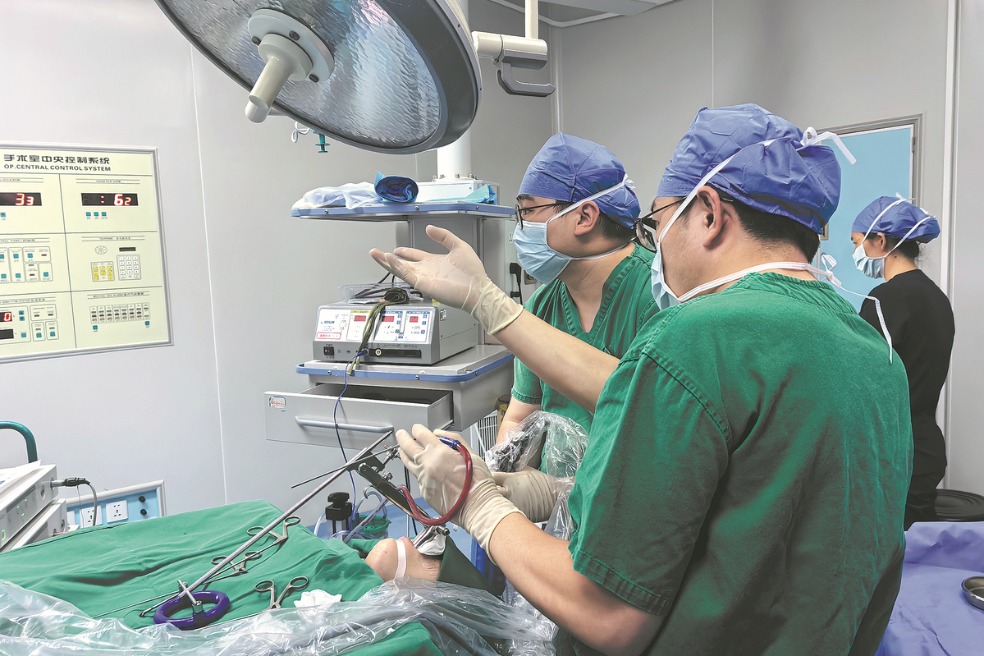
    A groundbreaking medical intervention in China’s remote southwestern region has dramatically transformed the life of a 62-year-old patient suffering from a rare combination of serious health conditions. Mr. Zha, a resident of Malipo county in Yunnan’s Wenshan Zhuang and Miao Autonomous Prefecture, has experienced remarkable improvement after Shanghai-based surgeons successfully removed a massive 1.3-kilogram tumor from his neck.

    The patient had been battling severe respiratory complications caused by Madelung’s disease—an uncommon disorder characterized by symmetric fat deposits—further complicated by advanced laryngeal cancer. His condition had progressively worsened, with local medical practitioners struggling to provide effective treatment as his neck swelled to an alarming size, severely constricting his airway.

    The turning point came in mid-October when a specialized medical team from Shanghai’s prestigious Eye and ENT Hospital of Fudan University arrived in Wenshan as part of a national healthcare initiative. Dr. Xu Chengzhi, who led the surgical intervention, described the critical condition upon initial examination: ‘During our free medical consultation on October 20, we encountered a patient whose neck had expanded to bucket-like proportions, with his airway compressed to a narrow slit.’

    This medical mission represents a broader national effort orchestrated by China’s National Health Commission. Since July, over 80 mobile medical teams have been deployed to underserved regions with limited healthcare infrastructure. The three-week program in Wenshan combined direct patient care with knowledge transfer, allowing Shanghai’s medical experts to both treat complex cases and enhance local medical capabilities through training and collaboration.

    Following the intricate surgery, Mr. Zha reported immediate relief and significantly improved breathing capacity, marking a profound enhancement in his quality of life despite necessary postoperative precautions.