标签: Asia

亚洲

  • Sri Lanka: A strategic gateway for investment trade and tourism

    Sri Lanka: A strategic gateway for investment trade and tourism

    Strategically positioned along major global shipping corridors in the Indian Ocean, Sri Lanka is rapidly transforming into a pivotal investment destination for international markets. The nation’s comprehensive economic reforms, competitive trade agreements, and diversified sectors present substantial opportunities across multiple industries including tourism, manufacturing, renewable energy, ICT/BPO services, and textiles.

    Sri Lanka’s geographic advantage provides unparalleled access to regional and global markets, enhanced by pro-business policies featuring tax incentives, regulatory streamlining, and continuous infrastructure development. The country boasts a young, skilled workforce that further strengthens its competitive positioning for foreign enterprises seeking expansion in South Asia.

    A cornerstone of Sri Lanka’s investment appeal lies in its extensive Free Trade Agreement network. The landmark FTA with Singapore (2018) opened access to ASEAN’s 650 million consumers, while an impending agreement with Thailand and renewed negotiations with China demonstrate the country’s commitment to global trade integration. Sri Lanka remains the only South Asian nation maintaining FTAs with both India and Pakistan, providing duty-free access to 1.6 billion people.

    The EU GSP+ and UK GSP+ schemes grant zero-duty access for over 6,000 product lines to markets exceeding 450 million consumers, creating exceptional export advantages. These trade frameworks, combined with ongoing negotiations with major economies, position Sri Lanka as a resilient and attractive long-term investment destination.

    Tourism represents a particularly promising sector, with Sri Lanka’s eight UNESCO World Heritage Sites, pristine beaches, and diverse ecosystems attracting global travelers. The island offers unique cultural experiences including the historic Kandy Esala Perahera festival, Ayurvedic wellness traditions, and renowned cuisine featuring signature dishes like hoppers and kottu. Adventure tourism continues to grow with activities ranging from hiking in Horton Plains to whale watching in Mirissa.

    Sri Lanka’s export portfolio maintains global recognition for quality and craftsmanship, particularly Ceylon tea, precious gems (including renowned blue sapphires), ethically produced apparel for major international brands, and premium spices. These exports underscore the nation’s unique position in global markets through quality production and enduring appeal.

    The convergence of strategic location, trade advantages, sectoral diversity, and investment-friendly policies establishes Sri Lanka as one of South Asia’s most promising economic landscapes for international investors.

  • Why Trump called Trevor Noah ‘talentless’ after the Grammys

    Why Trump called Trevor Noah ‘talentless’ after the Grammys

    Former President Donald Trump has launched a scathing attack on comedian Trevor Noah following a controversial joke made during the 67th Annual Grammy Awards ceremony, which drew over 15 million viewers on Sunday night. The incident marks the latest escalation in Trump’s ongoing conflicts with late-night comedians.

    During his opening monologue for his final Grammy hosting appearance, Noah made pointed references to Trump’s political ambitions through ‘term limits’ humor. The most provocative moment occurred during the Song of Year introduction, where Noah quipped that the award was ‘almost as much as Trump wants Greenland,’ adding that with Jeffrey Epstein’s island unavailable, Trump ‘needs a new one to hang out with Bill Clinton.’

    The joke prompted an immediate response on Truth Social, the social media platform Trump launched in 2022. The former president denounced the broadcast as ‘virtually unwatchable’ and specifically targeted Noah, describing him as ‘almost as bad as Jimmy Kimmel’ while vehemently denying any association with Epstein’s island. Despite documented appearances in Epstein-related files, no evidence exists confirming Trump actually visited the controversial location.

    Trump escalated his rhetoric by labeling Noah a ‘total loser’ and ‘talentless dope’ while threatening legal action. ‘He better get his facts straight,’ Trump declared, announcing his intention to ‘send my lawyers’ after the comedian.

    Legal experts remain skeptical about the viability of Trump’s threats. The former president currently maintains multiple ongoing lawsuits against media organizations including The New York Times and BBC. According to defamation specialists consulted by Vulture, successful litigation over an awards show joke would face significant constitutional hurdles, as courts traditionally protect satirical content and comedy under free speech provisions.

    The confrontation represents another episode in Trump’s extensive history of conflicts with comedians who satirize his public persona, with the legal threats appearing to lack substantial foundation in defamation law.

  • ‘Win-win’ ties walk the talk

    ‘Win-win’ ties walk the talk

    Amidst a blistering Australian summer, Chinese Ambassador to Australia Xiao Qian convened a significant New Year media briefing in Canberra, attended by representatives from over twenty Chinese and Australian media outlets. The event, held on January 28, provided a platform for substantive dialogue that transcended conventional diplomatic formalities, focusing instead on direct engagement and mutual understanding.

    Ambassador Xiao characterized the past year as one of ‘steady progress’ in bilateral relations, emphasizing the resilience of the China-Australia Comprehensive Strategic Partnership as it enters its second decade. This assessment comes against a backdrop of increasing global turbulence, with the relationship demonstrating remarkable durability despite international challenges.

    The diplomatic landscape has been revitalized through increased high-level engagements, including Australian Prime Minister Anthony Albanese’s visit to China and numerous face-to-face meetings between leaders. These interactions have strengthened political trust and facilitated tangible progress in rebuilding the bilateral framework.

    Economic cooperation remains the cornerstone of the relationship, with bilateral trade once again surpassing AUD $300 billion in 2025. China maintains its position as Australia’s largest trading partner, primary export destination, and leading source of imports. The exchange of agricultural products, mineral resources, and healthcare goods represents more than mere economic statistics—it directly sustains employment and livelihoods in both nations.

    A particularly significant development is the ongoing review of the China-Australia Free Trade Agreement (ChAFTA), which celebrated its tenth anniversary last year. Ambassador Xiao highlighted that most trade now enjoys ‘basically zero tax,’ using Australian wine exports as a concrete example of how tariff elimination benefits both economies. Both countries have agreed to assess potential upgrades to further enhance trade liberalization and economic cooperation.

    The ambassador emphasized that the full potential of economic collaboration remains untapped, indicating substantial opportunities for future growth. The discussions reflected a shared commitment to managing differences constructively while expanding areas of mutual interest.

    This engagement demonstrates how sustained dialogue and practical cooperation can transform abstract diplomatic concepts into tangible benefits, creating a resilient partnership that withstands global challenges and delivers real value to both nations.

  • Myanmar military-backed party declared election winner as army plans new body to maintain control

    Myanmar military-backed party declared election winner as army plans new body to maintain control

    BANGKOK (AP) — Myanmar’s political landscape has solidified with the military-aligned Union Solidarity and Development Party (USDP) securing a decisive electoral victory, according to final official results released Wednesday. The outcome, widely anticipated due to the exclusion of major opposition parties and severe restrictions on dissent, reinforces the military’s continued dominance over the nation’s governance structures.

    Concurrent with the election certification, Senior General Min Aung Hlaing, head of the military government, enacted legislation establishing a powerful Union Consultative Council. This advisory body—comprising at least five members including a chairman—holds authority to advise on national security, international relations, peace processes, and legislation without formally interfering with executive or judicial powers.

    The constitutional framework guarantees the military automatic control of 25% of parliamentary seats, effectively ensuring allied parties maintain overwhelming legislative control. Final figures reveal the USDP captured 339 of the 586 available parliamentary seats, while the military retains its constitutionally mandated 166 seats. This coalition controls approximately 86% of the legislature, with 21 other parties securing minimal representation.

    The electoral process, conducted in three phases across December and January, excluded approximately one-fifth of Myanmar’s 330 townships due to ongoing conflict. Official reports cite a 54% voter turnout among eligible citizens, though international observers have raised concerns about widespread coercion and suppression of fundamental rights.

    United Nations Human Rights Chief Volker Türk condemned the electoral process as fundamentally flawed, stating it exacerbated violence and societal polarization rather than advancing civilian rule. Reports indicate widespread voter intimidation tactics, including threats of forced conscription, food access restrictions, and administrative penalties.

    The creation of the consultative council mirrors the military’s established pattern of establishing parallel governance structures since the 2021 coup that ousted Aung San Suu Kyi’s elected government. This move potentially enables Min Aung Hlaing to maintain influence without assuming the presidency, which would require relinquishing his powerful commander-in-chief position under constitutional provisions.

    Parliament is scheduled to convene in mid-March to elect a new president, though the general’s potential role remains uncertain amid these institutional rearrangements.

  • Striking iron flower ignites Pudong skyline

    Striking iron flower ignites Pudong skyline

    China Daily Information Co (CDIC) has established stringent copyright protection protocols for all digital content published through its platforms. The comprehensive policy explicitly prohibits unauthorized republication or utilization of any materials—including textual content, photographs, and multimedia information—without obtaining prior written consent from CDIC.

    The company has implemented technical specifications recommending 1024*768 or higher display resolution for optimal viewing experience. CDIC maintains formal publishing accreditation under License 0108263 and operates with official registration number 130349, underscoring its status as a regulated information provider.

    Beyond content protection measures, the organization facilitates multiple engagement channels including corporate advertising opportunities, direct contact protocols, and career placement services catering to both domestic and expatriate professionals. The company further maintains active presence across various social media platforms to enhance audience connectivity.

  • Mirasi Group drives Mauritius’ urban transformation through visionary real estate investments

    Mirasi Group drives Mauritius’ urban transformation through visionary real estate investments

    Mirasi Group has established itself as a transformative force in real estate development across the Indian Ocean region, leveraging four decades of entrepreneurial expertise to reshape urban landscapes in Mauritius and Madagascar. Under the strategic guidance of Deputy CEO Yohan Ismael, the diversified conglomerate is executing an ambitious vision that integrates mixed-use developments, retail management, and long-term investment strategies to create comprehensive urban ecosystems.

    The Group’s philosophy centers on creating value for both investors and local communities through developments that combine strong governance with family-oriented values. This approach has positioned Mirasi as a preferred partner for international investors seeking exposure to Africa’s growing markets through Mauritius’ stable economic environment.

    Central to Mirasi’s transformation strategy is the comprehensive redevelopment of La City Trianon into a next-generation lifestyle destination. The project will incorporate retail spaces, entertainment venues, wellness facilities, diverse dining options, modern workspaces, and hospitality services. The upcoming addition of a Marriott-affiliated business hotel will further establish Trianon as a premier business district, catering to both regional travelers and local professionals.

    In residential real estate, Mirasi is addressing Mauritius’ growing demand for premium living through projects like OryView Residence, which offers modern, secure, and amenity-rich apartments. The company’s pipeline includes additional villa developments and residential communities, alongside ambitious plans for eco-luxury resorts designed to elevate the island’s tourism infrastructure.

    The Group’s expansion strategy extends to Madagascar through landmark projects including Mirasi Tower in Antananarivo, while utilizing Mauritius as a strategic gateway for planned entry into East African markets. This regional approach demonstrates Mirasi’s commitment to long-term growth across developing markets.

    For international investors, particularly those from Gulf regions, Mirasi offers access to Africa’s growth story through Mauritius’ political stability, robust connectivity, and favorable investment climate. The Group emphasizes partnerships with investors who share their vision for sustainable, high-impact developments that will define the next chapter of urban development across the Indian Ocean region.

  • Xi’s military purge is not really about corruption

    Xi’s military purge is not really about corruption

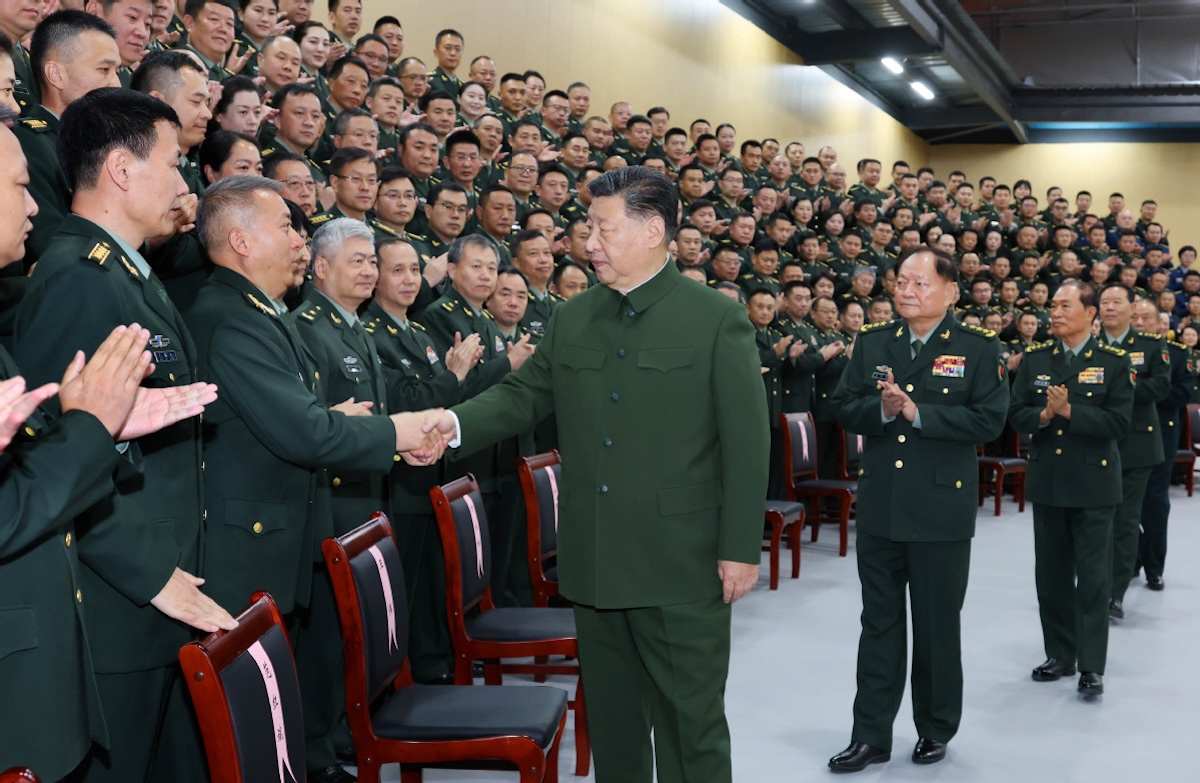
    China’s military command structure has undergone another significant transformation with the removal of General Zhang Youxia from his position as Vice Chairman of the Central Military Commission (CMC) on January 23. This development leaves only one of the original seven CMC members appointed three years ago still in office, marking one of the most substantial leadership overhauls in recent Chinese military history.

    President Xi Jinping, who chairs the CMC, has demonstrated a consistent pattern of removing senior officials throughout his tenure. This approach dates back to the early 2010s when several high-ranking Party members, including Politburo member Bo Xilai and security chief Zhou Yongkang, were purged under anti-corruption campaigns. The Party’s slogan at the time emphasized that ‘tigers’ (high-ranking officials) were equally vulnerable as ‘flies’ (lower-level officials) in the anti-graft drive.

    The recent focus has shifted to the People’s Liberation Army (PLA), which has experienced abrupt personnel changes. The disappearance and subsequent removal of Defense Minister Li Shangfu in mid-2023 preceded the current shakeup. According to the People’s Daily, the official Party newspaper, General Zhang and fellow CMC member Liu Zhenli were formally accused of exacerbating political and corruption issues that threatened Party control over the military.

    While speculation about internal power struggles continues, including unverified claims about nuclear secrets and coup attempts, what remains evident is the PLA’s ongoing structural challenges. General Zhang, in his seventies, represented one of the few senior military figures with actual combat experience from the Vietnam War. Despite reported personal connections to Xi through their shared Shaanxi province origins, personal relationships appear secondary to political objectives in China’s highest leadership circles.

    The timing of these changes is particularly significant as China faces multiple challenges, including economic pressures, demographic issues, and increasing international uncertainty. The performance of Russian forces in Ukraine has reportedly caused concern among Chinese leadership about their own military’s capabilities, particularly regarding potential operations against Taiwan.

    President Xi’s demand for absolute loyalty and battle readiness appears to be driving these personnel decisions. The coming year is expected to bring generational changes throughout China’s leadership structure, with significant implications for the country’s military posture and broader political direction.

  • TDB Group: Supporting Africa’s trade, integration and sustainable development

    TDB Group: Supporting Africa’s trade, integration and sustainable development

    Since its establishment in 1985, the Trade and Development Bank Group (TDB Group) has transformed from addressing Africa’s critical financing shortages into a premier multilateral financial institution driving continental progress. With a formidable asset portfolio exceeding $10 billion and shareholder capital of approximately $2.3 billion, the Group boasts an impressive network of over 80 sovereign and institutional shareholders across its subsidiaries.

    Over four decades of operation, TDB Group has deployed a cumulative $58 billion in financing and guarantee facilities, creating tangible impact through the support of more than 1.3 million jobs and directly benefiting an estimated 16 million people across Africa. This remarkable growth trajectory has been orchestrated under the strategic leadership of Group President and Managing Director Admassu Tadesse, who has implemented comprehensive governance, capital, and organizational reforms.

    A watershed moment arrived in 2017 when TDB achieved its inaugural investment-grade credit ratings, fundamentally enhancing its capacity to channel global capital into African markets on favorable terms that individual nations might struggle to secure independently. This financial credibility has positioned the institution as a critical intermediary connecting international investors with Africa’s development ambitions.

    The Group’s operational focus spans three pivotal areas: financing intra-African trade, strengthening industrial value chains, and developing cross-border infrastructure. Notable initiatives include facilitating fertilizer trade between Morocco and Ethiopia, alongside substantial investments in manufacturing, railway networks, energy projects, and digital connectivity infrastructure.

    Tadesse emphasizes the strategic alignment with continental integration goals, stating: ‘Sustainable development in Africa centres on economic integration,’ highlighting the institution’s synchronization with African Continental Free Trade Area objectives.

    Mauritius has emerged as a strategic operational hub, hosting critical Group functions including asset management and captive insurance platforms alongside conventional development banking operations. From this Indian Ocean base, TDB mobilizes regional and global capital—including significant investments from Gulf partners—to advance Africa’s sustainable development agenda through both commercial and concessional financing instruments.

  • Intercontinental Trust: Cross-border investment in a dynamic global landscape

    Intercontinental Trust: Cross-border investment in a dynamic global landscape

    The global investment landscape has undergone profound transformation over the past twenty years, compelling investors to rethink traditional cross-border expansion strategies. While established financial centers maintain their relevance, contemporary investment demands now require sophisticated platforms offering regulatory stability, extensive geographic coverage, and seamless multi-jurisdictional operational capabilities.

    Mauritius-based Intercontinental Trust, established in 1999, has strategically positioned itself at the forefront of this evolution. Operating under the regulatory oversight of the Financial Services Commission of Mauritius, the organization delivers comprehensive corporate, fiduciary, fund administration, and specialized tax services to institutional clients, investment banks, private equity entities, and high-net-worth individuals. The company’s core expertise lies in structuring durable cross-border investment mechanisms designed for long-term performance.

    Geographic investment patterns have notably shifted during this period. While Asian markets initially dominated global capital flows, African economies have emerged as increasingly attractive destinations for international investment. Mauritius’ robust legal framework and bilateral agreements have established the nation as a strategic gateway connecting capital sources with opportunities across both continents.

    Intercontinental Trust has further expanded its operational footprint through its Dubai office, licensed by the Department of Economic Development, creating additional connectivity between Middle Eastern capital and global investment opportunities. With physical presence in Mauritius, Dubai, Seychelles, South Africa, and Singapore, the organization has built a truly intercontinental network facilitating capital movement across emerging and established markets.

    The company’s evolution mirrors broader industry trends where investors increasingly prioritize jurisdictions offering regulatory clarity, political stability, and sophisticated financial infrastructure. This approach represents a significant departure from earlier investment models that focused predominantly on traditional financial hubs without regard for specialized regional expertise.

  • Abler Group: Redefining AML/CFT compliance as a strategic advantage

    Abler Group: Redefining AML/CFT compliance as a strategic advantage

    In an evolving global financial landscape where regulatory requirements increasingly shape operational frameworks, Abler Group has emerged as a pioneering force in redefining compliance paradigms. Established in Mauritius in 2017 under CEO Shahannah Abdoolakhan’s leadership, the organization has developed a distinctive operational philosophy that positions regulatory adherence not as a constraint but as a catalyst for business growth.

    The company addresses a critical industry challenge: the traditional perception of Anti-Money Laundering and Counter-Financing of Terrorism (AML/CFT) compliance as merely reactive obligations rather than strategic functions. Through its innovative approach, Abler integrates commercially intelligent compliance frameworks directly into daily business operations, transforming regulatory requirements from potential obstacles into competitive advantages.

    With operational bases in Mauritius and expanding presence in the United Arab Emirates and Dubai International Financial Centre, Abler delivers comprehensive support to banks, financial institutions, and corporations across multiple jurisdictions. Their service portfolio encompasses AML audits, remediation initiatives, regulatory advisory services, specialized training programs, and technology-driven compliance solutions designed to navigate complex cross-border regulatory environments.

    Chief Executive Shahannah Abdoolakhan articulates the company’s core principle: “Effective compliance represents a valuable investment, whereas inadequate compliance inevitably becomes a costly expense.” This foundational belief guides Abler’s methodology, demonstrating that properly implemented AML/CFT protocols can simultaneously enable sustainable growth, establish stakeholder trust, and protect long-term organizational value.

    The group’s progressive approach reflects a broader industry shift toward recognizing regulatory compliance as an integral component of strategic business planning rather than merely a technical requirement. By aligning compliance objectives with commercial goals, Abler helps organizations convert regulatory complexity into operational confidence and sustainable development.