标签: Asia

亚洲

  • India: Delhi court lifts 2-year debarment on BLS International

    India: Delhi court lifts 2-year debarment on BLS International

    In a significant legal victory for India’s outsourcing services sector, the Delhi High Court has nullified a two-year debarment previously imposed on BLS International Services Ltd by the Ministry of External Affairs (MEA). This judicial decision, disclosed through regulatory filings on December 18, 2025, effectively reinstates the company’s eligibility to participate in future government tenders issued by Indian diplomatic missions worldwide.

    The controversy originated when the MEA issued the exclusion order in October 2025, prohibiting BLS International from bidding on government contracts for a 24-month period. The New Delhi-based corporation promptly challenged this administrative decision through a writ petition filed with the High Court, arguing against the validity of the debarment.

    The court’s ruling represents a complete vindication for the company, which maintains an extensive operational footprint across 64 countries including significant presence in the UAE since 2011. As a specialized provider of visa processing, consular services, and citizen documentation solutions, BLS International collaborates with over 46 government entities globally through its network of more than 50,000 service centers.

    Market response to the legal development was immediately positive, with company shares experiencing substantial gains during early trading sessions on December 19. Investor confidence appears restored regarding the firm’s capacity to secure government contracts, which constitute a substantial portion of its business model.

    Founded in 2005 with initial mandates from the Portuguese Embassy in New Delhi, BLS International has evolved into one of the top three global players in governmental service outsourcing. The publicly-listed company currently employs approximately 60,000 personnel worldwide and maintains a market capitalization exceeding ₹130 billion as of late 2023, operating through nine international training facilities and four global contact centers.


  • India wins T20 series against South Africa after taking 5th match by 30 runs

    India wins T20 series against South Africa after taking 5th match by 30 runs

    India cemented their cricketing supremacy with a resounding 3-1 series victory against South Africa in the Twenty20 internationals, concluding with a decisive 30-run triumph in Friday’s final match. The hosts demonstrated formidable batting prowess by posting an imposing 231-5, setting the stage for their eighth consecutive T20 series win since December 2023.

    The innings was propelled by exceptional performances from Tilak Varma and Hardik Pandya, both achieving their second half-centuries of the series. Their explosive partnership yielded 105 runs in just 7.2 overs, with Pandya’s blistering 63 off 25 deliveries featuring five sixes, while Varma contributed a solid 73 from 42 balls before an unfortunate run-out.

    Opening batsmen Sanju Samson and Abhishek Sharma established a powerful foundation with a rapid 97-run partnership within nine overs. Samson, returning to T20 after October absence, smashed 63 runs while unexpectedly striking umpire Rohan Pandit with a drive to the shin during his aggressive batting display.

    South Africa’s response began promisingly with Quinton de Kock battling through a thumb injury sustained on the first delivery to score 65 off 35 balls. Despite reaching 118-1 at the halfway mark and matching India’s scoring rate initially, their campaign unraveled following Jasprit Bumrah’s pivotal intervention. The pace spearhead’s exceptional figures of 2-17 from four overs included the crucial dismissal of de Kock via a caught-and-bowled yorker.

    Leg-spinner Varun Chakravarthy overcame early punishment—conceding 23 runs in a single over to de Kock and Dewald Brevis—to emerge as the leading wicket-taker with 4-53. South Africa’s collapse from 120-1 to 201-8 underscored India’s bowling dominance in the critical middle overs.

    The sole disappointment for India remained captain Suryakumar Yadav’s continued batting struggles, managing only 5 runs to maintain his modest 2025 T20 average of 14.20. India now prepares to host New Zealand in January for their final T20 series before co-hosting the Men’s T20 World Cup with Sri Lanka in February.

  • Beijing explores robots to support aging population

    Beijing explores robots to support aging population

    In the Haidian district of China’s capital, nonagenarian seniors are finding companionship in an unexpected form: chess-playing robots. This emerging scenario represents Beijing’s strategic initiative to integrate robotic assistance into elder care frameworks as the city confronts unprecedented demographic aging.

    Recent data from the Beijing Association on Aging reveals a landmark demographic shift, with citizens aged 60 and above exceeding 5.14 million in 2024—the first time this population has surpassed the five-million threshold. This accelerating aging trend has intensified pressure on traditional care systems, catalyzing significant investment in technological solutions.

    According to the Beijing Bureau of Economy and Information Technology, a comprehensive three-year pilot program (2025-2027) will deploy intelligent elderly-care robots across domestic environments, community spaces, and institutional facilities. These initiatives specifically target rehabilitation support, daily activity assistance, and emotional companionship functions.

    Testing grounds like the senior technology experience center in Dongsheng town’s Longgang community showcase this technological integration. Manager Miao Fanghe reports serving over 6,000 elderly residents with rehabilitation robots and wearable exoskeletons since October 2025, with hundreds actively participating in technology trials.

    Companies like Beijing AI-Robotics Technology are supplying exoskeletons to metropolitan hospitals while conducting community training sessions in districts including Xicheng and Beijing E-town. Marketing representative Zhao Pengcheng notes that elderly users frequently seek rehabilitation following fall incidents or age-related musculoskeletal deterioration, with devices specifically designed to restore mobility and reduce knee joint stress.

    Similar implementations are visible in Changping district’s Taikang community, where robots provide rehabilitation guidance, mobility support, and continuous health monitoring.

    Despite growing adoption, Professor Li Jian of Beijing University of Posts and Telecommunications identifies persistent challenges in elderly-care robotics. While acknowledging their current utility, he emphasizes that age-friendly design—particularly regarding safety protocols and practical functionality—requires substantial refinement before achieving optimal implementation.

  • Aid cadre decides to stay permanently in Xizang

    Aid cadre decides to stay permanently in Xizang

    In an inspiring demonstration of dedication, Zhang Peng has formally requested permanent extension of his service at Lhasa Railway Station in the Xizang Autonomous Region, transforming what began as a temporary assignment into a lifelong commitment to the high-altitude community.

    When Zhang first arrived in December 2023, he confronted severe altitude sickness that cast doubt on his ability to remain on the plateau. Despite these initial challenges, he persevered and has since evolved into an indispensable member of the station’s management team over the past two years.

    Currently serving as head of the Technical Information Section, Zhang has made significant contributions to enhancing operational safety along the high-altitude railway corridor. His technical revisions include updating 21 critical regulations and pioneering the development of specialized equipment standards specifically engineered for the region’s extreme environmental conditions.

    Zhang attributed his decision to remain permanently to the profound sense of responsibility exhibited by local railway workers and the exceptional cross-cultural collaboration among Tibetan, Han, and other ethnic colleagues. ‘The cadres and staff here guard this railway with their lives, not simply by holding their posts,’ Zhang told Xizang Daily, emphasizing that ‘I am a member of Lhasa Station.’

    Reflecting on his transformative experience, Zhang described how working on the plateau has fundamentally shaped his perspective: ‘Here, I have truly felt the weight of the Qinghai–Xizang Railway spirit, challenging limits and striving for excellence. Working alongside plateau railway workers has become the most precious experience of my life.’

  • Death penalty bill to include Palestinians imprisoned for 7 October, Ben Gvir says

    Death penalty bill to include Palestinians imprisoned for 7 October, Ben Gvir says

    Israeli National Security Minister Itamar Ben Gvir has unveiled a significantly expanded version of controversial legislation that would mandate capital punishment for Palestinians accused of involvement in the October 7 attacks. The far-right minister detailed the provisions on social media platform X, outlining drastic changes to Israel’s judicial processes regarding Palestinian detainees.

    The revised legislation, initiated by MP Limor Son Har Melech of Ben Gvir’s Otzma Yehudit (Jewish Power) party, originally sought to permit judges to impose death sentences on Palestinians convicted of killing Israelis on ‘nationalistic grounds.’ The newly expanded bill now specifically targets those accused in the October 2023 attacks, classifying such sentences as ‘genocide under the Genocide Law’ and making execution a mandatory punishment.

    Critical changes within the proposed law include the abolition of unanimous decision requirements, allowing a regular majority of panel judges to approve executions. The legislation explicitly excludes Israelis who kill Palestinians under similar circumstances from facing capital punishment. Once formally accused, detainees would be executed within 90 days by the Israel Prison Service (IPS), with multiple methods proposed including shooting, electric chair, hanging, or lethal injection.

    The bill further authorizes military courts in the occupied West Bank to impose death sentences regardless of prosecutorial positions, while eliminating the ability of army commanders to mitigate or commute approved sentences. The identity of execution personnel would remain confidential under the proposed framework.

    Israeli law currently permits capital punishment in limited circumstances, though no executions have occurred since Nazi officer Adolf Eichmann’s 1962 hanging. The bill previously passed its first reading in November with 39 of 120 Knesset members supporting it.

    Human rights organizations have condemned the legislation amid reports of widespread Palestinian detentions on terrorism charges and increasing detainee deaths. Approximately 9,300 Palestinians are currently held in Israeli prisons, with advocacy groups reporting a ‘record high’ of 110 deaths under Ben Gvir’s prison policies since he took office. Palestinian rights groups have characterized the bill as an ‘unprecedented act of savagery’ that effectively legalizes the systematic killing of prisoners.

    International observers have repeatedly criticized Israel’s application of anti-terrorism laws against Palestinians engaged in peaceful activism or humanitarian work, noting frequent use of vague or unsubstantiated charges.

  • Inner Mongolia’s two ports named national smart port models

    Inner Mongolia’s two ports named national smart port models

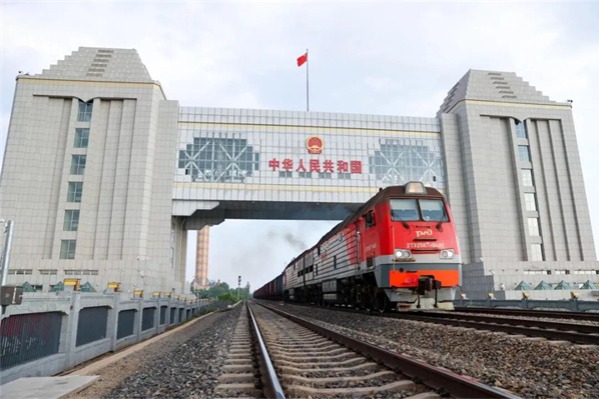
    Two strategic ports in China’s Inner Mongolia Autonomous Region have been designated as national models for smart port development by China’s National Port Administration. Ganqimaodu Road Port and Manzhouli Railway Port emerged as standout performers among 311 ports nationwide in this prestigious recognition of digital innovation.

    Ganqimaodu Road Port, serving as a critical energy corridor for China-Mongolia cooperation, has pioneered comprehensive smart port solutions encompassing operational protocols, construction standards, and data integration frameworks. The facility has established China’s inaugural dedicated cross-border lane for autonomous transport operations, marking a significant milestone in border logistics automation.

    Through the implementation of automated guided vehicles and advanced clearance systems, Ganqimaodu has achieved remarkable efficiency gains. Customs processing efficiency has surged by over 60 percent, while transportation costs have been reduced by 15 percent. These innovations have earned the port dual recognition as both a national multimodal transport demonstration project and a China-SCO digital economy best practice case.

    Meanwhile, Manzhouli Railway Port, which functions as the largest rail freight hub for China-Russia trade, has integrated cutting-edge 5G and Internet of Things technologies to develop a comprehensive cargo monitoring ecosystem. The port’s smart system incorporates intelligent dispatching mechanisms and sophisticated risk alert capabilities.

    The technological transformation at Manzhouli has yielded dramatic operational improvements. Real-time data visualization and intelligent analytics have enabled the port to double its daily transshipment capacity from 420 to 840 twenty-foot equivalent units (TEUs). Additionally, full-train inspection procedures now require less than one minute to complete.

    This national recognition underscores Inner Mongolia’s substantial contribution to China’s broader digital transformation of port infrastructure. Both facilities offer scalable and replicable solutions that demonstrate the potential of technological innovation in border logistics. During the 14th Five-Year Plan period (2021-2025), the region has allocated 410 million yuan (approximately $58.57 million) toward 50 smart port initiatives, significantly enhancing cross-border logistics efficiency and regulatory capacity through coordinated technological governance.

  • Unlocking life in Gansu: an Egyptian professor’s journey with the Five-Star Card

    Unlocking life in Gansu: an Egyptian professor’s journey with the Five-Star Card

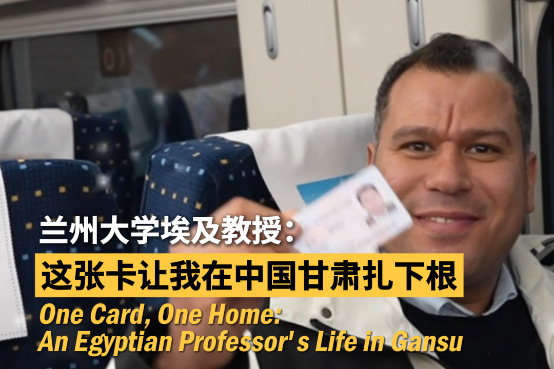
    In China’s northwestern Gansu province, Egyptian public health professor El-Sayed Salama has discovered what he describes as “Chinese-style happiness” through a revolutionary document—the newly implemented Five-Star Card. As a long-term faculty member at Lanzhou University’s School of Public Health, Salama recently became among the first foreign nationals to receive China’s upgraded permanent residence identification system.

    The professor characterizes the card as far more than administrative documentation—it represents what he calls “a master key that has unlocked a whole new life” in China. This sophisticated identification platform has fundamentally transformed his daily experience, granting him parity with Chinese citizens across numerous service sectors. From streamlined medical appointments and exploration of traditional Chinese medicine to financial transactions and transportation, the Five-Star Card has eliminated previous bureaucratic barriers.

    According to the Gansu Provincial Public Security Department, the province has significantly intensified its international talent attraction initiatives throughout 2024. The Five-Star Card system represents a cornerstone of these efforts, with coordinated upgrades across more than 60 service domains including healthcare, education, finance, and transportation infrastructure.

    Salama emphasizes how these integrated improvements have effectively bridged the “last mile” in services for foreign professionals residing in Gansu. Previously time-consuming processes like high-speed rail travel arrangements, hotel registrations, and cross-border financial transactions now require mere minutes—a efficiency standard the professor admiringly labels “Chinese speed.

    Beyond practical conveniences, the Five-Star Card has facilitated deeper cultural integration for Salama and his family. From mobile payment systems and vibrant night market explorations to museum visits and cultural exchanges with his son, the Egyptian academic now considers Gansu his genuine home. The card has not only provided administrative efficiency but has fostered what Salama describes as a profound “sense of belonging” within Chinese society.

  • Ticombo opens early access to FIFA World Cup 26 match tickets across North America

    Ticombo opens early access to FIFA World Cup 26 match tickets across North America

    Global ticket resale platform Ticombo has initiated early-access ticket listings for the highly anticipated FIFA World Cup 2026, responding to surging international demand for the first 48-team tournament hosted across three North American nations. The peer-to-peer marketplace now enables fans to browse and secure match options throughout the United States, Canada, and Mexico well in advance of the competition.

    The 2026 tournament, set to be one of the most attended sporting events in history, will feature matches in major metropolitan hubs including New York/New Jersey, Dallas, Los Angeles, Toronto, and Mexico City. Ticombo’s platform allows users to filter tickets by host country, match stage, and seating category, providing structured visibility into availability as final schedules develop.

    A company representative emphasized that early listing release aims to assist fans in coordinating complex travel and accommodation plans for what is projected to be an exceptionally high-demand event. Industry analysts note that secondary marketplaces like Ticombo serve as crucial access points once initial ticket allocations are exhausted, particularly for global events attracting international audiences.

    The expanded 48-team format will significantly increase the number of matches, creating more opportunities for fan attendance. North American travel authorities have already issued early-planning advisories in anticipation of substantial tourism influx during the tournament period.

  • Knife attacker kills three after smoke bombing Taiwan metro

    Knife attacker kills three after smoke bombing Taiwan metro

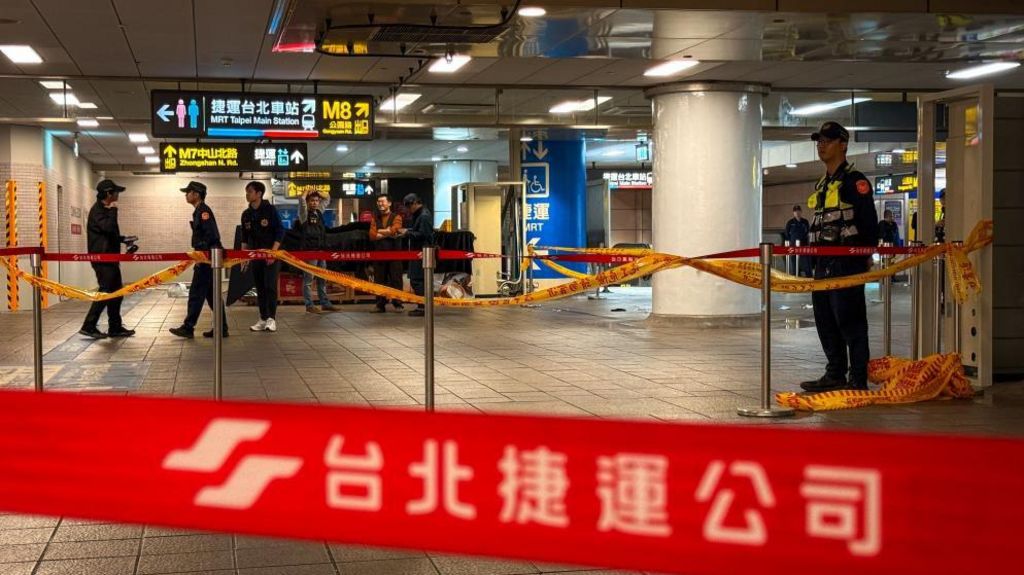
    A violent rampage unfolded across Taipei’s metro system on Friday evening, resulting in three fatalities and five injuries before the suspected perpetrator fell to his death from a building. The attack sent shockwaves through the Taiwanese capital, known for its low violent crime rates.

    The 27-year-old assailant initiated the assault during evening rush hour, detonating smoke bombs and Molotov cocktails at Taipei Main Station—a major transportation hub interconnected with bustling underground shopping corridors. According to Premier Cho Jung-tai, the attacker subsequently proceeded to another subway station approximately 800 meters away in a popular shopping district, stabbing bystanders during his movement between locations.

    Eyewitness footage circulating on social media depicted chaotic scenes as commuters fled in panic. One courageous individual who attempted to intervene sustained fatal injuries from a blunt object and later died at a medical facility.

    Authorities confirmed the suspect’s demise after falling from a building, though investigative efforts continue to establish motive and potential affiliations. Premier Cho immediately ordered enhanced security protocols at transportation nodes including metro stations, railway facilities, and airports nationwide.

    President William Lai pledged a thorough and expedited investigation into the incident. This represents the most significant public attack since the 2014 Taipei Metro stabbing that claimed four lives, whose perpetrator was ultimately executed in 2016.

  • Draft law addressing safety of hazardous chemicals to be reviewed by lawmakers

    Draft law addressing safety of hazardous chemicals to be reviewed by lawmakers

    China’s legislative body is preparing to review a groundbreaking draft law specifically targeting hazardous chemicals safety, marking a significant step in strengthening the country’s chemical risk management framework. The proposed legislation comes in response to persistent safety incidents occurring across various regions, highlighting the urgent need for enhanced regulatory measures.

    Huang Haihua, spokesman for the Legislative Affairs Commission of the National People’s Congress (NPC) Standing Committee, announced that the draft hazardous chemicals safety law will undergo deliberation during the upcoming NPC Standing Committee session scheduled from Monday to Saturday in Beijing. The official emphasized that chemical safety represents a critical concern directly impacting public safety, national security, and social stability.

    The comprehensive legislation establishes a multifaceted approach to accident prevention, encompassing the entire lifecycle of hazardous chemicals from registration and production to storage, usage, operation, transportation, and final disposal. The draft mandates the creation of an integrated risk identification and management system while requiring improved safety infrastructure and equipment across the industry.

    Notably, the proposed law emphasizes human factor considerations by requiring enhanced safety awareness training and technical skill development for employees working with hazardous materials. It further stipulates that county-level governments and relevant chemical departments must strengthen emergency response capabilities through regular drills and preparedness exercises.

    In a significant technological advancement provision, the draft requires road transport companies handling hazardous chemicals to implement real-time monitoring systems for both vehicles and drivers. This measure aims to promptly identify and correct illegal or non-compliant driving behaviors, addressing transportation risks that have contributed to previous incidents.

    The legislative initiative demonstrates China’s proactive approach to industrial safety management, potentially establishing new benchmarks for chemical regulation that could influence global safety standards in the hazardous materials sector.