标签: Asia

亚洲

  • iFX EXPO Dubai 2026: Two days that shape the online trading year ahead

    iFX EXPO Dubai 2026: Two days that shape the online trading year ahead

    The global financial technology sector is converging on Dubai for the highly anticipated iFX EXPO 2026, scheduled for February 11-12 at the Dubai World Trade Centre’s Za’abeel Halls 5–6. This premier industry gathering anticipates welcoming over 10,000 participants, featuring 200+ exhibiting companies and 150+ expert speakers from across the online trading ecosystem.

    The 2026 edition introduces an innovative Trading Festival component, creating a comprehensive industry campus that complements the traditional exhibition format. This expansion offers attendees hands-on experiences including live trading competitions through the Trading Cup, platform testing facilities at the Investing Lab, and educational sessions at the Mastery Hub and Traders Arena.

    Day one (February 11) will showcase solutions from leading firms including Pepperstone, Mega Fusion, Exness, Tattvam, and B2Broker, providing exhibitors access to pre-vetted decision-makers while enabling attendees to efficiently compare offerings and identify potential partners. Concurrently, the Speaker Hall will host panels featuring representatives from prestigious organizations including H.H. The Ruler’s Court of Dubai, MENA Fintech Association, Deutsche Bank, Vara, Middle East Stablecoin Association (MESA), and Emirates Gold.

    The second day (February 12) is strategically designed to capitalize on established momentum, offering additional opportunities for partnership finalization and deal-making. The conference program will delve into critical industry topics including growth strategies, affiliate and introducing broker models, market expansion techniques, performance analytics, and operational efficiency enhancements.

    The event commences with a welcome reception on February 10 at Bla Bla Dubai, facilitating preliminary networking. With registration closing imminently, professionals are urged to secure their participation to gain access to the full spectrum of exhibition, conference, and festival experiences while bypassing on-site queues.

  • Instagram outage hits thousands of US users: What really happened

    Instagram outage hits thousands of US users: What really happened

    Meta Platforms’ Instagram service encountered significant technical difficulties on Wednesday evening, resulting in widespread accessibility issues for thousands of users across the United States. The disruption, which began approximately at 8:00 PM Eastern Time, reached its peak with over 10,000 concurrent user reports according to outage monitoring service Downdetector.

    The technical malfunction primarily affected Instagram’s web-based platform, with numerous users experiencing persistent error messages, feed loading failures, and complete service unavailability through desktop browsers. The mobile application appeared to maintain relatively better stability during this incident, though some users reported intermittent connectivity problems across both platforms.

    Social media platforms, particularly X (formerly Twitter), became the primary outlet for user frustration and real-time updates as affected individuals shared screenshots of error messages and sought confirmation regarding the scope of the technical issues. The online community engaged in widespread speculation about potential causes while awaiting official communication from Meta’s technical team.

    Remarkably, the service disruption demonstrated relatively rapid resolution, with Downdetector metrics indicating substantial recovery by approximately 9:30 PM Eastern Time. This restoration timeline suggests that Meta’s engineering team successfully addressed the underlying technical problem within approximately 90 minutes of initial detection.

    While Meta Platforms has not yet released an official technical postmortem regarding the root cause, industry analysts note that such brief service interruptions remain relatively common among large-scale social media platforms managing immense user traffic and complex infrastructure systems. The incident highlights the ongoing challenges facing technology companies in maintaining seamless service availability across global networks.

  • Arcera Life Sciences inks strategic partnership with ISPOR UAE Chapter

    Arcera Life Sciences inks strategic partnership with ISPOR UAE Chapter

    In a significant move to address the growing global threat of antimicrobial resistance (AMR), Abu Dhabi-based Arcera Life Sciences has established a strategic partnership with ISPOR UAE Chapter alongside launching a novel intravenous antibiotic in the United Arab Emirates. The memorandum of understanding, signed on February 5, 2026, creates a collaborative framework focused on advancing health economics and outcomes research (HEOR) within the region’s healthcare landscape.

    The partnership emerges against the backdrop of alarming global health statistics from the World Health Organization, which identifies AMR as a critical public health threat responsible for approximately 1.14 million deaths directly attributed to drug-resistant bacteria in 2021 alone. Projections indicate that without immediate intervention, bacterial AMR could claim 39 million lives globally over the next quarter-century—equivalent to three deaths per minute. The economic implications are equally staggering, with World Bank forecasts suggesting AMR could trigger annual GDP losses reaching $3.4 trillion by 2030 due to escalating healthcare costs and productivity declines.

    Arcera’s newly introduced antibiotic represents a pharmaceutical breakthrough designed to combat multidrug-resistant bacteria, including Extended Spectrum Beta-Lactamase (ESBL)-producing pathogens. This development aligns with the UAE’s national antimicrobial stewardship programs aimed at preserving last-line medical defenses. The company has accelerated regulatory approval processes across GCC nations while advancing registration plans in South Africa, where authorization is anticipated by early 2027.

    The collaboration will leverage ISPOR UAE Chapter’s global network and research capabilities alongside Arcera’s regional expertise to enhance evidence-based decision-making in healthcare technology assessment. The partnership specifically targets capacity building, career development, and mentorship programs to strengthen local research competencies.

    Isabel Afonso, Chief Executive Officer of Arcera Life Sciences, emphasized that “building future-ready healthcare systems requires trusted partnerships and appropriate policy frameworks to translate scientific advancements into tangible real-world impact.” Professor Nadia AL Mazrouei, ISPOR UAE Chapter President, noted that “by combining our global resources with Arcera’s regional leadership, we can effectively address the unique challenges of the UAE’s rapidly evolving health technology landscape.”

    The announcement coincided with Arcera’s participation in a high-level panel discussion titled ‘Securing the Future: Policies to Strengthen Healthcare for the Next Generation in the Middle East and Africa Region.’ The dialogue featured distinguished global experts focusing on creating sustainable policy frameworks that balance innovation with long-term healthcare system resilience.

  • India lifts wheat stock limits as supplies rise, easing prices

    India lifts wheat stock limits as supplies rise, easing prices

    In a significant policy reversal, the Indian government has officially abolished all restrictions on wheat stockpiling for traders, wholesalers, and retailers. The decision, announced Thursday, comes as domestic supplies reach comfortable levels and market prices show sustained moderation.

    The world’s second-largest wheat producer had initially implemented these stockholding limits in May 2025 as an emergency measure to combat hoarding practices and suppress escalating food inflation. The restrictions were part of a broader strategy to ensure adequate domestic availability and stabilize market conditions during periods of supply constraint.

    Official statements from New Delhi indicate current wheat inventories have surpassed last year’s levels, signaling robust supply conditions that rendered the previous constraints unnecessary. Despite the removal of quantity limits, market participants will continue to submit weekly stock position declarations, maintaining transparency in supply chain monitoring.

    This policy shift follows last month’s authorization of 500,000 metric tons of wheat flour and related product exports, marking a gradual easing of export controls originally instituted in 2022. The sequential relaxation of trade restrictions reflects India’s improving agricultural output and stabilizing food security situation, potentially positioning the nation for increased participation in global grain markets.

  • Hong Kong ex-media tycoon Jimmy Lai will be sentenced Monday after national security conviction

    Hong Kong ex-media tycoon Jimmy Lai will be sentenced Monday after national security conviction

    Hong Kong’s judiciary has scheduled Monday’s sentencing hearing for pro-democracy media magnate Jimmy Lai, following his December conviction under Beijing’s national security legislation. The 78-year-old founder of the shuttered Apple Daily newspaper faces potential life imprisonment in a case that has drawn international condemnation and raised concerns about press freedom in the semi-autonomous territory.

    Lai, a prominent critic of China’s Communist Party, was initially arrested in 2020 under the security law implemented following the 2019 anti-government protests. Beijing authorities maintain the legislation was essential for maintaining Hong Kong’s stability, while critics argue it has eroded the city’s judicial independence and media freedoms.

    The sentencing proceedings, set for 10 a.m. Monday, will also determine the fates of six former Apple Daily journalists and two activists tried alongside Lai. While Lai maintained his innocence throughout the trial, his co-defendants entered pleas that could result in reduced sentences.

    International observers have closely monitored the case, with both the United States and United Kingdom expressing strong objections to the prosecution. The British government has particularly emphasized Lai’s status as a British citizen in its calls for his release. The sentencing is expected to further strain diplomatic relations between Beijing and Western governments that have criticized China’s handling of Hong Kong’s autonomy.

    Lai was convicted on charges of conspiring with foreign forces and publishing seditious materials, specifically allegations that he collaborated with Apple Daily executives to encourage foreign sanctions against Hong Kong and China. The former media tycoon is currently serving a separate six-year sentence for fraud convictions related to his activities in 2019.

  • Kuwait announces working hours of government employees for Ramadan 2026

    Kuwait announces working hours of government employees for Ramadan 2026

    The Kuwaiti government has formally disclosed its comprehensive work schedule for public sector employees during the upcoming Ramadan period in 2026. This announcement builds upon External Decision No. (1) of 2024, which previously established the reduced four-and-a-half-hour workday mandate for the holy month.

    Under the current flexible working system, as outlined in Civil Service Bureau Circular No. (12) of 2024, government entities will maintain considerable autonomy in determining their specific operational timelines. The framework permits starting times between 8:30 AM and 10:30 AM, allowing individual departments to adjust schedules according to their operational requirements while adhering to the overall reduced hours.

    A notable provision includes a 15-minute grace period at the commencement of each workday. Additionally, female employees receive an extra 15-minute grace period at the conclusion of their workday. For evening operations during Ramadan, the regulations explicitly state that official working hours cannot begin before 6:45 PM, ensuring alignment with traditional prayer and fasting schedules.

    The implementation reflects Kuwait’s ongoing commitment to accommodating religious observances while maintaining public service functionality. This approach mirrors similar Ramadan work hour adjustments seen across other Gulf Cooperation Council nations, though Kuwait’s specific provisions regarding grace periods and flexible scheduling represent distinctive elements of its labor policy.

  • Trump endorses Japan’s Takaichi ahead of snap election

    Trump endorses Japan’s Takaichi ahead of snap election

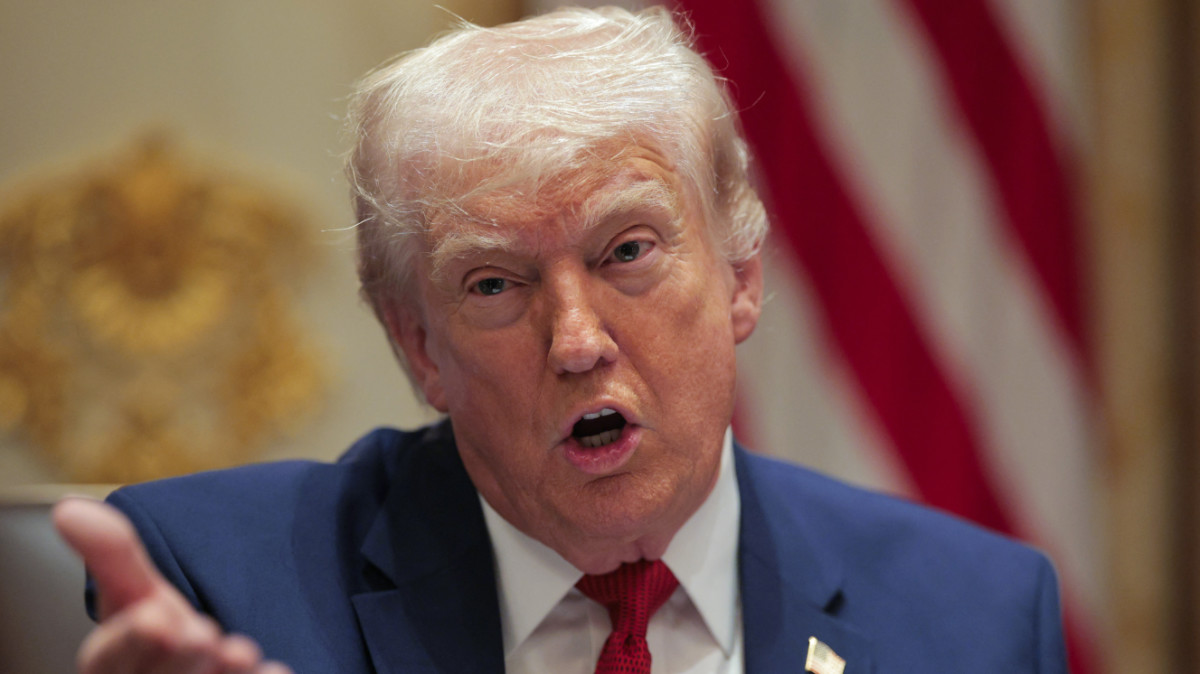
    In an unusual move of international political endorsement, former U.S. President Donald Trump has publicly thrown his support behind Japanese Prime Minister Sanae Takaichi just days before Japan’s snap parliamentary election. Trump utilized his Truth Social platform on Thursday to applaud Takaichi as “a strong, powerful, and wise leader… one that truly loves her country,” expressing confidence that “she will not let the people of Japan down.”

    This endorsement continues Trump’s pattern of backing foreign leaders who align with his political vision, following recent support for Argentina’s Javier Milei and Hungary’s Viktor Orbán. The relationship between Takaichi and Trump has strengthened significantly since her assumption of office in October, marked by substantial diplomatic engagements.

    The bilateral relationship faced early challenges when Trump threatened imposing 25% tariffs on Japanese imports, a situation that was resolved through a July agreement wherein Japan committed to investing $550 billion in the United States in exchange for reduced import levies of 15%.

    Takaichi’s administration rolled out an exceptionally warm welcome for Trump during his visit to Tokyo just one week after she took office, featuring a full military honor guard and band performance at Akasaka Palace, the government’s official guesthouse. The two leaders signed a significant rare earths agreement and a document proclaiming a new “golden age” in U.S.-Japan relations, with Takaichi describing Trump as a “partner in a new golden era” and praising his Middle East peace efforts.

    Trump’s endorsement highlighted progress in national security cooperation and economic collaboration between the two nations, while simultaneously announcing plans to host Takaichi at the White House on March 19th.

    The political backdrop to this endorsement includes complex geopolitical tensions, particularly regarding Taiwan. Trump’s show of support for Takaichi comes merely one day after his telephone discussion with Chinese leader Xi Jinping, wherein both leaders acknowledged the importance of maintaining positive relations. During their conversation, Xi emphasized Taiwan as “the most important issue” in Sino-American relations, explicitly stating that Taiwan is “China’s territory” and urging Washington to exercise prudence regarding weapons sales to the self-governed island.

    Takaichi has been at the center of escalating tensions between Tokyo and Beijing, which have reached their lowest point in over a decade. In November, she drew Beijing’s ire by suggesting Japan might deploy its self-defense forces should China attack Taiwan, highlighting the complex regional dynamics that shape her leadership approach.

  • Explosion in Indian coal mine kills 18; rescue operations to resume in daylight

    Explosion in Indian coal mine kills 18; rescue operations to resume in daylight

    A devastating explosion tore through an unauthorized coal mining operation in India’s northeastern Meghalaya state on Thursday, resulting in 18 confirmed fatalities and 8 injuries. The tragedy occurred in the East Jaintia Hills district, where rescue teams worked tirelessly to recover victims from the rubble before suspending operations at nightfall.

    Local authorities identified the site as an illegal ‘rat-hole’ mine, a dangerous mining method involving deep vertical shafts with narrow horizontal tunnels. Despite a 2014 federal environmental court ban on this practice due to safety concerns and environmental damage, these operations continue widespread throughout the region.

    District official Manish Kumar confirmed the mine’s illegal status and indicated that rescue efforts would resume Friday morning with support from state and federal disaster management personnel. District Police Chief Vikash Kumar suggested the explosion likely resulted from a dynamite blast, though forensic investigation continues. The blast triggered subsequent fires and created dangerous accumulations of toxic gases within the mine shafts.

    The tragedy prompted immediate responses from top government officials. Meghalaya Chief Minister Conrad K. Sangma ordered a comprehensive inquiry into the incident, vowing accountability for those responsible. Prime Minister Narendra Modi expressed his grief over the mishap, offering condolences to bereaved families and wishing swift recovery to the injured. The government announced compensation of 200,000 rupees (approximately $2,216) for each deceased victim’s family.

    This incident highlights the ongoing challenge of illegal mining operations in India’s resource-rich regions, where safety regulations are routinely flouted despite judicial interventions and environmental concerns.

  • What has happened in a year of US foreign aid cuts?

    What has happened in a year of US foreign aid cuts?

    A year after the Trump administration’s radical restructuring of American foreign assistance, the global humanitarian landscape has undergone catastrophic transformations. What originated as a 90-day suspension of international aid has evolved into a near-total dissolution of United States humanitarian operations, with USAID’s functions fully absorbed by the State Department by July 2023.

    The human cost has proven both staggering and preventable. Secretary of State Marco Rubio’s early assurance that “no children are dying on my watch” has been contradicted by devastating outcomes. Medical experts including Dr. Atul Gawande, former USAID global health assistant administrator, projected that reduced immunization programs alone would cause over one million deaths annually.

    Research from the Center for Global Development indicates these cuts to the world’s largest humanitarian donor may contribute to approximately 700,000 fatalities per year. The Lancet Global Health forecasts even grimmer long-term consequences: 22.6 million additional preventable deaths globally by 2030, including 5.4 million children under five, resulting from combined reductions in US and UK funding.

    The administration justified these measures under its “America First” doctrine, promising increased efficiency. Despite vehement opposition from figures including former President Barack Obama—who labeled the move “a colossal mistake”—the implementation proceeded rapidly. By March 2025, 86% of foreign aid programs had been terminated alongside comparable staff reductions.

    Evidence reveals inconsistent application of cuts, with strategic allies receiving preferential treatment. Kenya secured a $1.7 billion health system donation after leading UN peacekeeping efforts in Haiti, while Jordan saw reinstated water infrastructure projects. Conversely, high-need regions including Yemen, Afghanistan, Syria, and Sudan faced severe assistance reductions.

    In Afghanistan, child malnutrition reached 25-year highs with 450 health centers closing. Yemen lost nutritional support for 100,000 children and food assistance for 2.4 million people. Gender-specific impacts proved particularly severe: 1.5 million Yemeni women lost obstetric services while 300,000 were denied gender-based violence prevention.

    Critics emphasize that USAID constituted less than 1% of the federal budget, making financial savings minimal compared to heightened global risks. The dismantling of disease prevention programs, including the President’s Emergency Plan for AIDS Relief (Pepfar) that served 20 million people, has raised alarms about pandemic preparedness. Experts warn these reductions threaten international security and conflict prevention capabilities, potentially creating dangerous ripple effects worldwide.

  • What to know about Thailand’s election as economic growth slows and nationalism rises

    What to know about Thailand’s election as economic growth slows and nationalism rises

    BANGKOK — Thailand stands at a political crossroads as the nation prepares for Sunday’s general election, marked by economic challenges, nationalist fervor, and allegations of corruption. The snap election, called unexpectedly by Prime Minister Anutin Charnvirakul in December, represents a critical moment for Southeast Asia’s second-largest economy.

    The political landscape features three dominant parties locked in a competitive race with no clear frontrunner anticipated. Prime Minister Anutin leads the conservative Bhumjaithai Party, repositioning himself as a resolute leader following border tensions with Cambodia after his administration faced criticism over devastating floods and corruption scandals.

    Opposition forces include the progressive People’s Party, currently leading in polls with an ambitious reform agenda. Despite winning the most parliamentary seats in the 2023 election under a different banner, the party was prevented from forming a government by conservative lawmakers. Meanwhile, the Pheu Thai Party, associated with former Prime Minister Thaksin Shinawatra, campaigns on economic revival through populist measures despite recent political setbacks.

    The electoral system will elect 400 constituency-based lawmakers and 100 party-list representatives, collectively forming the 500-member House of Representatives responsible for selecting the next prime minister. Political analysts suggest a Bhumjaithai-led coalition appears most probable, as conservative establishments view their platform as less disruptive to Thailand’s political status quo.

    Concurrently, voters will decide on a constitutional referendum determining whether Parliament should initiate the process of replacing the military-drafted 2017 charter. Democratic advocates consider this a crucial step toward reducing unelected institutions’ influence, while conservatives argue existing provisions ensure political stability.