标签: Asia

亚洲

  • Tangible steps urged to boost Sino-US ties

    Tangible steps urged to boost Sino-US ties

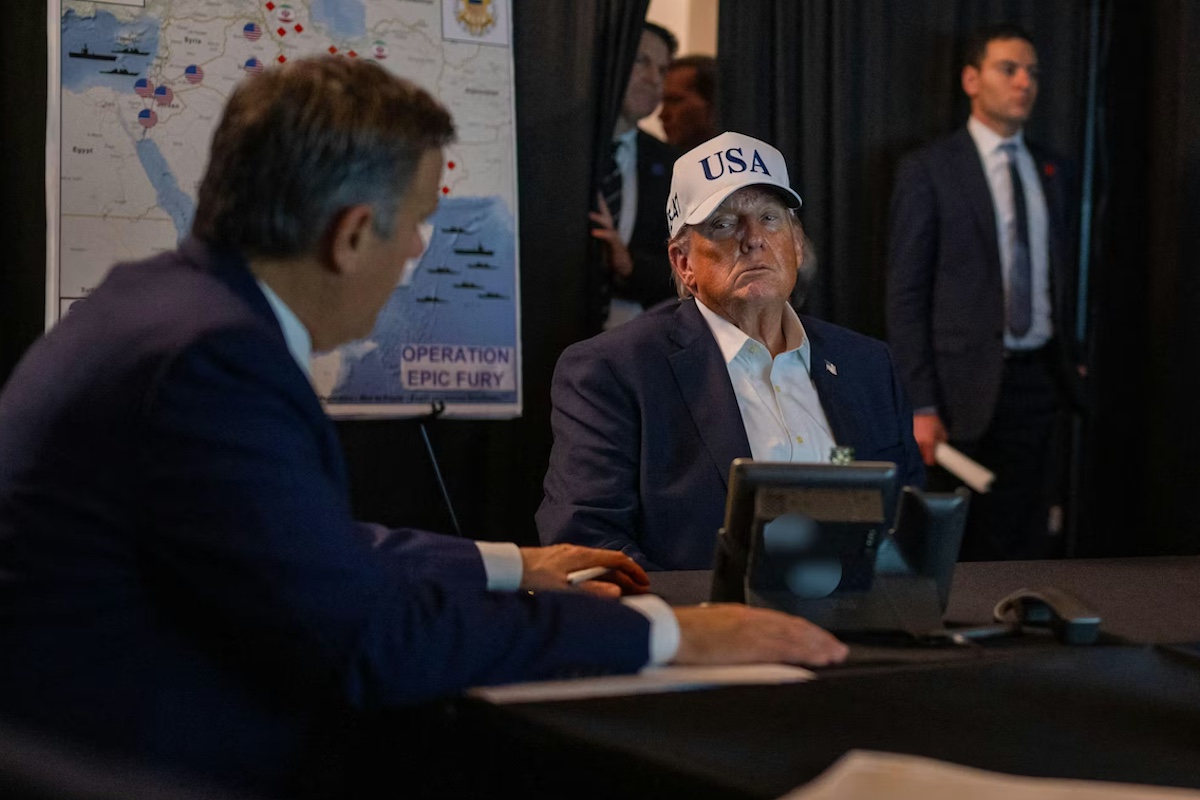
    In a significant diplomatic development, Chinese President Xi Jinping and US President Donald Trump conducted their first head-of-state telephone conversation of 2026 on Wednesday, coinciding with the traditional Chinese Start of Spring festival. The extensive discussion has been characterized by observers as potentially opening doors to renewed bilateral cooperation amid global turbulence.

    The dialogue established several key diplomatic milestones for the coming year, with President Xi highlighting parallel national priorities: China’s initiation of its 15th Five-Year Plan (2026-2030) and the United States’ approaching 250th anniversary celebrations. Additionally, both nations are poised to host major international gatherings—China will chair the APEC Economic Leaders’ Meeting while the United States prepares to host the G20 Summit.

    President Xi articulated his vision for the relationship through maritime metaphor, expressing hope to “steer the giant ship of China-US relations steadily forward through winds and storms” toward mutual respect, peaceful coexistence, and win-win cooperation. He emphasized the philosophical approach that “it is always right to do a good thing, however small, and always wrong to do a bad thing, however small.”

    President Trump acknowledged the relationship as “the most important in the world,” noting positive economic and trade developments while committing to further progress throughout his remaining presidential term. In subsequent social media communications, Trump characterized the exchange as “a long and thorough call” anticipating “many positive results” over the next three years.

    Academic analysts from both nations highlighted the conversation’s significance. Professor Diao Daming of Renmin University observed that the communication “made clear the great significance of the year 2026 to both nations and the world,” suggesting that mutual success rather than mutual obstruction should define the relationship. Professor Jia Qingguo of Peking University identified “hard-won opportunities” for collaboration in artificial intelligence and nuclear nonproliferation.

    The Taiwan question emerged as a critical component of discussions, with President Xi unequivocally stating China’s position on safeguarding sovereignty and territorial integrity. He specifically addressed US arms sales to Taiwan, urging prudent handling of the matter. The Chinese Foreign Ministry reported that President Trump acknowledged understanding China’s position on Taiwan.

    Chen Binhua, spokesman for China’s State Council Taiwan Affairs Office, subsequently reinforced that Taiwan represents “the first red line that cannot be crossed in China-US relations,” calling for US adherence to the one-China principle and existing bilateral agreements.

    International policy experts, including Gary Hufbauer of the Peterson Institute for International Economics, suggested that tangible US actions—including tariff reductions and affirmed commitment to one-China policy—would be necessary to demonstrate good faith. Hufbauer warned that additional arms sales to Taiwan or expanded export controls would signal deterioration.

    Su Xiaohui of the China Institute of International Studies characterized the exchange as demonstrating China’s “responsible role” in complex geopolitical circumstances, emphasizing the mutual need to avoid miscalculation while advancing communication.

    The diplomatic engagement occurs against a backdrop of cautious optimism among observers who stress that concrete actions—particularly from the United States—must follow rhetorical commitments to realize the potential for stabilized relations between the world’s two largest economies.

  • For Thailand’s popular progressives, winning the vote is only the first hurdle

    For Thailand’s popular progressives, winning the vote is only the first hurdle

    In Thailand’s heated political landscape, a youthful reform movement is capturing national attention through unconventional methods. Suttasitt “Macky” Pottasak, a former television producer turned politician, represents the new face of the People’s Party—a progressive force determined to reshape Thai politics. Abandoning his career in Bangkok, Macky successfully secured a rural constituency near Nakhon Ratchasima, defeating an established political dynasty through grassroots campaigning and innovative social media outreach.

    The 38-year-old lawmaker has adopted symbolism from the Japanese anime series One Piece, particularly the character Luffy’s hat and flag, which became emblems during recent youth protests across Asia. His daily light-hearted policy videos generate millions of views, reflecting his philosophy that “past generations made politics boring—I want to make it fun.”

    This approach resonates with many Thais, as opinion polls consistently show the People’s Party leading rivals ahead of Sunday’s critical election. However, Thailand’s recent political history suggests electoral victory alone doesn’t guarantee governance. In 2023, the progressive Move Forward party achieved an unexpected win only to be blocked from forming a government by unelected institutions, subsequently dissolved by constitutional court ruling, and its leaders banned from politics.

    The current political climate follows three tumultuous years marked by short-lived coalition governments, two prime ministers dismissed by judicial intervention, and a border conflict with Cambodia. The People’s Party emerges as the reincarnation of previous reform movements, maintaining their ambitious agenda while learning from past setbacks.

    At rallies across the country, the party’s new leader Natthaphong Ruengpanyawut—a former software engineer—draws rock star-like admiration from supporters. The energy reflects widespread desire for change, particularly among younger voters facing economic uncertainty.

    Throughout rural constituencies like Macky’s, economic distress is palpable. Village head La-or Kohsantea describes how young people must leave to find work, noting “no-one has helped us with the poverty problem.” Thailand suffers from among Asia’s highest household debt levels, with annual GDP growth below 2%—significantly trailing neighboring economies.

    Kritsana Lohsantea, a 28-year-old factory worker, represents this generation’s anxieties. With limited education and facing factory closures, he seeks assistance securing social security benefits. Meanwhile, demographic challenges emerge as Thailand’s population declines, with births dropping 10% last year—the world’s sharpest decrease. Macky proposes localized training programs and improved digital systems to address elder care shortages as younger generations migrate from rural areas.

    The People’s Party’s platform emphasizes constitutional reform, seeking to reduce the power of unelected institutions like the constitutional court that can veto elected governments. Their agenda includes bureaucratic modernization, educational reform, and curbing military and corporate influence. A constitutional referendum will coincide with the election.

    Their main rivals—Prime Minister Anutin Charnvirakul’s nationalist Bhumjaithai party and the populist Pheu Thai party—focus on immediate gratification policies. Anutin emphasizes national security credentials from the Cambodia border conflict and military support, while Pheu Thai promises daily millionaire creations through national lotteries. Both offer subsidies and cash handouts that economists like Thammasat University’s Professor Apichat Satitniramai criticize as “painkillers” that avoid addressing structural issues.

    The People’s Party traces its origins to 2017 when charismatic entrepreneur Thanathorn Juangroongruangkit founded Future Forward, immediately perceived as threatening establishment interests. Despite military opposition and judicial interventions that banned Thanathorn from politics and dissolved successive iterations of the movement, support has grown substantially.

    Current polls suggest the People’s Party may gain more seats than in previous elections, though likely falling short of parliamentary majority. Crucially, the unelected senate can no longer participate in government formation. However, conservative institutions have already initiated challenges against 44 party figures through corruption allegations related to their stance on lese majeste law reform, potentially disqualifying them from office.

    As Thanathorn told the BBC: “They are afraid of change. They want tomorrow to be just like yesterday. They think dissolving our parties, banning our leaders would make us smaller. In fact, we are getting bigger.”

    Even if successful electorally, the party would face significant governance constraints, making constitutional reform their paramount priority. They find unlikely allies in Pheu Thai, which also suffered from judicial interventions against its elected leaders.

    Chulalongkorn University political scientist Siripan Nogsuan Sawasdee observes: “If Thailand was a functional democracy, none of this would have happened. Elections only determine representatives in the lower house. Who governs is determined by elite networks and unelected institutions that veto the voters’ will.”

    The upcoming election thus represents not merely a political contest but a fundamental test of whether Thailand’s democratic institutions can reflect the popular will against entrenched establishment resistance.

  • Morocco evacuates 143,000 people in northwest as flood precaution

    Morocco evacuates 143,000 people in northwest as flood precaution

    Moroccan authorities have executed one of the largest emergency evacuations in recent history, relocating over 143,000 residents from vulnerable areas in the country’s northwest region. The massive precautionary operation, announced by the Interior Ministry on Thursday, comes as multiple hydrological threats converge to create potentially catastrophic flooding conditions.

    The evacuation decision follows sustained heavy rainfall that has saturated watersheds throughout the northwestern plains, causing rivers to swell beyond their normal capacity. Compounding the natural water accumulation, reservoir managers have been compelled to release controlled overflow from dams that have reached maximum capacity after prolonged precipitation.

    This preventive measure reflects Morocco’s enhanced disaster preparedness protocols, which have been strengthened following previous flood tragedies. The region has historically experienced devastating inundations, including a recent flash flood incident that claimed numerous lives and represented the deadliest water-related disaster in a decade.

    The coordinated evacuation involved multiple government agencies working in tandem to ensure resident safety while minimizing disruption. Those displaced have been moved to designated emergency shelters equipped with essential supplies and personnel trained in crisis management.

    Meteorological indicators suggest the precipitation pattern will continue throughout the week, maintaining pressure on water management systems and keeping flood risks elevated. The government has maintained constant monitoring of hydrological data while keeping emergency response teams on high alert across affected provinces.

  • Ghaziabad sisters tragedy: Father denies financial woes caused daughters’ death

    Ghaziabad sisters tragedy: Father denies financial woes caused daughters’ death

    A devastating family tragedy in Ghaziabad, Uttar Pradesh, has taken a complex turn as conflicting narratives emerge surrounding the apparent suicide of three teenage sisters. The girls—identified as Nishika (16), Prachi (14), and Pakhi (12)—reportedly leaped from their ninth-floor apartment in the Bharat City housing society during the early hours of February 4th.

    Their father, Chetan Kumar, has vehemently denied financial pressures contributed to the incident, instead attributing the tragedy to his daughters’ intense fixation with Korean pop culture. In statements to Indian media, Kumar revealed the girls had demanded to be taken to Korea and had adopted Western names—Aliza, Cindy, and Maria—reflecting their cultural obsession. “They asked me to take them to Korea. But I said we are Indians. They got angry and even refused to eat,” Kumar told India Today, adding they had threatened suicide if their demands weren’t met.

    However, investigative reporting by local media reveals complicating factors in Kumar’s account. India Today reports Kumar, a stock trader, carries substantial debt exceeding Rs20 million (approximately Dh813,000). Additionally, he maintains two marriages (to sisters) and had withdrawn all three daughters from formal education approximately two years prior to the incident.

    Police discovered a poignant suicide note that partially corroborates the cultural obsession narrative. “I am really sorry, sorry papa,” the note began, while wall writings in their room stated: “My life is very, very alone.” A diary entry obtained by authorities read: “We love Korea, love, love, love… How will you make us leave Korea? Korea was our life, so how dare you make us leave our life?”

    An eyewitness account from neighbor Arun Singh, who was on his tenth-floor balcony opposite the girls’ apartment, provides chilling details of the final moments. Singh reported seeing the eldest sister sitting precariously on the window ledge around 2 AM, rocking back and forth. “Suddenly, the older sister toppled backwards and fell through the window, and the second sister came with her. The youngest sister, who too was at the window, appeared to lunge forward to catch them, but she too fell through the opening.”

    Senior police officer Nimish Patil confirmed the investigation continues, examining all aspects including financial pressures, cultural influences, and family dynamics that may have contributed to this profound tragedy.

  • Saudi’s Neom replaced by Almaty as 2029 Asian Winter Games hosts

    Saudi’s Neom replaced by Almaty as 2029 Asian Winter Games hosts

    In a significant development for winter sports in Asia, the Olympic Council of Asia (OCA) announced on Thursday that Almaty, Kazakhstan will host the 2029 Asian Winter Games, replacing the originally scheduled host Neom in Saudi Arabia. The decision was formally declared during a contract signing ceremony in Milan, coinciding with the eve of the 2026 Winter Olympics.

    The hosting change follows last month’s postponement of the event in Neom, where Saudi authorities appeared to delay the delivery of essential infrastructure, particularly the planned year-round ski resort in Trojena. This facility is a central component of Neom, the kingdom’s ambitious $500 billion megaproject aimed at constructing a futuristic city in the western desert region along the Red Sea.

    OCA President Sheikh Joaan bin Hamad Al Thani expressed gratitude to the Kazakh government and city of Almaty for their commitment to advancing winter sports across the continent. “Almaty is a city with deep connections to winter sports and we have very fond memories of when we last hosted the Asian Winter Games in 2011,” stated Sheikh Joaan during the official proceedings. “We are grateful for your ongoing partnership and we have no doubt we’ll build on this legacy and host an unforgettable games in 2029.”

    Almaty brings substantial experience to the event, having previously hosted the Asian Winter Games in 2011 across both Almaty and the capital Astana. The city has also demonstrated ambitions in the international winter sports arena through its previous bid for the 2022 Winter Olympics, though ultimately unsuccessful in securing the event against Beijing.

    The transition to Almaty represents a strategic shift for the Asian winter sports community, replacing Saudi Arabia’s untested winter sports infrastructure with Kazakhstan’s established winter sports facilities and organizational experience. This change ensures continuity for the quadrennial event while maintaining the scheduled 2029 timeline rather than implementing the proposed four-year postponement that had been discussed with Saudi organizers.

  • How did Harry Potter villain become Chinese Lunar New Year symbol?

    How did Harry Potter villain become Chinese Lunar New Year symbol?

    In an unexpected cultural phenomenon, Draco Malfoy—the aristocratic antagonist from J.K. Rowling’s Harry Potter series—has emerged as an unconventional mascot for China’s Lunar New Year celebrations. The character’s sudden popularity stems from the Chinese translation of his surname, “Ma-er-fu,” which combines the words for “horse” and “fortune,” making it particularly auspicious for the Year of the Horse.

    Social media platforms across China have been inundated with images showcasing vibrant red posters featuring Tom Felton’s portrayal of the Slytherin student adorning household doors and commercial spaces. E-commerce platform Taobao reports robust sales of Malfoy-themed merchandise, with packages of four decorative posters selling for approximately 11 yuan ($1.60). One Rednote user encapsulated the trend by stating: “Year of the Horse’s blessing, so stick on a Malfoy.

    The phenomenon has reached monumental proportions, with photographs circulating online depicting a massive multi-story banner of Malfoy in his Hogwarts uniform draped across a shopping mall in central Henan province. This unusual adoption occurs despite the character’s villainous role in the original narrative.

    This cultural adaptation highlights the enduring popularity of the Harry Potter franchise in China, where foreign film representation remains limited due to strict import quotas and growing domestic content production. The wizarding world’s commercial presence continues expanding, with Warner Bros recently announcing collaboration with Jinjiang International to develop a Harry Potter Studio Tour in Shanghai. Additionally, Beijing’s Universal Studios features extensive Harry Potter-themed attractions, and the film series enjoyed successful re-releases in Chinese theaters during 2024.

  • Japan’s Ogiwara tops qualifying for men’s big air as snowboarding kicks off at Olympics

    Japan’s Ogiwara tops qualifying for men’s big air as snowboarding kicks off at Olympics

    LIVIGNO, Italy — The 2026 Winter Olympics witnessed an extraordinary display of athletic prowess as snowboarding events commenced with the men’s big air qualifiers on Thursday. Hiroto Ogiwara, Japan’s 20-year-old phenom, delivered a stunning performance that secured his position atop the leaderboard with 178.5 combined points from his two best runs.

    Ogiwara, who previously revolutionized the sport at the 2025 Aspen X Games by landing the first-ever 2,340-degree jump (equivalent to six-and-a-half rotations) in competitive history, demonstrated why he’s considered the athlete to beat in this discipline. His technical mastery and aerial control left judges and spectators in awe.

    Local favorite Ian Matteoli provided Italian fans with thrilling moments, capturing second position with 174.5 points. The competition intensified with another Japanese contender, Kira Kimura, claiming third place at 173.25 points, narrowly edging out China’s reigning gold medalist Su Yiming, who finished fourth with 172.25 points.

    The American contingent faced challenges, with only Oliver Martin advancing to Saturday’s final after securing ninth position. The qualification format required athletes to execute three jumps off the massive 40-meter ramp, with their two highest scores determining advancement to the finals.

    The nighttime event in Livigno—a picturesque Alpine town transformed into an extreme sports arena—showcased athletes soaring under floodlights against a dramatic mountain backdrop. Big air, characterized by single massive jumps incorporating complex spins, flips, and board manipulations, represents one of three snowboarding park events alongside halfpipe and slopestyle competitions.

    Livigno will additionally host freestyle skiing aerials and moguls throughout the Olympic Games, cementing its status as a hub for winter action sports during the Milan Cortina Olympics.

  • Bamboo-based drone completes maiden flight in Tianjin

    Bamboo-based drone completes maiden flight in Tianjin

    In a groundbreaking development for sustainable aviation technology, a tilt-rotor drone constructed primarily with bamboo-based composite materials has successfully completed its inaugural flight in Tianjin. This achievement represents the world’s first fixed-wing unmanned aerial vehicle to incorporate such a significant proportion of bamboo-derived components, according to the International Centre for Bamboo and Rattan.

    The innovative aircraft, developed through a collaborative effort between the International Centre for Bamboo and Rattan, Beihang University’s Ningbo Innovation Research Institute, and Long Bamboo Technology Group, features over 25% of its structural components made from advanced bamboo composites. This milestone demonstrates the viability of environmentally conscious materials in high-performance aviation applications.

    Technical specifications reveal a drone with a 2.5-meter wingspan and approximately 7-kilogram weight, capable of vertical takeoff and landing operations. The aircraft achieves cruise speeds exceeding 100 kilometers per hour with an endurance rating of more than one hour per flight cycle.

    The bamboo composite technology delivers substantial advantages over conventional materials, reducing overall weight by more than 20% compared to lightweight carbon fiber alternatives while simultaneously cutting material costs significantly. The bamboo-based composite cloth costs approximately one-quarter of standard carbon fiber materials and proves even more economical than specialized aeronautical-grade alternatives.

    Project lead researcher Qin Daochun emphasized the technical challenges overcome during development, noting that the research team conducted over 100 experiments adhering to strict airworthiness standards. These efforts resulted in a bamboo composite material exhibiting exceptional strength, toughness, and formability characteristics suitable for aviation applications.

    This successful demonstration marks a crucial advancement in China’s expanding low-altitude economy initiatives, potentially establishing new pathways for greener, lighter, and more cost-effective development within the drone industry and broader aviation sector.

  • Hunan emerging as China-Africa trade hub

    Hunan emerging as China-Africa trade hub

    Hunan Province is rapidly solidifying its position as China’s central hub for African trade relations, with African specialty products becoming increasingly integrated into local consumption patterns. As the Lunar New Year approaches, households across Hunan are stocking celebration supplies featuring South African wines and Tanzanian nuts among other African commodities.

    The province has launched extensive promotional activities since January 23rd, showcasing nearly 300 products from over a dozen African nations through pop-up events in multiple cities including Yiyang and Yueyang. At the permanent exhibition hall of the China-Africa Economic and Trade Expo (CAETE) in provincial capital Changsha, consumers can explore a comprehensive range of African goods spanning food, beverages, and skincare products.

    Hunan’s strategic importance in China-Africa trade relations is demonstrated by impressive economic metrics. According to the Hunan Department of Commerce, the province recorded 58 billion yuan ($8.36 billion) in trade with African nations last year, maintaining its leading position in central and western China for seven consecutive years. The province has hosted four editions of the CAETE, significantly strengthening its role in facilitating cross-continental commerce.

    Shen Yumou, head of the Hunan Department of Commerce, revealed during the ongoing provincial legislative session that more than 3,000 Hunan-based enterprises currently operate across 111 countries and regions, indicating the province’s extensive global business footprint.

    Changsha, internationally recognized as the ‘construction machinery capital,’ has pioneered innovative export standards for second-hand engineering equipment. The city addressed previous challenges with inconsistent international regulations by establishing national-first class standards for remanufactured and repaired machinery.

    Tan Haoran, deputy director of the administrative office of the China (Hunan) Pilot Free Trade Zone, explained: ‘To address these challenges, we released standards for the export of remanufactured and repaired engineering machinery—a national first.’ These standards have significantly enhanced product quality and export competitiveness, resulting in over 3 billion yuan worth of remanufactured equipment exported from Hunan globally during the past two years.

  • Libya: Gaddafi supporters left without rallying figure after Saif al-Islam’s killing

    Libya: Gaddafi supporters left without rallying figure after Saif al-Islam’s killing

    The confirmed assassination of Saif al-Islam Gaddafi, son of the late Libyan leader Muammar Gaddafi and his designated successor, has ignited widespread agitation across Libyan social media and raised profound questions about the nation’s political future. Libya’s attorney general officially confirmed the killing in the early hours of Wednesday, following hours of intense speculation and the subsequent circulation of graphic images showing Gaddafi’s lifeless body in a desert area.

    According to political advisers close to the former heir apparent, the operation was conducted by a four-man commando unit that breached his residence, disabled security systems, and executed him during a direct confrontation. The incident occurred in the Zintan region, approximately 100 kilometers south of Tripoli, where Saif al-Islam had been detained following the 2011 revolution that overthrew his father’s regime.

    Saif al-Islam, born in 1972, stood apart from his siblings as the only member of the Gaddafi family to play a significant political role during the Jamahiriya era. Educated with a PhD from the London School of Economics, he positioned himself as a reformist and operated through the Gaddafi International Charity and Development Foundation, which served as an instrument of parallel diplomacy to counter his father’s pariah status in Western nations.

    Despite being subject to an International Criminal Court arrest warrant for crimes against humanity during the 2011 uprising, and subsequent psychological trauma from his imprisonment, Saif al-Islam had announced intentions to contest the presidential election originally scheduled for 2021. His potential candidacy, which reportedly garnered substantial popular support, was among the factors that led to the election’s cancellation.

    The United Nations Support Mission in Libya has strongly condemned what it described as a ‘targeted killing,’ while the attorney general’s office has opened an investigation. However, many analysts express skepticism about the prospect of accountability, given Libya’s entrenched culture of impunity regarding political assassinations.

    The assassination has exposed the deep divisions within Libyan society. While segments of the population, particularly in historic Gaddafi strongholds like Sirte, have openly mourned his death, his existence had long represented a political embarrassment for most armed factions. His strategy of positioning himself outside the two dominant power structures—Prime Minister Abdul Hamid Dbeibah’s internationally recognized government in Tripoli and the Haftar family’s administration in Benghazi—ultimately isolated him from centers of power while appealing to those disillusioned with post-revolutionary elites.

    The attribution of responsibility remains intensely contested. Social media speculation initially pointed toward Mahmoud Hamza, commander of the 444 Brigade and a key Dbeibah ally, though his forces promptly denied involvement. Alternative unverified claims suggest possible responsibility from Saddam Haftar, son of eastern commander Khalifa Haftar, while Gaddafi loyalists have even suggested foreign involvement linked to French political scandals involving Libyan financing.

    Analysts at the Royal United Services Institute suggest the operation likely resulted from local tensions within Zintan rather than a broader conspiracy. The city has long been characterized by internal divisions between factions aligned with either Tripoli or Benghazi, and Saif al-Islam’s presence under the protection of his own armed brigade had created growing tensions over years.

    The elimination of Saif al-Islam removes a central figure from Libya’s political narrative, particularly for pro-Gaddafi elements and non-aligned groups seeking alternatives to the dominant power structures. With all of Muammar Gaddafi’s other children either deceased or exiled, the event leaves pro-Gaddafi sentiments without any symbolic leadership, potentially altering the political calculations of various security actors who had instrumentalized residual sympathy for the former regime.