标签: Asia

亚洲

  • Making it count

    Making it count

    Hong Kong’s contemporary art scene reveals a compelling narrative of female artists navigating complex market dynamics while maintaining artistic integrity. Despite global progress in gender representation, these creators continue to face distinctive challenges in finding sustainable commercial footing for their ambitious works.

    Jaffa Lam, an established artist with international recognition including collections at M+ and Centre Pompidou, creates large-scale installations using recycled materials in collaboration with Hong Kong’s women workers. Her socially-engaged practice, featuring expansive fabric canopies up to 14 meters long, remains difficult to place with conventional collectors due to size and logistical constraints. “The situation hasn’t fundamentally changed,” Lam acknowledges, though representation by Axel Vervoordt Gallery has expanded her clientele.

    Galleries like Alisan Fine Arts have consciously championed women artists for over a decade. Director Daphne King notes her ongoing mission to “balance the narrative” through exhibitions like Women + Ink and international showcases at New York’s China Institute. The gallery represents emerging talents like Angel Hui, whose immersive installations transform traditional cultural motifs into contemporary experiences, including an upcoming Venice Biennale collateral event.

    The path proves particularly challenging for late-career artists. Lindsey McAlister returned to painting after a 40-year hiatus directing youth theater programs. Her vibrant abstract works, now represented by two galleries, attracted attention at Art Central and international fairs despite slower commercial traction. “People seem curious about the journey itself,” McAlister observes, noting her story resonates with women considering creative reinvention.

    Many artists supplement incomes through academic positions and selective commercial collaborations. Angela Yuen’s kinetic sculptures using found objects led to a Hermès commission where she transformed hardware into light installations. Fashion partnerships with luxury brands provide exposure, though artist Man Fung-yi cautions younger colleagues to “know their value and maintain professionalism” in commercial dealings.

    Beyond commercial success, these artists find fulfillment through educational roles and community engagement. Lam describes how teaching at Chinese University of Hong Kong provided meaningful connection following local tragedies, creating space for “quieter, slower, and more human” responses than creating objects alone could achieve.
  • Racing for the rich

    Racing for the rich

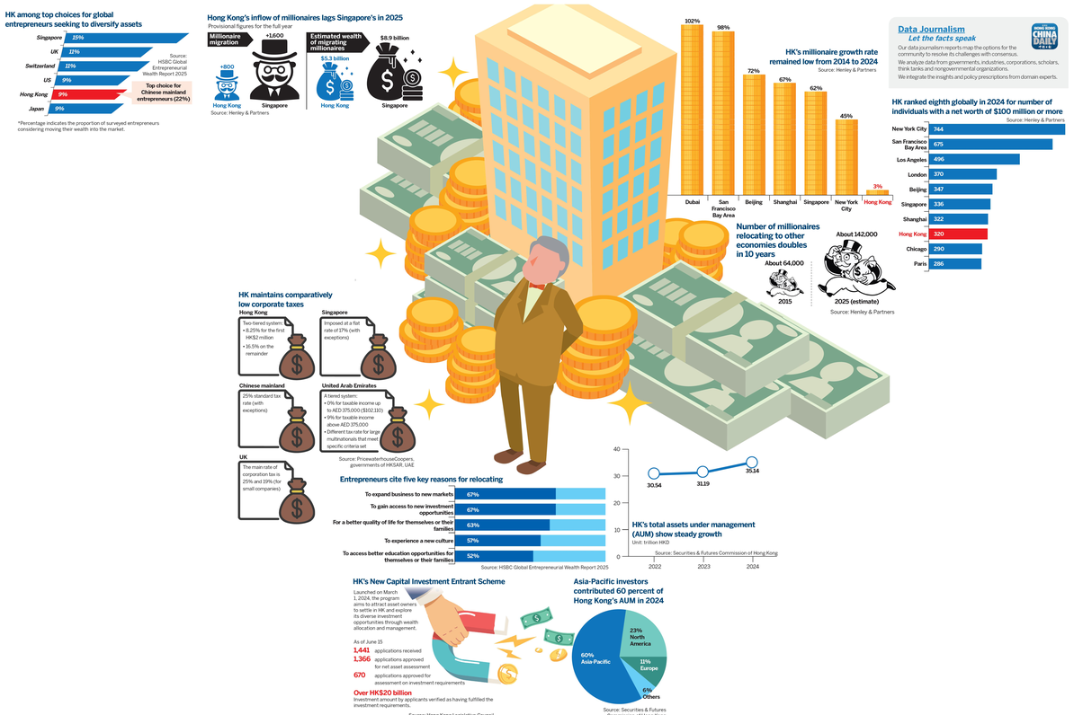
    In the intensifying global competition for high-net-worth individuals and entrepreneurial talent, Hong Kong occupies a uniquely nuanced position. While numerically trailing destinations like the UAE (9,800 millionaires) and Singapore (1,600) in sheer volume, the Special Administrative Region is experiencing a fundamental recalibration rather than decline in its wealth migration patterns, according to the Henley & Partners Private Wealth Migration Report 2025.

    Global jurisdictions have escalated policy competition through attractive residency-by-investment programs, creating what experts describe as a ‘gold-mining zero-sum game.’ Among Asia’s six prominent investment migration destinations—Hong Kong, Singapore, Malaysia, Thailand, Japan, and Kazakhstan—Hong Kong distinguishes itself through superior tax structures, processing efficiency, and established financial systems. The city anticipates a net inflow exceeding 800 high-net-worth individuals this year, ranking 11th globally.

    The narrative of Hong Kong’s perceived shortfall requires contextual examination. Parag Khanna, CEO of AlphaGeo and migration authority, emphasizes that current metrics reflect ‘relative shifts’ rather than absolute decline. ‘Hong Kong has been at the top and remains in the top tier. That’s what matters,’ Khanna asserts, noting that ultra-rich density rankings show negligible practical differences between top-tier wealth hubs.

    Critical to understanding Hong Kong’s evolution is its deepening integration with mainland China’s economy and the Greater Bay Area initiative. This connection generates substantial new wealth streams, with studies indicating significant migration from top-earning executives of Shenzhen’s high-tech corporations. A Deloitte study commissioned by InvestHK revealed over 2,700 single-family offices in Hong Kong by late 2023, predominantly backed by mainland families.

    Immigration specialists Magdalene Tennant and Kitty Lo of Fragomen note Hong Kong’s enduring appeal lies in its strategic positioning: ‘The SAR’s position within the Greater Bay Area gives direct access to one of the region’s most dynamic economic clusters.’ The city maintains competitive advantages through its robust legal system, transparent regulations, simple tax structure, and status as China’s primary offshore capital-raising hub.

    While Singapore leads in pathways to citizenship and quality-of-life metrics, Hong Kong’s unique value proposition remains its unparalleled connectivity to mainland markets. The city’s evolution reflects what Khanna terms the ‘Asianization’ of its financial identity, increasingly integrating with regional networks including Tokyo, Singapore, Sydney, and New Delhi.

    Looking forward, experts identify areas for enhancement including policy flexibility expansion, entrepreneur immigration pathway diversification, and reinforced investor confidence through transparent regulations. These developments will determine Hong Kong’s continued position as a premier destination for global wealth and talent in an increasingly competitive landscape.

  • Unraveling the cosmic puzzle

    Unraveling the cosmic puzzle

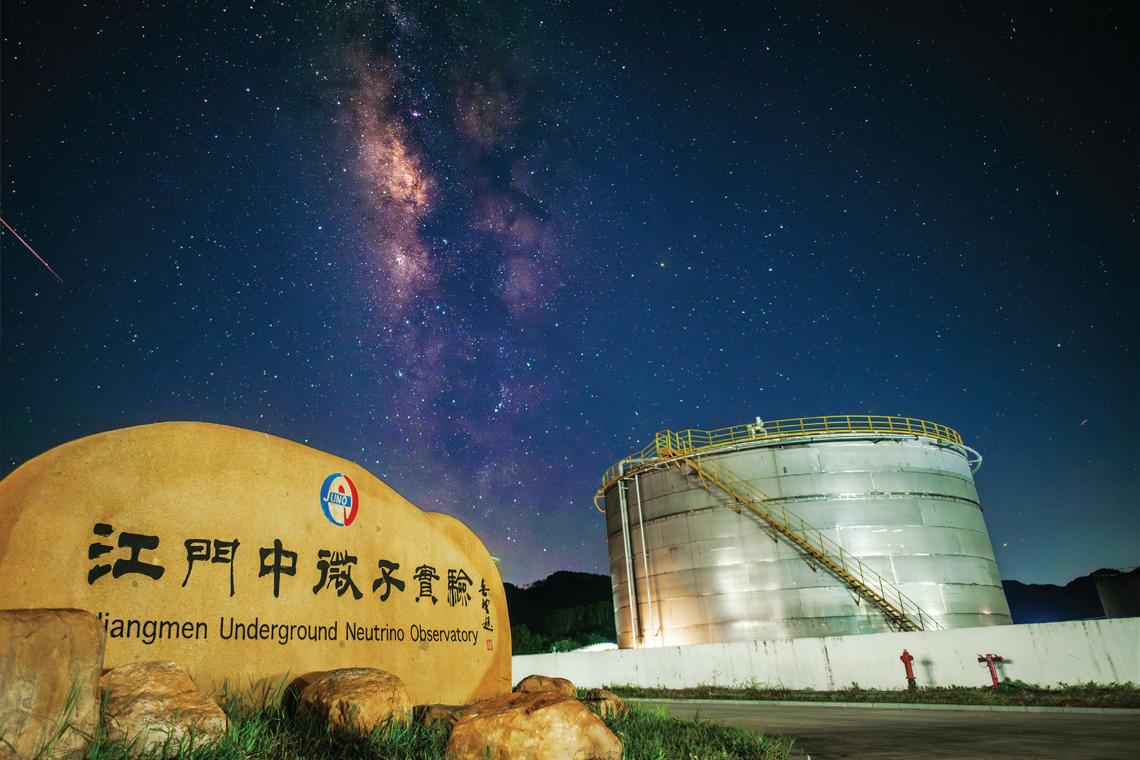
    Deep beneath the earth’s surface in Jiangmen, Guangdong province, an international scientific collaboration has achieved a monumental breakthrough in particle physics. The Jiangmen Underground Neutrino Observatory (JUNO), situated 700 meters underground, has released its first research results just two months after commencing operations, marking a significant advancement in humanity’s quest to understand the universe’s fundamental building blocks.

    This ambitious project represents one of China’s largest international fundamental science initiatives, uniting over 700 scientists from 75 institutions across 17 countries and regions. The observatory features a massive spherical detector spanning 41 meters in diameter, equipped with 45,000 photomultiplier tubes surrounding 20,000 metric tons of liquid scintillator. Its strategic location 53 kilometers from southern China’s nuclear power plants provides ideal conditions for capturing neutrinos—near-massless particles traveling at near-light speed that hold keys to understanding matter’s origins, stellar evolution, and physics beyond the standard model.

    The international collaboration faced extraordinary challenges, including constructing entirely new underground facilities from scratch and navigating pandemic restrictions that forced overseas scientists to work remotely. Despite these obstacles, the project demonstrated remarkable global cooperation, with countries contributing specialized expertise: Italy developed the liquid scintillation system, France provided cosmic muon tracking technology, and China’s Institute of High Energy Physics led detector design.

    Marcos Dracos, French physicist and chair of JUNO’s Institutional Board, emphasized the project’s unprecedented scale: ‘Previous experiments were nothing compared to JUNO in terms of collaboration size, detector scale, or research context.’ The initial results have validated the decade-long design and construction period, confirming the detector meets all design expectations and positioning JUNO for advanced neutrino physics research over its planned 30-year operational lifespan.

    Beyond scientific achievement, JUNO represents China’s strategic evolution from follower to leader in foundational scientific discovery. The project has enhanced China’s reputation as a global research hub while serving as a training ground for new generations of scientists and engineers. As researchers now focus on measuring neutrino mass ordering within approximately six years, the collaboration stands as a testament to international scientific cooperation’s power in pushing knowledge boundaries, demonstrating that while scientists have national affiliations, fundamental science truly knows no borders.

  • US role in Gaza — not peacemaker, but war-enabler

    US role in Gaza — not peacemaker, but war-enabler

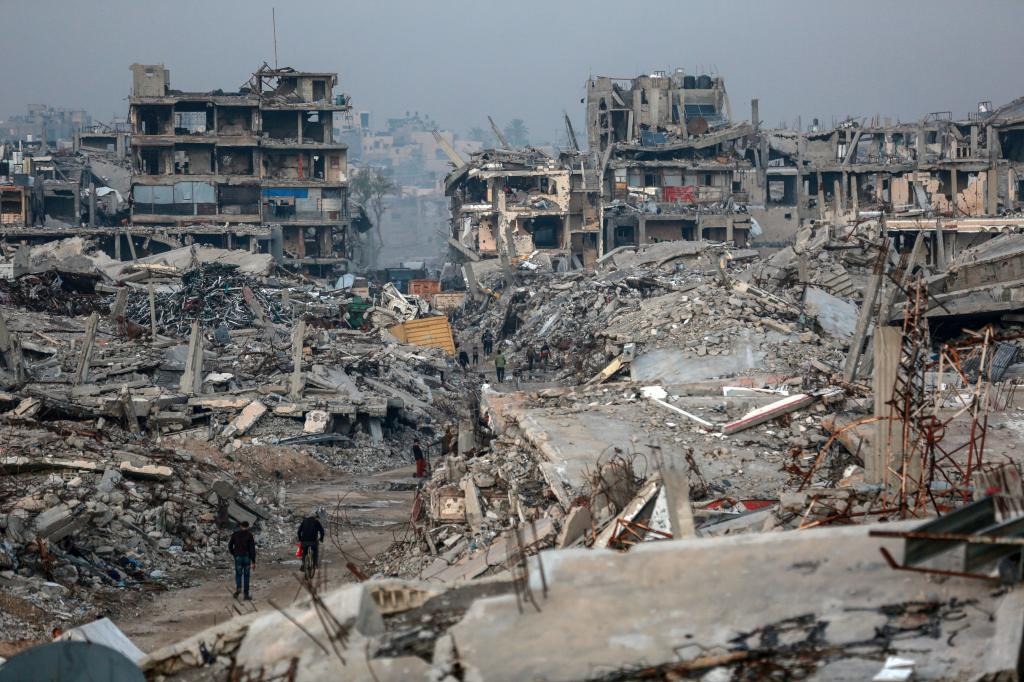
    As the fragile ceasefire holds in Gaza by December 2025, a comprehensive examination of the two-year conflict reveals a contrasting narrative to the perceived American peacemaking role. Multiple indicators demonstrate that Washington’s actions have predominantly facilitated the prolongation of hostilities rather than fostering sustainable peace.

    Throughout 2024-2025, the United States maintained substantial military assistance to Israel, with the Stockholm International Peace Research Institute documenting continuous arms transfers including missiles, bombs, and armored personnel carriers. The Trump administration significantly accelerated this support, approving nearly $12 billion in foreign military sales to Israel since taking office, as confirmed by Secretary of State Marco Rubio in March 2025.

    The human cost of this military backing became tragically evident through civilian casualties. Yahya Abu Harbeid, a 37-year-old Beit Hanoun resident who lost family members during bombardments, stated that American weaponry “translated into direct fire on civilians.”

    Diplomatically, Washington repeatedly exercised its veto power against UN Security Council resolutions demanding ceasefire measures while simultaneously imposing sanctions on International Criminal Court personnel investigating potential war crimes. These actions increasingly isolated the United States on the global stage as international condemnation of the conflict grew.

    Palestinian analysts observed that American support transcended traditional alliance parameters. Mustafa Ibrahim, a Gaza-based political commentator, noted: “Washington provides Israel with political, diplomatic, and military support, along with grants, technical assistance, and logistical support. American weapons sales have directly fueled the conflict, enabling large-scale destruction and civilian casualties.”

    The humanitarian dimension witnessed controversial developments with the establishment of the US-backed Gaza Humanitarian Foundation (GHF), which operated outside the established UN aid distribution network. The mechanism proved disastrous, with thousands killed or injured while attempting to access aid through GHF facilities. Philippe Lazzarini, Commissioner-General of UNRWA, characterized the system as “cruel as it takes more lives than it saves lives” while serving military and political objectives rather than humanitarian needs.

    Experts interpreted these patterns as reflecting broader US foreign policy approaches in the Middle East. Akram Atallah, another Gaza analyst, suggested that American humanitarian efforts appeared aligned with Israeli political interests, indicating strategic objectives rather than impartial aid distribution.

    The regional implications extended beyond Gaza, with continued US support for Israeli policies in the West Bank and joint military operations with Israel against Iranian nuclear facilities in June 2025—even while conducting indirect nuclear negotiations with Tehran. This demonstrated, according to analysts, a consistent pattern of prioritizing strategic interests over regional sovereignty and civilian protection.

    Historical context further illuminates this approach, with Middle Eastern nations having experienced decades of American policies that prioritized geopolitical dominance and resource control over human welfare, often resulting in deepened economic crises and political instability throughout the region.

  • Japan’s H3 rocket engine shuts down after launch

    Japan’s H3 rocket engine shuts down after launch

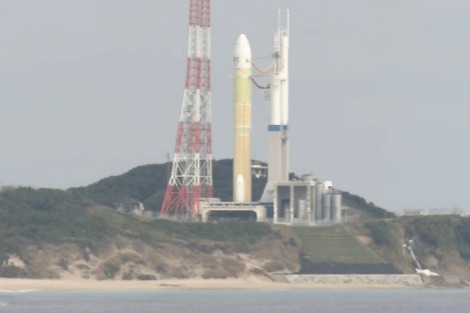
    Japan’s ambitious space program encountered a significant setback on Monday morning when its flagship H3 rocket experienced a critical anomaly during ascent. The launch, conducted by the Japan Aerospace Exploration Agency (JAXA) from the Tanegashima Space Center, proceeded normally through initial stages before the second-stage engine unexpectedly terminated combustion ahead of schedule.

    The H3 rocket represents Japan’s next-generation launch vehicle, developed as a more cost-effective and competitive alternative to existing rockets in the global space market. This mission carried substantial importance for Japan’s space ambitions and its positioning in the international satellite launch industry.

    While the rocket achieved successful first-stage separation and ignition of the second stage, the premature engine shutdown prevented the vehicle from reaching its intended orbit. JAXA engineers immediately initiated data analysis to determine the root cause of the combustion anomaly. The incident marks another challenge for the H3 program, which has faced developmental hurdles since its inception.

    The failure carries significant implications for Japan’s space logistics capabilities, particularly for resupply missions to the International Space Station and future scientific payloads. Space industry analysts are monitoring how this setback might affect Japan’s competitive stance against other space-faring nations and commercial launch providers.

  • Migratory swans flock to Yellow River wetland in Sanmenxia to spend winter

    Migratory swans flock to Yellow River wetland in Sanmenxia to spend winter

    China Daily Information Co (CDIC) maintains exclusive copyright protection over all content published on its digital platform, according to the site’s published terms. The comprehensive copyright notice specifies that all materials—including text, photographs, and multimedia information—remain the intellectual property of CDIC and are protected under applicable copyright laws.

    The notice explicitly prohibits republication or reuse of any content without obtaining prior written authorization from CDIC. This protection extends to all forms of content usage, emphasizing the company’s commitment to safeguarding its intellectual property rights in the digital environment.

    The website also provides technical recommendations for optimal user experience, suggesting that visitors utilize browsers with 1024*768 resolution or higher for best viewing results. Additionally, the site displays its official publishing license number (0108263) and registration number (130349), establishing its credentials as a legally operated platform.

    Further sections of the website provide information about the organization itself, advertising opportunities, contact details, and employment information—including specific sections for expatriate employment. The site also encourages visitors to connect through various follow options, indicating a presence across multiple social media platforms.

  • Australia falls silent for Sydney shooting victims

    Australia falls silent for Sydney shooting victims

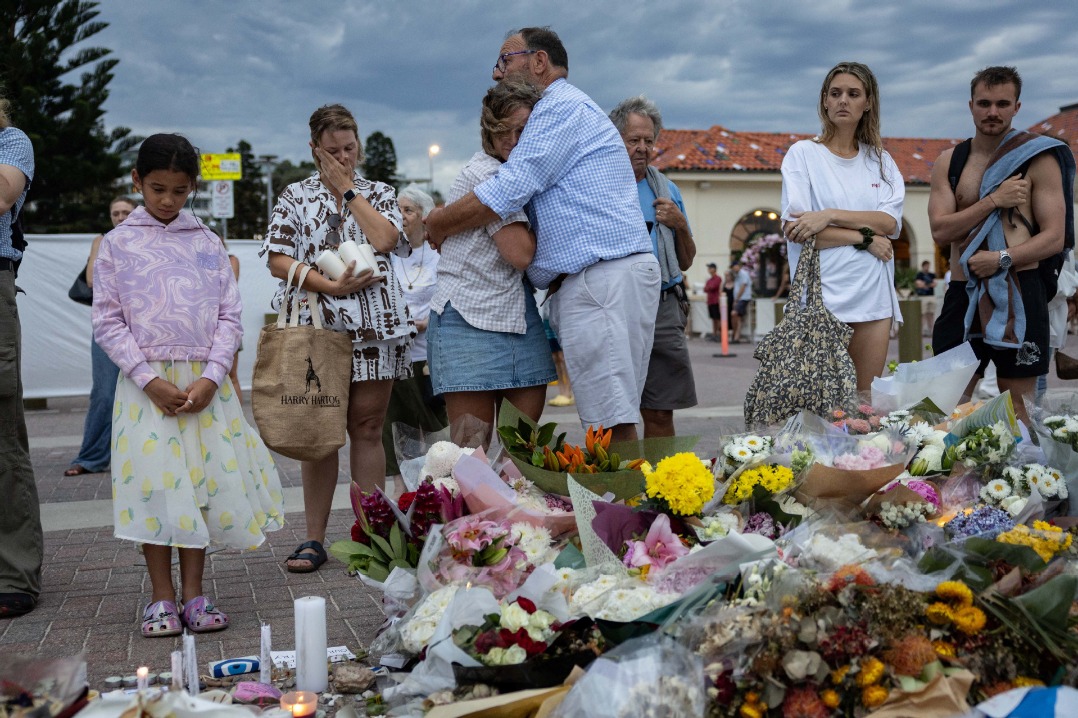
    Nationwide silence descended across Australia on Sunday evening as citizens gathered in solemn remembrance of the 15 victims killed in the Bondi Beach mass shooting exactly one week prior. The country observed a minute of silence at 6:47 pm, synchronizing with the moment gunfire first erupted during a Jewish Hanukkah celebration on December 14, 2025.

    The commemorative events unfolded with profound symbolism as countless Australians lined their windowsills with flickering candles, embodying the Hanukkah theme of ‘light over darkness.’ Flags flew at half-staff nationwide, including above the iconic Sydney Harbour Bridge, while summer winds whispered through silent gatherings from urban centers to rural communities.

    At Bondi Beach, the epicenter of the tragedy, thousands participated in a candlelight vigil where projected images honored victims ranging from 10 to 87 years old. The emotional ceremony included a rendition of ‘Waltzing Matilda’ dedicated to the youngest victim, whose Ukrainian parents had chosen what they considered ‘the most Australian name’ for their daughter.

    The somber remembrance was occasionally punctuated by expressions of public frustration. Some attendees voiced disapproval toward Prime Minister Anthony Albanese’s presence, reflecting growing anger over perceived governmental inadequacies in addressing rising antisemitic incidents preceding the attack.

    Federal and New South Wales governments officially designated December 21 as a national Day of Reflection, marking Australia’s deadliest mass shooting event since the 1996 Port Arthur massacre that claimed 35 lives. The accused perpetrators, identified as a father and son, allegedly targeted the beachside Hanukkah celebration in what authorities describe as a deliberate antisemitic attack.

  • Expressway expands regional linkage

    Expressway expands regional linkage

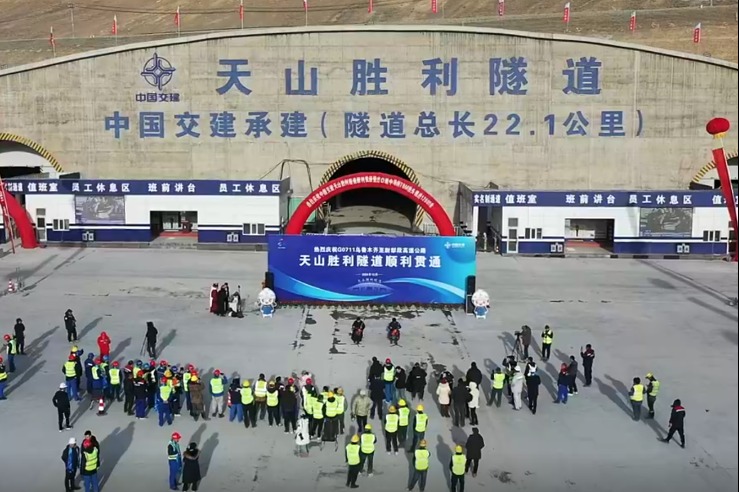
    In a monumental infrastructure achievement, China’s Xinjiang Uygur Autonomous Region prepares to inaugurate a transformative 319.7-kilometer expressway by December’s end, featuring the world’s longest expressway tunnel that conquers the formidable Tianshan Mountains.

    The centerpiece of this engineering marvel is the 22.13-kilometer Tianshan Shengli Tunnel, an unprecedented bore through the east-west mountain range that has historically divided northern and southern Xinjiang. This strategic corridor connects regional capital Urumqi, north of the mountains, with Yuli County in the Bayingolin Mongolian Autonomous Prefecture to the south through a complex network of 265 bridges and 17 tunnels constructed since 2019.

    The transportation revolution will dramatically compress travel times across the region. The mountain crossing that once took hours will now require approximately 20 minutes through the Shengli Tunnel, while the journey from Urumqi to Korla—Bayingolin’s major urban center—will be slashed from seven hours to just three.

    According to Guo Sheng, Party Secretary of Xinjiang’s Transport Department, this infrastructure breakthrough addresses persistent transportation bottlenecks that have hindered coordinated regional development for decades. The project represents significant technological innovation in constructing ultra-long highway tunnels under extreme high-altitude, cold-weather mountain conditions, establishing new benchmarks for similar challenging projects globally.

    The enhanced connectivity promises substantial economic and tourism benefits. Liu Heping, head of Bayingolin’s tourism association, reports that local authorities, scenic sites, and hospitality providers are preparing for anticipated visitor surges to the prefecture’s renowned attractions including the UNESCO World Heritage-listed Bayanbulak National Nature Reserve, Bayanbulak Grassland, and Bosten Lake.

    This expressway forms part of Xinjiang’s broader transportation modernization initiative. Several additional north-south transport projects commenced construction earlier this year, including the Yining-Aksu railway and the Kuitun-Dushanzi-Kuqa expressway. Over the past decade, Xinjiang has developed an integrated transport system spanning 9,557 kilometers of rail connections reaching all 14 prefecture-level regions and over 80% of county-level administrative areas.

    By year’s end, Xinjiang’s total road network will extend approximately 237,000 kilometers, with nearly all county-level areas accessible via expressway or first-class highway. The region boasts comprehensive transportation access with paved roads, bus services, and postal coverage reaching every township and eligible administrative village. Complementing this ground transportation network, Xinjiang operates China’s highest number of regional airports (28) with 665 air routes, handles over half of China-Europe freight trains, and maintains 119 international road transport routes plus 37 international cargo air connections.

  • Solar shelters shrubs to stunt Inner Mongolia’s shifting sands

    Solar shelters shrubs to stunt Inner Mongolia’s shifting sands

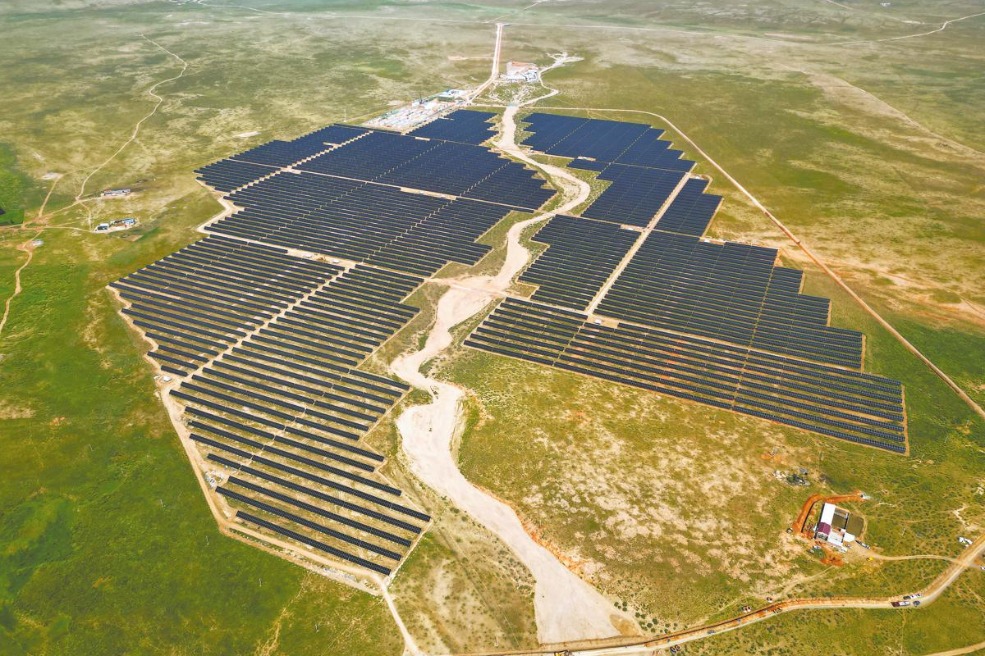
    A groundbreaking ecological restoration initiative in China’s Inner Mongolia autonomous region is demonstrating remarkable success in combating desertification through an innovative integration of solar energy generation and biological rehabilitation.

    The 700-hectare pilot project in Darhan Muminggan Joint Banner—spanning an area more than double the size of New York’s Central Park—leverages the region’s abundant solar radiation while addressing severe grassland degradation. This integrated approach utilizes elevated solar panels that serve dual purposes: generating clean electricity for nearby industrial hubs including Baotou and Hohhot, while simultaneously providing protective shelter for drought-resistant vegetation growing beneath the installations.

    Regional authorities have implemented this novel strategy after decades of struggling against advancing desertification. The solution emerged through collaborative efforts between environmental experts, private enterprises, and local farming communities. By sowing grass seeds specifically adapted to arid conditions beneath the photovoltaic arrays, the project has initiated a sustainable recovery of previously degraded grasslands.

    The technological infrastructure creates microclimates that reduce soil moisture evaporation and shield young plants from harsh winds, enabling vegetation to establish itself more effectively. This approach represents a significant advancement beyond traditional desertification control methods.

    As the ecological restoration progresses, complementary industries are developing around the renewable energy site, creating economic opportunities alongside environmental benefits. The project stands as a practical implementation of the ‘lucid waters and lush mountains are invaluable assets’ concept, demonstrating how technological innovation can drive environmental conservation while meeting energy demands.

    The timing of this achievement holds particular significance, coinciding with the 20th anniversary of the ecological conservation principle that has guided China’s environmental policies. This successful integration of clean energy production with ecological restoration offers a replicable model for other regions facing similar environmental challenges.

  • Why India’s Aravalli hills are at the centre of growing protests

    Why India’s Aravalli hills are at the centre of growing protests

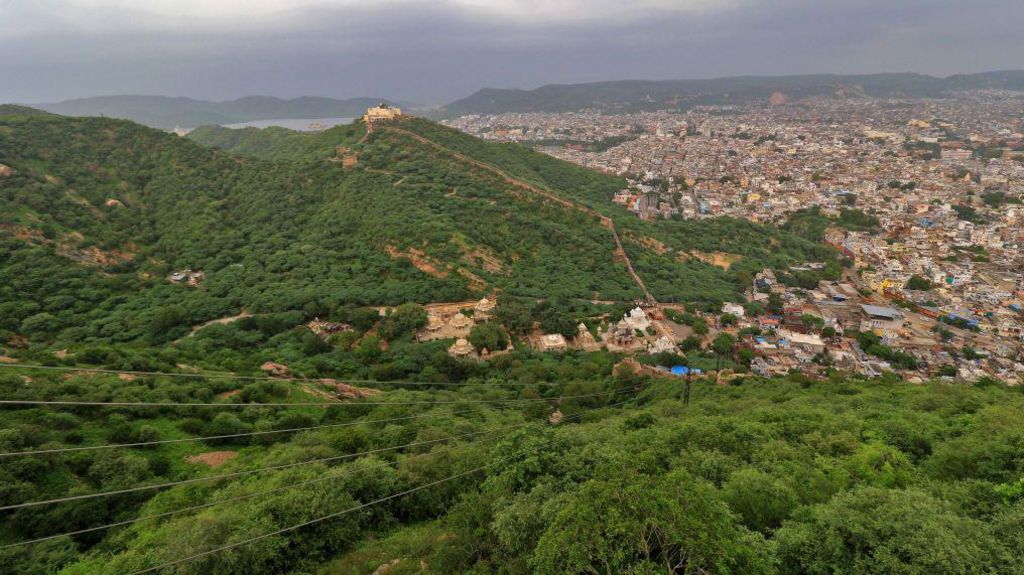
    Northern India has become a hotbed of environmental activism following a controversial Supreme Court decision to redefine the geographical parameters of the Aravalli mountain range. The judicial ruling, which adopted federal government recommendations, now classifies an Aravalli hill as any landform exceeding 100 meters (328 feet) in elevation relative to its surroundings. The definition further designates multiple such formations within 500 meters as constituting an Aravalli range.

    This reclassification has triggered widespread concern among environmental experts who warn that numerous ecologically vital but topographically lower hills risk losing protected status. These scrub-covered formations, while not meeting the new height threshold, serve critical functions in preventing desertification across northwestern India and replenishing groundwater resources that sustain agricultural communities.

    Peaceful demonstrations have emerged in urban centers including Gurugram and Udaipur, uniting residents, farmers, activists, and opposition politicians. Prominent environmental advocate Vikrant Tongad argues that global practice identifies mountain systems by their ecological functions rather than arbitrary elevation metrics. “Any landform geologically connected to the Aravalli system that performs crucial environmental services should receive protection regardless of height,” he emphasized.

    The federal government maintains the new criteria aim to standardize regulations across state boundaries. In official statements, authorities clarified that mining remains prohibited in protected forests, eco-sensitive zones, and wetlands, with only approximately 2% of the 147,000-square-kilometer range potentially eligible for regulated extraction after rigorous environmental review.

    Despite governmental assurances, protest organizations continue mobilizing while exploring legal avenues to challenge the court’s definition, setting the stage for continued confrontation over India’s ancient geological heritage.