标签: Asia

亚洲

  • Blast at Islamabad mosque kills 11 during Friday prayers: Police source

    Blast at Islamabad mosque kills 11 during Friday prayers: Police source

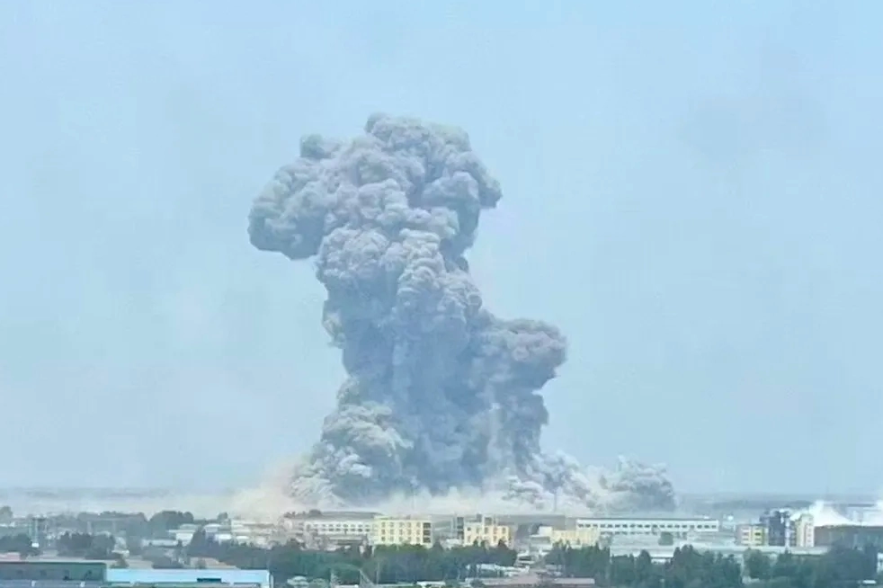
    A devastating explosion struck a Shi’ite Muslim mosque in Pakistan’s capital Islamabad during Friday prayers, resulting in 11 fatalities and leaving 20 individuals wounded, according to police sources. The blast occurred at approximately 2:09 PM local time on February 6, 2026, when the mosque was filled with worshippers engaged in weekly congregational prayers.

    Police official Zafar Iqbal confirmed the tragic incident, stating that emergency services had transported numerous casualties to nearby medical facilities. “We have shifted several people to hospitals. I can’t say how many are dead at this moment, but yes people have died,” Iqbal reported from the scene.

    Law enforcement authorities have cordoned off the area as investigation teams work to determine the nature and cause of the explosion. A police spokesman indicated that the specific type of explosive device used in the attack remains unclear at this preliminary stage of the investigation.

    This incident marks another concerning episode in Pakistan’s ongoing struggle with sectarian violence, particularly targeting religious minorities. The attack on a Shi’ite place of worship during Friday prayers—the most attended weekly religious gathering—suggests deliberate timing to maximize casualties.

    International news agencies including AFP and Reuters have deployed correspondents to cover the developing situation, while Pakistani security forces have intensified their presence throughout the capital region. The government has yet to release an official statement regarding responsibility for the attack or potential security measures in response to this tragedy.

  • Beijing-Xiong’an Express Line poised to shrink travel time, boost regional integration

    Beijing-Xiong’an Express Line poised to shrink travel time, boost regional integration

    The Beijing-Xiong’an Express Line, an ambitious infrastructure project spanning approximately 86 kilometers through Hebei’s Xiong’an New Area, Langfang, and Beijing, is approaching operational status with transformative implications for regional connectivity. According to Xue Yunlei, deputy general manager of Xiong’an Group’s Xiong’an-Shangqiu Rail Express Line Co, the primary structural construction has been finalized, with current efforts concentrated on station interior completion, electromechanical system installations, comprehensive testing, and operational readiness protocols.

    This state-of-the-art transit corridor, featuring eight newly constructed stations, will establish a direct connection with the Beijing Daxing Airport Line upon commissioning. The strategic integration promises to dramatically reduce travel durations, facilitating a streamlined half-hour commuting circuit between Xiong’an and Beijing’s urban core.

    The Xiong’an Terminal Station exemplifies engineering sophistication through its triple-tier underground design. The uppermost ‘urban living level’ provides seamless access to adjacent commercial developments, while the intermediate ‘integrated transfer level’ enables efficient three-minute transitions between the Xiong’an-Xinzhou High-Speed Railway, planned Metro Lines M1 and M2, and the Express Line itself. The foundational platform level prioritizes passenger safety and boarding convenience through optimized design.

    Operational projections indicate the line will enable 30-minute journeys from Xiong’an to Daxing International Airport and 60-minute travel to Beijing’s Lize Business District. Beijing Rail Transit Operation and Management Co will administer the service, implementing Beijing’s renowned standards for operational safety, service efficiency, intelligent systems, and passenger experience excellence. This infrastructure initiative represents a significant advancement in the Beijing-Tianjin-Hebei regional integration strategy, potentially establishing new benchmarks for intercity transportation networks.

  • Building the ‘City of the Future’: Xiong’an AI Park fosters next-gen innovation

    Building the ‘City of the Future’: Xiong’an AI Park fosters next-gen innovation

    The Xiong’an Artificial Intelligence Industrial Park has rapidly evolved into a thriving hub for technological advancement, attracting over 60 enterprises since its inauguration in June 2025. This concentrated AI ecosystem is demonstrating remarkable growth potential and emerging as a cornerstone for China’s ambitious ‘City of the Future’ initiative.

    Strategically positioned within the Xiong’an New Area, the park benefits from formidable academic backing through partnerships with Tsinghua University’s Institute for AI Industry Research and Institute for Interdisciplinary Information Sciences. This collaboration ensures a continuous pipeline of research commercialization projects transforming theoretical concepts into practical applications.

    Current infrastructure spans approximately 69,000 square meters, with 25,000 square meters already operational. Expansion plans are underway to add nearly 400,000 square meters of additional facilities, signaling strong confidence in the park’s long-term development trajectory.

    The park’s operational philosophy centers on innovation-driven, application-oriented development, with the Xiong’an Artificial Intelligence Research Institute serving as its core intellectual engine. This approach focuses on advancing next-generation AI theory while simultaneously driving practical innovation across multiple sectors.

    According to Xu Pengcheng, an official at the Industrial Operations Center, the park has successfully attracted high-quality enterprises specializing in AI model development and trusted data spaces. Notably, over 80% of these companies originated from Beijing, including publicly listed corporations and university-incubated projects.

    The park’s management has implemented tailored support mechanisms aligned with Xiong’an New Area’s talent acquisition policies. These include living subsidies for recent graduates, which effectively reduce labor costs for resident companies while providing comprehensive support for workforce development and retention.

  • From governing south Yemen to mobilising: The STC’s post-defeat strategy

    From governing south Yemen to mobilising: The STC’s post-defeat strategy

    In a stunning geopolitical reversal, Yemen’s Southern Transitional Council (STC) has seen its territorial control evaporate following a decisive Saudi-led counteroffensive, marking a dramatic shift in the complex Yemeni conflict landscape.

    Amr al-Bidh, senior STC official and scion of a prominent southern political family, acknowledges the past two months have been a ‘rollercoaster’ for the separatist movement. The STC, which had effectively controlled all former South Yemen territory by early December following a surprise offensive against Saudi-backed tribal forces, now finds its leadership fragmented and military presence significantly diminished.

    The turning point came when STC fighters refused to withdraw from strategically vital Hadhramaut and al-Mahrah provinces, prompting Saudi Arabia to respond with overwhelming force. On January 2, Saudi airstrikes supported a counteroffensive by Yemen’s internationally recognized Presidential Leadership Council (PLC), resulting in at least 80 STC casualties and the restoration of government control—even in Aden, the STC’s administrative headquarters and envisioned capital of a future independent state.

    Bidh maintains the STC’s advance was initially a limited operation that gained unexpected momentum, claiming the group ‘hadn’t come with the idea of establishing a state in an instant.’ However, Saudi Arabia viewed the territorial expansion as a direct threat to national security, particularly as Emirati-backed forces approached the kingdom’s borders.

    The conflict exposed deepening tensions between regional powers Saudi Arabia and the United Arab Emirates, previously allies in the Yemen conflict. The rift culminated in the UAE’s complete withdrawal from Yemen in late December, following Saudi allegations of Emirati weapons shipments to STC forces. This departure left behind a network of detention facilities that PLC officials and human rights activists have characterized as secret torture prisons—allegations Bidh says the STC cannot substantiate.

    The STC’s political standing further deteriorated when a delegation to Riyadh announced the organization’s dissolution on Saudi television—a statement some members claim was made under duress. Meanwhile, STC leader Aidarous al-Zubaidi has disappeared and faces treason charges, with intelligence reports suggesting he was evacuated to the UAE via Somaliland.

    Despite these setbacks, Bidh asserts the STC retains significant popular support, evidenced by large-scale protests in Aden that required no financial incentives. He contends the movement has been ‘liberated from the burden of government’ and may return to grassroots organizing, true to its ‘transitional’ designation.

    The conflict has revealed deep regional divisions within southern Yemen, particularly in resource-rich Hadhramaut where local tribes resisted STC authority. As Saudi Arabia assumes more direct control, residents report improved services in Aden, though Bidh questions whether this improvement stems from actual governance changes or simply reduced responsibility for the embattled separatists.

  • 1,200 robotaxis to be deployed in UAE and KSA until 2027

    1,200 robotaxis to be deployed in UAE and KSA until 2027

    In a landmark development for autonomous transportation, Chinese technology firm WeRide has unveiled plans to deploy 1,200 robotaxis across major Middle Eastern cities by 2027. The ambitious initiative will see self-driving vehicles operational in Abu Dhabi, Dubai, and Riyadh through integration with the Uber application platform.

    This expansion builds upon existing autonomous operations already established in the region. Currently, over 200 WeRide vehicles are conducting passenger services, with the fleet scheduled for progressive scaling as regulatory approvals and performance benchmarks are achieved. The company characterizes this deployment as the most substantial commercial robotaxi commitment ever made in the Middle East and North Africa region.

    Dubai’s transportation infrastructure has already incorporated this technology in prominent districts including Umm Suqeim and Jumeirah, areas renowned for their proximity to public beach facilities. During the current pilot phase, these autonomous vehicles operate with specialized safety drivers onboard to ensure operational reliability and passenger security.

    Ahmed Bahrozyan, Chief Executive of Dubai’s Public Transport Agency, emphasized that this pilot program directly supports Dubai’s comprehensive Self-Driving Transport Strategy. The emirate has established an ambitious target of converting 25 percent of all transportation journeys to autonomous modes by 2030.

    The technological rollout represents a significant advancement in smart city infrastructure and sustainable transportation solutions for the region. It demonstrates growing confidence in autonomous vehicle technology among Middle Eastern regulators and transportation authorities while potentially transforming urban mobility patterns across the Gulf Cooperation Council countries.

  • Likely Ramadan 2026 start dates in India, Pakistan, Bangladesh, Egypt, Philippines revealed

    Likely Ramadan 2026 start dates in India, Pakistan, Bangladesh, Egypt, Philippines revealed

    Astronomical calculations and meteorological projections are converging on February 19, 2026 as the anticipated commencement date for Ramadan across numerous Muslim-majority nations. While the official determination remains subject to traditional moon sighting ceremonies, scientific forecasts show remarkable consistency across geographical boundaries.

    Pakistan’s Meteorological Department has provided detailed celestial calculations, indicating the new moon will emerge on February 17 at 5:01 PM PKT (4:01 PM UAE time). Meteorological officials note a high probability of crescent visibility on the evening of February 18, with the moon reaching approximately 26 hours of age. Critical visibility windows place sunset at 6:25 PM PKT and moonset at 7:24 PM PKT, creating favorable conditions for observational confirmation.

    Parallel projections emerge from India, where religious authorities await local sightings but anticipate similar timing. Bangladesh’s Islamic Foundation concurrently expects February 19 initiation, according to Daily Star reports.

    The Philippines presents a slight variation, with preliminary projections suggesting February 18 as the potential commencement date. Final determination rests with the Bangsamoro Darul-Ifta’ and the National Commission on Muslim Filipinos, continuing the tradition of regional astronomical observation led by Bangsamoro Mufti Sheikh Abdulrauf A. Guialani.

    Notably, Egyptian observatories beyond Asia align with the February 19 prediction, demonstrating the geographical consensus among astronomical experts. This transnational synchronization highlights how modern celestial calculation methods complement traditional moon sighting practices in determining Islamic lunar months.

    The convergence of scientific prediction and religious tradition underscores the unique intersection of faith and astronomy that characterizes Ramadan preparations worldwide.

  • Scientists measure coldest ocean temperatures during ‘snowball Earth’ period

    Scientists measure coldest ocean temperatures during ‘snowball Earth’ period

    An international research consortium led by Chinese scientists has achieved a groundbreaking quantification of Earth’s most extreme climatic period, revealing unprecedented details about the ‘snowball Earth’ epoch approximately 700 million years ago. Published in Nature Communications, their study provides the first direct temperature measurements of ancient oceans during this planetary deep freeze.

    The investigation determined that continental margin waters—critical zones for early biological activity—maintained temperatures between -22°C and -8°C despite global glaciation. This remarkable liquid state persisted due to salinity levels quadruple those of contemporary seawater, creating a natural antifreeze effect that prevented complete solidification.

    Dr. Lu Kai, lead author and postdoctoral researcher at the Chinese Academy of Sciences’ Institute of Geology and Geophysics, emphasized the significance: ‘These represent the coldest ocean temperatures ever recorded in Earth’s history, surpassing even Antarctica’s modern supercooled lakes.’

    The team employed innovative paleothermometry techniques analyzing iron isotopes within ancient glacial marine sediments. These isotopic signatures function as geological thermometers, preserving temperature data through atomic abundance variations that correlate with thermal conditions.

    Dr. Lu explained the mechanism: ‘High salinity enabled liquid water persistence through processes similar to contemporary Antarctic ice shelf circulation. During freeze-thaw cycles at ice sheet bases, salt exclusion created concentrated brines with depressed freezing points.’

    This research fundamentally advances understanding of how primordial life endured extreme cryogenic conditions while offering new perspectives on Earth’s climate resilience mechanisms. The findings establish critical parameters for modeling past climate transitions and evaluating biological tolerance thresholds during planetary-scale environmental crises.

  • Israelis breach Gaza boundary in march calling for settlements

    Israelis breach Gaza boundary in march calling for settlements

    Hundreds of Israeli activists deliberately crossed into the restricted Gaza border area on Thursday during a coordinated demonstration advocating for renewed Jewish settlements in the Palestinian territory. The protest, organized by the Nachala Settlement Movement, saw approximately 1,500 participants march toward the Gaza perimeter under the banner “We will not surrender to Trump’s dictates: no to an international Gaza, yes to a Jewish Gaza.”

    The Israeli military confirmed the breach of the designated closed military zone, stating that security forces promptly returned the group to Israeli territory. Military authorities condemned the action, emphasizing that “approaching the barrier area and entering it is dangerous and disrupts the activity of security forces in the area.”

    The demonstration featured symbolic tree planting activities near the border fence, with organizers claiming participants overcame police attempts to prevent their approach. WhatsApp messages circulated beforehand had promoted the gathering as a “historic planting event in Gaza.”

    Notably, several government officials from Prime Minister Benjamin Netanyahu’s Likud party attended and endorsed the event. Communications Minister Shlomo Karhi, Social Equality Minister May Golan, and multiple lawmakers expressed support for the settlement initiative. Likud member Ariel Kallner declared that Israel’s “resurrection will come when the Israeli flag is raised in Gaza, when Jewish settlements bloom in Gaza.”

    The protest occurs amid growing calls from right-wing Israeli politicians to permanently occupy Gaza and reverse the 2005 disengagement, which saw the removal of 21 existing settlements. Finance Minister Bezalel Smotrich recently called to “correct the sin of expulsion” from Gaza, reflecting increasingly vocal settlement ambitions that directly contradict international law and the Trump administration’s ceasefire proposal envisioning Israeli withdrawal.

  • China’s space industry-developed eVTOL aircraft completes first flight

    China’s space industry-developed eVTOL aircraft completes first flight

    In a significant advancement for electric aviation, China’s aerospace industry has successfully conducted the inaugural flight of a revolutionary electric vertical takeoff and landing (eVTOL) vehicle. Developed by the Ninth Academy of China Aerospace Science and Technology Corporation, the pioneering aircraft completed its maiden voyage in Chongqing on February 6, 2026.

    The innovative aircraft represents a radical departure from conventional aviation design, featuring a groundbreaking configuration that merges aerial vehicle capabilities with automotive engineering. This hybrid design enables seamless transition between terrestrial and aerial transportation modes, creating unprecedented versatility for modern mobility requirements.

    Structurally composed of wings, cabin, and chassis components, the vehicle comprises two distinct operational modules: an airborne unit capable of carrying two passengers at speeds up to 150 km/h at altitudes below 3,000 meters, and a road-going module equipped with a fully electric intelligent chassis that delivers an impressive 300-kilometer range on land.

    Beyond personal transportation, this multifunctional low-altitude equipment demonstrates substantial potential across multiple sectors including logistics operations, emergency response coordination, and specialized transport services. The development marks China’s growing proficiency in advanced electric aviation technology and represents a strategic expansion of aerospace capabilities into urban air mobility solutions.

    The successful test flight underscores China’s accelerating advancements in electric aviation technology and demonstrates the aerospace sector’s successful diversification into next-generation transportation systems with practical urban and regional applications.

  • China solicits public opinion on standards for pre-cooked dishes

    China solicits public opinion on standards for pre-cooked dishes

    The Chinese government has launched a significant public consultation initiative regarding national food safety standards for pre-cooked dishes. The National Health Commission announced the move on Friday, marking a crucial step in regulating the rapidly expanding prepared foods sector.

    This standardization effort addresses growing consumer concerns about quality control, ingredient transparency, and production safety within the pre-cooked food industry. The proposed standards will establish comprehensive guidelines covering production processes, packaging requirements, storage conditions, and labeling specifications for prepared meals.

    The consultation period allows industry stakeholders, food safety experts, and general citizens to contribute insights and recommendations before final implementation. This participatory approach demonstrates regulatory authorities’ commitment to developing balanced standards that protect public health while supporting industry innovation.

    The initiative comes amid increasing consumer demand for convenience foods and corresponding concerns about nutritional quality and food safety. Pre-cooked dishes have gained substantial popularity in urban centers, particularly among working professionals and young families seeking time-efficient meal solutions.

    Food safety regulations have received heightened attention in China following previous incidents that undermined consumer confidence. The new standards aim to establish clear quality benchmarks that manufacturers must meet, potentially reshaping competitive dynamics within the food processing sector.

    Industry analysts suggest the standardization could accelerate market consolidation while improving overall product quality. The move aligns with broader governmental efforts to enhance food safety systems and modernize China’s food processing infrastructure.