标签: Asia

亚洲

  • Most Americans disapprove of the war on Iran, poll shows

    Most Americans disapprove of the war on Iran, poll shows

    A comprehensive Reuters/Ipsos opinion survey, conducted at the onset of joint U.S.-Israeli military operations against Iran, reveals deep-seated disapproval among the American public and significant concerns over President Donald Trump’s propensity for military engagement. The data indicates a nation grappling with the immediate repercussions of an escalating international conflict.

    The poll results demonstrate that 43% of all American respondents explicitly disapprove of the offensive strikes on Iran, with only 27% expressing approval. A substantial 30% remained undecided or declined to answer, highlighting widespread uncertainty. Political affiliation proved to be a critical divider; an overwhelming 74% of Democratic voters denounced the attacks, contrasted by a mere 13% disapproval among Republican respondents.

    Further scrutiny of presidential authority shows 56% of all Americans believe President Trump is excessively willing to deploy military force. This sentiment is acutely polarized, skyrocketing to 87% among Democrats while resting at 23% within his Republican base. Conversely, 73% of Republicans affirmed their belief that the President’s application of force is ‘about right.’

    This public division stands in stark contrast to President Trump’s campaign promises to conclude foreign wars and avoid new entanglements, alongside his self-proclaimed identity as a peacemaker. Historical context reveals a disconnect, noting that the President authorized bombings in seven nations within his first year, a modern record.

    The military campaign has triggered a dangerous escalation. Retaliatory strikes by Iran targeted not only Israel but also multiple U.S. allies across the region, including Saudi Arabia, the UAE, and Kuwait. The conflict has claimed high-level figures, most notably Iranian Supreme Leader Ayatollah Ali Khamenei. The Islamic Revolutionary Guard Corps claims to have launched hundreds of drones and missiles at over 500 U.S. and Israeli sites.

    Human cost is mounting. The Iranian Red Crescent Society reports 555 fatalities from U.S.-Israeli attacks, while Iranian strikes have killed at least 11 in Israel. By Monday, the U.S. confirmed four American military personnel were killed at a base in Kuwait, alongside the loss of three U.S. F-15s.

    The war’s domestic economic impact is already felt. Nearly half of all respondents (45%) stated rising gasoline prices would make them less likely to support the war, a concern shared by 45% of Republicans. Data from the American Automobile Association confirmed a national average price spike of 10 cents per gallon over the weekend, pushing the average to $2.99, with prices in Washington, D.C., exceeding $3.10 per gallon.

    The Reuters/Ipsos poll concluded before the announcement of U.S. casualties. When questioned on this potential outcome, 42% of Republicans indicated American deaths would diminish their support for the military action, signaling that public opinion may further shift as the human and economic toll becomes increasingly evident.

  • Israel strikes near Beirut city center, first such attack since 2024 ceasefire

    Israel strikes near Beirut city center, first such attack since 2024 ceasefire

    Israeli military forces conducted targeted airstrikes in Beirut’s southern suburbs on Monday evening, marking the first significant breach of the November 2024 ceasefire agreement. The attacks focused on the Jnah and Bir Hassan districts, areas situated in close proximity to the Lebanese capital’s city center.

    According to local broadcaster al-Jadeed, the strikes represent the closest Israeli military action to central Beirut since the implementation of the ceasefire over fifteen months ago. The Israeli military confirmed the operation, stating it had targeted a Hezbollah official, though no specific details regarding the target or potential casualties were immediately provided.

    The escalation occurs amid heightened regional tensions involving multiple Middle Eastern actors. Visual documentation from the scene showed substantial smoke rising from the impact sites following the explosions, indicating significant structural damage to the targeted locations.

    This military action demonstrates the fragile nature of the ceasefire that has largely maintained relative calm along the Israel-Lebanon border since late 2024. The strike underscores ongoing tensions between Israel and Hezbollah, which have persisted despite the formal ceasefire arrangement.

    The development comes within the broader context of continued regional instability and the complex web of alliances and conflicts involving the United States, Israel, Iran, and various regional militant groups. Security analysts are monitoring the situation closely for potential retaliatory measures and further escalation.

  • Jammu and Kashmir’s long road to India cricketing glory

    Jammu and Kashmir’s long road to India cricketing glory

    In a landmark achievement for Indian domestic cricket, the Jammu and Kashmir cricket team has secured its maiden Ranji Trophy title by defeating eight-time champions Karnataka in a thrilling final showdown. This victory represents far more than a sporting accomplishment—it stands as a testament to resilience and determination emerging from a region historically marginalized within India’s cricketing landscape.

    The Ranji Trophy, among the world’s oldest first-class cricket competitions, serves as the foundational bedrock of Indian cricket. Jammu and Kashmir’s triumph against Karnataka—a team featuring four current international players including KL Rahul and Mayank Agarwal—marks a dramatic underdog story that captivated the nation during a season otherwise dominated by T20 World Cup coverage.

    Cricket’s roots in the region extend back to the colonial era, when Kashmir willow gained renown for producing high-quality bats that powered the sport across India. Despite this historical connection, Jammu and Kashmir faced decades of institutional neglect, political turmoil, and inadequate infrastructure that hampered cricketing development. The team didn’t secure its first Ranji match victory until 1982-83—more than twenty years after gaining state association status.

    The transformation began approximately fifteen years ago as political volatility eased and systematic development initiatives took hold. Three critical inflection points catalyzed the team’s remarkable ascent:

    Between 2011-2013, former Indian captain Bishen Singh Bedi instilled crucial self-belief in players traditionally overawed by more established teams. His mentorship proved instrumental for Pervez Rasool, who became the first cricketer from the region to represent India.

    In 2018-2019, former Indian all-rounder Irfan Pathan joined as player-mentor, emphasizing unity beyond regional divisions and helping identify emerging talents like batsman Abdul Samad and fast bowler Umran Malik.

    Approximately five years ago, administrative restructuring established an Apex Council led by Mithun Manhas—a former Delhi stalwart with Jammu roots—who professionalized the setup with modern coaching methods, scientific fitness programs, and national-standard infrastructure.

    Seasoned domestic batsman Paras Dogra, drafted as captain at age 41, provided leadership that elevated the entire team. The squad’s spearhead proved to be fast bowler Aquib Nabi, who claimed 60 wickets this season following 44 last year, earning IPL recognition and endorsement from former captain Sourav Ganguly for national team consideration.

    This victory symbolizes cricket’s expanding footprint across India’s diverse regions and offers Jammu and Kashmir meaningful integration into the national mainstream through shared sporting pride—an achievement reminiscent of Afghanistan’s improbable cricketing ascent on the global stage.

  • US-Israeli war on Iran expands and shuts down Gulf oil and gas production

    US-Israeli war on Iran expands and shuts down Gulf oil and gas production

    The Middle East descended deeper into a large-scale military confrontation on Monday as hostilities between the US-Israeli alliance and Iran escalated dramatically, triggering severe consequences across the region. The conflict, now in its third day, has expanded beyond direct engagements to significantly impact global energy infrastructure and regional stability.

    Iran’s Islamic Revolutionary Guard Corps (IRGC) declared it had executed coordinated strikes on over 500 US and Israeli targets utilizing an arsenal of 700 drones and hundreds of missiles. This offensive came in response to what Iranian officials characterize as unprovoked aggression, following the killing of Supreme Leader Ali Khamenei in a joint operation on Saturday.

    The energy sector experienced immediate disruption as Saudi Arabia’s state-owned Aramco initiated precautionary shutdowns at its critical Ras Tanura refinery complex following drone strikes. Simultaneously, Qatar—the world’s largest LNG producer—halted production at facilities in Ras Laffan and Mesaieed after similar attacks, though Qatar’s defense ministry reported successfully intercepting two SU24 fighter jets originating from Iranian airspace.

    These developments precipitated a 13% surge in global oil prices, pushing benchmarks above $82 per barrel—the highest valuation since January 2025. The price spike intensified as commercial shipping operations either suspended transit or diverted course from the strategically vital Strait of Hormuz, a maritime channel accounting for approximately one-fifth of global oil shipments.

    The conflict’s geographical expansion continued as Lebanon became increasingly embroiled in hostilities. Israeli airstrikes targeted Beirut’s suburbs, southern regions, and the Beqaa Valley, resulting in 31 fatalities and 249 injuries. These operations prompted mass displacements and Israeli expulsion orders affecting dozens of communities. Hezbollah claimed its rocket and drone attacks on northern Israel constituted retaliation for Khamenei’s death.

    In a significant political development, the Lebanese government imposed an immediate and comprehensive ban on Hezbollah’s military operations, demanding the transfer of all “illegal” weapons to state authority. The decision received endorsement from influential parliamentary speaker Nabih Berri, traditionally a Hezbollah ally, signaling shifting political dynamics within the Lebanese establishment.

    Additional theaters of conflict emerged as three US F-15 aircraft crashed in Kuwait under disputed circumstances. While US military officials attributed the incident to “apparent friendly fire,” Iranian authorities claimed responsibility for intercepting the jets near the Kuwaiti border. Meanwhile, rockets targeted a British military installation in Cyprus, with preliminary assessments suggesting Lebanese militant groups orchestrated the attack.

    The conflict’s repercussions extended to digital infrastructure, where Amazon Web Services reported service disruptions at Emirati data centers struck by “objects” that ignited fires. In Jerusalem, Israeli authorities maintained the closure of Al-Aqsa Mosque for the third consecutive day during Ramadan, drawing condemnation from Palestinian religious authorities who perceive the action as exploiting security concerns to alter the holy site’s status quo.

    Humanitarian organizations reported escalating casualties, with the Iranian Red Crescent Society documenting 555 fatalities from US-Israeli operations. American officials confirmed four military personnel killed during missions, while Iranian strikes in Israel resulted in at least 11 deaths.

    Top Iranian official Ali Larijani emphasized Tehran’s preparedness for prolonged conflict, stating “Iran, unlike the United States, has prepared itself for a long war”—a declaration underscoring the potential for continued regional destabilization.

  • At least 555 killed in US-Israeli attacks on Iran: Red Crescent Society

    At least 555 killed in US-Israeli attacks on Iran: Red Crescent Society

    TEHRAN – The Iranian Red Crescent Society (IRCS) confirmed on Monday that coordinated military strikes by the United States and Israel have resulted in at least 555 fatalities across Iran since operations commenced Saturday morning. The humanitarian organization disclosed that 131 Iranian counties sustained damage during the extensive aerial campaign.

    According to an official statement published on the IRCS website, emergency response teams have mobilized more than 100,000 rescue personnel nationwide. These teams are conducting continuous relief operations, evacuating casualties to medical facilities, and providing urgent assistance in affected regions.

    The military escalation began Saturday when joint US-Israeli forces targeted Tehran and multiple other urban centers. The attacks resulted in the death of Supreme Leader Ali Khamenei, along with members of his family, senior military officials, and numerous civilians. In retaliation, Iran launched multiple waves of missile and drone strikes against Israeli territory and US military installations throughout West Asia.

    Among the most devastating incidents reported by Iran’s official IRNA news agency was the bombing of a girls’ school in Hormozgan province, which claimed 165 lives and injured 95 others. Additionally, a medical facility in northern Tehran, including its neonatal intensive care unit, suffered significant damage during Sunday night’s bombardment.

  • Drones attack UK base in Cyprus as president maintains neutral stance

    Drones attack UK base in Cyprus as president maintains neutral stance

    Cyprus found itself at the center of escalating regional tensions as multiple drone incursions targeted the Royal Air Force base at Akrotiri on Monday, March 2, 2026. The Cypriot government confirmed two separate interception incidents, marking a significant security breach at the British sovereign territory on the Mediterranean island.

    The initial attack occurred shortly after midnight when an unmanned drone struck the runway at RAF Akrotiri, causing limited damage but fortunately no casualties. The situation escalated at noon when British combat aircraft scrambled to intercept two additional drones approaching the base. Government spokesman Konstantinos Letymbiotis stated that the incoming threats were ‘dealt with’ in a timely manner by the responding aircraft.

    The base authorities activated emergency protocols, sounding alarm sirens and ordering non-essential personnel to evacuate. Residents of nearby Akrotiri village received instructions to leave the area as radar systems detected approaching objects. The security alert extended to Paphos International Airport, approximately 70 kilometers northwest of Akrotiri, which underwent temporary evacuation after radar detected a suspicious object heading toward the facility. The airport, which serves dual civilian and military purposes, subsequently resumed operations.

    The drone attacks disrupted air travel significantly, with approximately 60 flights to Cyprus, primarily from European destinations, canceled throughout the day. British authorities have launched an investigation into the overnight strike, with preliminary reports suggesting the drones may have been launched from Lebanon, located approximately 150 kilometers to the east. Officials have declined to confirm the exact origin of the attacks.

    Amid the security crisis, Cypriot President Nikos Christodoulides maintained the nation’s neutral stance, emphatically stating that ‘Cyprus is not and will not become involved in military operations against Iran.’ The president discussed the incident with European Commission President Ursula von der Leyen, who characterized the attacks as a matter of ‘serious concern for European security’ and reaffirmed the EU’s support for member states. As current holder of the rotating EU presidency, Cyprus postponed an informal EU foreign ministers’ meeting scheduled for Monday.

  • Iranian missiles kill two Bangladeshis and wound several across Gulf

    Iranian missiles kill two Bangladeshis and wound several across Gulf

    Cross-border Iranian missile and drone attacks have resulted in casualties among Bangladeshi migrant workers in several Gulf countries, highlighting the vulnerability of foreign labor forces in regional conflicts. The Bangladeshi Ministry of Foreign Affairs confirmed two fatalities and multiple injuries among its citizens working in the United Arab Emirates, Bahrain, and Kuwait.

    In Ajman, UAE, truck driver Saleh Ahmed from Sylhet died after being struck by debris from an intercepted Iranian drone that damaged civilian infrastructure. The incident caused projectile fragments to scatter across residential areas, leading to the fatal injury.

    Meanwhile, in Bahrain’s Salman Industrial Area, SM Tareq from Sandwip island lost his life when missile debris struck the vicinity. Two additional Bangladeshi nationals sustained injuries in the same attack and received hospital treatment.

    Kuwait reported four injured Bangladeshi workers following a drone attack near the country’s main international airport. All victims are currently receiving medical attention and are reported in stable condition.

    The Bangladeshi government has initiated coordination with host nations regarding repatriation procedures for deceased citizens once commercial flight operations resume. Current air travel suspensions have left thousands of Bangladeshi migrant workers stranded in Dhaka, unable to return to their workplaces across the Middle East.

    With over six million citizens employed in Gulf states—primarily in construction, transportation, and domestic sectors—Bangladesh maintains one of the world’s largest overseas labor forces. The government has activated emergency protocols, placing all regional embassies on high alert and establishing dedicated hotlines for concerned families. Authorities are additionally coordinating with host governments to facilitate compensation claims for affected workers.

  • Brics missing in action as war on permanent member Iran spirals

    Brics missing in action as war on permanent member Iran spirals

    The BRICS alliance is confronting a severe test of its global credibility and internal cohesion following its collective silence on Israel’s targeted killing of Iranian Supreme Leader Ayatollah Ali Khamenei, which resulted in over 550 casualties including 165 children. Despite comprising eleven nations positioning themselves as leaders of the Global South, the bloc has failed to issue any unified statement regarding the attack on its permanent member Iran, which joined the grouping in 2024.

    Analysts reveal deep divisions within the alliance, particularly highlighting India’s complicating role as current BRICS chair. New Delhi recently elevated its relationship with Israel to a ‘special strategic partnership’ and condemned Iran’s retaliatory strikes against the United Arab Emirates—another BRICS member. This alignment with Israeli interests directly contrasts with positions taken by other core members including China, Russia, Brazil and South Africa, all of which individually condemned Khamenei’s assassination.

    Priyal Singh, senior researcher at the Institute for Security Studies, notes that India’s visible solidarity with Israeli leadership and Iran’s attacks on UAE territories have created nearly insurmountable barriers to consensus. The bloc’s institutional design, which makes collective decisions non-binding, combined with significant bilateral trade relationships with Israel across multiple member states, further paralyzes unified action.

    Experts suggest economic interests ultimately outweigh geopolitical solidarity. Patrick Bond of the University of Johannesburg contends that BRICS nations’ corporate profiteering in Israel will likely prevent meaningful support for Iran, drawing parallels to similar inaction regarding Venezuela and Cuba. This economic pragmatism undermines the bloc’s purported role as a counterweight to Western hegemony.

    The expansion from five to eleven members in 2024-2025—adding Iran, UAE, Egypt, Ethiopia, Saudi Arabia, and Indonesia—has dramatically complicated decision-making processes. Emerging Middle Eastern power axes centered around UAE and Saudi interests further fracture potential unity, particularly with Iran potentially weakened. With the next summit scheduled for New Delhi in September, the bloc’s perceived inability to protect its members may fundamentally damage its international standing and internal trust.

  • Iranian drones cost a fraction of air defences. How long can Gulf states last?

    Iranian drones cost a fraction of air defences. How long can Gulf states last?

    In a significant escalation of regional hostilities, Iran has launched comprehensive military strikes across the Middle East in retaliation against the United States and Israel. The offensive, which targeted both military installations and economic infrastructure, demonstrates Tehran’s multifaceted approach to asymmetric warfare.

    The campaign has seen unprecedented missile and drone deployments against multiple Gulf states, including critical oil and gas facilities in Saudi Arabia and Qatar. Beyond punitive measures for the killing of Iranian leadership and civilians, these attacks strategically target the economic foundations of nations perceived as U.S. allies. Particularly significant is the targeting of the Strait of Hormuz, a vital global energy transit corridor.

    Military analysts reveal the sophisticated economic dimension of Iran’s strategy. According to data compiled by defense experts, Iran launched 165 ballistic missiles, two cruise missiles, and 541 drones against the UAE alone by Sunday. While Emirati defenses achieved an extraordinary 92% interception rate, the financial asymmetry reveals Tehran’s strategic calculus.

    Kelly Grieco of the Stimson Center notes the devastating economic imbalance: For every dollar Iran spends on drones, the UAE expends approximately $20-28 intercepting them. Grieco estimates Iran’s total offensive expenditure between $177 million and $360 million, while defense costs for the UAE reached between $1.45 billion and $2.28 billion—creating a five to tenfold financial disadvantage for defending nations.

    This strategy of financial attrition mirrors Russian tactics in Ukraine, where inexpensive Iranian-designed Shahed drones (now mass-produced with Chinese components) overwhelm expensive defense systems. The technological disparity has been likened by Economist correspondent Gregg Carlstrom to ‘using Ferraris to intercept e-bikes.’

    The sustainability of current defense postures remains uncertain. Regional powers including Saudi Arabia maintain sophisticated multi-layered defense networks incorporating American, European, and Chinese systems. Saudi Arabia remains the only Gulf state deploying Chinese Silent Hunter laser systems specifically designed for low-cost drone interception.

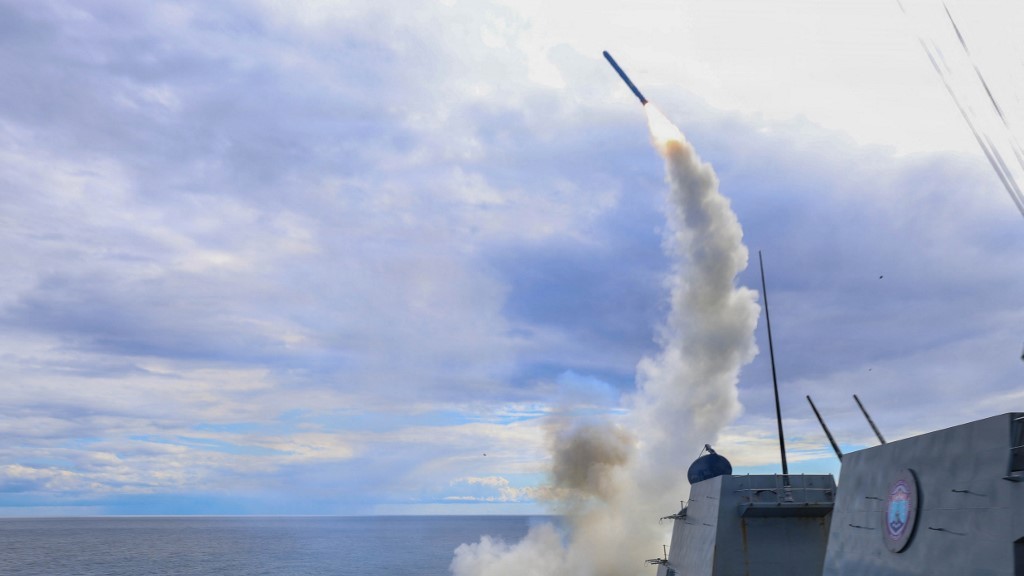
    Meanwhile, the United States faces its own logistical challenges, rapidly expending Tomahawk cruise missiles and aircraft-launched weapons while working to replenish stocks of Patriot, Standard Missile, and Thaad interceptors. Current conflicts have already depleted air defense inventories throughout the Middle East, raising concerns about long-term defensive capabilities against sustained asymmetric attacks.

  • Cyprus condemns UK after RAF base that launched Gaza spy flights hit by drone

    Cyprus condemns UK after RAF base that launched Gaza spy flights hit by drone

    The Cypriot government has formally expressed dissatisfaction with Britain’s failure to provide explicit assurances that its military bases on the island would be used exclusively for humanitarian purposes. This diplomatic tension emerged hours after a one-way attack drone struck the Royal Air Force Akrotiri base, despite British Prime Minister Keir Starmer’s announcement permitting U.S. forces to utilize British installations for targeting Iranian missile sites.

    Government spokesperson Konstantinos Letymbiotis revealed that two additional unmanned aerial vehicles were intercepted while approaching RAF Akrotiri on Monday morning. Although the incident resulted in no casualties, military families and local residents underwent precautionary evacuations during the security alert.

    The drone attack is understood to have been launched prior to Starmer’s Sunday evening address from Downing Street, where he justified the decision as necessary to counter Iranian missile threats. “The only way to stop the threat from Iranian missiles is to destroy the missiles at source,” Starmer stated, emphasizing the defensive nature of the arrangement requested by the United States.

    Cyprus maintains that despite multiple communications across various levels, British authorities failed to provide clear and timely assurances regarding the strictly humanitarian role of their bases. Letymbiotis emphasized Cyprus’s longstanding position as a “humanitarian hub” and criticized communication failures that affected residents near British installations.

    The spokesperson refused to exclude the possibility of Cyprus seeking renegotiation of the status and operating conditions of British bases, highlighting serious concerns about information transparency and regional security implications. Britain maintains two strategic bases in Cyprus at Dhekelia and Akrotiri, the latter having conducted hundreds of surveillance flights over Gaza during Israel’s military operations.

    While the Ministry of Defence has consistently stated these flights supported hostage rescue operations, revelations have emerged about intelligence sharing with Israel and captured footage of Gaza during attacks that killed British citizens. Analysts suggest the U.S. may more likely utilize the joint UK-US military base on Diego Garcia for any potential operations against Iranian targets, given its strategic positioning within 5,300km of Iran.