标签: Asia

亚洲

  • Shanxi NPC deputies arrive in Beijing

    Shanxi NPC deputies arrive in Beijing

    BEIJING – Delegates from Shanxi province formally arrived in the Chinese capital on Tuesday, March 3rd, 2026, marking their participation in the upcoming Fourth Session of the 14th National People’s Congress (NPC). The arrival signals the commencement of one of China’s most significant annual political events, where legislative agendas and national policies are set for the forthcoming year.

    The delegation, representing millions of constituents from the resource-rich northern province, traveled to Beijing to contribute to deliberations on critical national issues. Their attendance at the NPC, China’s top legislative body, underscores the province’s role in the nation’s governance framework. The session is anticipated to address a comprehensive range of topics, from economic development strategies and environmental initiatives to social welfare enhancements.

    Photographic documentation captured the deputies’ arrival, highlighting the organized and formal nature of the event. The NPC serves as a pivotal platform for integrating regional perspectives into national policy-making, ensuring that local interests from across China, including those of Shanxi, are represented at the highest level of government. The outcomes of this session are expected to have substantial implications for national legislation and the strategic direction of the country’s development.

  • New study proposes scientific basis for improving concrete reinforcement in desert environments

    New study proposes scientific basis for improving concrete reinforcement in desert environments

    A groundbreaking study from Chinese researchers has overturned conventional wisdom about sandstorm damage, revealing that moderate wind and sand erosion can actually enhance the structural integrity of concrete surfaces in desert environments. The collaborative research between the Northwest Institute of Eco-Environment and Resources (NIEER) under the Chinese Academy of Sciences and Lanzhou Jiaotong University provides a scientific basis for improving reinforcement methods for infrastructure in arid regions.

    Published in the prestigious journal Composites Part B: Engineering, the study investigated the interface performance of wind-and-sand-eroded concrete when reinforced with carbon fiber-reinforced polymer (CFRP). Unlike previous research that focused on ideal flat interfaces, this pioneering work simulated various wind-sand environments through mechanical testing and microscopic analysis.

    Lead researcher Liu Benli from NIEER explained the counterintuitive findings: “Moderate abrasion forms a microstructure conducive to the bonding of the reinforcing layer. In vivid terms, the process resembles a sculptor carving rough textures into stone for subsequent reinforcement.” The research demonstrated that wind and sand impact creates microscopic grooves on material surfaces, providing natural anchoring points for coatings and protective materials that significantly enhance interfacial bonding.

    The quantitative results were striking: sand erosion increased the interface ultimate bearing capacity of CFRP-concrete specimens by 31 percent and amplified surface roughness by a factor of 10 compared to uneroded specimens. The research team also developed predictive models for interfacial bearing capacity and bond-slip relationships that incorporate abrasion effects, showing strong alignment with experimental data.

    According to Zhang Kai, associate professor at Lanzhou Jiaotong University’s School of Civil Engineering, the study represents a significant advancement: “For the first time, we’ve achieved quantitative correlation between environmental conditions and interface performance. Engineers can now precisely predict material load-bearing capacity based on wind and sand intensity.” This breakthrough enables the scientific utilization of sandstorms as a ‘natural power’ to sustain infrastructure in desert regions, potentially transforming how engineers approach construction and maintenance in challenging environments.

  • Gallop towards luck with Fujian’s Lantern Festival

    Gallop towards luck with Fujian’s Lantern Festival

    The southeastern Chinese province of Fujian has reimagined its traditional Lantern Festival celebrations through a groundbreaking digital initiative featuring animated mascots Fu Fu Zai and Hua Hua Mei. These charismatic characters, accompanied by the symbolic Lucky Horse, guide participants through an immersive virtual journey across six culturally significant Fujian landmarks where lantern displays illuminate the night skies.

    This innovative approach to cultural preservation combines cutting-edge digital storytelling with time-honored traditions, allowing global audiences to experience Fujian’s rich cultural heritage remotely. The interactive experience showcases elaborate lantern installations at historically important sites while maintaining the communal spirit of the ancient festival through digital means.

    The initiative represents a significant evolution in how traditional Chinese festivals are celebrated and shared in the digital era, demonstrating how technology can enhance rather than replace cultural practices. By creating accessible virtual experiences, organizers have expanded the festival’s reach beyond physical boundaries while preserving the authentic atmosphere of lantern-viewing gatherings that have characterized the celebration for centuries.

    This digital transformation of traditional festival activities reflects broader trends in cultural preservation and technological integration within Chinese society, offering new models for celebrating heritage while adapting to contemporary technological landscapes.

  • What China’s response to the U.S. attack on Iran says about its foreign policy

    What China’s response to the U.S. attack on Iran says about its foreign policy

    As military tensions escalated between the United States, Israel, and Iran, China maintained a characteristically measured diplomatic stance. Following initial hostilities, Beijing’s Foreign Ministry expressed “profound concern” while advocating for immediate ceasefire and renewed dialogue. Foreign Minister Wang Yi subsequently characterized the strikes as “unacceptable” while reinforcing calls for peaceful resolution through diplomatic channels.

    This response pattern reflects China’s established approach to international conflicts—verbal condemnation without direct intervention. Analysts note Beijing’s strategic prioritization of long-term interests over immediate geopolitical engagement. Particularly significant is the anticipated state visit by U.S. President Donald Trump scheduled for early April, which Chinese leadership views as more consequential than Middle Eastern hostilities.

    Despite China’s growing military capabilities—including joint exercises with Iran and its first overseas military base in Djibouti—experts confirm Beijing remains reluctant to project power beyond its immediate periphery. The country has demonstrated diplomatic ambition through mediating the 2023 Iran-Saudi Arabia rapprochement, but avoids military entanglements, viewing U.S. interventions in Afghanistan and Iraq as cautionary examples.

    Energy security considerations further complicate China’s position. As Iran’s largest oil importer (approximately 1.4 million barrels daily, representing 13% of seaborne imports), China has nonetheless developed substantial resilience through diversified suppliers and strategic reserves. Analysts indicate potential disruptions would have marginal short-term impact, with Russian crude offering readily available alternatives.

    More concerning to Beijing are potential disruptions to Strait of Hormuz transit routes and attacks on LNG facilities in Gulf states, as demonstrated by QatarEnergy’s production halt following recent attacks. While China possesses defense trade relationships with Iran, including missile technology transfer, experts unanimously dismiss possibilities of direct military assistance, citing Beijing’s overwhelming interest in avoiding confrontation with the United States and its allies.

  • Chinese researchers create neural network for modeling human concept formation

    Chinese researchers create neural network for modeling human concept formation

    A team of Chinese researchers has achieved a significant milestone in artificial intelligence by developing an innovative neural network capable of simulating human concept formation. The breakthrough, detailed in a recent publication in Nature Computational Science, represents a fundamental advancement in understanding how AI can form abstract concepts from raw sensory data such as visual and auditory inputs.

    The research collaboration between the Institute of Automation of the Chinese Academy of Sciences and Peking University has produced CATS Net (Concept-Abstraction Task-Solving Network), a novel framework that addresses critical limitations in current AI systems. Unlike conventional large language models that rely exclusively on pre-existing linguistic data, this new architecture enables spontaneous concept generation through experiential learning.

    CATS Net operates through two integrated modules: a concept-abstraction component that processes sensory information, and a task-solving module that performs specific functions including recognition and judgment tasks. This dual-structure approach allows the system to autonomously develop an extensive “concept space” – a structured repository of abstract representations that mirrors human cognitive organization.

    Remarkably, the framework enables knowledge transfer between different AI systems through aligned concept spaces, eliminating the requirement for retraining on raw data. This capability closely parallels human communication patterns where shared conceptual understanding facilitates efficient information exchange.

    Through comprehensive brain imaging studies, the research team demonstrated that CATS Net’s conceptual organization aligns closely with human cognitive and linguistic patterns. The neural activity patterns observed during the network’s operation show significant correspondence with concept-processing regions in the human brain, suggesting the model not only mimics but potentially illuminates the computational mechanisms underlying human concept formation.

    This research provides unprecedented insights into both artificial intelligence development and fundamental neuroscience, offering new pathways for creating AI systems that learn and reason more like humans while advancing our understanding of cognitive processes.

  • NPC deputy dedicated to rural vitalization

    NPC deputy dedicated to rural vitalization

    In the remote highlands of Xinyuan County within China’s Ili Kazak Autonomous Prefecture, NPC deputy Musajan Khairat exemplifies grassroots leadership in rural revitalization. The skilled welder and blacksmith has transformed from a local artisan into a national policymaker, leveraging his position to address critical infrastructure needs in northwestern China’s agricultural communities.

    Khairat’s journey began after junior high school when he mastered metalworking techniques and established a welding workshop. Recognizing the transformative power of vocational skills, he initiated free training programs for fellow villagers, creating sustainable income opportunities in a region where economic mobility remains challenging.

    His legislative impact emerged when farmers consistently reported irrigation difficulties and transportation obstacles in the ravine-dotted terrain. Responding to these concerns, Khairat formulated a detailed proposal for high-standard farmland development that gained traction during national legislative sessions. This initiative culminated in the implementation of advanced drip irrigation systems and comprehensive field modernization projects throughout Xinyuan County.

    The infrastructure enhancements have yielded measurable benefits: reduced water consumption through precision irrigation, improved road access for agricultural transportation, and stabilized income growth for local farming families. Khairat’s dual approach—combining hands-on skill development with policy advocacy—demonstrates how grassroots representatives can bridge community needs with national development priorities.

    As China continues its rural revitalization campaign, Khairat’s work offers a model for region-specific solutions that address both immediate economic needs and long-term agricultural sustainability. His upcoming participation in the national legislative session will focus on expanding these successful initiatives to other mountainous regions facing similar agricultural challenges.

  • NPC deputy calls for development of ‘AI plus manufacturing’

    NPC deputy calls for development of ‘AI plus manufacturing’

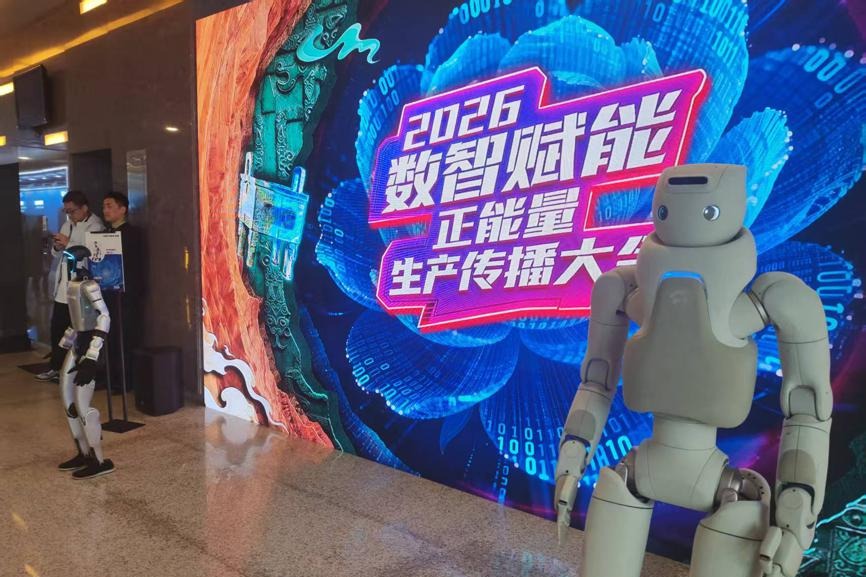
    Zhang Fan, Vice-General Manager of China Electrical Equipment Group and National People’s Congress deputy, has positioned artificial intelligence integration with manufacturing as a national priority requiring comprehensive strategic planning. The prominent industry leader argues that China’s manufacturing sector must embrace AI technologies to achieve transformative innovation and maintain global competitiveness.

    During recent parliamentary sessions, Zhang emphasized that ‘AI plus manufacturing’ represents the future of industrial development, necessitating strengthened top-level design and clear industry guidelines. His advocacy builds upon previous policy recommendations submitted last year, which called for deeper integration between artificial intelligence and manufacturing processes to drive high-quality development.

    Zhang’s proposals have gained significant traction within China’s policy-making circles, receiving substantial attention from relevant government departments. His position combines practical industry experience with legislative influence, as demonstrated during his January 2026 inspection of China Electrical Equipment Group’s research facilities in Shanghai, where he assessed technological readiness for AI implementation.

    The manufacturing expert’s recommendations align with China’s broader technological ambitions, suggesting that systematic AI adoption could revolutionize production efficiency, product quality, and innovation capabilities across traditional manufacturing sectors. This approach mirrors global trends where advanced economies are increasingly leveraging AI to maintain industrial leadership.

    Zhang’s dual role as both industry executive and elected representative provides unique insights into the practical challenges and opportunities presented by AI integration, making his policy recommendations particularly valuable for China’s ongoing technological modernization efforts.

  • Qingdao Lantern Festival event draws crowds with folk crafts, trade fair

    Qingdao Lantern Festival event draws crowds with folk crafts, trade fair

    The coastal city of Qingdao in Shandong province witnessed a magnificent convergence of cultural heritage and economic activity during its recently concluded Lantern Festival celebrations. Held over the weekend as part of the national “Our Festival” initiative for 2026, the event successfully extended the festive atmosphere of the lunar new year period while showcasing regional traditions.

    Thousands of residents and visitors flocked to the festival grounds where they experienced an immersive cultural journey through various attractions. The celebration featured vibrant public performances that demonstrated traditional artistic expressions alongside extensive exhibitions of intangible cultural heritage handicrafts. Artisans displayed their mastery of time-honored techniques, offering attendees firsthand insight into China’s rich artisanal legacy.

    A significant commercial dimension complemented the cultural offerings through a specially organized Chinese New Year-themed trade fair. This marketplace created economic opportunities for local businesses and craftspeople while providing visitors with unique shopping experiences. The strategic integration of commerce with cultural preservation demonstrated how traditional festivals can serve dual purposes in contemporary society.

    The event particularly emphasized Qingdao’s distinctive century-old folk customs, blending universal Lunar New Year traditions with local characteristics. This careful curation resulted in a warm and lively atmosphere that captured the essence of the Year of the Horse celebrations. Organizers successfully created an environment where cultural education, entertainment, and economic activity coexisted harmoniously.

    Photographic documentation from the event shows enthusiastic participants engaging with various aspects of the festival, from admiring intricate lantern displays to purchasing handmade crafts. The successful execution of this large-scale public celebration highlights Qingdao’s ongoing commitment to preserving cultural traditions while adapting them to modern contexts.

  • India’s top court angry after junior judge cites fake AI-generated orders

    India’s top court angry after junior judge cites fake AI-generated orders

    India’s judicial system faces a critical test of technological integration as the Supreme Court intervenes in a landmark case involving artificial intelligence-generated legal judgments. The controversy emerged when a junior civil judge in Vijaywada, Andhra Pradesh, utilized AI to produce four fabricated legal citations during a property dispute ruling in August last year.

    The Supreme Court has characterized this incident as a matter of ‘institutional concern’ that directly impacts ‘the integrity of adjudicatory process.’ In a stern response, the court stayed the lower court’s ruling and differentiated between human error and technological misconduct, stating that reliance on AI-generated falsehoods constitutes more than mere mistake—it represents professional misconduct.

    The case reached India’s highest judicial authority after defendants successfully demonstrated that the referenced legal precedents were entirely fictitious. Although the Andhra Pradesh High Court had previously acknowledged the AI-generated nature of the citations, it upheld the original decision, accepting the judge’s claim that she acted in ‘good faith’ during her first experience with AI tools.

    This incident reflects a global pattern of judicial systems struggling with AI integration. Recent months have witnessed similar controversies in United States federal courts and England’s High Court, where lawyers presented fabricated AI-generated case materials. The international legal community increasingly recognizes that generative AI systems frequently ‘hallucinate’—creating convincing but entirely fictional legal references and sources.

    India’s Supreme Court has responded by issuing notices to the country’s Attorney General, Solicitor General, and the Bar Council of India, signaling potential regulatory developments. This action follows the court’s recent publication of a white paper on AI in judiciary, which emphasized the necessity of maintaining human oversight and institutional safeguards despite technological adoption.

    The case represents a pivotal moment in legal technology regulation, balancing efficiency gains against fundamental requirements for judicial accuracy and integrity.

  • China’s top political advisory body concludes standing committee session

    China’s top political advisory body concludes standing committee session

    Beijing witnessed the conclusion of the 15th standing committee session of China’s 14th National Committee of the Chinese People’s Political Consultative Conference (CPPCC) on March 2, 2026. The meeting, presided over by CPPCC National Committee Chairman Wang Huning, marked significant preparations for the upcoming annual full session while reviewing the advisory body’s annual accomplishments.