标签: Asia

亚洲

  • Report: China’s world heritage sites thriving

    Report: China’s world heritage sites thriving

    China’s comprehensive system for protecting its World Heritage sites has yielded exceptional results, with all natural heritage locations maintaining excellent condition while simultaneously driving economic benefits for local communities, according to a landmark assessment report released by the National Forestry and Grassland Administration.

    The extensive evaluation, covering four decades of conservation efforts from 1985 to 2025, reveals that China’s 15 natural heritage sites and 4 mixed cultural-natural sites have experienced no severe human-caused damage or threats to their outstanding universal value. These protected areas span approximately 80,000 square kilometers across 20 provincial regions, encompassing extraordinarily diverse ecosystems ranging from mountains and forests to wetlands, deserts, and coastal zones.

    At a recent press conference, Liu Jiaqi, an academician with the Chinese Academy of Sciences, emphasized that China has achieved remarkable success through its protected areas system, particularly in institutional development, regulatory frameworks, heritage value presentation, and public awareness initiatives. The country has pioneered distinctive governance models that integrate nature and culture, implement regionally coordinated management, promote sustainable tourism development, and establish community co-governance structures.

    International conservation assessments corroborate China’s positive trajectory. According to Yuan Jiming, director of the administration’s nature reserve management department, four editions of the IUCN World Heritage Outlook published between 2014 and 2025 consistently demonstrate that China’s natural and mixed heritage sites outperform global averages in conservation effectiveness.

    Beyond strict protection measures, China has actively developed mechanisms to transform ecological value into sustainable community benefits. Through eco-cultural tourism, nature education programs, study tours, and under-forest non-timber economies, heritage sites have become engines of local development. Notably, over 90% of these sites prioritize employing local residents in conservation roles, while tourism has emerged as a pillar industry in numerous regions.

    In 2024 alone, these heritage destinations attracted more than 180 million tourist visits, generating approximately 184.3 billion yuan ($26.6 billion) in consumption. At iconic locations like Jiuzhaigou, Huangshan Mountain, and Wulingyuan, tourism-related revenue constitutes over 50% of local GDP.

    The administration has pledged to continue enhancing protection measures while promoting sustainable utilization of these natural treasures. Future strategies will focus on ecological conservation and green development, with particular emphasis on building diversified ecological product systems that meet public aspirations for improved quality of life while advancing regional economic, social, and cultural progress.

  • Hainan to establish tropical marine national park

    Hainan to establish tropical marine national park

    China is redefining its national park system by extending conservation efforts from terrestrial landscapes to marine ecosystems with the establishment of a tropical marine national park in Hainan province. This groundbreaking initiative represents a significant shift toward integrated land-sea conservation management that could establish global benchmarks for ocean stewardship.

    The development follows the implementation of China’s National Park Law on January 1, 2026, which legally enables the designation of marine areas within the national park framework based on natural ecological distribution patterns. For Hainan—bordered by approximately 2 million square kilometers of ocean and hosting biodiverse coral reefs, mangroves, seagrass beds, and rare marine species—this legislation provides a clear regulatory pathway to enhance marine protection.

    According to Wang Aimin, chief scientist at the Hainan International Blue Carbon Research Center, “A marine national park transcends mere geographical demarcation. It represents a comprehensive commitment to preserving the authenticity and integrity of marine ecosystems with the same rigor applied to terrestrial conservation.”

    The park initiative forms part of Hainan’s broader strategy to position itself as a center for deep-sea technology innovation, modern marine industries, and international marine cooperation. This conservation effort coincides with robust growth in Hainan’s ocean economy, which recorded a 7.9 percent year-on-year increase in gross ocean product last year.

    Emerging sectors are driving this expansion, particularly deep-sea oil and gas exploration. The independently developed Deep Sea No 1 gas field—China’s inaugural ultra-deepwater project—recently completed its 100th crude oil shipment since commissioning, with total oil and gas output exceeding 4.5 million metric tons of oil equivalent in the previous year. New fields including Dongfang 29-1, Dongfang 13-3, and Wenchang 16-2 have also commenced production.

    Hainan’s offshore energy sector demonstrated remarkable growth with crude output reaching approximately 611,100 tons (a 125 percent increase from 2024) and natural gas output hitting about 5.6 billion cubic meters (a 62 percent rise). The renewable energy sector similarly expanded as major offshore wind power projects in Danzhou and Lingao county connected to the grid, driving the marine power industry’s added value to 1.3 billion yuan—a 306 percent year-on-year surge.

    Traditional marine industries are simultaneously evolving toward more sustainable practices. Marine fisheries are transitioning to shore-based operations, deeper water exploration, and international collaboration. Sanya Yazhou Bay Agriculture and Aquaculture Development Company exemplifies this transformation through its adoption of intensive, intelligent production systems. The company recently imported African clawed frogs for scientific research applications in green pest control and pesticide resistance studies.

    Future plans include introducing foreign fish breeding stock, particularly groupers, to enhance genetic diversity and address inbreeding complications such as stunted growth and disease susceptibility, according to Bai Zemin, the company’s deputy general manager.

  • India and US release a framework for an interim trade agreement to reduce Trump tariffs

    India and US release a framework for an interim trade agreement to reduce Trump tariffs

    In a significant diplomatic development, the United States and India have unveiled a comprehensive framework for an interim trade agreement that substantially reduces tariffs on bilateral goods. The agreement emerges as a strategic realignment following months of negotiations centered on energy policy and market access.

    The breakthrough announcement came through a joint statement released by both governments on Friday, detailing reciprocal concessions. The United States will reduce import tariffs on Indian goods from 25% to 18%, while India commits to eliminating or significantly reducing tariffs on American industrial goods and agricultural products. The arrangement specifically excludes sensitive Indian agricultural sectors including maize, wheat, rice, and dairy products—a critical protection for India’s massive agricultural workforce.

    This interim framework represents a carefully negotiated compromise that addresses longstanding trade tensions. President Trump simultaneously revoked separate 25% tariffs imposed on Indian goods last year, signaling a renewed commitment to trade cooperation. The agreement includes provisions for enhanced market access and more resilient supply chains, with both nations expressing commitment to pursue a broader comprehensive trade deal in the future.

    Indian Trade Minister Piyush Goyal highlighted the agreement’s economic benefits, projecting access to the $30 trillion U.S. market for Indian exporters across pharmaceuticals, gemstones, diamonds, and aircraft components. He anticipates the deal will generate hundreds of thousands of new employment opportunities through increased export volumes.

    The agreement follows India’s strategic decision to reduce dependence on Russian crude oil, a move that paved the way for improved trade relations with the United States. Both leaders characterized the partnership as “reciprocal and mutually beneficial,” with Prime Minister Modi acknowledging President Trump’s personal commitment to strengthening bilateral ties.

    Despite government enthusiasm, Indian opposition parties have criticized the arrangement as disproportionately favoring American interests, particularly in sensitive economic sectors. The agreement marks India’s latest in a series of trade advancements, including recent partnerships with the European Union, Oman, and New Zealand.

  • Egypt and Saudi Arabia focus on Eritrea as UAE bolsters ties to Ethiopia

    Egypt and Saudi Arabia focus on Eritrea as UAE bolsters ties to Ethiopia

    A significant geopolitical realignment is unfolding in the strategically vital Red Sea region as Egypt actively brokers enhanced security cooperation between Saudi Arabia and Eritrea. This diplomatic maneuver aims to counterbalance the United Arab Emirates’ expanding military footprint, particularly its growing partnership with Ethiopia—Eritrea’s historical adversary.

    The emerging三方 (three-way) diplomacy mirrors a recent defense agreement between Sudan’s military and Pakistan, reportedly Saudi-financed, though weapon systems remain undelivered. This complex arrangement underscores the rapidly shifting alliances transforming Red Sea security dynamics.

    Both Egypt and Eritrea previously maintained strong ties with the UAE, but relationships have strained over divergent approaches to Sudan’s civil war and Gaza conflict. Eritrea, under President Isaias Afwerki’s authoritarian rule since 1993 independence, previously hosted UAE military operations in Yemen at Assab port until its 2021 closure. The UAE’s subsequent military partnership with Ethiopia significantly altered regional calculations.

    University of Maryland Horn of Africa expert Michael Woldemariam notes: ‘Supporting Eritrea aligns with Egypt’s regional security perspective, but Cairo faces financial constraints. Bringing financially robust Saudi Arabia into the equation serves Egyptian interests.’ He adds that Eritrea requires no encouragement to embrace Saudi ties, having sought this alignment independently.

    The reclusive President Afwerki visited Saudi Arabia for four days in December 2025, discussing enhanced security cooperation. The 80-year-old leader, governing one of Africa’s most repressive states, possesses considerable experience navigating complex regional dynamics since Eritrea’s decades-long independence struggle against Ethiopia.

    Current tensions between Eritrea and Ethiopia have intensified, with Addis Ababa accusing Asmara of arming rebel groups. This hostility occurs against Ethiopia’s construction of the Grand Renaissance Dam, which Cairo views as an existential threat to Nile water security.

    Meanwhile, the UAE has reportedly redeployed personnel from Somalia to Ethiopia, with Emirati military transport aircraft frequently observed at Ethiopian Air Force bases throughout January. Experts suggest Abu Dhabi relies on Ethiopia to supply Sudan’s paramilitary Rapid Support Forces (RSF), while Egypt and Saudi Arabia back the opposing Sudanese military faction.

    Middle East Institute Egypt program director Mirette Mabrouk characterizes Egypt’s lobbying as demonstrating ‘a proactive tilt in Cairo’s approach to Red Sea security.’ She observes: ‘Saudi Arabia was caught sleeping at the wheel regarding UAE activities in the Red Sea. Egypt awakened earlier and now attempts to plug strategic gaps, including Eritrea.’

    The challenge remains translating this loose alignment into concrete deliverables. The Sudan-Pakistan agreement exemplifies these difficulties, with no confirmed weapons transfers despite announced deals. Sources indicate Saudi Arabia, facing domestic economic pressures, remains hesitant to fully commit despite overtures from Cairo and Asmara.

    Eritrea’s limited revenue streams—peasant taxes, mining operations, and a 2% diaspora tax—create urgent need for Saudi financing, particularly as Asmara seeks new military equipment amid concerns over Ethiopian drone capabilities.

  • US deported Palestinians to Israel on private jet twice: Report

    US deported Palestinians to Israel on private jet twice: Report

    The Trump administration has utilized high-cost private jets to execute a series of deportation flights transporting Palestinians from the United States to Israel, according to investigative reports from The Guardian and +972 Magazine. This operation marks a significant departure from standard immigration enforcement protocols.

    Two confirmed flights have occurred, with the first departing on January 21st from Arizona, carrying eight individuals to Tel Aviv. A subsequent flight took place on Monday, with the passenger count remaining unclear though the luxury aircraft featured sixteen seats. The flights were operated by aircraft owned by Dezer Development, a real estate conglomerate led by Gil Dezer, son of Israeli-American billionaire Michael Dezer.

    The operational logistics involved a Florida-based company, Journey Aviation, which charters the jet to the U.S. government. Gil Dezer stated he is unaware of passenger identities, receiving only usage dates. Notably, the Dezer family maintains close ties to the Trump family, having donated over $1 million to Trump’s presidential campaign.

    The policy is anomalous for multiple reasons. The U.S. government typically employs commercial aircraft for deportations, making the use of luxury private jets, costing up to $26,000 per flight hour, highly unusual. Furthermore, the Israeli government’s cooperation in repatriating Palestinians to militarily occupied territories represents a break from historical precedent, aligning with officials’ stated desires for Palestinian emigration to third countries.

    The flights refueled in New Jersey, Ireland, and Bulgaria, drawing political condemnation in Dublin. Irish opposition lawmakers decried the permission to refuel as ‘reprehensible,’ ‘deeply disturbing,’ and ‘outrageous.’

    Among those deported on the initial flight was 24-year-old Maher Awad, who was met by Israeli armed guards at Ben Gurion Airport and left near the village of Ni’lin in the West Bank. Awad, who arrived in the U.S. at age 15, had a Social Security number, worked, and paid taxes. His American girlfriend and newborn son remain in Michigan. Another deportee, 47-year-old Sameer Zeidan, left a wife and children in Louisiana. Both men reported being shackled for the entire transcontinental journey. Notably, neither was technically undocumented; Zeidan was a legal permanent resident who had failed to renew his green card after serving prison time a decade ago.

    This operation exemplifies the administration’s aggressive expansion of deportation criteria to include immigrants with legal status who have past criminal records, even for old, minor offenses. Requests for comment from the Department of State and Homeland Security were not returned.

  • Pakistan mosque explosion: where the attack unfolded

    Pakistan mosque explosion: where the attack unfolded

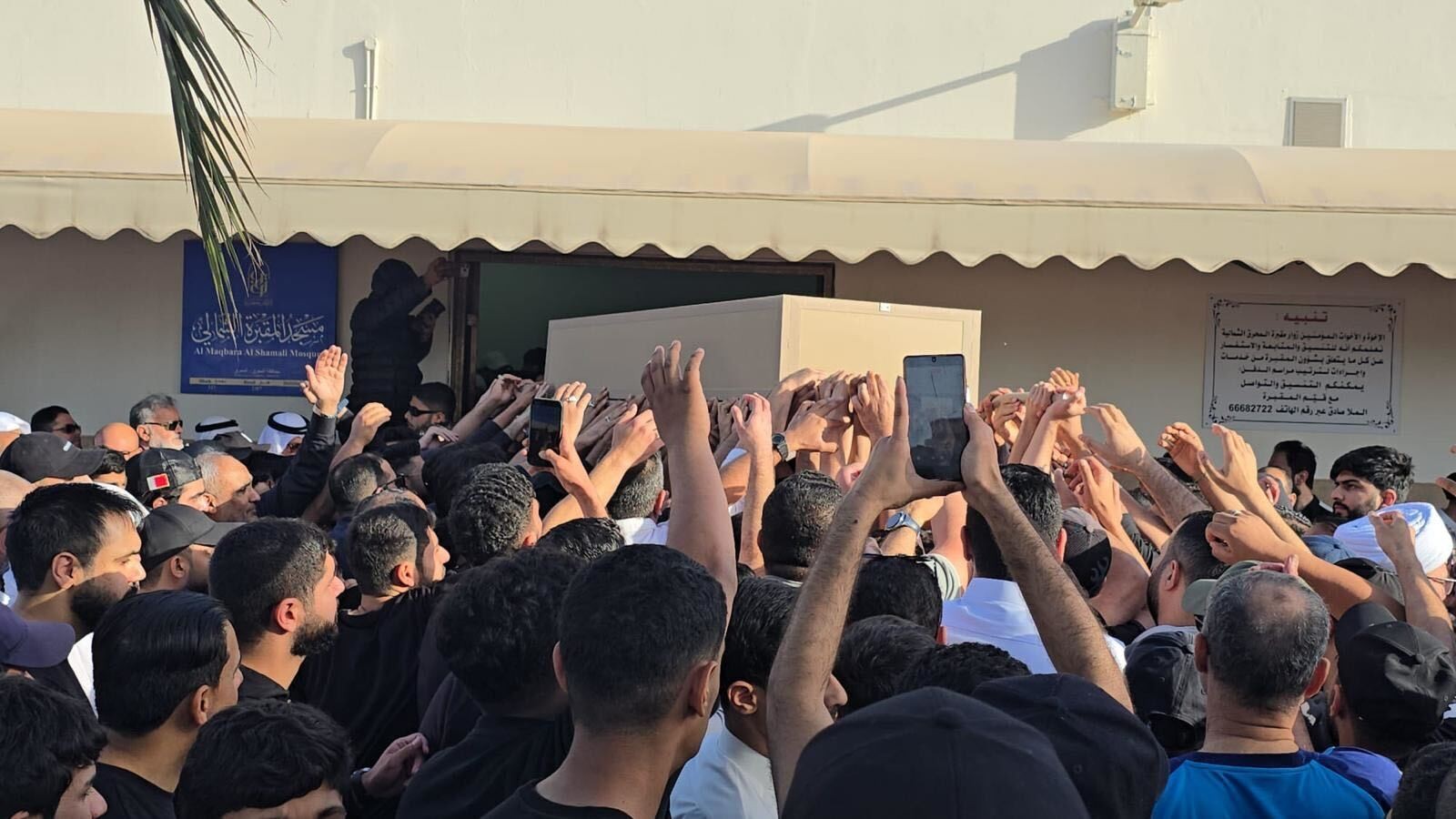
    A devastating suicide bombing targeted a Shia mosque in Pakistan, resulting in a catastrophic loss of life and sending shockwaves through the community. Local police authorities confirmed that at least 31 worshippers were killed when an attacker detonated an explosive device within the mosque’s premises during prayers.

    The assault represents one of the most severe sectarian attacks in recent memory, striking at the heart of a religious gathering and exposing persistent security vulnerabilities. The explosion unfolded during a period of heightened congregational worship, maximizing casualties and creating scenes of chaos and devastation.

    Emergency response teams rushed to the scene immediately following the blast, transporting casualties to nearby medical facilities where medical personnel declared a state of emergency. The attack has drawn widespread condemnation from government officials and religious leaders across sectarian divides, with promises of thorough investigation and heightened security measures.

    This tragedy occurs against a backdrop of longstanding sectarian tensions in the region and raises serious concerns about the protection of religious minorities. Counterterrorism units have launched an intensive investigation to identify the perpetrators and determine the precise methodology behind the attack. The international community has begun issuing statements of solidarity with Pakistan while urging strengthened counterterrorism cooperation.

  • Photos: Kites, victory cries fill Lahore skies as Basant festival returns after long ban

    Photos: Kites, victory cries fill Lahore skies as Basant festival returns after long ban

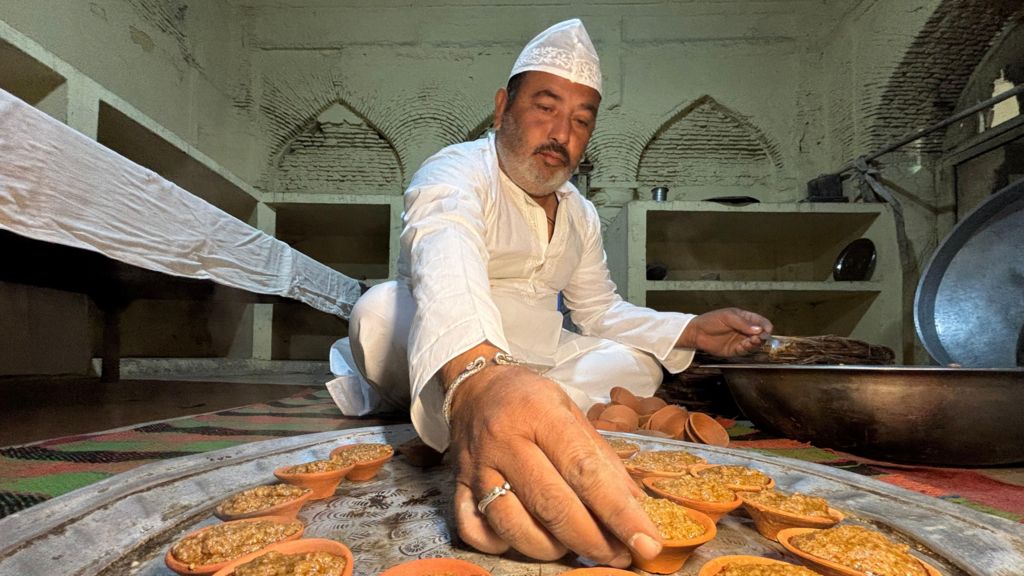
    The ancient city of Lahore witnessed a spectacular cultural renaissance as the traditional Basant kite-flying festival returned to its skies after an 18-year prohibition. On Friday, the vibrant tapestry of colorful kites transformed the atmosphere above Pakistan’s cultural capital, accompanied by triumphant shouts of “bo-kata!” echoing across rooftops as enthusiasts severed opponents’ strings.

    The spring heralding festival, banned in 2008 due to safety concerns after several fatalities involving metal-coated kite strings, was reinstated last year following substantial public demand. The official commencement occurred at midnight with Punjab Information Minister Azma Bukhari ceremoniously launching the inaugural kite.

    Throughout the night, families and friends crowded onto rooftops throughout the Walled City and surrounding neighborhoods, creating a carnival atmosphere with drumbeats and enthusiastic celebrations. Abdul Aziz, 57, described the emotional significance: “Today, when I dropped the first kite in air, I felt as if there was a space in my life that was now filled.”

    Authorities implemented comprehensive safety measures including QR code tracking systems on all kites and strings, prohibition of metallic or chemical-coated materials, and mandatory safety rods for motorcyclists. Approximately 4,600 producers registered with authorities to sell festival materials, while officials conducted rooftop inspections and restricted access to non-compliant structures.

    The festival’s economic impact proved substantial, generating an estimated 3 billion rupees ($10 million) in kite-related commerce alone. Hotels reached full capacity while poultry demand surged to levels typically seen during major religious festivals. At Mochi Gate, Pakistan’s largest kite market, supplies were rapidly depleted with vendor Zubair Ahmed reporting complete sell-outs within two days.

    The celebrations were somewhat tempered by security concerns following a suicide bombing in Islamabad that claimed 31 lives. In response, Punjab Chief Minister Maryam Nawaz announced the cancellation of Saturday’s Liberty Square concert originally scheduled as part of the Basant festivities.

  • Salama credits local caddie for stunning wire-to-wire victory in Egypt Golf Series finale

    Salama credits local caddie for stunning wire-to-wire victory in Egypt Golf Series finale

    Spanish professional golfer Juan Salama captured his first MENA Golf Tour championship with a dominant wire-to-wire victory at the Egypt Golf Series finale held at Madinaty Golf Club in Cairo. The rising star credited his local caddie’s expertise as instrumental in his spectacular performance that culminated in a three-shot triumph.

    Salama established tournament dominance from the outset by firing a blistering course-record 60 in the opening round, marking his personal best competitive round. He maintained his commanding position throughout the competition, closing with a five-under-par 65 to finish at 17-under overall. The Spaniard’s victory provided redemption after suffering a playoff defeat to Jack Davidson just seven days earlier at Address Marassi.

    “Shooting 60 was my personal best round, so to open the tournament like that really set everything up,” Salama acknowledged. “I had a local caddie this week who read the greens exceptionally well, and it’s been a fantastic start to the year.”

    The final round presented tense moments as Salama’s pursuers attempted to close the gap. After extending his lead with four birdies on the front nine, a dropped shot at the 15th hole briefly offered hope to competitors. However, Salama demonstrated remarkable composure, navigating the challenging water hazard at the 16th before sealing his victory with a birdie at the 17th.

    “I felt solid but was definitely nervous,” Salama confessed. “I focused on staying present on every shot, maintaining my routine, and handling each moment individually. The water hazard at 16 created particular tension, but I managed to navigate it successfully.”

    Welsh golfer Jack Davidson, last week’s champion, shared second place at 14-under with overnight co-leader Owen Edwards. Davidson posted a 66 in the final round but acknowledged that catching Salama proved ultimately impossible given the Spaniard’s consistent performance.

    England’s Ben Jones delivered the joint best round of the final day with a six-under 64, climbing to fourth position at 13-under. compatriot Curtis Knipes matched Jones’s 64 to secure fifth place at ten-under.

    The tournament concluded the MENA Golf Tour’s successful four-event Egypt swing, which distributed $400,000 in prize money across world-class venues. Salama collected $18,000 from the $100,000 prize fund along with valuable Official World Golf Ranking points. The tour now progresses to Morocco before continuing to Jordan and the GCC region.

  • India rejects ‘baseless’ allegations of involvement in Pakistan mosque bombing

    India rejects ‘baseless’ allegations of involvement in Pakistan mosque bombing

    India has issued a formal rejection of allegations linking it to Friday’s devastating suicide bombing at an Islamabad mosque that resulted in 31 fatalities and over 170 injuries. The Ministry of External Affairs characterized the accusations as “baseless and pointless” while simultaneously condemning the attack and expressing condolences for the loss of life.

    The deadly assault unfolded when an attacker opened fire at the gates of the Khadija Tul Kubra Imambargah mosque before detonating explosives among worshippers. Pakistani Defense Minister Khawaja Asif identified the bomber as having traveled to Afghanistan and directly accused India of sponsoring the terrorist operation. This represents the most severe attack in Pakistan’s capital in over a decade.

    Eyewitness accounts and images from the scene depicted horrific carnage, with bloodied bodies scattered across the mosque’s carpeted floors amid shattered glass and debris. Panicked survivors tended to the wounded in the compound’s gardens as emergency services struggled to respond to the scale of the tragedy.

    The bombing has further strained relations between the nuclear-armed neighbors, with India’s swift denial reflecting the sensitive nature of cross-border terrorism allegations. The incident occurs against a backdrop of longstanding tensions between India and Pakistan, though direct accusations of state-sponsored terrorism remain relatively uncommon in recent diplomatic exchanges.

  • UAE drafted map to build ‘temporary UAE housing complex’ in Israel-controlled Gaza

    UAE drafted map to build ‘temporary UAE housing complex’ in Israel-controlled Gaza

    The United Arab Emirates has developed preliminary blueprints to construct a temporary housing complex for Palestinians within the Israeli-militarily occupied sector of Gaza, according to a Reuters report. This initiative positions the wealthy Gulf state in opposition to regional powers and Palestinian factions who perceive such moves as facilitating the de facto partition of the territory.

    The proposed ‘UAE Temporary Emirates Housing Complex’ is mapped for an area adjacent to Rafah, near Gaza’s sealed border with Egypt. While still in early planning stages, the proposal carries significant geopolitical implications, potentially straining the UAE’s relations with Egypt, which formally opposes any partition of Gaza. Furthermore, regional heavyweights Qatar and Saudi Arabia remain skeptical about funding reconstruction efforts while the threat of permanent Israeli occupation persists.

    This development signals a notable divergence between the UAE’s public diplomacy and its operational stance. Despite official statements from Abu Dhabi denying involvement in Gaza’s civilian administration and rejecting participation in peacekeeping forces, these plans suggest a deeper comfort with the current Israeli-controlled status quo than previously indicated.

    The initiative is reportedly being coordinated with the Trump administration and its ‘Board of Peace,’ with former UN official Nickolay Mladenov—now employed by the UAE—serving as a key liaison. The proposal emerges alongside discussions about developing Gaza’s offshore gas reserves and contrasts with Jared Kushner’s recent remarks at Davos downplaying partition concepts in favor of unified development plans.

    As Israel maintains a strict blockade and controls humanitarian access through the Rafah crossing, these housing plans underscore the UAE’s emerging role as Israel’s preferred partner in navigating Gaza’s complex post-conflict landscape, even as ceasefire violations continue and Hamas refuses disarmament without full Israeli withdrawal.