标签: Asia

亚洲

  • Japan’s remilitarization ‘threatens’ Southeast Asia

    Japan’s remilitarization ‘threatens’ Southeast Asia

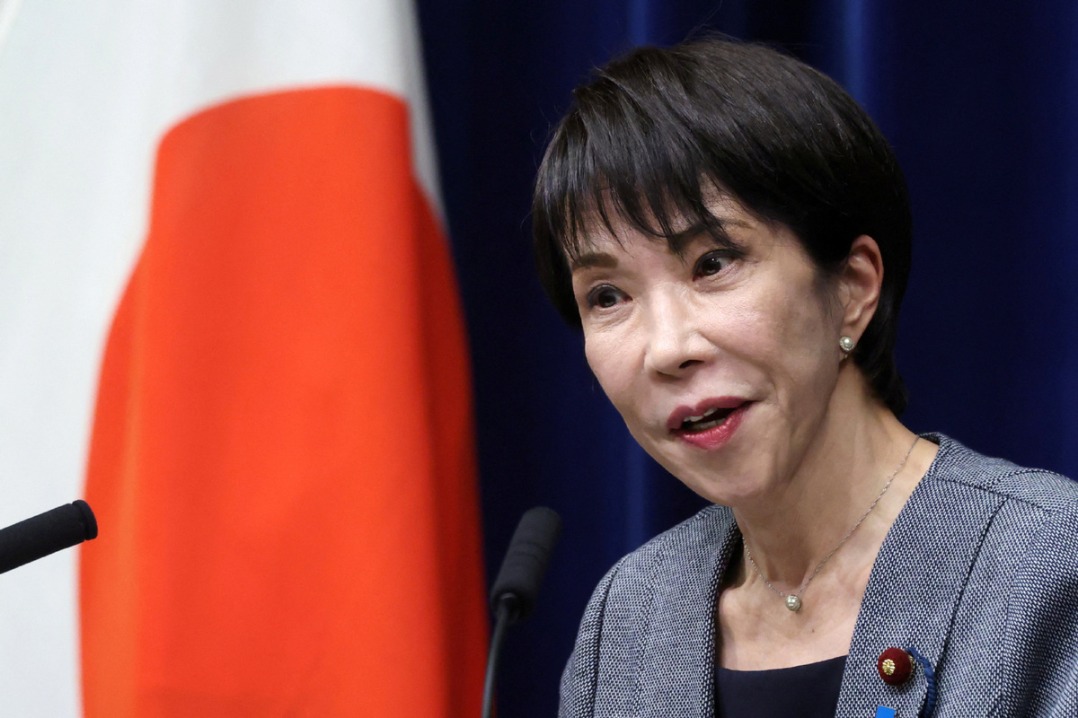
    Southeast Asian security analysts are raising alarms over Japan’s rapid military expansion under Prime Minister Sanae Takaichi’s administration, warning that these developments could fundamentally alter regional stability. Since assuming office in October 2025, Takaichi has implemented a series of controversial security policy shifts that mark a significant departure from Japan’s postwar pacifist stance.

    The government has accelerated its defense spending timeline, now targeting the NATO-standard 2% of GDP expenditure two years ahead of schedule. More provocatively, Tokyo is considering revisions to its Three Non-Nuclear Principles while exploring options for nuclear-powered submarines and eased arms export restrictions. These moves have generated both domestic and international concern about Japan’s strategic direction.

    According to Peter T.C. Chang, research associate at the Malaysia-China Friendship Association, Takaichi represents a right-wing ideology seeking to restore Japan’s imperial-era strength through a movement reminiscent of America’s ‘MAGA’ campaign. This political trajectory threatens to disrupt the delicate balance that has underpinned ASEAN’s prolonged stability, which has historically relied on Japan’s economic rather than military influence.

    Regional experts note that Japan’s military deployments have increasingly focused on Southeast Asia, with particular attention to offensive capabilities such as long-range missiles stationed on southwestern islands. James Gomez of Bangkok’s Asia Centre warns that this buildup will inevitably heighten geopolitical tensions across the region.

    The fundamental concern among ASEAN members is whether Southeast Asia might transform from a driver of regional stability into an arena for major-power competition. University of Malaya professor Awang Azman Awang Pawi cautions that closer Japan-US security alignment could force ASEAN states to choose sides in great-power rivalries.

    Domestic challenges including Japan’s rapidly aging population, shrinking workforce, and substantial social spending commitments raise questions about the sustainability of this military expansion. Nevertheless, the Takaichi administration continues to advance its security agenda at an unprecedented pace, creating new uncertainties for the Asia-Pacific region.


  • Various activities held across China to celebrate upcoming new year

    Various activities held across China to celebrate upcoming new year

    China Daily Information Co (CDIC) maintains rigorous copyright protection over all content published across its digital platforms. The comprehensive policy explicitly states that all materials—including textual content, photographic images, and multimedia information—remain the exclusive intellectual property of CDIC since 1994.

    The company mandates that no content may be republished or utilized in any form without obtaining prior written authorization. This protection extends to all creative works hosted on their domains, establishing clear legal boundaries against unauthorized usage.

    Technical recommendations accompany these copyright notices, with the platform suggesting optimal viewing experiences through browsers set at 1024*768 resolution or higher. The publication operates under formal registration credentials, including License for Publishing Multimedia Online 0108263 and Registration Number 130349.

    Beyond content protection policies, CDIC maintains transparent organizational channels for public engagement. The platform provides dedicated sections for corporate information, advertising opportunities, general inquiries, and career prospects—including specific employment avenues for expatriates. The company further encourages audience connection through multiple social media channels, fostering community interaction while maintaining copyright integrity.

  • Hamas confirms death of spokesman of its military wing

    Hamas confirms death of spokesman of its military wing

    The Al-Qassam Brigades, Hamas’s military wing, has officially confirmed the death of its prominent spokesperson Abu Obeida during Israel’s ongoing offensive in Gaza. The announcement came through a newly appointed representative who has assumed the same nom de guerre, delivering the news during a televised address on Monday.

    The successor, appearing in the distinctive uniform associated with the role, revealed that Abu Obeida—born Hudhaifa Samir Al-Kahlout and also known as Abu Ibrahim—perished alongside several other senior Hamas leaders. Among those confirmed dead was former military commander Mohammed Sinwar, marking significant losses within the organization’s leadership structure.

    Abu Obeida rose to prominence in 2006 when he announced the capture of Israeli soldier Gilad Shalit, subsequently becoming the recognizable voice of Hamas’s military operations during subsequent conflicts with Israel. His final recorded statement was delivered on July 18, with Hamas sources indicating he was killed in an Israeli airstrike on August 30. This timeline was corroborated by Israeli Defense Minister Israel Katz, who acknowledged the spokesperson’s elimination in a Gaza Strip operation on August 31.

    The spokesperson’s legacy includes maintaining communication with Palestinian supporters throughout what he described as ‘the darkest circumstances,’ establishing him as a symbolic figure within the movement since his appointment to the role in 2005.

  • Postal and delivery services now cover all rural areas in Xizang

    Postal and delivery services now cover all rural areas in Xizang

    In a landmark infrastructure achievement, Tibet Autonomous Region has established complete postal and delivery service coverage across all rural territories, including its most remote farming and pastoral communities. The announcement came from regional officials on Monday, marking the successful culmination of extensive logistics network development.

    Lhakpa, an official from the market supervision department of Xizang’s postal administration, revealed the region has established 1,324 postal and express delivery outlets while modernizing 2,410 village-level postal logistics stations. This comprehensive network ensures express delivery services now penetrate every administrative village throughout the mountainous region.

    “We have realized distribution centers in every county, service outlets in every township, and delivery services in every village,” Lhakpa stated, emphasizing the completeness of the coverage. The official further noted that rural postal routes have achieved full motorization, with vehicle-based delivery operations implemented across all transportation corridors.

    The infrastructure breakthrough addresses the persistent “last mile” delivery challenge that long plagued remote agricultural and pastoral regions. Farmers and herders can now access postal services within their own villages, enjoying service quality comparable to urban standards.

    Parallel to logistics improvements, Xizang has aggressively expanded e-commerce capabilities. Zhao Lei, an official from the regional commerce department, highlighted the “Free Shipping for Xizang” initiative implemented during the 14th Five-Year Plan period (2021-25). This program encouraged major e-commerce platforms including Taobao, Tmall and JD.com to offer free or discounted shipping to Xizang while balancing commercial interests with social responsibilities.

    JD Group emerged as a significant partner, investing over 500 million yuan ($71 million) directly into Xizang through its “E-Commerce in Rural Areas” project while attracting an additional 1.5 billion yuan in external investment.

    According to Su Yinghu, head of China Post’s Xizang branch, a comprehensive rural e-commerce ecosystem has taken shape over the past five years, integrating agricultural sales, logistics distribution and inclusive financial services. This system has facilitated over 230,000 agricultural product orders with total sales exceeding 132 million yuan, while nearly 1.3 billion yuan in agriculture-related loans have supported local businesses and created over 1,300 jobs.

    The impact is visibly transformative for residents. Pema, a villager from Tashigang village in Nyingchi city, reported dramatically improved convenience: “Packages often arrive within a few days. Our local products, such as mushrooms and local pork, can now be sold across the country.”

  • 3D-printed cultural center offers new model for building smart, green cities

    3D-printed cultural center offers new model for building smart, green cities

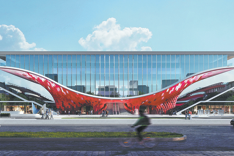
    In a groundbreaking development for sustainable architecture, China’s Xiong’an New Area has unveiled what experts are calling a paradigm-shifting model for future urban construction. The Xiong’an Wings cultural center, now standing as one of the world’s largest 3D-printed structures, represents a fusion of advanced manufacturing, ecological design, and digital innovation.

    Soaring five stories high with dramatic 20-meter cantilevered roofs that emulate a swan in flight, the building’s design draws inspiration from classical Chinese poetry depicting waterfowl gliding over misty landscapes. This artistic vision presented significant engineering challenges that conventional construction methods couldn’t economically solve, particularly for the complex double-curved facade.

    Project Technical Director Zhang Xihuang explained how 3D printing technology enabled the realization of this ambitious design: ‘We utilized modified plastic panels manufactured with precision layering to create the flowing red wings that define the structure. This approach not only achieved our aesthetic objectives but also demonstrated substantial environmental advantages.’

    The construction methodology reduced material consumption by 20-30% and completely eliminated the need for polluting molds, addressing waste reduction at its source. Durability testing indicates the printed panels will maintain over 80% of their performance characteristics after two decades of outdoor exposure.

    The project implemented a fully digital workflow utilizing Building Information Modeling (BIM) throughout its entire lifecycle, from initial design to future operational management. On-site construction was monitored by drone-mounted laser scanners that detected deviations as slight as five centimeters, enabling real-time adjustments.

    Structural efficiency was further enhanced through topology optimization software that minimized unnecessary steel in the building’s frame without compromising strength. Once operational, the center’s advanced insulation and intelligent management systems are projected to reduce annual energy consumption by more than 30%.

    The cultural center, developed through collaboration between Power Construction Corporation of China and Tongji University researchers led by Professor Yuan Feng, will serve as a community hub featuring performance spaces for opera, music, and conferences. Its extensive glass walls offer panoramic views of Jinhu Lake, integrating the natural surroundings with indoor activities.

    Perhaps most significantly, the project’s innovations are being formalized into Xiong’an’s first local technical standards for 3D-printing construction technology, creating a replicable template for future sustainable development. Zhang characterized Xiong’an Wings as ‘a convincing example of how cities can be built smarter, greener and more beautifully for the future.’

  • China’s latest giant panda base opens to public, blending tech with conservation

    China’s latest giant panda base opens to public, blending tech with conservation

    Mianyang, Sichuan Province – China’s cutting-edge giant panda conservation facility officially commenced public operations on December 29, 2025, marking a significant advancement in wildlife preservation technology. The Mianyang base, spanning approximately 120 hectares, represents the fifth establishment under the China Conservation and Research Center for the Giant Panda (CCRCGP) network.

    The facility debuted with remarkable public interest, welcoming approximately 6,300 visitors during its inaugural opening day. Currently housing 20 giant pandas across various age groups—from subadults to senior individuals—the base reports all specimens have successfully adapted to their new environment and maintain excellent physical condition.

    Engineered to replicate natural habitats, the complex features mountainous terrain and valley landscapes enhanced by sophisticated artificial infrastructure. The design incorporates 54 specialized enclosures serving distinct purposes including breeding programs, cub rearing facilities, adult display areas, and dedicated disease control units.

    Technological innovation stands as a cornerstone of the new base, with integrated smart systems featuring intelligent safety monitoring, precision climate control, automated humidity regulation, and advanced light-based disinfection mechanisms designed to enhance animal immunity.

    Sichuan Province, recognized as the primary habitat for giant pandas, hosts over 70% of China’s wild panda population. Mianyang specifically maintains the highest concentration among all prefecture-level cities nationwide. This conservation achievement reflects China’s broader ecological civilization initiatives, which have yielded significant success—the International Union for Conservation of Nature reclassified giant pandas from ‘endangered’ to ‘vulnerable’ status in 2016. Current estimates indicate approximately 1,900 giant pandas now thrive in China’s wilderness.

  • Xi’s diplomacy in 2025: Shedding light on a world at crossroads

    Xi’s diplomacy in 2025: Shedding light on a world at crossroads

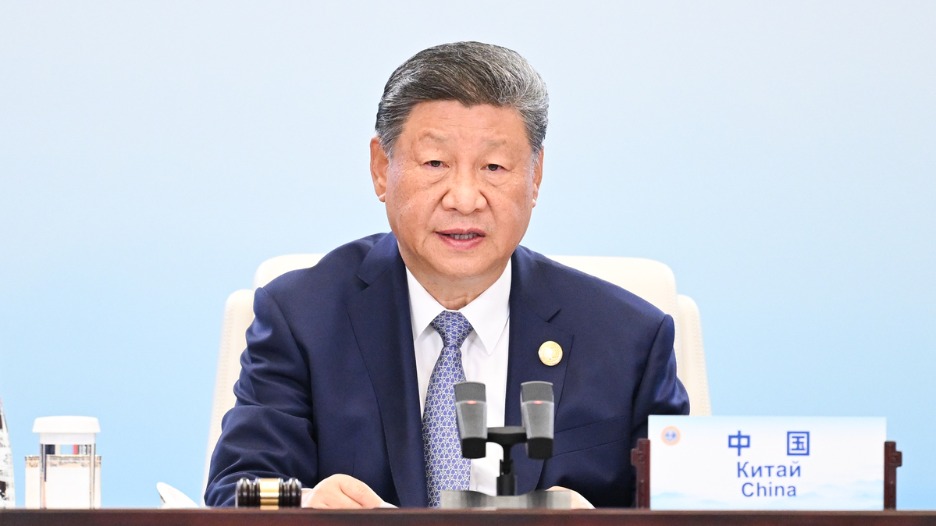
    As 2025 concludes, Chinese President Xi Jinping’s diplomatic engagements throughout the year have demonstrated China’s increasingly assertive role in shaping global affairs during a period of significant international turbulence. Against a backdrop of escalating geopolitical tensions and transformative shifts in world order, China’s foreign policy approach has provided distinct alternatives to current global challenges.

    The cornerstone of China’s 2025 diplomatic agenda emerged during the landmark Shanghai Cooperation Organization summit in Tianjin—the largest gathering in the organization’s 24-year history. President Xi unveiled the Global Governance Initiative (GGI), presenting a comprehensive framework for international cooperation that emphasizes five fundamental principles: sovereign equality, adherence to international rule of law, multilateralism, people-centered development, and actionable implementation.

    This initiative represents the fourth major global proposal advanced by Xi, following previously established frameworks including the Global Development Initiative, Global Security Initiative, and Global Civilization Initiative. Chinese officials characterize the GGI as another significant contribution to international public goods, positioning China as a proactive architect of global governance structures rather than merely a participant.

    The Tianjin summit brought together leaders from more than 20 nations and representatives from 10 international organizations, creating an unprecedented platform for diplomatic engagement. Observers note that China’s diplomatic strategy throughout 2025 has consistently emphasized alternatives to division and confrontation, advocating instead for dialogue and mutually beneficial cooperation amid increasing global fragmentation.

    Analysts suggest that China’s diplomatic offensive throughout 2025 reflects a calculated effort to expand its influence within existing international institutions while simultaneously proposing alternative governance frameworks. This approach comes at a time when traditional Western-led global governance systems face mounting challenges and criticisms from developing nations seeking greater representation and alternative partnership models.

  • Smart agri tech to spur rural modernization

    Smart agri tech to spur rural modernization

    China is accelerating its agricultural transformation through advanced technologies as part of its 15th Five-Year Plan (2026-2030), positioning smart farming as the cornerstone of rural modernization and national food security. Minister of Agriculture and Rural Affairs Han Jun emphasized that modernizing agriculture remains a strategic priority for bolstering domestic development and mitigating external risks amid global uncertainties.

    Han characterized rural modernization as a ‘ballast stone’ for economic and social stability, noting that bridging the urban-rural divide and ensuring farmers benefit from modernization are crucial for establishing a new development paradigm. By 2035, hundreds of millions of farmers are projected to transition into modern lifestyles, unleashing significant development momentum and consumption potential.

    The initiative builds upon substantial foundations: China achieved record grain production of 715 million metric tons this year, with technological advancements contributing over 64% to agricultural growth. Despite this progress, challenges persist in addressing rural development gaps and sustaining farmer income growth.

    A comprehensive technological overhaul is underway, including:
    – Launching measures to increase grain production capacity by 50 million tons
    – Accelerating high-standard farmland construction
    – Advancing seed industry innovation through biotechnology breakthroughs
    – Deploying smart agricultural machinery and AI-driven farming solutions
    – Developing diversified food supply systems
    – Expanding agricultural processing to enhance farmer incomes

    China Agricultural University President Sun Qixin highlighted that developing ‘new quality productive forces’ tailored to local conditions is essential for overcoming development bottlenecks. Biotechnology serves as a core engine, with gene editing and synthetic biology breakthroughs poised to reshape agricultural production models.

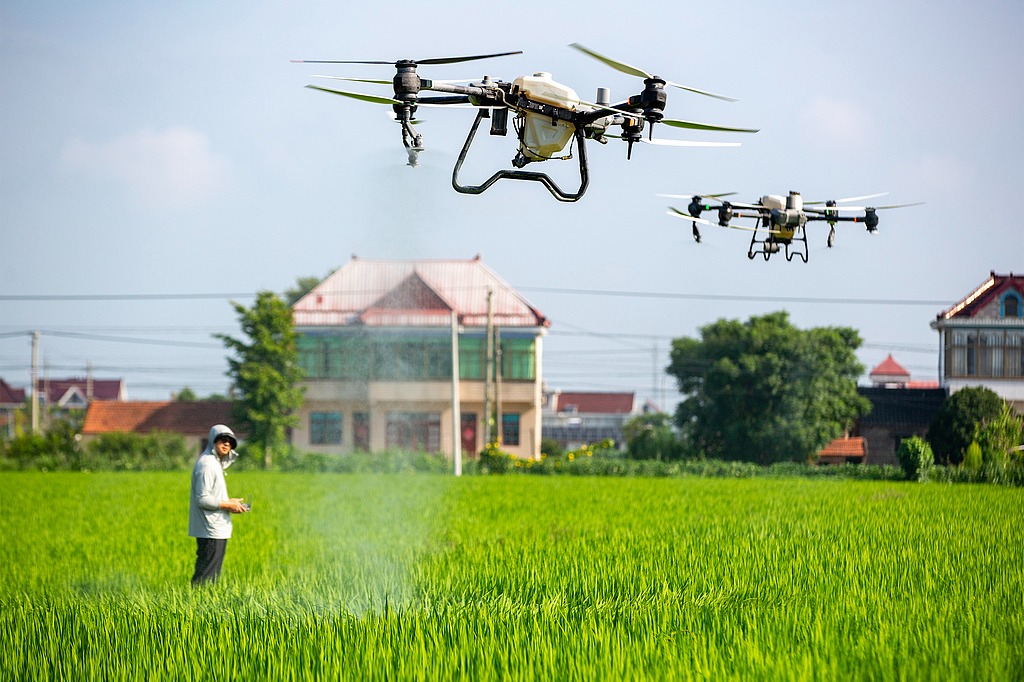
    The integration of big data, cloud computing, and artificial intelligence is transforming traditional farming practices. Next-generation agricultural technologies—from drones to intelligent farming robots—are accelerating the shift toward automated, data-driven production systems. China recently established its first quality inspection and testing center for smart agriculture technologies, filling a critical gap in the national testing system.

    Concurrent with technological advancement, China is expanding its digital agriculture talent pool. Training programs focused on improving farmers’ mobile usage and e-commerce skills attracted nearly 40 million participants this year. The government also maintains its commitment to poverty prevention through dynamic monitoring systems and continued support policies, with all 832 previously impoverished counties having developed two to three competitive leading industries.

    Employment among formerly impoverished populations has stabilized above 30 million, accounting for over two-thirds of household income. In the first three quarters of 2025, rural residents in these counties recorded per capita disposable income of 13,158 yuan ($1,872), representing 6.5% year-on-year growth that exceeded the national rural average.

  • Robotics, AI innovations put elderly care on fast track

    Robotics, AI innovations put elderly care on fast track

    China’s rapidly aging population is witnessing a technological transformation in elderly care, with artificial intelligence and robotics emerging as critical solutions to address growing demographic challenges. Across the nation, from Beijing nursing homes to Shenzhen care facilities, AI-powered devices are providing companionship, mobility assistance, and specialized therapies for senior citizens.

    In a Beijing residence, a nonagenarian engages in daily chess matches with his robotic companion named Sense—a 2,000 yuan ($285) AI system that offers both intellectual stimulation and social interaction. Financial professional Shen Tu, who gifted the device to his grandfather, reports the technology has not only brought joy to his elderly relative but has become a focal point for family bonding during weekend gatherings.

    The applications extend far beyond companionship. In Guangdong province, advanced robotics systems now perform room patrols in care institutions, provide mobility support through exoskeleton technology, and even administer traditional moxibustion therapy. These innovations represent a fundamental shift in how China approaches elderly care amidst staggering demographic changes.

    Official statistics from the Ministry of Civil Affairs reveal that by the end of 2024, China’s population aged 60 and above reached 310 million, representing 22% of the total population. Among these seniors, approximately 35 million have lost self-care capability—a figure projected to surge to 46 million by 2035.

    Conventional care models struggle with multiple challenges including severe shortages of professional caregivers, inefficient service delivery, and difficulties meeting personalized needs. Smart elderly care solutions integrating AI, Internet of Things, and robotics technologies are increasingly filling these gaps, becoming essential infrastructure in China’s response to its aging society.

    The development receives substantial policy support alongside technological innovation, positioning China at the forefront of redefining elder care through automation and intelligent systems.

  • China’s top diplomat blasts US arms sale to Taiwan as military drills around the island unfold

    China’s top diplomat blasts US arms sale to Taiwan as military drills around the island unfold

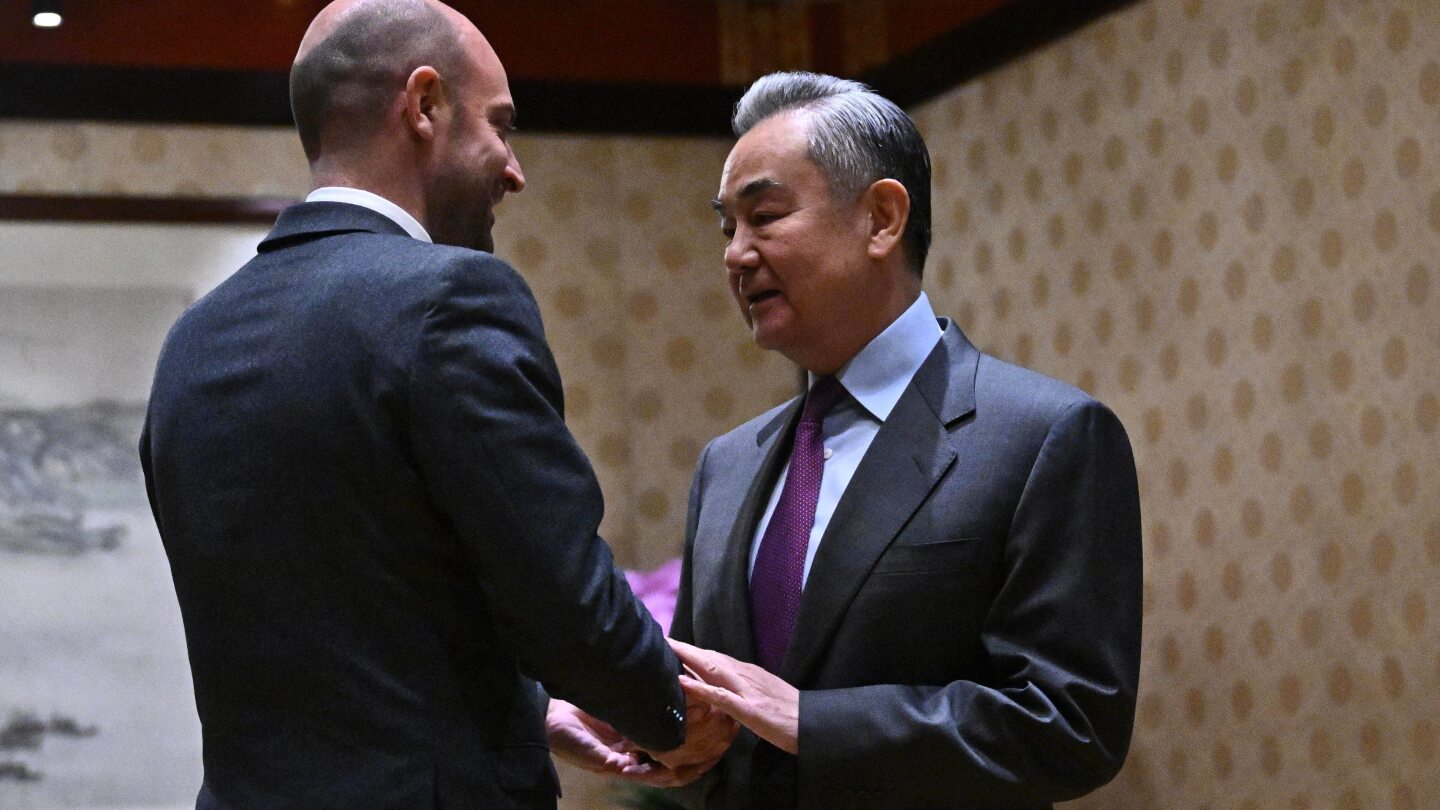
    Chinese Foreign Minister Wang Yi delivered a stern condemnation of United States military policy toward Taiwan during a year-end diplomatic review in Beijing on Tuesday. The address came as China entered its second day of coordinated military exercises around the self-governed island.

    Wang characterized the recent $11 billion U.S. arms package to Taiwan—the largest such sale in history—as a severe provocation requiring “resolute opposition and strong countermeasures.” The comprehensive weapons package includes advanced missile systems, unmanned aerial vehicles, artillery platforms, and specialized military software.

    Reiterating China’s longstanding position, Wang emphasized Beijing’s commitment to “complete reunification” with Taiwan, which has maintained separate governance since the conclusion of China’s civil war in 1949. Taiwan’s administration maintains that it has never been under the jurisdiction of the current Communist Party-led government in Beijing.

    The foreign minister’s remarks extended beyond U.S.-Taiwan relations to include sharp criticism of Japan’s leadership. Wang accused Japanese officials of “openly challenging China’s territorial sovereignty” and expressed concern about the “resurgence of Japanese militarism,” referencing Japan’s wartime aggression against China.

    China’s military exercises, initiated Monday, serve dual purposes: responding to American arms sales and signaling disapproval of recent statements from Japanese Prime Minister Sanae Takaichi, who suggested potential military intervention regarding Taiwan.

    Beyond regional tensions, Wang highlighted China’s broader diplomatic agenda, including addressing the Israel-Gaza conflict where China supports international ceasefire efforts and advocates for Palestinian rights. Wang also detailed China’s mediation between Thailand and Cambodia, helping consolidate a ceasefire after months of border fighting, and reiterated Beijing’s aim to facilitate Ukraine-Russia peace talks despite Western skepticism about China’s impartiality.

    These diplomatic initiatives demonstrate China’s concerted effort to expand its influence as an international mediator and major power in resolving regional and global conflicts.