标签: Asia

亚洲

  • Hanoi chokes as air quality reaches crisis level

    Hanoi chokes as air quality reaches crisis level

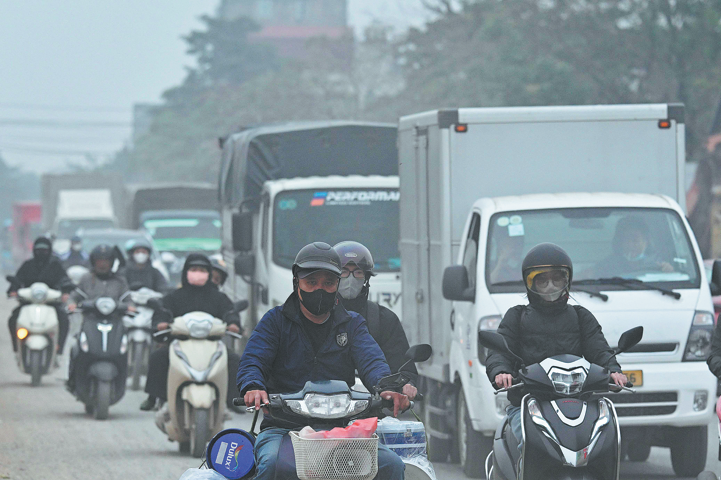
    Hanoi is grappling with a severe air pollution emergency as the Vietnamese capital registered among the world’s worst air quality levels this week. On December 10th, the city’s Air Quality Index (AQI) soared to 223, catapulting Hanoi to the third most polluted city globally according to IQAir’s real-time measurements.

    The hazardous conditions have persisted for several days, with thick smog laden with fine particulate matter enveloping the city. Monitoring systems from the Ministry of Agriculture and Environment confirmed multiple locations had reached the ‘purple zone’ threshold—classified as very unhealthy—prompting serious health concerns among the city’s residents.

    Environmental officials attribute the crisis to a convergence of factors. Le Thanh Thuy, Deputy Head of Hanoi’s Environmental Management Division, cited year-end urban upgrading projects, chronic traffic congestion, increased transportation of construction materials, and widespread open burning of waste and agricultural by-products as primary contributors. ‘The weather conditions have not been favorable while many activities peak at the end of the year, placing enormous pressure on Hanoi,’ Thuy noted.

    Experts emphasize that the pollution problem extends beyond city limits. Hoang Duong Tung, Chairman of the Vietnam Clean Air Network, identified neighboring provinces including Bac Ninh, Ninh Binh and Hung Yen as significant pollution sources affecting the capital region. Tung advocated for implementing artificial intelligence to validate, clean, and synchronize air quality data, stating that ‘only with accurate, transparent, real-time data can we build appropriate scenarios and policies.’

    In response to the escalating crisis, Vietnam’s National Assembly approved a Resolution addressing environmental protection policies. The comprehensive plan mandates urgent action to improve air quality in Hanoi and Ho Chi Minh City during 2025-2026, establishing specific targets including a 20% reduction in average annual PM2.5 concentrations by 2030 compared to 2024 levels.

    The Resolution outlines concrete measures including stricter vehicle emissions controls, limitations on highly polluting vehicles in urban centers, enhanced regulation of construction and transport waste, restrictions on agricultural burning, and expanded wastewater treatment systems. Additionally, lawmakers directed the creation of a national environmental information system featuring real-time public maps of environmental quality to support monitoring and early-warning efforts.
  • Myanmar’s opium cultivation reaches record high

    Myanmar’s opium cultivation reaches record high

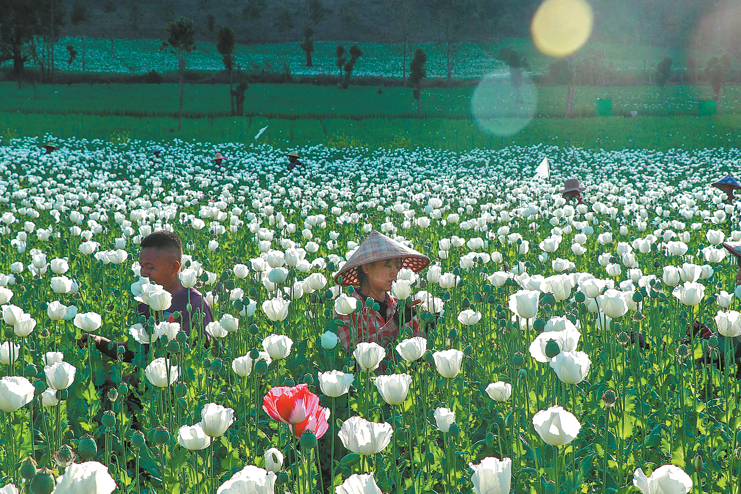
    Myanmar has dramatically escalated to become the globe’s foremost opium producer, with cultivation reaching a ten-year peak according to the United Nations Office on Drugs and Crime (UNODC). The Southeast Asian nation’s opium output now more than doubles that of Afghanistan, the previous leading source.

    Recent UNODC data reveals a striking 17% year-on-year surge in Myanmar’s opium cultivation, expanding from 45,200 hectares to 53,100 hectares. This expansion solidifies Myanmar’s notorious status as a primary source of illicit opium globally, particularly as Afghan production continues its downward trajectory.

    Delphine Schantz, UNODC’s Regional Representative for Southeast Asia and the Pacific, warned that “the sharp increase in opium cultivation demonstrates an expanding opium economy that has been resurgent in recent years and is likely to grow further.”

    The agency attributes this alarming growth primarily to skyrocketing opium prices, which have more than doubled from $145 per kilogram in 2019 to the current $329 per kilogram. This economic incentive, combined with escalating conflict and instability throughout Myanmar, has driven many farmers toward poppy cultivation as a means of survival.

    Regional analysis shows eastern Shan State experienced the most dramatic growth at 32%, followed by Chin State at 26%, while Kachin State saw a modest 3% increase. Southern Shan State remains the cultivation epicenter, accounting for 44% of the country’s total opium production.

    For the first time, the UNODC study documented significant opium cultivation in Sagaing Region, estimating 552 hectares under poppy production. There are also emerging indications that Myanmar’s opium is increasingly supplanting Afghan supplies in international markets, with European authorities reporting seizures of heroin believed to originate from Myanmar on flights from Thailand.

  • Nepal’s capital grapples with a seasonal plague

    Nepal’s capital grapples with a seasonal plague

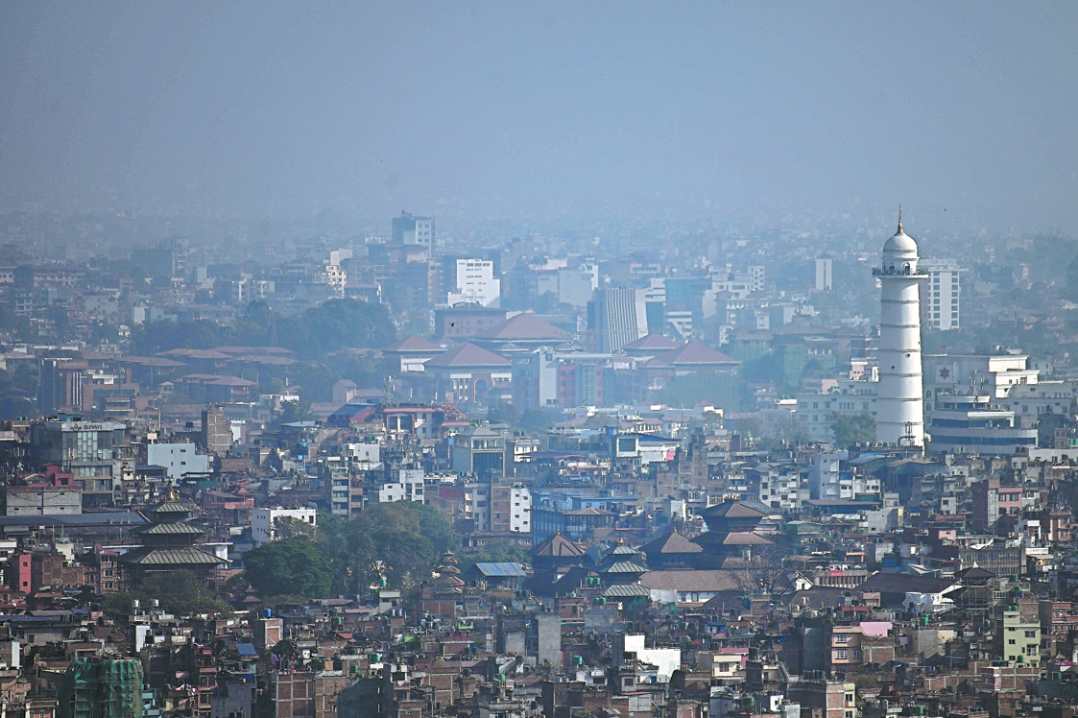
    Kathmandu Valley’s iconic mountain vistas have vanished beneath a thick haze as winter air pollution reaches critical levels. The seasonal combination of dry winds, agricultural burning, and urban emissions has transformed Nepal’s capital into one of Asia’s most polluted urban environments, with PM2.5 and PM10 concentrations soaring to hazardous levels.

    Local residents like Dinesh Lal Shrestha from Tarakeshwar Municipality report confronting farmers engaged in open burning of agricultural waste, though these individual efforts prove largely ineffective. Municipal authorities have implemented measures including public notices and potential fines of up to 10,000 rupees ($70) for waste burning violations, yet acknowledge the limitations of their jurisdiction.

    Environmental experts emphasize that fragmented approaches cannot solve what is fundamentally a regional crisis. Bhushan Tuladhar, a prominent environmentalist, states that current measures remain insufficient to produce meaningful results. The problem intensifies during winter months when temperature inversions trap pollutants, compounded by agricultural burning practices in surrounding regions.

    Air quality specialist Bhupendra Das warns that the situation will deteriorate further as harvesting season progresses in the Tarai region, where stubble burning remains common practice. The economic implications are severe: the World Bank estimates air pollution costs Nepal over 6% of its GDP annually through reduced labor productivity, tourism impacts, and healthcare burdens.

    Most alarmingly, air pollution has emerged as Nepal’s leading risk factor for death and disability, surpassing both malnutrition and tobacco use. The World Bank reports approximately 26,000 premature deaths annually attributable to poor air quality, reducing average life expectancy by over three years.

    Experts unanimously call for coordinated action across all municipal boundaries, including strict enforcement against waste burning, public awareness campaigns, regulation of industrial emissions, and specialized equipment for forest fire management. Without unified regional cooperation, Kathmandu’s air quality crisis will continue to escalate with devastating human and economic consequences.

  • Connection seen as key to sustained trade growth

    Connection seen as key to sustained trade growth

    Economic experts across Asia project sustained growth in regional trade throughout 2026, emphasizing that enhanced connectivity and cooperation will be crucial for building economic resilience. This development comes as Asian nations increasingly look inward to strengthen supply chains and reduce dependency on Western markets amid growing trade barriers.

    According to Park Chonghoon, Standard Chartered’s head of research in South Korea, the upward trajectory in intraregional trade will persist as supply chain networks continue expanding across Asia. He stressed that deeper integration should extend beyond imports and exports to include consumption of end products, creating more robust regional markets capable of withstanding external trade pressures.

    Recent data supports this optimistic outlook. A United Nations Trade and Development report from early December indicates global trade in goods and services is poised to surpass $35 trillion for the first time this year, marking a substantial 7% year-on-year increase. The report highlighted East Asia’s exceptional performance, with exports growing by 9% over the past four quarters and intraregional trade expanding by an impressive 10%.

    ING Think, the research division of Dutch bank ING, forecasts Asia’s trade in commercial services to grow 5.5% year-on-year in 2026, outpacing this year’s 4.6% growth rate despite slowing goods trade reducing demand for transport and logistics.

    Japan’s Infinity LLC Chief Economist Hidetoshi Tashiro advocates for Asian countries to gradually decrease their reliance on the United States while working toward establishing a comprehensive regional free trade zone. He noted that while US manufacturing declines and export constraints increase, East Asia’s manufacturing sector continues to serve as a fundamental support for the US economy.

    Tashiro emphasized the need for the region to conceptually reject external pressure while deepening economic ties to create trust-based systems resilient to outside interference. This perspective finds practical application across various Asian initiatives, including ongoing cooperation among Association of Southeast Asian Nations members and Central Asian countries’ recent agreement to nearly double mutual trade to $20 billion.

    Suriyan Vichitlekarn, executive director of the intergovernmental Mekong Institute, echoed these sentiments, noting that escalating global conflicts further underscore the importance of strengthening interdependence among neighboring nations. Representing all six Greater Mekong Subregion countries (Cambodia, China, Laos, Myanmar, Thailand, and Vietnam), Suriyan emphasized that mutual reliance is essential for regional stability.

    He specifically highlighted the potential for Thailand and Cambodia to collaborate on building regional resilience once border demarcation issues are resolved. Current tensions have already significantly impacted trade, with Oxford Economics reporting a 66% plunge in Thailand’s deliveries to Cambodia in October, creating a 2.5 percentage point drag on total goods export growth.

    Amitendu Palit, senior research fellow at Singapore’s Institute of South Asian Studies, pointed to the successful performance of existing economic frameworks like the Regional Comprehensive Economic Partnership—the world’s largest trade agreement. He anticipates Asian economic integration becoming increasingly issue-based, with regional economies collaborating more extensively on challenges including climate change, digital trade, and enhanced connectivity.

  • Asia’s economic divide forecast to widen in 2026

    Asia’s economic divide forecast to widen in 2026

    The Asian economic landscape is projected to experience significant divergence throughout 2026, creating a tale of two regions within the continent. Advanced semiconductor manufacturers and technology hubs are positioned to capitalize on the ongoing artificial intelligence revolution, while export-dependent emerging markets face mounting pressures from trade restrictions and domestic instability.

    Technology powerhouses including South Korea, Singapore, and Malaysia are experiencing substantially improved economic prospects driven by unprecedented demand for sophisticated chips and AI infrastructure. These nations, deeply integrated into global AI supply chains, are witnessing accelerated growth trajectories as investments pour into their technology sectors.

    Meanwhile, China, India, Indonesia, and Japan demonstrate economic resilience supported by robust domestic consumption patterns that provide a buffer against global market volatility. Their diversified economic foundations continue to fuel steady growth despite external challenges.

    Conversely, several Southeast Asian and South Asian economies confront a more challenging outlook. Thailand, the Philippines, Bangladesh, and Nepal face headwinds from softening international demand for their non-technology exports. The implementation of United States tariff policies has particularly impacted export-oriented industries in these nations.

    Compounding these economic pressures, political uncertainty in several vulnerable economies creates additional obstacles to stable growth. Analysts note that this combination of external trade pressures and domestic instability could widen the developmental gap between technology-forward economies and those reliant on traditional manufacturing and commodity exports.

    The emerging divide highlights how technological advancement and global trade policies are reshaping economic hierarchies within Asia, potentially creating lasting implications for regional economic cooperation and development strategies.

  • Japan’s remilitarization ‘threatens’ Southeast Asia

    Japan’s remilitarization ‘threatens’ Southeast Asia

    Southeast Asian security analysts are raising alarms over Japan’s rapid military expansion under Prime Minister Sanae Takaichi’s administration, warning that these developments could fundamentally alter regional stability. Since assuming office in October 2025, Takaichi has implemented a series of controversial security policy shifts that mark a significant departure from Japan’s postwar pacifist stance.

    The government has accelerated its defense spending timeline, now targeting the NATO-standard 2% of GDP expenditure two years ahead of schedule. More provocatively, Tokyo is considering revisions to its Three Non-Nuclear Principles while exploring options for nuclear-powered submarines and eased arms export restrictions. These moves have generated both domestic and international concern about Japan’s strategic direction.

    According to Peter T.C. Chang, research associate at the Malaysia-China Friendship Association, Takaichi represents a right-wing ideology seeking to restore Japan’s imperial-era strength through a movement reminiscent of America’s ‘MAGA’ campaign. This political trajectory threatens to disrupt the delicate balance that has underpinned ASEAN’s prolonged stability, which has historically relied on Japan’s economic rather than military influence.

    Regional experts note that Japan’s military deployments have increasingly focused on Southeast Asia, with particular attention to offensive capabilities such as long-range missiles stationed on southwestern islands. James Gomez of Bangkok’s Asia Centre warns that this buildup will inevitably heighten geopolitical tensions across the region.

    The fundamental concern among ASEAN members is whether Southeast Asia might transform from a driver of regional stability into an arena for major-power competition. University of Malaya professor Awang Azman Awang Pawi cautions that closer Japan-US security alignment could force ASEAN states to choose sides in great-power rivalries.

    Domestic challenges including Japan’s rapidly aging population, shrinking workforce, and substantial social spending commitments raise questions about the sustainability of this military expansion. Nevertheless, the Takaichi administration continues to advance its security agenda at an unprecedented pace, creating new uncertainties for the Asia-Pacific region.

  • Various activities held across China to celebrate upcoming new year

    Various activities held across China to celebrate upcoming new year

    China Daily Information Co (CDIC) maintains rigorous copyright protection over all content published across its digital platforms. The comprehensive policy explicitly states that all materials—including textual content, photographic images, and multimedia information—remain the exclusive intellectual property of CDIC since 1994.

    The company mandates that no content may be republished or utilized in any form without obtaining prior written authorization. This protection extends to all creative works hosted on their domains, establishing clear legal boundaries against unauthorized usage.

    Technical recommendations accompany these copyright notices, with the platform suggesting optimal viewing experiences through browsers set at 1024*768 resolution or higher. The publication operates under formal registration credentials, including License for Publishing Multimedia Online 0108263 and Registration Number 130349.

    Beyond content protection policies, CDIC maintains transparent organizational channels for public engagement. The platform provides dedicated sections for corporate information, advertising opportunities, general inquiries, and career prospects—including specific employment avenues for expatriates. The company further encourages audience connection through multiple social media channels, fostering community interaction while maintaining copyright integrity.

  • Hamas confirms death of spokesman of its military wing

    Hamas confirms death of spokesman of its military wing

    The Al-Qassam Brigades, Hamas’s military wing, has officially confirmed the death of its prominent spokesperson Abu Obeida during Israel’s ongoing offensive in Gaza. The announcement came through a newly appointed representative who has assumed the same nom de guerre, delivering the news during a televised address on Monday.

    The successor, appearing in the distinctive uniform associated with the role, revealed that Abu Obeida—born Hudhaifa Samir Al-Kahlout and also known as Abu Ibrahim—perished alongside several other senior Hamas leaders. Among those confirmed dead was former military commander Mohammed Sinwar, marking significant losses within the organization’s leadership structure.

    Abu Obeida rose to prominence in 2006 when he announced the capture of Israeli soldier Gilad Shalit, subsequently becoming the recognizable voice of Hamas’s military operations during subsequent conflicts with Israel. His final recorded statement was delivered on July 18, with Hamas sources indicating he was killed in an Israeli airstrike on August 30. This timeline was corroborated by Israeli Defense Minister Israel Katz, who acknowledged the spokesperson’s elimination in a Gaza Strip operation on August 31.

    The spokesperson’s legacy includes maintaining communication with Palestinian supporters throughout what he described as ‘the darkest circumstances,’ establishing him as a symbolic figure within the movement since his appointment to the role in 2005.

  • Postal and delivery services now cover all rural areas in Xizang

    Postal and delivery services now cover all rural areas in Xizang

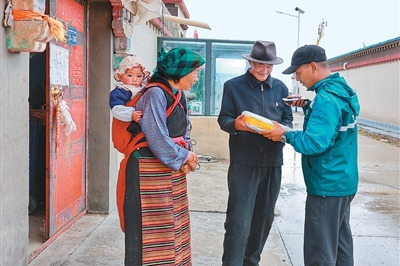
    In a landmark infrastructure achievement, Tibet Autonomous Region has established complete postal and delivery service coverage across all rural territories, including its most remote farming and pastoral communities. The announcement came from regional officials on Monday, marking the successful culmination of extensive logistics network development.

    Lhakpa, an official from the market supervision department of Xizang’s postal administration, revealed the region has established 1,324 postal and express delivery outlets while modernizing 2,410 village-level postal logistics stations. This comprehensive network ensures express delivery services now penetrate every administrative village throughout the mountainous region.

    “We have realized distribution centers in every county, service outlets in every township, and delivery services in every village,” Lhakpa stated, emphasizing the completeness of the coverage. The official further noted that rural postal routes have achieved full motorization, with vehicle-based delivery operations implemented across all transportation corridors.

    The infrastructure breakthrough addresses the persistent “last mile” delivery challenge that long plagued remote agricultural and pastoral regions. Farmers and herders can now access postal services within their own villages, enjoying service quality comparable to urban standards.

    Parallel to logistics improvements, Xizang has aggressively expanded e-commerce capabilities. Zhao Lei, an official from the regional commerce department, highlighted the “Free Shipping for Xizang” initiative implemented during the 14th Five-Year Plan period (2021-25). This program encouraged major e-commerce platforms including Taobao, Tmall and JD.com to offer free or discounted shipping to Xizang while balancing commercial interests with social responsibilities.

    JD Group emerged as a significant partner, investing over 500 million yuan ($71 million) directly into Xizang through its “E-Commerce in Rural Areas” project while attracting an additional 1.5 billion yuan in external investment.

    According to Su Yinghu, head of China Post’s Xizang branch, a comprehensive rural e-commerce ecosystem has taken shape over the past five years, integrating agricultural sales, logistics distribution and inclusive financial services. This system has facilitated over 230,000 agricultural product orders with total sales exceeding 132 million yuan, while nearly 1.3 billion yuan in agriculture-related loans have supported local businesses and created over 1,300 jobs.

    The impact is visibly transformative for residents. Pema, a villager from Tashigang village in Nyingchi city, reported dramatically improved convenience: “Packages often arrive within a few days. Our local products, such as mushrooms and local pork, can now be sold across the country.”

  • 3D-printed cultural center offers new model for building smart, green cities

    3D-printed cultural center offers new model for building smart, green cities

    In a groundbreaking development for sustainable architecture, China’s Xiong’an New Area has unveiled what experts are calling a paradigm-shifting model for future urban construction. The Xiong’an Wings cultural center, now standing as one of the world’s largest 3D-printed structures, represents a fusion of advanced manufacturing, ecological design, and digital innovation.

    Soaring five stories high with dramatic 20-meter cantilevered roofs that emulate a swan in flight, the building’s design draws inspiration from classical Chinese poetry depicting waterfowl gliding over misty landscapes. This artistic vision presented significant engineering challenges that conventional construction methods couldn’t economically solve, particularly for the complex double-curved facade.

    Project Technical Director Zhang Xihuang explained how 3D printing technology enabled the realization of this ambitious design: ‘We utilized modified plastic panels manufactured with precision layering to create the flowing red wings that define the structure. This approach not only achieved our aesthetic objectives but also demonstrated substantial environmental advantages.’

    The construction methodology reduced material consumption by 20-30% and completely eliminated the need for polluting molds, addressing waste reduction at its source. Durability testing indicates the printed panels will maintain over 80% of their performance characteristics after two decades of outdoor exposure.

    The project implemented a fully digital workflow utilizing Building Information Modeling (BIM) throughout its entire lifecycle, from initial design to future operational management. On-site construction was monitored by drone-mounted laser scanners that detected deviations as slight as five centimeters, enabling real-time adjustments.

    Structural efficiency was further enhanced through topology optimization software that minimized unnecessary steel in the building’s frame without compromising strength. Once operational, the center’s advanced insulation and intelligent management systems are projected to reduce annual energy consumption by more than 30%.

    The cultural center, developed through collaboration between Power Construction Corporation of China and Tongji University researchers led by Professor Yuan Feng, will serve as a community hub featuring performance spaces for opera, music, and conferences. Its extensive glass walls offer panoramic views of Jinhu Lake, integrating the natural surroundings with indoor activities.

    Perhaps most significantly, the project’s innovations are being formalized into Xiong’an’s first local technical standards for 3D-printing construction technology, creating a replicable template for future sustainable development. Zhang characterized Xiong’an Wings as ‘a convincing example of how cities can be built smarter, greener and more beautifully for the future.’