标签: Asia

亚洲

  • New round of China-US trade talks underway in Paris

    New round of China-US trade talks underway in Paris

    Diplomatic efforts to stabilize economic relations between the world’s two largest economies resumed Sunday as Chinese and American delegations convened in Paris for a fresh round of trade negotiations. The talks mark the latest attempt to bridge longstanding commercial differences and establish a more predictable framework for bilateral trade.

    The Paris venue, strategically chosen for its neutral ground, provides an opportunity for both nations to address complex trade issues away from the heightened political atmospheres of their respective capitals. The discussions are expected to cover a wide range of topics including tariff structures, market access, intellectual property protections, and supply chain resilience.

    This meeting represents a continuation of dialogue that has persisted through various phases of the bilateral relationship, reflecting the mutual recognition that despite strategic competition, economic interdependence necessitates ongoing communication channels. The choice of Paris as host city also signals both countries’ willingness to engage within a broader international context, potentially drawing on European perspectives regarding global trade norms.

    Observers are monitoring whether these talks will yield substantive agreements or serve primarily as a confidence-building exercise ahead of potential higher-level engagements. The outcome may significantly influence global market stability and international trade patterns for the coming year.

  • 5th member of Iranian women’s soccer team gives up asylum in Australia

    5th member of Iranian women’s soccer team gives up asylum in Australia

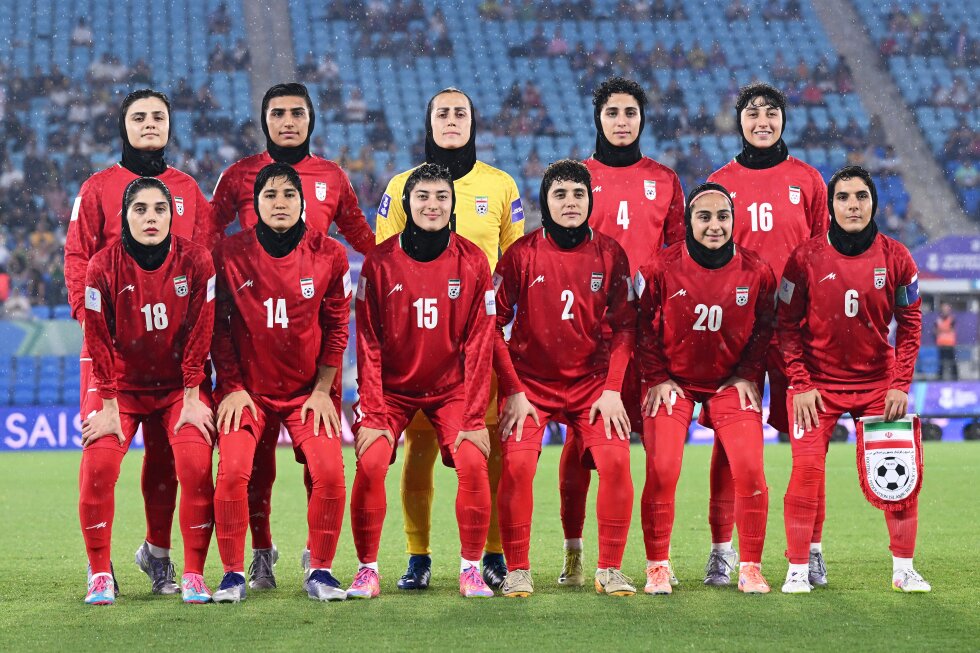
    MELBOURNE, Australia — The Australian government confirmed Monday that a fifth member of the Iranian women’s national football team has departed the country after initially accepting refugee status, further reducing the number of athletes remaining from a group that sought humanitarian protection. This latest departure occurred shortly before midnight on Sunday, according to officials from Home Affairs Minister Tony Burke’s office.

    The development follows Saturday’s exit of two additional players and a support staff member who traveled from Sydney to Malaysia. These departures mark a significant reversal from the initial wave of asylum seekers that saw six players and one staff member from Iran’s 26-person squad accept humanitarian visas following the Women’s Asian Cup tournament last month.

    The team’s arrival in Australia preceded the February 28 outbreak of conflict in the Middle East, creating a complex geopolitical backdrop for their stay. On March 10, the majority of the Iranian contingent returned to Kuala Lumpur, while the remaining individuals pursued refugee status.

    Iran’s Tasnim News Agency characterized the returning athletes as ‘returning to the warm embrace of their family and homeland,’ framing their departure as a failure of Western influence. The situation gained international attention when players declined to sing Iran’s national anthem during tournament matches, raising concerns about potential repercussions upon their return home.

    The case drew high-profile attention, with Iranian diaspora groups in Australia and former U.S. President Donald Trump urging the Australian government to provide protection for the athletes. Iranian state media subsequently portrayed the athletes’ return as a ‘disgraceful failure of the American-Australian project.’

    With the latest departures, only two squad members remain in Australia under humanitarian protection, marking a dramatic shift from the initial seven who sought refuge.

  • Why Hamilton loves China?

    Why Hamilton loves China?

    Seven-time Formula 1 World Champion Lewis Hamilton has developed a remarkable appreciation for China that extends far beyond the racetrack. The British racing icon has discovered multiple reasons to cherish the Asian nation, from the electrifying atmosphere at the Shanghai International Circuit to the stunning natural beauty of Jiuzhaigou Valley in Sichuan Province.

    Hamilton’s connection with China has deepened through his repeated visits for Grand Prix events, where he has experienced firsthand the passion of Chinese motorsport enthusiasts. The Shanghai International Circuit has become a familiar territory for the champion driver, who has celebrated numerous victories before crowds of enthusiastic supporters.

    Beyond the high-speed world of Formula 1, Hamilton has explored China’s diverse cultural and natural landscapes. His appreciation for Jiuzhaigou National Park highlights his attraction to China’s breathtaking natural wonders, known for their colorful lakes, waterfalls, and snow-capped peaks. This combination of professional success and personal discovery has created a multifaceted relationship between the racing legend and the country.

    Hamilton’s affection for China represents the powerful bridge that international sports figures can build between cultures, demonstrating how athletic competition can foster genuine appreciation and understanding between nations and their people.

  • China’s largest coalbed methane field sees record daily output

    China’s largest coalbed methane field sees record daily output

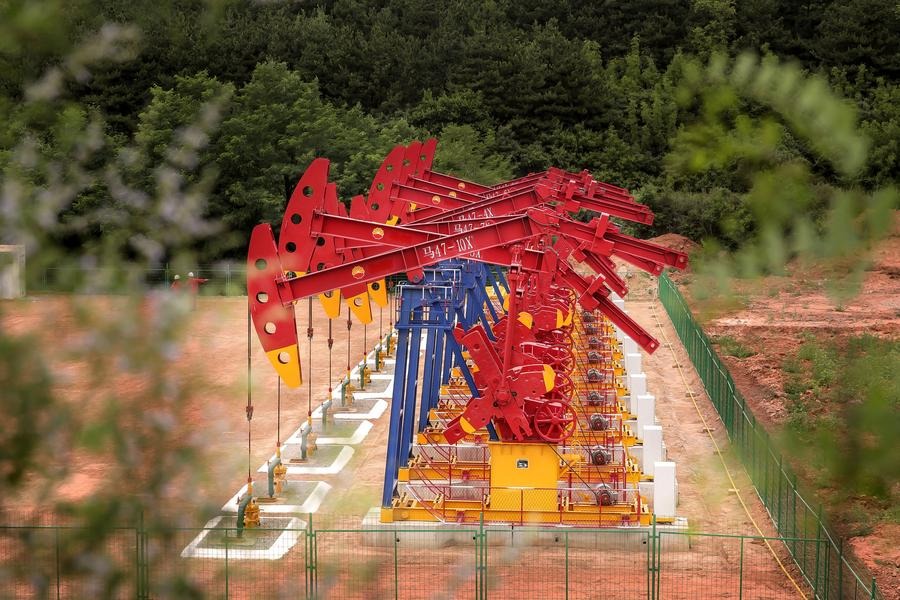
    China’s energy sector has reached a significant milestone with its flagship coalbed methane project achieving unprecedented production levels. The Daning-Jixian field, situated in Shanxi Province, has now attained a record-breaking daily output capacity of 11 million cubic meters, according to PetroChina Coalbed Methane Company.

    This strategic energy asset, positioned on the eastern periphery of the Ordos Basin, represents China’s pioneering large-scale coalbed methane development initiative. Since its commissioning in 2019, the field has demonstrated remarkable growth, with confirmed reserves totaling an impressive 400 billion cubic meters. The project’s development trajectory shows consistent advancement, having yielded 3.05 billion cubic meters throughout 2025 alone, establishing its dominance as the nation’s foremost coalbed methane production site.

    The field’s expansion continues with the ongoing second-phase development program, which promises to augment annual production capacity by an additional 1.5 billion cubic meters. This development aligns with China’s broader energy strategy that prioritizes cleaner fossil fuel alternatives and energy security.

    Coalbed methane, categorized as an unconventional natural gas resource, offers multiple environmental and safety advantages. Its extraction contributes to reduced mining hazards, decreased greenhouse gas emissions, and enhanced energy supply stability. China possesses substantial coalbed methane reserves, predominantly distributed across major coal-bearing regions including the Ordos, Sichuan, and Junggar Basins. Current estimates indicate national reserves surpass 40 trillion cubic meters, representing a considerable energy resource for future development.

  • China releases full text of NPC Standing Committee work report

    China releases full text of NPC Standing Committee work report

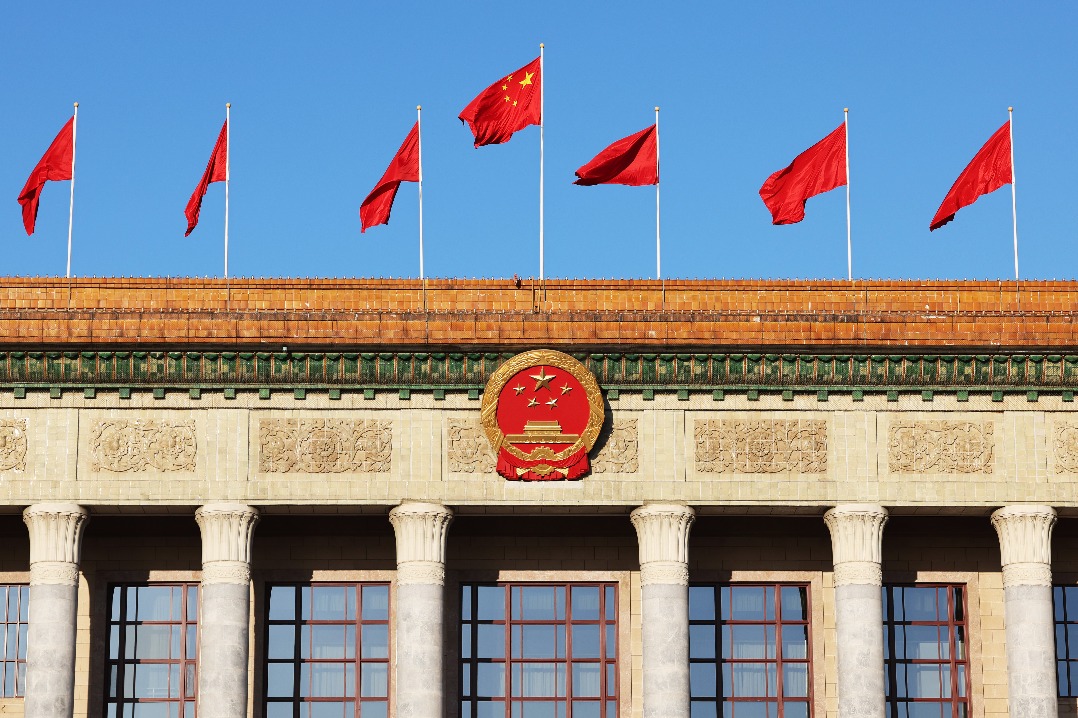
    BEIJING – The complete official document detailing the annual activities and accomplishments of China’s National People’s Congress (NPC) Standing Committee has been formally published by Xinhua News Agency. This comprehensive report, initially presented by NPC Standing Committee Chairman Zhao Leji, received formal endorsement during the concluding session of the 14th NPC on March 12.

    The extensive review systematically documents the legislative body’s productivity across six fundamental domains throughout the preceding year. A principal emphasis was placed on reinforcing constitutional implementation and intensifying compliance oversight mechanisms, thereby safeguarding legal uniformity and the integrity of the nation’s rule-of-law framework.

    Furthermore, the committee concentrated on refining the quality and scope of its legislative output, crafting laws designed to actively service and underpin the country’s ongoing reform initiatives and developmental objectives. The oversight function of the NPC was rigorously exercised, cementing its critical position within the comprehensive oversight architecture of the Party and state.

    The report also highlights initiatives aimed at broadening and enhancing the work concerning NPC deputies, ensuring their capacity to execute their roles effectively was fully supported. On the international stage, the NPC leveraged its distinctive attributes to conduct foreign exchanges, making substantive contributions to China’s broader diplomatic strategy. Concurrently, the committee engaged in profound self-improvement efforts to boost its operational efficacy and legal performance.

    Looking forward, the document delineates a clear set of priorities for the upcoming legislative year. These include driving the comprehensive enforcement of the Constitution, advancing the development of a socialist legal system with Chinese characteristics, and refining the precision and effectiveness of supervisory practices. Additional focal points comprise bolstering support for deputies in their lawful duties, pursuing dynamic international engagement, and fulfilling a defined four-fold functional role to ensure comprehensive national governance.

  • Israel rejects reports of interceptor shortages

    Israel rejects reports of interceptor shortages

    Israeli Foreign Minister Gideon Saar has categorically denied recent reports alleging critical shortages in the nation’s missile defense capabilities amid ongoing hostilities with Iran. Speaking to journalists on Sunday, Saar refuted claims published by Israeli newspaper Haaretz and global news site Semafor, both of which cited unnamed U.S. officials suggesting Israel had alerted Washington about dangerously depleted interceptor stocks.

    The current conflict, now entering its third week, has placed unprecedented strain on Israel’s aerial defense networks. Defense systems were already compromised following extensive engagements during last year’s confrontations with Iran, where substantial interceptor resources were expended to neutralize incoming missile threats. The sustained nature of Iran’s recent barrages—reportedly enhanced with cluster munition-equipped missiles that complicate interception protocols—has accelerated the depletion of defensive arsenals.

    Despite these challenges, U.S. officials indicate the situation remains within anticipated parameters. One official confirmed to Semafor that Washington had foreseen these developments months in advance, emphasizing that American interceptor reserves remain substantial without similar shortage concerns. This assurance comes amid broader regional anxieties as Gulf partners also face critical shortages, forcing selective engagement protocols against Iranian projectiles.

    Technical constraints exacerbate the situation, with annual production of Patriot Pac-3 interceptors limited to approximately 600 units globally. Gulf states have been actively deploying high-cost interceptors from Terminal High Altitude Area Defense systems and Patriot missile batteries throughout the conflict.

    Minister Saar reinforced the strategic alignment between Israel and the United States, stating both nations remain ‘eye to eye’ in their determination to continue military operations until achieving long-term objectives. ‘Our goal remains the permanent removal of existential threats from Iran—not annual cycles of warfare,’ Saar declared, underscoring the commitment to sustained engagement despite logistical challenges.

  • Iran threatens escalation, US puts oil hub in crosshairs

    Iran threatens escalation, US puts oil hub in crosshairs

    The strategic waters of the Persian Gulf have become the epicenter of a rapidly escalating military confrontation between Iran and the United States, with critical oil infrastructure emerging as primary targets in a conflict that shows no signs of abating.

    Fresh cross-border attacks were reported across Gulf states on Sunday, following Iran’s explicit warning for civilians to evacuate three major United Arab Emirates ports that Tehran has designated as “legitimate targets.” The Iranian government claims these facilities are being utilized by US military forces to launch strikes against Iranian territory.

    In a significant escalation of hostilities, Washington has dramatically raised the stakes by directly targeting Iran’s most crucial oil export channel. Recent US military operations have focused on Kharg Island, the strategic chokepoint responsible for processing approximately 90% of Iran’s crude oil exports. American forces have conducted strikes on more than 90 Iranian military targets on the island, marking a dangerous new phase in the three-week-old conflict that also involves Israel.

    Iranian Foreign Minister Abbas Araghchi stated in an interview with Al Araby Al Jadeed that no specific peace initiatives have been proposed to end the hostilities. “The end of the war depends on guaranteeing that it will not be repeated and on paying compensation,” Araghchi emphasized, indicating Tehran’s conditions for ceasefire negotiations.

    The minister earlier accused the US of launching attacks on Kharg Island and Abu Musa Island from two locations within the UAE—Ras Al-Khaimah and a site “very close to Dubai.” He characterized the situation as “extremely dangerous” while asserting Iran’s commitment to exercise restraint to avoid striking civilian-populated areas in the UAE.

    Behind the scenes, diplomatic sources reveal growing resentment among Gulf Arab states who find themselves unwilling participants in a conflict they neither initiated nor endorsed. These nations are now bearing significant economic and security costs as the violence spills across their borders.

    Anwar Gargash, diplomatic adviser to the UAE president, articulated this delicate balancing act on social media, acknowledging his country’s right to self-defense while emphasizing that “still prioritizes reason and de-escalation, and continues to exercise restraint.”

    The UAE, Saudi Arabia, and Bahrain all activated defense systems to intercept incoming projectiles. Iran’s Revolutionary Guards (IRGC) claimed responsibility for launching 10 missiles and an unspecified number of drones against US forces stationed at al-Dhafra airbase in the UAE.

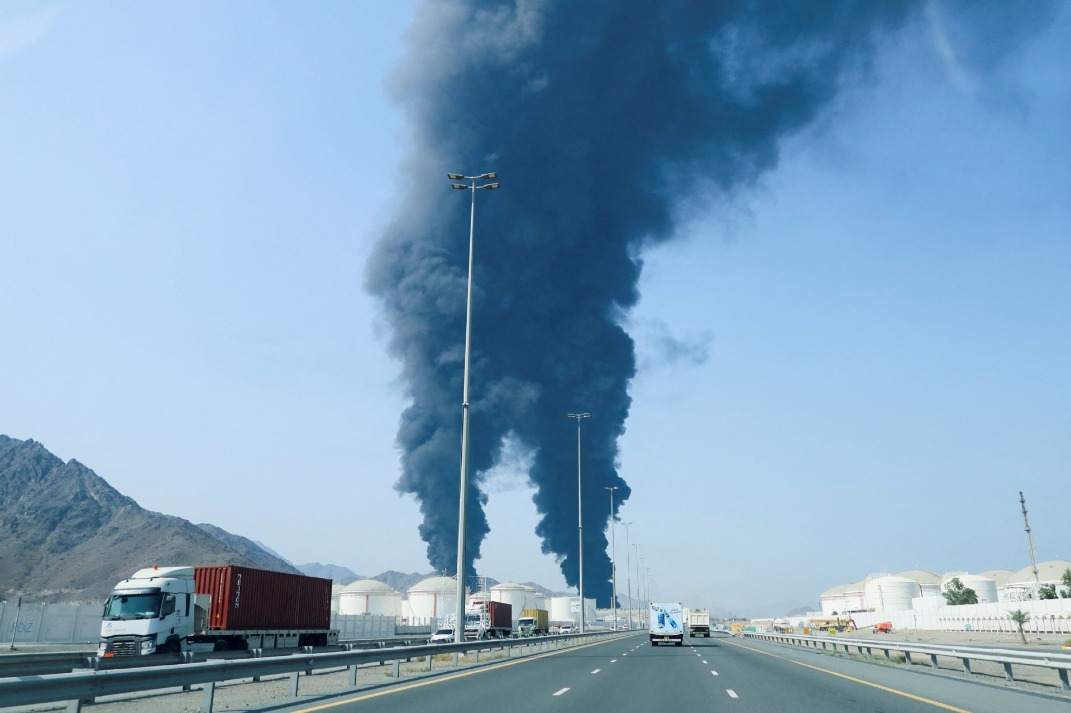
    Despite Tehran’s threats, there was no immediate evidence of attacks on Dubai’s Jebel Ali port—the Middle East’s busiest commercial hub—or Abu Dhabi’s Khalifa port. However, debris from an intercepted Iranian drone struck an oil facility at Fujairah port, with television footage capturing plumes of thick black smoke rising into the air. Authorities confirmed that civil defense teams were managing the situation and urged the public to rely solely on official updates.

    Meanwhile, US President Donald Trump declared in an NBC News telephone interview that Washington is not prepared to strike a deal with Iran because “the terms are not good enough.” The president revealed that initial attacks had “completely demolished” most of Kharg Island and suggested additional strikes might be conducted “just for good measure.”

    In a separate development, Iran’s joint military command accused the United States and Israel of utilizing replica Iranian drones to attack neighboring countries and shift blame onto Tehran. State media reported that copies of Iran’s Shahed-136 drone, designated LUCAS, were allegedly used to hit “unrelated targets in regional states,” including attacks in Turkiye, Iraq, and Kuwait, though no evidence was provided to support these claims.

    The IRGC further escalated rhetoric by vowing to hunt down Israeli Prime Minister Benjamin Netanyahu. A statement carried by state media declared: “If this criminal, the killer of children, remains alive, we will spare no effort to track down and eliminate him with all our strength.”

    Since the conflict began on February 28, more than 2,000 people have been killed, with the majority of casualties occurring in Iran. The ongoing hostilities have caused major disruptions to global oil supplies, driving international prices higher and creating economic ripple effects across world markets.
  • China, US start economic, trade talks in Paris

    China, US start economic, trade talks in Paris

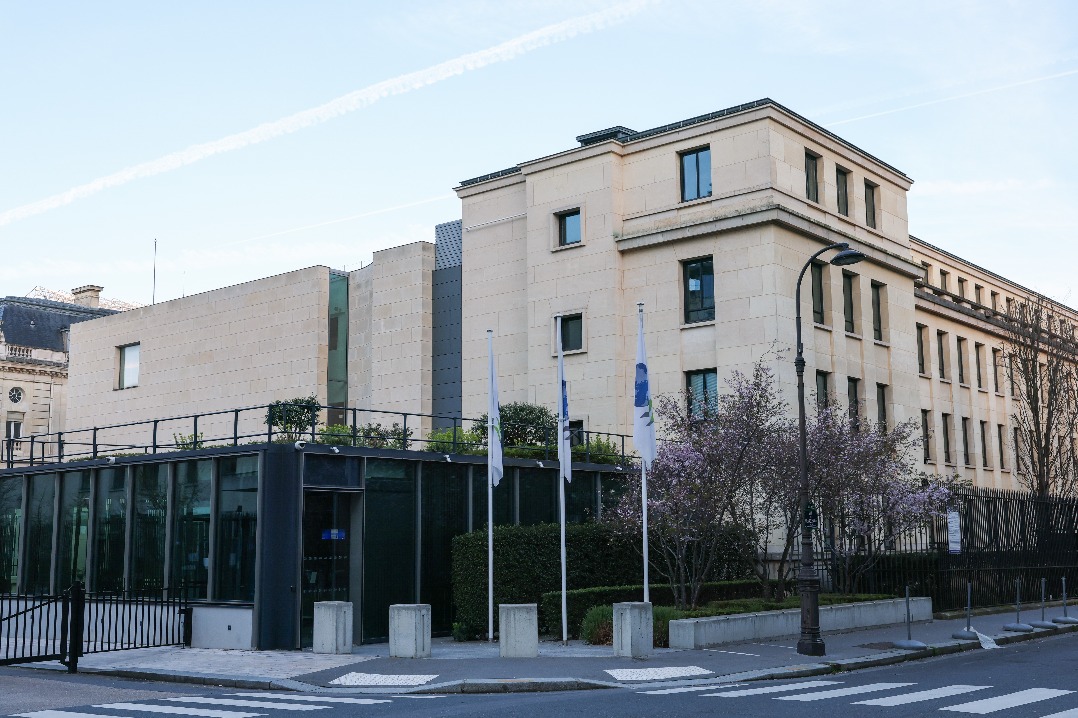
    Senior Chinese and American officials initiated a new round of economic and trade negotiations in Paris on Sunday, marking a significant diplomatic engagement between the world’s two largest economies. The talks, held at the Organization for Economic Cooperation and Development headquarters, represent the first major bilateral economic discussions since the heads of state met in Busan.

    China’s delegation is headed by Vice-Premier He Lifeng, a prominent member of the Political Bureau of the Communist Party of China Central Committee, underscoring the importance Beijing places on these negotiations. The discussions are proceeding under the framework established during previous high-level communications between the two nations’ leaders, including their recent meeting in South Korea and multiple telephone conversations.

    According to a statement released by China’s Ministry of Commerce on Friday, both parties will address mutual concerns regarding economic and trade matters. The Paris venue provides a neutral ground for these delicate negotiations, which come at a critical juncture in global economic relations. The OECD’s involvement suggests both technical and policy dimensions will be explored during the talks.

    The resumption of formal trade dialogue signals a potential thaw in economic relations between the two powers, though substantial challenges remain. Market analysts and trade experts are closely monitoring the proceedings for indications of policy shifts or potential agreements that could impact global supply chains, tariff structures, and international trade norms.

  • China-US trade talks become center of attention

    China-US trade talks become center of attention

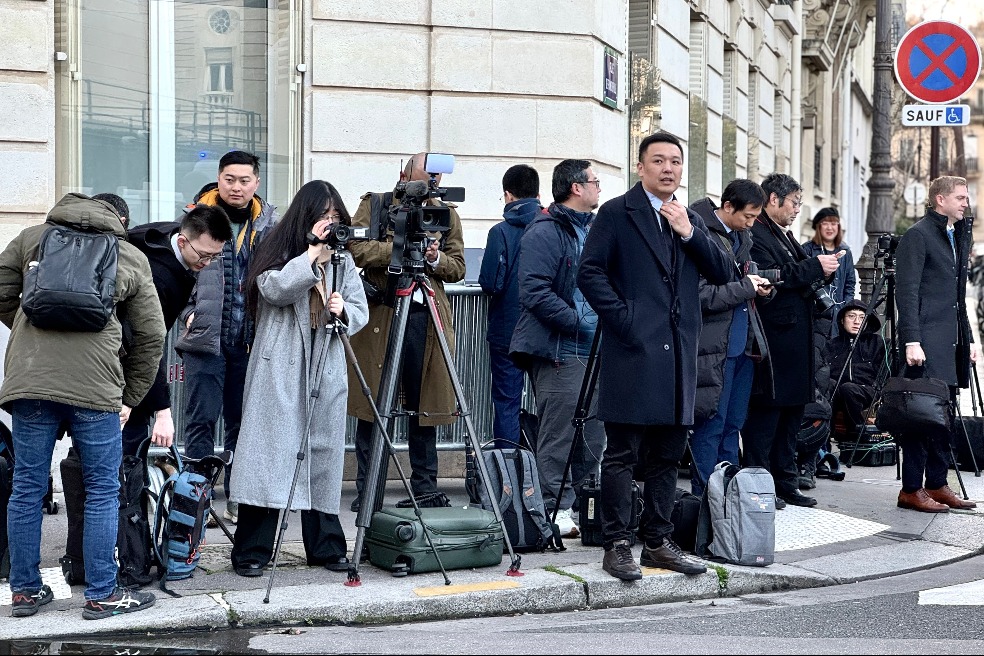
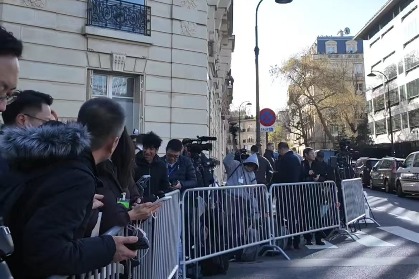
    PARIS – The global economic community turned its attention to the French capital on Sunday as high-stakes trade negotiations between the United States and China commenced at the Organization for Economic Cooperation and Development headquarters. International media representatives gathered outside the OECD building in anticipation of the bilateral talks that could significantly influence global economic relations.

    The negotiations mark another chapter in the complex economic relationship between the world’s two largest economies. The choice of Paris as the venue underscores the international community’s vested interest in stable US-China trade relations, given their substantial impact on global markets and supply chains.

    Observers noted that the OECD’s neutral ground provides an appropriate setting for discussions that have previously been hampered by geopolitical tensions. The organization’s role in facilitating economic cooperation among developed nations adds diplomatic weight to the proceedings.

    While specific agenda items remain undisclosed, analysts anticipate discussions will address ongoing trade imbalances, market access limitations, and intellectual property protections. The outcomes of these talks could potentially reshape international trade dynamics ahead of the G7 summit scheduled for later this month.

    The negotiations come amid evolving global economic conditions, including inflationary pressures and supply chain restructuring efforts that have affected both nations. Economic analysts are monitoring the talks for signals about future tariff policies and bilateral investment frameworks.

  • Xi’s article on promoting high-quality development of marine economy to be published

    Xi’s article on promoting high-quality development of marine economy to be published

    President Xi Jinping, who serves as General Secretary of the Communist Party of China Central Committee and Chairman of the Central Military Commission, will have a significant article on advancing high-quality development within China’s marine economy published in the upcoming issue of Qiushi Journal. The piece is scheduled for release on Monday, March 16, 2026, in the sixth issue of this year’s edition of the CPC Central Committee’s flagship publication.

    The forthcoming article represents a strategic directive from China’s leadership framework, emphasizing the critical importance of sustainable ocean economic development as a national priority. Qiushi Journal, known for publishing authoritative political theory and policy guidance, will feature President Xi’s comprehensive vision for transforming China’s maritime sectors through innovation-driven approaches and ecological conservation principles.

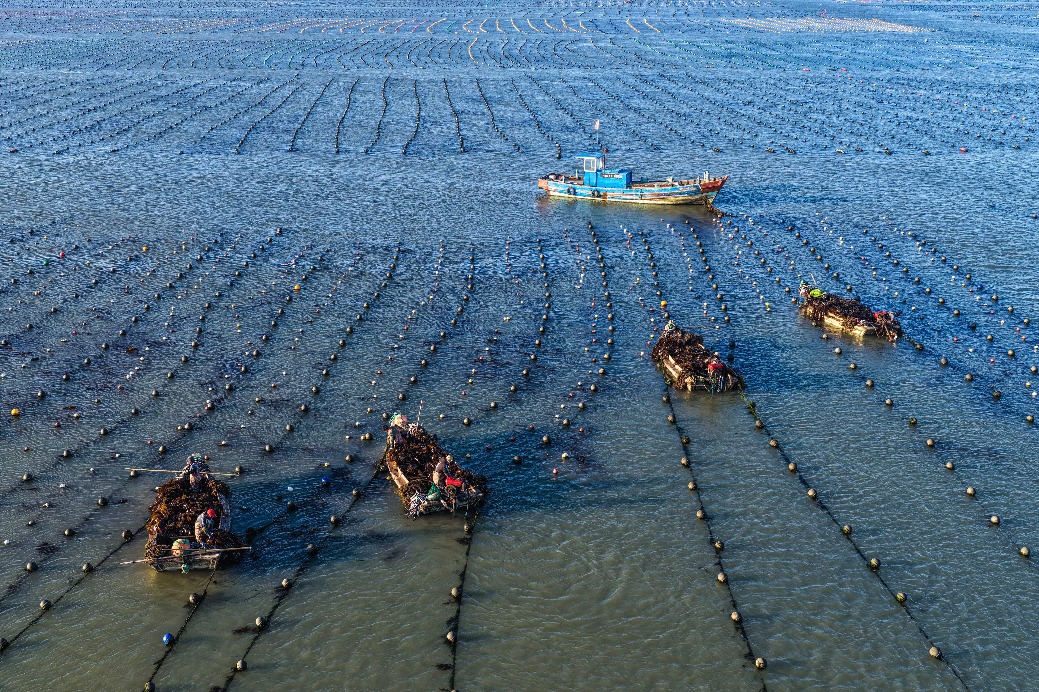
    This publication occurs within China’s broader context of enhancing its blue economy capabilities while maintaining environmental stewardship. The marine economy encompasses numerous industries including shipping, fisheries, aquaculture, offshore energy, and coastal tourism, all of which require integrated development strategies balancing economic growth with environmental sustainability.

    The timing of this publication follows recent national meetings where marine development was highlighted as essential for China’s comprehensive modernization goals. President Xi’s article is expected to provide theoretical foundation and practical guidance for policymakers, industry leaders, and regional authorities tasked with implementing China’s maritime development initiatives.