标签: Asia

亚洲

  • UAE to host New Year celebrations in more than 30 location for workers

    UAE to host New Year celebrations in more than 30 location for workers

    In a significant move toward social inclusion, the United Arab Emirates’ Ministry of Human Resources and Emiratisation (MoHRE) has unveiled expansive New Year celebrations specifically designed for the nation’s workforce. The ‘Together, We Welcome the New Year’ initiative will unfold at over 30 venues across the country on December 31, 2025, and January 1, 2026, marking a substantial expansion from the 18 locations hosted the previous year.

    The comprehensive program is crafted to foster happiness and social integration, featuring a diverse array of activities. Workers can anticipate engaging in various sports and entertainment events, participating in competitive games, and receiving special gift distributions. The ministry has formally invited private sector companies and labor accommodations to register their participation through the official MoHRE digital portal, allowing them to select events that align with their logistical preferences and geographical locations.

    This initiative reflects the UAE’s deepening commitment to recognizing the vital contributions of its labor force to national development. The celebration expansion demonstrates institutional efforts to ensure that those who physically build the nation’s infrastructure can equally partake in its cultural milestones. The program follows a successful precedent of holiday events, including recent Eid al Fitr and Eid al Adha celebrations where workers won substantial prizes, such as brand-new vehicles that provided life-changing financial opportunities for recipients and their families abroad.

    The worker celebrations occur alongside the UAE’s renowned public New Year spectacles, creating a comprehensive festive environment that spans all segments of society. This approach underscores the country’s dedication to creating inclusive communities while maintaining its position as a global leader in innovative social programming.

  • China to continue fishing ban on Yellow River

    China to continue fishing ban on Yellow River

    BEIJING – China’s Ministry of Agriculture and Rural Affairs has announced a significant extension and expansion of its fishing ban along the Yellow River basin, implementing one of the nation’s most comprehensive aquatic conservation measures through 2030.

    The newly issued directive expands protection to three additional primary tributaries, meaning the ban now encompasses the Yellow River’s entire main stream and 13 major tributaries. This represents China’s continued commitment to reversing ecological decline in its second-longest river system.

    Beginning January 1, 2026, year-round fishing prohibitions will take effect in the river’s ecologically sensitive source region and upstream critical waters. From the Ningxia section downstream to the estuary, a seasonal moratorium will be enforced annually from April 1 to July 31 – a period covering key spawning seasons.

    The policy permits only limited, quota-based fishing in specifically designated areas for certain species. All commercial fishing operations will be strictly prohibited during ban periods within restricted zones.

    First implemented in 2018, the fishing ban has demonstrated measurable success in protecting aquatic biodiversity and promoting sustainable fishery development. However, ministry officials noted that the overall declining trend in Yellow River fishery resources has not yet been fundamentally reversed, necessitating continued protective measures.

    The ministry will collaborate with nine provincial-level regions along the river’s course to strengthen monitoring and law enforcement efforts, ensuring effective protection of the basin’s fragile aquatic ecosystems.

  • Poll findings indicate Taiwan people’s ‘strong dissatisfaction’ with DPP authorities: mainland spokeswoman

    Poll findings indicate Taiwan people’s ‘strong dissatisfaction’ with DPP authorities: mainland spokeswoman

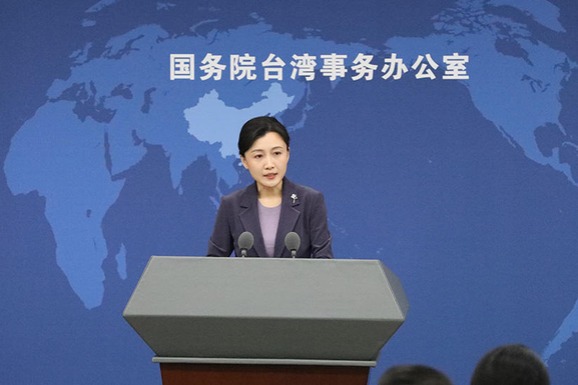
    BEIJING — A recent opinion survey conducted in Taiwan has revealed profound public dissatisfaction with the ruling Democratic Progressive Party (DPP) administration, according to statements from a mainland spokesperson on Wednesday. Zhang Han, spokeswoman for China’s State Council Taiwan Affairs Office, addressed these findings during a media briefing, highlighting growing discontent among Taiwan residents regarding the island’s current political leadership.

    The poll results, which indicate that more than half of Taiwan’s population perceives the DPP as untrustworthy, incompetent in governance, and plagued by corruption, were presented as evidence of widespread disillusionment. Zhang characterized these findings as reflecting public outrage toward what she described as the DPP’s neglect of citizen welfare, persistent pursuit of separatist agendas, intense political infighting, suppression of opposition voices, and subservience to foreign interests at the expense of Taiwan’s autonomy.

    Since assuming office, Taiwan’s leader Lai Ching-te has allegedly intensified cross-strait tensions through what Zhang characterized as provocative separatist policies and deliberate efforts to undermine economic cooperation between Taiwan and mainland China. The spokesperson further accused the administration of squandering public funds on unnecessary military expenditures while allegedly engaging in corrupt practices that benefit foreign arms dealers and political elites.

    Zhang expressed concern that these policies have pushed Taiwan toward increased instability and potential conflict. She concluded by urging Taiwan compatriots to recognize what she termed the destructive nature of DPP leadership and to consciously distance themselves from separatist activities, emphasizing the importance of cross-strait unity and peaceful development.

  • Xi emphasizes strong start for 15th Five-Year Plan period

    Xi emphasizes strong start for 15th Five-Year Plan period

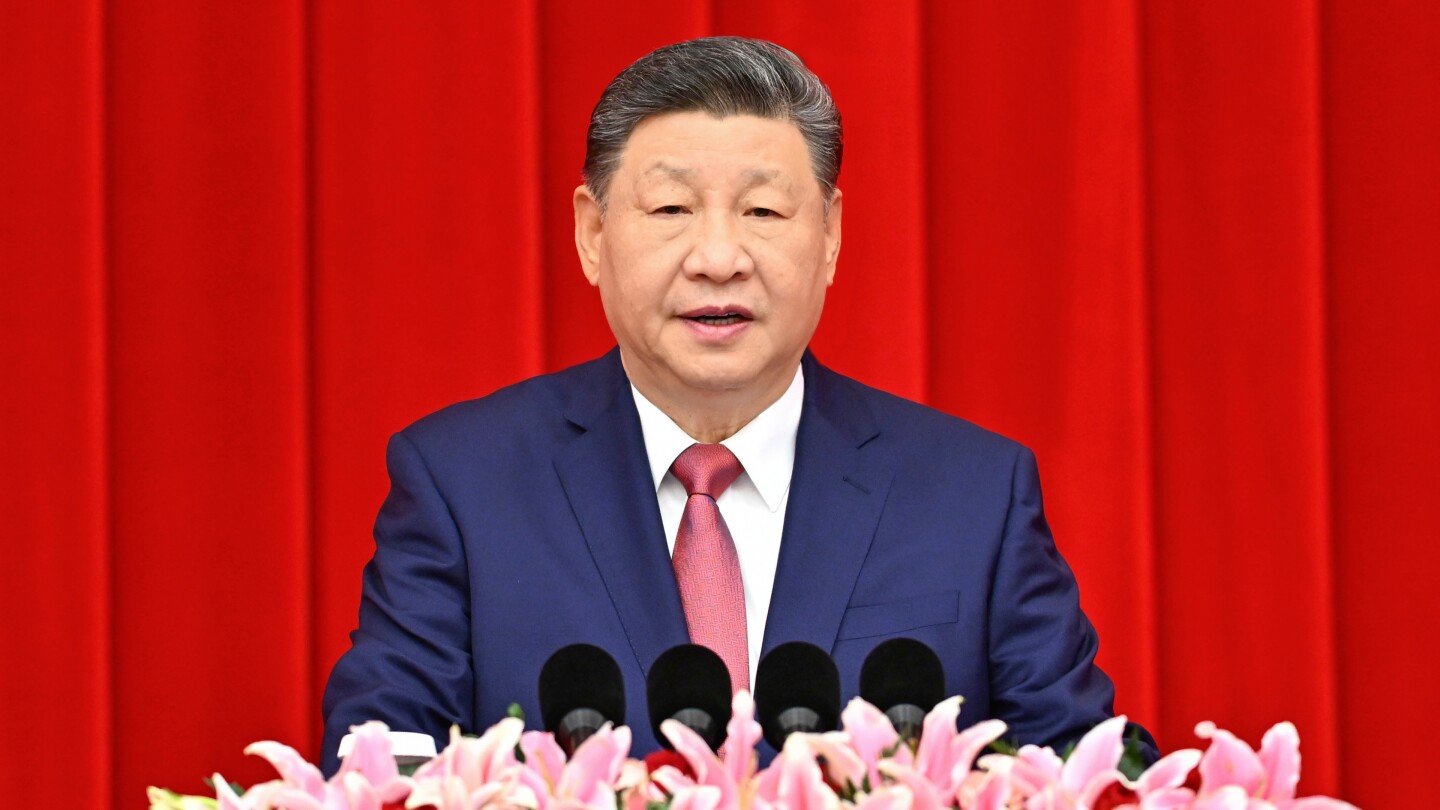
    Chinese President Xi Jinping has issued a decisive call for the nation to secure a powerful commencement to its 15th Five-Year Plan period (2026-2030). The directive was delivered during his address at a New Year gathering convened by the National Committee of the Chinese People’s Political Consultative Conference (CPPCC) in Beijing on Wednesday.

    Speaking as the General Secretary of the Communist Party of China Central Committee and Chairman of the Central Military Commission, Xi emphasized the critical importance of strategic implementation from the outset of the new development cycle. The gathering, which brought together leadership from China’s top political advisory body, served as a platform to outline priorities for the upcoming year and the broader five-year framework.

    The 15th Five-Year Plan represents a cornerstone policy document that will chart China’s economic and social development trajectory through the second half of this decade. Xi’s address signals the administration’s commitment to maintaining policy continuity while addressing both domestic priorities and global challenges.

    The CPPCC meeting, traditionally held to mark the transition into the new year, took on added significance this year as it precedes the formal implementation of the development blueprint. Xi’s remarks underscored the interconnected nature of political consensus, economic planning, and national advancement goals.

    This development occurs against the backdrop of China’s ongoing efforts to balance economic growth with structural reforms, technological innovation, and sustainable development objectives. The strong start called for by the leadership indicates an accelerated timeline for policy rollout and implementation mechanisms as China positions itself for the next phase of national rejuvenation.

  • Saudi Arabia and UAE bank on different military strengths in Yemen rivalry

    Saudi Arabia and UAE bank on different military strengths in Yemen rivalry

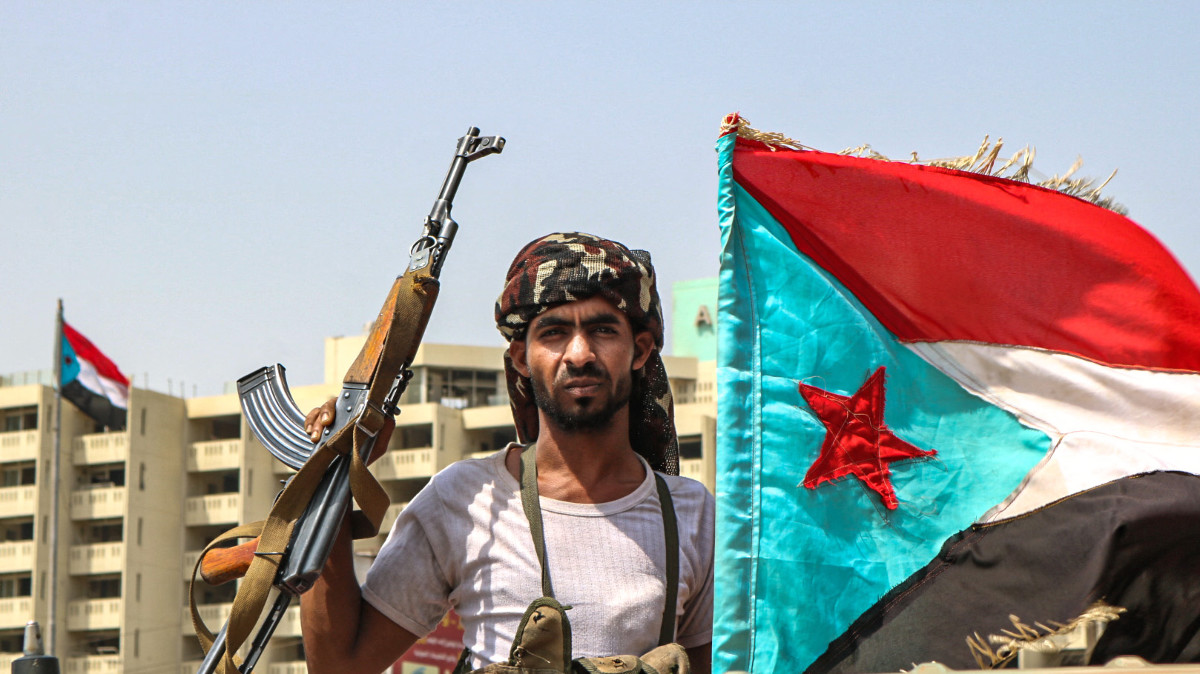
    A significant rupture has emerged within the Gulf coalition in Yemen, as Saudi Arabia conducted precision airstrikes targeting forces aligned with its former partner, the United Arab Emirates. The bombing of the port of al-Mukalla, which Riyadh claims interdicted a UAE-linked weapons shipment destined for the separatist Southern Transitional Council (STC), marks an unprecedented escalation between the two regional powers.

    The confrontation stems from the STC’s recent offensive against Saudi-backed government troops, an action Saudi authorities allege was fueled by Emirati pressure and support. The Saudi foreign ministry condemned these moves as ‘highly dangerous’ and a violation of the coalition’s founding principles. In a swift response, the UAE’s foreign ministry rebuked the accusations and subsequently announced a ‘comprehensive assessment’ of its role, culminating in a decision to formally end its military mission in Yemen.

    Diplomatic sources revealed to Middle East Eye that the Saudi strikes surprised both Emirati leadership and U.S. officials, indicating a severe breakdown in communication. Analysts now assess the strategic advantages each nation brings to the potential conflict. While the UAE commands an extensive network of proxy militias estimated at up to 200,000 fighters, Saudi Arabia holds superior control over key logistical channels—airspace, maritime routes, and land border crossings—which could severely restrict Emirati efforts to rearm allies like the STC.

    Experts including Mohammed al-Basha and Hesham Alghannam note that Saudi Arabia is leveraging international legitimacy, economic influence, and hard-learned lessons from its previous campaign against the Houthis. The open desert terrain in southern Yemen, unlike the northern mountains, gives the Saudi air force a distinct advantage against STC forces.

    The underlying tensions, simmering for years, have been exacerbated by Saudi Arabia’s independent negotiations with the Houthi rebels, a process that sidelined the UAE. This fissure has created a complex multi-front conflict, with analysts warning that the Iran-aligned Houthis may emerge as the primary beneficiaries of the intra-Gulf rivalry. The situation presents a volatile landscape where previous alliances have shattered, raising the specter of prolonged instability and a reconfiguration of power dynamics throughout Yemen and the broader region.

  • Bangladesh to give state funeral for ex-PM Khaleda Zia; 3-day mourning period declared

    Bangladesh to give state funeral for ex-PM Khaleda Zia; 3-day mourning period declared

    Bangladesh has initiated three days of national mourning to honor former Prime Minister Khaleda Zia, who passed away Tuesday at age 80. The government will conduct an elaborate state funeral ceremony on Wednesday afternoon, with prayers scheduled outside the national parliament building in Dhaka.

    As the first female prime minister of this South Asian nation of 170 million people, Zia pioneered women’s leadership in Bangladeshi politics. Her educational stipend programs for girls transformed opportunities for female students nationwide. Despite significant health challenges and political imprisonment in recent years, Zia remained politically active until her final days, with nomination papers filed on her behalf for upcoming February elections just hours before her death.

    The current interim government under Nobel laureate Muhammad Yunus acknowledged Zia as “a great guardian” of the nation, recognizing her role in repeatedly restoring democratic governance. Security forces have been extensively deployed throughout the capital, with flags flying at half-mast as the country prepares for anticipated large public gatherings.

    Zia’s son, Tarique Rahman, recently returned from 17 years abroad and is viewed as a potential prime ministerial candidate should their Bangladesh Nationalist Party secure victory in the upcoming elections. The funeral will see diplomatic representation from regional powers, with both Indian and Pakistani foreign ministers attending—marking significant diplomatic engagements since the overthrow of Zia’s longtime rival, Sheikh Hasina, last year.

    Zia’s body will be laid to rest beside her late husband, President Ziaur Rahman, who was assassinated in 1981. Her political career spanned decades, featuring both historic achievements and intense rivalry with Hasina’s Awami League, which continues to operate from exile after Hasina’s recent conviction and forced departure from power.

  • China’s Xi hails nation’s technological progress and renews promise to take back Taiwan

    China’s Xi hails nation’s technological progress and renews promise to take back Taiwan

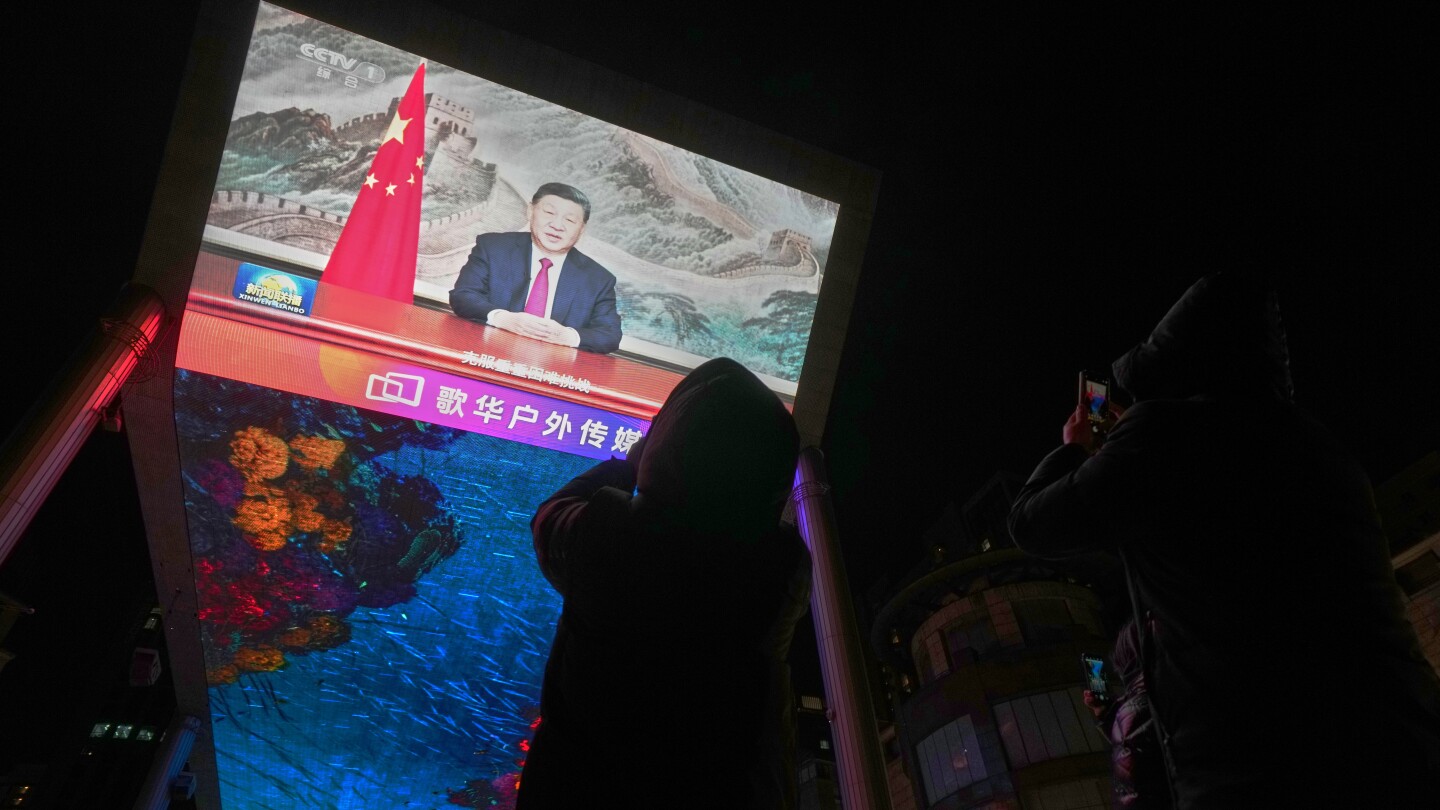
    In his nationally televised New Year’s Eve address, Chinese President Xi Jinping celebrated China’s technological breakthroughs across multiple strategic sectors while firmly reiterating Beijing’s position on Taiwan reunification. The presidential speech, broadcast through state media channels, emphasized China’s progress in artificial intelligence, semiconductor development, military technology, and space exploration.

    Visual accompaniments to the address featured humanoid robots performing martial arts demonstrations and newly operational hydropower projects, symbolizing the nation’s technological modernization. “We sought to energize high-quality development through innovation,” President Xi stated, acknowledging public contributions to China’s economic expansion throughout the previous five-year planning cycle.

    The address coincided with heightened military activity near Taiwan, where China conducted two days of exercises involving rocket launches, aircraft sorties, and naval deployments. These demonstrations responded to anticipated United States arms sales to the self-governed island.

    President Xi framed the Taiwan matter through emotional rhetoric, asserting: “We Chinese on both sides of the Taiwan Strait share a bond of blood and kinship. The reunification of our motherland, a trend of the times, is unstoppable.”

    Taiwanese President Lai Ching-te denounced the military maneuvers while committing to responsible management of cross-strait relations, pledging neither escalation nor provocation. The address also highlighted China’s growing global diplomatic presence, referencing high-level international events hosted throughout the past year.

    This speech arrives as China prepares to formulate its next five-year economic plan, scheduled for discussion at March’s legislative session, with increased emphasis on technological self-reliance amid tightening U.S. export controls on advanced semiconductors and related technologies.

  • What to know about the mystery of Malaysia Airlines Flight 370 as the search resumes

    What to know about the mystery of Malaysia Airlines Flight 370 as the search resumes

    A decade after one of aviation’s most perplexing disappearances, the search for Malaysia Airlines Flight MH370 has officially recommenced, rekindling hopes for resolution. On Wednesday, Malaysian authorities confirmed that Ocean Infinity, a U.S. marine robotics firm, has initiated a new underwater search operation utilizing advanced technology and revised data analysis.

    The Boeing 777 vanished on March 8, 2014, during its routine flight from Kuala Lumpur to Beijing with 239 passengers and crew aboard. After its final communication at 39 minutes into the flight, the aircraft’s transponder ceased transmission. Military radar tracked an unexpected reversal over the Andaman Sea, while satellite data indicated the plane continued flying for hours before presumably crashing into the remote southern Indian Ocean due to fuel exhaustion.

    Previous multinational search efforts, including the largest underwater operation in history covering 120,000 square kilometers, yielded minimal results. Only a few fragments—notably a wing flaperon discovered on Réunion Island in 2015—have been confirmed as wreckage from the missing aircraft. The absence of bodies, substantial debris, or definitive explanations has perpetuated the mystery.

    Theories regarding the disappearance range from mechanical failure and cabin depressurization to deliberate intervention. Malaysian investigators in 2018 eliminated suspicion of passengers and crew but acknowledged possible “unlawful interference” given the intentional severance of communications.

    The passenger manifest represented global diversity, with individuals from China, the United States, Indonesia, France, Russia, and other nations. Among them were technology professionals, artists, families with children, and two Iranians traveling on stolen passports.

    The current search, operating under a “no-find, no-fee” agreement worth $70 million upon success, will focus on a targeted 15,000-square-kilometer area identified through enhanced debris drift studies and technological advancements. Initially paused in April due to adverse weather conditions, the operation will resume intermittently from December 30 for 55 days in zones deemed most probable for locating wreckage.

    Ocean Infinity has collaborated with numerous experts to refine search parameters but has not disclosed whether new evidence prompted the revised approach. The immense challenges of searching the deep, volatile Indian Ocean—where depths average 4 kilometers—continue to complicate recovery efforts.

  • China announces it ‘successfully completed’ Taiwan military maneuvers

    China announces it ‘successfully completed’ Taiwan military maneuvers

    The People’s Liberation Army of China announced on New Year’s Eve the successful completion of its two-day “Justice Mission 2025” military exercises in waters surrounding Taiwan. Senior Captain Li Xi, spokesperson for the PLA’s Eastern Theater Command, stated that the operations had thoroughly evaluated the integrated joint combat capabilities of Chinese forces while demonstrating heightened alert status against perceived separatist activities.

    The drills, characterized by their substantial scale and strategic positioning, represented Beijing’s latest assertion of its territorial claims over the self-governed island. While official announcements provided minimal operational details beyond rousing promotional videos accompanied by martial music, the exercises concluded amid heightened regional tensions during the final days of 2025.

    Chinese President Xi Jinping indirectly referenced the Taiwan situation in his annual New Year’s address, emphasizing the “blood and kinship” bonds between Chinese people across the Strait and declaring national reunification as “an unstoppable trend of the times.”

    The military maneuvers drew significant international concern, with Japan’s Foreign Ministry characterizing them as tension-escalating actions and reaffirming its preference for peaceful resolution through dialogue. This response followed earlier statements by Japan’s prime minister suggesting potential military intervention should Taiwan face direct attack.

    The United States faced Chinese criticism following its December announcement of a substantial arms sales package to Taiwan, potentially representing the largest such military aid package if approved by Congress. Philippine Defense Minister Gilberto C. Teodoro Jr. expressed deep concern about China’s actions, noting their implications for regional stability in the broader Indo-Pacific community.

    Despite the heightened tensions, former U.S. President Donald Trump downplayed concerns, citing his positive relationship with Xi Jinping and noting China’s long history of conducting naval exercises in the area.

  • Pacifist Japan has slowly transformed from exclusively self-defense to a military buildup

    Pacifist Japan has slowly transformed from exclusively self-defense to a military buildup

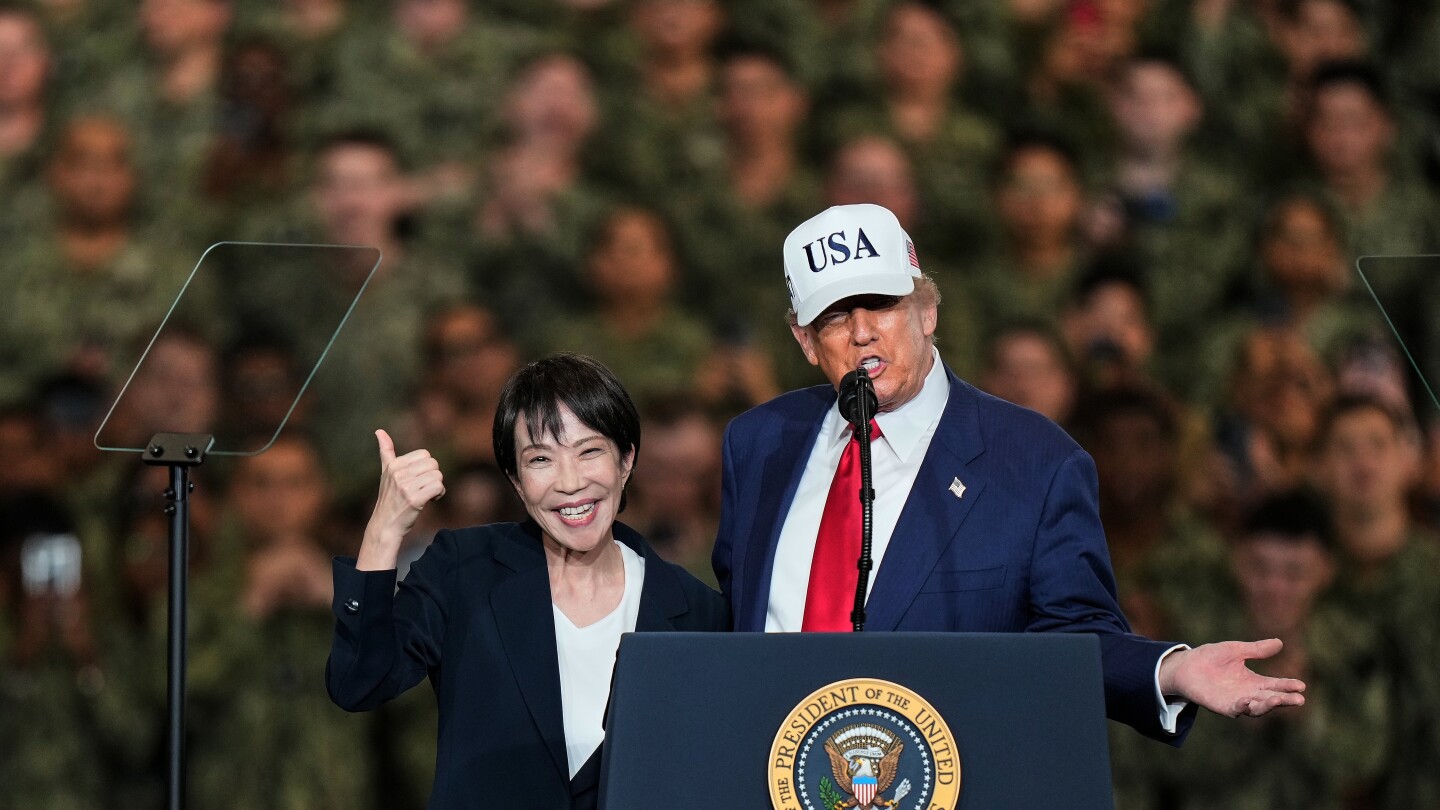
    Japan is accelerating a historic shift in its defense posture, embarking on an ambitious military modernization program that includes doubling annual arms spending to counter perceived threats from China. This strategic pivot occurs as Prime Minister Sanae Takaichi, known for her hawkish security views, assumes leadership amid increasing pressure from the United States for greater military cooperation in Asia.

    The government maintains that Japan remains committed to peaceful principles while building a more self-reliant defense capability to deter Chinese aggression. However, Beijing and other critics argue these developments represent a fundamental departure from Japan’s postwar pacifist constitution. Tensions escalated when Takaichi suggested that Chinese military action against Taiwan could justify Japanese intervention—a significant break from previous leaders’ strategic ambiguity.

    Japan’s constitutional transformation has evolved over decades. Article 9 of the U.S.-drafted 1947 constitution originally renounced war and prohibited maintaining military forces. The creation of the Self-Defense Forces in 1954 began a gradual reinterpretation of these restrictions. A landmark change occurred in 2014 under Prime Minister Shinzo Abe, who reinterpreted Article 9 to allow collective self-defense, enabling Japan to use force if allies are attacked.

    Recent Chinese military activities have intensified Tokyo’s concerns. In December, Chinese aircraft locked targeting radars on Japanese planes during carrier drills near southwestern Japan. Two Chinese carriers were also spotted operating near Iwo Jima—the first such occurrence—demonstrating Beijing’s expanding military reach near disputed territories.

    Takaichi’s administration recently approved a record defense budget exceeding 9 trillion yen ($58 billion) for the coming year, focusing on developing strike-back capabilities with cruise missiles and unmanned systems. The government plans to further relax arms export restrictions and promote defense industry cooperation with allies like the UK, Italy, and Australia through joint projects including next-generation fighter jets.

    A government-commissioned panel has even proposed developing nuclear submarines for extended deterrence—a controversial suggestion for the only nation to suffer atomic bombings. While Japan officially maintains its three non-nuclear principles, Defense Minister Shinjiro Koizumi acknowledged considering all options for new submarines, indicating continued evolution in Japan’s security posture.