标签: Asia

亚洲

  • Xi replies to French teens’ China dream

    Xi replies to French teens’ China dream

    In an extraordinary display of cultural diplomacy, Chinese President Xi Jinping has personally responded to a group of French students who expressed their fascination with Chinese language and culture. The correspondence began when more than twenty teenagers from Ecole Internationale PACA in southern France composed a collective letter to President Xi, sharing their enthusiasm for Mandarin studies and their aspiration to visit China.

    The students, primarily high schoolers enrolled in Chinese-language courses, initiated the communication after learning about French President Emmanuel Macron’s planned delegation to China. Their teacher, Hu Peixin—the institution’s first Chinese instructor—facilitated the unusual diplomatic outreach that culminated in Thursday’s historic response from Beijing.

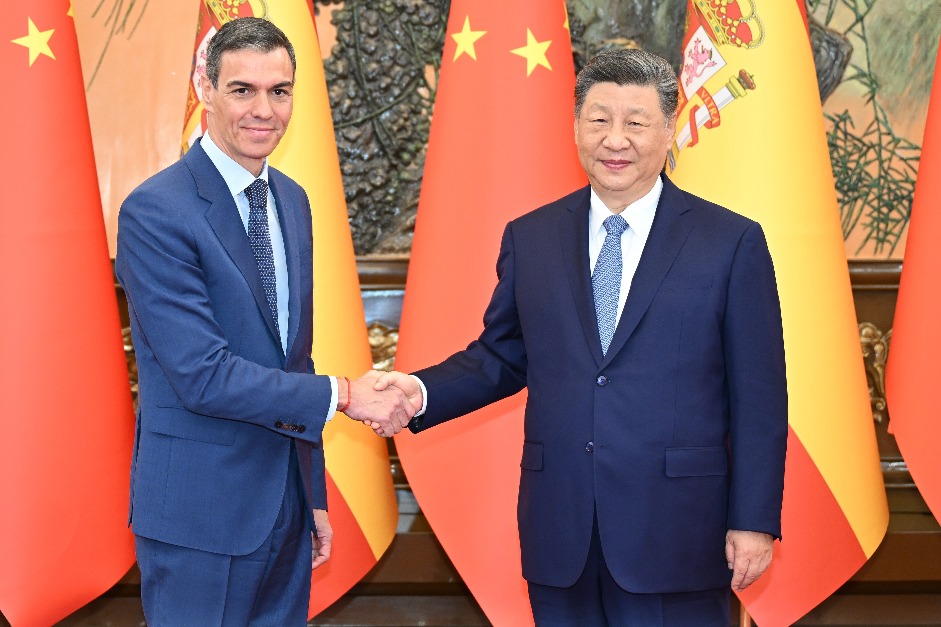
    President Xi’s reply emphasized China’s welcoming stance toward international youth, explicitly inviting these French students along with their European peers to experience China’s multidimensional reality through educational visits and tourism. The Chinese leader highlighted the growing global significance of Mandarin, noting that by September 2025, 86 nations had integrated Chinese into their national curricula, with over 200 million international learners worldwide.

    Seventeen-year-old Isis Dauvillier expressed profound honor at receiving the presidential response, stating, ‘We genuinely wish to witness China’s architectural marvels and cultural sites previously known only through textbooks.’ Despite initial difficulties with character recognition, Dauviviller and her classmates have progressed to reading Chinese news reports, enhancing their historical understanding.

    Sixteen-year-old Arnaud Quintas, who began systematic Chinese studies five years ago, anticipates visiting Sichuan’s giant panda reserves and discussing technological advancements with Chinese counterparts. School director Nicolas Debenne described the presidential communication as emotionally overwhelming, emphasizing that ‘as ordinary citizens, we never anticipated correspondence from a president.’

    Debenne further articulated the transformative power of language acquisition in building international bridges: ‘When you share a language, communication becomes significantly more effective. This linguistic connection represents a crucial pathway for strengthening Franco-Chinese friendship.’ The school administrator noted that Mandarin studies have not only improved academic performance but also fostered greater awareness of China’s global contributions and research achievements.

    Teacher Hu Peixin believes this exchange will become a cherished memory that broadens students’ worldview and boosts their confidence in pursuing global opportunities. The incident reflects deepening bilateral relations and growing European interest in Chinese language acquisition as a tool for enhanced economic, diplomatic, and cultural connectivity.

  • Ten killed in fire at India hospital intensive care unit

    Ten killed in fire at India hospital intensive care unit

    A devastating overnight fire at SCB Medical College and Hospital in Cuttack, Odisha has resulted in ten fatalities, with all victims confirmed as patients receiving treatment in the trauma care intensive care unit. The blaze, which ignited approximately at 02:30 local time on Monday (21:00 GMT Sunday), is preliminarily attributed to an electrical short circuit.

    State Chief Minister Mohan Charan Majhi confirmed that eleven hospital staff members sustained burn injuries during heroic rescue attempts to evacuate patients from the rapidly spreading flames. These personnel, including medical staff and security, reportedly ‘risked their lives’ during the emergency operation according to the Chief Minister’s statements to press representatives.

    The fire primarily affected the trauma care ICU while also spreading to adjacent intensive care units and patient wards. Emergency response teams successfully brought the conflagration under control, with evacuated patients relocated to other departments within the same medical facility—one of Odisha’s largest government-run hospitals.

    This incident represents the latest in a series of tragic hospital fires across India. Historical precedents include last October’s ICU fire in Rajasthan that killed six critically ill patients, the 2024 neonatal ICU blaze in Jhansi that claimed ten newborn lives, and separate 2021 fires in Virar and Maharashtra that resulted in 13 COVID-19 patient fatalities and 10 infant deaths respectively.

    The Odisha state government has announced financial compensation for victims’ families and initiated a judicial inquiry into the incident. Chief Minister Majhi pledged strict action against any parties determined responsible for the tragedy.

    Electrical short circuits remain a predominant cause of hospital fires throughout India, with medical facilities presenting particular vulnerability due to extensive electrical equipment, oxygen systems, and the inherent challenges of evacuating immobile patients during emergencies.

  • Myanmar’s parliament meets for first time in 5 years with military controlling most seats

    Myanmar’s parliament meets for first time in 5 years with military controlling most seats

    NAYPYITAW, Myanmar — Myanmar’s political landscape witnessed a significant development on Monday as the nation’s parliamentary chambers reconvened for the first time in over five years. This legislative resurrection follows controversial elections conducted during December and January that excluded major opposition factions, effectively cementing military dominance within the government structure.

    The military establishment, which orchestrated a forceful takeover from Aung San Suu Kyi’s democratically elected government in February 2021, has governed without legislative oversight until now. The recently concluded electoral process was promoted by authorities as a transitional step toward democratic normalization, though international observers have questioned its legitimacy.

    Statistical analysis reveals the military and its political allies command nearly 90% of seats across both parliamentary chambers. This overwhelming majority was achieved through the systematic exclusion of Myanmar’s primary opposition parties, including Suu Kyi’s National League for Democracy, which either faced disqualification or voluntarily abstained from participating due to perceived unfair electoral conditions.

    The ceremonial commencement of the 373-seat lower house proceeded under stringent security measures in the capital city. Roads surrounding the parliamentary complex, recently renovated following earthquake damage, were sealed by security personnel who conducted thorough vehicle inspections for potential explosives. Delegates adorned in traditional attire participated in the opening session amid this heightened security environment.

    The 213-seat upper house is scheduled to convene on Wednesday, with regional parliamentary sessions following within 48 hours. Constitutional provisions drafted by the military reserve 166 of the 586 combined parliamentary seats for military appointment, while the Union Solidarity Development Party secured 339 additional seats. The remaining positions were distributed among 21 minor parties, each obtaining between one and twenty seats.

    This parliamentary reconstitution occurs against the backdrop of escalating civil conflict triggered by the 2021 coup. United Nations Special Rapporteur Tom Andrews has explicitly urged the global community to reject both the electoral outcomes and subsequent power distribution arrangements. Meanwhile, an opposition shadow parliament comprising lawmakers barred from assuming their positions in 2021 conducted parallel proceedings online, asserting its legitimacy as Myanmar’s true legislative body.

  • Trump suggests he may delay China trip as he pressures Beijing for help with Strait of Hormuz

    Trump suggests he may delay China trip as he pressures Beijing for help with Strait of Hormuz

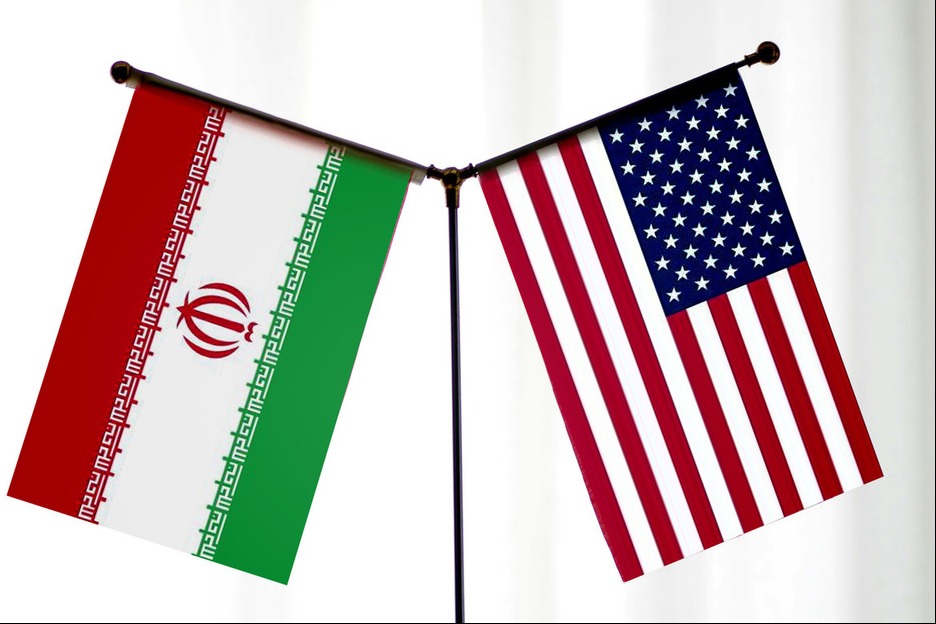
    WASHINGTON — President Donald Trump has indicated a potential postponement of his scheduled state visit to China, leveraging diplomatic pressure on Beijing to contribute naval assets to secure the Strait of Hormuz amidst escalating tensions with Iran. In a Sunday interview with the Financial Times, Trump emphasized China’s strategic dependence on Middle Eastern oil exports as justification for participating in a multinational coalition to safeguard critical oil shipping routes.

    The geopolitical landscape has undergone significant transformation following recent U.S.-Israeli military operations against Iran, which triggered substantial disruptions in global oil flows and consequent price surges. Trump explicitly connected Chinese cooperation to the timing of his anticipated meeting with President Xi Jinping, stating authorities would ‘like to know’ Beijing’s position before proceeding with travel arrangements.

    This diplomatic maneuvering occurs alongside ongoing trade negotiations between U.S. Treasury Secretary Scott Bessent and Chinese Vice Premier He Lifeng, who convened Monday in Paris to discuss bilateral economic concerns. While both nations maintain a temporary tariff truce, the potential cancellation of presidential talks could reignite trade tensions that have previously threatened global economic stability.

    The administration’s evolving stance on Hormuz security reflects practical challenges after initial assertions of unilateral U.S. naval escorts for oil tankers. With no nations yet formally committing military resources to the proposed coalition, Trump revealed discussions with approximately seven countries regarding potential participation while specifically highlighting China’s distinctive strategic position due to its substantial energy import requirements.

    Economic implications extend beyond diplomacy as rising oil prices affect American consumers during the midterm election season. Concurrently, China faces domestic economic pressures having recently revised its 2026 growth projections downward to 4.5-5%, representing its slowest anticipated expansion in decades. prolonged Strait of Hormuz disruptions could further strain Beijing’s economic planning.

    The Chinese Embassy in Washington offered measured response to coalition proposals, emphasizing the international community’s shared interest in regional stability without committing to military involvement. A spokesperson noted China’s continued communication with conflict participants while positioning the nation as a constructive partner for de-escalation efforts.

  • London Al-Quds rally defies restrictions amid Gaza war anger

    London Al-Quds rally defies restrictions amid Gaza war anger

    Central London witnessed a significantly diminished Al-Quds Day rally on Sunday after British authorities imposed unprecedented restrictions on the annual event. The Metropolitan Police, acting on government approval, prohibited the traditional procession through the capital, permitting only a stationary demonstration amid concerns about potential public disorder.

    The Islamic Human Rights Commission (IHRC), which organizes the UK event typically held near Ramadan’s conclusion, strongly condemned the police decision. Instead of their customary march through London streets, participants were confined to a static gathering, a limitation that substantially reduced attendance compared to previous years.

    Assistant Commissioner Ade Adelekan acknowledged the lower turnout, noting that ‘fewer people attended than we had anticipated,’ suggesting that the imposed conditions led many supporters to voluntarily abstain from participation.

    This year’s rally focused primarily on protesting Israel’s military campaign in Gaza, which organizers termed a ‘genocide.’ Demonstrators waved Palestinian flags while speakers denounced Western support for Israel’s operations that have resulted in significant Palestinian casualties and widespread destruction in the besieged territory. Additional banners expressed opposition to potential conflict with Iran, bearing slogans such as ‘Hands Off Iran.’

    Police reported twelve arrests during the event for various offenses including alleged support for proscribed organizations, public disorder offenses, and abusive behavior. Authorities also confirmed investigations into potentially inflammatory chants delivered by a speaker at the protest.

    Home Secretary Shabana Mahmood supported the police request to ban the march, citing legitimate concerns about ‘serious public disorder’ potentially arising from the demonstration. The government’s decision reflects ongoing tensions surrounding public expressions of support for Palestinian causes amid the ongoing conflict in Gaza.

  • Kpop Demon Hunters wins Oscar for best animated film

    Kpop Demon Hunters wins Oscar for best animated film

    In a historic moment for both animation and Korean cultural representation, the supernatural musical film ‘Kpop Demon Hunters’ claimed the Academy Award for Best Animated Feature at Sunday’s Oscar ceremony. The Netflix-produced phenomenon, which has captivated global audiences since its summer release, triumphed over formidable competition to secure Hollywood’s highest animation honor.

    Directors Maggie Kang and Chris Appelhans, alongside producer Michelle LM Wong, accepted the award to enthusiastic applause. Kang, receiving her first Oscar nomination and win, delivered an emotionally charged acceptance speech dedicating the victory to Korea and Koreans worldwide. ‘For those of you who look like me, I’m so sorry that it took us so long to see us in a movie like this. But it is here, and that means the next generations don’t have to go longing,’ she stated, highlighting the film’s significance for Asian representation in mainstream cinema.

    The innovative film blends K-pop spectacle with supernatural adventure, following a girl group that weaponizes their vocal talents against demonic forces, including a soul-capturing boy band from the underworld. Its cultural impact extends beyond animation, with the soundtrack dominating global music charts and becoming a commercial staple in retail spaces worldwide.

    Lead vocalists Ejae, Rei Ami, and Audrey Nuna attended the ceremony in golden gowns—a deliberate homage to ‘Golden,’ the film’s breakout ballad that earned an Oscar nomination for Best Original Song. This follows the film’s previous awards sweep, having already secured Golden Globes for both Best Animated Feature and Best Original Song, while ‘Golden’ recently made history as the first K-pop track to win a Grammy Award.

  • ‘I cry every time’: How Kpop Demon Hunters went viral

    ‘I cry every time’: How Kpop Demon Hunters went viral

    The unprecedented triumph of ‘Kpop Demon Hunters’ at the 2026 Academy Awards, where it secured the Oscar for Best Animated Feature, represents a cultural watershed moment in global entertainment. This groundbreaking film has captivated audiences worldwide since its Netflix debut last summer, achieving what few animated features have accomplished: genuine cross-generational appeal.

    At San Francisco’s elementary schools, children like eight-year-old Oona Herman trade character stickers as prized commodities while attending themed birthday parties featuring movie merchandise and life-sized character cutouts. Yet the phenomenon extends far beyond childhood fascination. Parents like Christine Kao find themselves unexpectedly moved by the film’s emotional depth, frequently moved to tears by its narrative beauty despite initial expectations of mere children’s entertainment.

    The film’s genius lies in its multi-layered construction. On its surface, it presents as a vibrant musical adventure where a K-pop girl group battles demons through the power of their golden voices. Yet beneath this colorful exterior lies a profound exploration of identity through protagonist Rumi’s struggle with her dual heritage as both demon hunter and half-demon. This tension resonates particularly with Asian American audiences who recognize the cultural nuances of family expectations and personal identity.

    Musically, the film represents an evolutionary leap in cultural fusion. The soundtrack—crafted by an international team of K-pop and Hollywood producers—creates what musicologist Ray Seol of Berklee College describes as ‘a clever intersection between K-pop and Western pop music.’ The producers engineered a ‘global sound’ that maintains K-pop’s essential character while incorporating familiar Western pop elements, making it accessible to international audiences while preserving its authentic Korean roots.

    Lyrically, the songs transcend typical animated film music, serving as narrative vehicles that explore themes of self-discovery and identity. Tracks like ‘What It Sounds Like’ function on multiple levels, simultaneously referencing physical markings that reveal Rumi’s heritage while metaphorically addressing emotional scars and personal growth.

    The film arrives at a pivotal moment in Korean cultural expansion, building upon the foundation laid by Gangnam Style’s global breakthrough in 2012. Where BTS and Blackpink paved the way for K-pop’s Western acceptance, ‘Kpop Demon Hunters’ represents the maturation of this cultural movement into a comprehensive ‘K-everything’ phenomenon that encompasses animation, storytelling, and cultural diplomacy. South Korean President Lee Jae Myung has explicitly embraced this cultural output as soft power instrument for diplomatic and economic advancement.

    From merchandise shortages that surprised Netflix to academic analysis at institutions like Yale University, where sociology professor Dr. Grace Kao studies its cultural impact, the film has demonstrated an extraordinary capacity to bridge demographic and cultural divides while advancing the ongoing global influence of Korean creative industries.

  • South Africa beats Fiji to win rugby sevens world series. New Zealand wins women’s title

    South Africa beats Fiji to win rugby sevens world series. New Zealand wins women’s title

    In a climactic conclusion to the 2026 World Rugby Sevens series, South Africa emerged victorious after a tense championship final against Fiji at the New York Sevens tournament. The two teams entered Sunday’s decisive match tied atop the season standings, transforming the final into an ultimate series decider.

    The South African squad established early dominance with Selvyn Davids scoring the sole try of the first half. Tristan Leyds extended their advantage to 10-0 just two minutes into the second period with another crucial try. Fiji mounted a formidable comeback in the closing moments as Terio Veilawa crossed the line, narrowing the gap to 10-7 with merely two minutes remaining.

    The match reached its peak intensity when Fiji gained final possession, advancing within five meters of the South African try line. Their championship hopes ended abruptly with a knock-on that terminated the attacking opportunity, securing South Africa’s double victory in both the tournament and overall series.

    South African captain Impi Visser, celebrating his 50th World Series match, praised the monumental defensive effort: “Fiji brought out the best in us. It’s remarkable how everything culminated in this final—as if perfectly scripted.”

    In the women’s championship, New Zealand delivered a spectacular comeback against Australia, overcoming a 21-5 deficit to claim a 22-21 victory. Despite having already secured the series title by reaching the semifinals, the Black Ferns demonstrated exceptional determination to conclude their season triumphantly.

    The match saw Australian sisters Teagan and Maddison Levi combine for three tries, establishing what appeared to be an insurmountable lead. New Zealand’s resilience manifested through tries from Alena Saili and a double from Kelsey Tineti, setting the stage for Katelyn Vahaakolo’s match-winning try converted in the final minute.

    New Zealand captain Risi Pouri-Lane emphasized the team’s collective belief: “Final matches can swing either way, but grinding through adversity when odds are against you truly matters. The unwavering conviction within every team member proved decisive.”

  • Iraq warns Kurdish authorities not to get drawn into war on Iran, sources say

    Iraq warns Kurdish authorities not to get drawn into war on Iran, sources say

    The Iraqi federal government has issued a stern warning to the Kurdistan Regional Government (KRG) regarding the potential involvement of Kurdish factions in the ongoing US-Israeli military campaign against Iran. According to multiple officials from Iraq, Kurdistan, and Turkey who spoke with Middle East Eye, Baghdad delivered the ultimatum earlier this week, threatening to deploy federal forces to secure border areas if the KRG fails to prevent Kurdish groups from joining the conflict.

    This development emerges amid growing regional apprehensions that Iranian Kurdish opposition parties based in Iraqi Kurdistan might be pressured by Washington to initiate cross-border operations. These groups, possessing thousands of well-organized fighters, represent the most structured segment of Iran’s fragmented opposition. Their involvement, however, would almost certainly provoke severe retaliation from Tehran, potentially dragging Iraq deeper into the escalating regional warfare.

    Iran has previously threatened to strike Kurdish bases in Iraq if utilized for attacks, while Turkey consistently views armed Kurdish movements as a fundamental national security threat. Kurdish officials, including Qubad Talabani, KRG Deputy Prime Minister, have publicly distanced themselves from the conflict, emphasizing that participation could unleash unpredictable chaos across the region. Talabani explicitly stated, “This is not our war, and we’ve made that very clear.”

    The situation is further complicated by ambiguous signals from the US administration. President Donald Trump initially appeared to encourage Kurdish engagement, suggesting they would need to “choose a side,” but later contradicted this by stating, “I don’t want the Kurds to go in. The war is complicated enough as it is.”

    Despite this, two prominent exiled groups—the Free Life Party of Kurdistan (PJAK) and the Democratic Party of Iranian Kurdistan—have not ruled out joining the war. PJAK recently called for Kurds in western Iran to form local committees, with senior commander Mazloum Haftan articulating goals for a “democratic and decentralised Iran” rather than alignment with either Washington or Tehran.

    The conflict originated on February 28th with US-Israeli air and missile strikes targeting Iran’s military infrastructure and nuclear program, described by Washington as efforts to cripple Tehran’s capabilities. Iran denounced the attacks as unprovoked aggression aimed at regime change. The warfare has since expanded, with Iranian retaliatory strikes on Israeli territory, US bases in the Gulf, and regional energy facilities, significantly escalating tensions across Middle Eastern shipping lanes and strategic locations.

  • Veteran Al Jazeera journalist Jamal Rayyan dies aged 72

    Veteran Al Jazeera journalist Jamal Rayyan dies aged 72

    The Arab media landscape is mourning the loss of Jamal Rayyan, the pioneering broadcaster and foundational voice of Al Jazeera, who passed away at age 72. With a distinguished career spanning over five decades, Rayyan’s death signifies the closing of a transformative chapter in modern Arab journalism.

    Rayyan’s legacy is inextricably linked to the rise of Al Jazeera, where he made history as the first presenter to appear on the network during its 1996 launch broadcast. His authoritative delivery and distinctive style became synonymous with the channel’s identity, helping establish it as a formidable international broadcaster that challenged conventional media narratives across the region.

    Born in Tulkarm in the occupied West Bank on August 23, 1953, Rayyan held Jordanian citizenship. His Palestinian roots profoundly influenced his perspective throughout a career that would span multiple countries and major media institutions. He began his journey in 1974 as a broadcaster on Jordanian radio and television before expanding his reach to international platforms including the Korean Broadcasting System, Emirates Television, and the BBC.

    For nearly three decades, Rayyan remained one of Al Jazeera’s most recognizable and trusted faces, presenting news and political programs that reached millions of viewers across the Arab world and beyond. Colleagues and audiences alike remember him as a transformative professional who expanded spaces for political debate and public discussion through Arabic-language broadcasting.

    Rayyan’s passing represents the end of an era for the generation of journalists who redefined Arab media in the late 20th century. Throughout his half-century career, he left an indelible imprint on television journalism and inspired countless younger reporters entering the field. He will be remembered not only as a pioneering broadcaster but also as an enduring symbol of Al Jazeera’s formative years, when the network emerged as one of the most influential voices in regional media.