标签: Asia

亚洲

  • Beijing tackles pollen levels as spring blooms

    Beijing tackles pollen levels as spring blooms

    As Beijing enters peak cypress pollen dispersion season in mid-March, municipal authorities have implemented a comprehensive mitigation strategy combining technological interventions and ecological management. The Beijing Municipal Forestry and Parks Bureau has coordinated round-the-clock operations targeting high-risk zones including residential communities, educational institutions, and medical facilities.

    The current pollen season, which commenced around March 8 according to expert analysis, has prompted deployment of three primary countermeasures: high-frequency water spraying, strategic pruning of male cypress branches, and application of environmentally-friendly biological agents. These pollen fixatives and control agents represent Beijing’s latest innovation in balancing ecological preservation with public health concerns.

    District-level initiatives implemented preventive measures as early as autumn 2025, with Haidian district conducting extensive pruning of pollen-producing cones during dormancy periods. Major green spaces including Temple of Heaven and Ditan Park have intensified suppression efforts following last year’s remarkable phenomenon where billions of pollen particles created visible golden hazes that diffused sunlight into ethereal patterns.

    While visually striking, these pollen clouds created severe health impacts for residents like 27-year-old Jin, who experienced debilitating allergy symptoms including nasal congestion, sneezing, and multi-system itching that diminished her quality of life. This year, she reports noticeable improvement attributable to the enhanced mitigation measures.

    Director Jiang Yingshu of the bureau’s science and technology division emphasized the need for scientific approaches that acknowledge both the ecological value of cold-resistant cypress species and their public health implications. Approximately 168,000 male cypress trees within the Fifth Ring Road area contribute to pollen dispersion patterns influenced by urban heat island effects and prevailing winds, typically creating higher concentrations in southwestern urban zones.

    Medical experts from Beijing Tongren Hospital recommend complementary personal protection strategies during peak dispersion hours (10:00-17:00), including mask usage, protective eyewear, and enhanced indoor air filtration. Chief physician Ouyang Yuhui advises prompt medical consultation for persistent symptoms despite these comprehensive mitigation efforts.

  • US forces strike Iranian missile sites near Strait of Hormuz: command

    US forces strike Iranian missile sites near Strait of Hormuz: command

    In a significant military escalation, United States forces launched precision strikes against hardened Iranian missile installations positioned along Iran’s coastline adjacent to the strategically vital Strait of Hormuz. The operation was confirmed Tuesday by the US Central Command via an official statement on social media platform X.

    The tactical execution involved deploying multiple 5,000-pound deep penetrator munitions specifically designed to destroy fortified underground targets. The strikes targeted Iranian military infrastructure that posed potential threats to one of the world’s most crucial maritime chokepoints for global oil transportation.

    This military action represents a substantial escalation in regional tensions, marking one of the most direct confrontations between US and Iranian forces in recent years. The Strait of Hormuz serves as a critical passageway for approximately 21% of global petroleum consumption, making stability in the region essential to international energy markets.

    The operation follows increasing concerns about Iran’s military positioning along this strategic waterway, though specific provocations leading to this precise military response were not detailed in the initial announcement. The use of specialized bunker-busting munitions indicates the hardened nature of the targeted facilities and the strategic intention to permanently disable these capabilities.

  • China, US stay in touch on date of Trump’s visit, says Chinese Foreign Ministry

    China, US stay in touch on date of Trump’s visit, says Chinese Foreign Ministry

    Beijing has confirmed ongoing diplomatic communications with Washington regarding the scheduling of former President Donald Trump’s potential visit to China. The development follows recent media speculation that had suggested a possible postponement of the visit linked to geopolitical tensions in the Middle East.

    Foreign Ministry spokesman Lin Jian addressed journalists during a regular press briefing, emphasizing that Chinese authorities have taken note of Washington’s official clarification denying any connection between the visit’s timing and the Strait of Hormuz situation. “China has noted that the US described such reports as completely false,” Lin stated, confirming that bilateral discussions about the visit’s arrangements continue through diplomatic channels.

    The original reports prompted a coordinated response from multiple high-ranking US officials on Monday. President Trump himself dismissed the speculation during White House remarks, asserting his anticipation for the visit while acknowledging current military engagements. “There’s no tricks to it,” Trump told reporters. “It’s very simple. We’ve got a war going on (with Iran).”

    US Treasury Secretary Scott Bessent characterized the media narrative as “false,” explicitly denying that the visit would be contingent on China’s involvement in policing the strategic waterway. White House Press Secretary Karoline Leavitt confirmed that the meeting remains secure though acknowledged potential logistical adjustments due to current military coordination requirements.

    The diplomatic exchange highlights the complex interplay between great power diplomacy and ongoing global security challenges, with both nations maintaining communication protocols despite competing priorities and international pressures.

  • Conservation passion for the wild at heart

    Conservation passion for the wild at heart

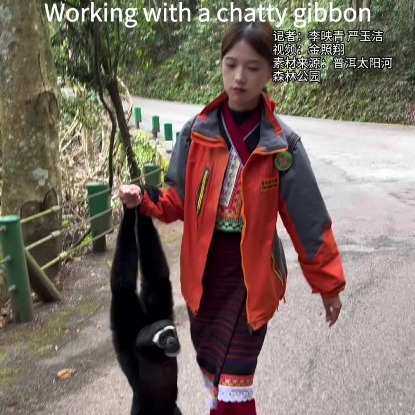
    Nestled within the mountainous terrain of northern Sichuan province, Tangjiahe National Nature Reserve stands as a testament to China’s commitment to ecological preservation. At dawn, Xiao Mei, head of research and monitoring, ascends the mist-shrouded slopes carrying essential equipment for her fieldwork—a routine she has maintained for twelve years.

    Established in 1978 and granted national status in 1986, this 40,000-hectare sanctuary serves as a vital conservation zone for endangered species including the giant panda, golden snub-nosed monkey, and the dove tree (Davidia involucrata)—a living fossil from the Quaternary glaciation period. The reserve also protects Fritillaria cirrhosa, a prized herb in traditional Chinese medicine.

    Xiao’s journey to becoming a conservation leader was unexpected. Initially employed as a fertilizer salesperson after studying plant protection in Chengdu, she applied to Tangjiahe without fully understanding the reserve’s significance. The primitive conditions—limited infrastructure, electricity shortages, and extreme isolation—nearly drove her away within her first three days.

    However, the forest itself transformed her perspective. Witnessing plants thriving in their natural rhythm and animals moving freely instilled a profound appreciation for ecological balance. This spiritual connection replaced her restlessness with scientific curiosity, leading her to analyze infrared camera footage and patrol data with renewed purpose.

    Tangjiahe’s ecological success is remarkable. As a core area within the Giant Panda National Park, its subtropical forests have avoided large-scale logging and maintained minimal human disturbance. Wildlife encounter rates exceed those of many reserves, with visitors frequently spotting various species.

    The panda population demonstrates exceptional stability—from 39 individuals in earlier surveys to 41 confirmed by 2025 monitoring data. Since 2016, the reserve has maintained a comprehensive DNA archive, collecting genetic samples from over 30 pandas annually to ensure accurate population tracking.

    This conservation model represents more than species protection—it embodies harmonious coexistence between humanity and nature, offering valuable insights for global wildlife preservation efforts.

  • Doughy delicacy: A matter of artistic taste

    Doughy delicacy: A matter of artistic taste

    In the coastal Jiaodong region of Shandong province, an ancient culinary tradition transforms simple dough into intricate edible sculptures that serve as cultural messengers. Each morning, steamers produce not just bread, but vibrant artistic creations: crimson fish with gleaming scales, majestic lions with flowing manes, and blushing peaches resembling those freshly picked from orchards.

    These elaborate creations, known as Jiaodong huabobo (flower-shaped buns), represent far more than sustenance. They embody a rich tradition of symbolic communication that has flourished for centuries. Gai Yaping, a 41-year-old recognized inheritor of this intangible cultural heritage from Yantai, notes that international visitors often express astonishment, questioning whether these exquisite pieces are actually meant for consumption.

    The answer reveals a deep cultural practice where baked artistry replaces conventional greeting cards. These sculpted delicacies mark life’s most significant moments – from month-old infants receiving tiger-shaped buns symbolizing strength and health, to elders celebrating longevity with peach-shaped creations, to weddings featuring peonies, dragons, phoenixes, and mandarin ducks expressing romantic devotion.

    While honoring generations-old customs, the craft has evolved significantly. Contemporary artisans employ natural colorants previously unavailable – spinach extract for verdant green, pumpkin for sunny yellow – creating a more vibrant palette than the traditionally white buns. The creation process remains resolutely hands-on, utilizing simple implements like scissors, chopsticks, and spoons to shape the dough.

    Mastering huabobo requires both artistic aptitude and scientific precision. As Gai explains, while sculpting allows creative freedom, fermentation follows exacting standards: “No matter how beautiful the sculpting is, if the fermentation fails, everything is ruined.” Steaming times vary dramatically based on size, ranging from ten minutes for 50-gram pieces to over an hour for 500-gram creations.

    This fusion of tradition and innovation has propelled huabobo into the digital marketplace. Online shops on platforms like JD.com and Taobao attract nationwide and international customers, with reviews praising their practicality and aesthetic appeal over conventional cakes. Gai’s final advice to consumers encapsulates the dual nature of her craft: “If you take one home, please don’t just leave it on a shelf. Eat it. We want the art to be beautiful to look at, and even better to taste.”

  • China a more dependable partner, Western polls find

    China a more dependable partner, Western polls find

    Recent opinion polls conducted across major Western nations reveal a profound transformation in global perceptions, positioning China as an increasingly reliable international partner and a recognized leader in technological innovation. The surveys indicate a notable decline in confidence toward the United States among its traditional allies, with China’s consistent policy framework and rapid developmental pace reshaping diplomatic perspectives.

    A comprehensive study conducted by U.S. digital media company Politico in collaboration with UK-based research consultancy Public First surveyed respondents across Canada, Germany, France, and the United Kingdom. The findings demonstrate that citizens in these historically US-allied nations now perceive China as a more dependable partner than the United States. The research, published on Sunday, further established China’s dominant position in advanced technological domains including artificial intelligence.

    This assessment aligns with broader global research conducted by the European Council on Foreign Relations in January, which documented growing international anticipation of China’s expanding influence throughout the coming decade. The survey indicated that Western populations increasingly regard China as either an ‘ally’ or ‘necessary partner’ for their respective nations.

    Complementing these findings, the Global Soft Power Index 2026 released by UK consultancy Brand Finance characterized China as progressively predictable, reliable, and capable of delivering concrete benefits through its integration of domestic advancement with structured global engagement.

    International relations experts attribute this perceptual shift to fundamental contrasts in policy consistency between Beijing and Washington. Professor Jian Junbo, Director of the Center for China-Europe Relations at Fudan University’s Institute of International Studies, noted that controversial foreign policies from the current U.S. administration have significantly impacted allied nations, resulting in substantial erosion of trust.

    “China has consistently maintained stable policies and long-term strategic planning, serving as a stabilizing force within international relations. This contrast becomes increasingly apparent and drives evolving perceptions,” Professor Jian stated.

    Anna Malindog-Uy, Vice-President of the Manila-based Asian Century Philippines Strategic Studies Institute, characterized this phenomenon as ‘credibility by contrast,’ noting that “Compared with perceived U.S. unpredictability, China demonstrates greater steadiness and possesses longer strategic horizons.”

    The trend toward favorable perspectives on China proves particularly pronounced among younger demographics. The Politico survey revealed respondents aged 18-24 expressed significantly stronger support for establishing closer ties with China compared to older generations.

    Professor Jian connected this generational divergence to media consumption patterns, explaining that “Younger demographics primarily obtain information through social platforms featuring more objective reporting about China. This facilitates more authentic, comprehensive understanding and consequently higher favorability.”

    Dr. Xiao He, Research Fellow at the Chinese Academy of Social Sciences’ Institute of World Economics and Politics, observed that younger generations perceive China as “an ascending nation unburdened by Cold War ideological baggage, enabling more objective assessment.” While acknowledging social media’s influential role in shaping opinions, Dr. Xiao emphasized that China’s fundamental appeal stems from its remarkable economic and technological advancement.

  • Why sweeping mines in the Strait of Hormuz wouldn’t be easy

    Why sweeping mines in the Strait of Hormuz wouldn’t be easy

    The potential mining of the Strait of Hormuz by Iran presents catastrophic implications for global economic stability, with particular severity for US agricultural sectors dependent on diesel and fertilizer imports. This strategic waterway, through which approximately 21 million barrels of oil transit daily, represents a critical chokepoint for energy markets worldwide.

    Drawing from personal experience as a former US Navy minesweeping officer, the author reflects on the evolution of naval mine countermeasures since the Vietnam War era. Historical precedent demonstrates that traditional minesweeping operations involving manned vessels have been largely phased out in favor of advanced technologies including helicopter-towed systems and unmanned underwater drones equipped with sophisticated sonar capabilities.

    Current intelligence assessments indicate Iran’s Islamic Revolutionary Guard Corps has spent decades preparing for potential strait closure operations, amassing an estimated 5,000 sea mines and hundreds of miniature submarines and small craft capable of mine deployment. The complexity of clearance operations is compounded by Iran’s complementary capabilities in drone warfare and potentially advanced anti-ship missiles supplied by international partners.

    Rather than engaging in perilous post-deployment clearance operations, US strategy appears focused on preventive measures targeting mine-laying vessels before deployment. However, the most definitive solution—occupation of adjacent shoreline territories—would require substantial ground force deployment and risk significant escalation.

    Notably, Iran continues to export its own oil through the strait despite hostilities, suggesting maintained safe channels that could theoretically be utilized by international shipping. However, such passage would render vessels vulnerable to coordinated attacks from Iranian drone and missile systems.

    The strategic impasse grants Iran substantial leverage in regional negotiations while complicating US military options. Resolution may ultimately necessitate escalated military engagement despite domestic political constraints, as the economic consequences of prolonged strait closure would prove unsustainable for global markets.

  • Man arrested after climbing into pygmy hippo Moo Deng’s enclosure at Thai zoo

    Man arrested after climbing into pygmy hippo Moo Deng’s enclosure at Thai zoo

    Thai authorities have apprehended an individual following an unauthorized intrusion into the habitat of Moo Deng, a celebrated pygmy hippopotamus who has gained substantial online fame. The incident occurred Tuesday evening at Khao Kheow Open Zoo, located approximately 100 kilometers southeast of Bangkok.

    According to Zoo Director Narongwit Chodchoy, the suspect entered the enclosure during a period when animal caretakers were temporarily absent and public visitors were not present. Surveillance footage, which has since circulated widely across digital platforms, depicts a man clad in a black beanie, sunglasses, green tank top, and brown shorts approaching Moo Deng and her mother Jona while operating a tablet device, presumably capturing photographic or video content.

    The individual remained within the restricted area for approximately one to two minutes before zoo personnel detected the breach. Officials confirmed that the man complied with staff instructions and did not attempt to evade detection while zoo authorities summoned police assistance.

    Moo Deng achieved international recognition shortly after her birth in 2024, primarily through social media content shared by zoo staff that highlighted the young hippo’s endearing characteristics. Her popularity has significantly increased visitor attendance, with both domestic and international tourists flocking to witness the animal firsthand.

    Law enforcement has preliminarily charged the suspect with trespassing violations, with additional legal proceedings under consideration. The individual has been released on bail pending further investigation. Zoo management has confirmed that both hippos emerged from the encounter unharmed, though slightly startled, and will receive continued veterinary observation.

    The zoo administration has reiterated its commitment to visitor safety and animal welfare, emphasizing the critical importance of adhering to all facility regulations and staff directives.

  • A look at Eid al-Fitr and how Muslims celebrate the Islamic holiday

    A look at Eid al-Fitr and how Muslims celebrate the Islamic holiday

    As the Islamic holy month of Ramadan concludes, Muslims worldwide prepare to observe Eid al-Fitr under unprecedented geopolitical tensions. This religious holiday, traditionally characterized by joyful congregational prayers, family gatherings, and festive new clothing, faces the shadow of international conflict and rising domestic anxieties across Muslim communities.

    The ongoing Iran conflict continues to destabilize numerous Middle Eastern nations, creating ripple effects that extend far beyond regional borders. American Muslims particularly find themselves navigating this year’s religious observances amidst a complex backdrop of immigration policy fears, escalating anti-Muslim rhetoric, and concerns for loved ones in conflict zones.

    Eid al-Fitr signifies the completion of Ramadan’s daily dawn-to-dusk fasting, a period dedicated to intensified worship, charitable acts, and communal solidarity. The holiday’s timing follows the Islamic lunar calendar, with this year’s celebrations anticipated to commence approximately on March 20th, though specific dates may vary across different countries and Muslim traditions.

    Global celebrations reflect rich cultural diversity: Indonesians participate in massive homecoming migrations to ancestral villages, Malaysian communities practice open-house hospitality with traditional green monetary gifts for children, and Egyptian families distribute powdered-sugar cookies while children receive special ‘eidiya’ cash presents. In the United States, ethnically diverse Muslim populations organize inclusive prayer services and community festivals featuring family-oriented activities.

    The traditional greeting ‘Eid Mubarak’ (Blessed Eid) continues to symbolize the holiday’s spirit of forgiveness and renewal, even as communities worldwide navigate the challenges of celebrating during turbulent times.

  • Chinese national charged for trying to smuggle 2,000 ants from Kenya

    Chinese national charged for trying to smuggle 2,000 ants from Kenya

    In a significant wildlife enforcement operation, Kenyan authorities have apprehended two individuals for attempting to smuggle over 2,000 live queen garden ants from the country. Zhang Kequn, a Chinese national, was intercepted at Nairobi’s Jomo Kenyatta International Airport last week after customs officials discovered the insects concealed in his luggage—each specimen individually packaged in test tubes or tissue paper.

    The subsequent investigation revealed that Zhang had acquired the ants from his Kenyan associate, Charles Mwangi, at a rate of 10,000 Kenyan shillings ($77) per 100 ants. Both men now face multiple charges including illegal dealing in wildlife species and conspiracy to commit a felony. During their court appearance on Tuesday, prosecutors presented evidence of their operation while both defendants entered not guilty pleas.

    This case highlights a growing concern among Kenyan conservation authorities about international demand for exotic insects. While not explicitly confirmed in this instance, wildlife officials have noted increasing interest from collectors in Europe and Asia who keep ants as exotic pets. Zhang’s luggage was reportedly destined for China when intercepted.

    The defendants’ attorney, David Lusweti, argued that his clients were unaware they were violating wildlife protection laws, stating they merely identified what they believed to be a legitimate economic opportunity. Despite these claims, both men remain in custody pending their next court hearing scheduled for March 27th.

    Kenya Wildlife Service officials indicate this investigation is expanding, with additional arrests anticipated as authorities probe suspected ant harvesting operations in other regions. This case follows a similar incident in May 2023 where four individuals received prison sentences and substantial fines for attempting to smuggle thousands of queen ants overseas, reportedly destined for collectors in Europe and Asia.