标签: Asia

亚洲

  • Pakistan captain Agha says it is up to India to decide whether to shake hands before World Cup clash

    Pakistan captain Agha says it is up to India to decide whether to shake hands before World Cup clash

    COLOMBO, Sri Lanka — As cricket rivals India and Pakistan prepare for their highly anticipated T20 World Cup encounter on Sunday, the pre-match focus has shifted from sporting prowess to diplomatic tensions and symbolic gestures. Pakistan captain Salman Ali Agha has placed the decision about pre-match handshakes squarely with the Indian team, highlighting the strained relations that have transformed this cricketing rivalry into a geopolitical spectacle.

    The upcoming match marks the first meeting between the teams since last year’s contentious Asia Cup tournament in the United Arab Emirates, where on-field animosities reached boiling point. The tournament witnessed Indian captain Suryakumar Yadav refusing handshakes with Pakistani players, followed by multiple disciplinary actions against players from both sides for breaching the International Cricket Council’s code of conduct.

    This encounter nearly didn’t materialize after Pakistan’s government threatened a boycott following the ICC’s exclusion of Bangladesh from the World Cup over security concerns regarding matches in India. Only through intensive negotiations with cricket’s governing body was the fixture preserved—a crucial revenue generator for international cricket.

    The historical context adds layers to the confrontation: India hasn’t toured Pakistan since 2008, while Pakistan’s last visit to India was for the 2023 ODI World Cup. All recent encounters have occurred at neutral venues under ICC tournaments, with India dominating the head-to-head record with 12 victories in 16 T20 matches and a commanding 6-1 record in T20 World Cup meetings.

    Both captains attempted to deflect attention from past controversies during pre-match press conferences. Agha emphasized learning from history rather than being bound by it, while Yadav dismissed questions about handshake protocols, stating his team’s focus remains solely on cricket performance.

    Additional subplots include scrutiny over Pakistani spinner Usman Tariq’s bowling action and concerns about Indian opener Abhishek Sharma’s recovery from a stomach infection that caused him to miss the Namibia match.

    Despite the political undertones, both teams recognize the match represents an opportunity to create new narratives beyond diplomatic tensions and historical records in what remains cricket’s most politically charged rivalry.

  • Investarise Global hosts high-profile Business & Investment Summit at Taj Exotica, Palm Jumeirah

    Investarise Global hosts high-profile Business & Investment Summit at Taj Exotica, Palm Jumeirah

    Dubai’s Taj Exotica Resort & Spa on Palm Jumeirah served as the prestigious backdrop for Investarise Global’s landmark Business & Investment Summit on February 14, 2026. The high-level gathering brought together an influential assembly of international investors, pioneering entrepreneurs, government policymakers, and established business leaders to advance critical discussions on global capital deployment and innovative cross-border partnerships.

    The event gained significant stature with the presence of Shaikha Moaza Obaid Suhail Al Maktoum as guest of honor, highlighting the crucial role of public-private cooperation in driving regional economic advancement. The summit also welcomed Sultan Ali Rasheed Lootah, a prominent UAE business figure renowned for his substantial contributions to enterprise development and economic diversification.

    Under the strategic direction of Investarise Global’s leadership team—including Founder and CEO Kishan Kumar Verma, Global Strategy Lead Sanjay Bhambri, Intergovernmental Relations Co-Founder Farid Ahmed, and Event Director Habib Ahmed—the summit successfully created a dynamic platform for meaningful dialogue and connection.

    Key participants included Jeet Wagh, Sandesh Sharda, Mudit Kumar, and Ashwin Kumar representing Ideabaaz, alongside Saeed Hamad Al Hamli of NQUBATOR. The diverse attendance spanned global investors, startup founders, and senior executives from the UAE, India, and international markets, creating a truly global networking environment.

    The summit benefited from extensive cross-sector support with strategic partnerships from Ideabaaz, ARBA, NoWorryTrip, Extrovert Events, Lootah Group, Nuqoosh, Realm Investment, VMC, Sicurezza, Artha, NQUBATOR, GMA, Infispark, and Marwari Catalyst.

    Central to the discussions were strategies for enhancing the global startup and SME ecosystem through improved investment accessibility, strategic alliance formation, and effective international market entry approaches. Industry leaders exchanged practical insights on innovation acceleration, capital flow optimization, and developing resilient international business relationships.

    This successful convening represents a significant achievement in Investarise Global’s mission to bridge entrepreneurial communities with global opportunities while positioning the UAE as a strategic hub for sustainable international business growth and innovation-driven economic development.

  • Athletes travel on cruise ship to UAE’s iconic Sir Bani Yas Island with peacocks, dolphins

    Athletes travel on cruise ship to UAE’s iconic Sir Bani Yas Island with peacocks, dolphins

    In an unprecedented fusion of athletic competition and luxury travel, the United Arab Emirates has once again demonstrated its capacity for innovation by hosting the Challenge Sir Bani Yas event aboard a specially chartered cruise ship. This groundbreaking sporting spectacle transported over 4,800 participants representing 93 nationalities to the iconic Sir Bani Yas Island while providing a unique pre-race experience that blended world-class athletic preparation with vacation-style amenities.

    The three-night voyage across the Arabian Gulf transformed traditional race logistics by offering competitors immediate proximity to start lines while eliminating common travel inconveniences. Aboard the vessel, amateur athletes trained alongside Olympians and Iron Man champions, with professional triathletes conducting running drills on deck while mechanics performed bicycle maintenance. The ship featured specialized facilities including swim training machines, a fully-equipped gym, and race briefing sessions, creating a mobile athletic village unlike any other.

    Participants competed across multiple distance categories including the full 226km Iron Man, 113km middle-distance, and 51.5km Olympic triathlons. The island course itself presented a spectacular natural backdrop with 17,000 free-roaming animals including oryx, gazelles, and peacocks accompanying cyclists along the route. Dubai resident Christopher Van Der Wait, a seasoned triathlete with over 100 global competitions, declared it the most unique event he’d ever experienced, noting how the UAE consistently pushes boundaries in sporting innovation.

    The cruise format offered significant practical advantages beyond the novelty factor. Abu Dhabi resident Giovanni Dellomes highlighted the financial accessibility: “I knew I wouldn’t have to buy flight tickets or hotel accommodations, making it considerably more affordable than international competitions.” The simplified logistics of transporting sporting equipment proved equally valuable, with participants able to wheel bicycles directly on and off the vessel without weight restrictions or assembly requirements.

    Beyond the competitive aspect, the event successfully engaged families and spectators. Egyptian visitor Ebtehag Yassin attended with her husband and teenage sons, noting how the experience inspired her eldest to consider participating next year. The convergence of elite athletics and tourism infrastructure represents a new paradigm in event hosting, with Australian professional triathlete Belinda Granger confirming she’d never witnessed anything comparable in her 30-year career. This innovative approach to sporting events continues the UAE’s tradition of transforming ambitious concepts into reality, creating unforgettable experiences that redefine what’s possible in athletic competition and hospitality.

  • Xi sends congratulatory message to 39th African Union Summit

    Xi sends congratulatory message to 39th African Union Summit

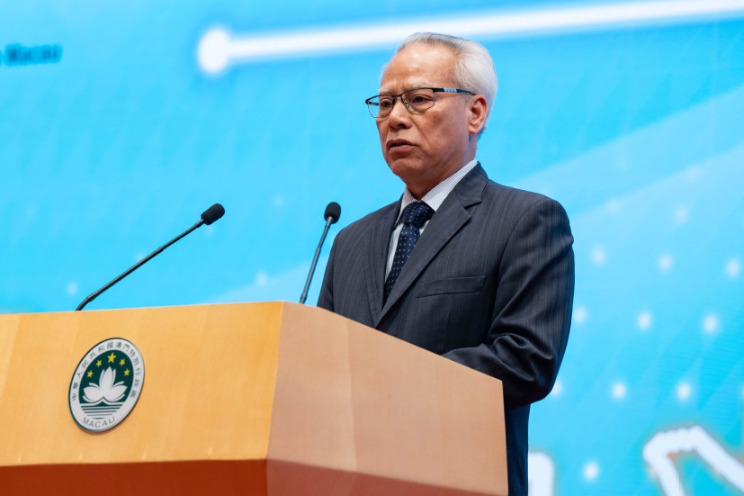
    Chinese President Xi Jinping has formally extended congratulations to African leadership on the occasion of the 39th African Union Summit. In a diplomatic message dated Saturday, President Xi addressed both Joao Lourenço, the rotating AU Chairperson and President of Angola, and Mahamoud Ali Youssouf, Chairperson of the AU Commission.

    The communication represents China’s continued diplomatic engagement with African nations and reinforces the strategic partnership between China and the continental organization. The message emphasized China’s warm sentiments toward African countries and their citizens during this significant political gathering.

    This diplomatic exchange occurs within the broader context of China-Africa relations, which have developed substantially through frameworks such as the Forum on China-Africa Cooperation (FOCAC) and the Belt and Road Initiative. The congratulatory message follows established diplomatic protocols while underscoring China’s commitment to multilateral engagement with African partners.

    The African Union Summit serves as the premier gathering for addressing continental issues, from economic development to peace and security matters. China’s consistent participation in these diplomatic exchanges demonstrates the ongoing strengthening of Sino-African relations across political, economic, and developmental spheres.

  • How UAE’s ‘Madbasa’ traps heat in windowless room to create date syrup with no machine

    How UAE’s ‘Madbasa’ traps heat in windowless room to create date syrup with no machine

    Across the Emirates, from Ras Al Khaimah to Fujairah, a centuries-old culinary tradition is being meticulously preserved by passionate elders who serve as living bridges to the UAE’s rich heritage. The ancient ‘Madbasa’ technique—a remarkable example of pre-industrial food preservation—transforms sun-ripened dates into rich, golden syrup known as ‘dibs’ through nothing more than trapped summer heat and gravitational pressure.

    This sustainable practice represents a masterpiece of traditional engineering. The Madbasa itself is a sealed, windowless chamber specifically designed to maximize thermal retention while excluding dust. Constructed originally from gypsum and Jandal wood (with modern adaptations using cement and tile), these specialized rooms function as natural hydraulic presses where woven palm-frond sacks (Yirab) or pottery containers (Khurus) filled with dates are carefully stacked.

    The meticulous process begins long before the dates enter the Madbasa. During the ‘Al-Mistah’ preparation phase, harvested dates are sun-dried and sorted, with only specific high-syrup varieties selected for production. “The dates must be ripe. They must be dry,” emphasizes 83-year-old Salem bin Abdulla Al Shamsi of Ras Al Khaimah, who has dedicated decades to preserving this method at his son’s farm.

    Inside the Madbasa, the stacked date-filled sacks undergo a 90-day transformation where intense heat and immense pressure work in concert to naturally extract the dense syrup. The chamber’s ingeniously designed floor features indented channels that guide the flowing dibs to a collection pit (jabia) traditionally lined with leak-proof clay.

    The resulting syrup possesses exceptional density and richness—darker and thicker than conventional honey—with a container holding 3kg of water capable of containing 4.5kg of this artisanal product. “The drier the dates, the greater the thickness,” Al Shamsi notes, highlighting the precise science behind this traditional craft.

    For heritage experts like Ali Al-Dhanhani of Dibba Al Fujairah—an award-winning farmer and cultural ambassador—the Madbasa represents more than food production; it serves as a living classroom connecting generations. “This is our environment and our homeland, and it is our duty to preserve these treasures,” Al-Dhanhani states, describing how he involves children and relatives in the annual September harvest tradition.

    Historically, dibs served as a vital nutritional resource and natural sweetener in the Emirati diet, featuring prominently in dishes from Luqaimat dumplings to Khameer bread. In an era before refrigeration, this method ensured year-round food security while embodying principles of community sharing—families often collectively maintained Madbasa facilities with strict hygiene protocols requiring foot washing before entry.

    Despite commercial factory production now available, traditional practitioners like Al Shamsi maintain small businesses selling artisanal dibs in jars ranging from 1.5kg to 4kg. Through their dedication, these cultural guardians ensure that this sweet embodiment of Emirati heritage continues to flow for generations to come.

  • A taste of tradition: Jinjiang’s Spring Festival delights

    A taste of tradition: Jinjiang’s Spring Festival delights

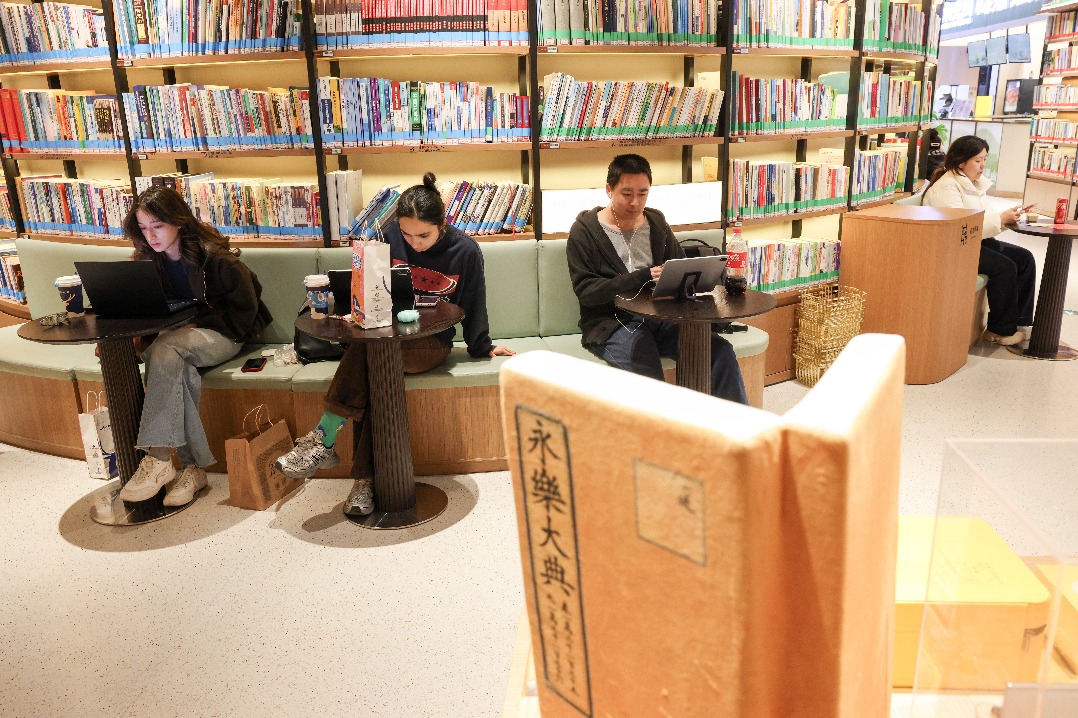
    In the heart of Fujian province, the city of Jinjiang transforms into a vibrant tapestry of culinary tradition during the Spring Festival season. The air becomes imbued with aromatic whispers of reunion, as generations gather to celebrate with time-honored delicacies that define the Minnan cultural identity.

    Beyond mere sustenance, these traditional foods serve as edible monuments to heritage. Steamed rice cake (wangao) emerges as a symbolic centerpiece, representing prosperity and elevation. Pan-fried oysters in scrambled egg (hailijian) brings coastal abundance to the festive table, while four-herb old duck soup offers medicinal balance according to traditional Chinese principles. The robust flavors of beef steak noodles provide substantial comfort, and sweet peanut soup concludes feasts with nostalgic simplicity.

    These culinary traditions are deeply rooted in the Minnan people’s historical narrative of perseverance and determination—qualities that shaped their migration patterns and cultural resilience. Jinjiang’s approach to the Spring Festival demonstrates how food functions as both cultural preservation and invitation. The city extends this culinary heritage to global visitors, offering immersive experiences into the Minnan way of life through taste, aroma, and communal celebration.

    The preservation of these practices represents more than culinary tradition; it embodies the living memory of a people who maintain cultural continuity through intentional culinary practices. Each dish tells a story of geographical adaptation, historical development, and cultural values that have been refined across centuries.

  • China upgrades Xiong’an high-tech zone to national level

    China upgrades Xiong’an high-tech zone to national level

    China’s State Council has formally granted national-level status to the Hebei Xiong’an High-Tech Industrial Development Zone, marking a significant milestone in the region’s development strategy. The approval, announced on February 14, 2026, covers two designated sections encompassing 20.84 square kilometers within the broader Xiong’an New Area in Hebei province.

    The upgraded zone will operate under the guiding principle of ‘developing high technology and achieving industrialization,’ with particular emphasis on cultivating new-quality productive forces adapted to local conditions. This elevation to national status is designed to accelerate the integration of scientific innovation with industrial development while attracting premium innovation resources from both domestic and international sources.

    Strategic objectives include fostering research collaborations on major scientific projects, achieving breakthroughs in core technologies within priority sectors, and facilitating the efficient commercialization of technological achievements. The zone will additionally focus on strengthening existing leading industries while making strategic investments in emerging sectors through institutional reforms and enhanced international cooperation.

    This development represents a crucial component of Xiong’an’s transformation into a global hub for cutting-edge industries and original innovation. The initiative supports the broader national strategy of establishing Xiong’an New Area as a modern metropolis while advancing the coordinated development of the Beijing-Tianjin-Hebei region. Originally established in April 2017, Xiong’an was conceived to absorb functions non-essential to Beijing’s capital status, with this latest upgrade significantly enhancing its innovation capacity and economic importance.

  • Lulu Retail plans to open 50 new stores, creating hundreds of job opportunities

    Lulu Retail plans to open 50 new stores, creating hundreds of job opportunities

    Lulu Retail Holdings, the Gulf Cooperation Council’s premier full-line retail conglomerate, has unveiled an ambitious expansion strategy following exceptional financial results for fiscal year 2025. The retail giant reported record-breaking revenues of Dh29.1 billion, marking a 4.1% year-on-year increase, while net profits reached Dh753 million, exceeding previous quarterly projections.

    The company’s growth trajectory will accelerate with plans to establish 50 new retail outlets across key GCC markets between 2026 and 2028. This expansion follows the successful opening of 20 new stores throughout 2025, bringing Lulu’s total operational footprint to 267 stores across the UAE, Saudi Arabia, Kuwait, and Bahrain. The new establishments will encompass various formats including hypermarkets, express convenience stores, and mini-markets, creating hundreds of new employment opportunities throughout the region.

    Digital commerce emerged as a particularly strong performance sector, with e-commerce sales surging 38.6% annually and accelerating to 51.8% growth during the fourth quarter. Online penetration reached 7.3% of total retail sales in Q4, demonstrating robust consumer adoption of digital shopping channels. Investments in proprietary digital infrastructure yielded particularly strong returns, with sales through Lulu’s owned platforms growing at nearly double the rate of third-party aggregator channels.

    The company’s private label portfolio continued to gain market share, accounting for 29.8% of total sales and contributing significantly to both revenue growth and margin enhancement. Financial stability improved with net debt reduction to Dh9.18 billion and enhanced leverage metrics on an IFRS 16 accounting basis.

    Reflecting confidence in continued performance, Lulu’s board announced a second-half dividend of 3.5 fils per share, bringing the total 2025 dividend distribution to 7 fils per share, equivalent to approximately Dh724 million in shareholder returns.

    CEO Saifee Rupawala emphasized the company’s disciplined expansion approach, noting that existing portfolio strength and digital capabilities position Lulu for sustained growth across GCC markets while maintaining attractive shareholder returns through consistent dividend distributions.

  • Philippine senators Dela Rosa, Go named ‘co-perpetrators’ in Duterte ICC case

    Philippine senators Dela Rosa, Go named ‘co-perpetrators’ in Duterte ICC case

    The International Criminal Court has formally implicated two sitting Philippine senators as alleged co-perpetrators in former president Rodrigo Duterte’s crimes against humanity case. Prosecutorial documents dated February 13 and published on the ICC’s website identify Senators Ronald Dela Rosa and Christopher Go among eight current and former officials accused of participating in Duterte’s controversial anti-drug campaign.

    ICC prosecutors have charged Duterte with three distinct counts of crimes against humanity, connecting him to at least 76 murders committed during his administration’s war on drugs. The prosecution’s filing states that “Duterte and his co-perpetrators shared a common plan or agreement to ‘neutralise’ alleged criminals in the Philippines through violent crimes including murder.”

    Senator Dela Rosa, who previously served as national police chief and primary enforcer of Duterte’s drug war, has been notably absent from public view for several months after previously expressing concerns about potential arrest. Senator Go, recently re-elected by a substantial margin, maintained a long-standing political alliance with Duterte dating back to their time in Davao City governance.

    The prosecution document outlines three chronological categories of alleged offenses: 19 murders occurring between 2013-2016 during Duterte’s mayoral tenure in Davao City; 14 targeted killings of so-called “High Value Targets” in 2016-2017; and 43 murders during anti-drug operations against lower-level suspects from 2016-2018.

    Duterte is scheduled to undergo a four-day “confirmation of charges” hearing commencing February 23, where ICC judges will determine whether the evidence warrants proceeding to full trial. The court has previously rejected arguments questioning the 80-year-old former leader’s fitness for trial following his arrest and transfer to Netherlands custody in March of last year.

  • Ramadan under open skies: Why iftar hikes are drawing UAE residents into the mountains

    Ramadan under open skies: Why iftar hikes are drawing UAE residents into the mountains

    As the sun dips below the mountainous horizons of the United Arab Emirates, a growing spiritual movement transforms traditional Ramadan observances. Instead of gathering around lavish dining tables, residents increasingly embark on iftar hikes—communal treks that culminate in breaking the fast amid nature’s tranquility. This emerging tradition combines physical activity with spiritual reflection, creating unique Ramadan experiences far from urban distractions.

    Organized hiking groups across the Emirates report significant participation during the holy month, with carefully structured programs accommodating different fitness levels and spiritual preferences. UAE Adventures Team, founded by Mohammed Al Kaabi, has developed formal iftar hiking initiatives over five years, evolving from casual gatherings into well-organized events prioritizing both safety and religious observance.

    “We offer multiple options because fasting experiences vary,” Al Kaabi explained. Some groups hike after evening prayers, while others undertake lighter afternoon treaks to break their fasts modestly on mountain trails before descending for full meals. The most popular time proves to be after taraweeh prayers, when trails fill with energetic participants.

    Outdoorzy Adventures founder Alaa Masood emphasizes accessibility in their Ramadan programming. “We select locations manageable for all skill levels, like Fossil Rock in Mleiha with its panoramic views,” Masood noted. Their iftar hikes incorporate safety measures including group size limitations and paced walking to prevent fatigue among fasting participants.

    For Grasp the Adventure founder Yousuf Elabbasy, these mountain iftars provide meaningful disconnection from modern stressors. “Hiking removes us from visual and noise pollution, work pressures, and social demands,” Elabbasy reflected. His groups typically pause at scenic overlooks or canyon pools precisely at sunset, sharing dates, nuts, and simple foods in spontaneous acts of generosity that capture Ramadan’s essence.

    Post-iftar, many groups continue hiking or gather for suhoor barbecues under the stars. Participants consistently report feeling spiritually renewed and community-connected through these experiences. While Ramadan hiking participation numbers may be slightly lower than other seasons, organizers note attendees demonstrate deeper commitment to the spiritual dimensions of these outdoor rituals.

    This trend reflects a broader cultural shift toward finding Ramadan’s core values—generosity, reflection, and togetherness—through simplified experiences that contrast with increasingly commercialized urban celebrations. The mountain iftar movement continues gaining momentum as UAE residents seek authentic spiritual connections during Islam’s holiest month.