标签: Asia

亚洲

  • Pakistan says 92 militants killed after attacks in Balochistan

    Pakistan says 92 militants killed after attacks in Balochistan

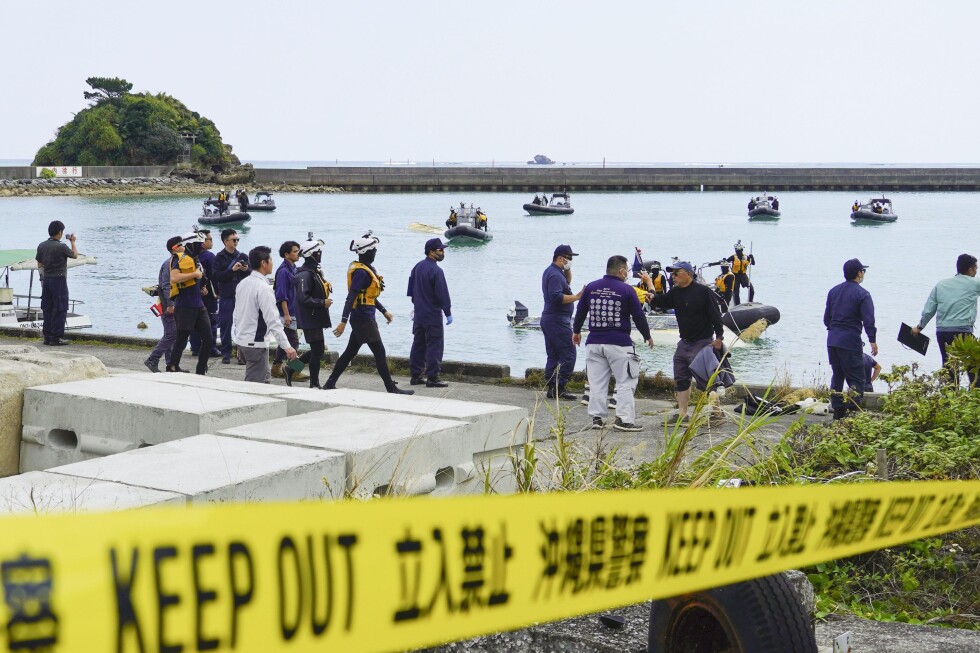
    Pakistan’s military has reported a significant escalation in violence across the restive Balochistan province, culminating in the deaths of 92 militants during intense counter-terrorism operations on Saturday. The coordinated attacks, claimed by the banned Baloch Liberation Army (BLA), targeted multiple urban centers including Quetta, Mastung, and the strategic port city of Gwadar.

    According to military statements released through the ISPR media wing, 15 security personnel lost their lives during clearance operations against well-armed insurgents. The violence inflicted severe civilian casualties, with at least 18 non-combatants killed—including women and children—in what authorities describe as targeted attacks on civilian populations.

    The provincial capital Quetta witnessed armed militants blocking major thoroughfares and detonating explosives near high-security zones, though authorities subsequently restored order. In Gwadar, assailants stormed a migrant worker encampment, executing 11 laborers in what appeared to be ethnically motivated violence. Security forces responded by eliminating six attackers at the Gwadar site.

    A particularly alarming development emerged from Noshki district, where militants abducted the region’s senior civil administrator. The official appeared in a social media video confirming his captivity, though Reuters could not independently verify the footage’s authenticity.

    Pakistan’s Interior Minister Mohsin Naqvi condemned the assaults while praising security forces for preventing militants from seizing any urban centers or strategic installations. The military attributed the coordinated nature of the attacks to terrorist leadership operating from overseas, noting that ringleaders maintained direct communication with operatives throughout the 15-hour engagement.

    The violence follows Friday’s military operations that neutralized 41 militants in separate raids, underscoring the persistent instability in this resource-rich region bordering Iran and Afghanistan. Hospitals throughout the province were placed on emergency footing as security forces continued clearance operations into Sunday.

  • Shanghai Science and Technology Museum to reopen soon

    Shanghai Science and Technology Museum to reopen soon

    After a comprehensive three-year transformation costing 820 million yuan ($114 million), Shanghai Science and Technology Museum prepares for its grand reopening during the upcoming Year of the Horse Spring Festival celebrations. The extensively renovated institution now boasts what is recognized as the world’s largest 120Hz CLED giant screen theater, representing a significant technological advancement in immersive educational experiences.

    The revitalized museum features ten permanent exhibition areas designed to engage visitors with cutting-edge scientific displays and interactive installations. In a notable cultural collaboration, the institution has partnered with Beijing’s Palace Museum to present a special Year of the Horse exhibition, strategically timed to coincide with the Spring Festival period. This partnership bridges scientific exploration with traditional Chinese cultural elements, offering a unique multidimensional experience.

    The substantial investment in the museum’s renovation underscores Shanghai’s commitment to enhancing its scientific education infrastructure and promoting public engagement with technology. The timing of the reopening during China’s most important traditional festival period is expected to attract significant visitor numbers, both domestic and international, contributing to cultural tourism during the holiday season.

    The technological centerpiece, the 120Hz CLED theater, represents the forefront of display technology, providing unprecedented visual clarity and immersive capabilities for educational content. This enhancement positions the museum as a global leader in scientific exhibition technology and experiential learning environments.

  • Freeskier Eileen Gu takes another wild ride to the Olympics, invites the world to tag along

    Freeskier Eileen Gu takes another wild ride to the Olympics, invites the world to tag along

    As Olympic gold medalist Eileen Gu prepares for the Milan Cortina Winter Games, the world’s premier freestyle skier embodies a unique convergence of athletic excellence, global celebrity, and geopolitical significance. The 22-year-old phenom, who stunned the world by capturing medals in all three freeskiing disciplines at the previous Olympics, now faces both the physical dangers of her sport and the complex scrutiny that accompanies her choice to compete for China, her mother’s homeland, despite being born and raised in California.

    Gu’s journey transcends typical athletic narratives. Between training sessions that literally risk her life—she estimates 10-15 such moments await in Milan—she pursues quantum physics studies “for fun” at Stanford, models on international fashion runways, and actively cultivates a platform promoting mental health and global unity through sports. This multidimensional existence has made her one of action sports’ most recognizable figures, drawing comparisons to legends like Shaun White for her transcendent cultural impact.

    The skier acknowledges the sometimes intense criticism surrounding her national representation choice, ranging from those who question her Chinese identity to others criticizing her decision not to compete for the United States. With characteristic poise, she addresses the controversy: “I can focus my attention on the places where I personally have the most interest and impact, and work as hard as possible to make as much good in the world as I can.”

    Her impact on winter sports development in China has been substantial. Gu recently visited rural northern China where she observed small ski hills offering free equipment and lift tickets to children—tangible evidence of the snow sports explosion following the Beijing 2022 Games. Official reports indicate 313 million Chinese citizens have engaged in winter sports since those Olympics, nearly equivalent to the entire U.S. population.

    Despite a recent concussion that induced seizures and genuinely frightened the self-described “cerebral” athlete, Gu enters the Games fully healthy and dominant in her sport. She remains unbeaten in halfpipe competition since February 2024 and recently secured her 20th World Cup victory in Switzerland. As she prepares to defend her three Olympic medals, Gu embraces both the competitive pressure and the geopolitical spotlight with equal measures of determination and philosophical acceptance, understanding that perfection is an impossible standard amid divided global opinions.

  • How ChatGPT is replacing Google search, helping UAE students learn much faster

    How ChatGPT is replacing Google search, helping UAE students learn much faster

    A profound educational transformation is underway across United Arab Emirates universities as artificial intelligence tools fundamentally alter academic practices and student psychology. According to extensive interviews with Emirati students conducted by Khaleej Times, AI platforms—particularly ChatGPT—have largely supplanted traditional Google search methodologies, creating both unprecedented learning efficiencies and new philosophical dilemmas about knowledge acquisition.

    Students report that AI integration has dramatically reduced academic anxiety while accelerating comprehension. Zayed Ahbabi, among those interviewed, revealed that ChatGPT serves as his primary educational tool for rapid concept clarification during fast-paced lectures. The psychological impact appears equally significant, with students describing diminished embarrassment when confronting challenging material and increased confidence in their learning capabilities.

    The technological shift has fundamentally altered study behaviors. Multi-tab Google searching—once synonymous with student research—has substantially declined in favor of AI-driven clarification. Khalifa Ahmed utilizes ChatGPT for structural organization and reading summarization rather than direct answer generation, transforming studying from memorization exercises into conversational learning experiences.

    Yousef AlNaqbi noted the social implications, observing that AI consultation often precedes peer discussion, creating more informed collaborative learning environments. This paradigm shift has enabled students to approach classroom interactions with greater preparedness and confidence.

    Despite overwhelming enthusiasm, students universally expressed caution regarding over-dependence. Concerns about intellectual laziness, reduced critical struggle, and potential social isolation emerged consistently across interviews. UAE academic institutions have responded by incorporating AI into integrity policies while emphasizing student accountability for submitted work.

    The central debate no longer revolves around whether to use AI, but rather how to establish appropriate usage boundaries. Students unanimously agreed that personal judgment and examination performance should remain exclusively human domains, particularly for decisions impacting future trajectories. The emerging challenge has become developing discernment about when AI enhancement serves genuine learning versus when it potentially undermines intellectual development.

  • Shanghai celebrates Spring Festival with intl students

    Shanghai celebrates Spring Festival with intl students

    Shanghai transformed into a cultural crossroads on January 29, 2026, as nearly 100 international students joined Chinese educators and peers at Shanghai Library East for a dual celebration. The event simultaneously launched the 8th Shanghai Get-together Writing Contest while welcoming the upcoming Spring Festival with traditional Chinese New Year activities.

    The gathering provided international participants with immersive experiences in Chinese cultural traditions while creating opportunities for deeper cross-cultural understanding. Now entering its eighth consecutive year, the writing initiative encourages foreign visitors to document their Shanghai experiences through both written narratives and short video submissions.

    Marking a significant diplomatic milestone, the 2026 contest introduces a special category honoring the 70th anniversary of China-Africa diplomatic relations. This new award category will specifically recognize stories showcasing Sino-African friendship and cultural exchange within Shanghai’s urban landscape.

    “Shanghai extends its welcome to the global community through openness and cultivates international friendships through inclusiveness,” stated Su Ling, Vice President of the Shanghai People’s Association for Friendship with Foreign Countries. “Our commitment remains firm in building bridges of mutual comprehension and expanding our worldwide network of companions.”

    Previous contest winner Ijaz Ul Haq from Pakistan reflected on his experience, characterizing Shanghai as an educational environment beyond traditional classrooms. “The city itself became my second classroom,” he noted, “where daily interactions and cultural encounters shaped my learning journey far beyond academic settings.”

  • Rare earths and data centres: India pushes local industry as global tensions rise

    Rare earths and data centres: India pushes local industry as global tensions rise

    Indian Finance Minister Nirmala Sitharaman unveiled the nation’s 2026-27 budget on Sunday, implementing a strategic pivot toward fiscal restraint following extensive tax concessions implemented last year. The budget framework emphasizes infrastructure development, domestic manufacturing support, and revised fiscal targets while navigating challenges posed by U.S. tariff policies.

    The budgetary allocations reveal significant increases in capital expenditure, with infrastructure investment rising 9% to ₹12.2 trillion ($133.1 billion). Defense spending witnessed an even more substantial 20% boost, reflecting heightened global geopolitical tensions. These investments continue the Modi administration’s decade-long emphasis on infrastructure-led economic growth.

    Seven strategic sectors received targeted manufacturing support, including semiconductors, data centers, textiles, and rare earth minerals. The government announced dedicated rare earth corridors across four states—Tamil Nadu, Kerala, Andhra Pradesh, and Odisha—building upon November’s ₹73 billion rare earth development scheme. A second semiconductor mission received $436 million in funding to advance equipment production and intellectual property development.

    Notably, the budget introduced substantial incentives for foreign cloud companies, offering tax holidays until 2047 for data center investments and global cloud services. This measure aims to accelerate capacity creation in a capital-intensive sector that has already attracted significant investments, including Google’s $15 billion facility announcement.

    The textiles sector gained attention through new mega-parks designed to enhance export competitiveness, particularly following the recent India-EU free trade agreement. Additional support emerged through expanded duty-free input limits for seafood exports and customs duty exemptions for lithium-ion battery manufacturing components.

    Despite these initiatives, financial markets reacted negatively to increased Securities Transaction Tax (STT) on derivatives trading, causing significant declines during special Sunday trading sessions. Market analysts warned this could increase transaction costs and reduce derivative market volumes.

    The budget notably transitioned from rigid annual deficit targets to a broader debt-to-GDP ratio framework, aiming to reduce the ratio from 56% to 50% (±1%) by 2030-31. For the upcoming fiscal year, the deficit is projected at 4.3% of GDP, down from 4.4%, while the debt ratio should ease to 55.6%. This shift provides greater fiscal flexibility while maintaining discipline amid expected GDP growth moderation from 7.4% to a slightly lower pace due to U.S. trade policies.

  • India’s budget boosts infrastructure spending while vowing fiscal discipline

    India’s budget boosts infrastructure spending while vowing fiscal discipline

    NEW DELHI — In a strategic move to navigate global economic volatility, Prime Minister Narendra Modi’s administration unveiled its annual budget to Parliament on Sunday, emphasizing sustained growth through infrastructure investment and manufacturing expansion while maintaining fiscal discipline.

    Finance Minister Nirmala Sitharaman presented the 2026-27 fiscal blueprint against a backdrop of international challenges including elevated interest rates, geopolitical friction, and protectionist trade policies. The budget, effective April 1, aims to position India more prominently within global supply chains while building domestic economic resilience.

    Notably absent were populist measures, with the government instead focusing on structural reforms targeting seven strategic sectors: biopharmaceuticals, semiconductors, electronics components, and rare earth magnets. The budget allocates 12.2 trillion rupees ($133 billion) for capital expenditure—primarily infrastructure—representing an increase from the previous year’s 11.2 trillion rupees.

    The government reaffirmed its commitment to fiscal consolidation, targeting a reduced deficit of 4.3% of GDP for the coming year, down from the anticipated 4.4% for the current fiscal ending March. This restraint comes despite projections from Thursday’s economic survey forecasting 6.8-7.2% growth fueled by rising domestic consumption.

    Key initiatives include establishing three chemical production parks to reduce import dependency, enhancing credit support for small and medium enterprises, and undertaking a comprehensive review of foreign investment rules to attract capital amid competitive global markets.

    Transportation infrastructure received significant attention, with plans for seven high-speed rail corridors connecting major cities, new dedicated freight corridors for rare earths, and the operationalization of 20 waterways over five years. The budget also includes provisions for developing ecological tourism trails in mountainous and coastal regions.

  • Pegasus fondant artwork ushers in Year of the Horse in Shanghai

    Pegasus fondant artwork ushers in Year of the Horse in Shanghai

    Shanghai has unveiled a spectacular culinary masterpiece to welcome the upcoming Lunar New Year—a monumental 4-meter-tall Pegasus sculpture crafted entirely from fondant. The breathtaking artwork made its debut on January 30, 2026, representing an extraordinary fusion of traditional Chinese cultural elements, heritage craftsmanship techniques, and contemporary artistic expression.

    The magnificent white winged horse, requiring over one ton of fondant material, stands as a symbolic tribute to the Year of the Horse in the Chinese zodiac cycle. Master sugar artist Zhou Yi, nationally celebrated as China’s ‘Sugar King,’ led the ambitious project utilizing intangible cultural heritage techniques passed down through generations.

    Zhou and his dedicated five-member team invested nearly four months of meticulous work to create the masterpiece from initial concept to final execution. The Pegasus installation forms part of Shanghai’s broader initiative to establish itself as a global cultural metropolis, seamlessly blending commercial appeal with artistic innovation while honoring traditional Chinese cultural motifs.

    The fondant sculpture represents more than seasonal celebration—it demonstrates how ancient craftsmanship can find renewed relevance through modern artistic interpretation, creating cultural dialogue between past and present while captivating public imagination through edible art on a monumental scale.

  • Carlos Alcaraz beats Novak Djokovic to become the youngest man to complete a career Grand Slam

    Carlos Alcaraz beats Novak Djokovic to become the youngest man to complete a career Grand Slam

    MELBOURNE, Australia — In a stunning display of resilience and skill, 22-year-old Spanish phenom Carlos Alcaraz has etched his name into tennis history by becoming the youngest male player ever to complete the career Grand Slam. The world’s top-ranked player achieved this monumental feat at the Australian Open on Sunday, overcoming tennis legend Novak Djokovic in a thrilling four-set final that showcased the dramatic changing of the guard in men’s tennis.

    The championship match began with Djokovic, pursuing an unprecedented 25th major title, dominating the first set 6-2 in just 33 minutes. The 38-year-old Serbian had previously won all 10 of his finals at Melbourne Park, but Alcaraz mounted an extraordinary comeback, winning the subsequent sets 6-2, 6-3, 7-5 in a match that lasted just over three hours.

    “This means the world to me—it’s a dream come true,” an emotional Alcaraz stated during the trophy ceremony. He acknowledged the pivotal moment when the match turned in his favor: “Tennis can change on just one point. One feeling, one shot can completely transform the entire match.”

    The victory was particularly significant as both players entered the final after grueling five-set semifinals. Alcaraz had defeated No. 3 Alexander Zverev, while Djokovic’s win over two-time defending champion Jannik Sinner ended after 1:30 a.m. on Saturday.

    The match reached a critical juncture in the fourth set when Djokovic, despite trailing two sets to one, nearly engineered another of his characteristic comebacks. After fending off six break points and whipping the crowd into chants of “Nole, Nole, Nole!” the Serbian earned his first breakpoint chance since the second set. However, a forehand error proved costly, and Alcaraz seized the opportunity to close out the match.

    Alcaraz paid tribute to his support team, noting recent coaching changes that saw Samuel Lopez step up after his parting with longtime coach Juan Carlos Ferrero. “Nobody knows how hard I’ve worked for this trophy,” Alcaraz revealed. “The preseason was an emotional rollercoaster, but my team pushed me every day to do all the right things.”

    Djokovic graciously acknowledged his opponent’s historic achievement, describing Alcaraz’s performance as “legendary” while joking about their potential rivalry over the next decade. The match carried additional significance with Spanish legend Rafael Nadal, whom both players acknowledged as an inspiration, watching from the stands.

    At 22 years and 272 days, Alcaraz broke the previous record held by Don Budge since 1938 (22 years, 363 days) and became only the ninth man in tennis history to achieve the career Grand Slam. His trophy collection now includes seven major titles: two each at Wimbledon, the French Open, and the U.S. Open, plus his newly acquired Australian Open championship.

  • Epstein said UAE ruler ‘set up’ Saudi crown prince over Khashoggi killing

    Epstein said UAE ruler ‘set up’ Saudi crown prince over Khashoggi killing

    Recently unsealed court documents from the Jeffrey Epstein case have revealed startling communications between the convicted sex offender and Middle Eastern contacts regarding the assassination of Saudi journalist Jamal Khashoggi. The correspondence, dated October 2018, shows Epstein actively speculating about the geopolitical implications of Khashoggi’s brutal killing inside the Saudi consulate in Istanbul.

    In exchanges with Anas Al Rashid, Epstein immediately suggested the operation might have been orchestrated by Mohammed bin Zayed (MBZ), the ruler of the United Arab Emirates, rather than Saudi Crown Prince Mohammed bin Salman. “Smells like something bigger to me. I wouldn’t be surprised if MBZ set him up,” Epstein wrote on October 12, 2018, just ten days after the murder.

    Al Rashid characterized the killing as “ugly .. very ugly” and described the subsequent information leaks as being executed “in a very smart way and .. fast.. very fast.” He warned Epstein that the situation had evolved into a “media war” and expressed concern that Saudi Arabia was “losing Trump” without an adequate defense strategy.

    The documents further reveal Epstein’s continued fascination with the case, including his theory that Khashoggi could be posthumously branded a “terrorist” and speculation about a “failed covert operation” or “entrapment trap.” Notably, the files indicate Epstein received a message about an “urgent” meeting request from Mohammed bin Zayed on the night of October 13, 2018.

    Separately, an FBI memo included in the document release alleges Epstein’s intelligence connections, stating he “worked with US and Israeli intelligence” and was “close to the former Prime Minister of Israel, Ehud Barak, and trained as a spy under him.” These revelations add another layer of complexity to Epstein’s mysterious international network and raise new questions about his involvement in global affairs beyond his criminal activities.