标签: Asia

亚洲

  • In pics: skyline in morning glow in Beijing

    In pics: skyline in morning glow in Beijing

    China Daily Information Co (CDIC) has established stringent copyright protection protocols governing all content published across its digital platforms. The comprehensive policy explicitly prohibits unauthorized republication or usage of any materials, including textual content, photographs, and multimedia information, without obtaining prior written authorization from CDIC.

    The company has implemented technical specifications recommending 1024*768 resolution or higher for optimal viewing experience on its platforms. CDIC maintains formal registration credentials (Registration Number: 130349) and operates under multimedia publishing license 0108263, establishing its legitimate standing as a content provider.

    Beyond content protection measures, the organization has developed additional operational frameworks including dedicated sections for corporate information (‘About China Daily’), advertising opportunities (‘Advertise on Site’), and user engagement channels (‘Contact Us’). The platform also facilitates career connectivity through its ‘Job Offer’ and ‘Expat Employment’ portals, while maintaining social media presence through its ‘FOLLOW US’ initiative.

    The copyright notice emphasizes that all materials created since 1994 remain protected under CDIC’s ownership, reinforcing the company’s commitment to intellectual property rights in digital publishing. This policy framework demonstrates the organization’s systematic approach to content management while maintaining accessibility for legitimate users and partners.

  • China announces another new trade measure against Japan as tensions rise

    China announces another new trade measure against Japan as tensions rise

    BEIJING — China has intensified its trade confrontation with Japan by initiating an anti-dumping investigation into imported dichlorosilane, a specialized chemical gas vital for semiconductor manufacturing. This move comes just one day after Beijing imposed restrictions on exports of dual-use technologies with potential military applications to Japan.

    The Chinese Commerce Ministry announced Wednesday that domestic producers had formally petitioned for the probe, citing a substantial 31% price decline for Japanese dichlorosilane between 2022 and 2024. According to the ministry’s statement, ‘The dumping of imported products from Japan has severely undermined the production and operational stability of our domestic industry.’

    These economic measures reflect Beijing’s growing dissatisfaction with Tokyo’s political positioning regarding Taiwan. Tensions intensified following recent remarks by Japanese Prime Minister Sanae Takaichi suggesting potential military intervention should China take action against Taiwan, which Beijing considers a breakaway province.

    The diplomatic rift widened further when Japanese legislator Hei Seki (also known as Yo Kitano) visited Taiwan on Tuesday and publicly referred to it as an independent nation. China had previously sanctioned Seki for disseminating what it termed ‘fallacies’ about Taiwan and other disputed territories. Chinese Foreign Ministry spokesperson Mao Ning dismissed Seki’s comments as ‘the nasty words of a petty villain.’

    Amid the escalating tensions, speculation mounts that China might impose restrictions on rare earth exports to Japan, mirroring previous measures implemented during its trade dispute with the United States. China dominates global production of heavy rare earths essential for manufacturing high-strength magnets used in defense systems and electric vehicles.

    While no official announcements have been made regarding rare earths, China Daily—considered a government mouthpiece—quoted anonymous sources indicating Beijing is evaluating tighter export controls on certain rare earth materials to Japan.

    Japan’s Foreign Ministry has urged China to revoke the trade restrictions, with Masaaki Kanai, head of Asia Oceanian Affairs, calling measures exclusively targeting Japan ‘unacceptable deviations from international practice.’ Tokyo has not yet announced retaliatory actions.

    Notably, as relations with Japan deteriorate, China has actively strengthened ties with South Korea. South Korean President Lee Jae Myung concluded a four-day visit to China on Wednesday, during which both nations signed 24 cooperation agreements valued at $44 million across technology, trade, and environmental sectors. Chinese media highlighted that South Korea has surpassed Japan as the top destination for outbound flights from mainland China, amid official travel advisories warning of safety risks for Chinese citizens in Japan.

  • Venezuela move draws condemnation

    Venezuela move draws condemnation

    The United States faces mounting international condemnation following its controversial military intervention in Venezuela and the apprehension of President Nicolas Maduro. During an emergency session of the United Nations Security Council on Monday, numerous nations denounced Washington’s unilateral actions as flagrant violations of the UN Charter and established international legal norms.

    UN Secretary-General Antonio Guterres expressed profound apprehension regarding the apparent disregard for international law demonstrated by Saturday’s military operation. He emphasized concerns about potential regional destabilization and the dangerous precedent set for future inter-state relations.

    Eritrean Permanent Representative Sophia Tesfamariam Yohannes characterized American actions as “a clear breach of international law and fundamental principles governing international relations.” Iranian Ambassador Amir Saeid Iravani went further, labeling the operation “state terrorism” and “a full-fledged act of aggression” that violated peremptory norms of international law.

    Venezuelan UN Ambassador Samuel Moncada appealed for decisive Security Council action, asserting that international peace can only be maintained through consistent application of international law without “double standards or selective interpretations.”

    The operation has drawn criticism even from traditional US allies. In Japan, political figures and media outlets warned that the intervention undermines international law and the postwar rules-based order. Opposition leader Yoshihiko Noda expressed “serious doubts” about the operation’s legal justification, while the Nikkei newspaper suggested it disregarded three core pillars of legal order: national sovereignty respect, congressional oversight, and the rules-based system.

    International legal scholar Hadi Rahmat Purnama from Universitas Indonesia cautioned that “applying national jurisdiction against other sovereign countries constitutes an act of war,” adding that Washington’s non-recognition of the Maduro government provides no legal basis for the apprehension.

  • Tiger Tower fire: 6 months on, owners get timeline for repairs, insurance payouts

    Tiger Tower fire: 6 months on, owners get timeline for repairs, insurance payouts

    After six months of uncertainty following a catastrophic fire that ravaged Dubai’s prominent 67-story Tiger Tower (officially named Marina Pinnacle Tower), displaced homeowners have finally received definitive timelines for restoration works and insurance compensation. The Dubai Land Department (DLD) has formally communicated that rehabilitation efforts are poised to commence, bringing substantial relief to affected property owners.

    According to an official DLD document dated December 26, 2025, a specialized contractor has been appointed to execute comprehensive structural repairs and rehabilitate building systems. The extensive restoration project, funded through an initial disbursement, is projected to require approximately eight months for completion before units can be officially returned to owners.

    The communication specifically addressed the critical insurance compensation process, confirming the appointment of an independent consultant to finalize damage assessments. Property owners can anticipate compensation disbursements to initiate within one to two months, pending completion of required documentation.

    The June 13, 2025 inferno necessitated the emergency evacuation of all 3,820 residents from 764 apartments in a remarkable six-hour operation by Dubai Civil Defence that resulted in no casualties. However, the subsequent months created significant hardship for owners like Muhammad, a three-bedroom apartment purchaser, who described experiencing ‘considerable emotional duress’ due to financial pressures and insufficient communication from authorities.

    The DLD has emphasized its ongoing coordination with building management to monitor rehabilitation progress and safeguard owner rights. Authorities additionally noted that temporary partial re-occupation of unaffected apartments may be permitted following approval from Dubai Municipality and Civil Defence, offering some residents earlier return possibilities before full project completion.

  • 7 million Australians face risk of wildfires

    7 million Australians face risk of wildfires

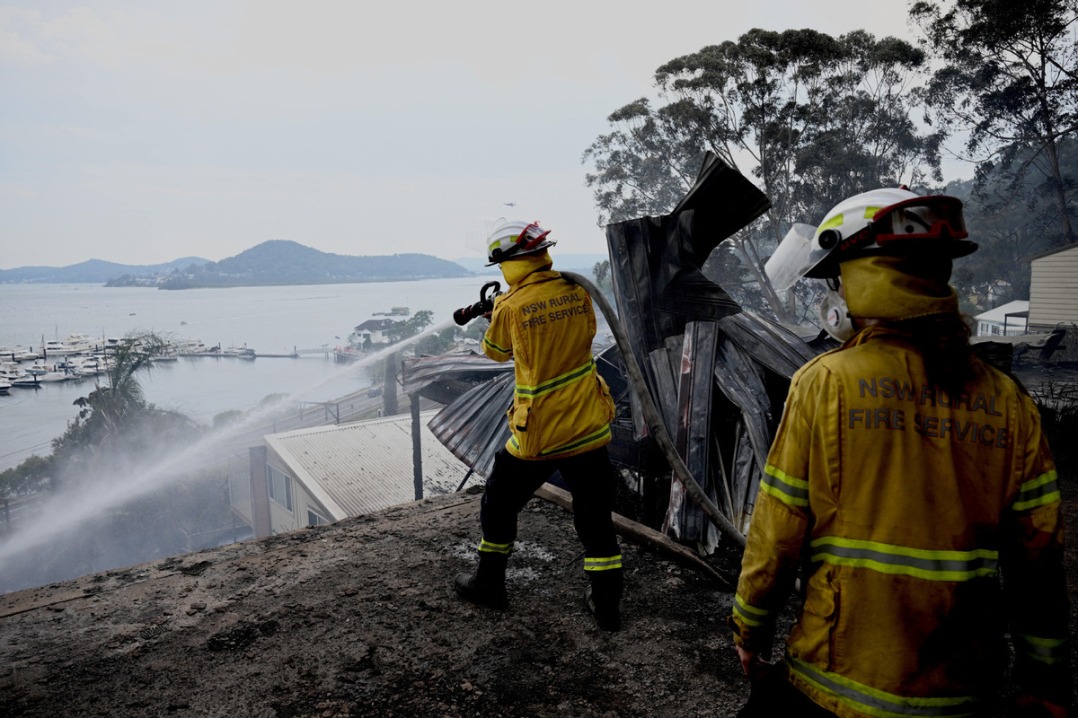
    A landmark collaborative study has revealed that nearly 7 million Australian residents face significant wildfire threats while living in suburban expanses surrounding major metropolitan centers. The comprehensive analysis, jointly published by the Climate Council and Emergency Leaders for Climate Action (ELCA), identifies these urban periphery zones as increasingly vulnerable to catastrophic fire events.

    The research highlights that the outer suburbs of Sydney, Melbourne, Perth, Adelaide, Hobart, and Canberra exhibit environmental and structural characteristics alarmingly similar to those that precipitated the devastating January 2025 Los Angeles wildfires. Demographic data shows a concerning 65.5% population increase in these high-risk areas since 2001, with current estimates exceeding 6.9 million inhabitants.

    A critical finding indicates that approximately 90% of Australian homes situated in these fire-prone regions were constructed prior to the implementation of contemporary bushfire-resilience building standards. The report further cites previous research demonstrating that while only 10% of fires account for 78% of fatalities, the majority of these deadly incidents occur in suburban settings.

    Greg Mullins, ELCA founder and former New South Wales fire commissioner, emphasized the dangerous convergence of environmental factors creating ideal conditions for catastrophic urban fires. ‘Nearly every Australian city now contends with the same hazardous preconditions witnessed in Los Angeles—extended dry periods, severe wind patterns, and historical precedents of destructive fires,’ Mullins stated. He specifically noted that climate change has intensified fire weather conditions to levels that sometimes surpass modern firefighting capabilities.

    The report urgently recommends both substantial reductions in climate pollution and prioritized enhancement of emergency services and land management capacities in these vulnerable urban fringe communities.

  • 2025 in review: A year of shifting horizons

    2025 in review: A year of shifting horizons

    The year 2025 witnessed a profound transformation of global politics as conservative ideologies gained unprecedented momentum across multiple continents. This rightward shift manifested through protectionist policies, nationalist agendas, and a fundamental reorientation of international relations that challenged established norms of global cooperation.

    The political transformation originated in Washington DC with the new U.S. administration declaring the commencement of ‘America’s golden age,’ promptly implementing aggressive tariff measures against trading partners. This protectionist stance triggered a chain reaction of retaliatory economic policies and inspired similar movements worldwide.

    By February, the political wave had crossed the Atlantic as European far-right movements gained prominence. The ‘Patriots for Europe’ coalition convened in Spain, explicitly endorsing the American protectionist model while advocating their own ‘Make Europe Great Again’ platform. This gathering signaled a significant consolidation of right-wing influence within European politics.

    The conservative momentum reached critical mass in East Asia by October when Japan elected Sanae Takaichi as its 104th prime minister. Her administration immediately prioritized constitutional revision and military expansion, marking a decisive departure from Japan’s traditional pacifist stance and representing the most significant security policy shift in decades.

    By December, the political transformation extended to South America with right-leaning candidate José Antonio Kast defeating the left-wing incumbent in Chile’s presidential election. His victory, coupled with similar right-wing successes in Ecuador and Bolivia, completed a comprehensive conservative realignment across Latin America.

    Analysts observe that this global movement represents a new political paradigm transcending regional boundaries. The U.S. administration’s policy approach has served as an ideological template for right-wing movements worldwide, with localized adaptations of populist slogans and strategies. Japan’s ‘Sanseito’ party exemplifies this trend, employing nationalist rhetoric and social media strategies inspired by American political tactics to transform from a fringe movement to a significant parliamentary force within five years.

    Experts note that coordinated digital campaigns and inflammatory rhetoric have proven effective in mobilizing support, though they warn that this rightward network remains inherently fragmented and could create new geopolitical tensions in the coming years.

  • Ecological approach to water treatment unveiled

    Ecological approach to water treatment unveiled

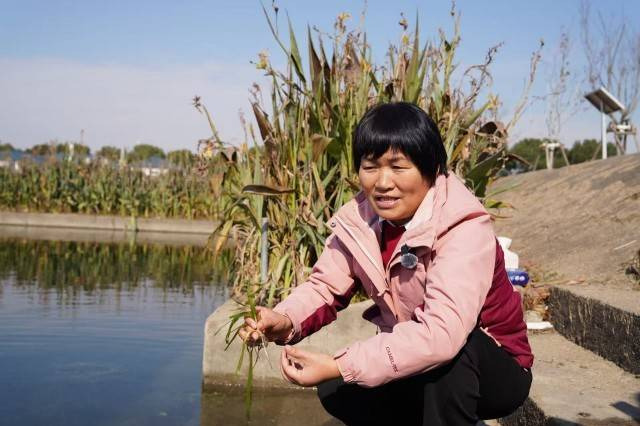
    SHANGHAI – Researchers at Shanghai Ocean University have unveiled a groundbreaking ecological approach to water purification that merges ancient Chinese medical philosophy with modern environmental science. The innovative methodology, developed under the guidance of Professor Wang Liqing, applies the fundamental diagnostic principles of Traditional Chinese Medicine – observation, listening, smelling, inquiry, and palpation – to assess and rehabilitate compromised aquatic ecosystems.

    The comprehensive treatment protocol initiates with meticulous water quality analysis through both visual inspection and advanced instrumental monitoring. Subsequent phases involve examining water circulation dynamics and investigating historical pollution sources alongside environmental transformations. These diagnostic insights inform the creation of customized rehabilitation strategies tailored to each unique water body.

    “Our primary intervention involves isolating pollution sources to prevent additional contamination,” Professor Wang explained. “We then perform precise ‘surgical’ modifications to underwater topography while establishing specialized habitats for carefully selected aquatic flora and fauna.”

    The research team conceptualizes water ecosystems as intricate networks where material conversion, energy transfer, and information exchange form self-regulating systems with interconnected components. This holistic perspective enables implementation of complete ecological solutions rather than addressing isolated symptoms.

    The treatment methodology employs diverse biological agents strategically deployed according to water depth. In deeper aquatic zones, fish populations serve as natural regulators of algae while absorbing surplus nutrients. Shallower regions receive submerged vegetation, particularly a specially engineered strain of vallisneria that demonstrates exceptional pollutant absorption capabilities.

    At their Qingpu district research facility, the team has perfected plant cultivation techniques through two decades of selective breeding. Their enhanced vallisneria variant achieves two annual harvests while exhibiting superior functional performance. The researchers have additionally developed specialized equipment including aquatic plant wrapping machinery and automated collection vessels that enable low-disturbance, high-efficiency planting and maintenance operations.

    While the ecological approach appears fundamentally simple, Professor Wang emphasizes its underlying complexity lies in precision implementation. “Each aquatic environment demands carefully calibrated, location-specific interventions to maintain ecological equilibrium,” she noted.

    The system’s effectiveness finds demonstration at Jinhai Lake in Fengxian district, where implemented measures have maintained remarkable stability since 2011. Water transparency consistently reaches two meters with quality meeting Grade II or III standards, while the site now purifies approximately 100,000 metric tons daily.

    In Zhujiajiao Water Town, the establishment of ecological buffer zones has improved water transparency from under half a meter to exceeding 1.5 meters. The approach achieves significant cost efficiency, reducing treatment expenses from 0.2-0.5 yuan per ton through conventional methods to approximately 0.04 yuan per ton.

    “We facilitate natural transformation processes rather than merely extracting pollutants,” Professor Wang elaborated. “Converting dissolved nutrients into harvestable biomass establishes a sustainable cycle where aquatic vegetation serves as fish nourishment or organic fertilizer.”

    The ecological methodology has been deployed across more than 700 projects throughout 23 Chinese provinces and municipalities, treating approximately 90 square kilometers of water area – equivalent to 15 West Lakes. “Our ultimate vision transcends water treatment alone,” Professor Wang concluded. “We aspire to create self-sustaining ecosystems that coexist harmoniously with human activity while delivering enduring environmental and economic benefits.”

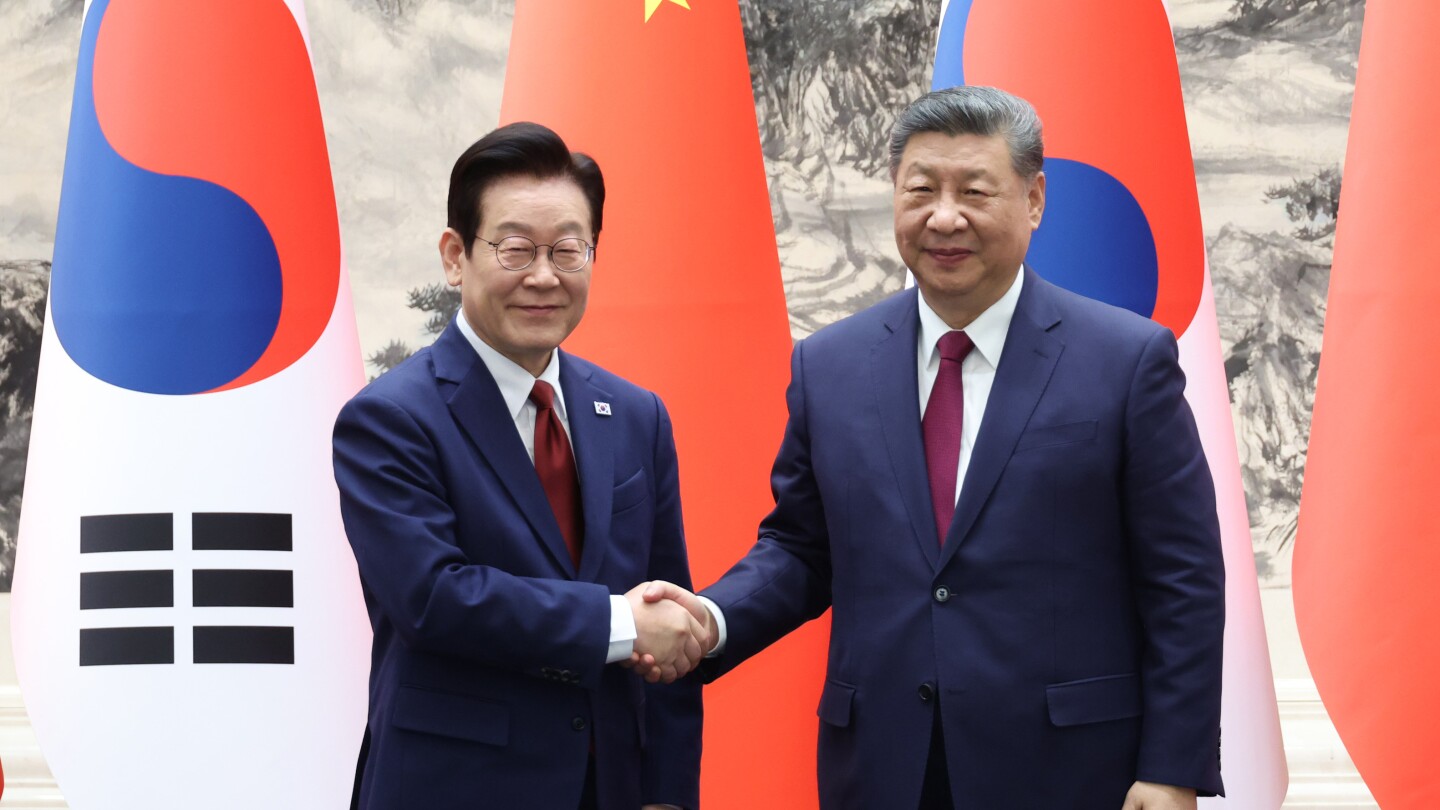
  • South Korean leader says he asked China’s Xi to act as mediator on North Korea issues

    South Korean leader says he asked China’s Xi to act as mediator on North Korea issues

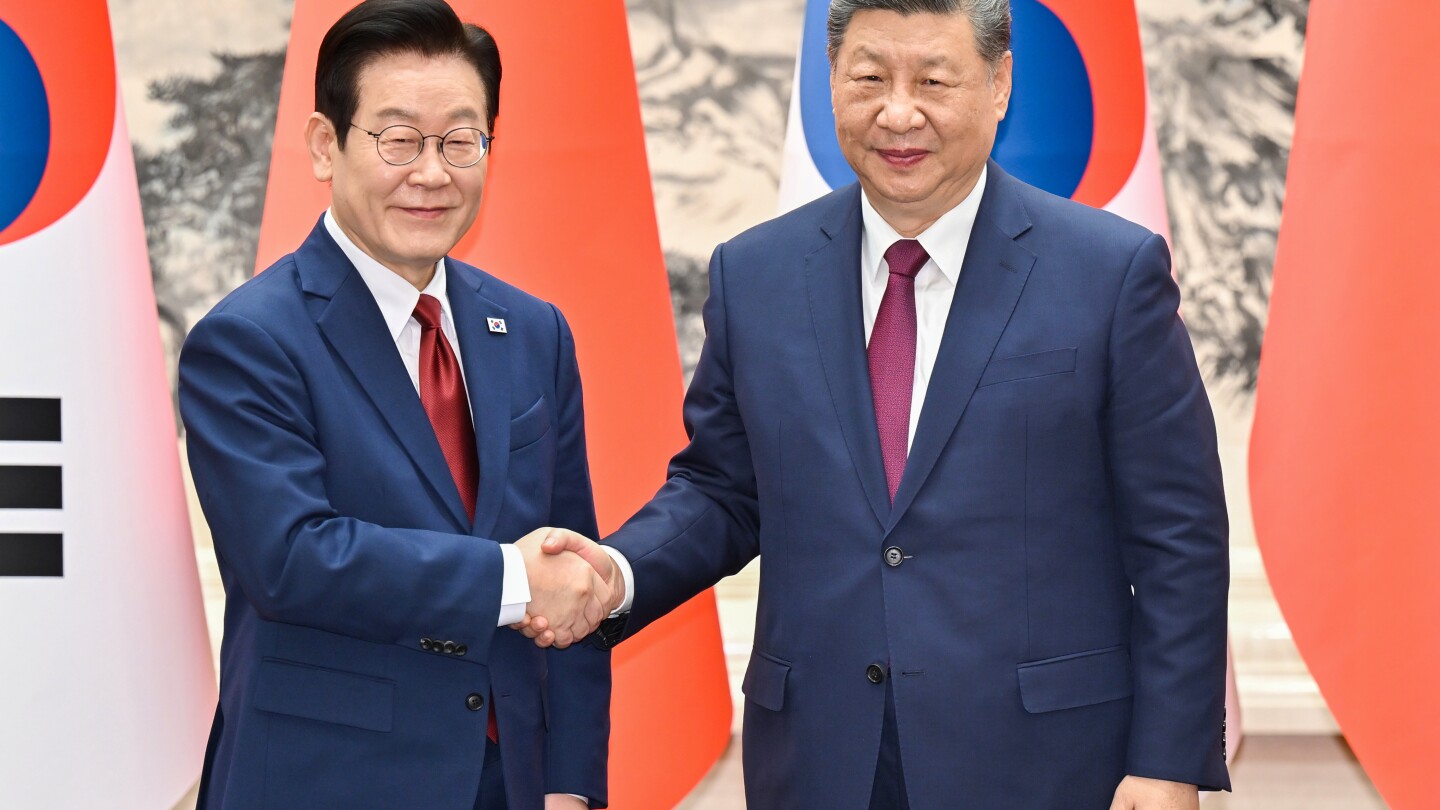
    During his official visit to China this week, South Korean President Lee Jae Myung formally requested Chinese President Xi Jinping to act as a diplomatic intermediary in resolving the protracted nuclear standoff with North Korea. The appeal came during bilateral talks held in Beijing on Monday, where President Lee emphasized the complete breakdown of communication channels between Seoul and Pyongyang.

    President Xi responded by emphasizing the necessity of patience in addressing North Korean matters while acknowledging South Korea’s ongoing efforts. The Chinese leader’s cautious stance reflects Beijing’s complex position as North Korea’s primary economic partner and diplomatic ally. This development occurs amid Pyongyang’s continued refusal to engage in denuclearization discussions since the collapse of negotiations with former U.S. President Donald Trump in 2019.

    Since assuming office in June, President Lee’s administration has pursued renewed dialogue with North Korea through a phased denuclearization approach involving reciprocal benefits. However, these overtures have been consistently ignored by North Korean leadership, with Kim Yo Jong—influential sister of Kim Jong Un—recently criticizing Seoul’s reliance on its U.S. alliance.

    During separate discussions with Chinese Premier Li Qiang, South Korean officials received similar counsel regarding diplomatic patience. President Lee specifically proposed initial steps to freeze North Korea’s nuclear and missile programs to prevent further arsenal expansion and potential proliferation risks. Chinese officials reportedly expressed alignment with this perspective, recognizing the ongoing nuclear development as detrimental to regional and global security.

    Despite these diplomatic exchanges, significant obstacles remain. North Korea has explicitly removed denuclearization from future negotiations, while experts caution that limited concessions might enable Pyongyang to secure sanctions relief without meaningful progress toward disarmament.

  • Flyers embrace ‘boomerang tickets’

    Flyers embrace ‘boomerang tickets’

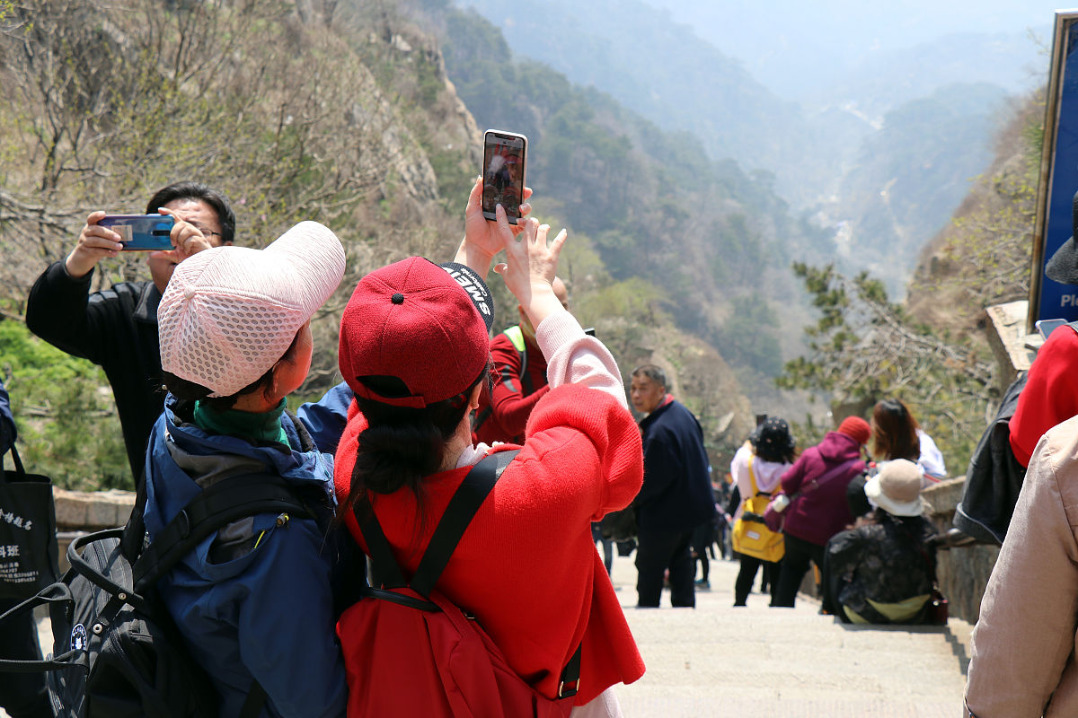
    A novel travel phenomenon dubbed the ‘boomerang ticket’ strategy is rapidly gaining popularity across Chinese social media platforms, revolutionizing how young travelers approach domestic journeys. This innovative approach involves booking flights with extended layovers in third cities that ultimately prove cheaper than direct routes, effectively transforming transit stops into brief sightseeing opportunities.

    The trend exemplifies a growing consumer preference for value-driven travel experiences, particularly among younger demographics seeking to maximize limited vacation time. One notable case involves a couple from Jiangsu province who opted for a Beijing-connected flight to reach nearby Changzhou—despite the cities being merely 40 kilometers apart—simply to enjoy a 47-hour capital city exploration at just 579 yuan ($83) per person.

    Industry analyst Li Gaochao of Shanxi Baohua International Travel Service notes that enhanced price transparency through digital platforms has empowered travelers to identify such cost-effective itineraries. ‘As cities intensify cultural tourism promotions with social media-friendly attractions,’ Li observes, ‘young travelers are strategically selecting these multi-city routes to incorporate additional destinations within tight schedules.’

    Civil aviation reforms have significantly contributed to this trend’s viability. According to Lin Zhijie of the China Air Transport Association, airlines have optimized domestic transfer services by integrating regional routes with major hubs and redistributing spare capacity. This operational shift has generated more affordable flight combinations while improving overall seat occupancy rates.

    Online travel platforms report surging interest, with Fliggy documenting a 95% month-on-month increase in ‘boomerang ticket’ searches during December. The average one-way fare registered approximately 356 yuan—44% lower than conventional tickets during the same period.

    Despite the apparent advantages, travel experts advise caution regarding potential risks. Li recommends selecting flights operated by the same airline or partners covered by interline agreements, ensuring carrier responsibility for rebooking if initial leg delays affect connections.

    For participants like Lu (surname only), who celebrated her anniversary with nighttime cycling around Tian’anmen Square during her Beijing layover, the approach has unlocked new travel possibilities. Already planning future boomerang journeys, she anticipates using similar strategies to experience Chongqing’s hotpot, Dalian’s coastal scenery, and Lanzhou’s northwestern culture—all through creatively routed flight bookings.

  • Israel defies ceasefire with Gaza strikes

    Israel defies ceasefire with Gaza strikes

    Israeli military operations have resumed in the Gaza Strip with artillery and helicopter strikes targeting southern regions on Monday, directly violating the established ceasefire agreement. The attacks resulted in the deaths of a young girl and her uncle while injuring four others, including children, when a strike hit a civilian tent in the al-Mawasi area of Khan Younis.

    The Israel Defense Forces claimed via social media platform X that their operation targeted a Hamas terrorist allegedly planning an imminent attack against Israeli forces. However, no evidence was provided to substantiate this claim, and the military made no mention of the civilian casualties resulting from the strike.

    United Nations spokesperson Stephane Dujarric confirmed during a press briefing that Israeli airstrikes continued across multiple areas of Gaza, exacerbating an already severe humanitarian situation. The attacks coincide with destructive winter storms that have damaged critical infrastructure and placed additional strain on water, sanitation, and hygiene services.

    According to the UN Office for the Coordination of Humanitarian Affairs (OCHA), heavy rainfall has compromised damaged water infrastructure, raising water levels in Wadi Gaza and Sheikh Radwan lagoon. The humanitarian community is engaging with Israeli authorities to allow specialized equipment entry to operate dewatering pumps.

    While the UN reported meeting 100 percent of minimum caloric standards in Gaza for the first time since October 2023, concerns mount over Israel’s recent ban on 37 international NGOs operating in the territory. The organizations, accused of failing to comply with security requirements, collectively provide more than half of all food assistance, support 60 percent of field hospitals, and implement nearly three-quarters of shelter activities.

    A joint statement from 53 NGOs emphasized that humanitarian access must be measured by whether civilians receive appropriate assistance in the right place and time, warning that the ban threatens to severely impede critical aid delivery to Gaza’s civilian population.