标签: Asia

亚洲

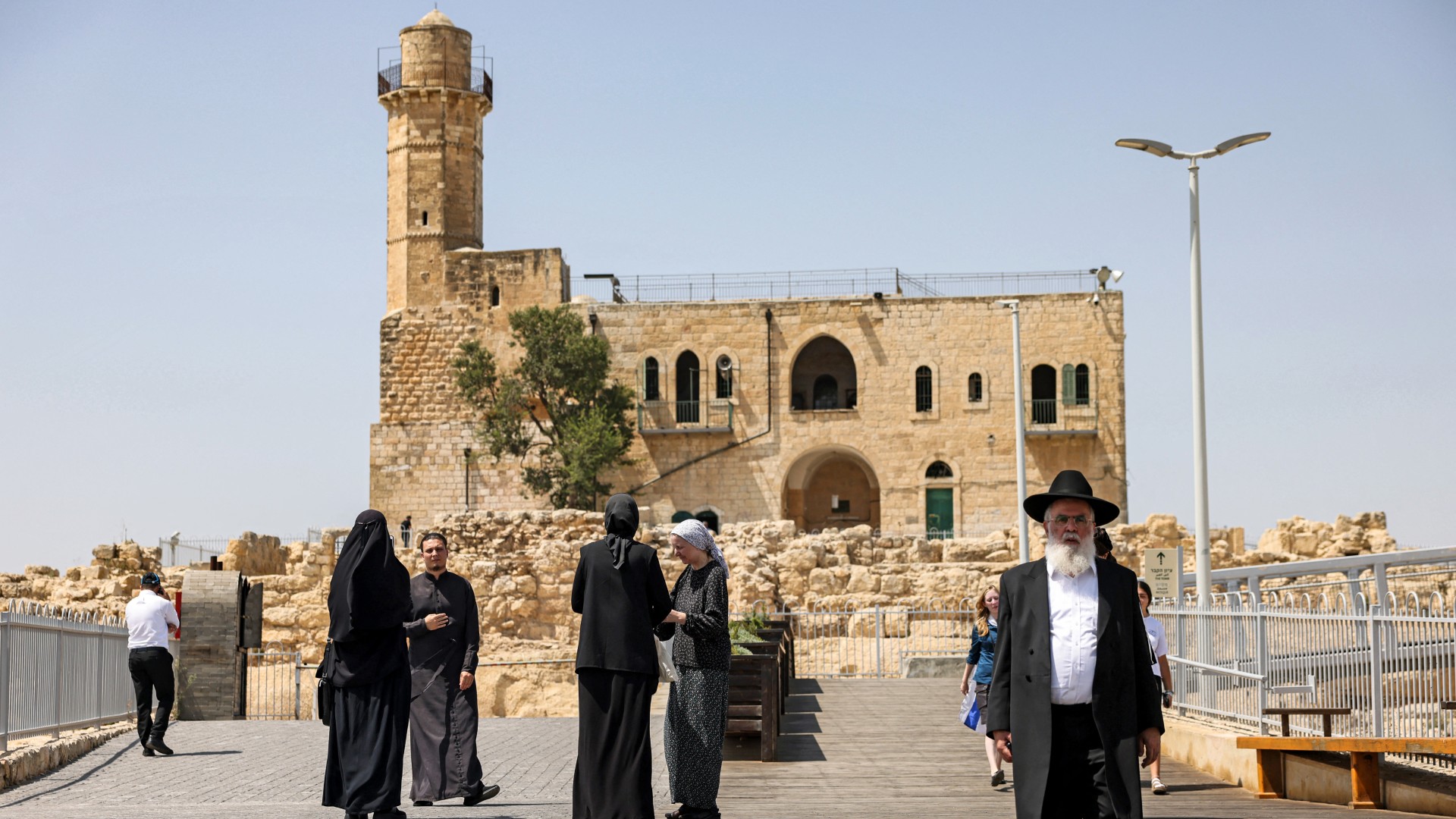
  • Israeli forces turn Palestinian homes into military bases

    Israeli forces turn Palestinian homes into military bases

    In the occupied West Bank, Palestinian families are recounting traumatic experiences of having their homes forcibly commandeered by Israeli military units. The practice, which has intensified following recent regional hostilities, involves soldiers occupying civilian residences for use as temporary operational bases.

    Khalid Jamal, a resident of al-Rehiyya south of Hebron, describes a 2:42 AM raid where 20 soldiers surrounded his family home. “The door was forced open. I woke up to find the house surrounded in an abnormal way,” Jamal recounts. His family of seventeen was forcibly relocated to a single ground-floor room where they endured freezing temperatures without adequate bedding while soldiers maintained constant guard.

    Simultaneously, military activity occurred throughout the upper levels of the home. “There was something being hammered above. We could hear banging, but I don’t know what it was,” Jamal noted, later discovering broken tiles and damaged children’s beds. The occupation lasted approximately 24 hours, during which soldiers consumed provisions and left behind empty Hebrew-labeled food cans.

    This pattern repeated in Fawwar refugee camp, where Mohammed Jodeh’s family received a 3:00 AM evacuation order. Israeli forces informed them their home would serve as a military barracks for three days. “We were shocked because it was the first time we had been forcibly expelled,” Jodeh stated, noting previous intrusions had never involved complete displacement.

    The strategic placement of these home seizures—particularly at camp entrances and elevated locations—suggests tactical military purposes. Palestinian residents interpret these actions as psychological warfare intended to undermine their sense of security and assert Israeli dominance. “The first objective is to make us feel that we are living in an unsafe place,” Jodeh analyzed. “The second is to assert their presence, to say: we are here.”

    These incidents occur within a broader context of heightened tensions following cross-border exchanges between Israel and Iran, which have resulted in Palestinian casualties from missile debris. The Israeli military has historically utilized home seizures during West Bank operations, though recent occurrences appear more frequent and systematic.

    Despite the psychological impact and property damage, affected families demonstrate remarkable resilience. “I am not thinking of leaving, absolutely not,” Jamal affirmed. “There is nothing I fear for, except my children.” This sentiment echoes throughout communities where such occupations have become an unfortunate reality of daily existence.

  • Singapore Airlines to operate daily flights to Hangzhou

    Singapore Airlines to operate daily flights to Hangzhou

    Hangzhou Xiaoshan International Airport has announced that Singapore Airlines will inaugurate a new daily round-trip service to Hangzhou commencing June 2026. This strategic expansion marks a significant enhancement to air connectivity between China’s Yangtze River Delta region and Southeast Asia.

    The Hangzhou-Singapore route, previously serviced by four carriers including Loong Air, China Eastern Airlines, Xiamen Airlines, and Scoot, has demonstrated robust growth with passenger traffic reaching 85,000 passengers year-to-date, representing an 11.9% year-on-year increase. This performance positions it as the airport’s second busiest international route.

    Singapore Airlines’ entry into this market is projected to substantially improve transit efficiency through leveraging its extensive global network. Airport data reveals that as of March 22, the transit passenger volume had reached 230,300, including 52,600 international travelers. This connectivity is further strengthened through intercontinental routes linking to major Asian hubs such as Seoul, Tokyo, and Bangkok.

    In preparation for increased passenger flow, the airport has implemented an advanced smart transit platform. According to Zhao Yijing, Transit Business Manager at the airport’s ground service department, the system enables remote security and customs inspections, entrusted handling of irregular baggage, and intelligent transfer operations.

    The new service will be operated utilizing an Airbus A350-900 aircraft, with the inaugural flight scheduled to depart Singapore on June 1. This expansion will increase weekly flights between Hangzhou and Singapore to 26, creating enhanced travel options and strengthened economic ties between the two regions.

  • Japan faces test of principles

    Japan faces test of principles

    A prominent Japanese academic has issued a stark warning about the potential erosion of Japan’s international standing, arguing that uncritical alignment with United States foreign policy could compromise the nation’s foundational principles. Atsushi Koketsu, Professor Emeritus at Yamaguchi University, contends that recent military actions undertaken by the US and Israel against Iran constitute violations of established international law.

    Professor Koketsu emphasized that Japan has historically built its diplomatic identity and global reputation on a steadfast commitment to operating within the framework of international legal standards. This positioning, he argues, has been central to Japan’s image as a peaceful nation since the post-war era.

    The academic’s critique centers on the concept of “pre-emptive” strikes, which he characterizes as legally questionable under international norms governing the use of military force. By fully endorsing or participating in such actions through its alliance with the United States, Japan risks undermining its carefully cultivated international identity, Koketsu suggested.

    This analysis emerges amid ongoing geopolitical tensions in the Middle East and reflects broader concerns within certain Japanese intellectual circles about the appropriate balance between maintaining critical international alliances and preserving independent diplomatic judgment. The warning highlights the complex calculations facing Japanese policymakers as they navigate increasingly volatile global security dynamics while attempting to maintain consistency with the nation’s constitutional pacifist principles.

  • Ashab al-Yamin: The obscure new group claiming Jewish ambulance attack

    Ashab al-Yamin: The obscure new group claiming Jewish ambulance attack

    London’s Metropolitan Police have launched a counter-terrorism investigation into a suspected antisemitic arson attack targeting four ambulances owned by Jewish charity Hatzola. The vehicles were set ablaze in the car park of Machzike Hadath Synagogue in Golders Green during early Monday hours, causing gas canisters onboard to explode. No casualties were reported.

    Within hours, responsibility was claimed by Harakat Ashab al-Yamin al-Islamiya (Hayi), or The Islamic Movement of the People of the Right Hand, through a newly created Telegram account. The group, which only surfaced publicly on March 9th, has allegedly claimed multiple attacks across Europe this month targeting Jewish sites.

    Middle East Eye analysis revealed that Hayi’s multilingual statement—posted in Hebrew, Arabic, and English—was flagged by two separate AI detection systems as likely being AI-generated. The statement contained unusual terminology for an anti-Zionist Shia group, including multiple references to ‘Israel’ and describing the Gaza conflict as ‘the Gaza war’ rather than more militant language.

    Israeli officials quickly linked Hayi to Iran, with Israel’s Ministry for Diaspora Affairs publishing a report stating the attack ‘aligns with similar antisemitic arson incidents across Europe’ connected to ‘the same Iran-aligned network.’ However, Met Police chief Mark Rowley cautioned that while Iranian state threats have shown ‘rapid growth’ in recent years, it was ‘too early’ to attribute the attack directly to Iran.

    Expert analysis by Aymenn Jawad al-Tamimi, who studies militant groups in Iraq and Syria, suggested the statement appeared to be machine-translated across languages after initial AI generation. The group’s evolving logo—now featuring a hand clasping a sniper rifle—bears resemblance to other Shia militia group flags.

    The investigation continues as authorities work to authenticate Hayi’s claims and determine possible state-backed involvement, recalling previous Telegram-coordinated attacks in the UK linked to hostile state actors.

  • Israeli press review: Expanding wars spark concerns over economy and air defence capacities

    Israeli press review: Expanding wars spark concerns over economy and air defence capacities

    The Bank of Israel has submitted its comprehensive 2025 annual report to the Israeli government and Knesset, presenting a dual narrative of economic resilience and substantial war-related deterioration. Governor Amir Yaron’s disclosure highlights both encouraging indicators and profound structural challenges facing the nation’s economy.

    While the report notes accelerated growth, moderated inflation within target ranges, record-low unemployment, and robust capital market performance, it simultaneously reveals an 8.6% GDP contraction equivalent to approximately 175 billion shekels ($55.95 billion) since October 2023. When accounting for security expenditures and international manufacturer payments, this economic damage escalates to roughly 375 billion shekels.

    Israel’s fiscal health shows concerning trends with a 2025 deficit at 4.7% of GDP and a debt-to-GDP ratio climbing over 8% since October 2023 to 68.5%, exceeding OECD median levels. Security expenses totaling 350 billion shekels have been the primary driver of deficit expansion.

    The defense industry emerged as a significant economic component, accounting for 10% of goods and services exports between 2019-2024 at $14.8 billion. However, per capita income has declined substantially, with each citizen losing approximately 35,000 shekels ($11,220) in potential earnings.

    Critical labor supply constraints have hampered growth, primarily due to reservist mobilization and the exclusion of Palestinian workers since October 2023. The economy has additionally suffered from negative immigration trends, losing an average of 9,000 workers annually during 2024-2025.

    The ongoing conflict with Iran has generated severe economic disruptions, with the Finance Ministry estimating weekly losses of 1.25 billion shekels due to educational system closures. Since the February 28th emergency declaration, approximately 170,000 workers have been placed on unpaid leave, with projections indicating further increases as hostilities continue.

    Air defense capabilities reveal concerning disparities in civilian protection. The layered defense system allocates resources based on algorithmic categorization considering population density, protective infrastructure, and strategic sensitivity. This results in unequal protection between economic centers like Tel Aviv and peripheral regions such as Dimona and Arad, where recent direct missile hits occurred.

    Interceptor inventory limitations present additional concerns, with reports indicating finite stocks and lengthy replenishment timelines. Despite current defensive capabilities, economic normalization remains improbable while conflict persists.

    In parallel developments, the Knesset approved controversial legislation expanding religious court jurisdiction to civil arbitration. The Israel Democracy Institute criticized the move as unprecedented in democratic nations, raising concerns about equality, judicial integrity, and women’s rights. Opposition leader Yair Lapid declared the legislation effectively ended Israel’s traditional religion-state status quo, moving toward a halachic state model.

  • Albanese urges ICC arrest warrants for Israeli ministers over torture of Palestinians

    Albanese urges ICC arrest warrants for Israeli ministers over torture of Palestinians

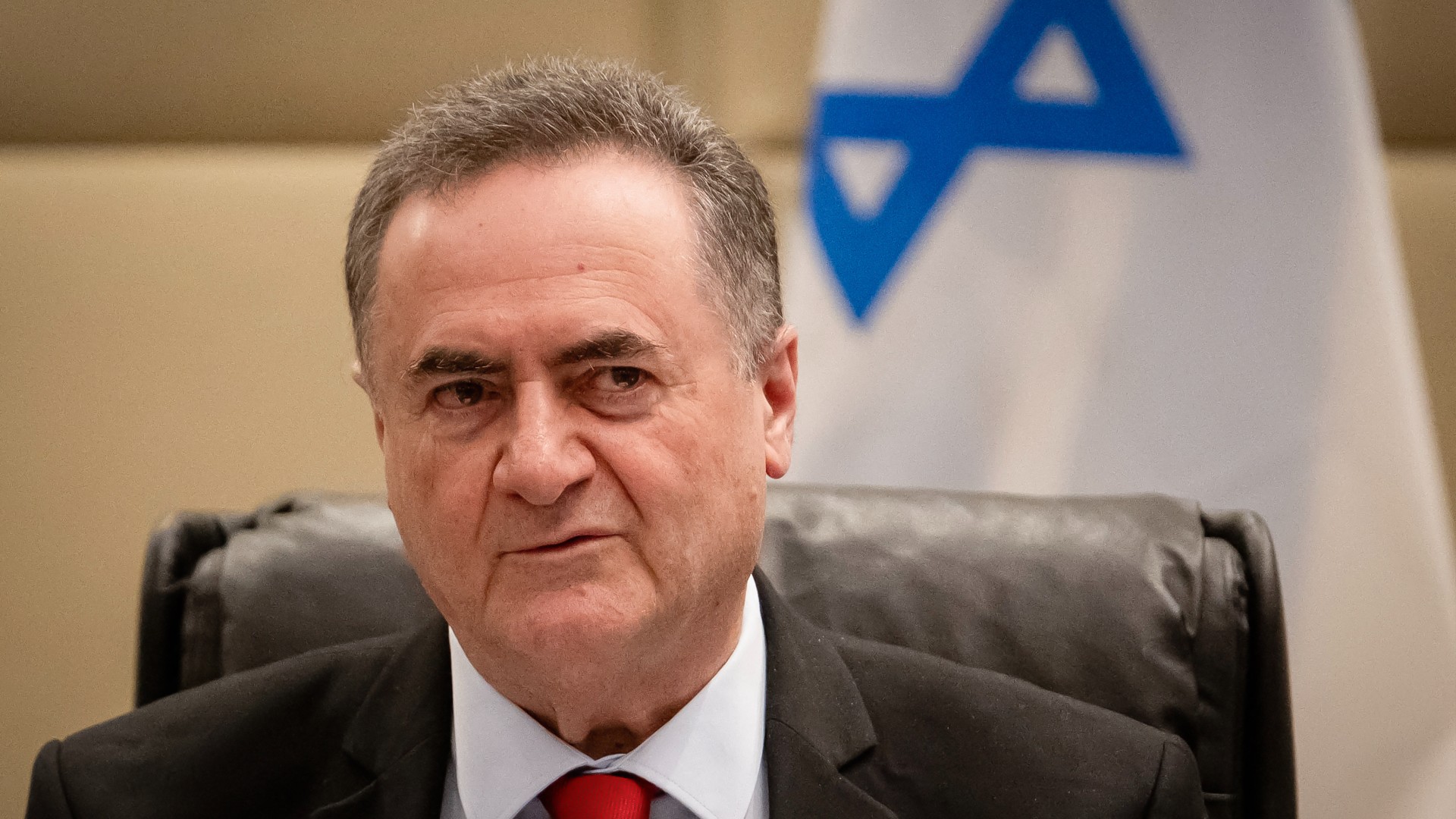
    In a groundbreaking development at the United Nations Human Rights Council, Special Rapporteur Francesca Albanese has formally called for the International Criminal Court to issue arrest warrants against three prominent Israeli government officials. The comprehensive report identifies National Security Minister Itamar Ben Gvir, Finance Minister Bezalel Smotrich, and Defense Minister Israel Katz as the primary architects of policies allegedly constituting systematic torture and genocide against Palestinians since October 2023.

    The 25-page document presents a meticulous legal analysis concluding that Israeli practices—both within detention facilities and across occupied territories—meet the precise legal thresholds for genocide under international law. The report details how custodial abuses including severe beatings, bone-breaking techniques, and systematic sexual violence intersect with broader policies of displacement, infrastructure destruction, and humanitarian aid blockade to create what Albanese terms a ‘torturous environment.’

    Albanese’s investigation reveals staggering detention statistics: approximately 18,500 Palestinians apprehended between October 2023 and February 2026, including 1,500 children. Currently, 9,000 remain imprisoned—often without formal charges—while 4,000 have been subjected to enforced disappearance. The report documents 84-94 custodial deaths while acknowledging the actual number might be significantly higher due to systematic transparency issues.

    The legal submission contends that these coordinated measures represent intentional efforts to inflict severe physical and psychological harm—a key criterion under Article II(b) of the Genocide Convention. Albanese emphasizes that these practices collectively aim to eradicate Palestinian political, cultural, and territorial continuity.

    This confrontation occurs against a backdrop of significant political pressure. Middle East Eye previously reported that ICC Prosecutor Karim Khan had prepared arrest warrant applications against Ben Gvir and Smotrich on apartheid charges before his May leave. However, deputy prosecutors have hesitated to file them due to ongoing threats of US sanctions.

    The US government sanctioned Albanese in July 2024 for her investigative work and ICC engagement, effectively freezing her assets and restricting her travel capabilities. Her family has subsequently initiated legal action against the Trump administration regarding these sanctions. This represents Albanese’s third major report since October 2023 systematically documenting alleged genocidal practices in Gaza.

  • Trump’s stringent demands on Iran risk bogging down potential talks, sources say

    Trump’s stringent demands on Iran risk bogging down potential talks, sources say

    The United States has presented Iran with a comprehensive set of demands as a prerequisite for ending ongoing hostilities, conditions that diplomatic sources characterize as potentially unacceptable to Tehran. The development comes amid mediation efforts by Turkey, Pakistan, and Egypt to establish communication channels between the two nations.

    According to sources familiar with the negotiations who spoke with Middle East Eye, the Trump administration’s approach mirrors Russia’s strategy during the 2022 Istanbul talks with Ukraine, where Moscow demanded significant concessions including territorial cessions and military limitations. The US demands reportedly require Iran to completely halt nuclear enrichment programs, cease ballistic missile development, and dismantle its regional proxy networks.

    The geopolitical stakes have intensified with Iran’s increasing control over the Strait of Hormuz, a critical waterway transporting 27% of global oil products. Additional requirements from Gulf states have been incorporated into the US demands, including potential joint control mechanisms to ensure uninterrupted energy shipments.

    Iran maintains two primary conditions for negotiations: guarantees against future attacks and compensation for losses incurred. Despite reports of potential backchannel discussions involving Iranian Parliament Speaker Mohammad Bagher Ghalibaf, who some experts consider the country’s de facto ruler due to Supreme Leader Khamenei’s reported incapacitation, Ghalibaf has publicly denied any ongoing talks with Washington.

    The negotiation dynamics are complicated by leadership uncertainties within Iran’s political hierarchy. Sources indicate the US faces challenges in identifying appropriate Iranian counterparts, as senior leadership has been either eliminated or remains inaccessible.

    A Friday deadline coinciding with the arrival of 2,000 US Marines and naval assets has heightened tensions. Some analysts suggest the negotiation overtures might serve as a tactical delay for potential military operations targeting Iranian islands in the Strait of Hormuz.

    Despite the impasse, diplomatic possibilities remain. Kamran Bokhari of the Middle East Policy Council notes Washington might accept a behaviorally modified Iranian regime that relinquishes nuclear ambitions, constrains missile capabilities, and reins in regional proxies, following a Venezuela-like model rather than insisting on full regime change.

  • ‘We give what we love’: How Kashmir’s ‘Little Iran’ is giving generous aid to Tehran

    ‘We give what we love’: How Kashmir’s ‘Little Iran’ is giving generous aid to Tehran

    Across the Kashmir Valley, an extraordinary humanitarian movement has emerged in response to the ongoing conflict in Iran. Communities are donating their most precious possessions—family heirlooms, life savings, and essential livelihood assets—to support civilians affected by the war.

    In Budgam, central Kashmir, Masrat Mukhtar donated the gold earrings her father gave her, a symbolic gesture replicated throughout the region during Eid al-Fitr celebrations. The tradition of collecting copper utensils for daughters’ weddings has been redirected toward wartime relief, with families choosing instead to support “daughters who lost mothers and sisters in the attacks,” explained 73-year-old Tahera Jan from Srinagar’s Zadibal neighborhood.

    The scale of sacrifice is profound: Sadakat Ali Mir, a 24-year-old mini truck driver, donated one of his two vehicles, effectively surrendering half his livelihood. “I heard the mosque call and decided to give half my livelihood,” he stated, referencing the historical Battle of Karbala as inspiration for such sacrifice. Similarly, Bilal Ahmad Gazi donated his cherished scooter, stating, “The situation in Iran feels like losing a family member.”

    Notably, the humanitarian effort transcends sectarian divisions. While Shia Muslims (approximately 10-15% of Jammu and Kashmir’s population) have been at the forefront, Sunni communities have participated significantly—sometimes comprising nearly half of all donors—by observing simpler Eid celebrations and redirecting resources. Shopkeepers closed early, families served modest meals, and all demonstrated what Sunni trader Shameen Khan described as “deliberate choice rather than obligation.”

    The response draws upon centuries-deep cultural connections between Kashmir and Persia, dating back to the 14th century when Mir Syed Ali Hamadani arrived from Persia with 700 followers, introducing crafts, architecture, and language that forever shaped Kashmiri culture. This historical bond earned Kashmir the enduring epithet “Iran-e-Sagheer” (Little Iran) from philosopher-poet Allama Muhammad Iqbal.

    Despite strict security measures implemented since India revoked the region’s semi-autonomy in 2019, large mourning processions filled Srinagar’s streets following Ayatollah Khamenei’s killing. Black flags hung from windows, portraits of Iranian leaders appeared in public parks, and thousands marched through Lal Chowk in tightly controlled but striking demonstrations.

    Organizers have developed coordinated relief efforts informed by specific needs in Iran. Students at the Islamic University of Science and Technology organized supply drives, while local doctors assembled tailored medical kits. As social activist Ilyas Bhat observed, “This is coordinated action shaped by knowledge of need, not a loose or symbolic gesture.”

    The Iranian Embassy in New Delhi expressed profound gratitude, acknowledging the “humanitarian support and heartfelt solidarity” from Kashmir. Their social media post highlighted a widow’s donation of gold kept as a memento of her husband who died 28 years earlier, noting how “tears and pure emotions bring comfort to Iran.”

    Lecturer Sakina Hassan, who studies humanitarian practice, emphasized the deeper significance: “People are not only parting with objects—they are extending memory, inheritance, and care into another space.” As Mukhtar watched volunteers wrap her earrings, she envisioned them bringing comfort in Iranian hospital wards, embodying the persistent bond between Kashmir and its namesake through time and conflict.

  • Jiangsu’s Yaohu Town and France’s Puy du Fou unveil China’s first bird-themed cultural tourism project

    Jiangsu’s Yaohu Town and France’s Puy du Fou unveil China’s first bird-themed cultural tourism project

    Yixing’s Yaohu Town has partnered with France’s renowned historical theme park Puy du Fou to unveil China’s inaugural bird-themed cultural tourism experience. The groundbreaking project, titled “The Rendezvous of Birds,” launched in late March, creating a unique fusion of natural spectacle and cultural performance that represents a significant milestone in Sino-French cultural exchange.

    The immersive experience features majestic birds of prey soaring above captivated audiences against the picturesque backdrop of Yixing’s natural landscapes. This collaboration marks Puy du Fou’s first venture into the Chinese market, bringing their expertise in historical reenactments and live performances to create a distinctive avian-centered entertainment format.

    Local officials describe the project as a “heartfelt dialogue between Chinese and French cultures” that combines ecological conservation themes with artistic performance. The production incorporates traditional Chinese elements alongside European storytelling techniques, creating a cross-cultural performance that appeals to both domestic and international tourists.

    The initiative forms part of broader cultural exchanges between China and France during the 2026 Sino-French Year of Cultural Tourism. Industry analysts note that such collaborations represent growing trends in the global tourism sector, where international partnerships create unique experiences that blend local cultural elements with foreign expertise.

    Yaohu Town, known for its ecological tourism resources, provides the perfect natural habitat for the avian performers, while Puy du Fou contributes decades of experience in creating historically-inspired live shows. Early visitors have reported being captivated by the seamless integration of natural avian behavior with choreographed performances, creating what many describe as a “breathtaking spectacle that merges nature and culture.”

  • Canadian man praises China’s medical efficiency after knee surgery in Yichang

    Canadian man praises China’s medical efficiency after knee surgery in Yichang

    A Canadian national has become an unexpected advocate for China’s healthcare system following an exceptionally efficient surgical experience in Yichang, Hubei province. Guy Francis Bennett, a 66-year-old journalist and filmmaker, suffered a torn meniscus in his right knee during a soccer match two months ago. When medical authorities in Vancouver informed him he would face a minimum one-year waiting period for routine minimally invasive surgery, Bennett grew concerned about the potential deterioration of his condition and disruption to his professional life.